
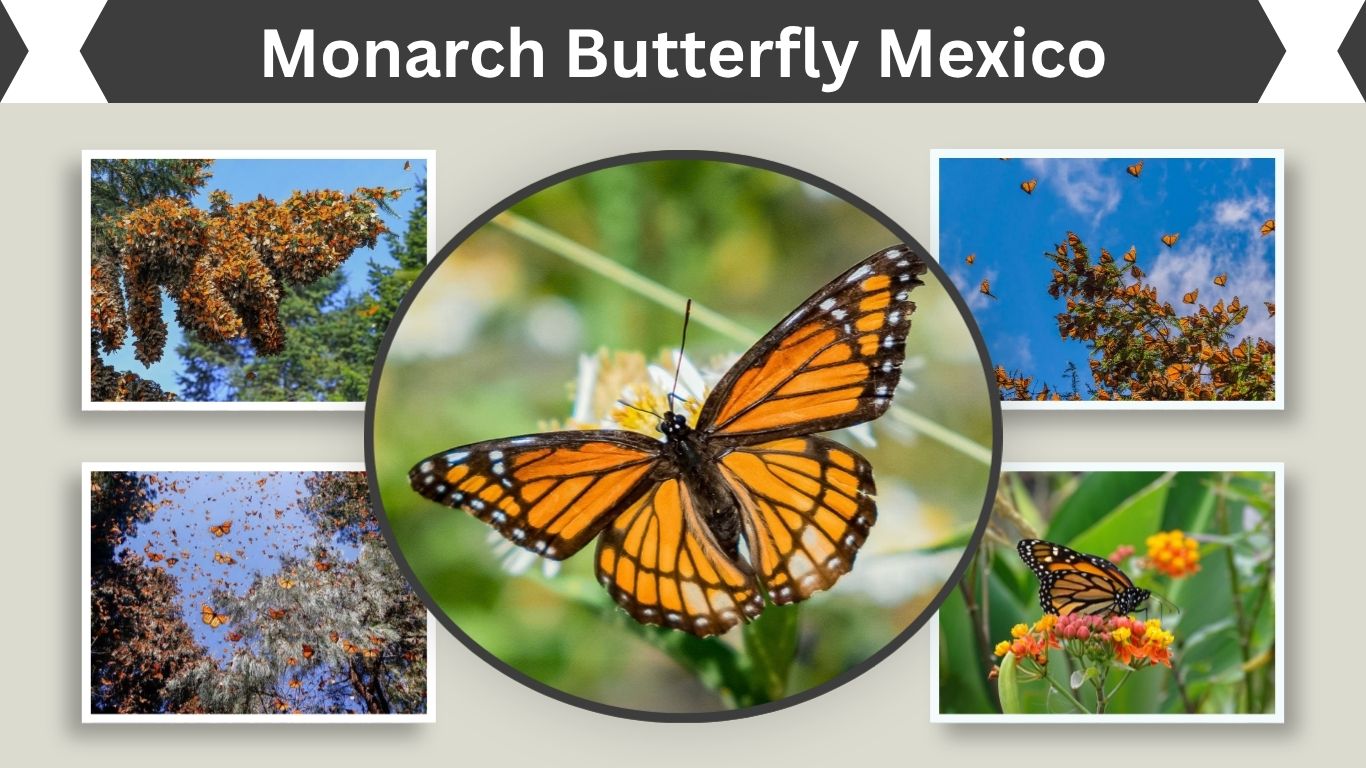
Every winter, monarch butterflies in Mexico create one of nature’s most magical scenes. Millions of orange-and-black butterflies travel from the United States and Canada to the cool oyamel fir forests of central Mexico. They gather in high mountain sanctuaries, covering tree trunks and branches like living leaves. This guide explains where monarch butterflies go in Mexico, why they migrate, the best time to see them, and what makes the Monarch Butterfly Biosphere Reserve so important.
Monarch Butterflies in Mexico
Monarch butterflies in Mexico are best known for their massive winter migration. Eastern monarchs travel south each year and settle in mountain forests mainly in Michoacán and the State of Mexico. The Monarch Butterfly Biosphere Reserve covers about 56,259 hectares in rugged forested mountains around 100 km northwest of Mexico City.
Why Mexico Is Important for Monarchs
Mexico provides the exact winter conditions monarch butterflies need. The high-elevation oyamel fir forests are cool, moist, and sheltered. These conditions help monarchs save energy while they wait for spring. Instead of breeding immediately, they cluster together on trees and remain mostly inactive during cold periods.
What Makes the Sight So Special
Visitors often describe the forests as quiet until sunlight warms the air. Then thousands of butterflies may begin to flutter from tree branches. The trees can look orange because monarchs gather in heavy clusters. UNESCO notes that the butterflies can color the trees and even bend branches under their collective weight.
Migration of Monarch Butterflies in Mexico
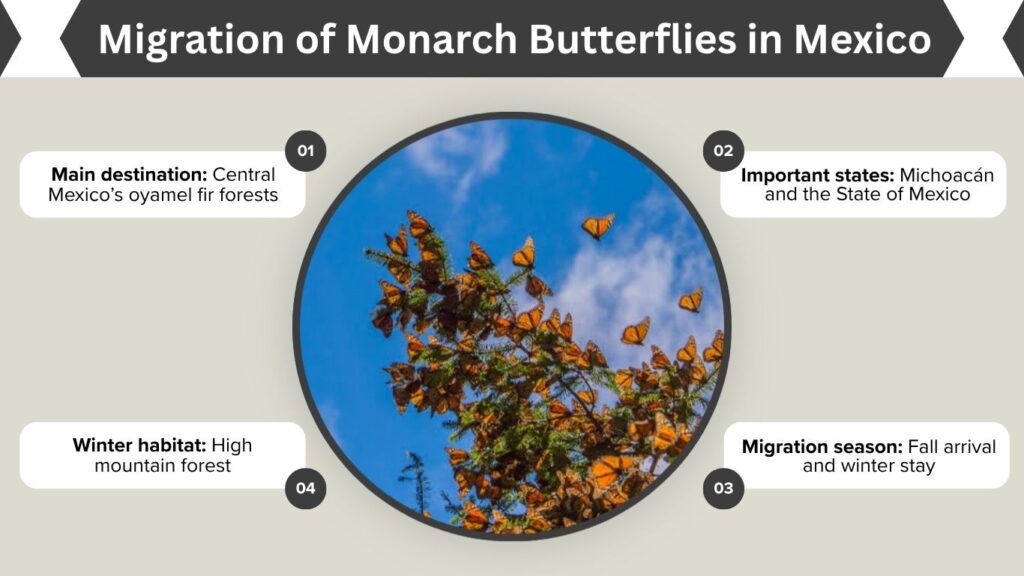
The migration of monarch butterflies in Mexico is part of a larger North American journey. These butterflies do not all come from one place. Many begin their trip from breeding areas across the northern United States and southern Canada, then fly south over several weeks before reaching Mexico’s wintering forests.
Migration Route and Distance
Monarchs may travel thousands of miles to reach central Mexico. Their route depends on weather, wind, food sources, and geography. They follow natural signals such as sunlight, temperature, and seasonal changes. This journey is remarkable because the butterflies arriving in Mexico have never been there before.
Key Migration Facts
- Main destination: Central Mexico’s oyamel fir forests
- Important states: Michoacán and the State of Mexico
- Winter habitat: High mountain forest
- Main tree type: Oyamel fir
- Migration season: Fall arrival and winter stay
- Spring movement: Monarchs leave Mexico and begin moving north
Why Do Monarch Butterflies Migrate to Mexico?
Monarch butterflies migrate to Mexico to survive winter. They cannot tolerate long freezing conditions in northern regions. Mexico’s mountain forests offer a protected microclimate where temperatures are cold enough to slow their metabolism but not usually too harsh for survival. This helps them conserve fat reserves until spring.
Where Do Monarch Butterflies Go in Mexico?
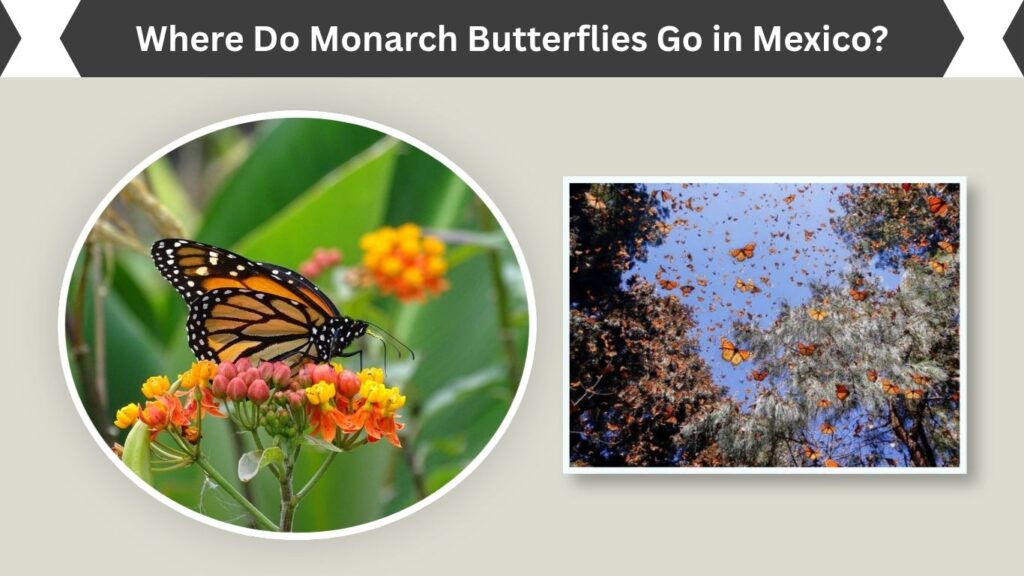
Monarch butterflies go to protected forests in the Trans-Mexican Volcanic Belt, especially in and around the Monarch Butterfly Biosphere Reserve. This region includes several sanctuaries where visitors can see the butterflies during the winter season. The reserve protects the butterflies’ most important overwintering habitat.
Main Monarch Butterfly Sanctuaries in Mexico
- El Rosario Sanctuary: One of the most famous and visited monarch butterfly sanctuaries in Michoacán.
- Sierra Chincua Sanctuary: A popular site near Angangueo, known for forest trails and dense monarch clusters.
- Piedra Herrada Sanctuary: Located in the State of Mexico and often visited from Mexico City.
- Cerro Pelón Sanctuary: A quieter area with strong ecological importance and guided access.
Monarch Butterflies in Michoacán, Mexico
Michoacán is strongly linked with the monarch butterfly migration. Towns such as Angangueo are often used as starting points for sanctuary visits. In Michoacán, monarchs cluster on oyamel fir trees in cool mountain forests, creating the famous “butterfly forest” view sought by many visitors.
Best Time to See Monarch Butterflies in Mexico
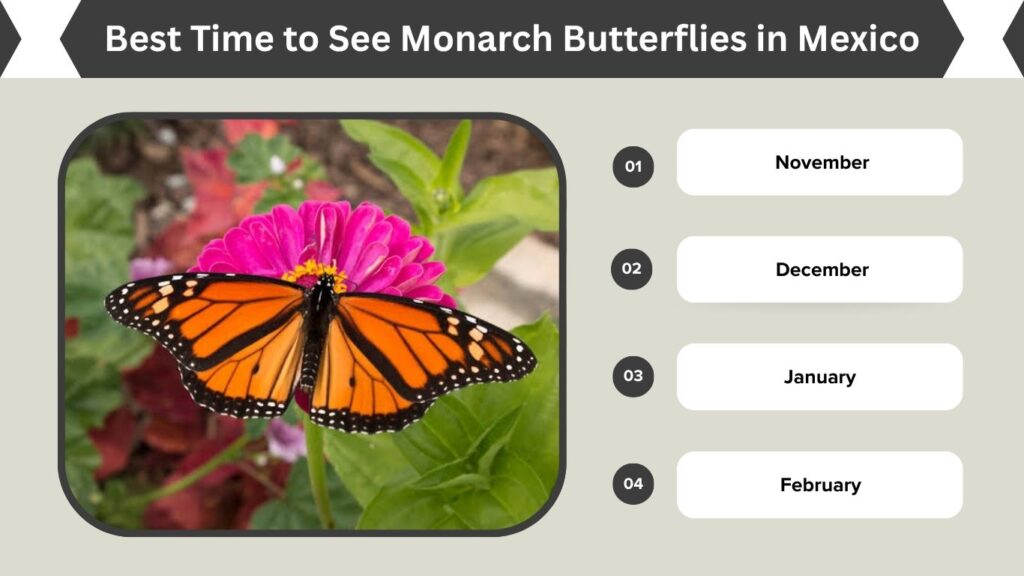
The best time to see monarch butterflies in Mexico is usually from January to early March. Butterflies may begin arriving around November, but they are often less active in the coldest weeks. Warmer sunny days later in the season usually give visitors the best chance to see them flying.
Seasonal Viewing Guide
| Time of Year | What to Expect |
| November | Monarchs begin arriving in Mexico |
| December | Large clusters form, but activity may be low |
| January | Good viewing season begins |
| February | Often one of the best months for activity |
| Early March | Butterflies may be very active before leaving |
| Late March | Many begin moving north again |
Best Conditions for Viewing
- Sunny weather: Butterflies are more active when sunlight warms the forest.
- Late morning to early afternoon: This is often better than early morning.
- Calm wind: Strong wind can reduce butterfly movement.
- Warm days: Cold days usually mean the butterflies stay clustered.
How Long Do Monarch Butterflies Stay in Mexico?
Monarch butterflies usually stay in Mexico through the winter months. They arrive in late fall, remain in the forest during winter, and begin moving north in spring. The exact timing changes with weather and seasonal conditions.
Monarch Butterfly Biosphere Reserve Mexico
The Monarch Butterfly Biosphere Reserve is one of the most important butterfly conservation areas in the world. It protects wintering sites where millions of monarchs gather each year. The reserve is recognized as a UNESCO World Heritage Site because of its outstanding natural value and the extraordinary monarch migration phenomenon.
Habitat Inside the Reserve
The reserve’s habitat is mainly high mountain forest. The U.S. Forest Service explains that monarchs overwinter in oyamel fir forests at elevations of about 2,400 to 3,600 meters. These forests create the cool, humid shelter monarchs need during winter.
Why the Reserve Matters
- Protects winter colonies: Monarchs depend on a small number of forest areas.
- Supports biodiversity: The forest also protects other plants and animals.
- Helps local communities: Responsible tourism can support guides, towns, and conservation work.
- Preserves migration: Without protected winter habitat, the migration would be at serious risk.
Monarch Butterfly Trees in Mexico
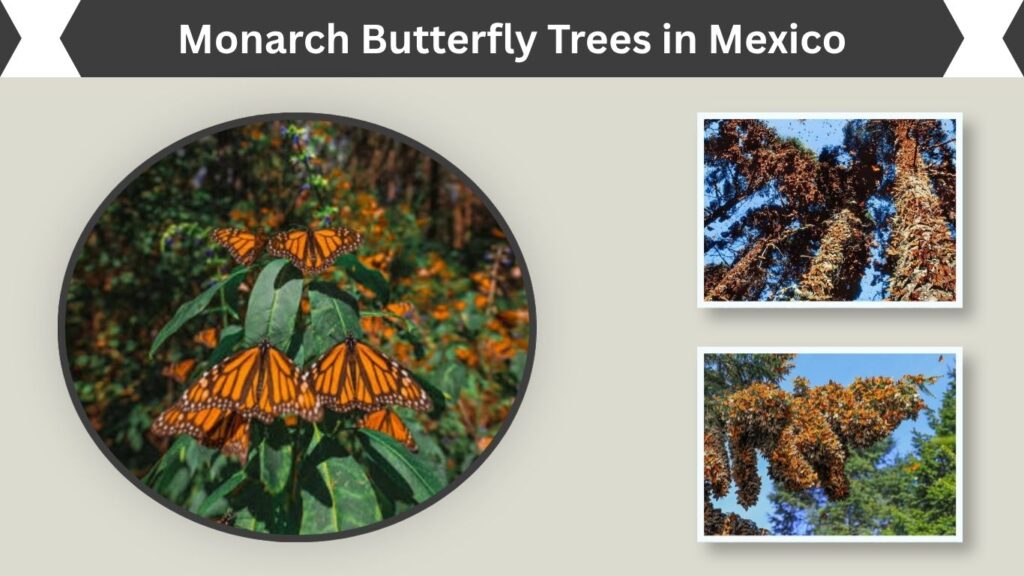
One of the most searched sights is monarch butterflies on trees in Mexico. During the winter, they hang together in thick clusters from trunks and branches. From a distance, the trees can look brown or orange. When sunlight reaches them, the clusters may open and the forest fills with moving wings.
Why Monarchs Cluster on Trees
Monarchs cluster to stay warm and conserve energy. Grouping together helps protect them from cold nights and mountain weather. The oyamel fir trees also provide shelter from wind, rain, and sudden temperature changes.
What Visitors Usually See
Visitors may see quiet clusters hanging from branches, butterflies resting on the ground, or thousands flying through shafts of sunlight. However, activity depends on weather. On cold or cloudy days, the butterflies may remain still, so patience is important.
Visiting a Monarch Butterfly Sanctuary in Mexico
A monarch butterfly trip to Mexico can be unforgettable, but visitors should follow sanctuary rules. These forests are sensitive habitats, and too much noise, crowding, or careless movement can disturb the butterflies. Most sanctuaries require local guides and marked trails to protect the colonies.
Visitor Tips
- Wear comfortable walking shoes because trails can be steep.
- Bring layers, as mountain weather can change quickly.
- Stay quiet near butterfly clusters.
- Do not touch butterflies, even if they land nearby.
- Follow guide instructions and remain on marked paths.
- Avoid flash photography near resting butterflies.
Tours From Mexico City
Many travelers look for monarch butterfly tours from Mexico City because several sanctuaries are reachable as long day trips or overnight trips. Piedra Herrada is often chosen for shorter access, while Michoacán sanctuaries like El Rosario and Sierra Chincua are better for a deeper monarch butterfly experience.
Conservation Challenges for Monarch Butterflies
Monarch butterflies face pressure across their full migration route. Threats include habitat loss, climate change, pesticide use, and loss of milkweed in breeding areas. In Mexico, forest protection is especially important because the winter colonies are concentrated in limited mountain areas.
Current Population Concerns
WWF reports that scientists measure monarch winter populations by the area of forest occupied by colonies. In the 2025–2026 hibernation season, monarchs occupied 7.24 acres of forest, up from 4.42 acres the previous winter. This shows improvement, but long-term protection is still important.
How People Can Help
- Plant native milkweed in suitable regions.
- Grow nectar-rich flowers for migrating butterflies.
- Reduce pesticide and herbicide use.
- Support responsible ecotourism in Mexico.
- Protect forests and pollinator habitats.
FAQs
When do monarch butterflies migrate to Mexico?
Monarch butterflies usually migrate to Mexico in the fall. Many arrive around November and spend the winter in oyamel fir forests. They remain there through the cold months and begin moving north again in spring when temperatures and seasonal conditions change.
Where in Mexico do monarch butterflies go?
Monarch butterflies mainly go to mountain forests in Michoacán and the State of Mexico. Important sanctuaries include El Rosario, Sierra Chincua, Piedra Herrada, and Cerro Pelón. These areas are part of the larger monarch wintering region in central Mexico.
What is the best time to see monarch butterflies in Mexico?
The best time is usually January through early March, especially on sunny days. February is often excellent because the butterflies may become more active as temperatures rise. Cold, cloudy, or windy days can make them stay clustered on the trees.
Why do monarch butterflies go to Mexico?
Monarch butterflies go to Mexico to survive winter. The cool, humid oyamel fir forests slow their metabolism and help them conserve energy. These mountain forests provide shelter until spring, when the butterflies begin the next stage of their migration north.
Can you visit the Monarch Butterfly Biosphere Reserve?
Yes, visitors can access several sanctuary areas with local guides during the viewing season. Trails, rules, and access can vary by sanctuary. Responsible visiting is important because the butterflies and their forest habitat are sensitive to noise, crowding, and disturbance.
