
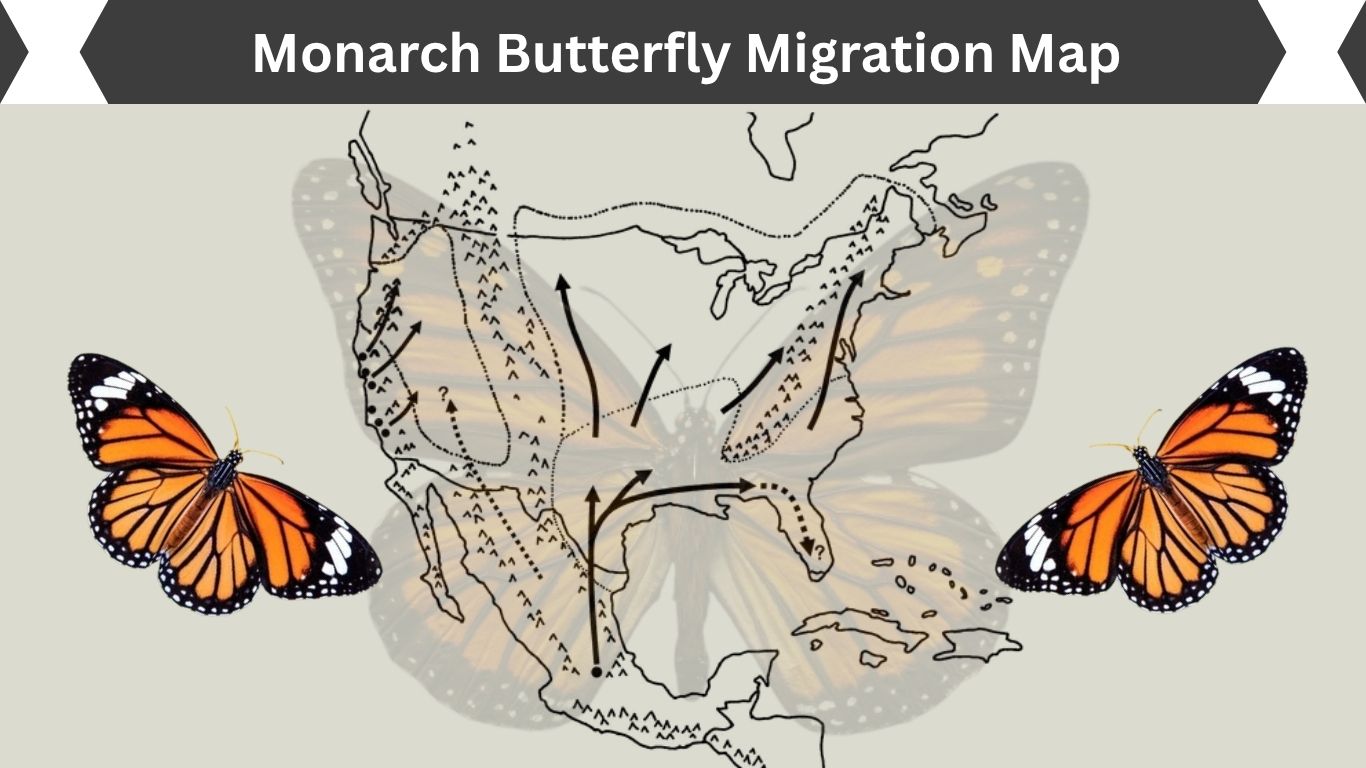
A monarch butterfly migration map helps readers understand one of the most amazing insect journeys in North America. Every year, monarchs move between breeding areas in the United States and Canada and overwintering sites in Mexico or coastal California. These maps show migration routes, seasonal timing, sighting reports, and population movement. Whether you are a student, gardener, traveler, or nature lover, a migration map makes the monarch’s long-distance journey easier to follow.
What a Monarch Butterfly Migration Map Shows
A monarch butterfly migration map usually shows where monarchs are seen during spring, summer, and fall. It may include arrows, colored regions, dates, and citizen-reported sightings. Interactive maps, such as Journey North’s seasonal monarch maps, let users track adult monarchs, eggs, larvae, and milkweed reports across North America.
Key Details Found on Migration Maps
- Migration direction: Northward in spring and southward in fall.
- Sighting locations: Reports from states, provinces, cities, and gardens.
- Seasonal timing: When monarchs arrive or pass through each region.
- Breeding zones: Areas where monarchs lay eggs on milkweed.
- Overwintering areas: Mexico for eastern monarchs and coastal California for western monarchs.
- Route patterns: Main flyways used during long-distance movement.
Monarch Butterfly Migration Routes in North America
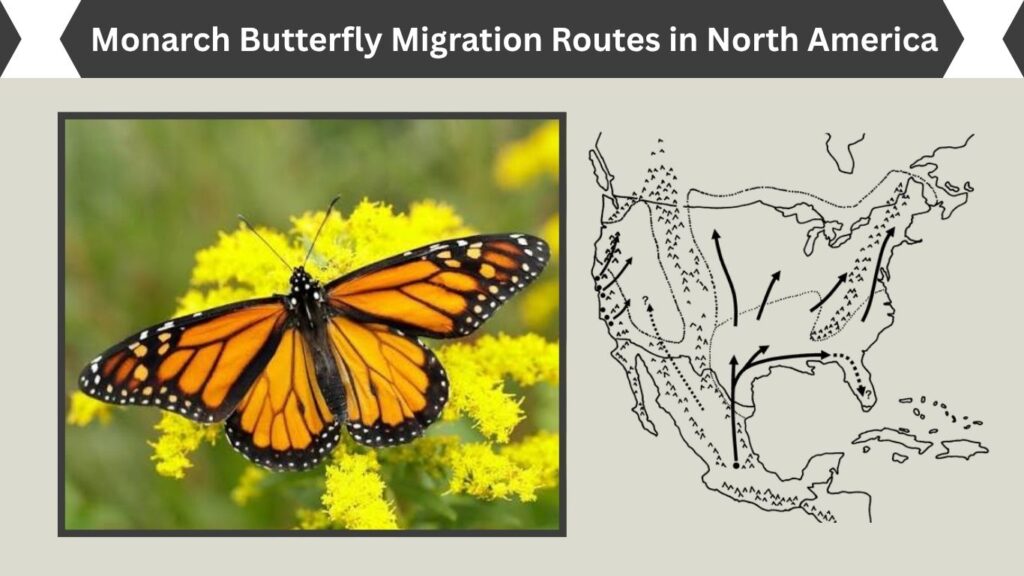
Monarch migration routes are not the same for every butterfly. Most monarchs east of the Rocky Mountains travel toward central Mexico, while many western monarchs overwinter along the California coast. A good migration route map separates these populations because their paths, winter destinations, and regional conservation needs are different.
Eastern Monarch Migration Route
Eastern monarchs breed across much of the central and eastern United States and southern Canada. In fall, they move south through several flyways before many merge through Texas and continue toward the oyamel fir forests of central Mexico. The U.S. Forest Service notes that eastern monarchs use several flyways that come together in central Texas before reaching Mexico.
Western Monarch Migration Route
Western monarchs are usually mapped west of the Rocky Mountains. Instead of traveling to Mexico’s mountain forests, many overwinter along the California coast. Their breeding range can spread through western states, including parts of Arizona, Idaho, Oregon, Washington, Nevada, and California, depending on season and habitat availability.
Monarch Butterfly Migration Timing by Season
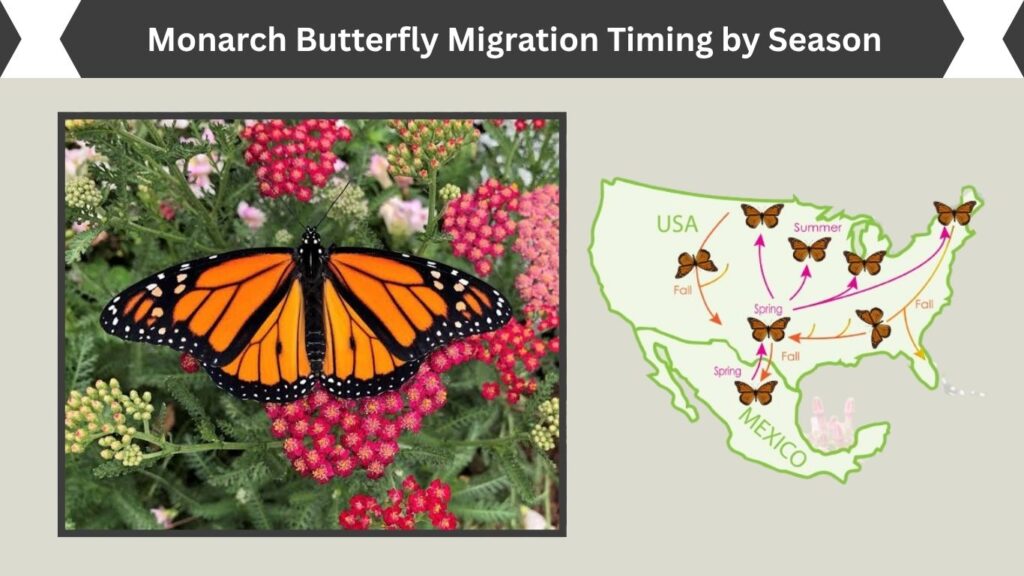
A monarch butterfly migration map is most useful when it includes timing. Monarch movement changes by season, and each generation plays a different role. Spring maps show northward expansion, summer maps show breeding activity, and fall maps show the famous southbound journey toward Mexico or California overwintering sites.
Spring and Summer Migration Map
In spring, monarchs leave overwintering areas and move north. The first generation usually reaches southern areas, lays eggs, and dies. Later generations continue the journey northward through the United States and into Canada. Summer maps often show adult monarch sightings, eggs, larvae, and milkweed reports because breeding is active during this period.
| Season | Map Focus | Main Movement |
| Spring | First sightings, eggs, milkweed | Northward |
| Summer | Breeding activity | Expanding across range |
| Fall | Adult migration | Southward |
| Winter | Overwintering colonies | Mexico or California |
Fall Monarch Butterfly Migration Map
The fall monarch butterfly migration map is one of the most searched map types. It shows the southbound route of the “super generation,” the monarchs that live longer and travel farther than summer generations. U.S. Fish and Wildlife Service explains that fall migration often begins around mid-August for many monarchs.
How to Read an Interactive Monarch Migration Map
An interactive monarch butterfly migration map can look complex at first, but it becomes simple once you understand the symbols. These maps often rely on public reports, meaning sightings are added by volunteers, gardeners, teachers, and nature watchers. This makes the map useful for seeing real-time movement, but it also means reports may be uneven by region.
Common Map Symbols and Filters
- Adult monarch sighted: A flying or resting adult butterfly was reported.
- First adult sighted: The first monarch seen in that area for the season.
- Egg sighted: Monarch eggs were found on milkweed.
- Larva or chrysalis: Caterpillars or pupae were reported.
- Milkweed sighted: Host plants were found growing in the area.
- Year filter: Users can compare maps from 2023, 2024, 2025, or 2026.
- Season filter: Users can switch between spring, summer, fall, and winter reports.
Monarch Butterfly Migration Map by Region
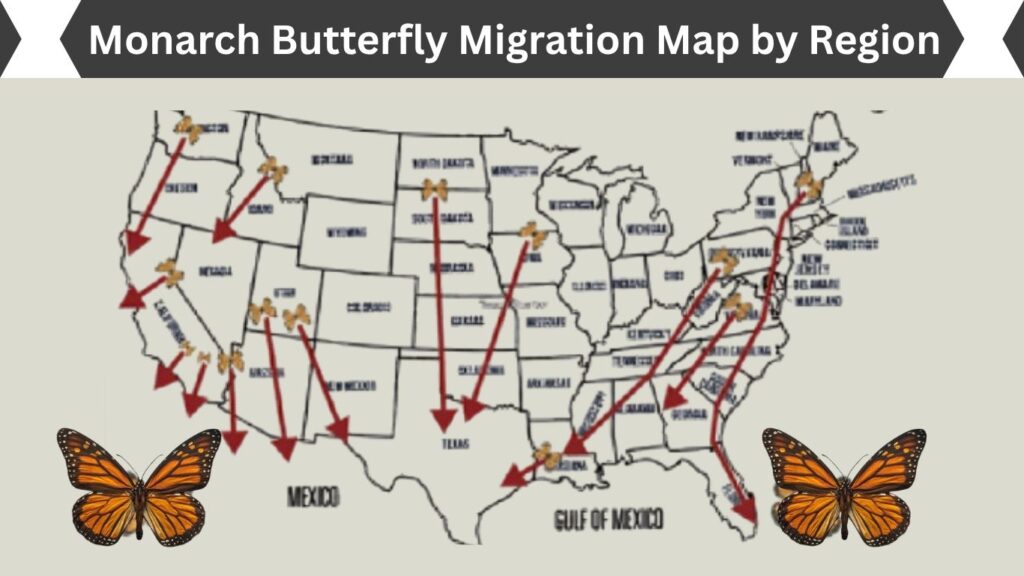
Searches like “monarch butterfly migration map Texas,” “Ohio map,” “Canada map,” “California map,” and “Mexico map” show that readers often want local information. A regional map helps people know when monarchs may pass through their area and what habitat they need during that part of the journey.
Important Regions on the Map
- Canada: Summer breeding areas, especially in southern provinces.
- Midwestern USA: Major breeding region with milkweed and nectar plants.
- Texas: Important fall migration corridor for eastern monarchs.
- Mexico: Winter destination for eastern monarchs in central mountain forests.
- California: Overwintering region for many western monarchs.
- Oregon and Washington: Western breeding and migration areas.
- Southeastern USA: Fall and spring movement zones, depending on weather.
Monarch Butterfly Migration Map to Mexico
A monarch butterfly migration Mexico map shows the final part of the eastern monarch journey. After traveling across the United States, many butterflies enter Mexico and reach high-elevation forests in Michoacán and the State of Mexico. These forests provide cool, protected winter conditions where monarchs cluster on trees until spring.
Where Monarchs Go in Mexico
Eastern monarchs overwinter in mountain forests within and around the Monarch Butterfly Biosphere Reserve. These colonies are often shown as destination points on migration maps. The butterflies gather in large groups on oyamel fir trees, creating the famous winter scenes of orange-and-black clusters covering branches.
Why Monarch Migration Maps Matter
Monarch migration maps are more than educational tools. They help scientists, conservation groups, and the public understand population movement. Because monarchs depend on milkweed, nectar plants, and safe overwintering habitat, mapping their journey can show where habitat protection is most needed across North America.
Conservation Value of Migration Maps
Migration maps help reveal changes in timing, route patterns, and population strength. Recent reports show the eastern monarch population in Mexico increased during the 2025–2026 winter season, but conservation groups still warn that long-term habitat protection remains important.
Tips for Using a Monarch Butterfly Migration Map
A map is most helpful when readers use it with the right expectations. Monarchs do not move like a single line on a road. Weather, wind, temperature, drought, milkweed growth, and nectar availability can all affect where and when they appear.
Best Ways to Use the Map
- Check the map by season, not just by year.
- Compare current sightings with past years.
- Look for nearby milkweed and nectar plant reports.
- Use fall maps to estimate southbound migration timing.
- Use spring maps to track first arrivals.
- Remember that fewer reports may mean fewer observers, not always fewer monarchs.
- Report your own sightings if the map allows public submissions.
FAQs
This FAQ section answers common search questions about monarch butterfly migration maps. These questions are useful for readers who want quick information about routes, timing, Mexico, California, and interactive maps. They also help cover long-tail keywords naturally while keeping the article helpful for beginners, students, and nature watchers.
What is a monarch butterfly migration map?
A monarch butterfly migration map shows where monarchs travel during the year. It may show spring movement north, fall movement south, breeding areas, overwintering sites, and public sighting reports. Interactive maps can also show eggs, larvae, adult butterflies, and milkweed sightings.
Where do monarch butterflies migrate on the map?
Eastern monarchs usually migrate between Canada, the United States, and central Mexico. Western monarchs often move between western breeding areas and overwintering sites along coastal California. A migration map helps separate these two major North American migration patterns.
When does fall monarch butterfly migration begin?
Fall migration often starts around mid-August in many areas, though timing depends on location and weather. Northern monarchs begin moving south earlier, while southern regions may see peak movement later. Fall maps are useful for tracking when monarchs pass through specific states.
Is there a monarch butterfly migration map for Mexico?
Yes, many migration maps show the route to Mexico. These maps usually highlight the eastern monarch population, which travels south through the United States and into central Mexico. The final destination is the mountain forest region where monarchs overwinter in large colonies.
How accurate are interactive monarch migration maps?
Interactive maps are useful, but they depend heavily on public sightings. Areas with many observers may show more reports than rural or less-populated areas. They are best used as a real-time guide, not as a perfect count of every monarch butterfly moving through a region.
