
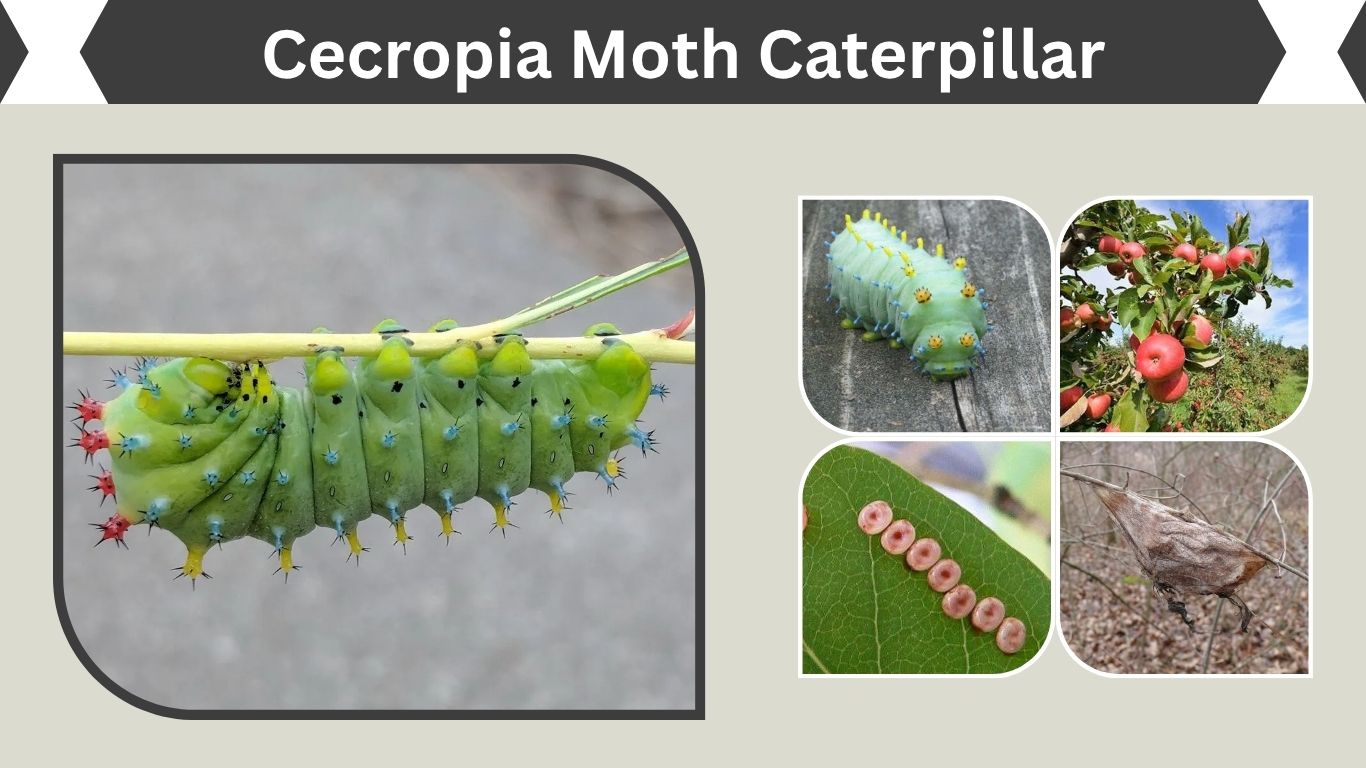
The cecropia moth caterpillar is the larval stage of the cecropia moth, Hyalophora cecropia. It is one of the most impressive caterpillars in North America because it grows large, green, and colorful, with red, yellow, and blue raised bumps along the body. Many people find one on a tree, shrub, or garden plant and wonder if it is poisonous, what it eats, how big it gets, and what to do when it starts making a cocoon.
What Is a Cecropia Moth Caterpillar?
The cecropia moth caterpillar becomes the cecropia moth, one of the giant silk moths. The adult cecropia moth is often described as North America’s largest native moth, with some wingspans over 6 inches.
| Feature | Cecropia Moth Caterpillar |
| Scientific name | Hyalophora cecropia |
| Adult moth group | Giant silk moth |
| Caterpillar color | Green or bluish-green when mature |
| Mature size | About 3–5 inches long |
| Main food | Leaves of trees and shrubs |
| Poisonous? | No, usually harmless |
| Cocoon | Tough brown silk cocoon |
The caterpillar is the feeding stage. The adult moth does not feed because it lacks working mouthparts, so most of the insect’s growth happens while it is a caterpillar.
Cecropia Moth Caterpillar Identification
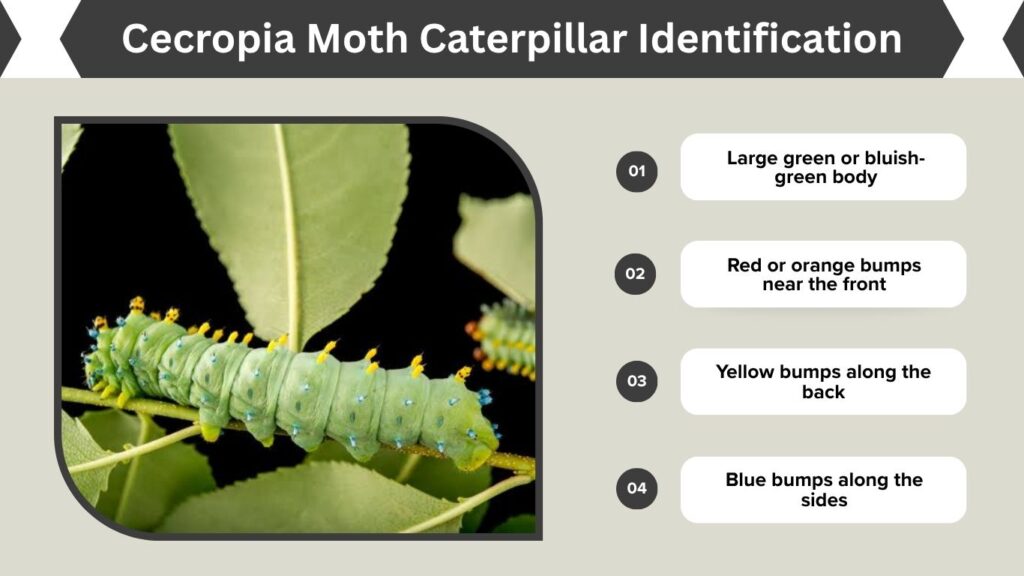
A mature cecropia caterpillar is usually easy to recognize. It has a thick green body with colorful bumps, called tubercles. These bumps may look scary, but they are not the same as venomous spines.
Key Identification Features
Look for these signs:
- Large green or bluish-green body
- Red or orange bumps near the front
- Yellow bumps along the back
- Blue bumps along the sides
- Small black tips on some bumps
- Thick, soft-looking body
- Usually found on tree or shrub leaves
Young caterpillars do not always look like the mature green form. The National Park Service notes that cecropia caterpillars change color as they grow, moving from dark young larvae to large green caterpillars later in development.
Cecropia Moth Caterpillar Size
A full-grown cecropia moth caterpillar can be very large. University of Maine Extension says cecropia caterpillars are often three to four inches long, while the National Park Service says mature caterpillars can reach about five inches.
This big size is one reason people often mistake it for a dangerous caterpillar. In reality, large size does not mean it is poisonous or aggressive.
Is the Cecropia Moth Caterpillar Poisonous?
No, the cecropia moth caterpillar is not poisonous to people. The National Park Service states that the caterpillar is not poisonous, and Iowa State University Extension says cecropia caterpillars and moths are harmless to people and pets.
It also does not sting like a saddleback caterpillar or puss caterpillar. Still, you should handle it gently or avoid touching it unless necessary. Large caterpillars are delicate, and rough handling can injure them.
What Does a Cecropia Moth Caterpillar Eat?
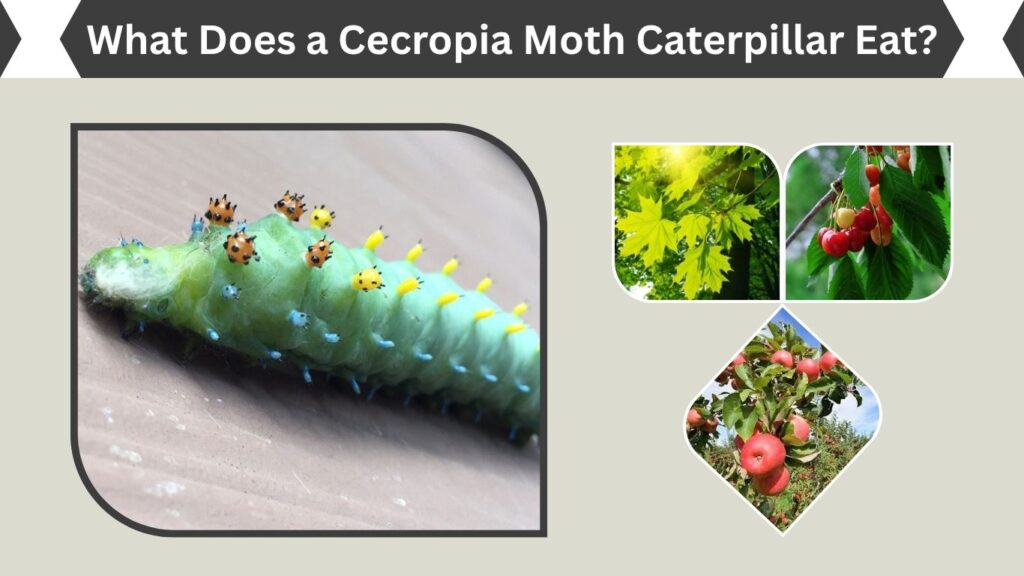
Cecropia caterpillars eat leaves from many trees and shrubs. They are not limited to one host plant, which makes them easier to find in forests, yards, parks, and gardens.
Common Host Plants
Cecropia moth caterpillars may eat:
- Maple
- Wild cherry
- Plum
- Willow
- Boxelder
- Apple
- Crabapple
- Lilac
- Walnut
- Elm
- Birch
- Poplar
- Alder
- Dogwood
Iowa State University Extension lists host plants such as wild cherry, plum, maple, willow, boxelder, apple, crabapple, lilac, walnut, elm, birch, and poplar. University of Maine Extension also lists maple, wild cherry, alder, birch, boxelder, plum, apple, dogwood, and willow as food plants.
What to Feed a Cecropia Moth Caterpillar
If you are raising a cecropia caterpillar, feed it the same plant it was already eating when you found it. Switching food plants can stress the caterpillar, especially if it is older.
Feeding Tips
Use these care tips:
- Give fresh leaves every day.
- Keep leaves from drying out too fast.
- Remove old leaves and droppings.
- Do not feed sprayed or pesticide-treated leaves.
- Use the same host plant whenever possible.
- Keep the container ventilated.
- Avoid overcrowding caterpillars.
If the caterpillar stops eating and starts wandering, it may be ready to make a cocoon rather than sick.
Cecropia Moth Caterpillar Life Cycle
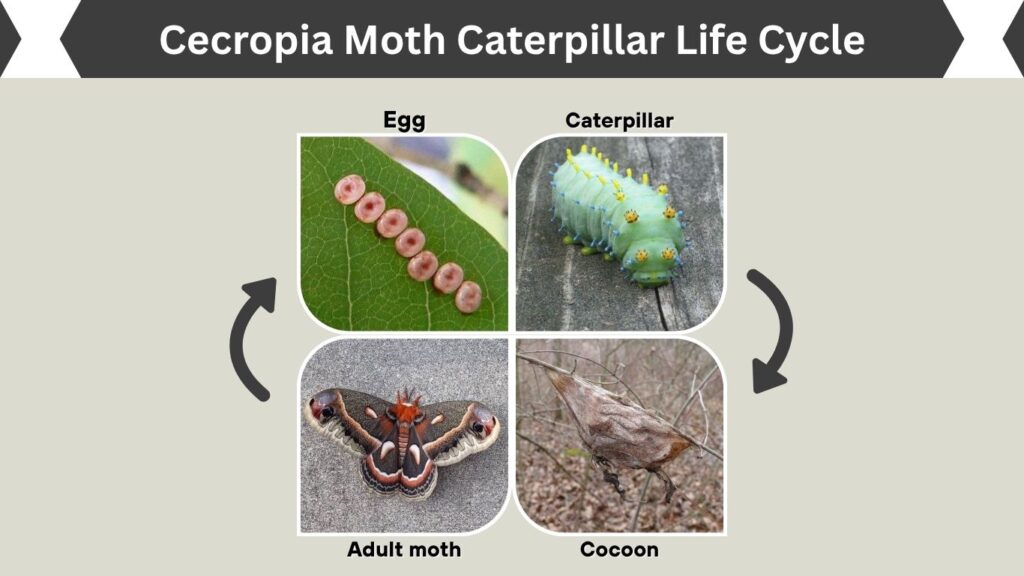
The cecropia moth has four main life stages: egg, caterpillar, pupa, and adult moth. The female lays eggs on host plant leaves. The larvae hatch, feed heavily, molt several times, grow large, and then spin cocoons.
| Stage | What Happens |
| Egg | Laid on host plant leaves |
| Baby caterpillar | Hatches and begins feeding |
| Growing caterpillar | Molts through several instars |
| Cocoon/pupa | Overwinters inside silk cocoon |
| Adult moth | Emerges, mates, and lays eggs |
The National Park Service explains that the caterpillars molt through multiple instar stages as they grow. NC State Extension notes that cecropia moths overwinter as pupae in cocoons attached to twigs of their host trees.
Cecropia Moth Caterpillar Cocoon
When the caterpillar is fully grown, it spins a tough brown silk cocoon. This cocoon is usually attached to a twig, branch, or stem. Inside, the caterpillar changes into a pupa and waits until the next suitable season to emerge as an adult moth.
NC State Extension describes cecropia moth cocoons as tough brown silk cocoons, and says the moths overwinter as pupae inside them.
If you find a cocoon outdoors, it is usually best to leave it outside. Bringing it into a warm house may cause the moth to emerge too early, before outdoor conditions are right.
Cecropia Moth Caterpillar Care
Caring for a cecropia caterpillar is possible, but it requires fresh host leaves, ventilation, cleanliness, and patience. A simple mesh cage or ventilated container can work if the caterpillar has enough room and fresh food.
Do not keep a cocoon in a hot room. It needs natural seasonal conditions. If you protect it outdoors, keep it in a safe, shaded, ventilated place where it will not dry out, freeze unnaturally, or be attacked by pets.
Cecropia Moth Caterpillar vs Luna Moth Caterpillar
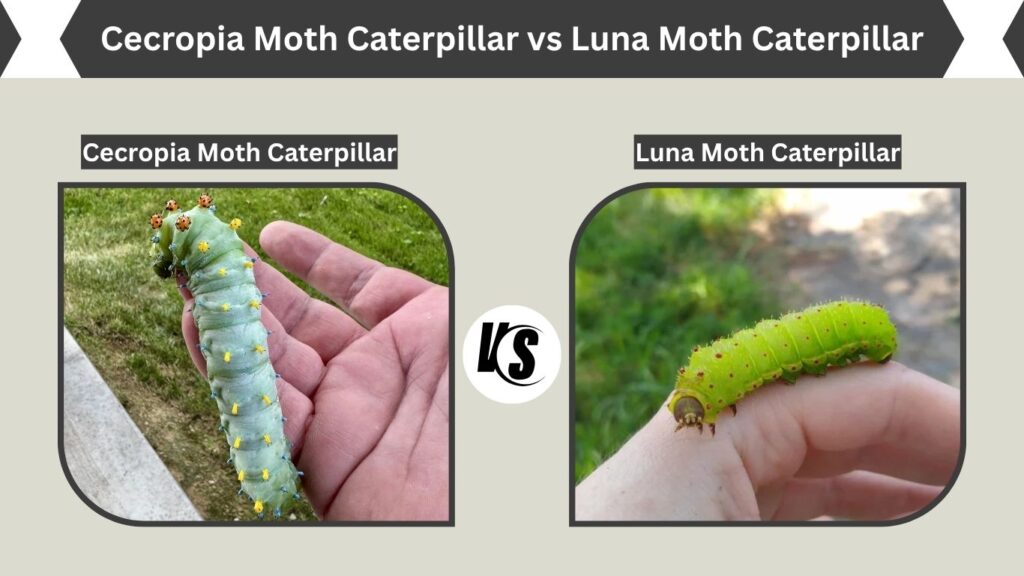
Cecropia and luna moth caterpillars are both large green giant silk moth larvae, so they can be confused. The easiest clue is the colorful raised bumps. Cecropia caterpillars have obvious red, yellow, and blue tubercles. Luna moth caterpillars are green but usually look smoother and less colorful.
| Feature | Cecropia Caterpillar | Luna Moth Caterpillar |
| Body color | Green or bluish-green | Green |
| Raised bumps | Bright red, yellow, and blue | Less colorful |
| Adult moth | Brown, red, white giant moth | Pale green moth with tails |
| Host plants | Many trees and shrubs | Many trees, depending on region |
If the caterpillar has colorful “jewel-like” bumps, it is more likely to be a cecropia caterpillar.
Cecropia Moth Caterpillar for Sale
People sometimes search for cecropia moth caterpillars, eggs, cocoons, or pupae for sale. Before buying, check local laws and avoid releasing insects outside their natural range. Moving caterpillars or cocoons between regions can spread parasites, diseases, or nonlocal genetics.
If you simply found one in your yard, the safest choice is to let it stay near its host plant or raise it only for observation and release the adult where the caterpillar was found.
FAQs
Are cecropia moth caterpillars poisonous?
No. Cecropia moth caterpillars are not poisonous, and they are generally harmless to people and pets.
What does a cecropia moth caterpillar eat?
It eats leaves from many trees and shrubs, including maple, cherry, willow, apple, crabapple, lilac, walnut, elm, birch, poplar, plum, and boxelder.
How big does a cecropia moth caterpillar get?
A mature cecropia caterpillar usually grows about 3–5 inches long, depending on age, food, and conditions.
What should I do with a cecropia moth caterpillar?
Leave it on its host plant if it is safe. If it is on a road or sidewalk, gently move it to nearby vegetation using a leaf or stick.
How do I know if a cecropia caterpillar is ready to cocoon?
A mature caterpillar may stop eating and start wandering. This usually means it is looking for a protected place to spin its brown silk cocoon.
