
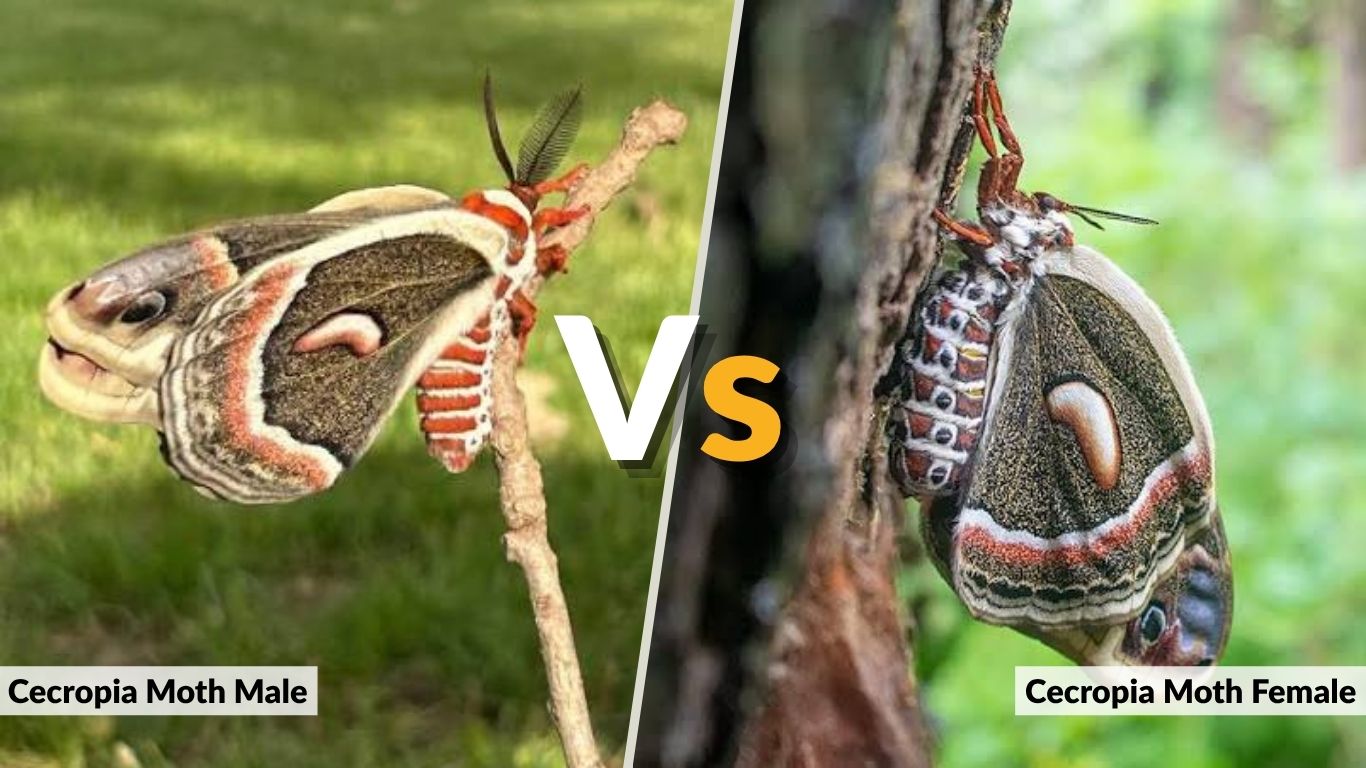
The easiest way to tell a male cecropia moth from a female is by checking the antennae and abdomen. Male cecropia moths usually have larger, wider, feather-like antennae for detecting female pheromones. Females usually have a heavier, rounder abdomen because they carry eggs. Both sexes are large, colorful, and short-lived, but their roles are different: males search for females, while females release pheromones, mate, and lay eggs.
Cecropia Moth Male vs Female: Quick Comparison
Cecropia moths are giant silk moths, and both males and females can look very similar at first. The best differences are antenna shape, abdomen size, and mating behavior.
| Feature | Male Cecropia Moth | Female Cecropia Moth |
| Antennae | Larger, wider, more feathery | Smaller, thinner, less feathery |
| Abdomen | Usually slimmer | Larger, rounder, heavier |
| Main role | Flies to find females | Releases pheromones and lays eggs |
| Movement | More likely to fly searching for mates | Often stays closer to cocoon after emerging |
| Eggs | Does not lay eggs | Carries and lays eggs |
| Lifespan | Short adult life | Short adult life |
The National Park Service notes that female cecropia moths have much larger abdomens, while males have larger antennae. Adult cecropia moths do not have working mouthparts and cannot eat, so their adult stage is mainly for mating and reproduction.
Male Cecropia Moth Identification
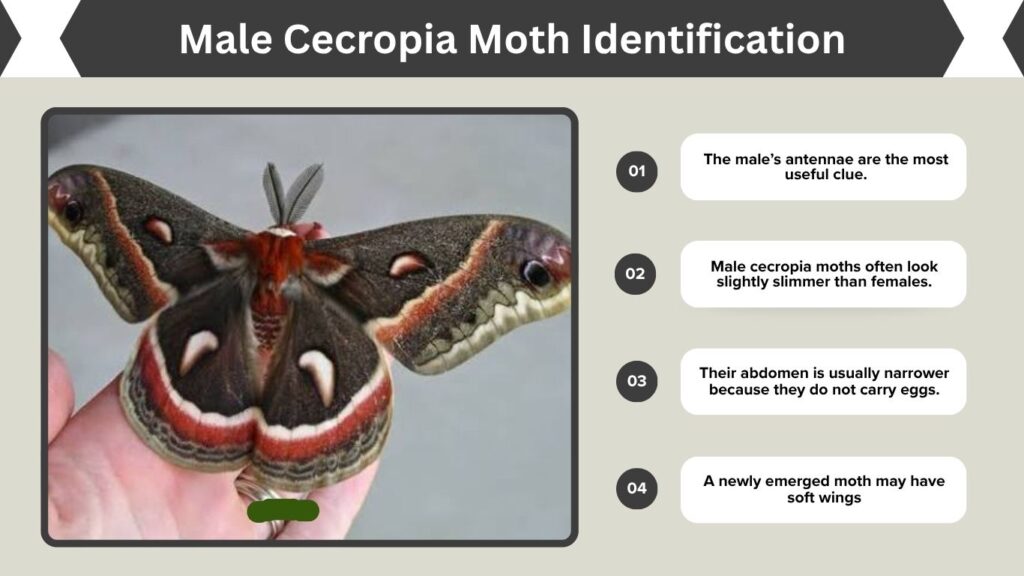
A male cecropia moth is often identified by its antennae. The antennae look broad, comb-like, or feather-like. These large antennae help the male detect pheromones released by a female.
Male Antennae
The male’s antennae are the most useful clue. They are wider and more heavily branched than the female’s antennae. This gives them more surface area for sensing scent molecules in the air.
Male cecropia moths use these large antennae to follow the scent of female pheromones. The Brandywine Conservancy explains that males have plume-like antennae that can detect wind-borne female pheromones from long distances.
Male Body Shape
Male cecropia moths often look slightly slimmer than females. Their abdomen is usually narrower because they do not carry eggs. When comparing a pair side by side, the male may look more streamlined.
However, body shape alone is not always perfect. A newly emerged moth may have soft wings and a swollen-looking body before the wings fully expand. That is why antennae are usually the better clue.
Female Cecropia Moth Identification
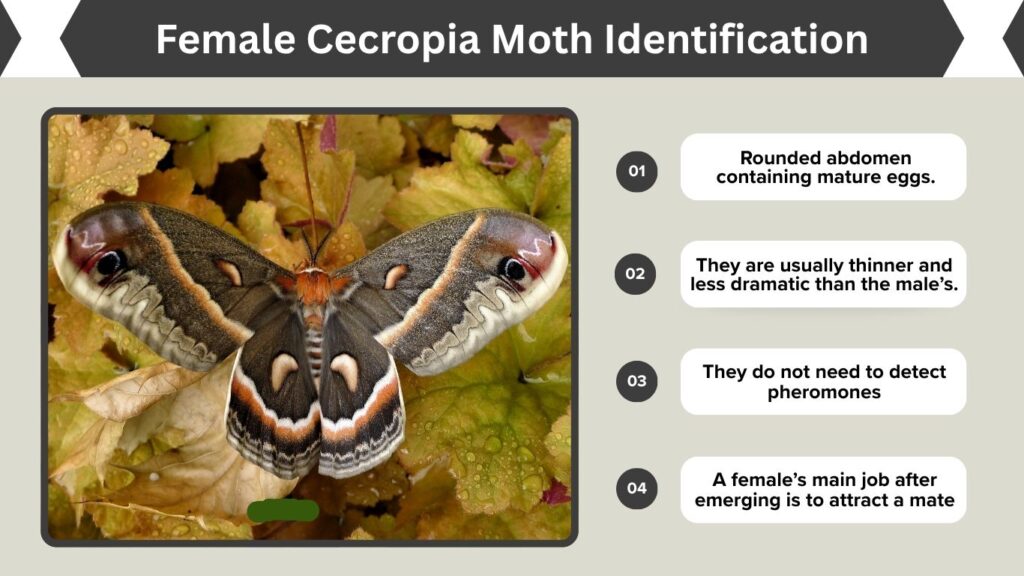
A female cecropia moth is usually identified by her larger abdomen and smaller antennae. She may look heavier, especially before she lays eggs.
Female Abdomen
The female abdomen is usually rounder and more swollen because it holds mature eggs. Brandywine Conservancy describes the female as having a heavier, more rounded abdomen containing mature eggs.
This is especially clear when a male and female are seen mating. The female often appears bulkier, while the male has the more obvious feathered antennae.
Female Antennae
Female antennae are still visible, but they are usually thinner and less dramatic than the male’s. They do not need to detect pheromones from far away in the same way males do.
A female’s main job after emerging is to attract a mate, mate successfully, and lay eggs on suitable host plants.
Cecropia Moth Antennae: The Best Difference
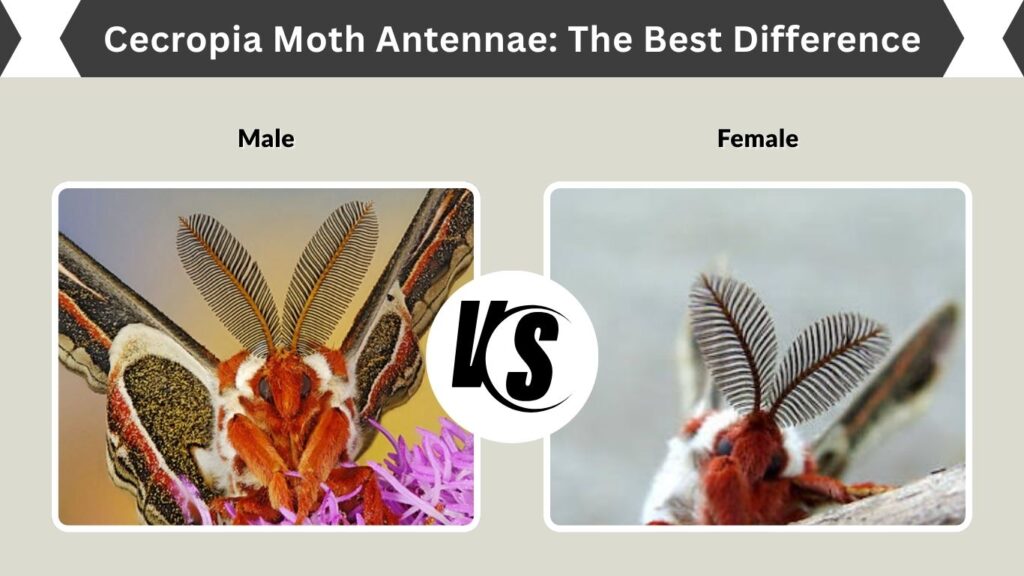
Antennae are the clearest male vs female feature. If you can see the head clearly, this is the first thing to check.
How to Compare Antennae
Use these simple clues:
- Male antennae look wide and feather-like.
- Female antennae look narrower and less branched.
- Males use antennae to detect female pheromones.
- Females use pheromones to attract males.
- Antennae are easier to compare in close-up photos.
The National Park Service says males sweep the air with large brush-like antennae to detect female pheromones, then fly upwind toward stronger scent concentrations until they find the female.
Cecropia Moth Size: Are Females Bigger Than Males?
Female cecropia moths often look bigger because of their heavier abdomen. Males may look smaller or slimmer, even if the wingspan is similar. Cecropia moths are among the largest native moths in North America, with wings that can span 5–7 inches, according to the National Park Service.
| Size Feature | What to Know |
| Wingspan | Both sexes can be very large |
| Abdomen | Female usually looks larger and heavier |
| Antennae | Male has larger, more feathery antennae |
| Overall look | Female may look bulkier; male may look slimmer |
If you only see one moth, sexing it by size can be difficult. If the antennae are very feathery, it is likely male. If the abdomen is very large and round, it is likely female.
Cecropia Moth Mating Behavior
Male and female cecropia moths behave differently during mating. The female usually releases pheromones after emerging from her cocoon. The male detects those chemicals and flies to her.
What the Female Does
The female releases sex pheromones to attract males. She may stay near where she emerged, especially soon after leaving the cocoon. After mating, she lays eggs on host plant leaves.
The National Park Service says female cecropia moths lay around 100 eggs, usually in small groups on both sides of host plant leaves. Eggs hatch in about two weeks.
What the Male Does
The male searches. He may fly at night or around dawn to find a female by following her scent. After mating, he may leave and search for another female.
This difference explains why males are often more likely to be noticed flying, while females may be found resting near a cocoon, tree, wall, porch, or light.
Cecropia Moth Eggs and Female Role
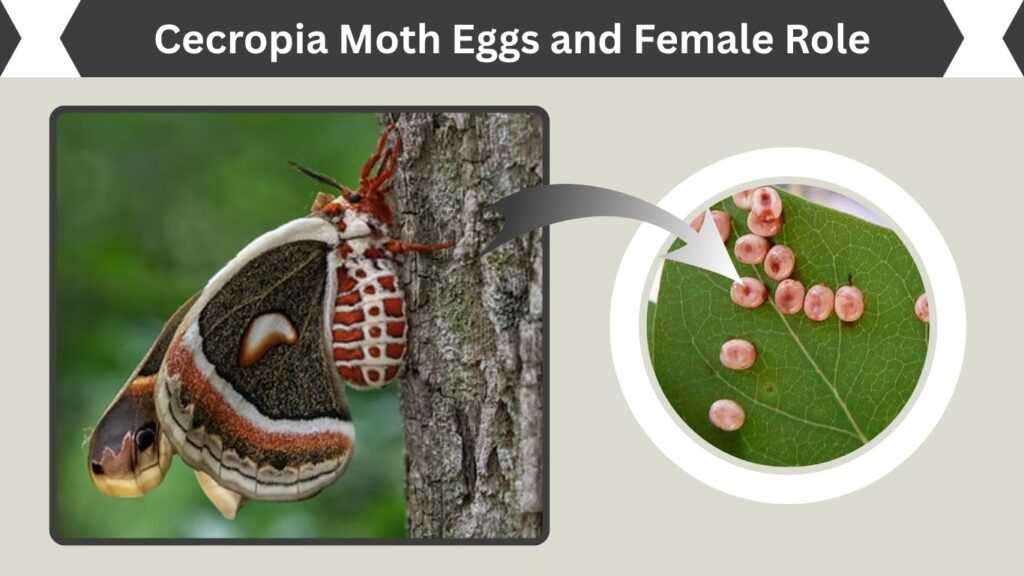
Only the female lays eggs. After mating, she places eggs on host plants where the caterpillars will be able to feed after hatching.
Cecropia caterpillars feed on many trees and shrubs. Iowa State University Extension lists host plants such as wild cherry, plum, maple, willow, boxelder, apple, crabapple, lilac, walnut, elm, birch, and poplar.
This is why a female’s choice of egg-laying site matters. She must place eggs where young caterpillars can find food quickly.
Adult Cecropia Moth Lifespan
Both male and female cecropia moths have short adult lives. They do not feed as adults because they lack functioning mouthparts. Their energy comes from what they stored as caterpillars.
The National Park Service says adult cecropia moths do not have a gut or working mouthparts and cannot eat; their purpose is to reproduce before dying in about a week or two.
Because their adult life is short, the male must find females quickly, and the female must mate and lay eggs soon after emerging.
Male vs Female Cecropia Moth in Photos
Photos can help, but angle matters. A top-down photo may show wing pattern clearly but not antenna width. A front-facing or close-up head photo is better for antenna comparison.
Photo ID Tips
When checking photos, look for:
- Large feathered antennae for male
- Smaller, thinner antennae for female
- Slimmer abdomen for male
- Heavy rounded abdomen for female
- Mating pair comparison if available
- Cocoon nearby, which may suggest a recently emerged female
Do not rely only on color. Both males and females have similar wing patterns with brown, red, tan, white, and crescent-like markings.
Cecropia Moth Male vs Female vs Luna Moth
People also compare cecropia moths with luna moths because both are giant silk moths. In both species, males usually have larger, more feathered antennae than females. But the moths themselves look very different.
| Feature | Cecropia Moth | Luna Moth |
| Main color | Brown, red, white, tan | Pale green |
| Wing shape | Broad wings with crescent marks | Long tail-like hindwings |
| Male clue | Large feathery antennae | Large feathery antennae |
| Female clue | Heavy abdomen | Heavy abdomen |
| Adult feeding | Does not feed | Does not feed |
If the moth is pale green with long tails, it is a luna moth, not a cecropia moth. If it is reddish-brown with large crescent wing marks, it may be a cecropia moth.
Common Mistakes When Sexing Cecropia Moths
Many people misidentify male and female cecropia moths because they focus only on size or wing color. Wing color and markings are not reliable sex clues because both sexes look similar.
Mistakes to Avoid
Avoid these common errors:
- Assuming the larger wingspan is always female
- Using wing color as the main clue
- Ignoring antenna shape
- Mistaking a swollen newly emerged male for a female
- Confusing cecropia moths with other giant silk moths
- Trying to sex a damaged moth from a poor photo
The best method is to check antennae first, abdomen second, and behavior third.
FAQs
How can you tell a male cecropia moth from a female?
The male usually has larger, wider, feather-like antennae. The female usually has a heavier, rounder abdomen because she carries eggs. The National Park Service also notes these differences.
Are female cecropia moths bigger than males?
Females often look bigger because their abdomen is heavier and rounder, especially before egg laying. Males may have a similar wingspan but usually look slimmer.
Why do male cecropia moths have larger antennae?
Male cecropia moths use their large, plume-like antennae to detect female pheromones in the air. This helps them locate females for mating.
Do both male and female cecropia moths eat?
No. Adult cecropia moths do not eat because they lack working mouthparts. Both males and females live briefly as adults and focus on reproduction.
What does the female cecropia moth do after mating?
After mating, the female lays eggs on suitable host plants. These eggs hatch into caterpillars that feed on leaves from trees and shrubs such as maple, cherry, willow, apple, lilac, elm, birch, and poplar.
