
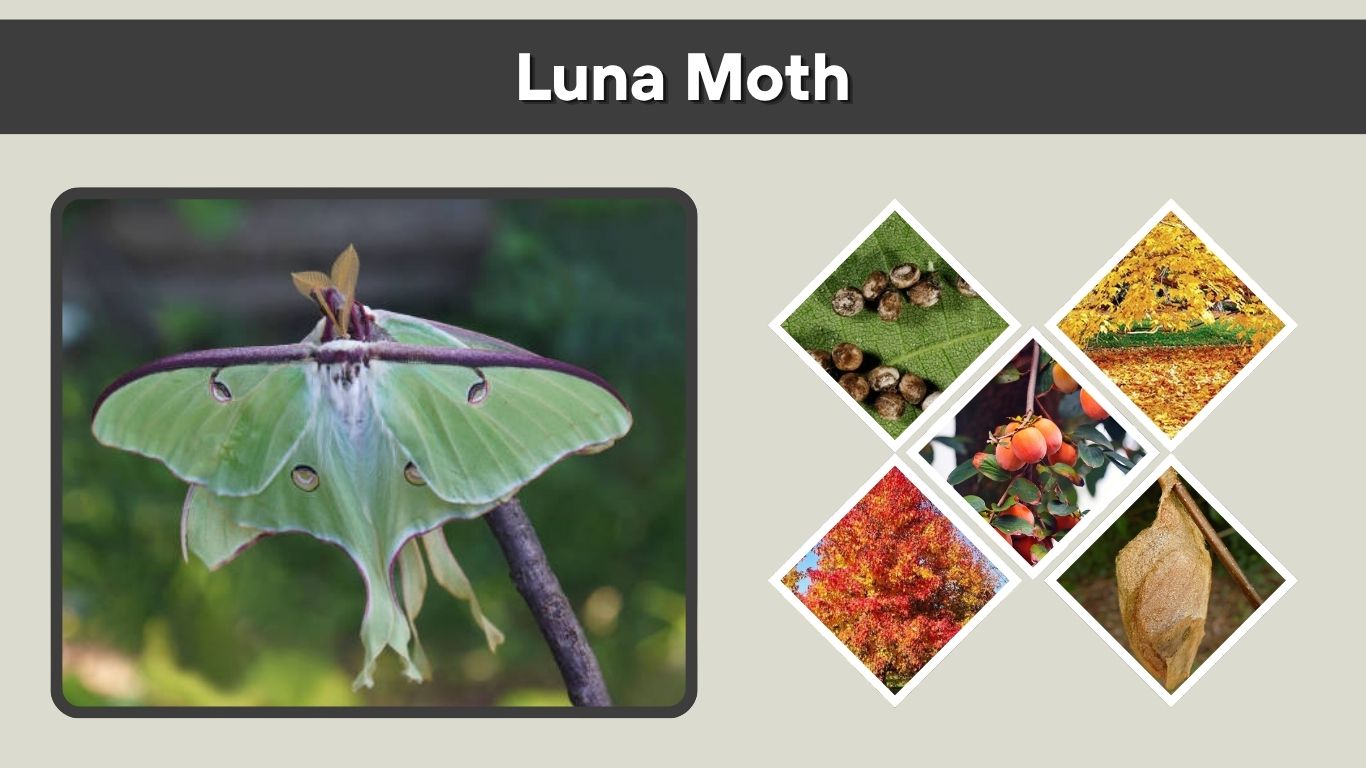
The luna moth is one of the most beautiful green moths in North America. Known for its pale green wings, long tails, and short adult life, this moth attracts attention from nature lovers, gardeners, and photographers. Many people also search for its caterpillar, cocoon, host plants, and spiritual meaning. This guide explains luna moth identification, life cycle, diet, habitat, symbolism, and common questions.
What Is a Luna Moth?
The luna moth, also called the lunar moth, is a large silk moth with soft green wings and eye-like markings. Its scientific name is Actias luna. The word “luna” means moon, which matches its pale color and nighttime activity. Adult luna moths are most active after dark and are often attracted to porch lights.
Unlike many smaller moths, the luna moth is easy to recognize because of its size, color, and long hindwing tails. These tails may help confuse bats during flight, giving the moth a better chance to escape predators. Although it looks delicate, the luna moth is a normal part of forest and backyard ecosystems.
Luna Moth Identification
You can identify a luna moth by looking at these features:
- Pale green wings with a soft, almost glowing appearance
- Long curved tails on the hindwings
- Eyespots on all four wings
- White or light-colored body
- Large wingspan, often around 3 to 4.5 inches
- Feather-like antennae, especially wide in males
- Smooth, elegant wing shape
- Usually seen at night near lights, trees, or wooded areas
Male luna moths often have larger, bushier antennae than females. These antennae help males detect female pheromones from a distance. Females usually have fuller bodies because they carry eggs.
Luna Moth Size and Appearance
Luna moths are among the larger moths in North America. Their wingspan can make them look even bigger when they rest with their wings spread flat. The wings are usually light green, but color can vary slightly depending on age, region, and condition.
Some individuals may look yellowish, faded, or even whitish as they age. People sometimes search for “white luna moth,” “pink luna moth,” “blue luna moth,” or “purple luna moth,” but true luna moths are normally green. Many unusual colors online may be related to lighting, edits, artwork, tattoos, or confusion with other moth species.
Luna Moth Life Cycle
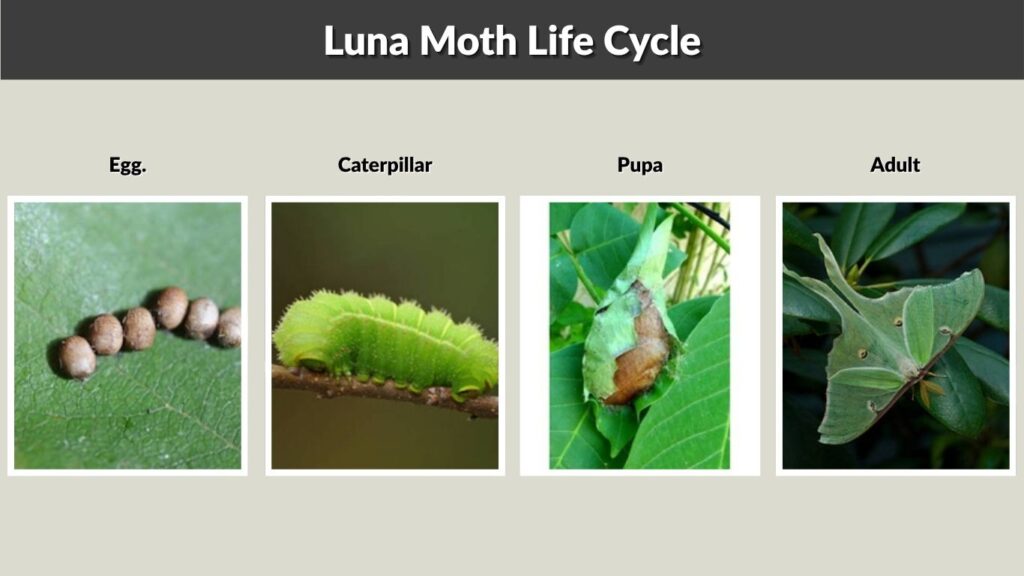
The luna moth goes through complete metamorphosis. This means it has four main stages: egg, caterpillar, cocoon, and adult moth. Each stage looks very different from the others. The caterpillar eats and grows, while the adult moth focuses mainly on reproduction.
The full life cycle depends on temperature, location, and season. In warmer areas, luna moths may have more than one generation each year. In cooler northern areas, they may produce only one generation.
| Life Stage | What Happens | Main Purpose |
| Egg | Female lays eggs on host plant leaves | Start new generation |
| Caterpillar | Larva eats leaves and grows larger | Feeding and growth |
| Cocoon/Pupa | Caterpillar spins a cocoon, often in leaf litter | Transformation |
| Adult moth | Moth emerges, mates, and lays eggs | Reproduction |
Luna Moth Eggs
Female luna moths lay eggs on the leaves of suitable host plants. The eggs are small and often laid in groups or scattered on leaf surfaces. After several days, tiny caterpillars hatch and begin feeding almost immediately.
The egg stage is short compared with the caterpillar and pupal stages. Because the eggs are small, they are easy to miss unless you inspect host plant leaves closely. In nature, many eggs may be eaten by insects, spiders, or other predators before they hatch.
Luna Moth Caterpillar
The luna moth caterpillar is green, plump, and leaf-feeding. It passes through several growth stages called instars. As it grows, it molts its skin and becomes larger. Mature caterpillars can look thick and bright green, helping them blend with leaves.
Luna moth caterpillars are not aggressive. They are usually found on host trees and shrubs where they feed quietly. If disturbed, they may curl, drop from the plant, or release defensive fluids. They are not considered dangerous to people, but it is still best to avoid handling caterpillars unnecessarily.
Luna Moth Cocoon and Pupa
When the caterpillar finishes feeding, it spins a cocoon using silk and leaves. Many cocoons are made in leaf litter on the ground, especially under host trees. Inside the cocoon, the caterpillar changes into a pupa.
The pupal stage is where the major transformation happens. In some climates, the moth may stay in the cocoon over winter and emerge when conditions become warmer. This is why fallen leaves can be important for moth survival. Removing all leaf litter from a yard may reduce shelter for pupating moths and other helpful insects.
Adult Luna Moth
The adult luna moth is the most famous stage, but it is also the shortest. Adult luna moths emerge from cocoons, expand their wings, and then search for mates. They do not live long as adults because they do not feed.
After mating, females lay eggs on host plants, and the cycle begins again. Adult luna moths are most often seen at night, especially around outdoor lights. Their brief adult life makes each sighting feel special.
What Do Luna Moths Eat?
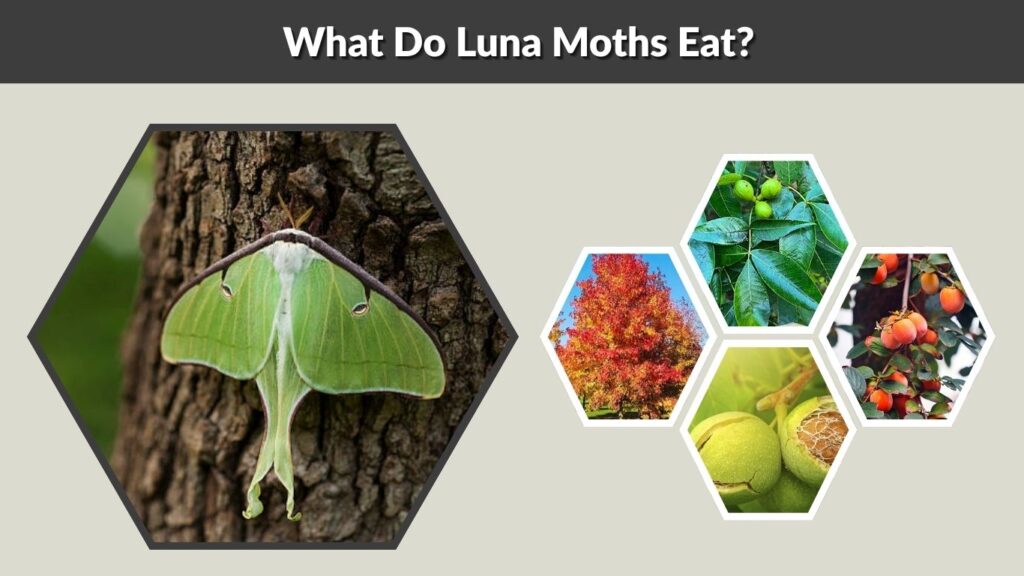
Luna moth diet depends on the life stage. Caterpillars eat leaves from specific host plants, while adult luna moths do not eat at all. This is one of the most interesting facts about the species.
Adult luna moths do not have functional mouthparts for feeding. Their energy comes from the fat and nutrients they stored as caterpillars. Because of this, the adult stage is focused on finding a mate and reproducing quickly.
Luna Moth Caterpillar Food
Luna moth caterpillars feed on leaves from several hardwood trees. Common host plants include:
- Sweetgum
- Hickory
- Walnut
- Birch
- Persimmon
- Sumac
- Alder
- Beech
- Willow
- Pecan
Host plant use can vary by region. In one area, luna moth caterpillars may be more common on sweetgum or hickory, while in another area they may use walnut, birch, or other trees. If you want to attract luna moths, planting or protecting native host trees is more useful than using artificial food.
Do Adult Luna Moths Have Mouths?
Adult luna moths have reduced mouthparts and do not eat nectar, leaves, fruit, or any other food. This surprises many people because most insects need to feed as adults. Luna moths survive on stored energy from the caterpillar stage.
Because adults do not eat, their lifespan is naturally short. They may live only about a week. During that time, they must find a mate and reproduce. This is why seeing an adult luna moth is often a rare and memorable moment.
Where Do Luna Moths Live?
Luna moths live in parts of North America, especially in wooded areas where host trees are available. They can be found in forests, parks, wooded neighborhoods, and sometimes gardens. They prefer places with enough tree cover for caterpillars and safe hiding spots for cocoons.
They are nocturnal, meaning they are active at night. During the day, adults may rest on tree trunks, leaves, walls, or other surfaces. Their green wings help them blend into foliage, although they can still be noticed because of their large size.
Habitat and Distribution
Luna moths are usually associated with deciduous forests and mixed woodlands. They need host plants for caterpillars, shelter for cocoons, and open nighttime airspace for adults to fly.
They may appear near homes if the area has nearby trees. Porch lights, streetlights, and garden lights can attract adults at night. However, bright lights may also confuse moths and make them easier targets for predators. Using softer outdoor lighting can help reduce harm to nocturnal insects.
Are Luna Moths Rare?
Luna moths are not necessarily rare everywhere, but many people do not see them often. Their adult life is short, they fly mostly at night, and they may be hidden in trees during the day. This makes sightings feel uncommon.
In suitable habitats, luna moths can be locally present even if people rarely notice them. Their numbers may be affected by habitat loss, pesticide use, excessive outdoor lighting, and removal of leaf litter. Protecting native trees and reducing chemicals can support them.
Are Luna Moths Endangered?
Luna moths are not generally considered endangered across their full range. However, local populations can still decline if their habitat is damaged. A species does not need to be officially endangered to need protection in backyards and natural spaces.
Simple steps can help: keep native trees, avoid unnecessary pesticide use, leave some natural leaf litter, and reduce bright nighttime lighting. These actions support not only luna moths but also many other moths, butterflies, beetles, and pollinators.
Luna Moth Meaning and Symbolism
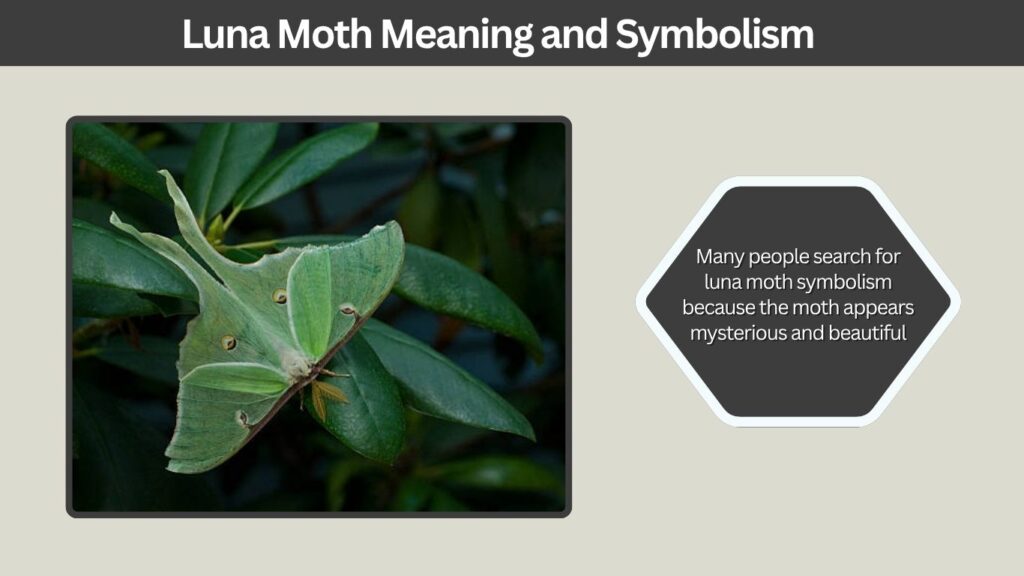
Many people search for luna moth symbolism because the moth appears mysterious and beautiful. Its moon-related name, nighttime activity, pale green color, and short adult life make it a popular symbol in art, tattoos, and spiritual interpretations.
Symbolic meanings are not scientific facts, but they are part of how people connect with nature. For some, a luna moth represents transformation, renewal, intuition, or a new beginning. For others, it may symbolize the shortness and beauty of life.
Spiritual Meaning of a Luna Moth
The spiritual meaning of a luna moth is often linked to change and transformation. Since the moth changes from egg to caterpillar, then cocoon, then adult, it naturally represents growth and personal development.
Some people also connect luna moths with the moon, dreams, night energy, and hidden wisdom. Seeing one may feel meaningful because adult luna moths are not seen every day. However, the most grounded meaning is that the moth is part of a healthy natural cycle.
Luna Moth Tattoo Meaning
A luna moth tattoo often represents transformation, beauty, rebirth, and personal growth. Because the adult moth lives only a short time, it can also symbolize living fully and appreciating temporary moments.
Tattoo designs may include green wings, moon phases, flowers, stars, or dark backgrounds. Some people choose black luna moth tattoos for a stronger gothic style, while others prefer soft green designs that look closer to the real insect.
Are Luna Moths Harmful?
Luna moths are harmless to humans. They do not bite, sting, poison people, or damage homes. Adult luna moths do not eat fabric, wood, stored food, or garden plants. Caterpillars feed on leaves, but they usually do not appear in numbers large enough to cause serious tree damage.
If you find a luna moth, the best response is to observe it gently and leave it alone. If it is in a risky place, such as near a doorway or busy path, you can carefully move it to a nearby tree or sheltered surface.
Are Luna Moths Poisonous?
Luna moths are not poisonous to humans. The adult moth is safe to observe and photograph. Caterpillars are also not known as dangerous stinging caterpillars, unlike some other moth larvae.
Still, it is better not to handle caterpillars unless necessary. Insects are delicate, and oils or pressure from human hands can harm them. Some people may also have skin sensitivity to insects, even when the insect is not medically dangerous.
Can Luna Moths Bite?
Luna moths cannot bite people. Adult luna moths do not have functional mouthparts for chewing or feeding. They cannot sting either. Their main defenses are camouflage, nighttime activity, and the long tails on their wings.
If a luna moth lands on you, it is not attacking. It may simply be confused by light, scent, or movement. Let it move away naturally or gently guide it onto a safe surface.
How to Attract Luna Moths
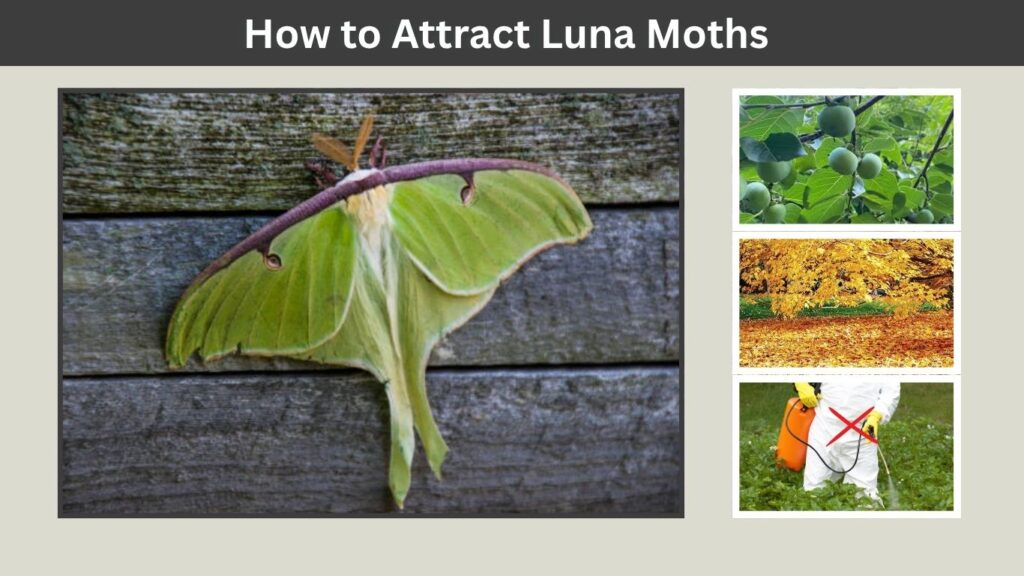
Attracting luna moths is mostly about creating a moth-friendly habitat. They need native host plants, safe places to pupate, and a low-chemical environment. A yard with trees, shrubs, leaf litter, and fewer pesticides is more likely to support them.
Outdoor lights may attract adult moths, but too much lighting can disturb them. It is better to focus on habitat than to use bright lights to pull them in.
Moth-Friendly Yard Tips
To support luna moths, try these simple steps:
- Plant native host trees such as sweetgum, hickory, walnut, birch, or persimmon
- Avoid spraying broad pesticides on trees and shrubs
- Leave some fallen leaves under trees for cocoons
- Reduce bright outdoor lights at night
- Keep part of the garden natural and undisturbed
- Avoid removing every caterpillar from plants
- Use native plants instead of only ornamental non-native species
These changes can also help butterflies, bees, beetles, birds, and other wildlife. A natural yard may look less “perfect,” but it often supports more life.
FAQs
How long do luna moths live?
Adult luna moths usually live for about one week. They do not eat as adults, so their time is focused on mating and laying eggs. The full life cycle is longer because the insect spends time as an egg, caterpillar, and pupa before becoming an adult moth.
What do luna moth caterpillars eat?
Luna moth caterpillars eat leaves from host trees such as sweetgum, hickory, walnut, birch, persimmon, sumac, and related hardwood plants. They do not eat random household foods. If you find one, it should stay on or near the correct host plant where it can continue feeding safely.
Are luna moths rare to see?
Luna moths can feel rare because adults fly at night and live only a short time. They may be present in wooded areas but still go unnoticed. Sightings are more likely near forests, host trees, and outdoor lights during the warmer months.
Do luna moths eat clothes?
No, luna moths do not eat clothes. Adult luna moths do not eat anything, and their caterpillars feed on tree leaves. They are not the same as clothes moths, which are smaller insects that may damage wool, fur, or other natural fibers indoors.
What does seeing a luna moth mean?
Scientifically, seeing a luna moth means the local environment has suitable habitat nearby. Symbolically, many people connect luna moths with transformation, renewal, beauty, and short-lived moments. Because they are nocturnal and uncommon to see, many people consider the sighting special.
