
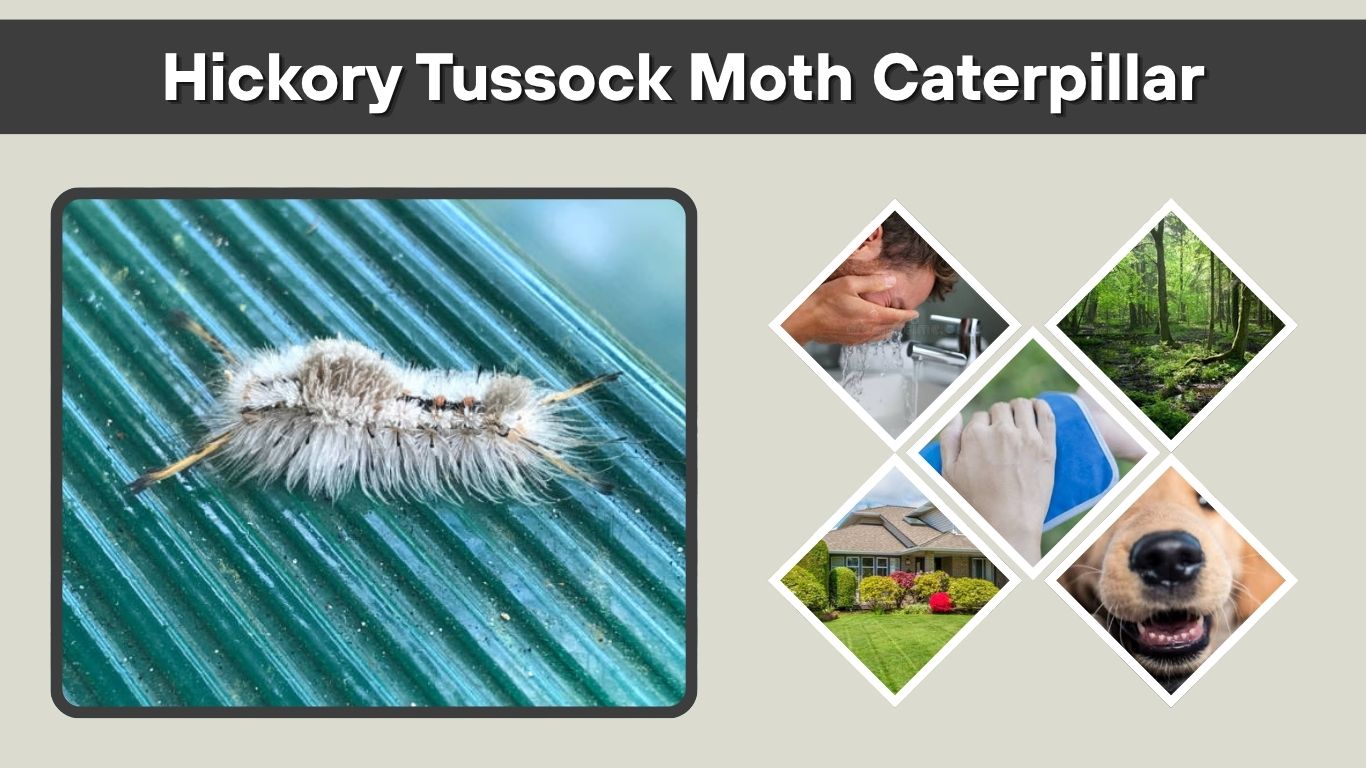
The hickory tussock moth caterpillar is a fuzzy white and black caterpillar often seen on trees, walls, decks, and garden paths in late summer and fall. Its soft appearance can make it look harmless, but its tiny hairs may irritate the skin. This guide explains how to identify it, where it lives, what it eats, whether it is poisonous, and how to remove it safely.
What Is a Hickory Tussock Moth Caterpillar?
The hickory tussock moth caterpillar is the larval stage of the hickory tussock moth, also called the hickory tiger moth. Its scientific name is Lophocampa caryae. It belongs to the moth family Erebidae, which includes many tiger moths and tussock moths.
This caterpillar is best known for its white fuzzy body with black markings. It is not a butterfly caterpillar. After completing its larval stage, it forms a cocoon and later becomes a moth. The adult moth is yellowish or pale brown with white markings on the wings.
1. Identification
You can recognize a hickory tussock moth caterpillar by these signs:
- Fuzzy white body covered with long hairs
- Black hair tufts or black markings along the back
- Black spots or dark bumps on the body
- Long black hair pencils near the front and rear
- Black head capsule
- Soft, woolly appearance
- Usually seen crawling on leaves, tree trunks, siding, decks, or sidewalks
- Often appears in late summer or fall
Young caterpillars may feed together in groups, while older caterpillars often wander alone. This wandering stage is when people usually notice them around homes, yards, and outdoor furniture.
Is the Hickory Tussock Moth Caterpillar Poisonous?
The hickory tussock moth caterpillar is not poisonous in the same way as a venomous snake or stinging insect. It does not inject venom, and it does not bite people in a harmful way. The main concern is its irritating hairs.
The hairs, also called setae, may break off when touched. These tiny hairs can irritate the skin, especially in people with sensitive skin or allergies. Some people may touch one and feel almost nothing, while others may develop itching, redness, burning, or a rash.
2. Rash and Skin Reaction
A rash from a hickory tussock moth caterpillar usually happens after direct contact with the hairs. The reaction can look like small red bumps, itchy patches, or mild swelling. It may feel like a prickly or burning irritation.
The rash is usually temporary, but the discomfort can be annoying. In sensitive individuals, the reaction may last longer. Eye contact is more serious because loose hairs can irritate the eye surface.
If you touch one, wash the area gently with soap and water. Do not rub hard. Sticky tape may help remove loose hairs from the skin. A cold compress can reduce itching and swelling. If the rash spreads, becomes painful, affects the eyes, or causes breathing problems, seek medical help.
Hickory Tussock Moth Caterpillar Sting Treatment
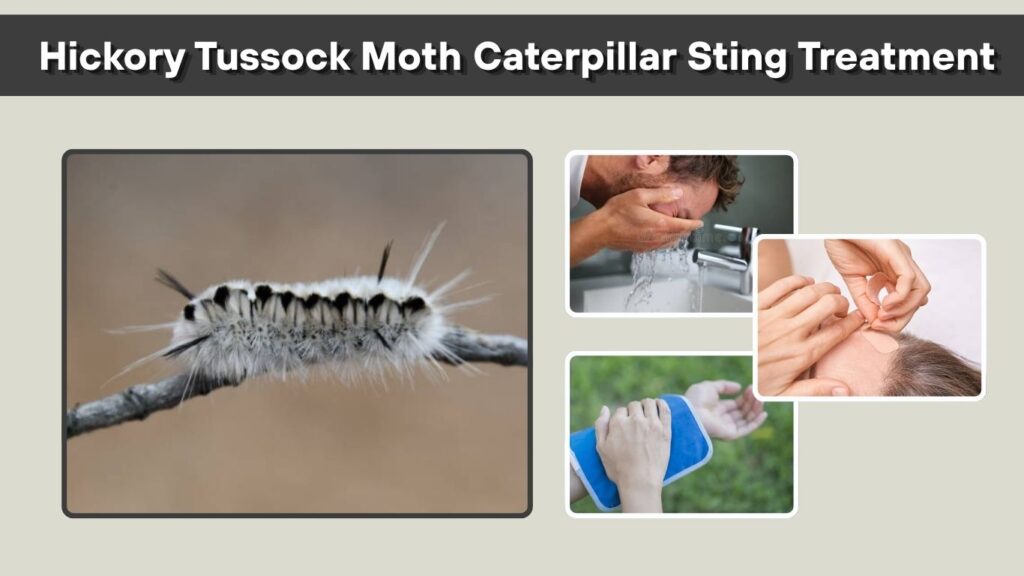
Many people call the reaction a “sting,” but the caterpillar does not sting like a bee or wasp. The sting-like feeling comes from the irritating hairs touching the skin. Treatment is mostly about removing the hairs and calming the irritation.
Avoid scratching the area because scratching may push hairs deeper into the skin. Also avoid touching your face or eyes after handling the caterpillar, even by accident.
3. What to Do After Contact
Follow these steps if you touch a hickory tussock moth caterpillar:
- Move away from the caterpillar.
- Wash the skin with soap and cool water.
- Use tape gently to lift loose hairs from the skin.
- Apply a cold compress for itching or swelling.
- Change and wash clothing that may have hairs on it.
- Avoid rubbing your eyes.
- Contact a doctor if symptoms are severe or unusual.
For children, check the hands, arms, neck, and face because they may touch the caterpillar and then touch other areas of the body.
Hickory Tussock Moth Caterpillar Quick Facts
| Topic | Details |
|---|---|
| Common name | Hickory tussock moth caterpillar |
| Scientific name | Lophocampa caryae |
| Adult form | Hickory tussock moth or hickory tiger moth |
| Main colors | White and black |
| Skin concern | Irritating hairs may cause rash |
| Main food | Hardwood tree leaves |
| Common season | Late summer to fall |
| Pet risk | May irritate mouth or skin if touched or eaten |
| Control need | Usually only needed near people, pets, or young trees |
Where Do Hickory Tussock Moth Caterpillars Live?
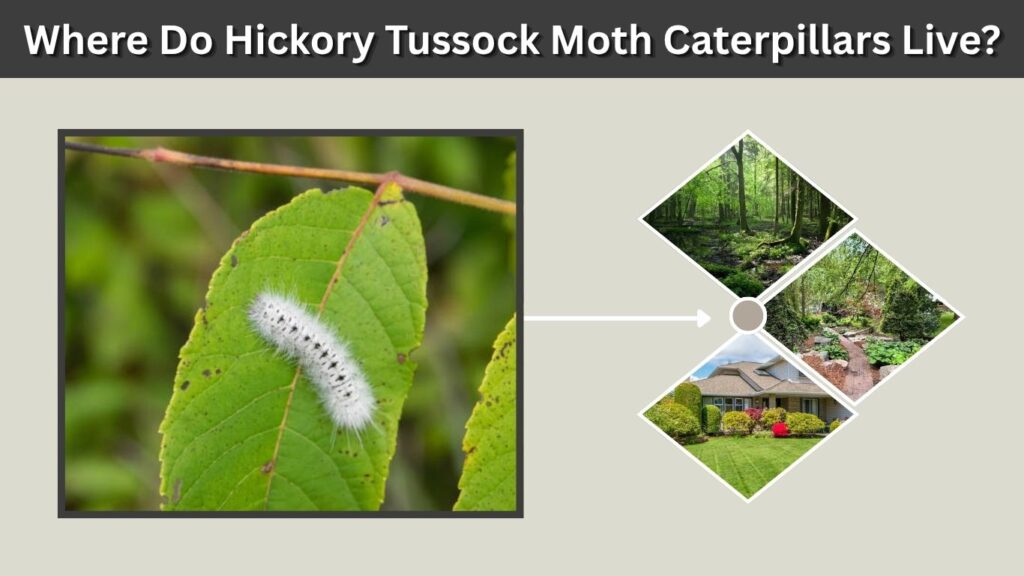
Hickory tussock moth caterpillars are found in parts of North America, especially in eastern regions. They live where suitable hardwood trees grow. You may see them in forests, parks, yards, orchards, and shaded neighborhoods.
They are often noticed in places such as Maine, New York, Michigan, Ohio, Ontario, New Hampshire, and other northern or eastern areas. Their exact visibility depends on local weather, host trees, and yearly population levels.
4. Habitat and Range
These caterpillars live around hardwood trees. They feed in the canopy when young, then may wander away from trees as they mature. This is why they often appear on porches, siding, fences, driveways, and garden paths.
They are native insects, not an invasive species in their natural range. In most cases, they do not cause serious long-term damage to forests. However, large numbers can remove leaves from small trees or ornamental plants.
What Does a Hickory Tussock Moth Caterpillar Eat?
Hickory tussock moth caterpillars eat leaves from many hardwood trees. Hickory is an important host, but they are not limited to hickory trees. They may also feed on walnut, pecan, ash, elm, oak, willow, maple, birch, aspen, basswood, and other trees.
Young caterpillars may feed together and skeletonize leaves. Older caterpillars spread out and feed more independently. A few caterpillars are usually not a major problem for healthy trees.
Hickory Tussock Moth Caterpillar Life Cycle
The life cycle begins when adult female moths lay eggs in batches. The eggs hatch into small caterpillars that feed on leaves. Young larvae may stay together in clusters, while older larvae become more solitary.
As the caterpillar grows, it sheds its skin several times. With each stage, the body becomes larger and the black-and-white pattern becomes easier to see.
5. Cocoon and Adult Moth
When the caterpillar is fully grown, it forms a cocoon. The cocoon may include some of the caterpillar’s irritating hairs, so it should not be handled with bare hands. Cocoons may be found in leaf litter, bark crevices, or protected outdoor areas.
After pupation, the adult hickory tussock moth emerges. The adult moth has wings and does not look as fuzzy or bold as the caterpillar. In many areas, there is one generation per year.
Are Hickory Tussock Moth Caterpillars Dangerous to Dogs?
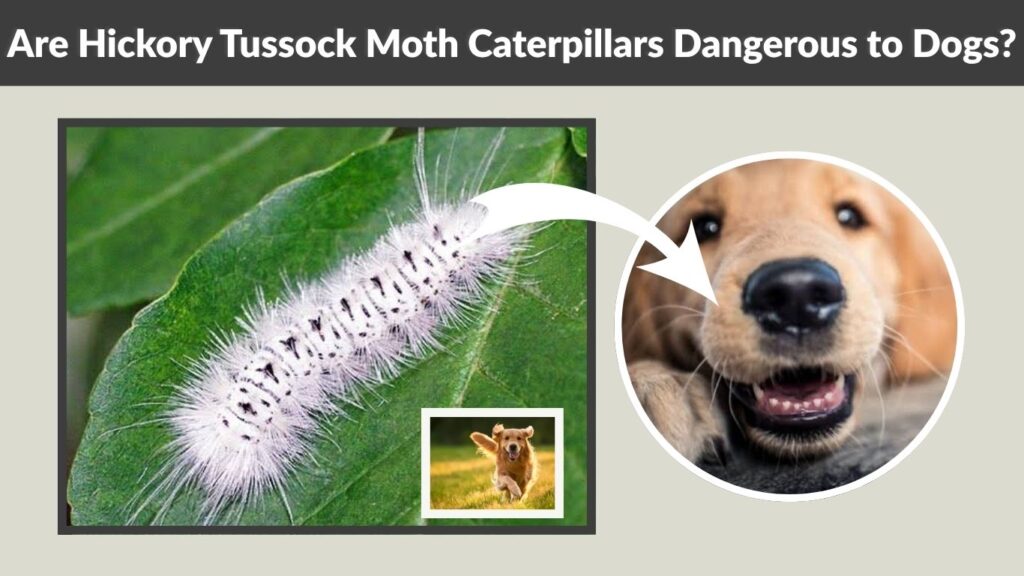
Hickory tussock moth caterpillars can irritate dogs if they are sniffed, licked, chewed, or swallowed. The main risk comes from the hairs irritating the mouth, tongue, throat, nose, or stomach.
A dog may drool, paw at the mouth, cough, gag, vomit, or show swelling after contact. Mild contact may pass quickly, but mouth or throat irritation should be taken seriously.
Do not let dogs play with fuzzy caterpillars. If your dog eats one and shows strong symptoms, call a veterinarian. This is especially important if there is swelling, breathing difficulty, repeated vomiting, or unusual weakness.
How to Get Rid of Hickory Tussock Moth Caterpillars
You do not need to remove every caterpillar from your yard. They are part of the local ecosystem and often disappear naturally after their season ends. Birds, predators, parasites, weather, and disease help control their numbers.
Control is useful when caterpillars are near children, pets, patios, decks, doorways, or small ornamental trees. The safest method is careful physical removal.
6. Safe Control Tips
Use these steps to reduce contact and manage small numbers:
- Wear gloves, long sleeves, and eye protection.
- Pick up caterpillars with a tool, not bare hands.
- Drop them into soapy water if removal is needed.
- Sweep patios and decks carefully.
- Avoid crushing caterpillars with bare skin exposed.
- Remove cocoons with gloves.
- Keep children and pets away from infested areas.
- Prune small infested branches when practical.
- Use labeled caterpillar control products only when necessary.
For large trees or heavy outbreaks, contact a professional arborist or pest control expert. Spraying tall trees without the right equipment can be unsafe and may harm beneficial insects.
Should You Touch a Hickory Tussock Moth Caterpillar?
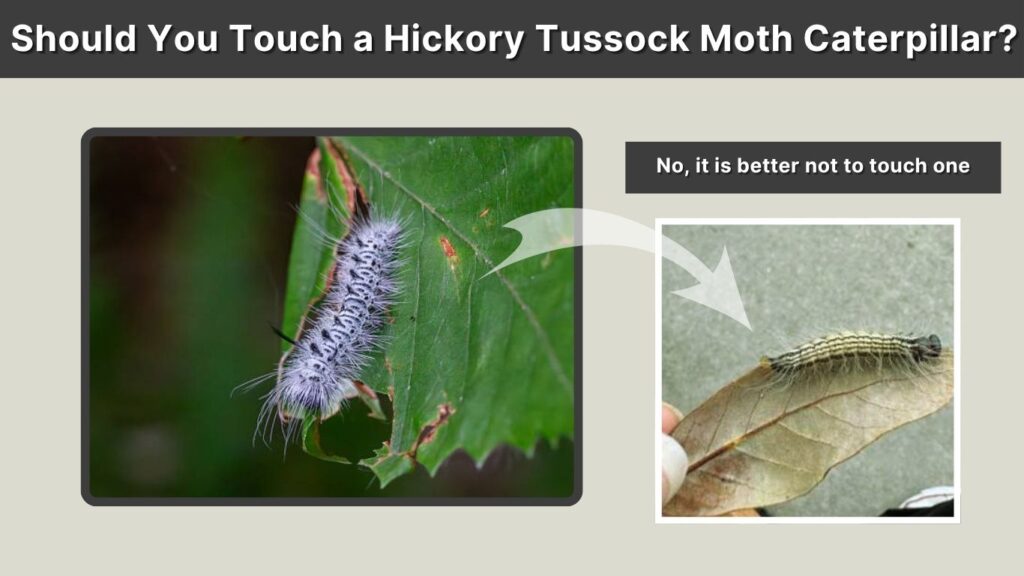
No, it is better not to touch one. Its fuzzy body may look soft, but the hairs can irritate skin. Teach children to look without touching. If you need to move one, use gloves, a leaf, a stick, or a dustpan.
This caterpillar is not aggressive. It does not chase people or pets. Problems usually happen when someone handles it, brushes against it, or touches a surface where loose hairs remain.
FAQs
Is a hickory tussock moth caterpillar poisonous?
It is not truly poisonous like a venomous animal, but its hairs can irritate the skin. Some people develop itching, redness, burning, or a rash after touching it. Sensitive people may react more strongly, so direct handling should be avoided.
Can you touch a hickory tussock moth caterpillar?
You should not touch it with bare hands. The fuzzy hairs may break off and cause irritation. If you need to move one, use gloves, a stick, a leaf, or a dustpan. Children should be taught not to pick up hairy caterpillars.
What does a hickory tussock moth caterpillar turn into?
It turns into the hickory tussock moth, also called the hickory tiger moth. The adult moth is pale yellowish or brownish with white markings on the wings. The adult stage looks much different from the fuzzy black-and-white caterpillar.
How long does a hickory tussock moth caterpillar rash last?
A mild rash may improve within a short time, but reactions vary by person. Some people may feel itching or irritation longer, especially if hairs remain in the skin. Wash the area, avoid scratching, and seek medical advice if symptoms worsen or spread.
How do you get rid of hickory tussock moth caterpillars?
Wear gloves and remove them with a tool, dustpan, or soapy water. Check decks, fences, siding, and outdoor furniture. Remove cocoons carefully because they may contain irritating hairs. For heavy infestations in large trees, professional help is safer.
