
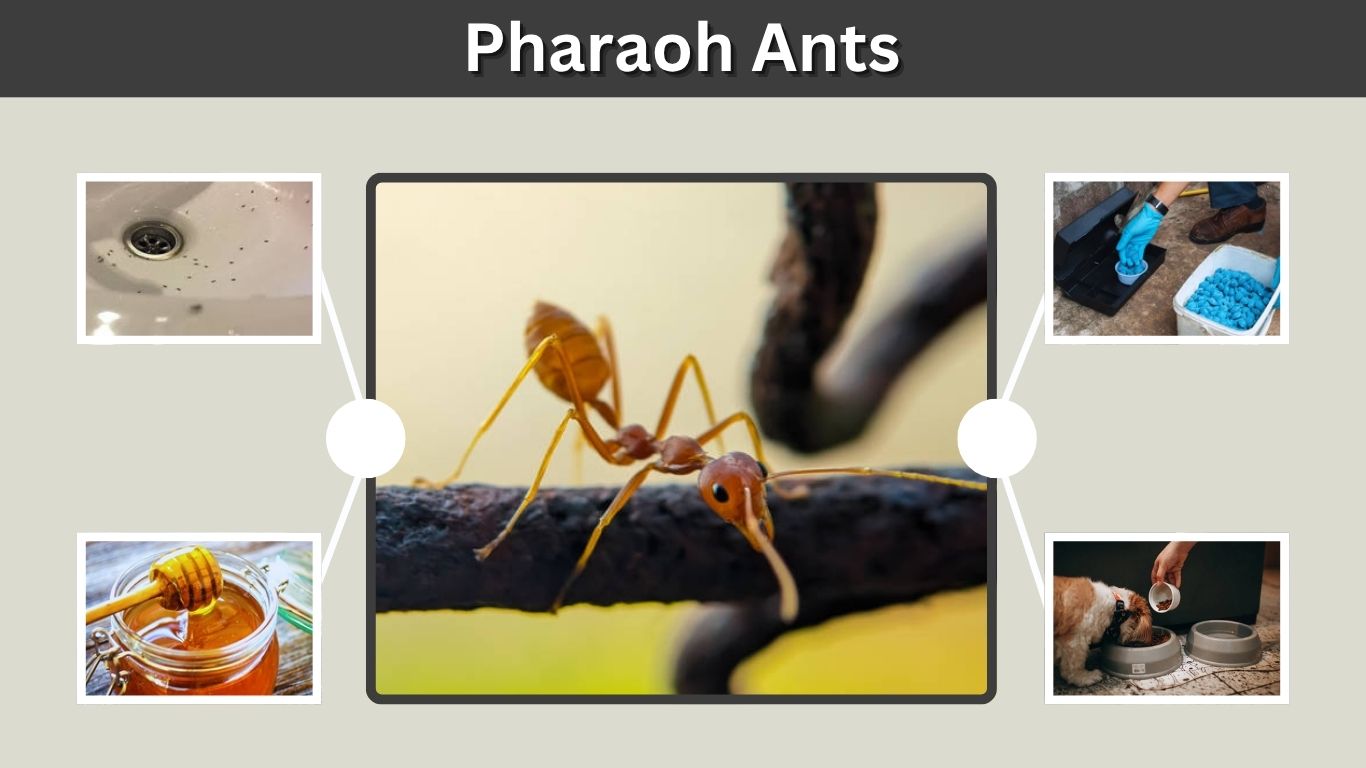
Pharaoh ants are tiny household pests that can become a major problem once they settle indoors. They are difficult to remove because their colonies spread quickly, hide in hard-to-reach spaces, and often split when disturbed. Understanding what pharaoh ants look like, where they live, and how to control them is the first step toward stopping an infestation before it grows.
What Are Pharaoh Ants?
Pharaoh ants are small, yellowish ants commonly found inside homes, apartments, hospitals, restaurants, and other heated buildings. Their scientific name is Monomorium pharaonis. Unlike many ants that mainly nest outdoors, pharaoh ants prefer warm indoor spaces where they can find moisture, food, and shelter throughout the year.
These ants are known for forming large colonies with multiple queens. This makes them harder to eliminate than many other household ants. A single colony can spread into several smaller colonies if treated the wrong way, which is why spraying them directly often makes the problem worse.
What Does a Pharaoh Ant Look Like?
Pharaoh ants are very small, usually about 1.5 to 2 millimeters long. Their bodies are pale yellow, honey-colored, or light brown, and their abdomen may look darker than the rest of the body. Because of their tiny size, people often mistake them for sugar ants, thief ants, or ghost ants.
You may notice them moving in narrow trails along:
- Kitchen counters
- Bathroom sinks
- Baseboards
- Wall edges
- Electrical outlets
- Food storage areas
Their small size allows them to enter packages, cracks, appliances, and hidden wall spaces easily.
Pharaoh Ant Size, Habitat, and Colony Behavior
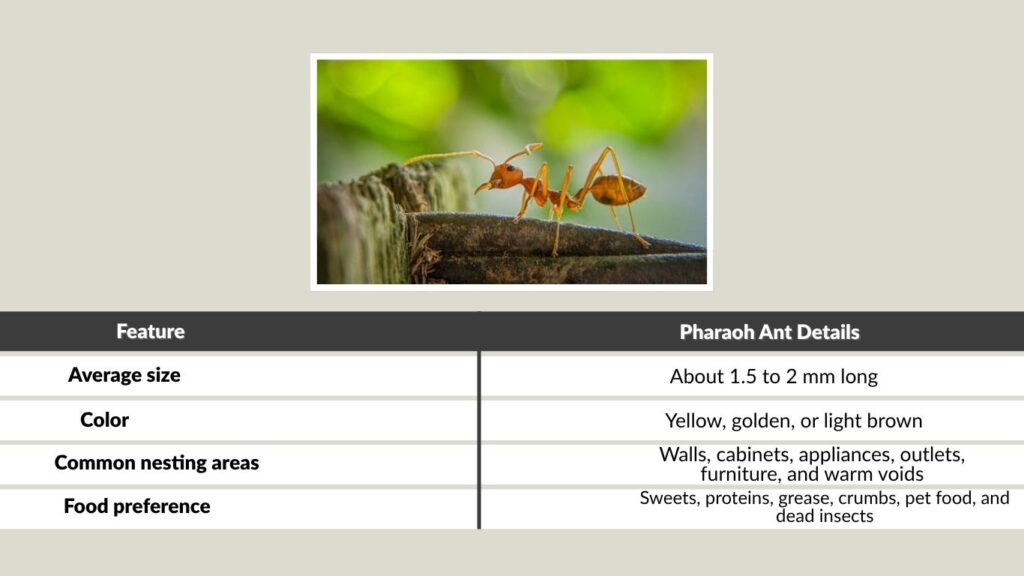
Pharaoh ants are indoor specialists. They do not need a large outdoor nest to survive. Instead, they build hidden nests in warm, protected places close to food and water.
| Feature | Pharaoh Ant Details |
|---|---|
| Average size | About 1.5 to 2 mm long |
| Color | Yellow, golden, or light brown |
| Common nesting areas | Walls, cabinets, appliances, outlets, furniture, and warm voids |
| Food preference | Sweets, proteins, grease, crumbs, pet food, and dead insects |
| Colony structure | Multiple queens and many workers |
| Main control challenge | Colonies can split and spread when disturbed |
Where Do Pharaoh Ants Live?
Pharaoh ants are often found in kitchens, bathrooms, laundry rooms, hospitals, hotels, and apartment buildings. They prefer warm, humid places and can nest almost anywhere indoors.
Common nesting spots include:
- Behind baseboards and wall trim
- Inside wall voids
- Under floors
- Near hot water pipes
- Behind refrigerators and dishwashers
- Inside cabinets
- Around sinks and drains
- In cracks near food storage areas
Because they can nest deep inside a building, seeing a few ants on the counter may only be a small sign of a much larger hidden colony.
Why Are They Called Pharaoh Ants?
The name “pharaoh ant” comes from an old belief that this species was one of the pests found in ancient Egypt. Although the name has historical roots, pharaoh ants are now found in many parts of the world. They are especially common in heated buildings because indoor conditions allow them to survive year-round.
Are Pharaoh Ants Dangerous?
Pharaoh ants are not dangerous in the same way that fire ants or some aggressive stinging ants can be. However, they can still create health and sanitation concerns, especially when they invade kitchens, hospitals, or food preparation areas.
Do Pharaoh Ants Bite?
Pharaoh ants can bite, but their bites are usually mild and often go unnoticed. They do not sting like fire ants. A pharaoh ant bite may cause slight irritation for some people, but serious reactions are uncommon.
The bigger concern is not the bite itself. Pharaoh ants may crawl through dirty areas, drains, trash, and contaminated surfaces before reaching food, counters, or medical spaces. This makes them a potential hygiene problem.
Can Pharaoh Ants Make You Sick?
Pharaoh ants can contaminate food and surfaces because they travel through unsanitary areas. In homes, this is unpleasant and frustrating. In hospitals or care facilities, it can become more serious because ants may enter sterile areas, patient rooms, or medical supplies.
They are especially concerning because they are attracted to many types of food, including sweets, grease, meat, and pet food. Once they find a reliable food source, they can recruit many workers quickly.
Pharaoh Ants in the House
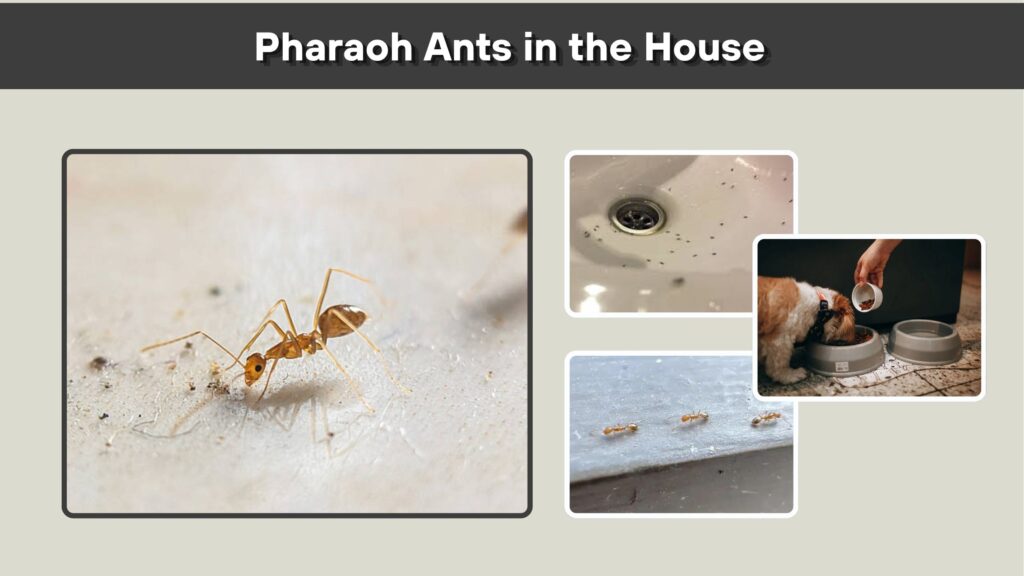
A pharaoh ant infestation can begin quietly. You may only see a few ants near the sink or pantry at first. Over time, trails may appear in several rooms as the colony expands.
Signs of a Pharaoh Ant Infestation
Look for these common signs:
- Tiny yellow or light brown ants trailing along walls or counters
- Ants appearing near sinks, drains, or water sources
- Ants inside food packaging
- Activity around pet bowls
- Ants coming from outlets, cracks, or cabinet gaps
- Repeated sightings even after cleaning or spraying
One important sign is persistence. If ants keep returning after you wipe them away, there is likely a hidden nest nearby or multiple nests throughout the structure.
Why Pharaoh Ants Are Hard to Kill
Pharaoh ants are difficult to control because of a behavior called budding. Budding happens when a colony splits into smaller groups. Each group may include workers, brood, and one or more queens. These groups then move to new nesting areas and create additional colonies.
This often happens when the colony feels threatened. Direct sprays, harsh cleaners, or disturbing nest areas can cause the ants to scatter. Instead of solving the infestation, the treatment may spread it deeper into the home.
How to Get Rid of Pharaoh Ants
The best way to get rid of pharaoh ants is to use a slow-acting bait that workers carry back to the colony. Bait allows ants to share the active ingredient with queens, larvae, and other workers. This method is usually more effective than spraying visible ants.
Step 1: Confirm the Ant Species
Before choosing a treatment, make sure the ants are actually pharaoh ants. They are often confused with other small ants. Pharaoh ants are usually very small, yellowish, and found indoors in warm areas.
If the ants are black, larger, or nesting outdoors, they may be another species. Correct identification matters because different ants respond to different bait and treatment methods.
Step 2: Avoid Spraying the Trail
Do not spray pharaoh ants with repellent insecticides. Sprays may kill visible workers, but they rarely reach the hidden queens. Worse, sprays can cause the colony to split and spread.
Avoid using:
- Repellent ant sprays
- Strong chemical cleaners directly on active trails
- Outdoor barrier sprays as the only treatment
- DIY sprays that scatter ants
- Crushing trails repeatedly without using bait
Cleaning is still important, but the goal is to remove food sources without disturbing the colony aggressively.
Step 3: Use Pharaoh Ant Bait
Pharaoh ant bait is usually the most reliable control method. Workers collect the bait and bring it back to the colony. Because the bait works slowly, ants have time to share it before dying.
Place bait near active trails but not directly on top of heavy food spills or wet surfaces. Good locations include under sinks, inside cabinets, behind appliances, near baseboards, and close to ant trails.
Step 4: Keep Food and Water Away
Bait works better when ants are not distracted by other food sources. Good sanitation makes bait more attractive and helps reduce colony growth.
Focus on:
- Sealing sugar, cereal, snacks, and pet food
- Cleaning grease and crumbs
- Emptying trash regularly
- Fixing leaky faucets and pipes
- Wiping counters at night
- Rinsing food containers before disposal
Even tiny crumbs can support pharaoh ants, so consistency matters.
Best Bait for Pharaoh Ants
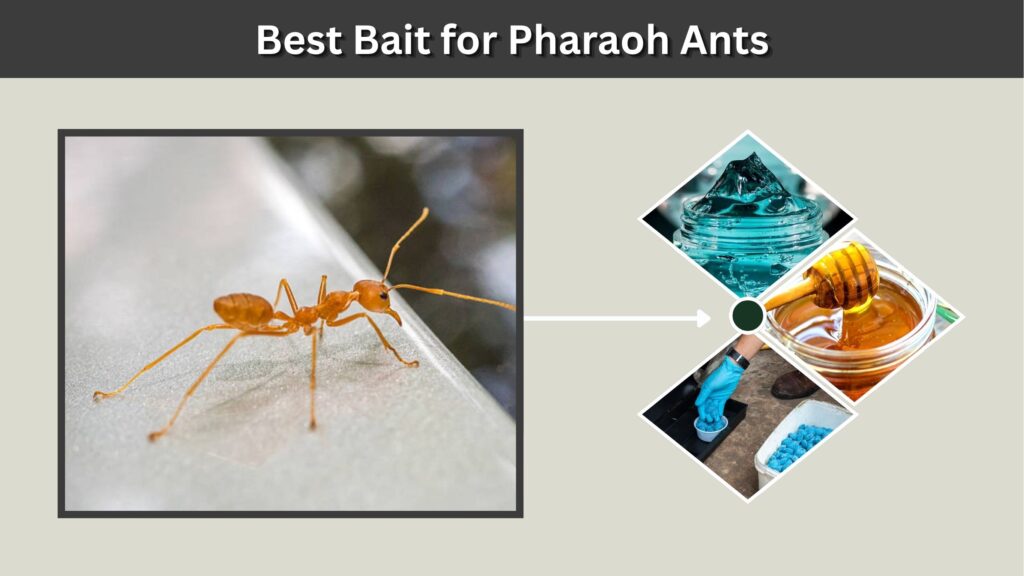
The best bait for pharaoh ants is usually a slow-acting gel, liquid, or bait station designed for indoor ant control. Since pharaoh ants feed on both sweets and proteins, you may need to test more than one bait type.
Pharaoh Ant Bait Tips
Use these baiting tips for better results:
- Place several small bait points instead of one large amount
- Keep bait fresh and replace it when dry
- Do not spray near bait stations
- Use bait where ants are already active
- Be patient, because control may take days or weeks
- Try both sweet and protein-based bait if ants ignore one type
If the ants suddenly stop taking a bait, they may have changed food preferences. Switching bait types can help.
Pharaoh Ant Traps vs Bait Stations
Many people search for pharaoh ant traps, but most products called “traps” are actually bait stations. Sticky traps may catch a few ants, but they will not eliminate the colony. Bait stations are better because they allow ants to feed and return to the nest.
For pharaoh ants, the goal is not to kill a few workers on the surface. The goal is to reach the queens and hidden colony members.
Pharaoh Ants in the Kitchen
The kitchen is one of the most common places to find pharaoh ants. They are attracted to sugar, grease, meat, crumbs, syrup, fruit, and pet food. They may also gather around sinks because they need moisture.
How to Get Rid of Pharaoh Ants in the Kitchen
Start by removing easy food sources and placing bait near ant trails. Avoid spraying countertops or cabinet cracks where ants are active. Instead, use bait in protected areas where children and pets cannot reach it.
Check these areas carefully:
- Behind the refrigerator
- Under the dishwasher
- Around the sink
- Inside pantry corners
- Behind the stove
- Near trash bins
- Around pet feeding stations
Pharaoh ants may also enter sealed-looking packages, so inspect pantry items if activity is heavy.
Pharaoh Ants vs Other Ants
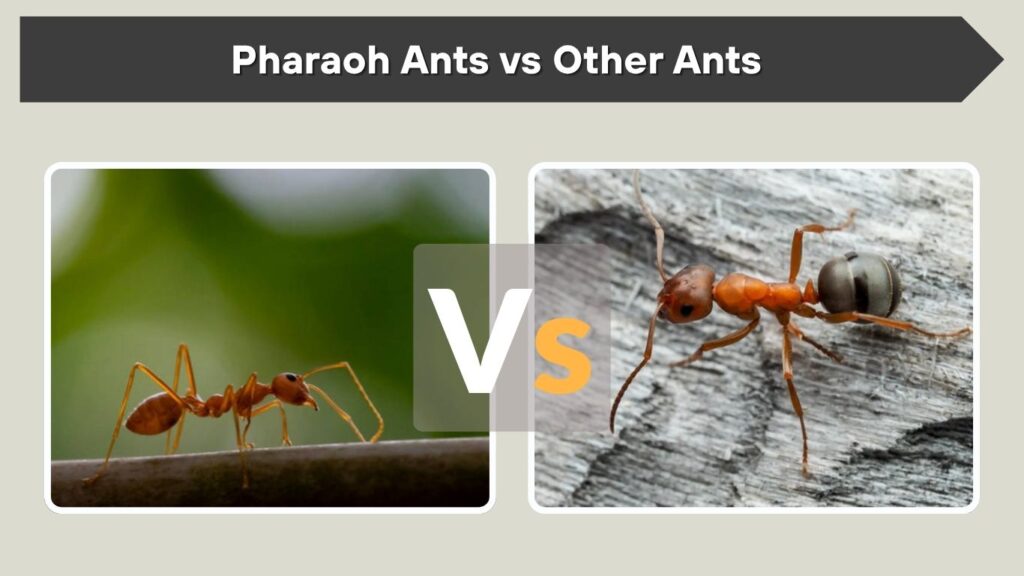
Many small ants look similar, but identifying the right species helps you choose the correct treatment.
Pharaoh Ants vs Sugar Ants
“Sugar ant” is a general name people use for ants attracted to sweet foods. Pharaoh ants also like sweets, but they are a specific species with tiny yellowish bodies and indoor nesting habits. If you see very small yellow ants in a kitchen or bathroom, they may be pharaoh ants rather than ordinary sugar ants.
Pharaoh Ants vs Ghost Ants
Ghost ants are also tiny and pale, but they often have a darker head and a nearly translucent body. Pharaoh ants are more evenly yellow or light brown. Both species can nest indoors and may require bait, but exact identification helps improve control.
Thief Ants vs Pharaoh Ants
Thief ants and pharaoh ants are both tiny, yellowish ants. Thief ants are usually more likely to nest outdoors or near other ant colonies, while pharaoh ants are strongly associated with indoor infestations. Because they look so similar, professional identification may be helpful if the infestation does not respond to bait.
When to Call a Pharaoh Ant Exterminator
You may need professional pharaoh ant control if the infestation keeps returning, spreads to multiple rooms, or appears in an apartment building, restaurant, healthcare setting, or large property.
A professional can help by identifying the ant species, finding activity zones, selecting the right bait, and creating a treatment plan that avoids colony splitting. For severe infestations, professional baiting and monitoring may be much more effective than random store-bought sprays.
Call an exterminator if:
- Ants are appearing in several rooms
- Bait is not reducing activity
- You live in a multi-unit building
- Ants are near medical supplies or food service areas
- The infestation returns repeatedly
- You are unsure whether they are pharaoh ants
How to Prevent Pharaoh Ants From Coming Back
Prevention is important after the colony is controlled. Pharaoh ants can return if food, moisture, and nesting spaces remain available.
Prevention Checklist
To reduce the chance of another infestation:
- Store food in tight containers
- Clean crumbs and spills quickly
- Keep pet food sealed when not in use
- Repair leaks and reduce moisture
- Seal small cracks where possible
- Take out trash regularly
- Avoid bringing infested items indoors
- Monitor kitchens and bathrooms for early activity
In apartments and shared buildings, prevention may require cooperation between units. If only one apartment is treated, ants may move through walls and return later.
FAQs
Are pharaoh ants harmful?
Pharaoh ants can be harmful because they may contaminate food and surfaces after crawling through dirty areas. They are not usually dangerous because of their bite, but they can create sanitation concerns in kitchens, hospitals, and food service areas. Their ability to spread indoors makes quick control important.
What kills pharaoh ants?
Slow-acting ant bait is usually the best way to kill pharaoh ants. Workers carry bait back to the hidden colony and share it with queens and larvae. Direct sprays are not recommended because they may cause the colony to split and spread into new nesting areas.
Do pharaoh ants bite humans?
Pharaoh ants can bite humans, but their bites are usually mild and not a major medical concern. Most people are more affected by the nuisance and hygiene issues they create. If ants are found near food, sinks, or medical areas, the infestation should be handled carefully.
What is the best way to get rid of pharaoh ants?
The best way to get rid of pharaoh ants is to identify them correctly, avoid repellent sprays, remove food sources, and use slow-acting bait near active trails. Severe or repeated infestations may require professional pest control, especially in apartments, restaurants, or healthcare buildings.
Why do pharaoh ants keep coming back?
Pharaoh ants keep coming back when hidden nests remain active or when colonies split after being disturbed. They may also return if food, moisture, or entry points are still available. Because they have multiple queens and hidden nests, complete control often requires patience and consistent baiting.
