
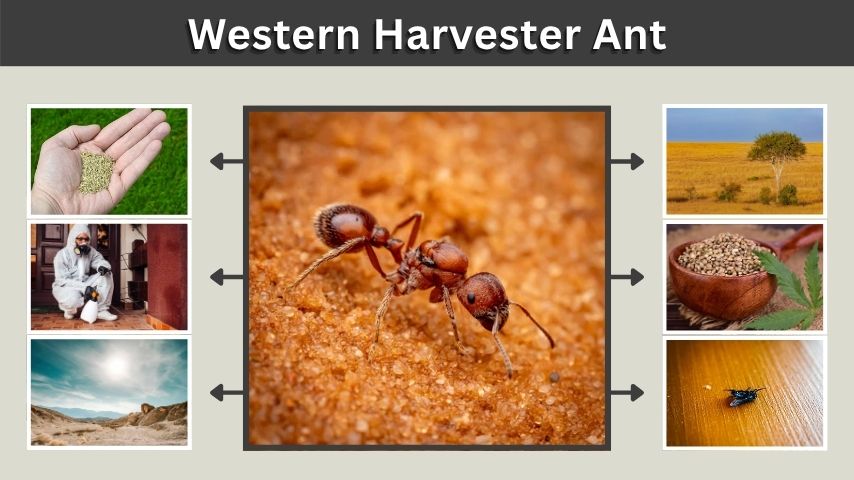
The western harvester ant is a large seed-collecting ant known for its visible gravel mounds, reddish-brown workers, painful sting, and important role in dry western ecosystems. Scientifically known as Pogonomyrmex occidentalis, this ant is common in arid grasslands, deserts, rangelands, and open habitats across parts of western North America. Although it can be fascinating to observe, it should be treated with respect because workers can defend their colony aggressively when disturbed.
What Is the Western Harvester Ant?
The western harvester ant is a ground-nesting ant species in the genus Pogonomyrmex. Like other harvester ants, it gets its name from its habit of collecting seeds and storing them inside the nest. These ants are not typical indoor pests. They usually live outdoors in open, dry environments where they can build large underground colonies and forage across bare ground.
Western harvester ants are important because they affect seed movement, soil structure, and the food web. Their colonies may last for years, and their mounds can remain visible for a long time. In natural areas, they help recycle nutrients and provide food for birds, reptiles, mammals, and other insects.
People usually notice western harvester ants because of:
- Large worker ants moving around open soil
- Gravel-covered mounds or cleared nest areas
- Seed-collecting trails
- Painful defensive stings
- Interest in ant farms or ant keeping
They are useful in nature, but they can become a concern when nests are close to homes, walkways, playgrounds, livestock areas, or places where people and pets may step on them.
Western Harvester Ant Identification
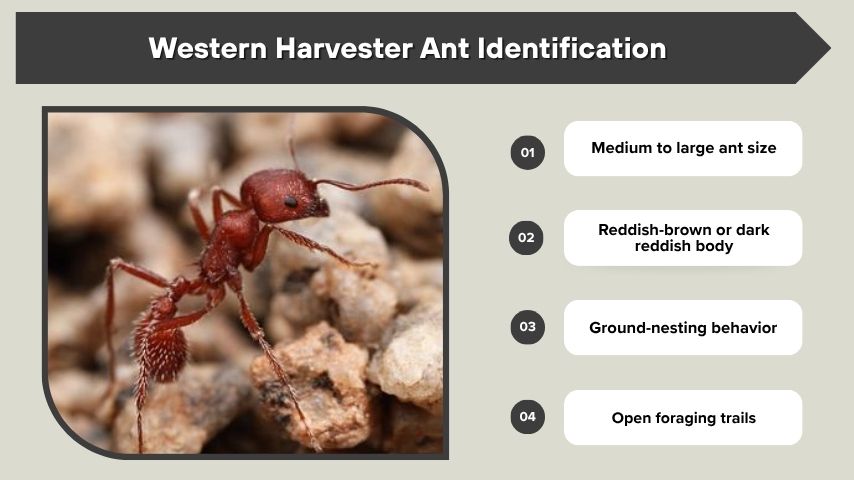
The western harvester ant is usually reddish-brown to dark red or brownish-black, depending on age, location, lighting, and individual variation. Workers are larger than many common household ants, which makes them easier to see on bare soil.
A key identifying feature of harvester ants is their strong seed-gathering behavior. You may see workers carrying seeds, plant fragments, or small bits of debris back to the nest. Their nest area often looks more organized than a random pile of soil.
Common identification clues include:
- Medium to large ant size
- Reddish-brown or dark reddish body
- Ground-nesting behavior
- Open foraging trails
- Cleared soil or gravel around the nest
- Workers carrying seeds
- Defensive behavior near the mound
The species name Pogonomyrmex occidentalis is often used when discussing the western harvester ant in scientific and ant-keeping contexts.
Western Harvester Ant Range and Habitat
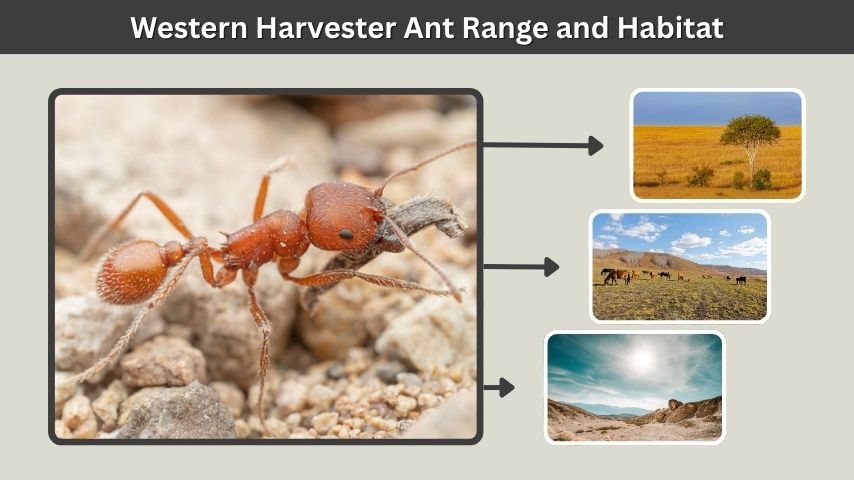
Western harvester ants are associated with dry western environments. They are often found in arid grasslands, desert edges, plains, rangelands, and open soil habitats. They prefer areas where seed-producing plants are available and where the soil allows them to build underground tunnels and chambers.
Their habitat can include:
- Dry grasslands
- Semi-arid plains
- Desert scrub
- Open rangeland
- Sandy or gravelly soil
- Roadsides and disturbed open areas
- Dry fields and pasture edges
Searches such as “western harvester ants in Utah,” “western harvester ants desert,” and “where do western harvester ants live” all relate to this habitat pattern. In places like Utah and other western states, they may be seen in open dry ground where vegetation is sparse enough for workers to forage.
They are less likely to thrive in heavily watered lawns, dense forests, or areas with constant soil disturbance. However, they can appear near human spaces when dry open ground and food sources are available.
Western Harvester Ant Hill and Mound
The western harvester ant hill is one of the easiest signs to recognize. Colonies often create conspicuous mound nests with gravel or small pebbles arranged around the entrance. These mounds may be surrounded by a cleared area where workers remove vegetation and debris.
A mature nest can have underground chambers for brood, workers, stored seeds, and the queen. The visible mound is only the surface structure. Beneath it, the colony may extend deep into the soil.
A western harvester ant mound may include:
- A central or side entrance
- Small pebbles or gravel on the surface
- Bare soil around the nest
- Worker trails leading away from the mound
- Seed husks or plant fragments nearby
- Strong defensive activity if disturbed
Do not kick, dig, or pour random chemicals into a mound. Disturbing the nest can cause workers to swarm out and sting.
What Do Western Harvester Ants Eat?
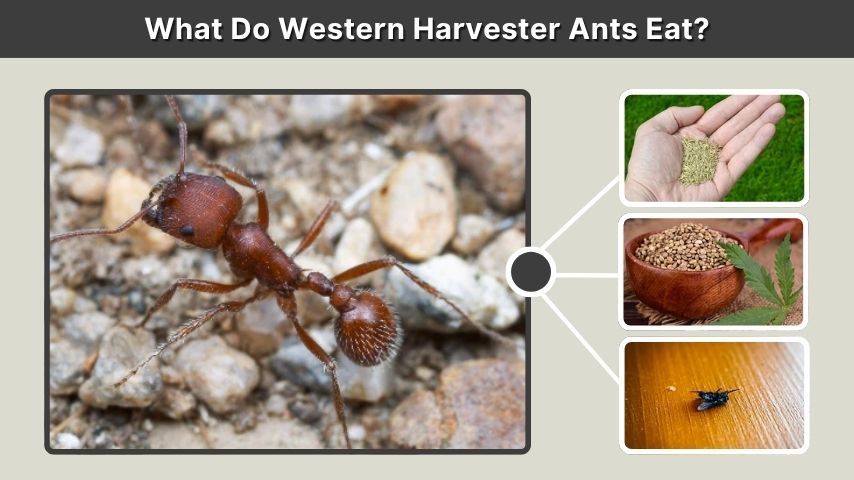
Western harvester ants mainly eat seeds. Workers collect seeds from grasses, weeds, and other plants, then carry them back to the colony. Seeds may be stored underground and used later when food is less available.
They may also eat dead insects or small arthropods when available, especially as a protein source for growing larvae. In the wild, their diet depends on season, local plants, rainfall, and colony needs.
| Food Source | Role in the Colony |
|---|---|
| Grass seeds | Main energy source |
| Weed seeds | Common wild food |
| Stored seeds | Backup food during poor conditions |
| Dead insects | Protein source |
| Small arthropods | Occasional protein |
| Pollen or plant material | Supplemental food |
For ant keepers, western harvester ant food usually includes small seeds and occasional protein. However, feeding should be done carefully. Overfeeding can cause mold, waste buildup, and stress inside a captive setup.
Western Harvester Ant Queen
The western harvester ant queen is the reproductive center of the colony. Her main job is to lay eggs. Workers care for the eggs, larvae, and pupae, while also foraging, maintaining the nest, and defending the colony.
A healthy queen can support colony growth for years under the right conditions. In the wild, new queens appear during nuptial flights, which happen when winged queens and males leave mature colonies to mate. After mating, a queen drops her wings and searches for a suitable place to begin a new nest.
A western harvester ant queen is usually larger than the workers and has a more developed thorax because she once had wings. People often search for “western harvester ant queen,” “western harvester ant queen for sale,” or “buy western harvester ant queen” because queens are needed for long-term ant colonies in captivity.
However, buying or moving queens can be restricted by local laws. Ants should never be released into the wild outside their native range. Releasing captive ants can spread disease, disrupt local ecosystems, or violate regulations.
Western Harvester Ant Colony Life Cycle
A western harvester ant colony begins when a mated queen successfully starts a nest. She lays eggs that develop into larvae, pupae, and adult workers. The first workers are often small because the young colony has limited resources. As the colony grows, workers take over foraging and nest maintenance.
The colony life cycle includes:
- Mating flights by winged males and queens
- A mated queen founding a nest
- Eggs hatching into larvae
- Larvae pupating into adults
- Workers expanding the nest
- Mature colonies producing new reproductives
In a strong colony, workers are divided by task rather than by strict command. Younger workers may stay inside the nest caring for brood, while older workers may forage outside. The colony functions through chemical signals, interaction, and environmental cues rather than a single leader giving instructions.
Western Harvester Ant Lifespan
The lifespan of a western harvester ant depends on its role. Workers generally live far shorter lives than queens. A worker may live for months, while a queen may live for years if she avoids predators, disease, starvation, and colony collapse.
Captive conditions can also affect lifespan. Poor humidity, mold, heat stress, lack of food, or an unsuitable nest can shorten worker and queen survival. In the wild, drought, flooding, predators, competition, and human disturbance may reduce colony success.
The practical lifespan breakdown is:
- Workers: usually months
- Males: short-lived after mating
- Queens: potentially years
- Colonies: may persist for many years if successful
When people ask “how long do western harvester ants live,” the best answer depends on whether they mean an individual worker, queen, or entire colony.
Do Western Harvester Ants Bite or Sting?
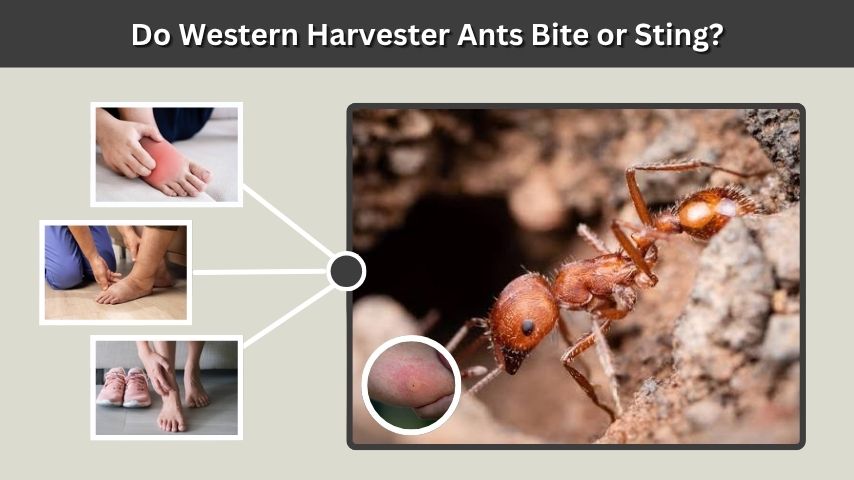
Western harvester ants can bite, but the more painful injury usually comes from the sting. A worker may bite to grip the skin, then sting and inject venom. This is why people often describe the experience as a bite even though the sting causes the strongest pain.
A western harvester ant sting can cause:
- Sudden sharp pain
- Burning sensation
- Redness
- Swelling
- Itching
- Tenderness
- A raised welt
The pain can last for hours in some cases. Multiple stings are more serious, especially for children, pets, or people with insect venom allergies. If someone develops trouble breathing, dizziness, facial swelling, throat tightness, widespread hives, or fainting, seek emergency medical help immediately.
Are Western Harvester Ants Dangerous?
Western harvester ants can be dangerous if handled carelessly or if their mound is disturbed. They are not usually a threat when left alone, but they defend the colony strongly. The risk is highest when people step on the mound, sit near the nest, dig into it, or try to collect ants by hand.
They are most concerning around:
- Children’s play areas
- Pet yards
- Walkways
- Campsites
- Livestock spaces
- Schools
- Gardens and work areas
Western harvester ants are not “poisonous” in the sense that touching them casually poisons you. They are venomous because they can inject venom through a sting. For most people, the result is pain and swelling. For allergic individuals, any venomous insect sting can be more serious.
Western Harvester Ant vs Red Imported Fire Ant
Western harvester ants are often compared with red imported fire ants because both can sting. However, they are different ants with different habits. Fire ants are usually smaller and known for aggressive swarming when their mound is disturbed. Western harvester ants are larger, seed-focused, and more associated with dry western habitats.
Fire ant mounds are often found in lawns, disturbed soil, pastures, and moist areas. Western harvester ant mounds are more likely to appear as gravelly or cleared nest areas in dry open ground.
Key differences include:
- Western harvester ants are larger.
- Fire ants often swarm more rapidly.
- Western harvester ants collect and store seeds.
- Fire ants eat a wider range of foods.
- Western harvester ant mounds may have gravel and cleared ground.
- Fire ant stings often produce itchy pustules.
Both should be avoided if the nest is active. Do not handle either species with bare hands.
Western Harvester Ant Care in Ant Farms
Western harvester ants are sometimes kept in ant farms because they are large, active, and interesting to observe. They collect seeds, dig tunnels, and show visible foraging behavior. However, they are not the safest choice for very young children because workers can sting.
A basic care setup should include a secure escape-proof nest, proper ventilation, dry nesting conditions, controlled hydration, and a safe feeding area. They need seeds as a main food source and may benefit from occasional protein such as small insects. Any uneaten food should be removed before it molds.
Basic western harvester ant care tips:
- Keep the enclosure secure.
- Provide appropriate seeds.
- Offer protein in small amounts.
- Avoid overfeeding.
- Remove moldy food quickly.
- Keep the nest away from extreme heat.
- Do not release captive ants.
- Research local rules before buying ants.
People often ask, “What will happen if I overfeed my western harvester ants?” The main risks are mold, mites, spoiled food, and unhealthy nest conditions. It is better to feed modest amounts and watch what the colony actually consumes.
Can I Release Western Harvester Ants?
You should not release western harvester ants unless they were collected legally from the exact same local area and release is allowed. In many cases, releasing purchased or captive ants is a bad idea. They may not be native to your location, may carry pathogens, or may disrupt local ants.
Even if western harvester ants are native to your state, a captive colony from a different region can still be ecologically inappropriate. Ants should be treated like live animals with environmental impact, not disposable classroom supplies.
If you no longer want a captive colony, contact the supplier, a local extension office, or an experienced ant-keeping group for responsible guidance.
How to Get Rid of Western Harvester Ants
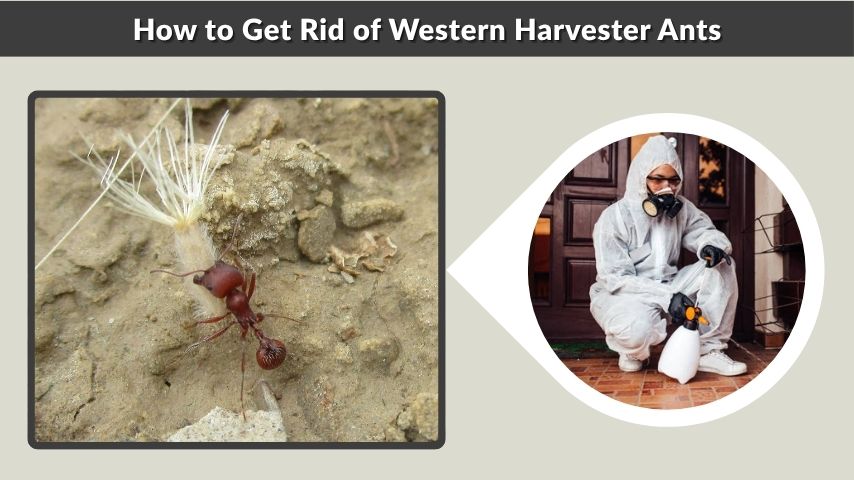
Western harvester ant control is not always necessary. If the mound is far from people, pets, and walkways, leaving it alone may be the best option. These ants have ecological value, and unnecessary eradication can harm local food webs.
Control may be needed when a mound is located in a high-risk place. For example, a nest beside a playground, patio, dog run, or school walkway may create a sting hazard.
Safer control steps include:
- Identify the ant correctly.
- Keep children and pets away from the mound.
- Mark the area until treatment is complete.
- Use a product labeled for harvester ants.
- Follow all pesticide label directions.
- Avoid unsafe home remedies.
- Consider professional pest control for public areas.
Do not pour gasoline, bleach, or random chemicals into the nest. Do not burn the mound. These methods are unsafe and can harm soil, people, pets, and nearby plants.
Western Harvester Ant Facts
Western harvester ants are fascinating insects with complex colony behavior. They are more than painful stinging ants. Their seed-harvesting habits influence the surrounding plant community, and their nest-building activity changes soil structure.
Interesting facts include:
- Their scientific name is Pogonomyrmex occidentalis.
- They collect and store seeds underground.
- Their nests may have gravel-covered mounds.
- Workers can sting painfully.
- Queens start new colonies after mating flights.
- They are common in dry western habitats.
- They are often used in ant farms.
- They should not be released outside their proper range.
The western harvester ant is best understood as both a valuable wild insect and a species that requires caution around people and pets.
FAQs
Do western harvester ants bite?
Western harvester ants can bite, but the more painful injury usually comes from the sting. A worker may bite to hold onto the skin and then inject venom with its stinger. This can cause burning pain, redness, swelling, itching, and tenderness around the sting site.
What do western harvester ants eat?
Western harvester ants mainly eat seeds from grasses, weeds, and other plants. They may also collect dead insects or small arthropods for protein. In captivity, they are usually fed small seeds and occasional protein, but uneaten food should be removed to prevent mold.
How long do western harvester ants live?
Worker western harvester ants usually live much shorter lives than queens, often measured in months. A queen can live for years under good conditions. The lifespan of a full colony depends on food, weather, predators, disease, habitat quality, and whether the nest is disturbed.
Are western harvester ants dangerous?
Western harvester ants can be dangerous if their nest is disturbed because workers can deliver painful venomous stings. Most stings cause local pain and swelling, but allergic reactions are possible. Children, pets, and people with insect sting allergies should avoid active mounds.
Can you keep western harvester ants in an ant farm?
Yes, western harvester ants are sometimes kept in ant farms, but they require secure housing and careful handling because workers can sting. Ant keepers should provide seeds, limited protein, proper hydration, and a clean enclosure. Captive ants should never be released irresponsibly.
