
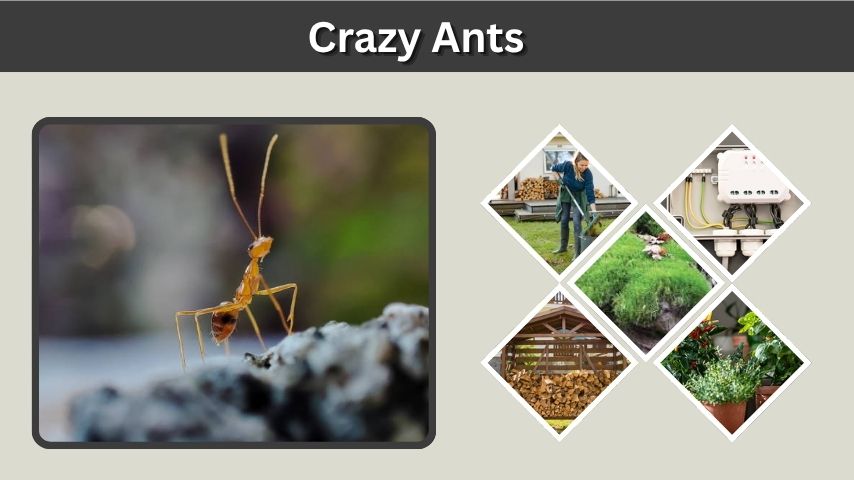
Crazy ants are a growing problem in several warm regions, especially Texas and Florida. These fast-moving ants are known for their erratic trails, large colonies, and ability to invade homes, yards, electrical equipment, and landscapes. While many people use the name “crazy ants” broadly, different species can be involved depending on the location. Understanding where they live and how they spread is the first step toward effective control.
What Are Crazy Ants?
Crazy ants are named for the way they move. Instead of following a straight, organized trail like many ants, they run quickly in scattered and unpredictable patterns. This behavior makes them easy to notice but harder to track back to a nest.
Several ants may be called crazy ants, including tawny crazy ants, Rasberry crazy ants, black crazy ants, Caribbean crazy ants, and yellow crazy ants. These names can confuse homeowners because not all crazy ants are the same species.
Why Location Matters
The type of crazy ant you are dealing with often depends on where you live. In Texas, the main concern is usually the tawny crazy ant, formerly known as the Rasberry crazy ant. In Florida, tawny crazy ants and other crazy ant species may be found. In Australia and Christmas Island, yellow crazy ants are a major invasive species concern.
Location affects:
- Which species is likely present
- How severe the infestation may become
- Whether the ant is considered invasive
- What treatment methods work best
- Whether reporting to local authorities is recommended
For homeowners, the most important step is not just asking, “Are these crazy ants?” but also asking, “Which crazy ants are common in my area?”
Crazy Ants in Texas
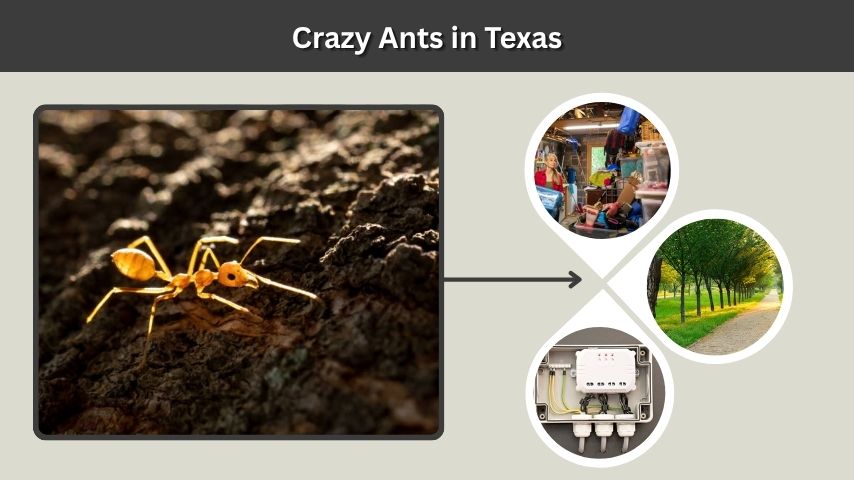
Texas is one of the most searched locations for crazy ants because tawny crazy ants have become a serious nuisance in parts of the state. Many people search for “crazy ants Texas,” “Texas crazy ants,” “crazy ants in Houston Texas,” and “tawny crazy ants Texas” because these ants can spread quickly and become difficult to manage.
Tawny Crazy Ants in Texas
The tawny crazy ant is the major crazy ant species associated with Texas infestations. It was formerly called the Rasberry crazy ant after Tom Rasberry, the pest control professional who helped bring attention to the ant in the Houston area.
These ants are small, reddish-brown to tawny-colored, and move in loose, erratic trails. They do not build obvious mounds like fire ants. Instead, they often nest under objects, debris, mulch, potted plants, landscape materials, and other protected spaces.
Where Were Crazy Ants First Found in Texas?
Tawny crazy ants were first found around Houston, Texas, in 2002. Since then, they have spread to other areas, mainly through human movement of infested materials. Items such as mulch, hay, potted plants, soil, landscaping materials, and yard debris can accidentally move ants from one property to another.
This is why infestations may appear suddenly in a neighborhood, nursery, park, or residential yard.
Crazy Ants in Houston, Austin, and Central Texas
Houston is strongly connected with early tawny crazy ant reports, but these ants are not limited to Houston. Search interest also includes Austin, Central Texas, North Texas, South Texas, and other areas.
In Texas, they may be found around:
- Homes and garages
- Mulch beds and landscaping
- Parks and natural areas
- Potted plants
- Electrical boxes
- Air conditioning units
- Trees and shrubs
- Yard debris and stored materials
If you live in a high-pressure area, you may see large numbers of ants outside before they move indoors.
Why Texas Crazy Ants Are a Problem
Tawny crazy ants can be difficult because they form large colonies with many queens. Their populations can become dense, and they may outcompete other ants, including fire ants in some areas.
They can also enter electrical equipment. Homeowners sometimes report ants around air conditioners, breaker boxes, pumps, outlets, and appliances. If ants are inside electrical equipment, avoid spraying liquids into the device. Contact a pest control professional or electrician when needed.
Crazy Ants in Florida
Florida also has strong search demand for crazy ants. Queries such as “crazy ants Florida,” “crazy ants in Florida,” “Florida crazy ants,” “tawny crazy ants Florida,” “Caribbean crazy ants Florida,” and “black crazy ants Florida” show that people are trying to identify which species they have and how serious the issue may be.
Tawny Crazy Ants in Florida
Tawny crazy ants have been reported in Florida and can create large infestations. They are often found in warm, humid areas with plenty of moisture, vegetation, and nesting material.
In Florida landscapes, they may be associated with:
- Mulch beds
- Palm debris
- Irrigated lawns
- Potted plants
- Shrub lines
- Tree bases
- Utility areas
- Outdoor structures
They can move indoors when conditions are favorable or when outdoor populations become large.
Caribbean Crazy Ants in Florida
The name Caribbean crazy ant is also connected with Florida. Some older reports used this name for crazy ant infestations in South Florida, although identification has changed over time as researchers studied the ants more closely.
For homeowners, this means common names can be unreliable. A person may search for Caribbean crazy ants in Florida, but the actual species may require expert identification.
Black Crazy Ants in Florida
Black crazy ants may also be seen in Florida. These ants are usually dark-colored and fast-moving. They can enter homes in search of sweets, grease, and moisture.
Black crazy ants may nest outdoors or indoors. Control usually depends on finding trails, removing food and moisture, using bait, and sealing entry points.
Texas vs Florida Crazy Ants
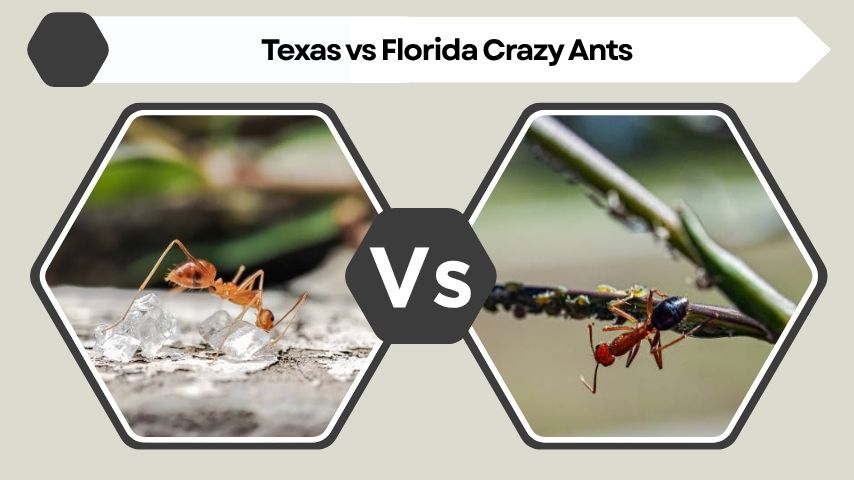
Texas and Florida both have crazy ant problems, but the search intent is slightly different. Texas searches are strongly tied to tawny or Rasberry crazy ants. Florida searches include tawny crazy ants, Caribbean crazy ants, black crazy ants, and general identification questions.
| Location | Main Search Concern | Common Names Used | Typical Problem Areas |
|---|---|---|---|
| Texas | Invasive tawny crazy ants | Tawny crazy ant, Rasberry crazy ant, Texas crazy ant | Houston, Austin, Central Texas, yards, electrical areas |
| Florida | Multiple crazy ant species | Tawny crazy ant, Caribbean crazy ant, black crazy ant | South Florida, yards, homes, mulch, irrigated landscapes |
| Christmas Island | Yellow crazy ant invasion | Yellow crazy ant, Christmas Island crazy ant | Forests, red crab habitat, conservation zones |
| Australia | Biosecurity and invasive spread | Yellow crazy ant, crazy ants Australia | Queensland, ports, tropical regions, restricted areas |
This table shows why one article can target several location keywords, but the content should clearly separate each region to avoid confusing readers.
Are There Yellow Crazy Ants in Texas or Florida?
Many people search for “yellow crazy ants Texas” or “yellow crazy ants Florida,” but yellow crazy ants are not the same as tawny crazy ants. Yellow crazy ants are best known as a major invasive species in Australia, Christmas Island, and other tropical regions.
In Texas and Florida, most homeowner concern is usually about tawny crazy ants, Rasberry crazy ants, black crazy ants, or related species. If you believe you have yellow crazy ants, especially in a region where they are not commonly established, contact a local extension office or pest authority for identification.
What Yellow Crazy Ants Look Like
Yellow crazy ants are typically yellowish to brownish-yellow with long legs and long antennae. They move quickly and can form large colonies. They do not rely on biting as their main defense; they can spray formic acid.
Because several ants can look similar, identification should be confirmed by an expert when the species matters.
Christmas Island Crazy Ants
Christmas Island is one of the best-known examples of yellow crazy ant damage. Search terms such as “Christmas Island crazy ants,” “Christmas Island yellow crazy ants,” and “Christmas Island red crab yellow crazy ants” relate to the serious environmental impact these ants have had.
Impact on Red Crabs
Christmas Island is famous for its red crab migration. Yellow crazy ants have harmed red crabs by forming supercolonies and spraying formic acid. This can kill crabs and disrupt the island’s forest ecosystem.
When red crab populations decline in affected areas, the forest changes because red crabs play an important role in eating seedlings and recycling nutrients.
Crazy Ant Control on Christmas Island
Control on Christmas Island is not the same as household pest control. It involves conservation programs, monitoring, baiting, and biological control research. Scientists and conservation managers have explored ways to reduce yellow crazy ant populations while protecting the island’s native wildlife.
This topic is more ecological than residential. Someone searching for Christmas Island crazy ants usually wants to understand the environmental impact, not how to treat ants in a kitchen.
Crazy Ants in Australia
Yellow crazy ants are also a major concern in Australia. Searches such as “yellow crazy ant Australia,” “crazy ants Australia,” and “how did yellow crazy ants get to Australia” focus on invasive species spread.
How Did Yellow Crazy Ants Get to Australia?
Yellow crazy ants likely spread through human transport, especially through shipping, ports, cargo, soil, plants, and other goods. Like many invasive ants, they can move long distances when people accidentally transport colonies or nesting materials.
Once established, they can spread locally through natural colony movement and further human-assisted transport.
Why Australia Treats Yellow Crazy Ants Seriously
Yellow crazy ants threaten native insects, small animals, agriculture, and sensitive ecosystems. In some Australian regions, they are treated as a biosecurity issue. This means people may be asked to report sightings instead of trying to manage them privately.
If you live in Australia and suspect yellow crazy ants, check local biosecurity guidance before moving soil, plants, green waste, or outdoor materials.
Crazy Ant Locations: Where Are They Found?
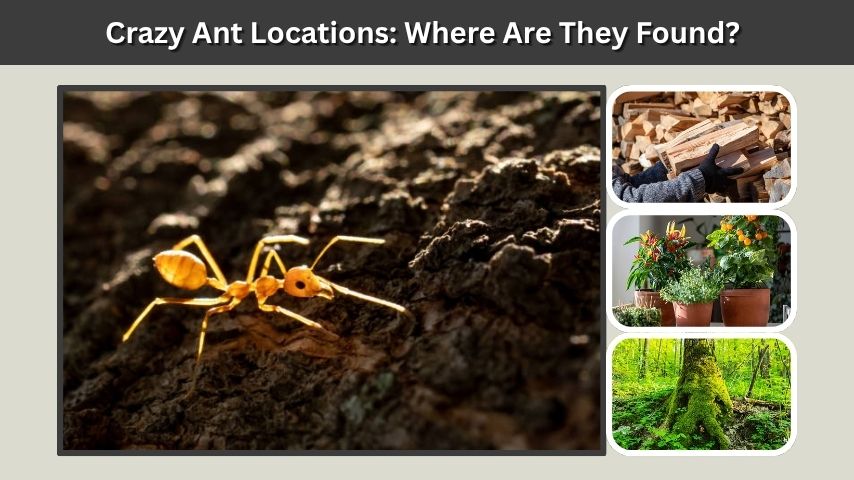
Crazy ants are found in many warm and humid regions. Their exact distribution depends on the species.
Common Crazy Ant Habitats
Crazy ants often prefer protected, moist, and cluttered places. Around homes, they may nest in:
- Mulch
- Leaf litter
- Tree bases
- Firewood piles
- Potted plants
- Yard debris
- Under stones or boards
- Wall voids
- Electrical equipment
- Irrigated landscape beds
They often do not make obvious mounds, so people may not know they have a problem until the ants appear in large numbers.
How Crazy Ants Spread
Crazy ants can spread naturally over short distances, but many major infestations move through human activity. Infested materials can carry workers, queens, brood, or colony fragments to a new location.
Common movement risks include:
- Nursery plants
- Mulch and soil
- Hay bales
- Firewood
- Landscaping materials
- Construction supplies
- Yard waste
- Potted plants
This is why homeowners should inspect outdoor materials before moving them from one property to another.
How to Control Crazy Ants in Texas and Florida
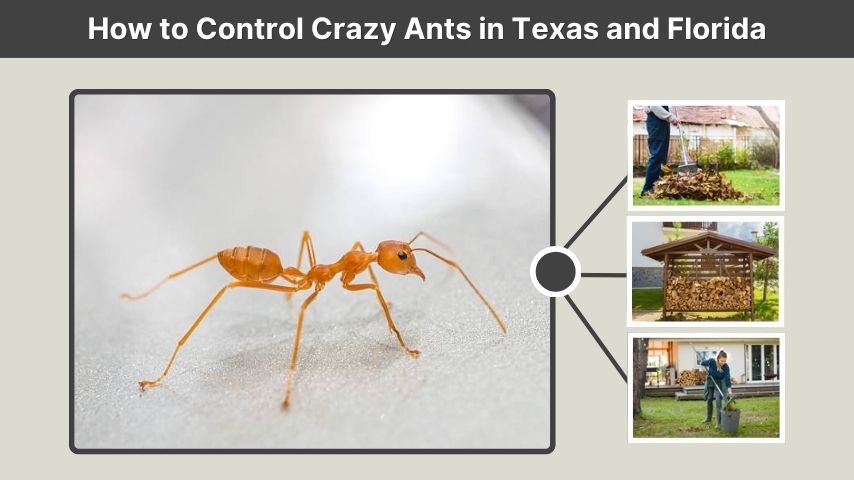
Crazy ant control is most effective when it combines inspection, sanitation, baiting, outdoor treatment, and exclusion. Spraying visible ants alone usually gives poor long-term results.
Step 1: Inspect the Property
Start by watching the ant trails. Look for erratic movement around the foundation, landscaping, windows, doors, air conditioning units, and utility lines. Outdoors, lift objects carefully and check underneath.
Step 2: Reduce Nesting Sites
Crazy ants thrive in cluttered outdoor areas. Reducing shelter can make the property less attractive.
Helpful steps include:
- Remove leaf piles
- Thin heavy mulch
- Store firewood away from the house
- Move potted plants away from entry points
- Trim shrubs and tree branches
- Clean up yard debris
- Avoid stacking materials near the foundation
This is especially important in Texas and Florida, where warm weather and irrigated landscapes can support large ant populations.
Step 3: Use Bait Correctly
Baits can work better than sprays because worker ants carry the bait back to the colony. However, crazy ants may change food preferences. Some colonies prefer sweet bait, while others may respond better to protein or grease-based bait.
Place bait near trails, not directly on top of them. Do not spray insecticide near bait because it can repel or kill workers before they share the bait.
Step 4: Treat Outdoor Entry Areas
If ants are entering the house, focus on outdoor access points. Look around doors, windows, pipes, utility lines, vents, and cracks. A professional may use non-repellent products or other targeted treatments around the perimeter.
Always follow product labels. In severe infestations, especially with tawny crazy ants in Texas or Florida, professional treatment is often the most practical option.
Step 5: Seal the Home
After activity is reduced, seal gaps and cracks. Use caulk, door sweeps, weatherstripping, and screens where appropriate. Sealing too early without reducing the colony may push ants into other areas, so combine exclusion with control.
When to Call a Professional
Crazy ants can be harder to control than many common household ants. Professional help is recommended when infestations are large, recurring, or connected to electrical equipment.
Call a professional if:
- Ants keep returning after baiting
- You see large numbers outdoors
- Ants are entering electrical boxes or appliances
- The infestation covers the yard and home
- You live in a known tawny crazy ant area
- You are unsure which species you have
- You need treatment around sensitive areas
A pest control professional can identify the ant, locate activity zones, and design a treatment plan based on the species and property.
FAQs
Are crazy ants common in Texas?
Crazy ants are a known problem in parts of Texas, especially tawny crazy ants, formerly called Rasberry crazy ants. They were first reported around Houston in 2002 and have spread to other areas. They are most common in warm, humid areas with suitable nesting materials.
Are crazy ants common in Florida?
Yes, crazy ants are found in Florida. Tawny crazy ants, black crazy ants, and ants historically called Caribbean crazy ants may be involved depending on the area. Florida’s warm climate, moisture, mulch, and landscaping make many properties suitable for crazy ant activity.
What is the difference between tawny and Rasberry crazy ants?
Tawny crazy ant and Rasberry crazy ant usually refer to the same invasive ant, Nylanderia fulva. “Rasberry crazy ant” was the older common name, while “tawny crazy ant” is now widely used. The name changed as researchers clarified the ant’s identification.
Are yellow crazy ants in Texas or Florida?
Yellow crazy ants are different from tawny crazy ants. They are best known as invasive ants in places such as Australia and Christmas Island. In Texas and Florida, most crazy ant concerns usually involve tawny crazy ants, black crazy ants, or related species.
How do you get rid of crazy ants in Texas or Florida?
Start by inspecting trails, reducing mulch and yard debris, removing food and moisture, and using ant bait near active areas. Outdoor control is often necessary because colonies may nest outside. For severe tawny crazy ant infestations, professional pest control is usually the best option.
