

Tawny crazy ants are invasive ants known for their reddish-brown color, fast erratic movement, and massive colony numbers. They can invade yards, homes, cars, electrical boxes, and outdoor equipment. Although they do not sting like fire ants, they can bite, swarm in large numbers, and become difficult to control without a proper plan. Learning how to identify and manage them is essential.
What Are Tawny Crazy Ants?
Tawny crazy ants are invasive ants that have become a serious nuisance in parts of the southern United States. Their scientific name is Nylanderia fulva. They were previously called Rasberry crazy ants in Texas after Tom Rasberry, a pest professional who noticed them spreading near Houston.
The name “crazy ant” comes from their movement. Instead of walking in neat, predictable lines, tawny crazy ants often run quickly in scattered, irregular patterns. When disturbed, they may look chaotic, which makes them easier to notice than many small household ants.
These ants are especially troublesome because they can form huge populations. A yard, park, farm, or neighborhood may become covered with active workers. They can nest in many places, forage widely, and spread through human movement of soil, plants, mulch, equipment, and other materials.
Tawny Crazy Ant Identification
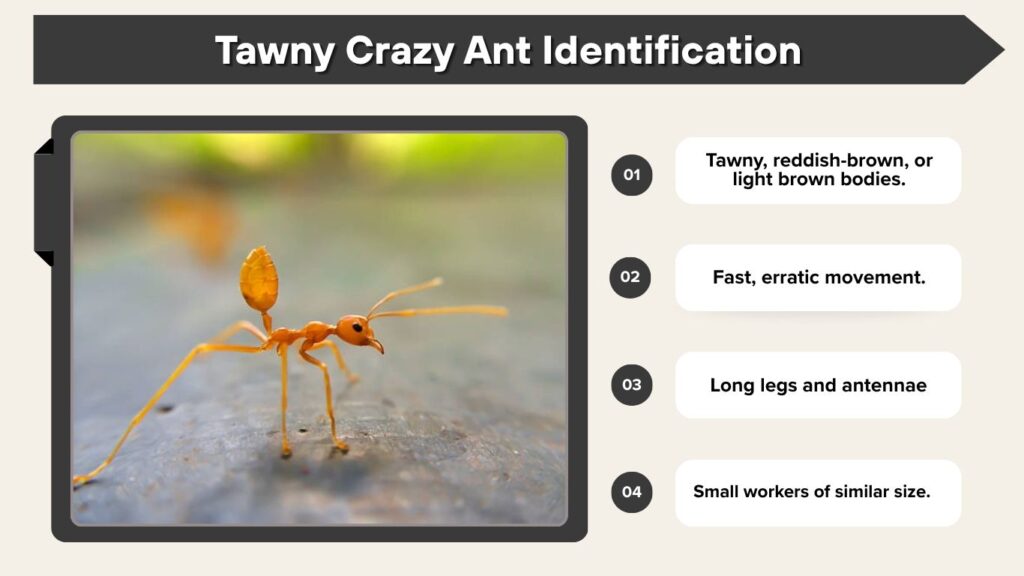
Correct identification matters because tawny crazy ants are often confused with fire ants, Argentine ants, odorous house ants, and other crazy ant species. The wrong identification can lead to poor treatment results.
Key Characteristics
Tawny crazy ants usually have:
- Tawny, reddish-brown, or light brown bodies
- Fast, erratic movement
- Long legs and antennae
- Small workers of similar size
- No obvious mound like fire ants
- Large trails across walls, soil, plants, and structures
- Heavy activity around moisture and food sources
They are small ants, but their huge numbers make infestations obvious. You may see thousands of workers moving across patios, sidewalks, foundations, tree trunks, and outdoor equipment.
Tawny Crazy Ants vs Fire Ants
| Feature | Tawny Crazy Ants | Fire Ants |
|---|---|---|
| Color | Tawny to reddish-brown | Reddish-brown to dark red |
| Movement | Fast, scattered, erratic | More direct and aggressive |
| Sting | Do not sting | Painful sting |
| Bite | Can bite mildly | Bite and sting |
| Nest | Hidden nests, no clear mound | Often visible soil mounds |
| Main Concern | Huge numbers, electronics, nuisance | Painful stings, mounds, medical risk |
Fire ants are more dangerous to humans because they sting. Tawny crazy ants are often more frustrating because they spread in huge numbers and can invade electrical equipment, cars, and structures.
Where Are Tawny Crazy Ants Found?
Tawny crazy ants are now established in parts of the Gulf Coast and southern United States. They are strongly associated with warm, humid environments and are commonly discussed in relation to Texas, Florida, Louisiana, Mississippi, Alabama, and Georgia.
Tawny Crazy Ants in Texas
Texas is one of the best-known locations for tawny crazy ant problems. They were first detected around Houston in 2002 and later spread to many counties. They are especially concerning in areas where they form dense populations around homes, parks, farms, and wooded properties.
In Texas, tawny crazy ants may replace fire ants in some invaded areas. That may sound positive at first, but it creates a different problem. Instead of fire ant mounds, property owners may face thick layers of fast-moving ants around buildings, yards, electrical systems, and outdoor equipment.
Tawny Crazy Ants in Florida
Tawny crazy ants are also found in Florida, where warm temperatures and moisture help them survive. They may nest near buildings, landscaped areas, mulch, potted plants, irrigation systems, and natural debris.
Florida infestations can be difficult because many other small ants also invade homes. Before treatment, it is important to confirm whether the ants are truly tawny crazy ants or another species with similar behavior.
Are Tawny Crazy Ants Dangerous?
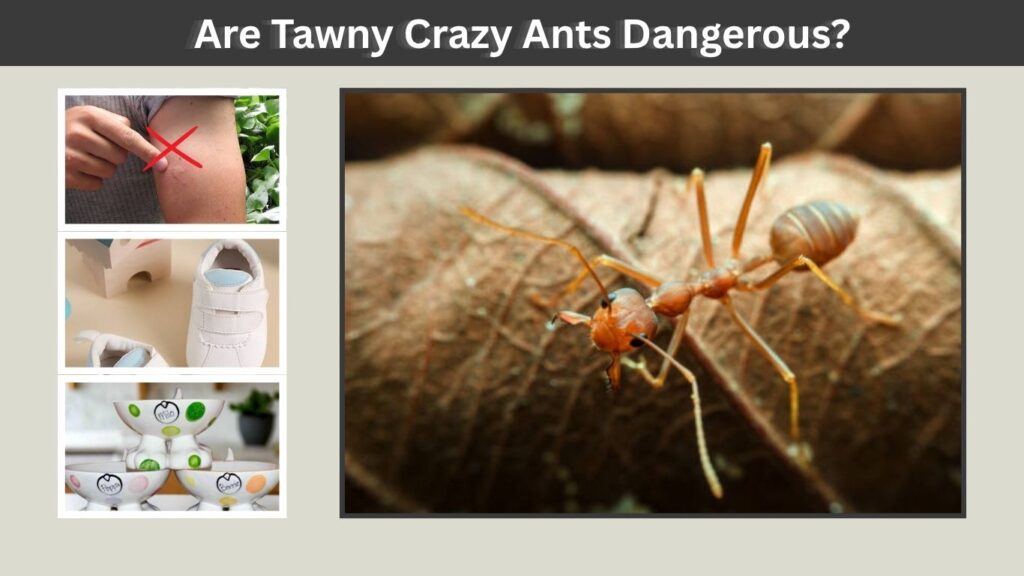
Tawny crazy ants are not usually considered dangerous in the same way fire ants are. They do not sting, and their bites are usually mild. However, they can still cause problems for people, pets, and properties.
Large infestations can make outdoor spaces uncomfortable. Ants may crawl over shoes, legs, pet bowls, patios, and garden areas. They may enter homes in search of food, moisture, or shelter. They can also invade sensitive equipment, creating costly damage.
Do Tawny Crazy Ants Bite?
Yes, tawny crazy ants can bite, but their bite is generally less painful than a fire ant sting. Most people experience mild irritation rather than serious injury. However, any ant contact can be more irritating for children, pets, or people with sensitive skin.
If bites cause swelling, infection, severe itching, breathing problems, or an unusual allergic reaction, medical advice is recommended. For most homeowners, the bigger issue is not the bite itself but the size of the infestation.
Why Are Tawny Crazy Ants a Nuisance?
Tawny crazy ants become a nuisance because they can build extremely large populations. Instead of a few trails, an infested property may have ants everywhere. They can cover sidewalks, trees, foundations, sheds, outdoor furniture, and equipment.
Common Problems
Tawny crazy ants may cause issues by:
- Invading homes and kitchens
- Crawling into electrical boxes and devices
- Nesting in mulch, leaf litter, and debris
- Swarming pet food and outdoor feeding areas
- Displacing other insects and native ants
- Moving into cars, pumps, and air-conditioning units
- Making yards and patios unpleasant to use
Their ability to invade electronics is one of the most frustrating problems. They may enter breaker boxes, outlets, pumps, computers, vehicles, and other devices. When many ants gather in electrical equipment, they can cause short circuits or equipment failure.
What Do Tawny Crazy Ants Eat?
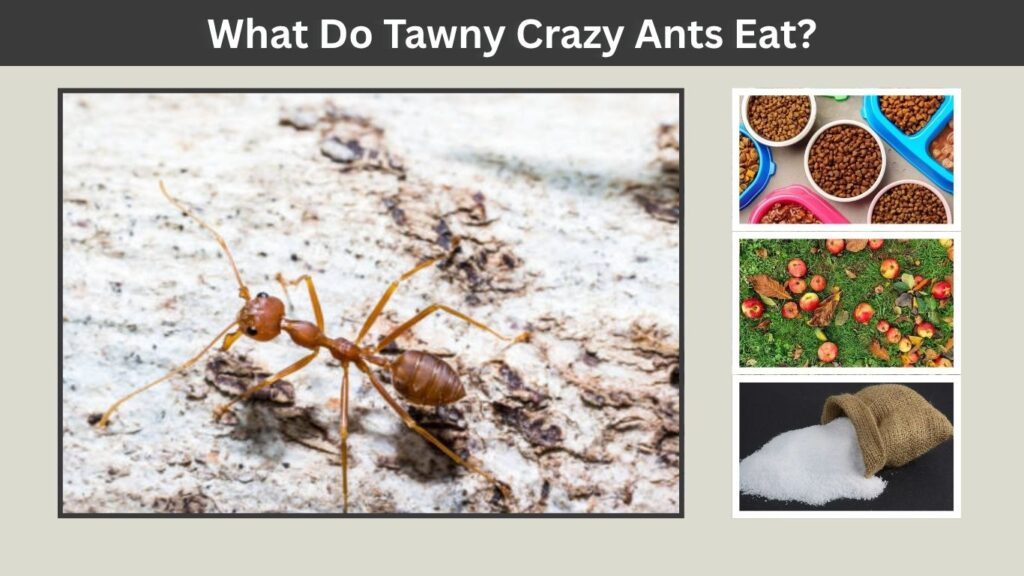
Tawny crazy ants are opportunistic feeders. They eat many types of food, which helps them survive around homes and landscapes. Their diet includes sweet liquids, proteins, insects, greasy foods, fruit, seeds, and honeydew from sap-feeding insects.
Honeydew is especially important. Aphids, scale insects, and mealybugs produce this sugary liquid while feeding on plants. Tawny crazy ants may protect these pests from predators so they can continue collecting honeydew. This can make plant pest problems worse in gardens and landscapes.
Food Sources Around Homes
They may be attracted to:
- Pet food
- Grease and food scraps
- Sugary drinks and spills
- Fruit and fallen produce
- Kitchen crumbs
- Trash cans
- Honeydew-producing insects
- Moisture around pipes or irrigation
Removing food and water sources will not eliminate a large colony by itself, but it can reduce indoor activity and make control efforts more effective.
Tawny Crazy Ant Colony Behavior
Tawny crazy ants are difficult to manage because colonies can be large and spread across wide areas. They may have multiple nesting sites and many queens. Instead of one obvious mound, the colony may be scattered through soil, mulch, logs, potted plants, leaf litter, and structural gaps.
Workers can forage long distances from the nest. That means the ants seen inside a home may not be nesting inside the home. They may be coming from outside, following trails along walls, pipes, tree branches, or foundation cracks.
Because of this behavior, spraying the ants you see often gives only short-term relief. The visible workers may die, but hidden queens and brood can continue producing more ants.
How to Get Rid of Tawny Crazy Ants
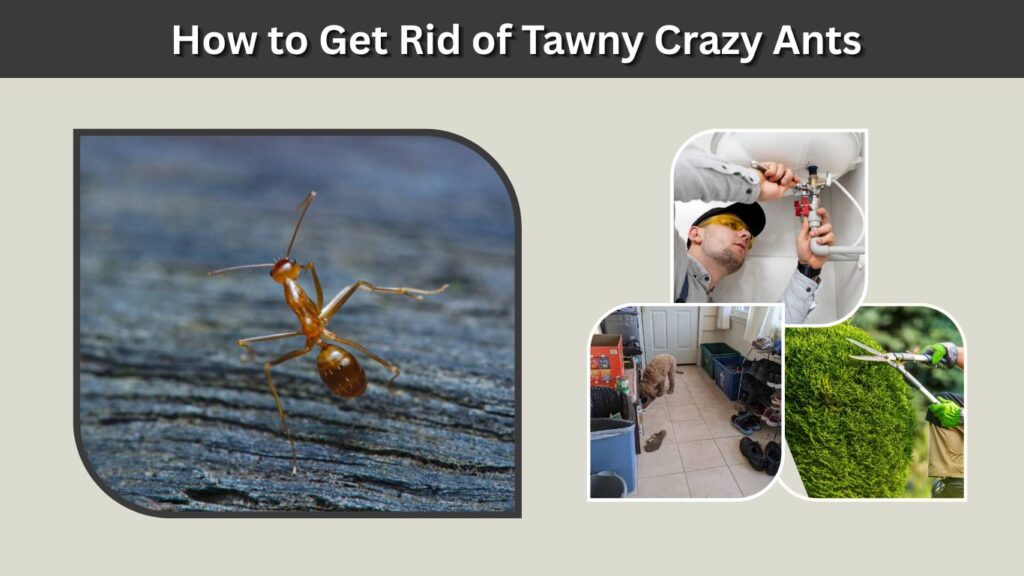
Getting rid of tawny crazy ants usually requires an integrated pest management approach. This means combining inspection, sanitation, exclusion, habitat reduction, baiting, and professional treatment when needed.
Step-by-Step Control Tips
Start with these steps:
- Confirm the ant species before treatment
- Remove food scraps, pet food, and sugary spills
- Fix leaks and reduce excess moisture
- Trim vegetation touching the house
- Remove leaf litter, mulch buildup, logs, and debris
- Seal cracks, gaps, and utility entry points
- Use baits where ants are actively foraging
- Avoid spraying over bait stations
- Contact a licensed pest professional for heavy infestations
Bait can help because workers carry it back to the colony. However, tawny crazy ants may not respond equally to every bait. Their food preference can change, and some products may work slowly or poorly if used incorrectly.
For large outdoor infestations, professional treatment is often the best option. Pest professionals may use a combination of baits, barrier treatments, monitoring, and follow-up visits.
Tawny Crazy Ant Bait and Treatment
Many people search for products such as Advion, Alpine WSG, Termidor, vinegar, or other treatments for tawny crazy ants. Some professional products may be useful in certain situations, but product choice depends on location, label restrictions, infestation size, and whether the ants are indoors or outdoors.
Homeowners should be careful with pesticide use. Applying the wrong product in the wrong place may scatter ants, contaminate surfaces, harm pets, or fail to reach the colony.
What Usually Works Best?
The most effective plan usually includes:
- Accurate identification
- Locating trails and nesting zones
- Reducing outdoor nesting materials
- Using labeled ant bait correctly
- Applying professional-grade products only as directed
- Repeating treatment and monitoring activity
Vinegar may kill some ants on contact or disrupt trails temporarily, but it is not a complete solution for a large tawny crazy ant infestation. Killing visible workers does not remove hidden nests or queens.
Tawny Crazy Ants in Cars and Electronics

Tawny crazy ants are known for invading cars, electrical boxes, pumps, outlets, air-conditioning units, computers, and other devices. They may be attracted to warm, protected spaces or electrical fields. Once inside, large numbers of ants can create serious problems.
What to Do If They Invade a Car
If tawny crazy ants are in your car:
- Remove all food, wrappers, and drink containers
- Vacuum seats, mats, trunk space, and crevices
- Clean sticky spills and cup holders
- Move the car away from ant trails or vegetation
- Inspect around tires, wheel wells, and engine areas
- Avoid spraying insecticide inside the cabin
- Use exterior baiting or professional treatment nearby
If ants are inside electrical systems, do not spray liquid insecticide into panels or wiring. This can be dangerous and may damage equipment. Call a pest professional or technician when electrical components are involved.
Tawny Crazy Ant Biological Control
Researchers have studied biological control options for tawny crazy ants. One promising area involves natural pathogens that affect tawny crazy ant populations. Biological control is important because these ants can be difficult to manage with standard products alone.
However, biological control is not a do-it-yourself method. It requires scientific testing, regulatory approval, and careful field use. Homeowners should not attempt to move infected ants, fungi, or pathogens between sites. For now, property-level control still depends on inspection, habitat reduction, baiting, and professional pest management.
Are Tawny Crazy Ants Native to the US?
Tawny crazy ants are not native to the United States. They are originally from South America and have become invasive in parts of the southern US. Their spread is strongly linked to human activity, especially the movement of infested materials.
Soil, plants, mulch, equipment, hay, firewood, vehicles, and shipping materials can all help ants move to new places. Because colonies may hide in small spaces, people can accidentally transport them without realizing it.
How to Prevent Tawny Crazy Ants From Spreading
Prevention is one of the most important parts of tawny crazy ant management. Once they become established, they are much harder to control.
Prevention Tips
To reduce the risk of spread:
- Inspect potted plants before moving them
- Avoid transporting infested mulch, soil, or debris
- Clean equipment before moving it to another site
- Store firewood and materials away from buildings
- Check vehicles, trailers, and outdoor tools
- Report unusual ant infestations in high-risk areas
- Follow local pest and quarantine guidance
If you live in an area with known tawny crazy ant infestations, be especially careful when moving landscaping materials or outdoor equipment.
FAQs
What are tawny crazy ants?
Tawny crazy ants are invasive ants known scientifically as Nylanderia fulva. They are small, reddish-brown ants that move quickly and erratically. They can form huge populations and invade homes, yards, vehicles, electrical equipment, and outdoor structures.
Do tawny crazy ants bite?
Yes, tawny crazy ants can bite, but they do not sting like fire ants. Their bite is usually mild and not medically serious for most people. The bigger problem is their large colony size and tendency to invade homes, electronics, cars, and outdoor areas.
How do you get rid of tawny crazy ants?
Control starts with proper identification, sanitation, moisture reduction, habitat cleanup, and targeted baiting. Surface sprays alone usually fail because colonies may be hidden and spread across wide areas. Heavy infestations often require a licensed pest control professional and repeated monitoring.
Are tawny crazy ants in Florida and Texas?
Yes, tawny crazy ants are found in parts of Texas and Florida, along with other Gulf Coast states. They were first detected near Houston in 2002 and have since spread to other areas. Warm, humid environments help them survive and expand.
Are tawny crazy ants worse than fire ants?
Tawny crazy ants are not worse than fire ants in terms of painful stings because they do not sting. However, they can be worse as a nuisance because they form huge populations, invade electronics, spread through properties, and are difficult to control once established.
