
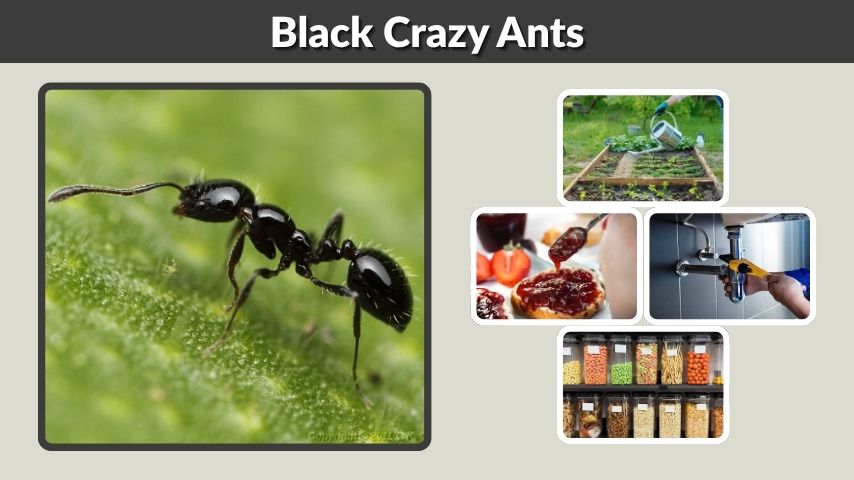
Black crazy ants are small, fast-moving ants known for their dark color, long legs, long antennae, and unpredictable running pattern. They often invade homes, gardens, greenhouses, cars, and warm outdoor spaces in large numbers. While they are not as dangerous as fire ants, they can still become a frustrating pest when colonies spread, forage indoors, or nest near buildings.
What Are Black Crazy Ants?
Black crazy ants are a common name for the longhorn crazy ant, a small dark ant species known scientifically as Paratrechina longicornis. They get the name “crazy ant” because they do not always move in neat, straight trails. Instead, workers often run quickly in scattered, jerky, unpredictable patterns, especially when disturbed.
These ants are often found in warm, humid regions, but they can also survive inside buildings, greenhouses, and other protected spaces in cooler areas. Because they adapt well to human environments, they may show up around homes, commercial buildings, plant nurseries, hospitals, restaurants, warehouses, and vehicles.
Black crazy ants are not usually the most destructive ant species in a yard, but they can become a serious nuisance. Their colonies may be hard to locate, and workers often forage long distances away from the nest. This means the ants you see in your kitchen, bathroom, garage, or car may be coming from a hidden nest some distance away.
Black Crazy Ant Identification
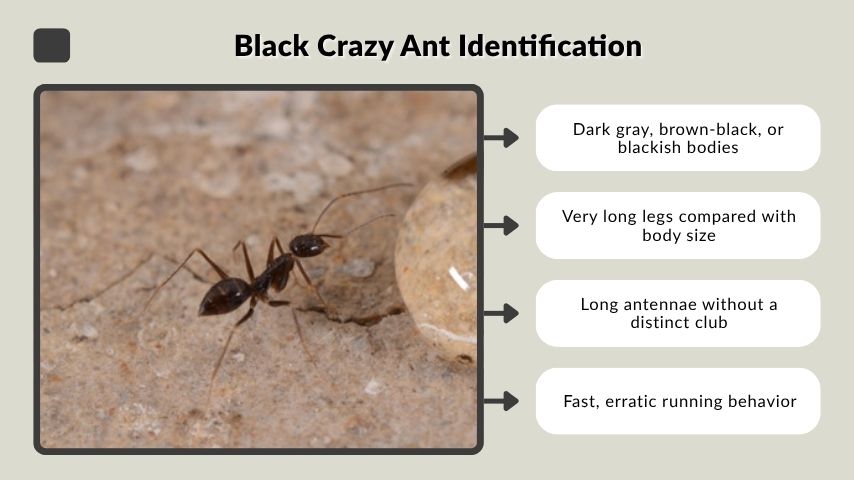
Correct identification is important before choosing a treatment plan. Many small dark ants look similar, including Argentine ants, odorous house ants, pavement ants, ghost ants, and other crazy ant species. Black crazy ants stand out because of their long legs, long antennae, dark body color, and rapid movement.
Key Features
Black crazy ants usually have:
- Dark gray, brown-black, or blackish bodies
- Very long legs compared with body size
- Long antennae without a distinct club
- Fast, erratic running behavior
- Small worker size, usually around one-eighth inch
- Workers that look similar in size instead of having large majors
- Trails around walls, foundations, plants, pipes, and food sources
Their long antennae are one of the most useful identification clues. If you watch them closely, the antennae may appear unusually long compared with many other household ants.
Black Crazy Ant vs Other Ants
| Feature | Black Crazy Ant | Fire Ant | Argentine Ant |
|---|---|---|---|
| Color | Dark gray to blackish | Reddish-brown | Light to dark brown |
| Movement | Fast and erratic | Aggressive swarming | Steady trail movement |
| Sting | No true sting | Painful sting | No major sting |
| Body Shape | Slender with long legs | Stockier workers | Small, uniform workers |
| Common Issue | Indoor nuisance and hard-to-find nests | Painful stings and mounds | Large household trails |
Where Do Black Crazy Ants Live?
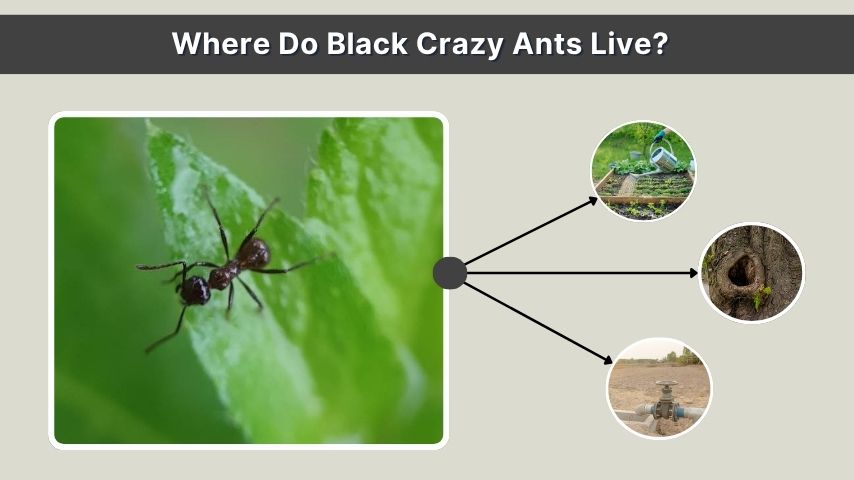
Black crazy ants are strongly associated with warm, humid environments. They are common in tropical and subtropical regions and can also live indoors in temperate climates. In the United States, people often report them in states such as Florida and Texas, especially in urban and coastal areas where warmth, moisture, and human structures create suitable nesting opportunities.
Common Nesting Areas
Black crazy ants may nest in:
- Soil near foundations
- Mulch, leaf litter, and garden beds
- Rotten wood or tree cavities
- Under stones, boards, logs, or debris
- Wall voids and structural gaps
- Potted plants and greenhouse containers
- Around pipes, drains, and moisture sources
- Vehicles, especially if food or moisture is available
These ants are flexible nesters. They do not always create obvious mounds, so an infestation may be noticed only after workers appear indoors or form trails near food and water.
Are Black Crazy Ants Dangerous?
Black crazy ants are not usually considered dangerous to people in the same way fire ants are. They do not have a painful sting, and they are not known for causing severe human injuries. However, that does not mean they should be ignored.
They can contaminate food, invade kitchens, enter electrical areas, disturb pets, and become a major nuisance when colonies are large. Some people may also experience mild irritation if ants crawl on the skin or bite.
Do Black Crazy Ants Bite?
Black crazy ants can bite, but their bite is usually mild and not medically serious for most people. They do not sting like fire ants. If someone feels discomfort, it is more likely to be a small pinch or irritation rather than a painful venomous sting.
However, avoid handling large numbers of ants. Children, pets, and people with sensitive skin may react more strongly to contact. If a bite area becomes swollen, painful, infected, or unusually irritated, it is best to seek medical advice.
Are Black Crazy Ants Invasive?
Black crazy ants are widely distributed and are often associated with human transport. They can spread through potted plants, soil, cargo, nursery materials, landscaping supplies, and goods moved between locations. Because they adapt well to disturbed environments, they can establish in urban areas, greenhouses, and buildings.
Whether they are officially treated as invasive depends on the region. In many places, they are considered a nuisance pest. In sensitive ecosystems or areas where they displace native ants, they may create ecological concerns. Their ability to nest in many places and forage widely makes them difficult to manage once established.
What Do Black Crazy Ants Eat?
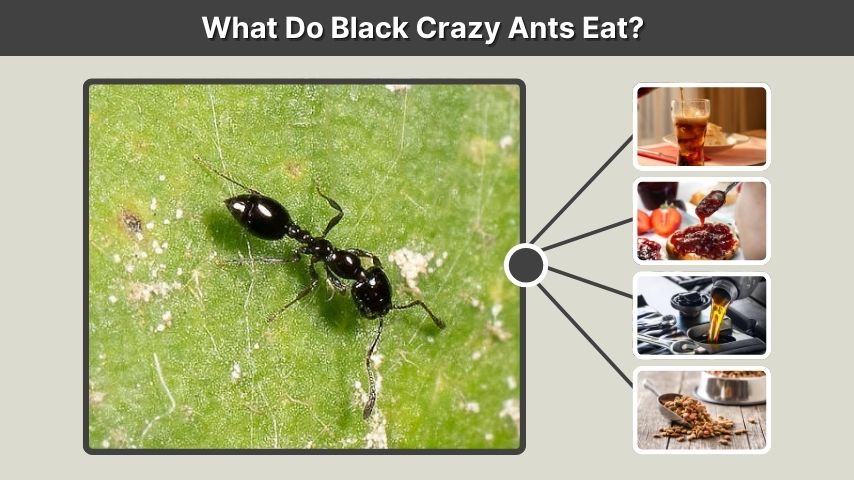
Black crazy ants are opportunistic feeders. They eat many different foods, which helps them survive around homes and commercial buildings. Their diet can include sugary liquids, proteins, dead insects, live insects, seeds, fruit, grease, crumbs, pet food, and honeydew from sap-feeding insects.
Common Food Sources
They are often attracted to:
- Sweet spills and sugary drinks
- Fruit, syrup, honey, and jam
- Grease, oils, and meat scraps
- Pet food and animal feed
- Dead insects
- Kitchen crumbs
- Honeydew from aphids, scale insects, and mealybugs
Outdoors, black crazy ants may tend honeydew-producing insects. This means they protect pests like aphids or scale insects in exchange for sugary honeydew. As a result, their presence can sometimes make plant pest problems worse.
Black Crazy Ant Queen and Colony Behavior
Searches for “black crazy ant queen” and “black crazy ant queen for sale” show that some people are interested in the colony structure or ant keeping. A black crazy ant colony contains queens, workers, males, eggs, larvae, and pupae. Workers are the ants most people see foraging around food, water, walls, and plants.
Black crazy ants can be difficult to control because workers may forage far from their nest. Killing visible workers does not always eliminate the colony. If queens and brood remain hidden, the infestation can continue.
People should also be cautious about buying or moving live ants. In many areas, transporting non-native or pest ants may be restricted or harmful to local ecosystems. If you are interested in ant keeping, choose legal, region-appropriate species and follow local rules.
Black Crazy Ants in Florida and Texas
Black crazy ants are commonly discussed in relation to Florida and Texas because both states provide warm climates and many urban environments where these ants can thrive. In Florida, they are often associated with homes, landscapes, greenhouses, and moisture-rich areas. In Texas, they may be confused with other nuisance ants, including other crazy ant species.
For homeowners, the location matters because different ant species may require different control methods. In Texas, for example, people may confuse black crazy ants with tawny crazy ants or fire ants. In Florida, they may be mistaken for ghost ants, Argentine ants, or other small dark ants.
If the infestation is large, recurring, or spreading through a property, professional identification can save time and money. Treating the wrong ant species often leads to poor results.
Black Crazy Ants in Cars
One unusual but common search topic is black crazy ants in cars. Ants may enter vehicles when cars are parked near infested soil, trees, mulch, or trash areas. They may also be attracted by food crumbs, drink spills, pet food, or moisture inside the vehicle.
How to Remove Ants From a Car
To reduce black crazy ants in a vehicle:
- Remove all food, wrappers, and drink containers
- Vacuum seats, carpets, mats, trunk space, and crevices
- Clean sticky spills and cup holders
- Move the car away from ant trails or vegetation
- Inspect under the hood and around wheel wells
- Use bait stations carefully outside the vehicle area
- Avoid spraying harsh insecticides inside the cabin
If ants are nesting inside the vehicle, a pest professional may be needed. Do not apply indoor sprays near vents, electronics, child seats, or food-contact surfaces unless the product label specifically allows that use.
How to Get Rid of Black Crazy Ants
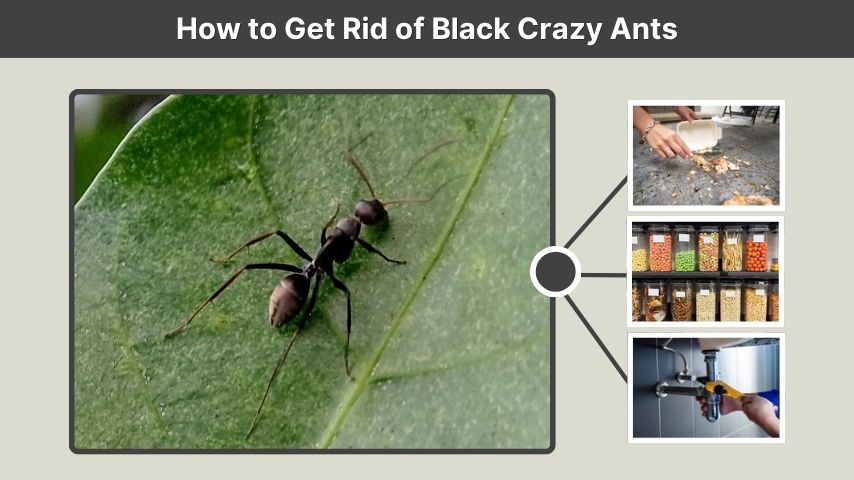
Getting rid of black crazy ants requires more than spraying the ants you see. Because workers forage far from the nest, visible trails may not reveal the colony location. A better approach is to combine sanitation, exclusion, moisture control, and targeted baiting.
Step-by-Step Control
Start with these actions:
- Identify the ant correctly
- Remove food crumbs and spills
- Store pantry goods in sealed containers
- Keep pet food cleaned up after feeding
- Fix leaks and reduce moisture
- Trim vegetation touching the structure
- Remove debris, boards, and clutter near the home
- Seal cracks, gaps, and entry points
- Use ant bait instead of relying only on sprays
Baits are useful because workers carry food back to the colony. However, bait choice matters. Some ants prefer sweets at certain times and proteins or fats at others. If one bait does not work, another bait type may be needed.
Avoid spraying directly over bait, because sprays can repel ants and prevent workers from feeding on the bait. Always follow the product label and keep baits away from children, pets, and food-preparation areas.
Natural Predators of Black Crazy Ants
Black crazy ants may be eaten by spiders, beetles, birds, lizards, frogs, and other predatory insects. Other ants may also compete with them. However, natural predators usually do not provide reliable control around homes.
In urban settings, black crazy ants survive well because they have access to shelter, water, food waste, and protected nesting sites. Predators may reduce some workers, but they rarely eliminate hidden colonies. For serious infestations, habitat reduction and baiting are more practical than relying on predators.
Black Crazy Ants vs Fire Ants
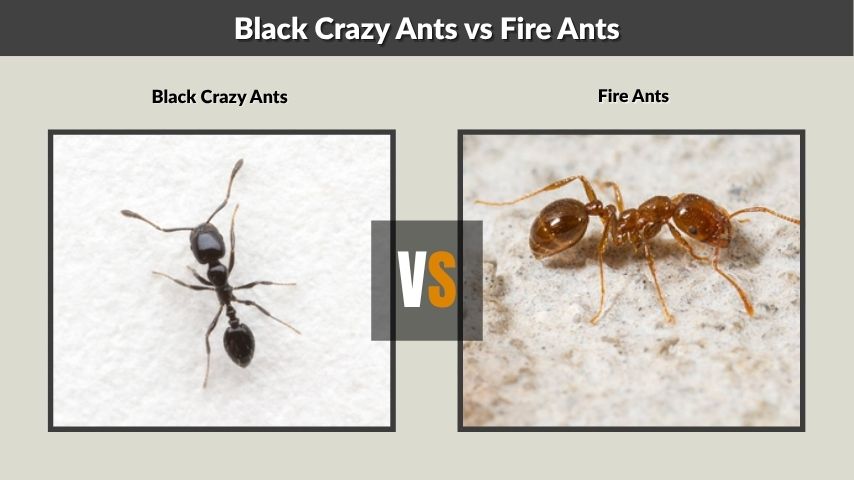
Black crazy ants and fire ants are very different pests. Fire ants are more dangerous to people and pets because they sting and can cause painful welts. Black crazy ants do not sting, but they can be harder to trace because they move quickly and nest in hidden places.
Fire ants often build visible mounds in lawns or open soil. Black crazy ants are more likely to appear as fast-moving workers around walls, plants, bathrooms, kitchens, garages, and outdoor structures. Fire ant control usually focuses on mound treatment and broadcast baiting. Black crazy ant control often requires tracking trails, reducing food and moisture, and using targeted baits near active foraging areas.
Should You Keep Black Crazy Ants as Pets?
Some people search for black crazy ant care, formicarium setups, queen care, and black crazy ants for sale. However, keeping this species is not always a good idea. They are fast, escape-prone, adaptable, and may be considered pests in many regions.
Buying queens or colonies can also contribute to accidental spread. If ants escape, they may establish indoors or outdoors. Before keeping any ant species, check local regulations and choose a legal species that is safe for your area.
FAQs
What is the scientific name of black crazy ants?
The scientific name of the black crazy ant is Paratrechina longicornis. It is also commonly called the longhorn crazy ant because of its very long antennae. The name “crazy ant” comes from its fast, erratic movement.
Are black crazy ants dangerous?
Black crazy ants are not usually dangerous to humans. They do not sting like fire ants, but they can bite mildly and become a serious nuisance indoors. Large infestations may contaminate food, disturb pets, and spread through kitchens, bathrooms, vehicles, or garden areas.
Where are black crazy ants found?
Black crazy ants are found in many tropical and subtropical regions. They are also common in buildings, greenhouses, and urban environments. In the United States, they are often reported in warm states such as Florida and Texas, especially around moisture, plants, and structures.
What do black crazy ants eat?
Black crazy ants eat sugary foods, proteins, grease, dead insects, fruit, crumbs, pet food, and honeydew from aphids or scale insects. Their flexible diet helps them survive around homes, gardens, restaurants, greenhouses, and other places where food and moisture are available.
How do you get rid of black crazy ants?
To get rid of black crazy ants, remove food and water sources, seal entry points, reduce outdoor clutter, and use ant baits near active trails. Spraying visible workers alone often fails because nests may be hidden. For large or recurring infestations, contact a pest control professional.
