
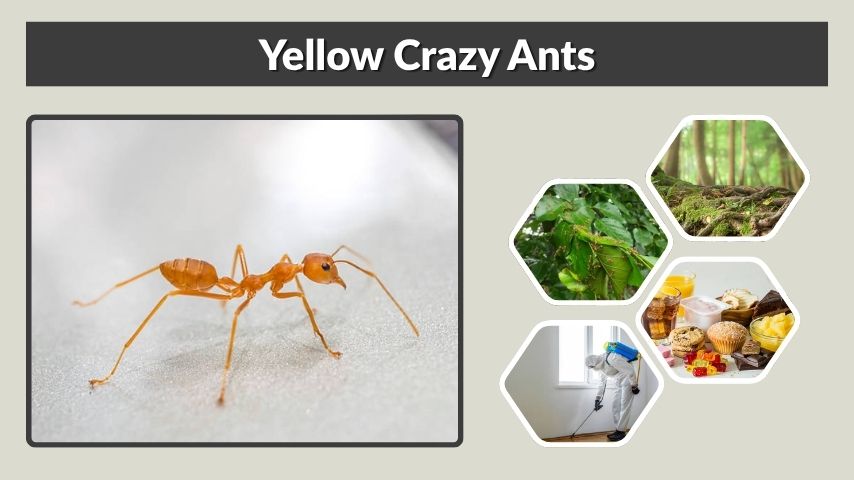
Yellow crazy ants are small, fast-moving invasive ants known for their erratic walking pattern, yellowish body color, and ability to form massive colonies. Although they do not sting like fire ants, they can spray formic acid, disturb wildlife, damage ecosystems, and become a serious nuisance around homes, gardens, farms, and natural areas. Understanding their behavior, risks, and control options is the first step toward managing them responsibly.
What Are Yellow Crazy Ants?
Yellow crazy ants are invasive ants best known for their long legs, quick movement, and chaotic-looking trails. Their common name comes from their yellow to orange-brown color and the “crazy” way they move when disturbed. Unlike ants that follow slow, neat lines, yellow crazy ants often run in scattered, frantic patterns.
The scientific name of the yellow crazy ant is Anoplolepis gracilipes. This species has spread through many tropical and subtropical regions, often moved accidentally by human activity. Soil, potted plants, cargo, timber, machinery, vehicles, garden waste, and shipping materials can all help ants move from one location to another.
Yellow crazy ants are especially concerning because they can form large, multi-queen colonies. In suitable environments, these colonies may grow into supercolonies with very high worker numbers. Once established, they can dominate an area, displace native insects, protect sap-sucking pests, and disrupt local food chains.
Yellow Crazy Ant Identification
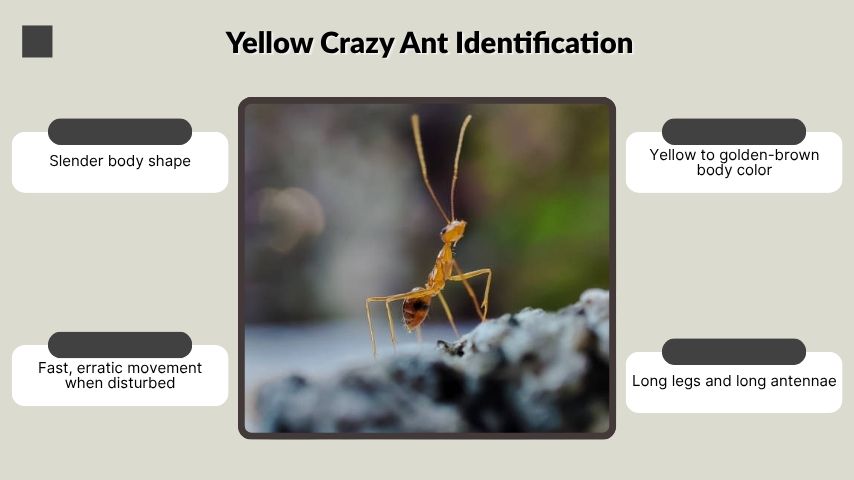
Identifying yellow crazy ants correctly is important because many ant species look similar at first glance. These ants are usually more noticeable because of their speed, long legs, and unusual movement rather than their size alone.
Key Characteristics
Yellow crazy ants usually have:
- Yellow to golden-brown body color
- Long legs and long antennae
- Slender body shape
- Fast, erratic movement when disturbed
- Trails around trees, walls, garden beds, or structures
- No obvious sting, unlike fire ants
Workers are generally only a few millimeters long, but their long legs and antennae make them appear larger. Their bodies are not as dark as black crazy ants or Argentine ants, and they are not reddish like many fire ants.
Quick Comparison Table
| Feature | Yellow Crazy Ant | Fire Ant | Argentine Ant |
|---|---|---|---|
| Color | Yellow to orange-brown | Reddish-brown | Light to dark brown |
| Movement | Fast and erratic | Aggressive, swarming | Steady trail movement |
| Sting/Bite | No sting; sprays acid | Painful sting | May bite, no major sting |
| Colony Type | Can form supercolonies | Large mound colonies | Large connected colonies |
| Main Concern | Ecosystem damage and nuisance | Human and animal stings | Household and garden invasion |
Where Do Yellow Crazy Ants Live?
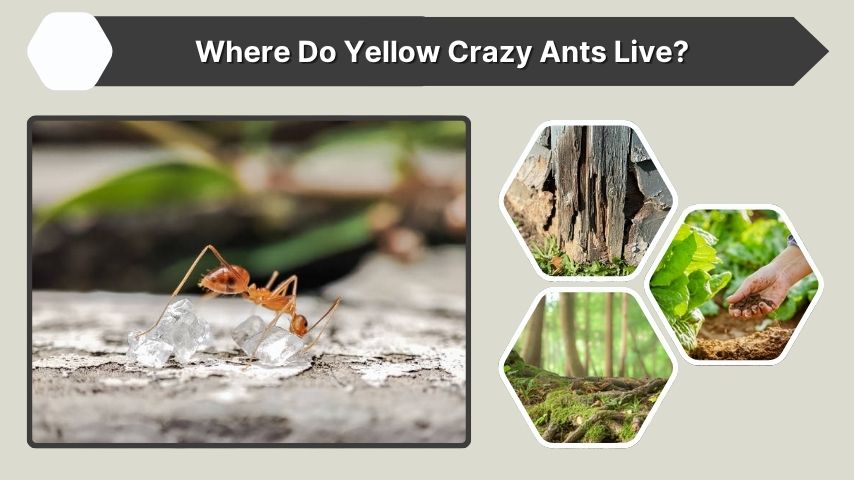
Yellow crazy ants prefer warm, humid environments. They are commonly associated with tropical and subtropical areas, but they can survive in many disturbed habitats if conditions are suitable. They nest in soil, leaf litter, rotten wood, tree bases, garden beds, compost, wall gaps, and under objects lying on the ground.
Common Nesting Sites
You may find yellow crazy ant nests in:
- Mulch, leaf litter, and garden debris
- Soil around tree roots
- Potted plants and nursery stock
- Under rocks, timber, and paving
- Wall cavities or outdoor structures
- Around irrigation systems and moist areas
They do not always build obvious mounds. This can make them harder to detect than mound-building ants such as fire ants. Instead, you may notice heavy foraging trails, large numbers of workers, or ants moving up and down tree trunks.
What Do Yellow Crazy Ants Eat?
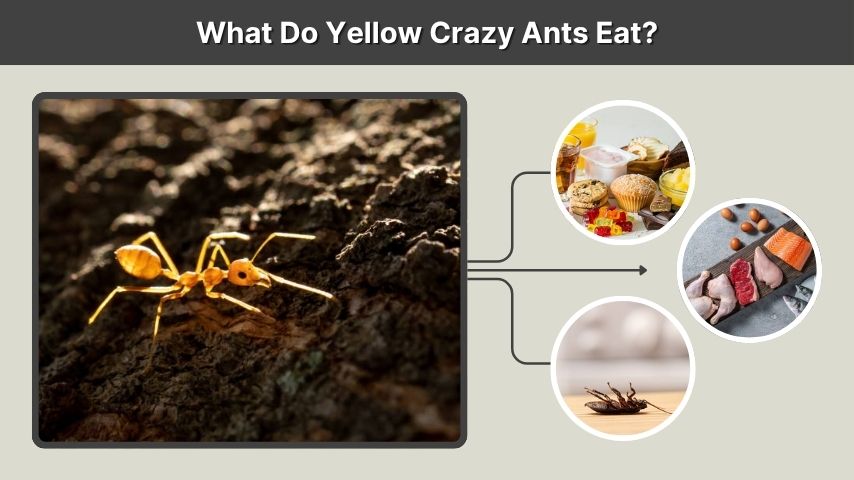
Yellow crazy ants are opportunistic feeders. They eat a mix of sugary foods, proteins, dead insects, small animals, seeds, and household scraps. One reason they become so successful is their relationship with sap-sucking insects such as scale insects, aphids, and mealybugs.
These insects produce honeydew, a sugary liquid that ants love. Yellow crazy ants protect these pests from predators and may help them spread. In return, the ants feed on honeydew. This relationship can increase plant pest problems and lead to sooty mold growth on leaves, fruit, and stems.
In gardens and farms, this can create a chain reaction. More ants can mean more scale insects. More scale insects can mean weaker plants, reduced fruit quality, and increased plant disease pressure.
Are Yellow Crazy Ants Dangerous to Humans?
Yellow crazy ants are not usually considered deadly to humans. They do not sting like fire ants, and they are not known for causing fatal attacks on people. However, they can still be unpleasant and potentially harmful in large numbers.
When threatened, yellow crazy ants spray formic acid. This acid can irritate skin and eyes. People who disturb a large nest or supercolony may experience burning, redness, or discomfort if ants spray acid onto sensitive areas.
Can Yellow Crazy Ants Kill Humans?
For most people, yellow crazy ants are unlikely to kill humans. The bigger concern is irritation, allergic reaction risk, contamination, and nuisance around homes or outdoor spaces. Pets, young children, and people with sensitive skin should avoid contact with heavy infestations.
If ants get into the eyes, rinse with clean water and seek medical advice if irritation continues. If a person develops breathing problems, swelling, dizziness, or a severe allergic response after contact with ants, treat it as urgent and get medical help.
Why Are Yellow Crazy Ants a Problem?
Yellow crazy ants are a problem because they can spread quickly, reach very high numbers, and change the balance of ecosystems. In natural areas, they may outcompete native ants and other insects. They can attack small animals, disrupt soil processes, and reduce food sources for birds, reptiles, and other wildlife.
Their impacts are especially well known on Christmas Island, where yellow crazy ant supercolonies have harmed red crab populations. Red crabs are important because they help shape the forest floor by eating leaf litter, digging burrows, and recycling nutrients. When ants reduce crab numbers, the structure of the forest can change.
Environmental Impacts
Yellow crazy ants can affect the environment by:
- Displacing native ants and insects
- Attacking small animals and ground-dwelling wildlife
- Spraying formic acid on crabs, reptiles, and other animals
- Encouraging scale insects and plant pests
- Changing forest floor processes
- Reducing biodiversity in invaded areas
The damage is not always immediate. Sometimes the biggest impacts appear over time as native species decline, plant pests increase, and natural processes become unbalanced.
Yellow Crazy Ants in Australia and Christmas Island
Yellow crazy ants are a major concern in parts of Australia, especially in warmer regions where they can survive and spread. They have been detected in port areas and have established in parts of Queensland. In some locations, management has shifted from full eradication to ongoing control and impact reduction.
Christmas Island is one of the most famous examples of yellow crazy ant damage. The ants were accidentally introduced there in the early twentieth century. By the late twentieth century, large supercolonies had formed. These supercolonies affected red crabs and created wider ecological problems across the island’s rainforest.
Control programs on Christmas Island have used baiting, monitoring, and biological control research. One biocontrol approach targets the scale insects that provide honeydew to the ants. By reducing this food source, managers aim to weaken ant supercolonies and reduce their environmental impact.
Yellow Crazy Ant Queen and Colony Structure
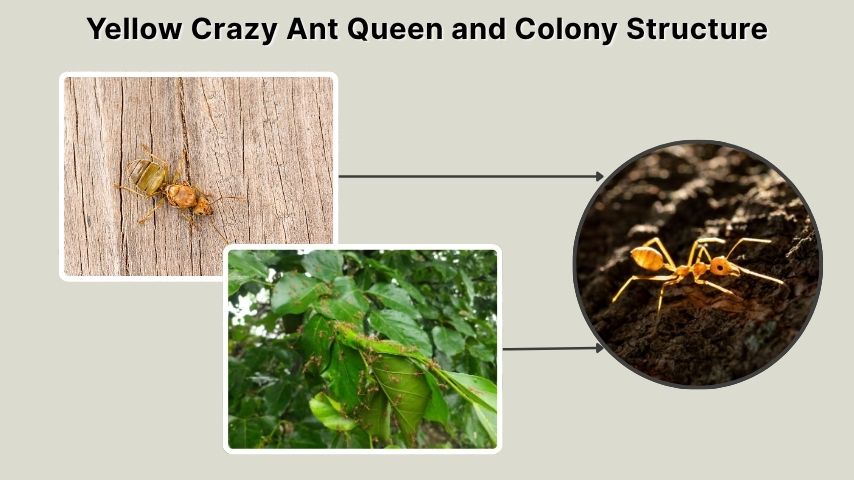
A yellow crazy ant colony may contain multiple queens. This is one reason infestations can grow quickly and become hard to eliminate. When a colony has more than one queen, it can reproduce and expand more efficiently than colonies that depend on a single queen.
New colonies often spread by budding. Budding happens when queens and workers move a short distance from the original nest to form a new nest. This is different from relying only on long-distance mating flights. Budding can create networks of related nests across a yard, farm, or natural area.
Because of this colony structure, simply killing visible workers rarely solves the problem. The queens may remain hidden, and the colony can recover. Effective control must target the colony, not just the ants you see on the surface.
Do Yellow Crazy Ants Bite?
Yellow crazy ants can bite, but biting is not their main defense. They are more known for spraying formic acid. This acid helps them subdue prey and defend themselves. In large numbers, the spray can irritate skin, eyes, and sensitive tissue.
This is one major difference between yellow crazy ants and fire ants. Fire ants are feared because of painful stings. Yellow crazy ants are feared more for their invasive behavior, large colony size, acid spraying, and ecological damage.
How to Get Rid of Yellow Crazy Ants
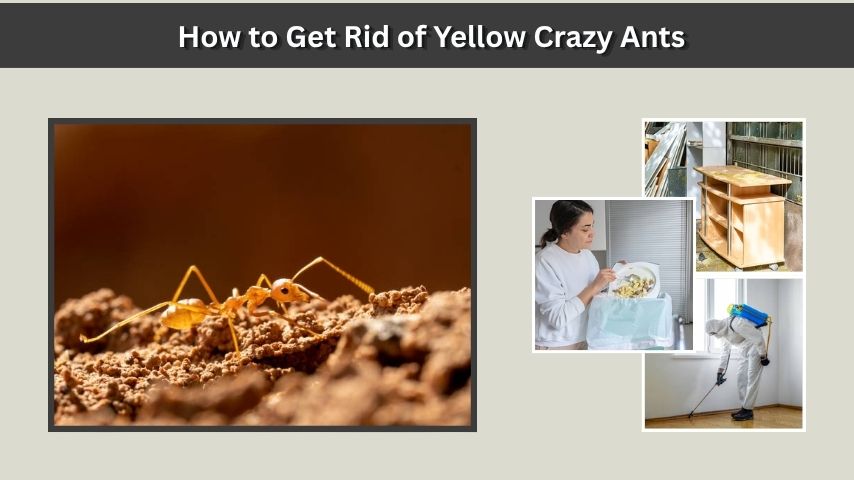
Getting rid of yellow crazy ants requires careful identification and a colony-level approach. Because they can form large, connected colonies, random spraying may only kill workers and scatter the infestation.
Practical Control Steps
For homes, gardens, or small properties, consider these steps:
- Confirm the ant species before treatment
- Avoid moving infested soil, plants, mulch, or equipment
- Remove food scraps, fallen fruit, and waste
- Reduce clutter, timber, and debris where ants can nest
- Use ant baits designed for the target species
- Follow local biosecurity or pest-control guidance
- Contact a licensed pest professional for heavy infestations
Baits are often more useful than surface sprays because workers carry bait back to the colony. However, the right bait depends on the species, season, food preference, and local regulations. Misusing chemicals can harm pets, wildlife, beneficial insects, and waterways.
Yellow Crazy Ant Control and Prevention
Prevention is easier than eradication. Yellow crazy ants often spread through human movement of materials. A single infested pot plant, load of mulch, or piece of equipment can start a new infestation.
How to Reduce Spread
To reduce the risk of spreading yellow crazy ants:
- Check potted plants before moving them
- Inspect soil, mulch, compost, and landscaping materials
- Clean machinery, trailers, and outdoor equipment
- Do not dump garden waste in natural areas
- Report suspicious ants in high-risk regions
- Follow local quarantine or biosecurity rules
If you live in an area where yellow crazy ants are regulated, do not attempt to move infested materials. Reporting is often the best first step, especially near farms, forests, reserves, ports, or known eradication zones.
Yellow Crazy Ants vs Fire Ants
Yellow crazy ants and fire ants are both invasive pests, but they are not the same. Fire ants are more dangerous to humans because they sting and can cause painful welts. Yellow crazy ants do not sting, but their acid spray and huge colony numbers can still create serious problems.
Fire ants often build visible soil mounds. Yellow crazy ants may nest in less obvious places such as leaf litter, tree bases, wall gaps, and debris. Fire ants are usually reddish-brown, while yellow crazy ants are yellow to orange-brown with long legs and antennae.
From an environmental perspective, both species are serious threats. The right response depends on correct identification, local rules, and the scale of infestation.
Should You Buy Yellow Crazy Ants?
You should not buy yellow crazy ants, yellow crazy ant queens, or yellow crazy ant colonies. In many places, they are invasive or regulated pests. Selling, transporting, or keeping them can spread infestations and may break biosecurity laws.
Searches like “yellow crazy ant queen for sale” or “yellow crazy ants for sale” show that some people may be interested in keeping them as ant colonies. That is risky and irresponsible where the species is invasive. If you are interested in ant keeping, choose legal, non-invasive species recommended for your region.
FAQs
What are yellow crazy ants?
Yellow crazy ants are invasive ants with yellow to orange-brown bodies, long legs, and fast, erratic movement. Their scientific name is Anoplolepis gracilipes. They are known for forming large colonies, spraying formic acid, spreading through human activity, and causing environmental damage in tropical and subtropical areas.
Are yellow crazy ants dangerous to humans?
Yellow crazy ants are not usually deadly to humans, but they can still cause problems. They do not sting like fire ants, but they can spray formic acid, which may irritate skin and eyes. Heavy infestations can also become stressful around homes, pets, gardens, and outdoor work areas.
Where are yellow crazy ants native to?
The exact native range of yellow crazy ants is uncertain, but they are now widely spread through tropical and subtropical regions. Their global spread has been strongly linked to human movement of goods, plants, soil, cargo, and other materials that accidentally carry ants or nesting colonies.
Why are yellow crazy ants invasive?
Yellow crazy ants are invasive because they spread easily, nest in many places, eat many foods, and can form multi-queen colonies. They also protect honeydew-producing insects, which gives them a steady food supply. These traits help them dominate new environments and displace native species.
How do you control yellow crazy ants?
Control usually requires correct identification, baiting, monitoring, and preventing further spread. Surface sprays may kill visible workers but often miss queens and hidden nests. In serious infestations, contact local biosecurity authorities or a licensed pest professional, especially if yellow crazy ants are regulated in your area.
