
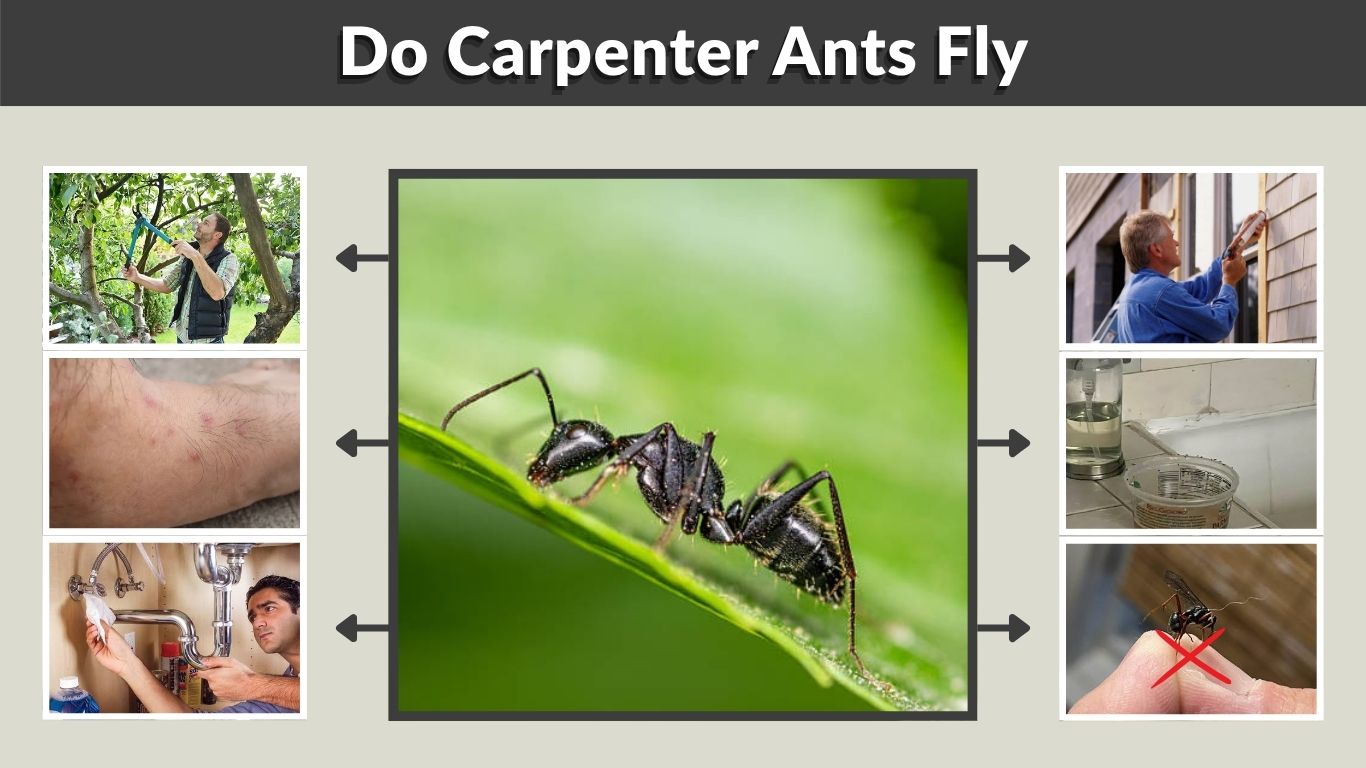
Carpenter ants are usually known for crawling through wood, walls, decks, and damp areas around the home. But sometimes, homeowners notice large black ants with wings and wonder: do carpenter ants fly? Yes, some carpenter ants can fly, but only reproductive males and queens have wings. Seeing flying carpenter ants indoors may be a warning sign that a mature colony is nearby or already inside your home.
Do Carpenter Ants Fly?
Yes, carpenter ants do fly during a specific stage of their life cycle. However, not every carpenter ant has wings. The carpenter ants that fly are reproductive ants, also called swarmers or alates. These winged ants leave the colony to mate and start new colonies.
Most carpenter ants you see crawling around your house are worker ants. Worker carpenter ants do not fly. They are responsible for collecting food, caring for young ants, expanding the nest, and protecting the colony.
Do All Carpenter Ants Fly?
No, all carpenter ants do not fly. Only reproductive carpenter ants have wings. These include male carpenter ants and young queen carpenter ants. Worker ants, which make up most of the colony, are wingless.
A carpenter ant colony usually needs time to mature before it produces winged ants. That means seeing flying carpenter ants can suggest that the colony has been active for a while.
Do Male Carpenter Ants Fly?
Yes, male carpenter ants can fly. Their main purpose is to mate with young queens during a swarm. After mating, male ants usually die. They do not build nests, care for young, or continue living in the colony for long.
Do Queen Carpenter Ants Fly?
Yes, queen carpenter ants can fly before starting a new colony. After mating, a queen lands, sheds her wings, and searches for a suitable nesting site. If she finds damp or damaged wood, she may begin laying eggs and building a new carpenter ant colony.
Are Flying Ants Always Carpenter Ants?
No, flying ants are not always carpenter ants. Many ant species produce winged reproductive ants. Flying ants may be carpenter ants, pavement ants, fire ants, field ants, odorous house ants, or another species.
This is why identification matters. A flying ant inside your house does not automatically mean you have carpenter ants. However, large black flying ants found indoors, especially near windows, walls, or damp wood, should be taken seriously.
Are Carpenter Ants the Same as Flying Ants?
Carpenter ants and flying ants are not exactly the same thing. “Flying ant” is a general term for any winged ant. A carpenter ant is a specific type of ant. Some carpenter ants can become flying ants when they are reproductive males or queens.
So, a flying carpenter ant is both a carpenter ant and a flying ant. But not every flying ant is a carpenter ant.
Flying Carpenter Ants vs Other Flying Ants
Flying carpenter ants are usually larger than many other flying ants. They often appear black or dark brown, although color can vary by species. Their size, body shape, and nesting habits can help separate them from other ants.
| Feature | Flying Carpenter Ants | Other Flying Ants |
| Size | Usually larger | Often smaller |
| Color | Often black or dark brown | Can be black, brown, red, or yellowish |
| Wings | Two pairs of wings | Two pairs of wings |
| Body shape | Narrow waist, elbowed antennae | Narrow waist, elbowed antennae |
| Main concern | Nesting in damaged or damp wood | Depends on species |
| Indoor warning sign | May indicate a mature colony | May be accidental entry or another nest |
What Do Flying Carpenter Ants Look Like?
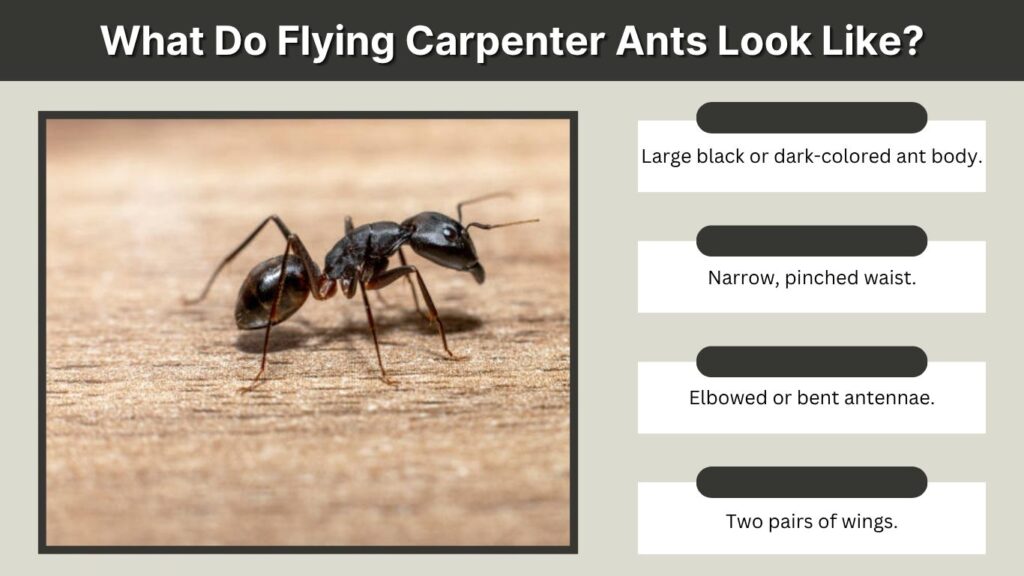
Flying carpenter ants are usually large ants with wings. They have a narrow waist, bent antennae, and two pairs of wings. Their front wings are usually longer than their back wings.
Many people confuse flying carpenter ants with termites. This is a common mistake because both insects can swarm and appear indoors with wings.
Key Signs of Flying Carpenter Ants
Look for these features when trying to identify flying carpenter ants:
- Large black or dark-colored ant body.
- Narrow, pinched waist.
- Elbowed or bent antennae.
- Two pairs of wings.
- Front wings longer than back wings.
- Ants appearing near windows, doors, walls, or damp wood.
Carpenter ants are usually bigger than many household ants. If the winged insects are large and ant-shaped, they may be carpenter ants.
Flying Carpenter Ants vs Termites
Flying carpenter ants and termites can look similar at first, but they have important differences. Carpenter ants have a narrow waist and bent antennae. Termites have a thicker waist and straight antennae.
Wing shape is another clue. Carpenter ants have front wings that are longer than the back wings. Termite wings are usually equal in length.
This difference is important because termites eat wood, while carpenter ants tunnel through wood to create nesting spaces. Both can be serious, but they require different treatment methods.
When Do Carpenter Ants Fly?
Carpenter ants usually fly during their swarming season. This often happens in spring or early summer, although timing can vary depending on the climate, species, and indoor conditions.
Warm weather, humidity, and mature colonies can trigger swarming. If a colony is indoors, flying carpenter ants may appear even when outdoor conditions are not obvious.
Why Do Carpenter Ants Fly in Swarms?
Carpenter ants fly in swarms to reproduce. The colony releases winged males and young queens at the same time. These ants mate, and fertilized queens try to start new colonies.
A swarm does not last forever. You may see many flying ants for a short period, then suddenly none. But even if the swarm disappears, the original colony may still be active.
Do Carpenter Ants Fly in the House?
Yes, carpenter ants can fly inside the house if a mature colony is indoors. This is more concerning than seeing one or two winged ants that flew in from outside.
Flying carpenter ants inside may come from:
- Wall voids.
- Window frames.
- Door frames.
- Attics.
- Crawl spaces.
- Basements.
- Damp wood.
- Roof leaks.
- Bathroom or kitchen moisture areas.
If winged carpenter ants emerge from inside your home, the colony may already be established.
Are Flying Carpenter Ants Dangerous?
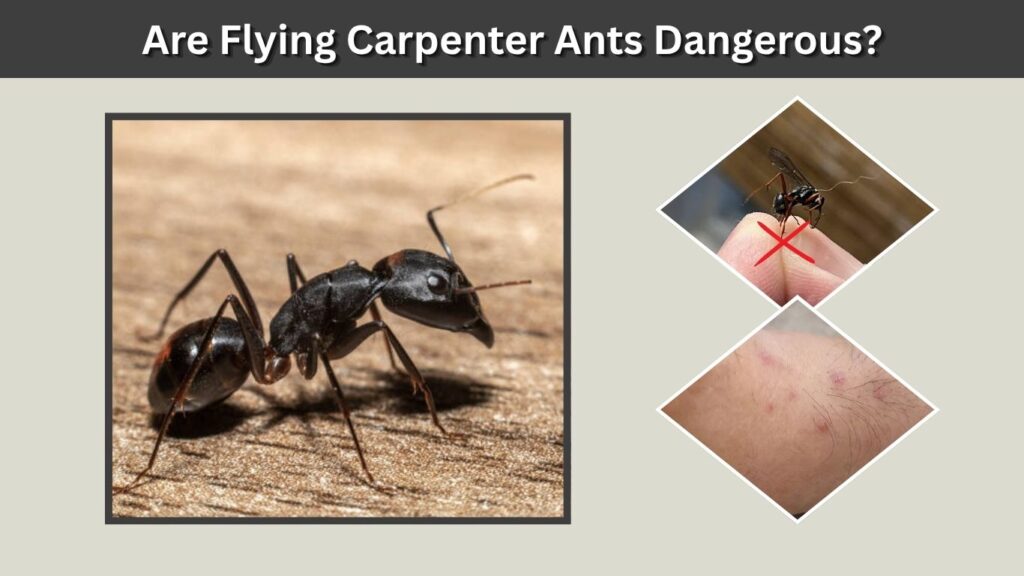
Flying carpenter ants are not usually dangerous in the way stinging insects are. They are not aggressive toward people, and they do not spread disease in the same way some pests can. However, they can be a warning sign of a home infestation.
The biggest concern is not the wings. The concern is the colony behind them.
Do Flying Carpenter Ants Bite?
Yes, flying carpenter ants can bite, but they usually bite only when disturbed or handled. Their bite may feel like a pinch and can cause mild irritation. Carpenter ants do not sting.
Some people may notice redness, itching, or slight swelling after a bite. Most bites are minor, but you should clean the area with soap and water.
Do Flying Carpenter Ants Sting?
No, carpenter ants do not sting. They can bite with their jaws, but they do not have a stinger like fire ants or wasps. If you are stung by a flying insect, it is probably not a carpenter ant.
Can Flying Carpenter Ants Damage a Home?
Flying carpenter ants themselves do not damage the home by flying around. However, they may indicate a carpenter ant colony nearby. Carpenter ants can damage wood by tunneling through it to build nests.
They do not eat wood like termites. Instead, they remove wood to create galleries. Over time, a large colony can weaken wood, especially if the wood is already damp, soft, or decayed.
Where Do Flying Carpenter Ants Come From?
Flying carpenter ants come from mature carpenter ant colonies. These colonies may be outside in trees, stumps, logs, firewood, or landscape timbers. They may also be inside a home.
Outdoor carpenter ants may enter through small openings while searching for food or nesting sites. Indoor colonies often begin where moisture has damaged wood.
Common Nesting Areas
Carpenter ants are attracted to damp, damaged, or decaying wood. They may nest in places such as:
- Window frames with moisture damage.
- Bathroom walls.
- Kitchen areas near leaks.
- Crawl spaces.
- Attic beams.
- Decks and porches.
- Tree stumps.
- Firewood piles.
- Roofline gaps.
- Wall voids near plumbing.
Moisture is one of the biggest clues. If you have flying carpenter ants and a leak, the two problems may be connected.
What Attracts Flying Carpenter Ants?
Flying carpenter ants may be attracted by light, warmth, moisture, and suitable nesting areas. They may gather near windows because they are drawn to sunlight or indoor lights.
Food can also support carpenter ant activity. Carpenter ants may feed on sweets, proteins, grease, pet food, and other household crumbs.
How to Get Rid of Flying Carpenter Ants
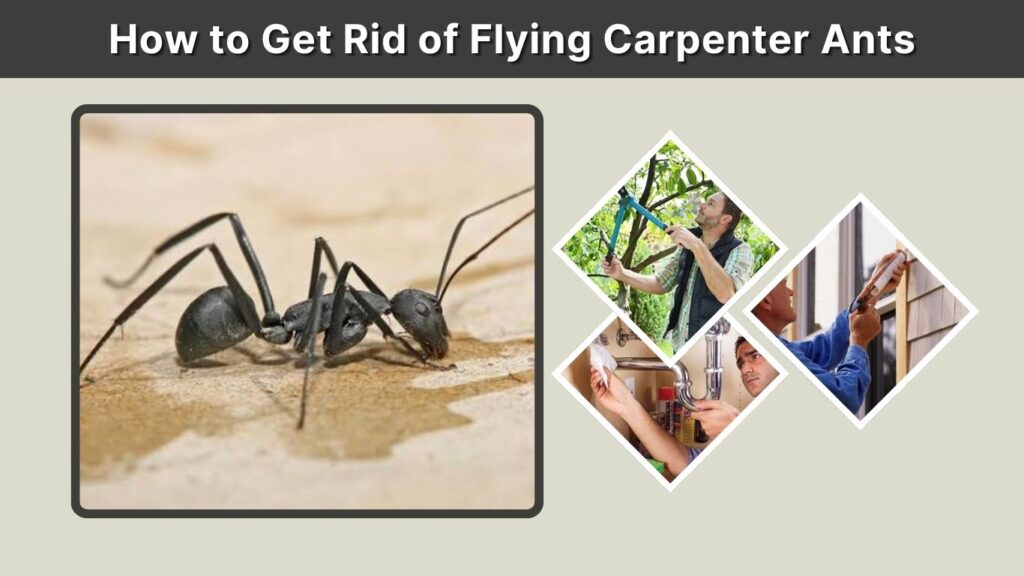
Getting rid of flying carpenter ants requires more than killing the ants you can see. The goal is to find and control the colony. If you only remove the flying ants, the nest may continue producing more ants.
Step-by-Step Control Tips
Use these steps to reduce flying carpenter ants:
- Vacuum visible flying ants and empty the vacuum outside.
- Seal cracks around windows, doors, siding, and utility lines.
- Fix leaks around sinks, tubs, roofs, and pipes.
- Remove damp or rotting wood around the home.
- Store firewood away from the house.
- Trim branches that touch the roof or siding.
- Clean food spills, crumbs, and pet food areas.
- Use carpenter ant bait where ants are active.
- Avoid spraying randomly if you need to track the nest.
Bait is often more useful than contact spray because ants may carry it back to the colony. Sprays may kill visible ants but fail to reach the nest.
How to Get Rid of Flying Carpenter Ants in the House
If flying carpenter ants are inside your house, try to find where they are coming from. Look around windows, baseboards, bathrooms, kitchens, attics, and damp walls. You may also see small piles of wood shavings, which can be a sign of carpenter ant nesting.
Do not ignore repeated indoor swarms. A few ants may be accidental, but many winged carpenter ants inside can mean the nest is indoors.
What Kills Flying Carpenter Ants?
Vacuuming, contact sprays, and insecticidal products can kill visible flying carpenter ants. However, killing visible ants is only a short-term fix. The colony must be treated to solve the problem.
Carpenter ant baits, dust treatments, and professional pest control methods may be needed for hidden nests. The best treatment depends on where the colony is located.
Should You Build a Trap for Flying Carpenter Ants?
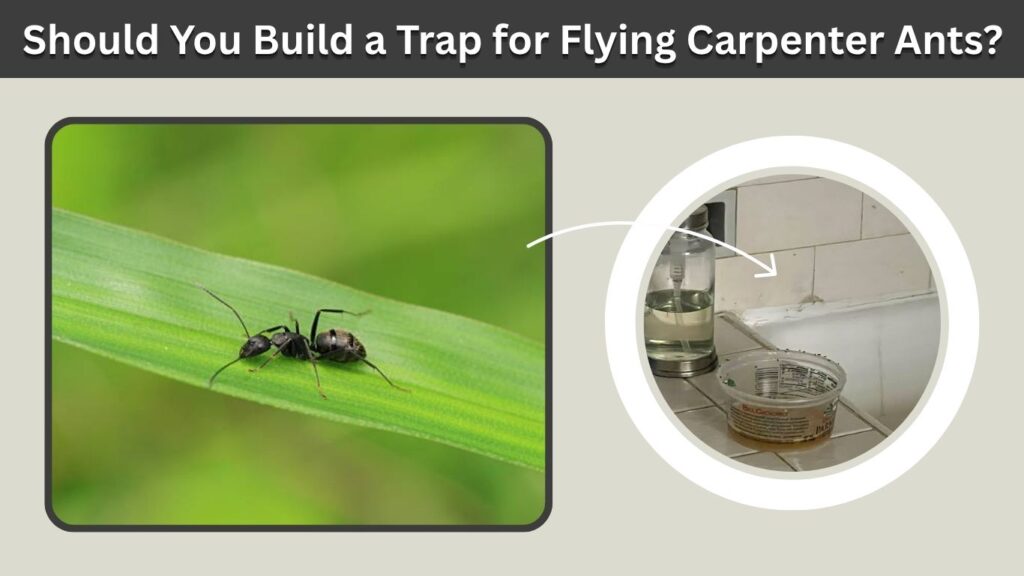
A homemade trap may catch some flying carpenter ants, especially near windows or lights. However, traps do not remove the colony. They may help reduce visible ants but should not be your main solution.
Some people try vinegar, soapy water, or light traps. These may kill individual ants, but they will not solve an established carpenter ant infestation.
Does Vinegar Work for Flying Carpenter Ants?
Vinegar may disrupt ant trails and repel some ants temporarily. It can also be used for cleaning surfaces where ants have traveled. However, vinegar is not a complete carpenter ant treatment.
It will not reach hidden colonies inside walls, wood, or crawl spaces. If you have repeated flying carpenter ants, vinegar alone is not enough.
When Should You Call a Professional?
You should consider calling a pest control professional if you see flying carpenter ants indoors more than once, find large black ants regularly, or suspect wood damage. Professional inspection can identify the species and locate hidden nests.
Call for help if you notice:
- Flying carpenter ants coming from walls or ceilings.
- Large ants indoors during spring or summer.
- Sawdust-like debris near wood.
- Damp or damaged wood.
- Rustling sounds inside walls.
- Repeated ant activity after DIY treatment.
- Ants near roof leaks, plumbing leaks, or crawl spaces.
A professional can help confirm whether the insects are carpenter ants, termites, or another pest. Correct identification saves time and prevents the wrong treatment.
FAQs
Do carpenter ants fly?
Yes, some carpenter ants fly. Winged carpenter ants are reproductive males and queens. Worker carpenter ants do not fly. If you see flying carpenter ants indoors, it may mean a mature colony is nearby or inside your home.
Are flying ants carpenter ants?
Some flying ants are carpenter ants, but not all. Many ant species produce winged ants during mating season. Large black flying ants indoors may be carpenter ants, especially if they appear near wood, moisture, windows, or walls.
Do flying carpenter ants bite?
Yes, flying carpenter ants can bite if they are handled or disturbed. Their bite may feel like a pinch and usually causes mild irritation. Carpenter ants do not sting, so a painful sting likely came from another insect.
What do flying carpenter ants look like?
Flying carpenter ants are usually large, dark ants with wings. They have a narrow waist, bent antennae, and front wings that are longer than the back wings. They are often mistaken for termites during swarming season.
How do you get rid of flying carpenter ants?
Start by vacuuming visible ants, sealing entry points, fixing moisture problems, and using carpenter ant bait near active areas. If flying ants keep appearing indoors, call a pest control professional because there may be a hidden nest inside the home.
