
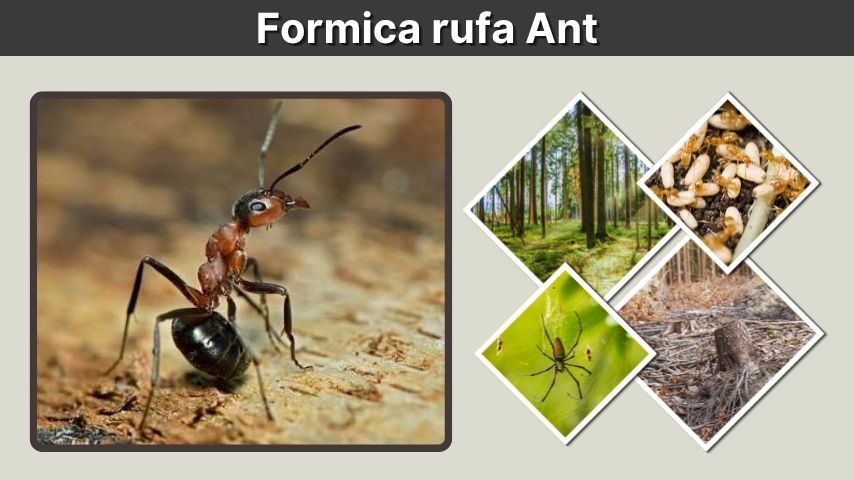
Formica rufa, commonly known as the red wood ant or southern wood ant, is one of Europe’s most recognizable forest ants. It is famous for building large dome-shaped nests from pine needles, twigs, grass, and other plant material. These ants are more than tiny forest insects; they influence soil, trees, aphids, predators, and pest populations, making them important members of woodland ecosystems.
What Is Formica rufa?
Formica rufa is a mound-building ant species in the family Formicidae. It belongs to the Formica rufa species group, a group of red-and-black wood ants known for building visible thatch mounds in forests and woodland edges.
Scientific Classification
The species was described by Carl Linnaeus in 1761. Like other true ants, it is a social insect with workers, queens, and males. Workers are the ants most people see walking in trails, defending the nest, carrying prey, or climbing trees for honeydew.
| Category | Formica rufa Details |
|---|---|
| Common names | Red wood ant, southern wood ant, horse ant |
| Scientific name | Formica rufa |
| Family | Formicidae |
| Genus | Formica |
| Worker size | About 4.5–9 mm |
| Main colors | Red-brown head and thorax, darker abdomen |
| Nest type | Large dome-shaped mound |
| Main food | Honeydew, insects, small invertebrates, carrion |
| Habitat | Coniferous and mixed woodland, forest edges, clearings |
| Native range | Europe and parts of western Asia |
| Defense | Sprays formic acid |
Why It Is Called the Red Wood Ant
The name “red wood ant” comes from its reddish body color and woodland lifestyle. The head and thorax are usually reddish brown, while the abdomen is darker, often brownish black. The “wood ant” name refers to its strong association with forests, especially places where it can build a mound in a sunny opening or along a woodland edge.
How to Identify Formica rufa
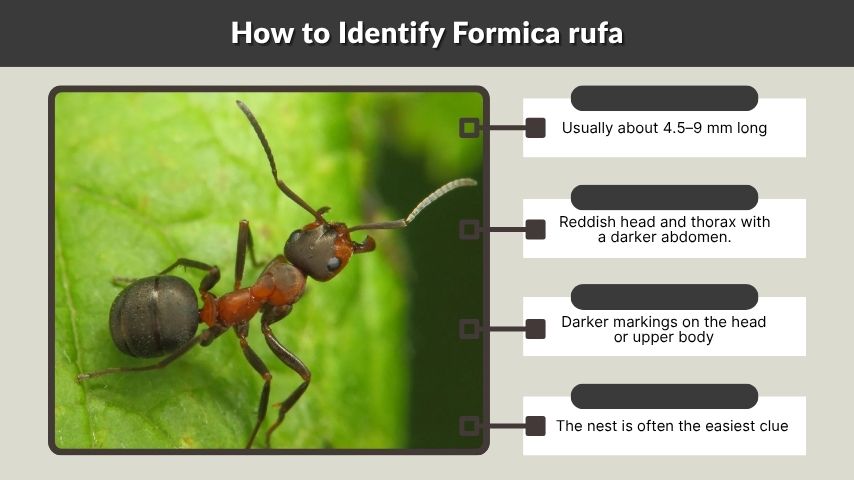
Identifying Formica rufa can be easy at a basic level but difficult at a species level. Many related wood ants look similar, so exact identification may require close examination by an expert. Still, there are several useful field clues.
Body Color and Size
Workers are medium to large for ants, usually about 4.5–9 mm long. They have a reddish head and thorax with a darker abdomen. Some individuals show darker markings on the head or upper body, while others look more evenly red.
The workers are polymorphic, meaning they vary in size within the same colony. Large workers may forage farther from the nest, while smaller workers may stay closer to the mound or work inside the colony.
Nest Appearance
The nest is often the easiest clue. Formica rufa builds large dome-shaped mounds from plant material. These mounds may include:
- Pine needles
- Twigs
- Dry grass
- Leaf fragments
- Bark pieces
- Soil particles
- Other forest litter
A mature mound can be very noticeable, sometimes rising high above the forest floor. It is often built against a tree stump, log, or other structure that supports the nest.
Similar Species
Formica rufa belongs to a complex group of similar red wood ants. Species such as Formica polyctena, Formica lugubris, and other mound-building ants may look very close to it. Hairiness, head shape, body proportions, and colony structure can help experts separate them.
For casual nature observation, it is usually acceptable to identify them as “red wood ants” unless a detailed species confirmation is needed.
Habitat and Distribution
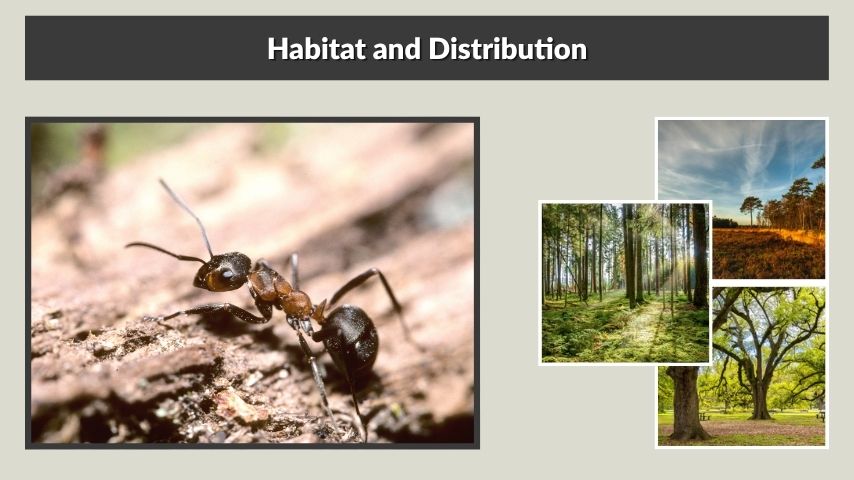
Formica rufa is native to Europe and nearby parts of western Asia. It is especially associated with forests, woodland margins, and sunny clearings where the nest can receive enough warmth.
Preferred Habitat
These ants are most often found in woodland environments with enough sunlight to warm the mound. A nest deep in cold shade may not receive enough heat for ideal colony growth, so forest edges and openings are especially valuable.
Common habitats include:
- Coniferous forests
- Mixed woodlands
- Woodland clearings
- Forest edges
- Heathland edges
- Parkland with suitable trees
- Areas near old stumps or fallen logs
The nest location is important because mound temperature affects brood development. Sunlit mounds warm faster and can help larvae and pupae develop efficiently.
Geographic Range
Formica rufa is found across parts of Europe and into western Asia. In Britain, it is often associated with southern England and Wales, although its local distribution can be patchy. In many regions, populations depend on the availability of suitable woodland habitat and stable nest sites.
Because related red wood ant species can be difficult to separate, local records may sometimes need expert confirmation.
Nest Structure and Colony Life
The nest of Formica rufa is not just a pile of forest litter. It is a carefully managed structure that helps regulate temperature, moisture, and colony safety.
How the Mound Works
The outer layer of the mound is made from dry plant material. This thatch-like cover helps absorb sunlight, shed rain, and insulate the colony. Beneath the visible mound, the nest can extend into the soil, creating chambers and tunnels where brood, workers, and queens are protected.
Workers constantly maintain the mound. They move materials, repair damage, clear paths, and adjust the nest surface. The mound changes through the seasons as weather, temperature, and colony needs change.
Queens, Workers, and Males
Like other ants, Formica rufa colonies contain different castes. Each caste has a specific role.
- Queens lay eggs and maintain colony reproduction.
- Workers build, forage, defend, clean, and care for brood.
- Males appear mainly for reproduction during mating periods.
Some colonies may have one queen, while others may have multiple queens. Colony structure can vary by region and population.
Colony Size
Large red wood ant colonies can contain many thousands of workers. Some wood ant colonies may form networks of related nests, although this varies among species and local conditions. A successful mound can remain active for many years if the habitat stays suitable and the colony is not disturbed.
Diet and Foraging Behavior
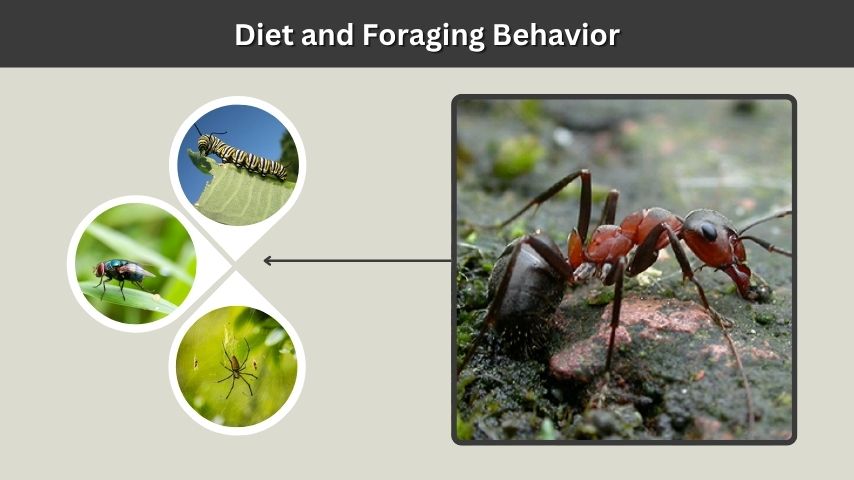
Formica rufa is an omnivorous ant. It feeds on both sugary liquids and animal protein. This flexible diet helps the colony survive in changing forest conditions.
Honeydew From Aphids
A major food source is honeydew, a sugary liquid produced by aphids and other sap-feeding insects. Workers climb trees and visit aphid colonies to collect honeydew. In return, ants may protect aphids from some predators.
This ant-aphid relationship is one of the most important parts of red wood ant ecology. It links the ants to trees, sap-feeding insects, and other forest animals.
Insects and Other Prey
Red wood ants are active hunters and scavengers. They catch or collect many small animals, including insects and arachnids. They may bring prey back to the nest to feed larvae and other colony members.
Their animal-based diet may include:
- Caterpillars
- Flies
- Beetles
- Spiders
- Sawfly larvae
- Dead insects
- Small soft-bodied invertebrates
Because they prey on many forest insects, red wood ants can influence pest populations. In some forests, they are considered helpful natural enemies of defoliating insects.
Ecological Importance
Formica rufa is often described as an ecosystem engineer because its nests and activities affect many other organisms.
Forest Pest Control
Red wood ants hunt a wide range of insects, including some that feed on tree leaves and needles. Their presence can reduce the number of certain defoliating pests near nest areas. They do not eliminate forest pests completely, but they can contribute to natural pest regulation.
Soil and Nutrient Cycling
The nest changes the soil beneath and around it. Workers bring in plant material, prey remains, and other organic matter. Over time, this activity can alter nutrients, soil structure, moisture, and microbial communities around the mound.
Effects on Other Wildlife
A red wood ant nest can affect many species. Some animals avoid the mound because of aggressive workers and formic acid. Others use the nest environment or feed on ants. Birds such as woodpeckers may prey on wood ants, while some specialized insects live near or inside ant nests.
The mound itself becomes a small habitat patch within the forest.
Defense and Formic Acid
One of the most famous features of Formica rufa is its ability to spray formic acid. This chemical defense helps protect the colony from predators and disturbance.
How Formic Acid Is Used
When threatened, workers may bend their bodies and spray acid from the end of the abdomen. The spray can irritate the skin, eyes, and mouth of predators. If a person gets too close to a disturbed nest, they may smell a sharp vinegar-like odor.
The ants may also bite with their mandibles while spraying acid into the bite area. This can make the sting-like feeling stronger, even though ants do not sting in the same way wasps do.
Are Red Wood Ants Dangerous?
Formica rufa is not usually dangerous to humans. However, disturbing a nest can cause many workers to swarm and defend it. Their bites and acid spray can be uncomfortable.
To stay safe:
- Do not step on or kick the mound.
- Avoid placing hands near active trails.
- Keep children from poking the nest.
- Move pets away from large mounds.
- Do not collect nest material.
- Rinse skin or eyes with clean water if exposed.
People with sensitive skin may react more strongly, so observation from a respectful distance is best.
Reproduction and Life Cycle
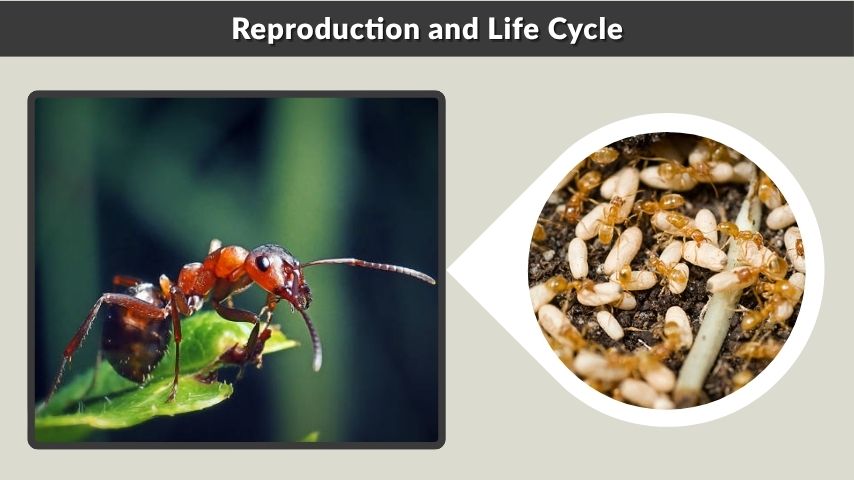
The life cycle of Formica rufa includes eggs, larvae, pupae, and adults. The queen produces eggs, workers care for the developing brood, and new reproductive ants appear when the colony is ready to expand.
Brood Development
Eggs hatch into larvae, which are fed and cleaned by workers. Larvae later become pupae before emerging as adult ants. Temperature plays a major role in development, which is why mound warming and careful nest maintenance are so important.
Workers may move brood to different parts of the nest depending on warmth and moisture. This behavior helps keep developing ants in suitable conditions.
Mating Flights
Winged males and young queens are produced during the reproductive season. They leave the nest to mate. After mating, males die, while queens attempt to start new colonies or join existing colony systems depending on local biology.
Establishing a new colony can be difficult. Young queens face risks from predators, lack of suitable nest sites, and competition with other ants.
Conservation Status and Threats
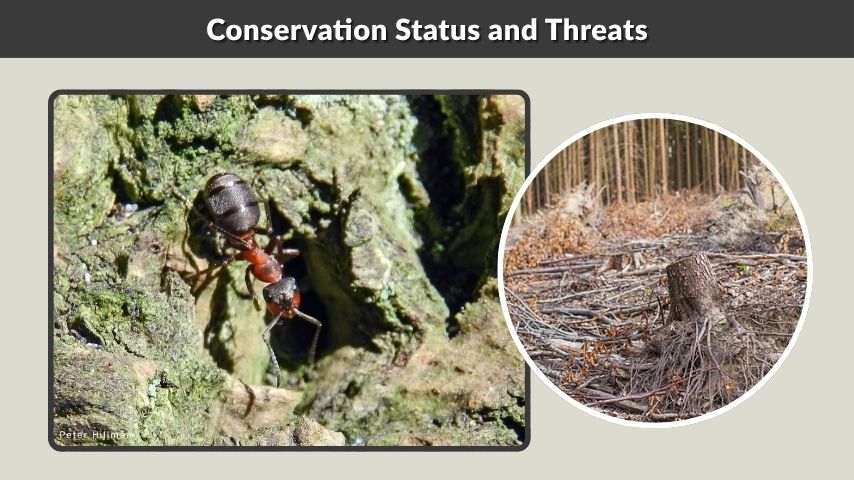
Formica rufa is considered Near Threatened on the IUCN Red List. Its conservation situation varies by region, but habitat loss and disturbance are common concerns.
Main Threats
Red wood ants need stable woodland habitat and suitable nest locations. They can decline when forests are heavily altered or fragmented.
Major threats include:
- Loss of woodland habitat
- Removal of sunny forest edges
- Intensive forestry disturbance
- Destruction of nests
- Road building and development
- Frequent trampling by people or livestock
- Changes in woodland management
Because nests can last for years, destroying one mound can remove an established colony that took a long time to develop.
Why Protection Matters
Protecting Formica rufa supports more than one ant species. These ants help regulate insects, influence soil, and support complex food webs. Their mounds can also show that a woodland has suitable structure, sunlight, and ecological continuity.
In some places, red wood ants are legally protected or managed as conservation priorities. Even where they are not legally protected, their nests should be left undisturbed.
Formica rufa in Gardens and Human Areas
Although Formica rufa is mainly a woodland species, people may encounter it near forest paths, parks, rural gardens, or woodland edges. It is not a typical indoor pest.
Should You Remove a Nest?
In most cases, the best option is to leave the nest alone. These ants are beneficial and usually stay outdoors. Removing a mature mound can harm the local ecosystem and may be unnecessary unless the nest creates a serious safety issue.
If a nest is near a trail, school area, or high-use space, contact a local conservation authority or pest professional familiar with protected species and local regulations. Do not use insecticides on red wood ant mounds without checking local rules.
How to Observe Them Safely
Watching a red wood ant colony can be fascinating. You may see workers carrying prey, building the mound, forming trails, climbing trees, and defending the nest.
For safe observation:
- Stand a few feet away from the mound.
- Avoid blocking active trails.
- Do not touch the nest surface.
- Watch for ants climbing shoes or clothing.
- Take photos without disturbing the colony.
A quiet observer can learn a lot from a single mound.
FAQs
What is Formica rufa?
Formica rufa is a European mound-building ant commonly called the red wood ant or southern wood ant. It lives mainly in forests and woodland edges, where it builds large dome-shaped nests from needles, twigs, grass, and other plant material.
Do Formica rufa ants bite?
Yes, workers can bite when disturbed. They may also spray formic acid, which can make the bite feel more irritating. They are not usually dangerous, but their defense can be uncomfortable, especially if a nest is disturbed or someone stands on an active trail.
What do Formica rufa ants eat?
They eat honeydew from aphids, small insects, spiders, larvae, and carrion. Honeydew is a major energy source, while prey provides protein for the colony. Their hunting behavior can help regulate some forest insect populations.
Where does Formica rufa live?
Formica rufa lives mainly in Europe and nearby parts of western Asia. It prefers coniferous and mixed woodland, forest edges, sunny clearings, and places with logs or stumps that help support large mound nests.
Is Formica rufa protected?
Protection depends on the country or region, but Formica rufa is considered Near Threatened globally. Because its nests are ecologically important and can take years to develop, they should not be damaged, moved, sprayed, or destroyed unnecessarily.
