
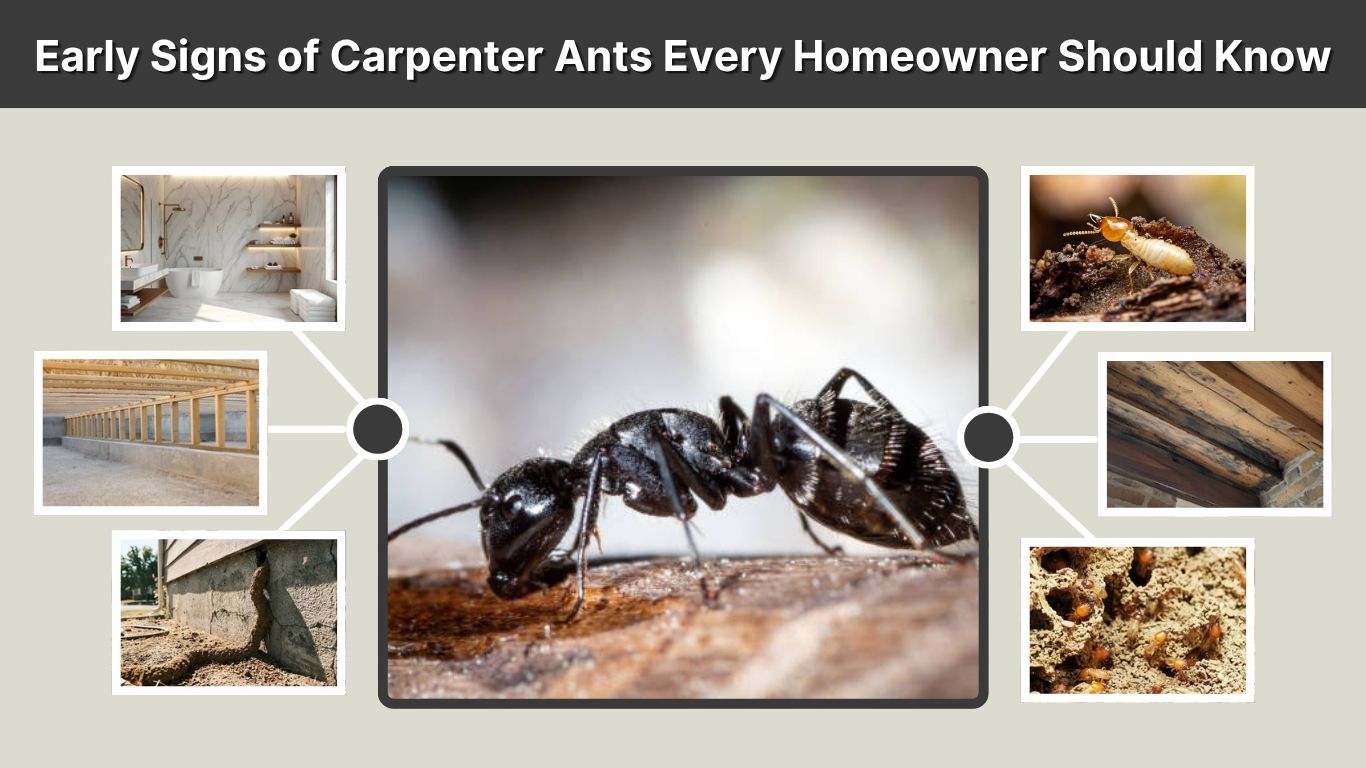
Carpenter ants can be difficult to notice in the early stages because they often nest inside walls, ceilings, window frames, or damp wood. At first, you may only see a few large ants or small piles of sawdust-like debris. These warning signs should not be ignored. Carpenter ants do not eat wood like termites, but they tunnel through it to build nests. Spotting the early signs can help you prevent bigger infestations and possible wood damage.
What Are the Early Signs of Carpenter Ants?
The early signs of carpenter ants are often subtle, so homeowners may not realize there is a problem right away. A few ants indoors may seem harmless, but repeated sightings, activity near damp wood, or tiny piles of debris can point to a hidden nest. Early detection is important because carpenter ants can spread through wall voids and wood framing.
Seeing Large Ants Indoors
One of the first signs of carpenter ants is seeing large ants inside the house. These ants are usually black, dark brown, reddish-black, or a mix of dark colors. They are often larger than many common household ants.
A single ant may have wandered in from outside. However, if you keep seeing large ants in the same room, near windows, or around damp areas, there may be a nest nearby.
Ant Activity at Night
Carpenter ants are often more active at night. You may notice them moving across kitchen counters, bathroom floors, baseboards, or basement walls after dark. Night activity can be an early warning sign because carpenter ants often forage when the home is quiet.
If you see ants at night more than once, try to watch where they go. Their trail may lead toward a hidden entry point or nest.
Ant Trails Near Walls or Wood
Carpenter ants often follow trails between food sources and nesting areas. These trails may appear near baseboards, window frames, door frames, plumbing areas, or exterior walls.
Common early trail locations include:
- Kitchen counters and cabinets
- Bathroom walls and floors
- Window sills and trim
- Basement beams or joists
- Laundry room plumbing areas
- Door frames and wall cracks
Early Signs of Carpenter Ants in House
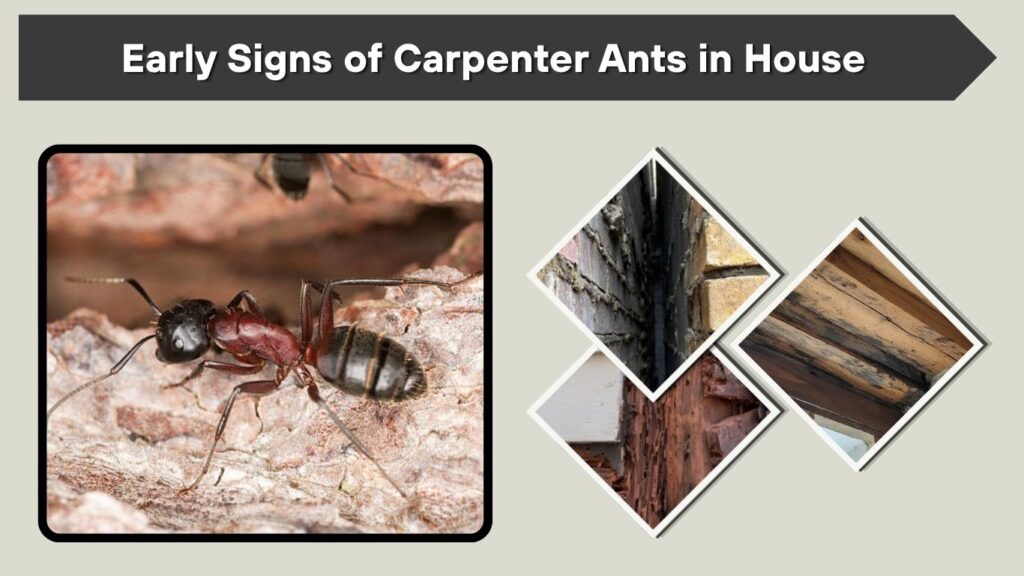
Carpenter ants may enter a house through small gaps, cracks, vents, utility openings, or moisture-damaged wood. Once inside, they can move through hidden spaces such as wall voids, crawl spaces, ceilings, and insulation. The key is to look for repeated patterns instead of judging the problem from one ant sighting.
Repeated Sightings in the Same Area
Repeated sightings are more concerning than seeing one random ant. If you keep finding carpenter ants in the same room or along the same wall, it may mean they are traveling from a nearby nest.
For example, ants appearing near a bathroom window, kitchen sink, or basement wall could be connected to moisture or hidden wood damage. Carpenter ants often return to the same paths, so repeated activity should be inspected.
Ants Near Moisture-Prone Rooms
Carpenter ants prefer damp or softened wood because it is easier to tunnel through. That is why they are often found near bathrooms, kitchens, laundry rooms, basements, crawl spaces, and areas around windows.
Moisture does not always mean standing water. A slow plumbing leak, roof leak, condensation problem, or poorly ventilated crawl space can create enough dampness to attract carpenter ants.
Ants Coming From Small Gaps
You may see carpenter ants coming from cracks near baseboards, outlets, window trim, pipe openings, or ceiling edges. These gaps may not be the nest itself, but they can show where ants are entering or traveling.
If ants disappear into a wall opening or trim gap, avoid sealing it immediately. First, observe the activity because the opening may help identify the nest location.
Early Signs of Carpenter Ant Damage
Carpenter ants do not eat wood like termites. Instead, they chew through wood to create smooth nesting galleries. Early damage is often hidden, especially when the nest is inside walls, ceilings, floors, or structural wood. Still, there are several warning signs that may appear before the damage becomes more serious.
Fine Sawdust or Frass
One of the clearest early signs of carpenter ant damage is frass. Frass looks like fine sawdust, wood shavings, or small debris piles. Carpenter ants push this material out as they tunnel through wood.
You may find frass near baseboards, window trim, door frames, beams, or small cracks in walls. It may also contain tiny insect parts or dirt-like material.
Hollow-Sounding Wood
Wood damaged by carpenter ants may sound hollow when tapped. This can happen when ants have created tunnels inside the wood while the surface still looks normal.
Hollow-sounding wood near moisture-damaged areas should be checked carefully. Common spots include window frames, porch supports, deck connections, and wood near plumbing leaks.
Weak or Soft Wood
Carpenter ants often choose wood that is already damp, decayed, or softened. Early warning signs may include soft trim, weakened window sills, damaged door frames, or wood that crumbles when pressed.
Soft wood does not always mean carpenter ants are present, but it creates the right condition for an infestation. If soft wood appears with ant activity or frass, the problem should be inspected.
Carpenter Ants in Drywall and Ceilings
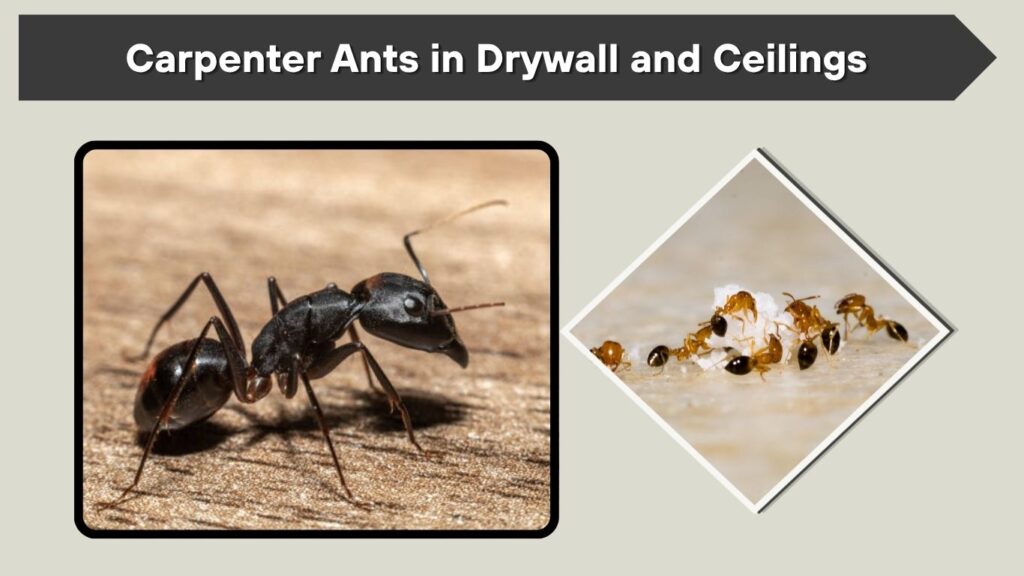
Carpenter ants may travel behind drywall or through ceiling voids, especially when wood framing, insulation, or moisture is nearby. Drywall itself is not their main nesting material, but it can hide movement inside walls and ceilings. This makes early detection harder because the visible surface may look normal while ants are active behind it.
Small Openings Near Drywall
Tiny openings, cracks, or gaps near drywall can be early clues. You may notice ants entering or leaving around trim, outlets, ceiling edges, or wall seams.
Sometimes frass appears below these openings. If sawdust-like debris keeps returning after cleaning, there may be carpenter ant activity behind the wall or nearby wood framing.
Rustling Sounds in Walls or Ceilings
In some cases, homeowners hear faint rustling sounds inside walls or ceilings. This may happen when carpenter ants are active in a hidden nest. The sound is often easier to notice at night when the house is quiet.
Rustling alone does not confirm carpenter ants, but when combined with large ants, frass, or moisture damage, it becomes more important.
Ceiling Activity After Leaks
Carpenter ants may be attracted to ceiling areas affected by roof leaks, plumbing leaks, or condensation. If ants appear near a ceiling stain, attic access point, or upper wall, moisture may be part of the problem.
Ceiling activity should be checked quickly because hidden moisture can also lead to mold, rot, and other pest problems.
Carpenter Ants vs Early Stage Signs of Termites
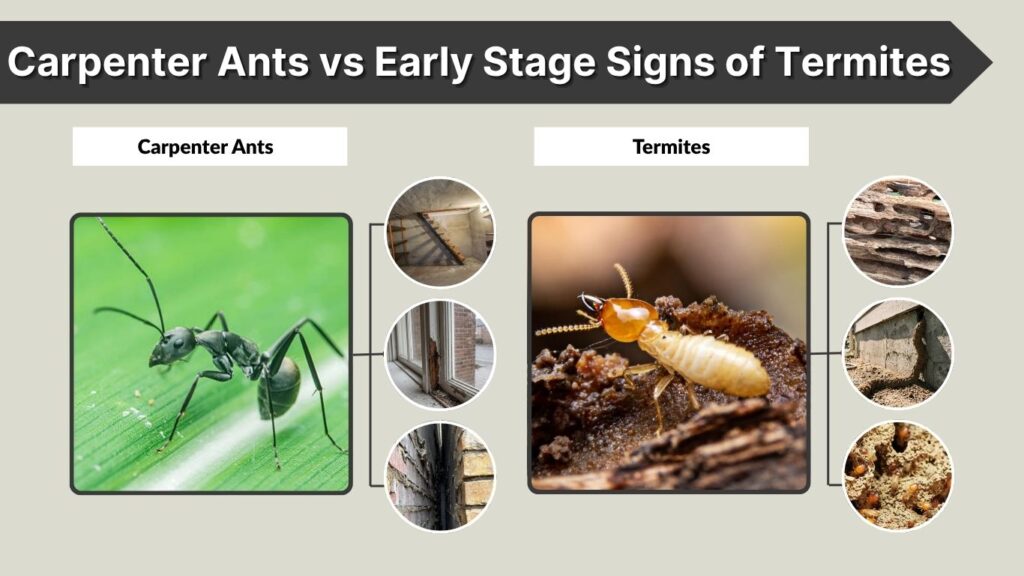
Carpenter ants and termites are often confused because both are connected to wood damage. However, they behave differently and leave different signs. Carpenter ants tunnel through wood to build nests, while termites eat wood for food. Knowing the difference helps homeowners choose the right inspection and treatment method.
Main Difference Between Carpenter Ants and Termites
The biggest difference is how they use wood. Carpenter ants remove wood to create tunnels. Termites consume wood and may damage it from the inside out.
Carpenter ants are also more likely to be seen walking around indoors. Termites are often hidden, and homeowners may notice mud tubes, swarmers, or damaged wood before seeing the insects themselves.
Comparison Table
| Sign | Carpenter Ants | Termites |
| Wood behavior | Tunnel through wood | Eat wood |
| Debris | Sawdust-like frass | Mud tubes or pellets |
| Antennae | Bent antennae | Straight antennae |
| Waist shape | Narrow waist | Broad waist |
| Wings | Front wings longer | Equal-sized wings |
| Common clue | Large ants indoors | Mud tubes or swarmers |
When Ceiling Signs May Point to Termites
Ceiling damage may point to termites if you notice blistered paint, sagging surfaces, mud tubes, or hollow wood but do not see large ants. Termites can remain hidden for a long time, so ceiling or drywall symptoms should not be ignored.
If you are unsure whether the issue is carpenter ants or termites, a professional inspection is the safest choice.
What Causes Early Carpenter Ant Infestations?
Early carpenter ant infestations usually begin when ants find moisture, food, shelter, or easy access to the home. Many colonies start outdoors in trees, stumps, logs, or damp wood, then workers move inside to forage. If indoor conditions are suitable, they may create satellite nests inside walls or structural areas.
Moisture Problems
Moisture is one of the biggest carpenter ant attractants. Damp wood is easier for them to tunnel through and provides a better nesting environment.
Common moisture issues include:
- Roof leaks
- Plumbing leaks
- Damp crawl spaces
- Poor attic ventilation
- Wet window frames
- Clogged gutters
- Wood touching soil
Outdoor Nesting Sites
Outdoor nests can lead to indoor activity. Carpenter ants may live close to the home and enter while searching for food or new nesting areas.
Possible outdoor sources include:
- Tree stumps
- Rotting logs
- Firewood piles
- Dead branches
- Landscape timbers
- Fence posts
- Damp decks or porches
Food and Entry Points
Carpenter ants may come indoors for sweets, grease, crumbs, proteins, pet food, or spills. They can enter through cracks, vents, utility openings, windows, doors, and gaps around pipes.
Reducing food sources helps, but it will not solve a hidden nest unless the colony and moisture problem are also addressed.
How to Check for Early Carpenter Ant Infestation
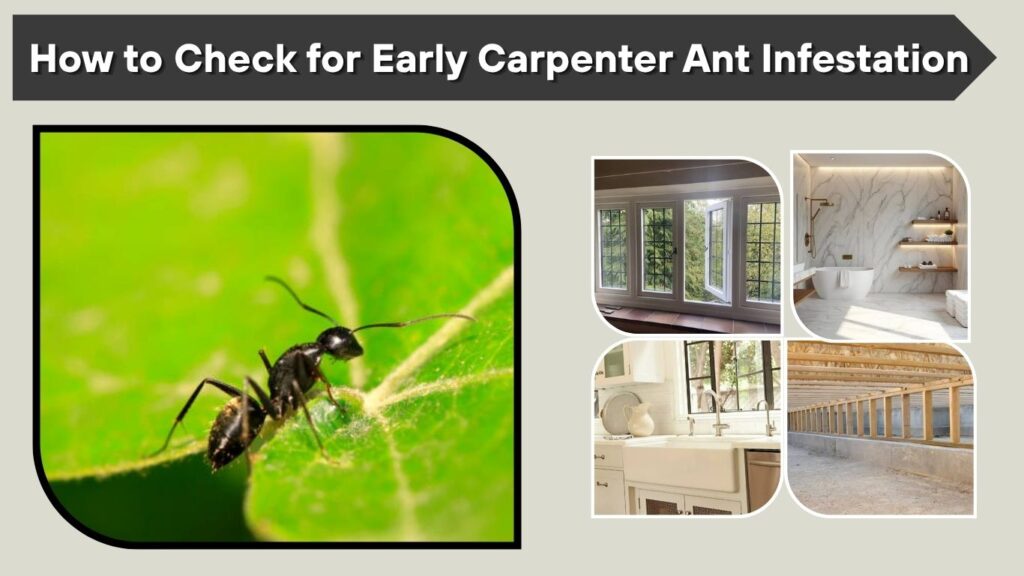
A basic inspection can help you decide whether carpenter ants are only passing through or possibly nesting nearby. The goal is to find patterns, moisture issues, entry points, and signs of damage. Focus on areas where ants have appeared more than once and places where damp wood may be present.
Inspect at Night
Check for ants after dark with a flashlight. Look along baseboards, counters, window sills, bathroom floors, basement walls, and plumbing areas. Night inspections may reveal trails that are not visible during the day.
Follow Ant Trails
If you see ants, watch where they travel. Do not spray them immediately. Following their path may help you find an entry point, food source, or nest location.
Check Damp Wood Areas
Focus on places where moisture and wood are close together, such as:
- Window sills
- Door frames
- Bathroom walls
- Kitchen sink areas
- Laundry rooms
- Basement wood
- Crawl spaces
- Attics
- Deck connections
Look for Frass
Clean up any sawdust-like debris and check whether it returns. If frass appears again in the same place, there may be active carpenter ant tunneling nearby.
What to Do If You Notice Early Signs
Early action can stop a small carpenter ant problem from becoming a larger infestation. The right response depends on how often you see ants, whether frass is present, and whether moisture or wood damage exists. Avoid relying only on contact sprays because they may kill visible ants without reaching the hidden colony.
Clean and Remove Food Sources
Wipe counters, sweep floors, seal pantry items, store pet food properly, and remove trash often. Reducing food sources can lower ant activity and make baiting more effective if treatment is needed.
Fix Moisture Issues
Repair leaks, improve ventilation, clean gutters, and replace rotting wood. Carpenter ants are strongly linked to moisture problems, so treatment may fail if damp conditions remain.
Use Bait Carefully
Carpenter ant bait may help because foraging ants can carry it back to the colony. Place bait near trails and avoid spraying near it. Sprays can repel ants and stop them from feeding on the bait.
Schedule an Inspection
Call a pest professional if you see winged ants indoors, find frass, hear wall activity, notice wood damage, or cannot locate the nest. A professional can identify the pest and treat the colony more directly.
FAQs
What are the first early signs of carpenter ants?
The first early signs are usually large ants indoors, repeated sightings in the same area, ant trails near walls or windows, and sawdust-like frass near wood. Some homeowners may also hear faint rustling sounds inside walls or ceilings when the colony is active.
What does early carpenter ant damage look like?
Early carpenter ant damage may look like fine wood shavings, tiny openings near trim, hollow-sounding wood, or soft wood around damp areas. Much of the damage may stay hidden at first because carpenter ants tunnel inside wood rather than damaging only the surface.
Can carpenter ants live behind drywall?
Yes, carpenter ants can travel behind drywall and nest near wood framing, insulation, or moisture-damaged areas. Drywall is not their main nesting material, but it can hide activity inside walls, making the infestation harder to detect early.
Are early signs of carpenter ants the same as termites?
No. Carpenter ants tunnel through wood and often leave sawdust-like frass. Termites eat wood and may leave mud tubes, pellets, or blistered surfaces. Because some signs overlap, proper identification is important before choosing treatment.
Should I worry if I see one carpenter ant?
One carpenter ant does not always mean you have an infestation. It may have entered from outdoors. However, repeated sightings, ants at night, winged ants indoors, frass, or activity near damp wood should be inspected because these signs may point to a hidden colony.
