
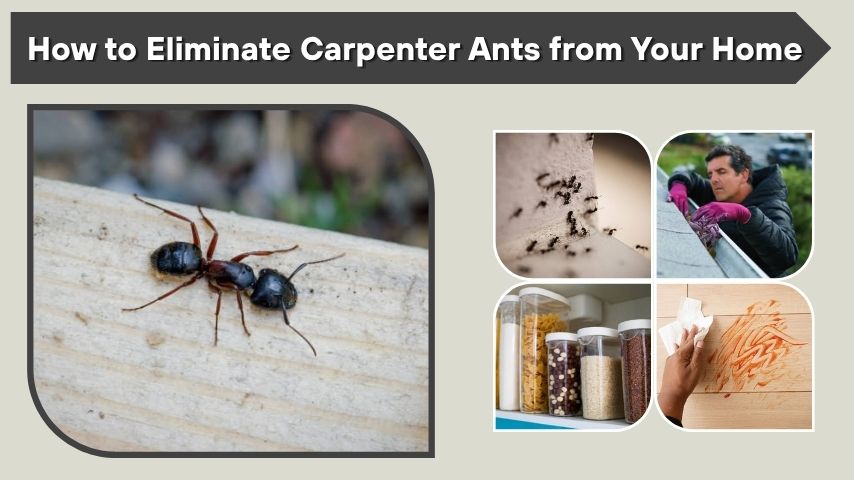
Carpenter ants can be more than a simple household nuisance. Unlike sugar ants that mainly search for food, carpenter ants tunnel into wood to build nests. They do not eat wood like termites, but their nesting activity can weaken damp or damaged wood over time. The best way to eliminate carpenter ants is to find the nest, remove moisture problems, use the right treatment, and prevent new colonies from moving in.
What Are Carpenter Ants?
Carpenter ants are large ants that commonly nest in wood. They are usually black, reddish-black, brown, or a mix of red and black, depending on the species. Indoors, they are often found around kitchens, bathrooms, windows, wall voids, crawl spaces, attics, and areas with moisture damage.
Carpenter ants prefer softened, damp, or decaying wood. This is why an infestation often points to a hidden leak, poor ventilation, roof damage, or wood touching soil. They can also nest outdoors in tree stumps, logs, firewood piles, fence posts, and dead branches.
Carpenter Ants vs. Termites
Many homeowners confuse carpenter ants with termites because both are linked to wood damage. However, they behave differently. Termites eat cellulose in wood. Carpenter ants excavate wood to create galleries where they live and raise young.
Carpenter ant tunnels are usually smooth and clean inside, while termite-damaged wood may contain mud or soil. Carpenter ants also push out wood shavings, which can look like sawdust.
Signs of a Carpenter Ant Infestation
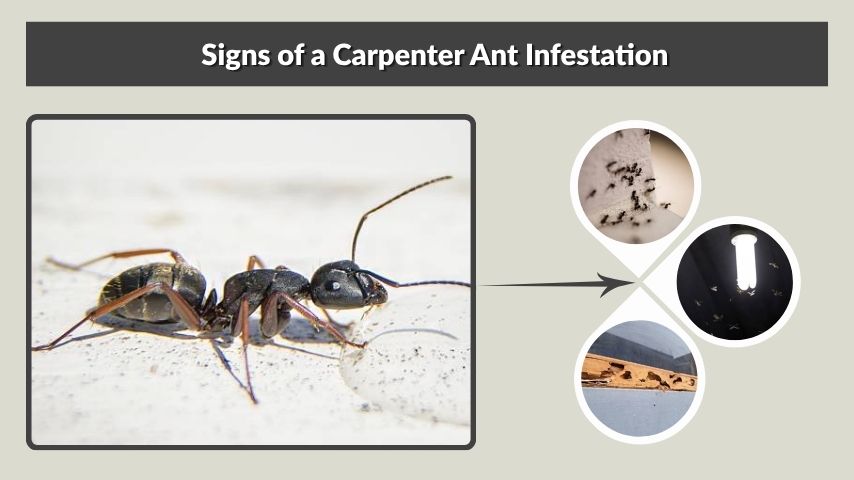
Carpenter ants are easiest to control when you catch the problem early. A few ants indoors may be scouts, but repeated sightings can mean a nest is nearby.
Common Warning Signs
Look for these signs:
- Large black or reddish ants indoors
- Ant trails near windows, doors, sinks, or baseboards
- Small piles of sawdust-like material
- Rustling sounds inside walls
- Winged ants indoors
- Ants appearing at night
- Damaged or hollow-sounding wood
- Ant activity near damp wood or leaks
The sawdust-like material is called frass. It may contain tiny wood particles, insect pieces, and debris from the nest. Finding frass near trim, windows, wall voids, or crawl spaces is a strong clue that ants are nesting in wood nearby.
Step 1: Find the Carpenter Ant Nest
The most important part of eliminating carpenter ants is finding the nest. Spraying random ants on the counter will not solve the problem if the colony remains hidden in a wall or outside stump.
Carpenter ants often have a main nest outdoors and one or more satellite nests indoors. A satellite nest may not contain the queen, but it can still support a large number of workers. If you only kill the visible ants, the colony may continue sending more.
How to Track Carpenter Ants
To find the nest:
- Watch ants at night when they are most active.
- Follow trails from food or water back to cracks or gaps.
- Look around sinks, tubs, dishwashers, windows, and exterior doors.
- Inspect damp wood, crawl spaces, attics, and basements.
- Check tree limbs, firewood, stumps, and mulch near the house.
- Listen for faint rustling in walls.
- Look for frass below trim, beams, or wall openings.
A flashlight can help you follow ant trails after dark. Do not disturb the trail immediately. First, observe where the ants are going.
Step 2: Fix Moisture Problems
Carpenter ants are strongly attracted to damp or damaged wood. If you treat the ants but leave the moisture problem, another colony may move in later.
Moisture Problems to Check
Inspect these areas:
- Leaky roofs
- Clogged gutters
- Wet crawl spaces
- Plumbing leaks
- Poor bathroom ventilation
- Condensation around windows
- Rotting deck boards
- Wood siding touching soil
- Damp basement framing
- Water-damaged trim
Repair leaks, improve ventilation, and replace rotted wood when necessary. This step is not optional. Moisture control makes your home less attractive to carpenter ants and helps prevent structural damage.
Step 3: Use Carpenter Ant Bait
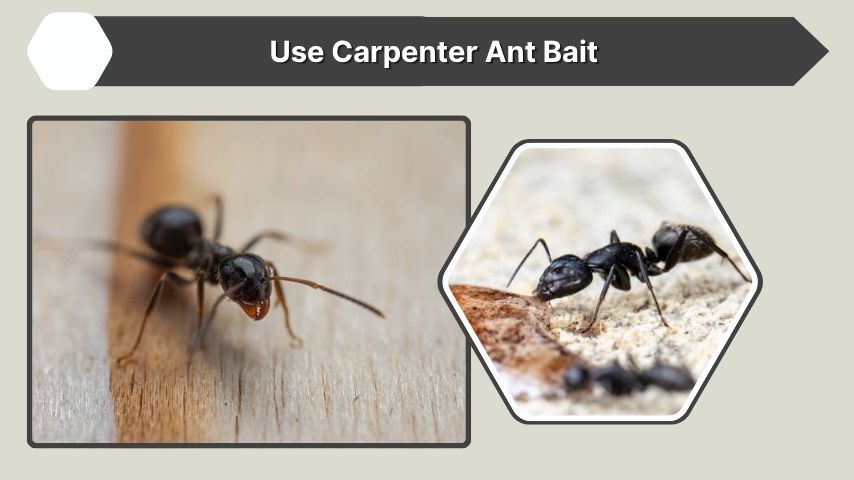
Bait can be one of the most effective ways to eliminate carpenter ants because workers carry it back to the colony. The goal is not to kill one ant quickly. The goal is to let ants share the bait with other ants, including those hidden in the nest.
How to Use Bait Correctly
Use bait near active trails, but do not spray insecticide around the bait. Sprays can repel or kill workers before they carry bait back to the colony.
Best practices include:
- Place bait close to trails.
- Use both sugar-based and protein-based baits if possible.
- Keep bait away from children and pets.
- Do not disturb feeding ants.
- Replace bait as directed on the label.
- Give bait time to work.
Carpenter ants may change food preferences depending on the season and colony needs. If one bait does not attract them, try a different type.
Step 4: Treat the Nest Directly
When you locate the nest, direct treatment is often the fastest way to eliminate the colony. This may involve dust, foam, or labeled insecticide products designed for carpenter ants. The treatment must reach the nesting galleries, not just the surface.
Indoor Nest Treatment
Indoor nests may be inside:
- Wall voids
- Window frames
- Door frames
- Insulation
- Ceiling voids
- Crawl space wood
- Damp structural beams
In some cases, small holes may need to be drilled to apply dust or foam into the void. This should be done carefully and only with products labeled for that use. If the nest is in a structural area or electrical wall void, a pest professional is usually safer.
Outdoor Nest Treatment
Outdoor nests may be found in:
- Tree stumps
- Logs
- Landscape timbers
- Firewood piles
- Dead branches
- Fence posts
- Mulch beds
- Rotting roots
Removing the outdoor nest source is important. Move firewood away from the house, remove rotting stumps when possible, and keep wood debris away from the foundation.
Carpenter Ant Treatment Options
There is no single best treatment for every infestation. The right method depends on where the nest is, how severe the infestation is, and whether ants are nesting indoors or outdoors.
| Treatment Method | Best For | Notes |
|---|---|---|
| Ant bait | Hidden colonies and foraging trails | Works slowly but can reach the colony |
| Insecticidal dust | Wall voids and nesting galleries | Must be applied carefully and legally |
| Foam treatment | Voids, cracks, and galleries | Useful when nest location is known |
| Perimeter treatment | Exterior entry points | Helps reduce new ants entering |
| Moisture repair | Long-term prevention | Essential for lasting control |
| Professional service | Large or hidden infestations | Best for structural or repeated problems |
Always read and follow the product label. More pesticide is not better. Incorrect use can be unsafe and may make ants scatter to new areas.
Natural and Non-Chemical Control Methods
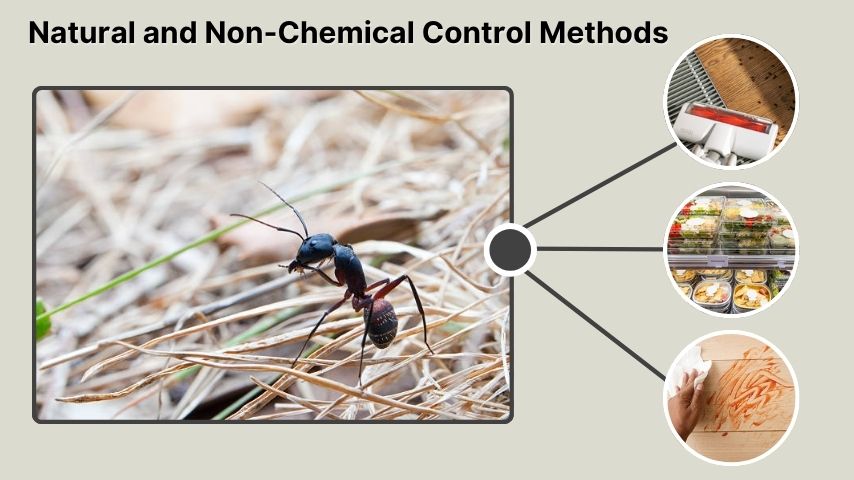
Natural methods can help reduce carpenter ant activity, but they may not eliminate a serious nest inside a structure. They work best as support steps.
Helpful Non-Chemical Steps
Try these actions:
- Vacuum visible ants.
- Store food in sealed containers.
- Clean sticky spills quickly.
- Remove indoor food attractants.
- Trim branches away from the roof.
- Move firewood away from the home.
- Remove rotting wood and stumps.
- Seal cracks around doors and windows.
- Improve drainage near the foundation.
Vinegar, essential oils, and soap sprays may disrupt trails temporarily, but they do not reliably eliminate a hidden carpenter ant colony. Use them only as minor support, not as the main treatment.
How to Eliminate Carpenter Ants in Walls
Carpenter ants in walls need careful attention. If ants are entering and exiting through a small gap, the nest may be inside the wall void. You may also hear rustling sounds or find frass near baseboards or window trim.
What to Do
Start by locating the exact entry point. Follow the ant trail and inspect the nearby wall, window, plumbing line, or damp area. If the nest is confirmed inside the wall, bait may help, but direct void treatment may be needed.
Avoid sealing the entry hole before treatment. If you seal ants inside without killing the nest, they may create new routes into other rooms. For wall nests, especially near wiring or plumbing, calling a licensed pest control professional is often the best choice.
When to Call a Professional
DIY treatment may work for small, easy-to-find outdoor nests. However, carpenter ants can be difficult when nests are hidden, spread out, or located inside structural wood.
Call a professional if:
- You see ants repeatedly indoors.
- You find winged carpenter ants inside.
- There is frass near walls or trim.
- You hear rustling in walls.
- You suspect structural damage.
- DIY bait has not worked.
- Ants return every season.
- The nest is in a wall, attic, or crawl space.
A professional can inspect for moisture, locate satellite nests, and apply treatment into the correct areas.
How to Prevent Carpenter Ants from Coming Back
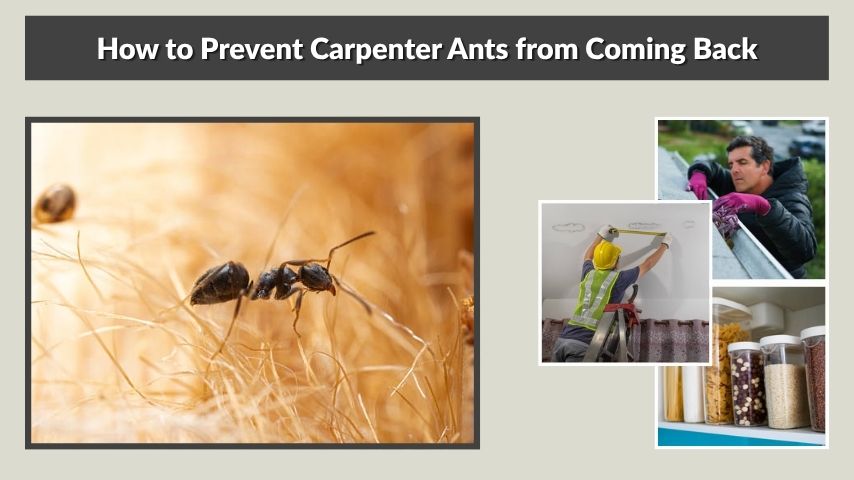
After elimination, prevention is the key to keeping carpenter ants away. The goal is to make your home dry, sealed, and less attractive to nesting ants.
Prevention Checklist
Follow these steps:
- Repair roof and plumbing leaks.
- Keep gutters clean.
- Improve crawl space ventilation.
- Replace rotted wood.
- Keep firewood off the ground and away from the house.
- Trim tree limbs away from the roof.
- Seal gaps around pipes, wires, windows, and doors.
- Keep mulch away from siding.
- Avoid wood-to-soil contact.
- Store food properly and clean spills.
A dry, well-maintained home is much less inviting to carpenter ants.
FAQs
What is the fastest way to eliminate carpenter ants?
The fastest way is to locate the nest and treat it directly with a labeled carpenter ant product. Bait can also work well, especially when the nest is hidden, but it takes time. For wall nests or structural infestations, professional treatment is usually the most reliable option.
Do carpenter ants eat wood?
No, carpenter ants do not eat wood. They tunnel through wood to create nesting galleries. The damage can still be serious over time, especially in damp or weakened wood. Small piles of sawdust-like frass are a common sign of their tunneling activity.
Will carpenter ant bait eliminate the whole colony?
Carpenter ant bait can eliminate a colony if workers accept it and carry it back to the nest. Place bait near active trails and avoid spraying around it. If ants ignore one bait, try another type because their food preferences can change.
Why do carpenter ants keep coming back?
Carpenter ants often return when moisture problems, rotting wood, or outdoor nests remain untreated. Killing visible ants does not solve the source. To stop repeat infestations, find the nest, repair leaks, replace damaged wood, and seal entry points.
Should I call an exterminator for carpenter ants?
Yes, call an exterminator if ants are inside walls, you see winged ants indoors, you find frass, or the problem keeps returning. Carpenter ant control can be complex because colonies may have indoor satellite nests and outdoor main nests.
