
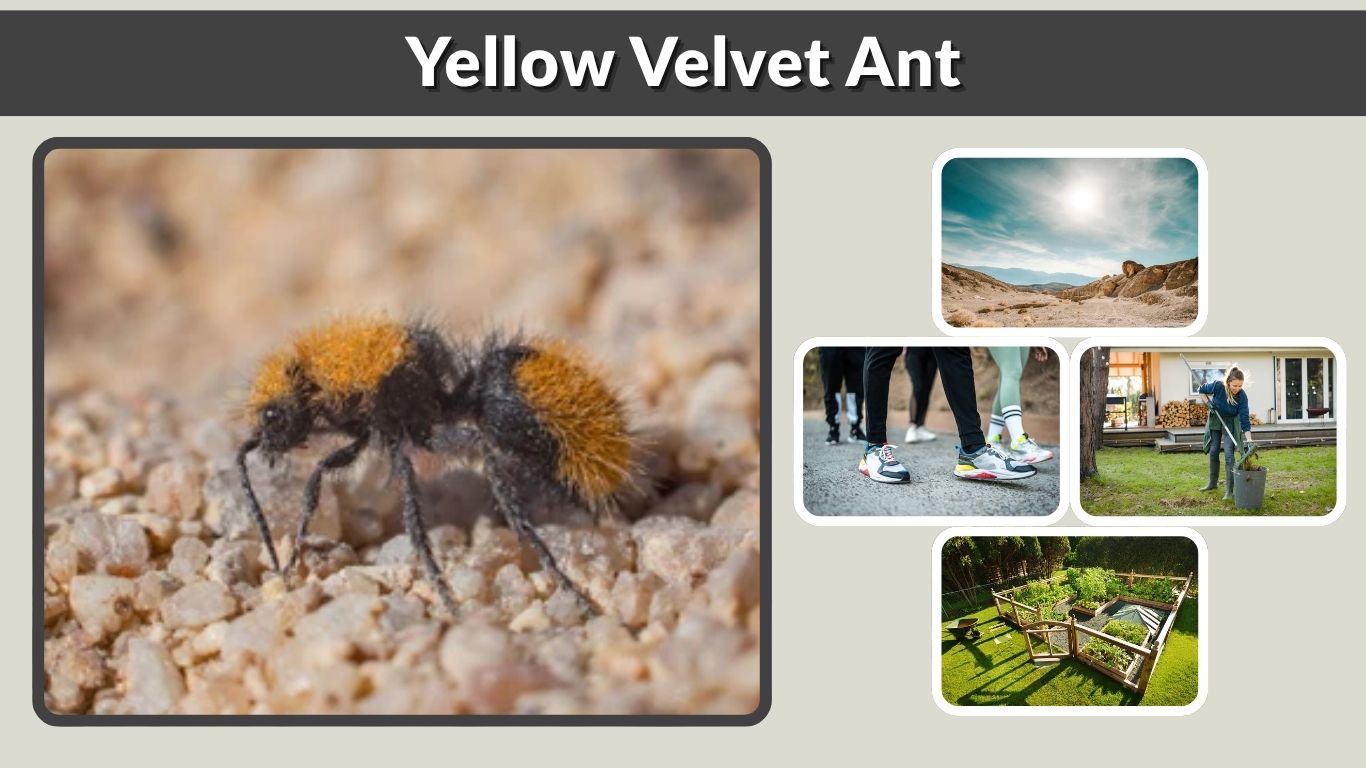
The yellow velvet ant is a fascinating but often misunderstood insect known for its bright, fuzzy appearance and extremely painful sting. Despite its name, it is not actually an ant but a type of wasp. Many people encounter it in gardens, sandy areas, or open fields and immediately become concerned about its sting and danger level. Its bold yellow coloring serves as a warning to predators and humans alike. In this guide, you’ll learn how to identify a yellow velvet ant, understand its behavior, and know how to stay safe around it.
What Is a Yellow Velvet Ant?
The yellow velvet ant is a member of the Mutillidae family, a group of wasps known for their dense hair and ant-like appearance. These insects are often mistaken for ants because the females do not have wings and move quickly along the ground.
Scientific Classification
Yellow velvet ants belong to the Mutillidae family, which includes thousands of species worldwide. They are closely related to wasps rather than ants, even though their appearance suggests otherwise.
This group of insects is known for its strong defensive adaptations, including a powerful sting and tough outer body. Different species within this family can vary in color, with yellow being one of the less common but striking variations.
Why It’s Called a Velvet Ant
The name “velvet ant” comes from the insect’s dense, velvety hair covering its body. This soft-looking texture contrasts with its tough exoskeleton.
The ant-like name comes from the wingless female, which resembles a large, fuzzy ant as it moves across the ground. However, its behavior and biology clearly place it in the wasp category.
Yellow Velvet Ant Identification
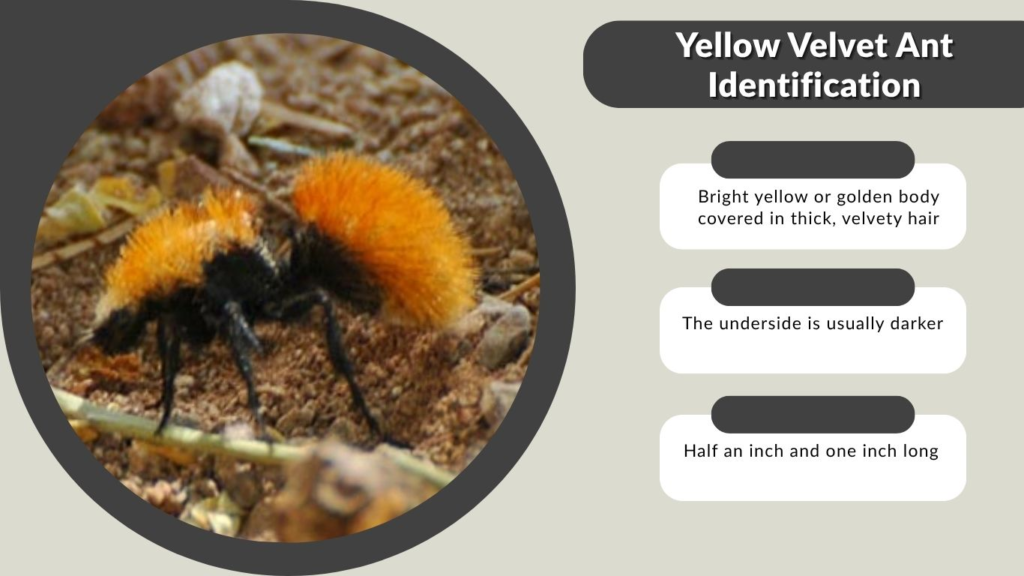
Yellow velvet ants are easy to recognize once you know what to look for. Their bright color and unusual texture make them stand out in natural environments.
Key Physical Features
The most noticeable feature is the bright yellow or golden body covered in thick, velvety hair. This coloration acts as a warning signal, telling predators to stay away.
The underside is usually darker, often black or deep brown, creating a strong contrast with the bright upper body. This combination makes them highly visible in open areas.
Their body is compact and sturdy, giving them a solid appearance compared to typical ants.
Size and Appearance
Yellow velvet ants are typically between half an inch and one inch long. Their size, combined with their bright color, makes them easy to spot.
They have a thick body structure and move quickly across the ground. Their hair gives them a soft appearance, but their body is actually very tough and resistant to damage.
Because of their striking look, they are often noticed immediately when seen outdoors.
Yellow Velvet Ant Male vs Female
Male and female yellow velvet ants look and behave very differently. Understanding these differences is important for both identification and safety.
Female Velvet Ant
The female is the one most commonly seen. She is wingless and moves along the ground, which is why she is often mistaken for an ant.
She has a powerful stinger, which is used strictly for defense. This is the main reason yellow velvet ants are known for their painful sting.
Her bright coloration serves as a warning signal, helping deter predators from attacking.
Male Velvet Ant
The male velvet ant has wings and looks more like a traditional wasp. He is less commonly noticed because he spends more time flying.
Unlike the female, the male does not have a stinger and cannot sting. This makes him harmless to humans.
Although males and females belong to the same species, their differences can make them appear unrelated at first glance.
Yellow Velvet Ant Sting
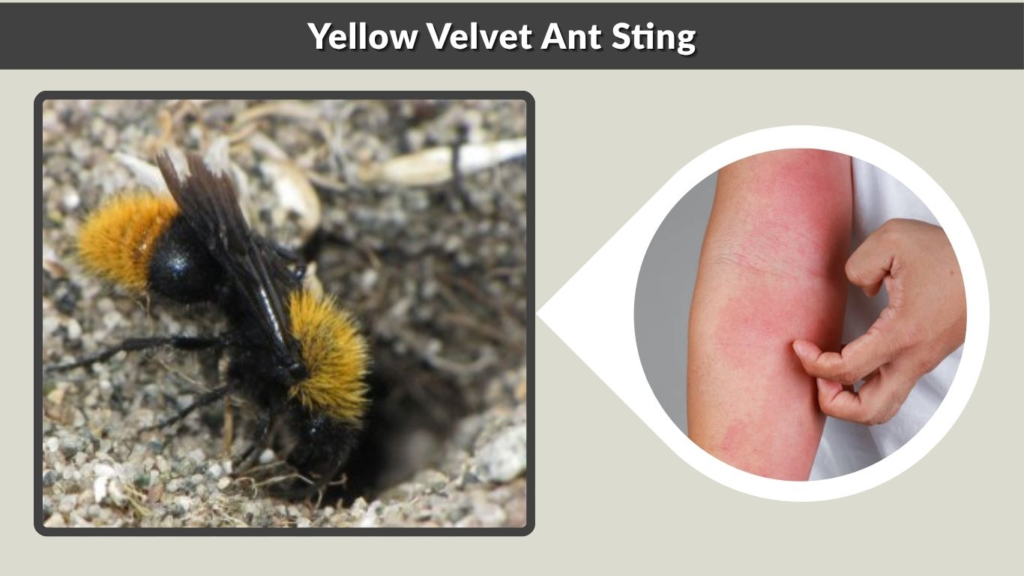
The sting of a yellow velvet ant is one of its most well-known characteristics. It is often described as extremely painful and is the primary reason people search for this insect.
How Painful Is the Sting?
The sting is very intense and can cause immediate, sharp pain. It is often compared to some of the most painful insect stings.
Although the pain is strong, it usually does not last long. The discomfort may continue for a short time before gradually fading.
This powerful sting is a defense mechanism, used only when the insect feels threatened or handled.
What Happens When Stung
When stung, the person will feel a sudden, sharp pain followed by redness and swelling in the affected area. The intensity of the pain can be surprising.
In most cases, the symptoms are temporary and do not lead to serious complications. However, individuals with allergies to insect stings may experience stronger reactions.
It is important to avoid touching or handling these insects to reduce the risk of being stung.
Are Yellow Velvet Ants Dangerous?
Yellow velvet ants may look intimidating, but they are not considered highly dangerous to humans. Their reputation mainly comes from the pain of their sting rather than actual risk.
Risk Overview
| Factor | Risk Level |
| Pain | Very high |
| Aggression | Low |
| Toxicity | Low |
| Medical risk | Minimal |
They are not aggressive and will only sting if disturbed or handled. Most encounters are harmless as long as you keep your distance.
When to Be Concerned
There are a few situations where extra caution is needed:
- If you are allergic to insect stings
- If multiple stings occur
- If the sting happens in a sensitive area
- If symptoms go beyond normal swelling
For most people, the sting is painful but not dangerous. However, it is always best to avoid contact.
Habitat and Where They Live
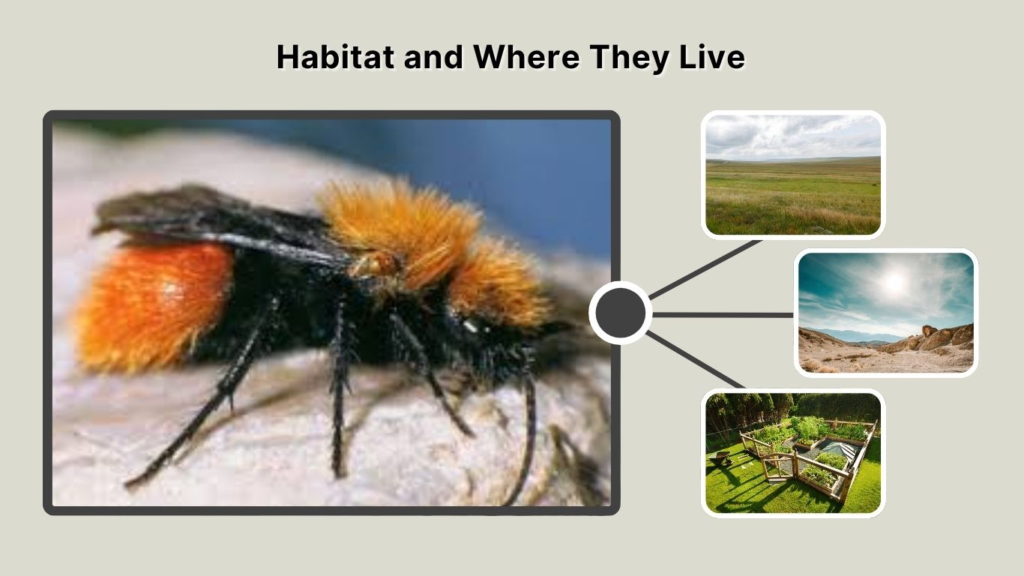
Yellow velvet ants prefer environments that support their ground-based movement and reproductive behavior.
- Dry, sandy soil areas
- Open grasslands and fields
- Forest edges
- Gardens and lawns
- Warm climates
They are most commonly found in sunny, dry locations where the soil is easy to move through. These environments also support the insects they rely on for reproduction.
You may see them walking across paths, lawns, or sandy ground, especially during warm months when they are most active.
Behavior and Defense Mechanisms
Yellow velvet ants have evolved several strong defense strategies that help them survive despite their small size. These behaviors make them one of the most well-protected insects in their environment.
- Bright warning coloration to deter predators
- Extremely painful sting used for defense
- Hard exoskeleton that resists attacks
- Ability to produce a squeaking sound
- Fast movement to escape threats
Their bright yellow color is not just for appearance—it serves as a warning signal. This type of coloration tells predators that the insect is dangerous and should be avoided.
Another interesting behavior is their ability to produce sound. When threatened, they can make a squeaking noise by rubbing body parts together, which can startle predators.
Their tough outer body also makes them difficult to crush, adding another layer of protection.
Yellow Velvet Ant vs Red Velvet Ant
Yellow and red velvet ants belong to the same family, but they differ in appearance, distribution, and visibility. This comparison helps with quick identification.
| Feature | Yellow Velvet Ant | Red Velvet Ant |
| Color | Yellow or golden | Bright red or orange |
| Visibility | Less common | More commonly seen |
| Habitat | Dry, sandy areas | Similar environments |
| Sting | Extremely painful | Extremely painful |
| Behavior | Similar defensive traits | Similar defensive traits |
| Family | Mutillidae | Mutillidae |
Both types share similar behavior and defense mechanisms, including their powerful sting. The main difference is their color and how frequently they are encountered.
Red velvet ants are more widely recognized, while yellow ones are less commonly seen but just as striking.
Life Cycle and Reproduction
Yellow velvet ants have a unique life cycle that involves a parasitic relationship with other insects. This makes their development different from many other species.
Reproduction Behavior
Female velvet ants lay their eggs inside the nests of other ground-nesting insects, such as bees or wasps. This provides a safe environment for their offspring.
Once the eggs hatch, the larvae feed on the host insect’s larvae or stored food. This ensures they have enough resources to grow and develop.
Development Stages
The life cycle follows a complete transformation:
- Egg stage
- Larva stage
- Pupa stage
- Adult stage
This process allows the insect to fully develop before emerging as an adult. The availability of host nests plays a major role in their reproduction success.
How to Avoid Yellow Velvet Ant Stings
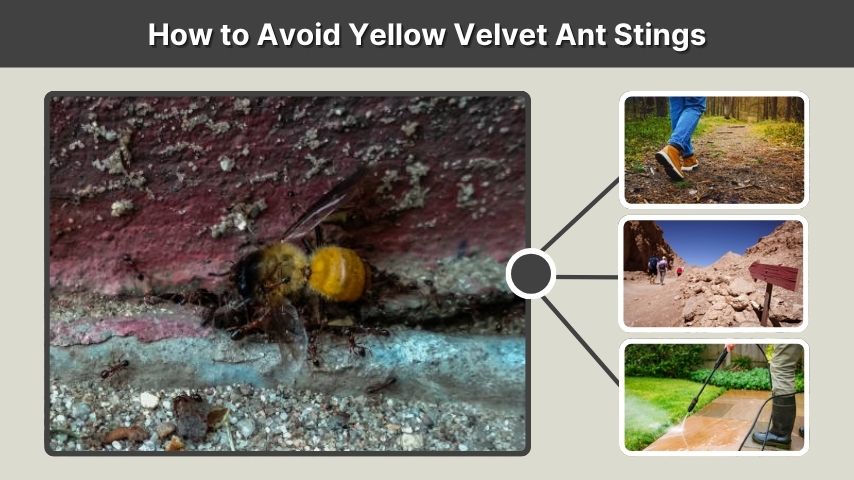
Avoiding contact is the best way to stay safe around yellow velvet ants. Since they are not aggressive, simple precautions can prevent most stings.
- Do not touch or handle them
- Always wear shoes outdoors
- Be cautious in sandy or dry areas
- Avoid disturbing them
- Keep outdoor areas clean and clear
Most stings occur when the insect is accidentally stepped on or handled. Being aware of your surroundings can greatly reduce the risk.
Wearing protective footwear is one of the easiest ways to prevent accidental contact, especially in areas where these insects are common.
Interesting Facts About Yellow Velvet Ants
Yellow velvet ants have several unique characteristics that make them stand out among insects.
- They are not true ants but wasps
- Their sting is one of the most painful among insects
- Females are wingless, while males can fly
- They produce sounds when threatened
- Their tough body helps protect them from predators
Despite their small size, they are highly adapted for survival. Their combination of visual warning signals and physical defenses makes them difficult for predators to attack.
Their unusual appearance and behavior also make them interesting subjects for study and observation.
FAQs
What is a yellow velvet ant?
A yellow velvet ant is a type of wingless wasp with a fuzzy yellow body. It is often mistaken for an ant due to its appearance but belongs to the Mutillidae family.
How painful is a yellow velvet ant sting?
The sting is extremely painful and is often compared to some of the most intense insect stings. However, the pain is usually short-lived and not dangerous for most people.
Are yellow velvet ants dangerous?
They are not considered dangerous unless you are allergic. They are not aggressive and only sting when threatened.
Where do yellow velvet ants live?
They are commonly found in warm, dry environments such as sandy areas, grasslands, gardens, and forest edges.
Can yellow velvet ants fly?
Only males can fly. Females are wingless and move along the ground, which is why they are often mistaken for ants.
