
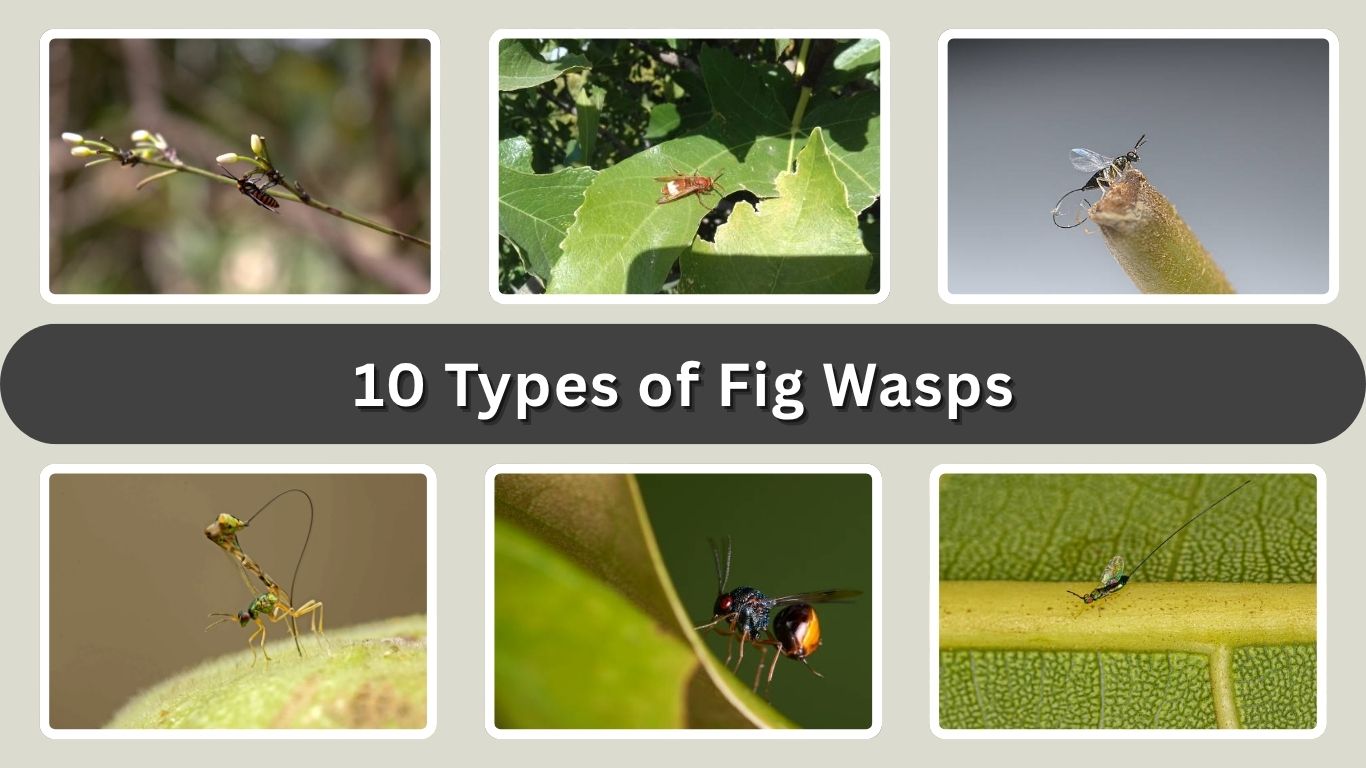
Fig wasps are tiny but incredibly important insects that share a unique relationship with fig trees. Most species spend nearly their entire lives inside figs, playing key roles in pollination, reproduction, and ecosystem balance. While some fig wasps are pollinators, others act as parasites or simply use figs as a habitat. Found mainly in tropical and subtropical regions, these wasps are rarely seen but are essential for the survival of many fig species. In this guide, you will explore 10 different types of fig wasps and their key characteristics.
1. Fig Pollinator Wasp
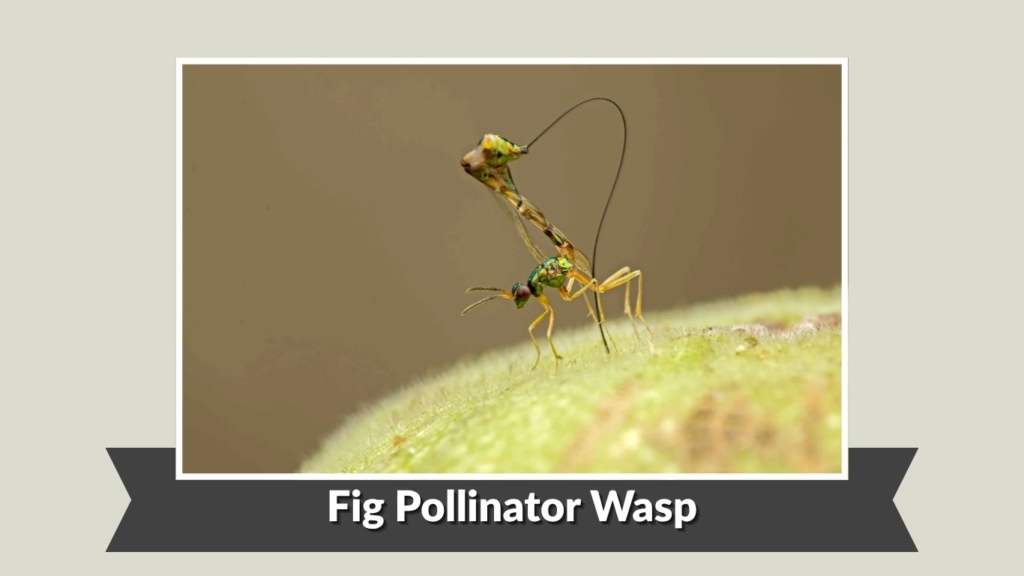
The Fig Pollinator Wasp is the most essential type of fig wasp, responsible for pollinating fig trees in a unique and highly specialized relationship. Without these tiny insects, many fig species would not be able to reproduce. They spend most of their lives inside figs, making them rarely seen in the open.
Identification
- Very small size, usually 1–3 mm long
- Dark brown to black body
- Short antennae
- Transparent wings (in females before entering figs)
- Compact, oval-shaped body
- Females adapted for entering fig openings
Habitat and Distribution
Fig Pollinator Wasps are found wherever fig trees grow, especially in tropical and subtropical regions. They live almost entirely inside figs, using them for shelter, reproduction, and development. Their distribution closely matches that of their host fig species, and each fig species typically has its own specific pollinator wasp species.
Behavior and Diet
These wasps have a unique lifecycle tied to fig trees. Female wasps enter immature figs through a small opening to lay eggs and pollinate the flowers inside. Adults do not live long and do not feed much outside the fig. Larvae develop within the fig, feeding on plant tissue and benefiting from the protected environment.
Lifecycle
The lifecycle begins when a female enters a fig and lays her eggs while pollinating the flowers. The larvae develop inside the fig, and males emerge first, mating with females before they exit. Female wasps then collect pollen from the fig and leave to find a new fig to enter, continuing the cycle.
2. Common Fig Wasp
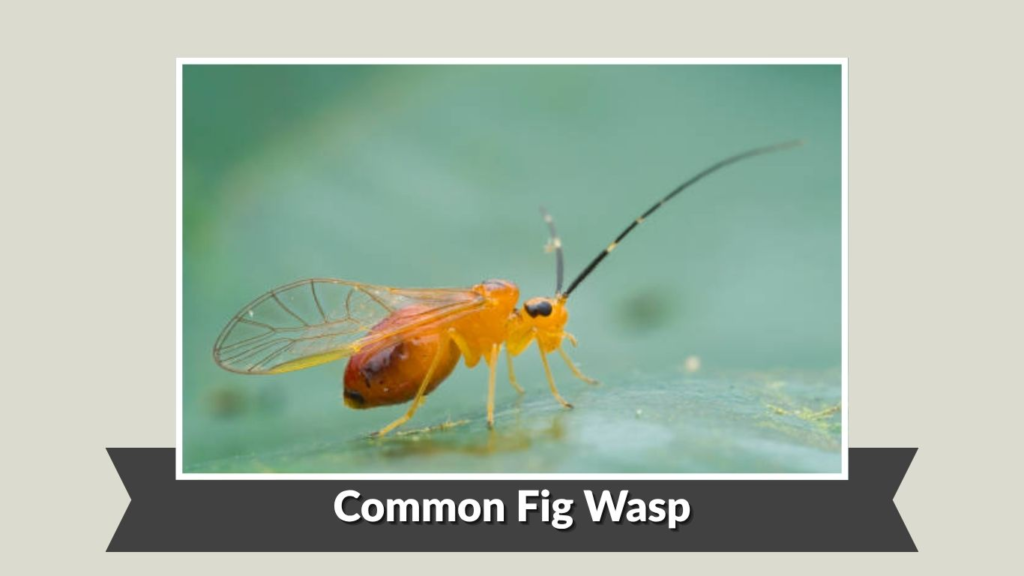
The Common Fig Wasp is a widely recognized type associated with cultivated and wild fig trees. It plays an important role in pollination and is part of the intricate relationship between figs and wasps. Although tiny and rarely seen, it is essential for fig reproduction.
Identification
- Extremely small, about 1–2 mm long
- Dark brown or black body
- Oval-shaped and compact form
- Short legs and antennae
- Transparent wings (in females before entering figs)
- Smooth, shiny body surface
Habitat and Distribution
The Common Fig Wasp is found in regions where fig trees grow, especially in tropical, subtropical, and warm temperate areas. It lives almost entirely within figs, using them for shelter and reproduction. Its distribution is closely linked to cultivated figs and wild fig species, making it common in orchards, gardens, and natural forests.
Behavior and Diet
This wasp spends most of its life cycle inside figs. Females enter immature figs to lay eggs and pollinate the internal flowers. Adults do not feed much outside the fig and live only briefly. Larvae feed on fig tissue, benefiting from the safe and enclosed environment provided by the fruit.
Lifecycle
The female enters a fig through a tiny opening and lays eggs while pollinating the flowers. Larvae develop inside the fig, and males emerge first, mating with females before they leave. Female wasps then collect pollen and exit the fig to find another one, continuing the reproductive cycle.
3. Black Fig Wasp
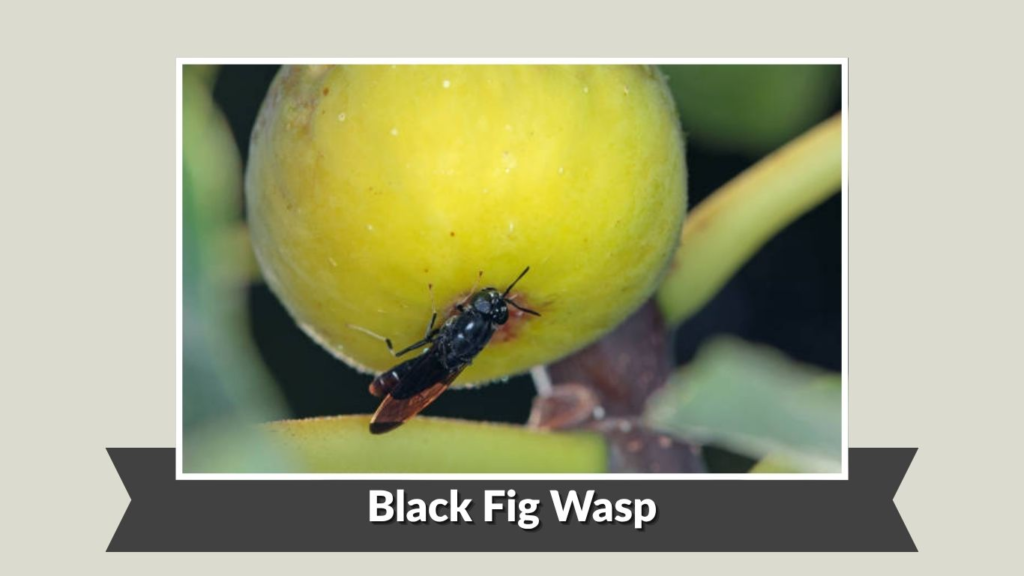
The Black Fig Wasp is a small, dark-colored species commonly associated with fig trees. Like other fig wasps, it has a highly specialized relationship with figs, often living most of its life inside the fruit. Despite its tiny size, it plays an important ecological role.
Identification
- Very small size, around 1–3 mm long
- Dark black or deep brown body
- Smooth, compact body shape
- Short antennae and legs
- Transparent wings (in females before entering figs)
- Slightly glossy appearance
Habitat and Distribution
The Black Fig Wasp is found in tropical and subtropical regions where fig trees are abundant. It lives almost entirely within figs, using them for reproduction and development. Its distribution closely follows that of its host fig species, and it is commonly found in forests, gardens, and areas with wild or cultivated fig trees.
Behavior and Diet
This wasp spends nearly its entire life cycle inside figs. Females enter figs to lay eggs and may assist in pollination depending on the species. Adults live briefly and do not rely heavily on external food sources. Larvae feed on fig tissue inside the fruit, growing in a protected environment.
Lifecycle
The lifecycle begins when a female enters a fig and lays eggs. Larvae develop within the fig, feeding on plant tissue. Male wasps emerge first, mate with females, and often do not leave the fig. Female wasps then collect pollen (if pollinating species) and exit the fig to find a new one, continuing the cycle.
4. Yellow Fig Wasp
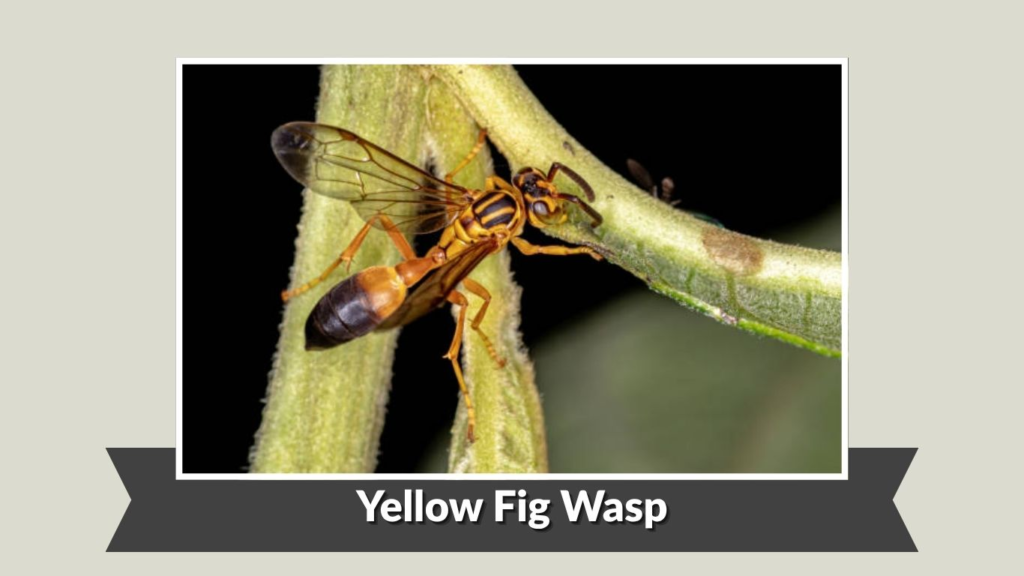
The Yellow Fig Wasp is a small and less noticeable species, named for its lighter body coloration. Like other fig wasps, it shares a close and specialized relationship with fig trees, often spending nearly its entire life cycle within the fig itself.
Identification
- Very small size, about 1–3 mm long
- Yellow to light brown body color
- Soft, oval-shaped body
- Short antennae
- Transparent wings (in females before entering figs)
- Delicate and less glossy appearance
Habitat and Distribution
The Yellow Fig Wasp is typically found in tropical and subtropical regions where fig trees are abundant. It lives inside figs, which provide both shelter and a place for reproduction. Its distribution closely matches the range of its host fig species, and it may be found in forests, orchards, and garden environments.
Behavior and Diet
This wasp spends most of its life inside figs. Females enter immature figs to lay eggs and may contribute to pollination. Adults do not live long outside the fig and rarely feed externally. Larvae develop by feeding on fig tissue, benefiting from the enclosed and protected environment.
Lifecycle
The female enters a fig through a small opening and lays eggs inside. The larvae hatch and grow within the fig. Male wasps emerge first, mate with females, and usually remain inside. Female wasps then collect pollen (if pollinating species) and leave the fig to locate a new one, continuing the reproductive cycle.
5. Long-tailed Fig Wasp
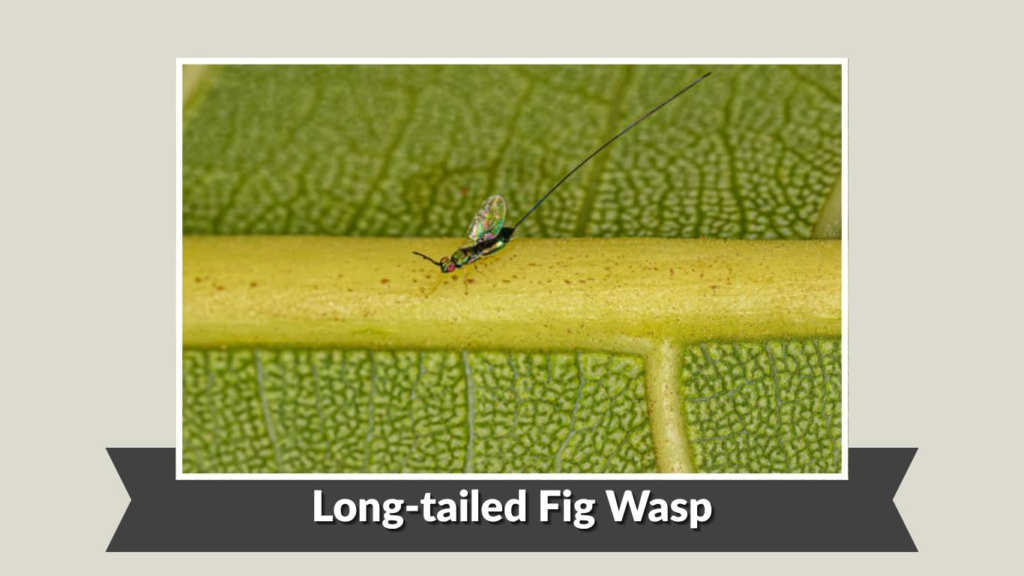
The Long-tailed Fig Wasp is known for its extended ovipositor, which gives it a “long-tailed” appearance. This adaptation allows it to lay eggs from outside the fig, making it different from pollinating fig wasps that enter the fruit.
Identification
- Very small size, about 1–3 mm long
- Slender body with elongated abdomen
- Noticeably long ovipositor (“tail”)
- Dark brown to black coloration
- Transparent wings
- Fine, delicate body structure
Habitat and Distribution
The Long-tailed Fig Wasp is found in regions where fig trees grow, especially in tropical and subtropical climates. It is commonly seen around figs rather than inside them, as it lays eggs from the outside. Its distribution closely follows that of its host fig species and is common in forests, gardens, and fig-rich environments.
Behavior and Diet
Unlike pollinating fig wasps, this species does not enter the fig. Instead, it lays eggs from the outside using its long ovipositor. It is often considered a non-pollinating or parasitic fig wasp. Adults may feed minimally on plant fluids, while larvae develop inside figs, often relying on resources created by other wasps.
Lifecycle
The female uses her long ovipositor to deposit eggs into the fig from the outside. After hatching, larvae develop inside the fig alongside other fig wasp species. They feed and grow within this protected environment. Once mature, adults emerge and continue the cycle by locating new figs for egg-laying.
6. Short-tailed Fig Wasp
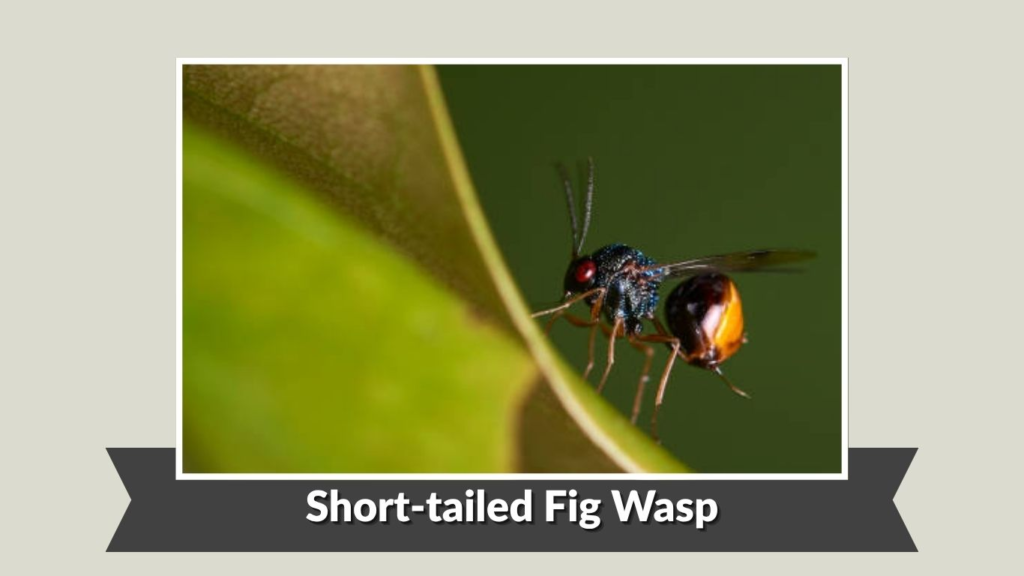
The Short-tailed Fig Wasp is a small species characterized by its relatively shorter ovipositor compared to long-tailed types. It is closely associated with fig trees and plays a role within the complex fig wasp community, often interacting with other species inside the fig.
Identification
- Very small size, about 1–3 mm long
- Compact, oval-shaped body
- Short ovipositor (“tail”)
- Dark brown or black coloration
- Transparent wings (in females before entering figs)
- Smooth body surface
Habitat and Distribution
The Short-tailed Fig Wasp is found in tropical and subtropical regions where fig trees are present. It lives primarily inside figs, using them for reproduction and development. Its distribution closely matches that of its host fig species, and it is commonly found in forests, gardens, and areas rich in fig trees.
Behavior and Diet
This wasp spends most of its life cycle inside figs. Depending on the species, it may be a pollinator or a non-pollinating fig wasp. Adults live briefly and may not feed much outside the fig. Larvae feed on fig tissue or resources within the fig, benefiting from the protected environment.
Lifecycle
The female lays eggs inside the fig, either by entering it or using a short ovipositor. Larvae hatch and develop within the fig alongside other fig wasps. Male wasps typically emerge first and mate with females. Females then leave the fig, sometimes carrying pollen, to find a new fig and continue the cycle.
7. Gall Fig Wasp
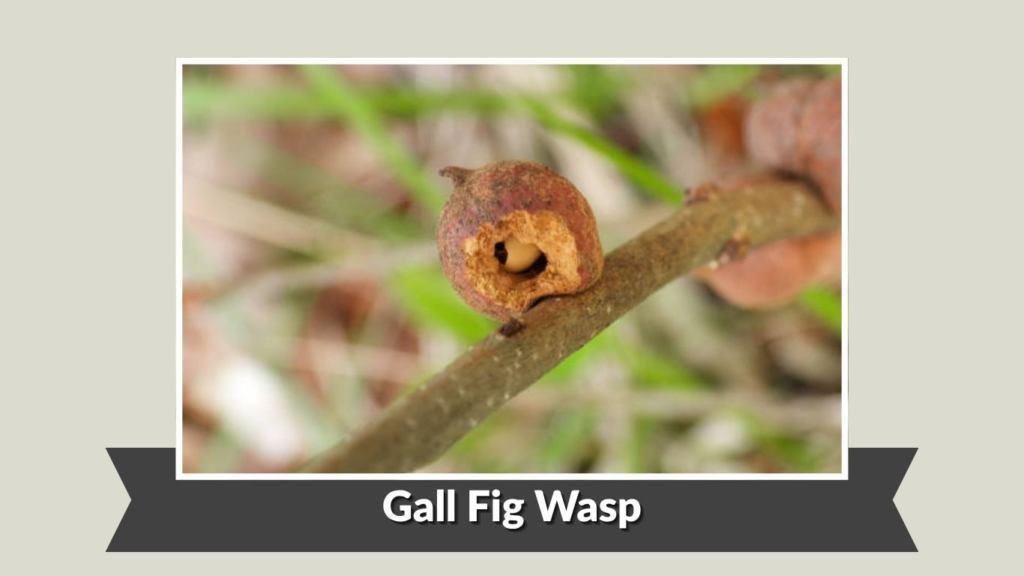
The Gall Fig Wasp is a type of fig wasp that induces the formation of galls inside figs, which serve as both food and shelter for its larvae. It is part of the complex ecosystem within a fig, often interacting with pollinating and non-pollinating species.
Identification
- Very small size, about 1–3 mm long
- Dark brown or black body
- Compact, oval shape
- Short antennae
- Transparent wings
- Subtle, less distinctive markings
Habitat and Distribution
The Gall Fig Wasp is found in tropical and subtropical regions where fig trees grow. It lives almost entirely inside figs, where it lays eggs and develops. Its distribution closely follows its host fig species and is commonly found in forests, orchards, and natural areas rich in fig trees.
Behavior and Diet
This species is known for forming galls within the fig tissue, which provide nourishment and protection for its larvae. It does not play a direct role in pollination. Adults live briefly and may not feed much outside the fig. The larvae feed on plant tissue within the gall structures.
Lifecycle
The female lays eggs inside the fig, triggering the formation of galls around the developing larvae. The larvae grow within these galls, feeding on surrounding plant tissue. After maturing, they pupate inside the fig. Adults emerge, mate, and females leave the fig to find new figs where they can lay eggs and continue the lifecycle.
8. Parasitic Fig Wasp
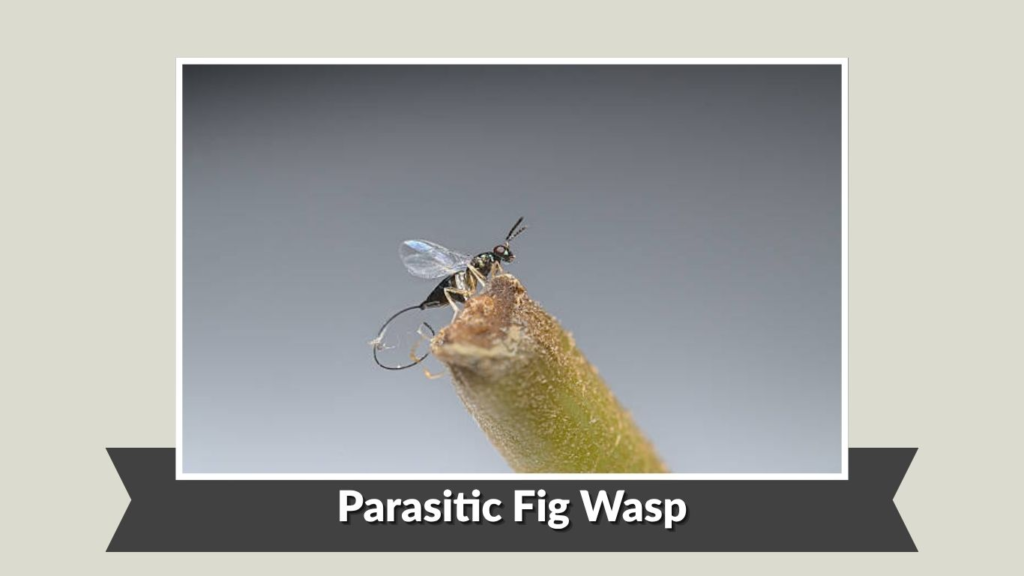
The Parasitic Fig Wasp is a unique type that depends on other fig wasps for its survival. Instead of pollinating figs, it uses the fig environment and other wasp species to reproduce. This creates a complex ecological relationship within a single fig.
Identification
- Very small size, about 1–3 mm long
- Slender body shape
- Dark brown to black coloration
- Long ovipositor used for egg-laying
- Transparent wings
- Fine, delicate structure
Habitat and Distribution
The Parasitic Fig Wasp is found in tropical and subtropical regions where fig trees grow. It is usually seen around figs rather than inside them initially, as it lays eggs from the outside. Its distribution closely follows fig tree habitats, including forests, gardens, and orchards.
Behavior and Diet
This wasp does not pollinate figs. Instead, it lays eggs inside figs where other fig wasps have already developed. Its larvae may feed on host larvae or compete for resources within the fig. Adults may feed minimally on plant fluids. This parasitic behavior plays a role in balancing fig wasp populations.
Lifecycle
The female lays eggs into figs from the outside using her ovipositor. After hatching, larvae develop inside the fig, often at the expense of other wasp larvae. They grow and pupate within the fig. Adults emerge, mate, and females seek out new figs to continue the parasitic lifecycle.
9. Non-pollinating Fig Wasp
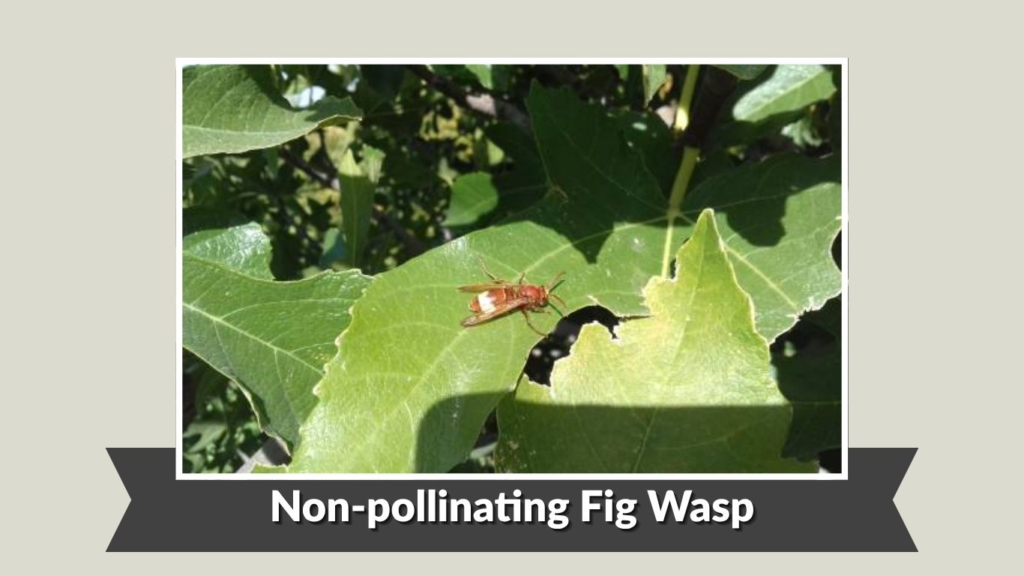
The Non-pollinating Fig Wasp is a type of fig wasp that does not contribute to pollination but still depends on figs for its lifecycle. It is part of the diverse fig wasp community and plays a role in the ecological balance within figs.
Identification
- Very small size, about 1–3 mm long
- Dark brown or black body
- Slender or compact body shape
- Transparent wings
- May have a short or moderately long ovipositor
- Simple, smooth appearance
Habitat and Distribution
The Non-pollinating Fig Wasp is found in tropical and subtropical regions wherever fig trees grow. It is commonly associated with figs but may lay eggs from outside or inside depending on the species. Its distribution closely follows its host fig species and is common in forests, gardens, and orchards.
Behavior and Diet
This wasp does not pollinate figs but uses them for reproduction. It may compete with pollinating wasps or rely on resources within the fig created by other species. Adults live briefly and may feed minimally on plant fluids. Larvae develop inside the fig, feeding on plant tissue or shared resources.
Lifecycle
The female lays eggs in or on figs, either by entering them or using an ovipositor from the outside. Larvae develop inside the fig alongside other wasp species. After maturing, they pupate within the fig. Adults emerge, mate, and females search for new figs to continue the lifecycle.
10. Striped Fig Wasp
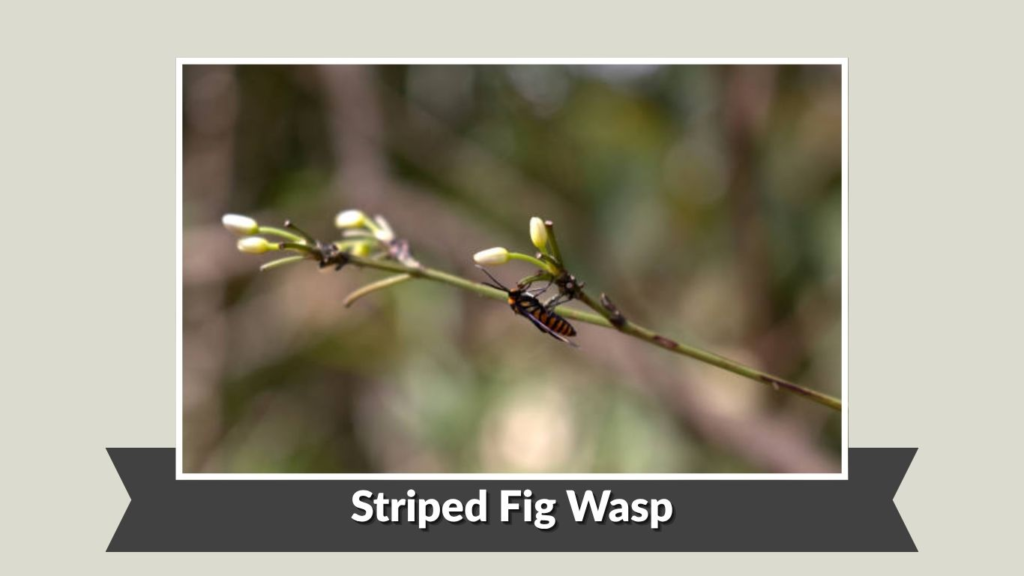
The Striped Fig Wasp is named for its faint banded or striped body pattern, which helps distinguish it from more uniformly colored fig wasps. Like others in its group, it has a close relationship with fig trees and spends most of its life within or around figs.
Identification
- Very small size, about 1–3 mm long
- Light and dark striped or banded body pattern
- Slender, oval-shaped body
- Transparent wings
- Short antennae
- May have a visible ovipositor depending on species
Habitat and Distribution
The Striped Fig Wasp is found in tropical and subtropical regions where fig trees are common. It is closely tied to its host fig species and is typically found in forests, orchards, and garden environments. It may live inside figs or remain outside depending on its role in the fig ecosystem.
Behavior and Diet
This wasp may be either pollinating or non-pollinating depending on the species. It spends most of its life cycle within figs. Adults live briefly and may feed minimally on plant fluids. Larvae develop inside figs, feeding on plant tissue or resources within the enclosed environment.
Lifecycle
The female lays eggs either inside the fig or from the outside using an ovipositor. Larvae develop within the fig, feeding and growing in a protected space. Male wasps often emerge first and mate with females. Female wasps then leave the fig, sometimes carrying pollen, and continue the cycle by locating new figs.
FAQs
What are fig wasps?
Fig wasps are tiny insects that live in a close relationship with fig trees. Most species spend nearly their entire life cycle inside figs. Some pollinate the fig flowers, while others depend on the fig for reproduction without contributing to pollination.
Are fig wasps harmful to humans?
Fig wasps are completely harmless to humans. They do not sting and are rarely seen because they live inside figs. Even when figs are eaten, the wasps inside are broken down naturally and pose no health risk.
Do all fig wasps pollinate figs?
No, not all fig wasps are pollinators. Some species are non-pollinating or even parasitic. However, each fig species typically depends on a specific pollinator wasp species to reproduce successfully.
Where do fig wasps live?
Fig wasps are found in regions where fig trees grow, especially in tropical and subtropical climates. They live mainly inside figs, using them for shelter, reproduction, and development throughout their lifecycle.
Why are fig wasps important?
Fig wasps are essential for the reproduction of many fig species. Pollinating fig wasps help fertilize fig flowers, allowing fruits to develop. This relationship supports ecosystems, as figs are a key food source for many animals.
