

Spider bites can be alarming, but the good news is that most spider bites are harmless and can be treated at home with simple care. In many cases, symptoms are mild and include redness, swelling, and slight pain or itching. However, it’s important to know how to properly treat a bite and recognize when it may require medical attention.
What Does a Spider Bite Look Like?

Spider bites often look similar to other insect bites, which can make them difficult to identify. In many cases, people assume they’ve been bitten by a spider when it may actually be a mosquito, flea, or skin irritation.
Common Mild Symptoms
- Red or slightly swollen bump
- Itching or mild burning sensation
- Localized pain or tenderness
- Small blister in some cases
These symptoms usually appear within a few hours and tend to improve on their own within a few days.
Signs It May Not Be a Spider Bite
Not every skin bump is caused by a spider. Some common lookalikes include:
- Mosquito or flea bites
- Skin infections
- Allergic reactions
- Ingrown hairs
If the bite keeps getting worse instead of better, it may not be a spider bite and should be checked by a doctor.
Spider Bite Treatment at Home: Step-by-Step

Most mild spider bites can be treated effectively at home by following simple first aid steps.
Step 1: Stay Calm and Move to a Safe Area
First, move away from the area where the bite occurred to avoid additional bites. Try to stay calm—panic can make symptoms feel worse. If possible, safely note what the spider looked like, but don’t risk getting bitten again.
Step 2: Clean the Bite Area
Wash the bite gently with soap and clean water. This helps remove dirt, bacteria, and venom residue, reducing the risk of infection.
- Use mild soap
- Rinse thoroughly
- Pat dry with a clean towel
Keeping the area clean is one of the most important steps in preventing complications.
Step 3: Apply an Antibiotic Ointment
If the skin is broken or irritated, apply a small amount of antibiotic ointment to help prevent infection.
- Use a thin layer
- Apply 1–3 times daily if needed
- Cover with a clean bandage if necessary
This step is especially helpful if you’ve scratched the bite or if the skin is sensitive.
Step 4: Use a Cold Compress
Applying a cold compress can reduce both pain and swelling.
- Wrap ice in a clean cloth (never apply directly)
- Apply for 10–15 minutes
- Repeat several times a day
Cold treatment helps control inflammation and provides quick relief from discomfort.
Step 5: Elevate the Affected Area
If the bite is on your arm or leg, try to keep it elevated.
- Raise above heart level when possible
- Helps reduce swelling
- Improves blood circulation
This simple step can make a noticeable difference, especially during the first 24 hours.
Step 6: Take Over-the-Counter Medication
You can manage symptoms using common medications:
- Pain relievers (ibuprofen or acetaminophen)
- Antihistamines for itching
- Anti-itch creams if needed
Always follow the dosage instructions and avoid medications that may not be suitable for your condition.
Step 7: Monitor the Bite Closely
Keep an eye on the bite over the next 24 to 48 hours.
Watch for:
- Increasing redness or swelling
- Severe pain
- Pus or discharge
- Fever or body aches
Most spider bites improve within a few days. If symptoms worsen, medical attention may be needed.
Home Remedies That May Help Mild Spider Bites
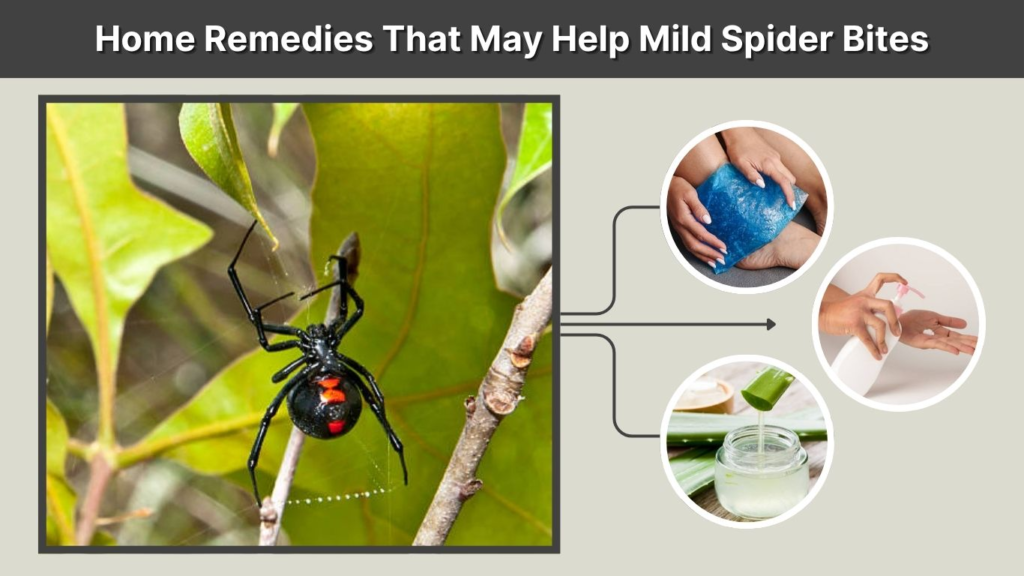
In addition to basic first aid, some simple remedies can help relieve discomfort.
Safe Soothing Options
- Cold compress for swelling
- Calamine lotion for itching
- Aloe vera gel for skin soothing
- Oral antihistamines for allergic reactions
These remedies do not cure the bite but can make symptoms more manageable.
Remedies to Avoid
Avoid these common mistakes:
- Do not cut or open the bite
- Do not try to suck out venom
- Do not apply heat
- Do not use harsh chemicals or alcohol
- Do not scratch excessively
These actions can worsen the condition or increase the risk of infection.
When to See a Doctor Immediately
While most bites are mild, some can become serious. It’s important to recognize warning signs early.
Emergency Warning Signs
- Difficulty breathing
- Severe muscle cramps
- Intense pain spreading beyond the bite
- Nausea, vomiting, or sweating
- Swelling of face, lips, or throat
- Fever or chills
- Rapidly spreading redness
- A dark, blistering, or ulcer-like wound
These symptoms may indicate a venomous spider bite or a severe reaction and require immediate medical care.
Black Widow vs Brown Recluse Spider Bites
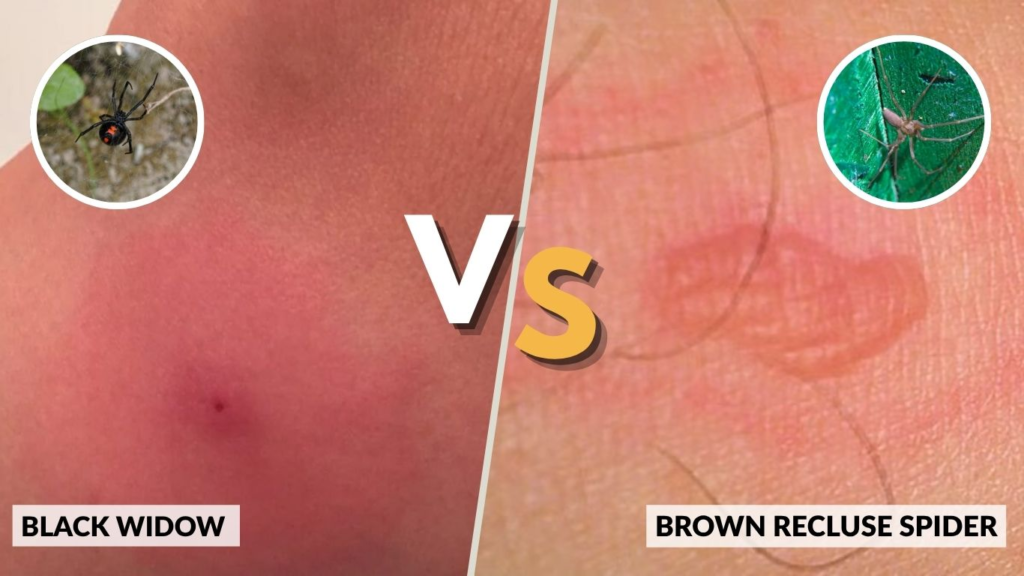
Some spider bites are more dangerous than others. The two most medically significant spiders are the black widow and brown recluse.
| Spider Type | Common Symptoms | Recommended Action |
| Black widow | Muscle cramps, severe pain, sweating, nausea | Seek urgent care |
| Brown recluse | Blister, skin damage, blue or dark center | Seek medical attention |
| Harmless spider | Mild redness, swelling, itching | Treat at home |
Understanding the difference helps you decide how quickly to seek treatment.
How Long Does a Spider Bite Take to Heal?
Most spider bites heal quickly, especially if they are mild and treated properly at home. The healing time can vary depending on the type of bite, your skin sensitivity, and how well the wound is cared for.
Normal Healing Timeline
- First few hours: Redness, swelling, and mild pain appear
- 24–48 hours: Symptoms should stabilize or begin improving
- 3–7 days: Most mild bites heal completely
- 1–3 weeks: Some bites (like brown recluse) may take longer
If the bite continues to worsen instead of improving, it may be infected or more serious than a typical spider bite.
How to Prevent Spider Bites at Home
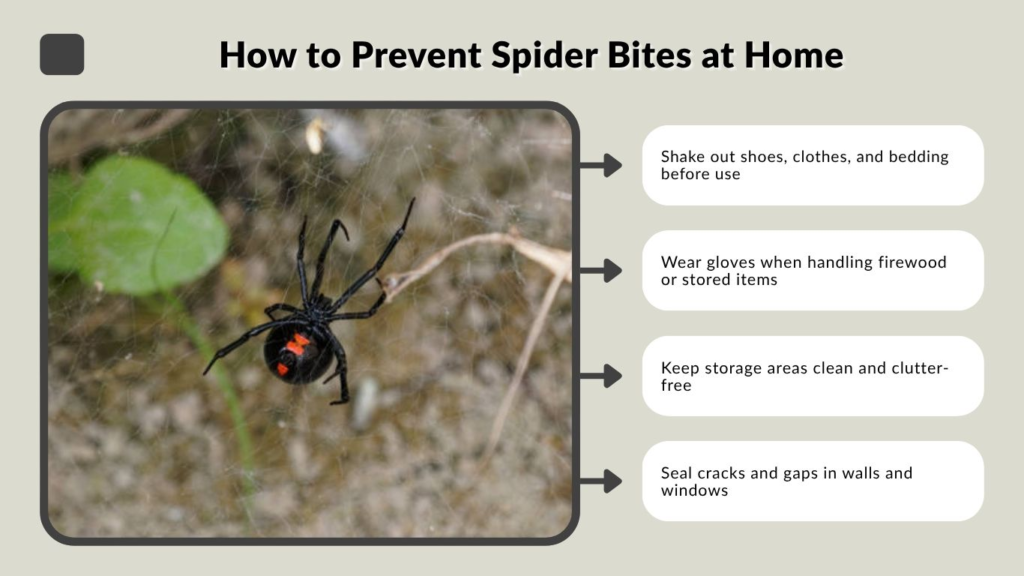
Preventing spider bites is easier than treating them. Spiders usually bite only when they feel threatened, so reducing contact is key.
Simple Prevention Tips
- Shake out shoes, clothes, and bedding before use
- Wear gloves when handling firewood or stored items
- Keep storage areas clean and clutter-free
- Seal cracks and gaps in walls and windows
- Use caution in dark areas like basements and garages
- Keep your sleeping area slightly away from walls
These steps help reduce the chances of accidental contact with spiders.
Who Is at Higher Risk?
Some people may experience stronger reactions or complications from spider bites.
Higher Risk Groups
- Children
- Older adults
- People with weakened immune systems
- Individuals with allergies
These groups should be more cautious and seek medical advice sooner if symptoms appear unusual.
Common Mistakes to Avoid After a Spider Bite
Many people unknowingly make mistakes that can worsen the bite or delay healing.
Avoid These Errors
- Ignoring worsening symptoms
- Scratching the bite excessively
- Using unproven home remedies
- Applying heat instead of cold
- Delaying medical care when symptoms are severe
Proper care and attention can prevent complications and speed up recovery.
FAQs
Can I treat a spider bite at home?
Yes, most spider bites can be treated at home using basic first aid like cleaning the area, applying a cold compress, and managing pain or itching. However, you should seek medical help if symptoms become severe or unusual.
What is the fastest way to heal a spider bite?
The best way to heal a spider bite is to keep it clean, use a cold compress to reduce swelling, avoid scratching, and monitor it closely. There is no instant cure, but proper care helps the body heal naturally.
Should I pop a spider bite blister?
No, you should not pop a blister. Doing so can increase the risk of infection and slow down healing. Let it heal naturally and keep the area clean and protected.
Can a spider bite get infected?
Yes, like any skin injury, a spider bite can become infected. Signs include increased redness, warmth, swelling, pus, or fever. If you notice these symptoms, consult a doctor.
When is a spider bite dangerous?
A spider bite becomes dangerous if it causes severe pain, muscle cramps, breathing difficulty, vomiting, or a spreading wound. These signs may indicate a venomous bite or allergic reaction and require immediate care.
