

Mud dauber wasps are a common sight in backyards, barns, and quiet corners of buildings. Known for their distinctive mud tube nests and solitary lifestyle, these wasps often go unnoticed or are misunderstood. Unlike their more aggressive cousins, mud daubers rarely sting and play a beneficial role in controlling spider populations. But as we become more aware of environmental changes and biodiversity loss, one question arises: Are mud dauber wasps endangered species?
Are Mud Dauber Wasps Endangered Species?
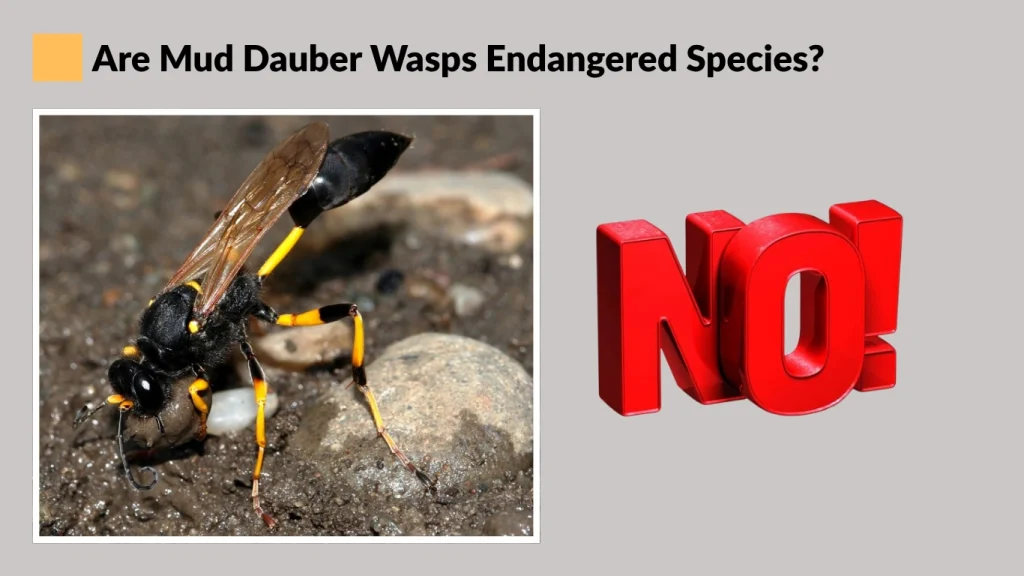
No, mud dauber wasps are not considered endangered. They are not listed on the IUCN Red List or classified under any national endangered species protections. These wasps are widespread across North America, parts of Europe, Asia, and Australia. They adapt well to both urban and rural environments, often nesting around human dwellings, barns, sheds, and bridges. Due to their solitary nature and ability to thrive in various habitats, their populations remain stable.
In fact, mud daubers are regarded as resilient and adaptable insects. Their presence near human settlements and low reliance on specific environments or host species help them avoid many of the risks that lead to endangerment in other insect species.
Overview of Mud Dauber Wasps

What Are Mud Dauber Wasps?
Mud dauber wasps are solitary wasps that build nests from mud. Unlike social wasps, each female mud dauber constructs and provisions her own nest. The most recognizable feature is their long, slender “waist” and the tube-shaped mud cells they create for their offspring.
Common Species and Global Distribution
Well-known species include the Black and Yellow Mud Dauber (Sceliphron caementarium), Organ Pipe Mud Dauber (Trypoxylon politum), and Blue Mud Dauber (Chalybion californicum). They’re found across North and South America, parts of Europe, Asia, and even Australia, showing a remarkable geographic spread.
Current Conservation Status
Are They Officially Listed as Endangered?
No. Neither the IUCN (International Union for Conservation of Nature) nor national wildlife agencies list mud daubers as endangered or threatened. Their wide distribution and stable numbers keep them out of immediate conservation concern.
Comparison with Other Wasp Species’ Status
While some specialized or tropical wasp species may be under ecological threat due to deforestation or climate change, mud daubers are not among them. Their generalist behavior and ability to coexist with humans give them a strong survival edge.
Natural Population Trends

Population Stability in Urban and Rural Areas
Mud daubers flourish in both city and countryside environments. Their nests are commonly seen in garages, barns, porches, and under eaves. As long as they can find mud for building and spiders for feeding their larvae, they are likely to remain abundant.
Monitoring and Research Gaps
Although not officially monitored, studies on their nesting behavior and prey selection exist. However, long-term population data is limited, and future environmental shifts could change their outlook.
Threats to Mud Dauber Wasp Populations
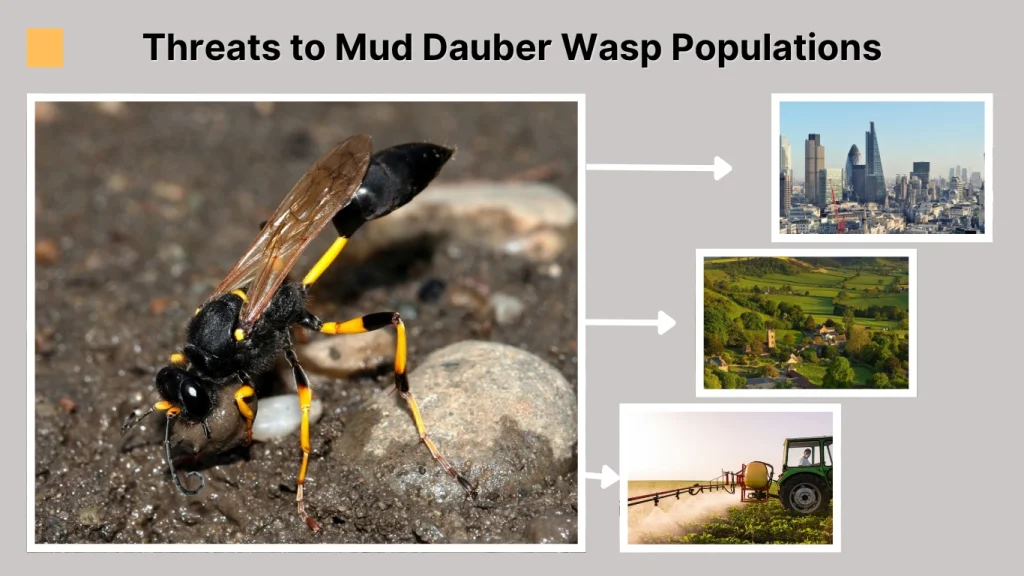
Habitat Destruction and Urbanization
While they’re adaptable, large-scale urbanization that removes green spaces and water sources can reduce suitable nesting grounds.
Use of Pesticides and Insecticides
Widespread use of chemicals can affect their food sources, especially spiders and small insects. Nest sites may also be contaminated or destroyed during pest control efforts.
Misunderstanding and Human Removal
Many people destroy mud dauber nests out of fear, unaware that these wasps are non-aggressive and beneficial. This behavior can contribute to local population drops.
Role in Ecosystem and Benefits to Humans
Natural Pest Control
Mud daubers help control spider populations, including black widow spiders. Their larvae feed on paralyzed spiders provided by the mother.
Pollination Contribution
Although not primary pollinators, adult mud daubers do visit flowers for nectar, giving them a minor role in pollination.
Are Conservation Efforts Necessary?
Current Conservation Needs
No targeted conservation actions are currently needed. However, promoting awareness and reducing unnecessary nest removal can help support their populations.
Public Awareness and Coexistence
Educating the public about their harmless nature and ecological role can reduce fear and improve tolerance for their presence.
Final Thoughts on Endangerment
Mud dauber wasps are far from endangered. Their ability to build nests in diverse environments, prey on common pests, and avoid human confrontation ensures their continued survival. That said, we should still be mindful of how pesticide use and habitat changes could impact them over time.
FAQs
Are mud dauber wasps protected by law?
No, they are not protected under any specific wildlife or conservation law as they are not considered at risk.
Why are mud daubers not endangered?
They have a widespread range, adapt easily to urban areas, and do not rely on a specific host species, making them resilient.
Do mud daubers face extinction threats?
Currently, no. However, long-term environmental changes and overuse of pesticides could pose localized risks.
Can mud dauber wasps survive in cities?
Yes. They often thrive in cities where they build nests in undisturbed areas like sheds and eaves.
Is it okay to remove a mud dauber nest?
Yes, but it’s generally not necessary. They are harmless and beneficial. If removal is needed, do so gently without pesticides.
