

Mud dauber wasps are solitary, spider-hunting insects best known for their unique mud nests. While they may look intimidating, mud daubers are non-aggressive and play an important role in natural pest control. Understanding where they live—both globally and locally—helps homeowners identify, manage, or appreciate their presence.
In this guide, you’ll learn where mud dauber wasps prefer to build their nests, the types of environments they thrive in, and which countries they are commonly found in across the world.
Mud Dauber Habitat
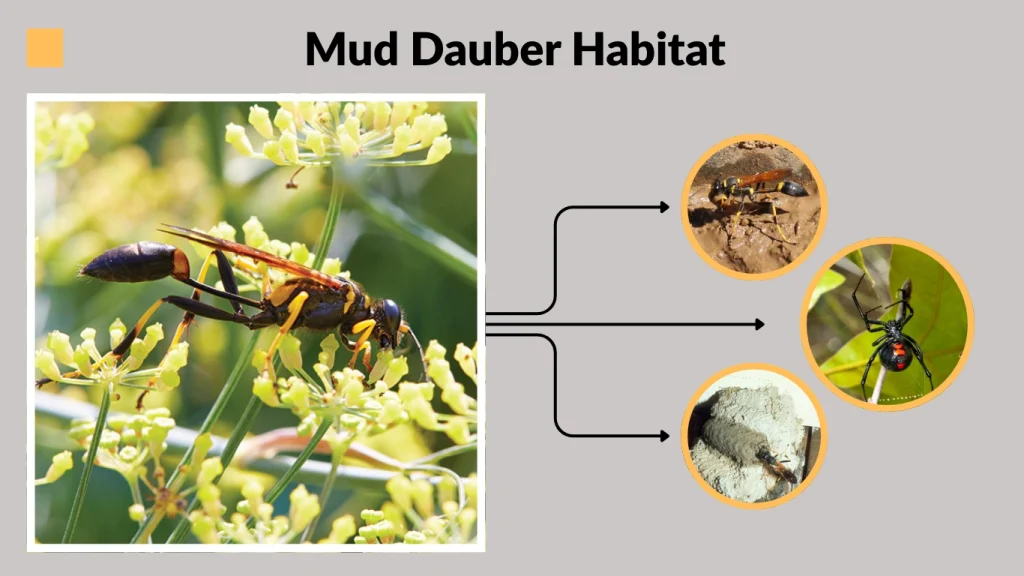
Mud dauber wasps prefer warm, dry environments where they can find shelter and access to spiders—the main food source for their larvae. They often nest in or near human structures, not because they’re aggressive, but because these areas provide ideal protection from wind and rain.
Some species are more selective in their nesting sites than others, but all mud daubers require:
- A source of wet or moist mud for building
- Nearby populations of spiders
- Sheltered, dry surfaces for securing their nests
They are solitary insects, meaning each female builds her own nest and does not live in a colony like social wasps.
Preferred Habitats and Nesting Locations

Mud dauber wasps build their nests in places that remain undisturbed for long periods. This makes certain man-made locations perfect for their needs.
Common Nesting Spots
- Under eaves or overhangs
- Inside garages, barns, or sheds
- In attics or on ceilings
- Behind window shutters
- On stone, brick, stucco, or wood walls
Urban vs Rural Environments
In urban areas, mud daubers often nest on high-rise buildings, porches, or apartment balconies. In rural areas, they’re commonly found around old barns, farmhouses, or tool sheds.
Natural Settings
Though often associated with buildings, they can also nest in:
- Rock crevices
- Tree trunks or hollow branches
- Caves or cliff faces
These natural sites are more commonly used in forested or mountainous areas where man-made structures are unavailable.
Climate Conditions Mud Daubers Prefer

Mud dauber wasps thrive in warm environments, but some species have adapted to survive in cooler or more temperate regions.
Warm, Dry Climates
They are most active in hot and dry weather, where mud dries quickly and spiders are plentiful. This includes:
- Deserts
- Arid plains
- Tropical lowlands
Humidity and Rain
High humidity helps them find moist mud, but too much rain can destroy unfinished nests or reduce wasp activity. That’s why they build under cover.
Cooler Zones
In colder climates, mud daubers reduce activity during winter. Some species overwinter inside their mud tubes, emerging in the spring when temperatures rise.
Effect of Climate Change
Rising temperatures have expanded the mud dauber’s range northward in several countries, including Canada and parts of Europe. New sightings are more common now in previously cooler zones.
Where Do Mud Dauber Wasps Live in the United States?
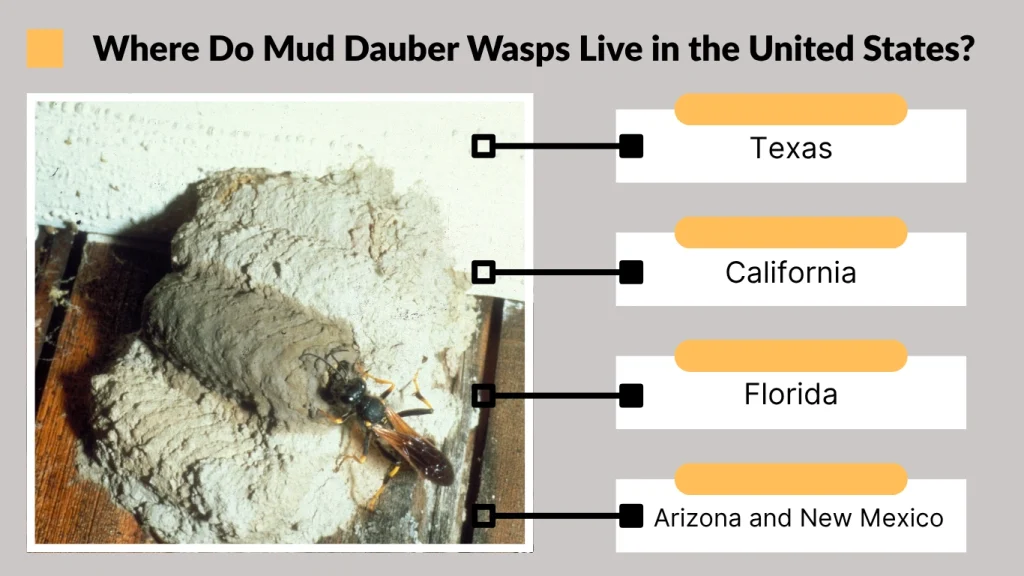
Mud daubers are found throughout the continental U.S., from Florida to Washington state. Some of the most common regions include:
Texas
Texas hosts multiple species of mud daubers. Nests are frequently found in:
- Ranch barns
- Porch ceilings
- Inside well houses
California
With its Mediterranean climate, California supports year-round mud dauber activity. They’re often seen on:
- Stucco buildings
- Garage walls
- Under patio roofs
Florida
In humid Florida, mud daubers prefer shaded spots with less rain exposure. Their nests are common in:
- Pool houses
- Outdoor staircases
- Fence posts
Arizona and New Mexico
These dry desert states offer ideal mud and spider conditions. Mud daubers are commonly found near:
- Water tanks
- Rock walls
- Overhanging cliffs
Countries Where Mud Dauber Wasps Are Found
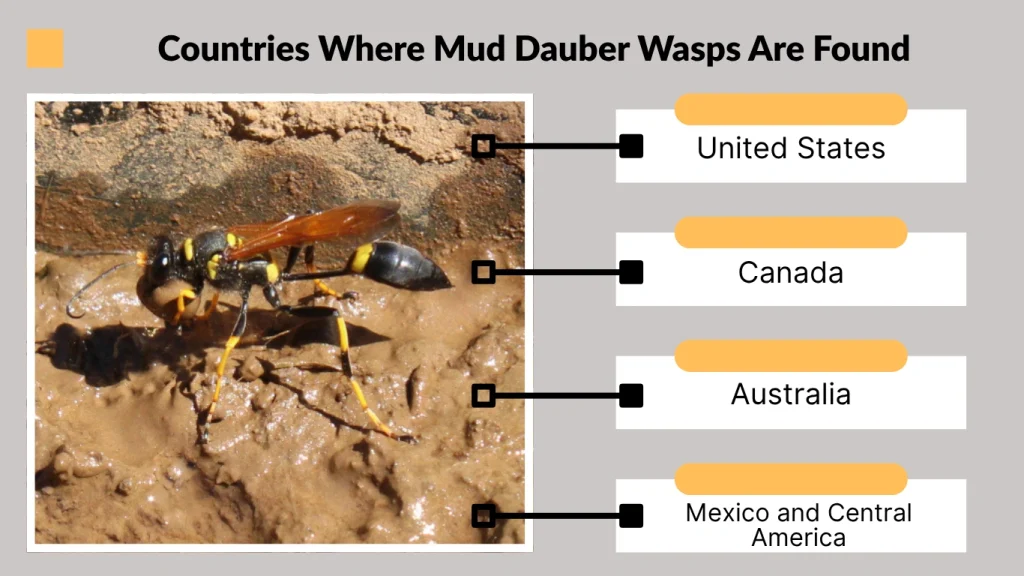
Mud dauber wasps are distributed across every inhabited continent except Antarctica. While some species are native, others have spread due to travel and climate adaptation.
United States
The most well-known mud daubers—like the organ pipe and blue mud dauber—are native to North America. Found in all states, they are a common sight during warm months.
Canada
Mud daubers are seen mainly in the southern provinces, such as Ontario and British Columbia. Their presence is seasonal, typically from May to September.
Australia
Mud daubers are widespread in Queensland, New South Wales, Western Australia, and Victoria. Their nests are frequently seen under verandas, decks, and eaves. Australian mud daubers are especially famous for preying on redback spiders.
Mexico and Central America
These regions provide perfect conditions—year-round warmth, lots of spiders, and plenty of dry building materials. Mud dauber nests are common in rural homes and city walls.
South America
Countries like Brazil, Colombia, and Argentina see high mud dauber activity, particularly around forest edges, farming villages, and old structures.
United Kingdom
Mud daubers are rare but increasing in parts of southern England due to warmer summers. They are more likely seen in greenhouses or near old buildings.
India
In India’s dry and tropical regions, especially Rajasthan and Madhya Pradesh, mud daubers build nests in:
- Ancient stone buildings
- Residential corners
- Electrical boxes
South Africa
Common in dry highland regions, they are seen around homes, under corrugated roofs, or stuck to brick walls.
Japan
Mud daubers are found in both rural villages and urban cities. Their nests appear under shrines, temple eaves, and older houses.
Mediterranean Europe
Countries like Spain, Greece, and Italy have small mud dauber populations. Nests are often found in barns, old stone walls, and sunny balconies.
Do Mud Daubers Migrate or Relocate?
Mud dauber wasps do not migrate. Each female selects her own nesting location based on local conditions and availability of mud and spiders.
- They typically stay within a few hundred feet of where they were born.
- However, they may change location if nests are destroyed or disturbed.
- Females do not reuse their own old nests, but other mud dauber species might.
Human Interaction and Coexistence
Mud daubers are not aggressive, making it easy to live alongside them. Their nests may be unsightly, but they offer natural spider control and rarely sting unless handled.
If you’re seeing a few around your home:
- Observe their behavior before removing the nest.
- If necessary, wait until they leave, then scrape off the mud.
- Use citrus oil or peppermint spray to deter future nesting.
FAQs
Do mud daubers live in cold climates?
They avoid cold regions but can survive winters inside nests as pupae. They’re most active in spring and summer.
Can they build nests inside houses?
Yes, especially in attics, garages, crawlspaces, or near windows left open.
Are they found on all continents?
Mud daubers are found on all inhabited continents except Antarctica.
What attracts mud daubers to certain places?
Shelter, warmth, available spiders, and access to mud are the main attractants.
Conclusion
Mud dauber wasps are widespread across the globe, favoring warm and sheltered areas in both urban and rural settings. Whether in the southern U.S., the Australian outback, or parts of India and Japan, they quietly build their mud homes and help reduce spider populations.
Though their nests may appear on your wall or ceiling, these wasps are non-aggressive and more helpful than harmful. Understanding where they live—and why—can help you manage their presence while appreciating their role in your local ecosystem.
