
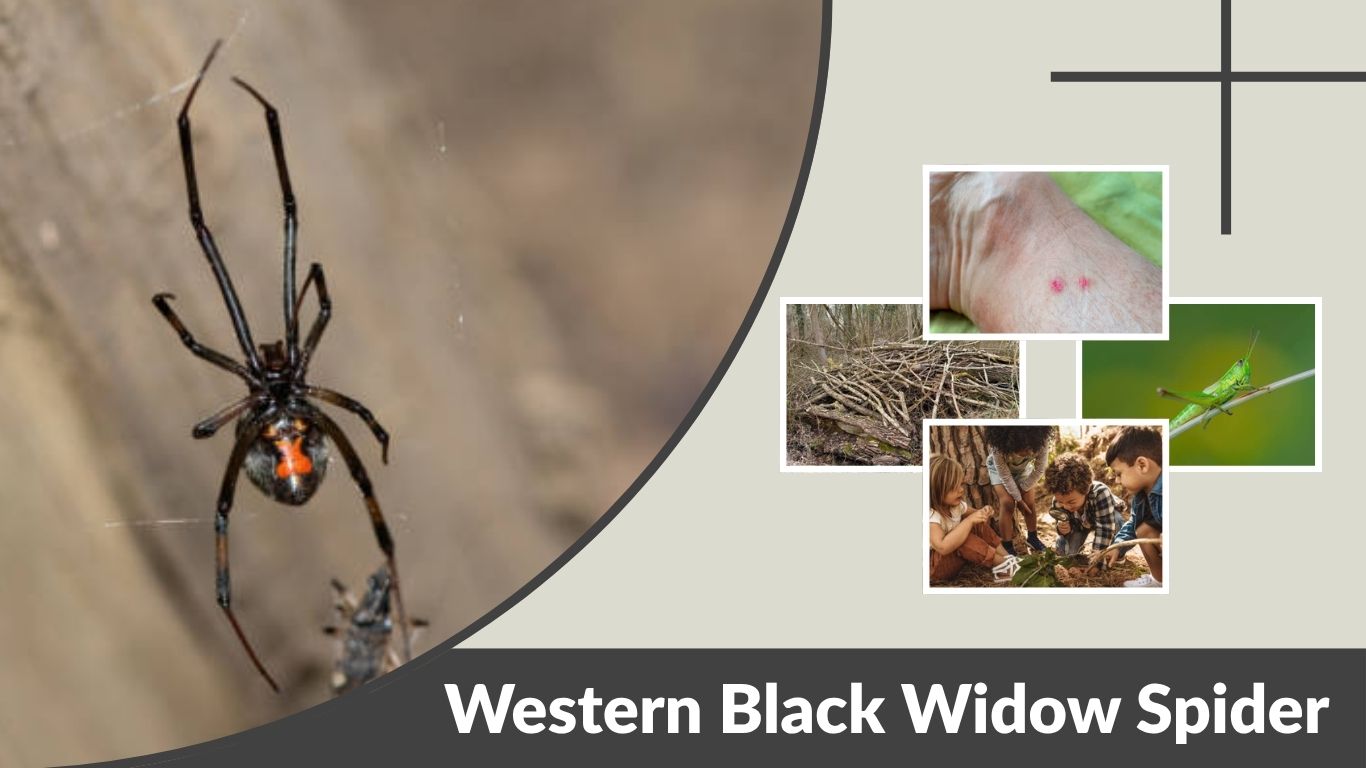
The western black widow spider (Latrodectus hesperus) is one of the most recognized and feared spiders in North America. Known for its glossy black body and distinctive red marking, it often raises concern due to its venomous bite. However, despite its reputation, this spider plays an important ecological role. In this guide, you’ll learn how to identify it, where it lives, and what happens if it bites, helping you separate facts from fear.
What Is the Western Black Widow Spider?
The western black widow spider is a venomous arachnid native to western North America. It belongs to the widow spider group, known for potent venom and distinctive markings. While often misunderstood, this species is generally shy and avoids human contact. Understanding its characteristics helps reduce unnecessary fear and allows safer coexistence.
How to Identify a Western Black Widow Spider
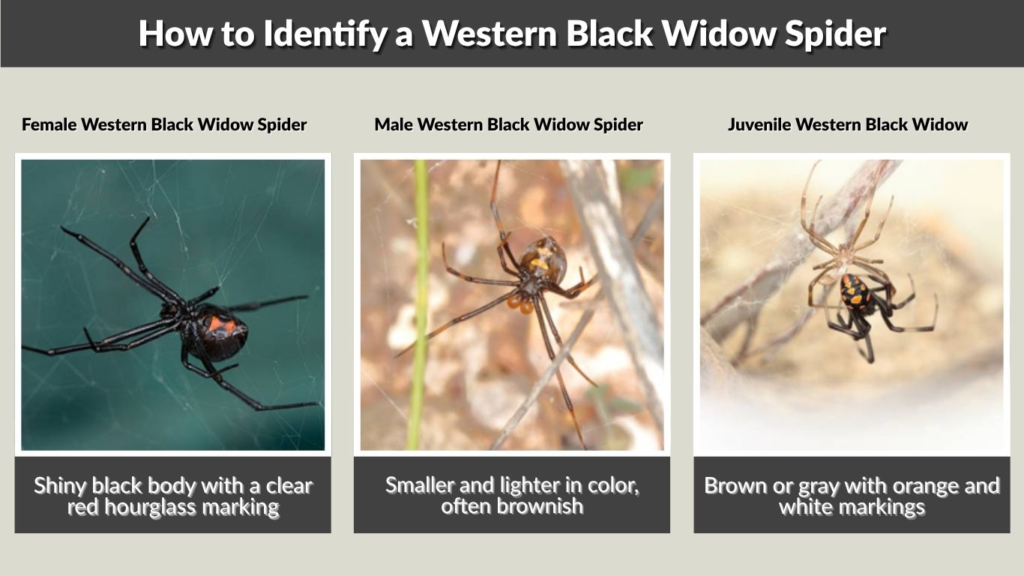
Identifying this spider correctly is essential, as it is often confused with other harmless species. Its appearance varies depending on age and gender, making recognition slightly challenging for beginners. Below are the key differences to help you identify it accurately.
Female Western Black Widow Spider
- Shiny black body with a clear red hourglass marking
- Larger size compared to males
- More potent venom, making bites more serious
Male Western Black Widow Spider
- Smaller and lighter in color, often brownish
- May have stripes or spots instead of solid black
- Much less dangerous to humans
Juvenile and Immature Western Black Widow
- Brown or gray with orange and white markings
- Patterns fade as they mature into black adults
- Frequently mistaken for other spider species
Western Black Widow Spider Habitat
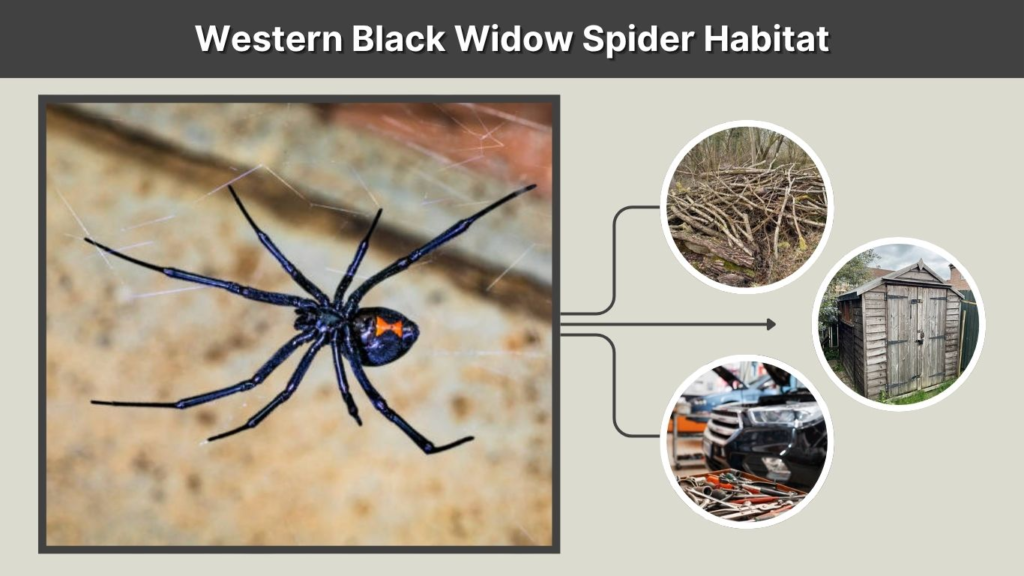
The western black widow spider prefers environments that are dry, quiet, and sheltered from disturbance. It often builds webs close to the ground in places where insects are abundant. These spiders are commonly found both in natural habitats and around human structures, especially where there is minimal activity.
Common Hiding Places
- Woodpiles, sheds, and garages
- Under rocks or outdoor furniture
- Dark corners, cracks, and crevices
Web Structure and Behavior
- Irregular, messy-looking webs
- Strong, sticky silk for trapping prey
- Usually positioned low to the ground
Western Black Widow Spider Distribution and Range
The western black widow spider is widely distributed across western regions of North America. Its range includes several U.S. states and extends into parts of Canada. Although its name suggests a limited area, it adapts well to different climates within its range, from dry deserts to coastal regions.
United States Distribution
This species is commonly found in states such as California, Oregon, Washington, and Colorado. It thrives in dry and semi-arid environments but can also adapt to suburban areas where shelter is available.
Canada Distribution
In Canada, the spider is primarily found in British Columbia and parts of Alberta. Its presence in these regions has increased due to favorable environmental conditions and gradual range expansion.
Are Western Black Widow Spiders Poisonous?
The western black widow spider is often described as “poisonous,” but the correct term is venomous. This means it delivers venom through its bite rather than being harmful when touched or eaten. Its venom contains neurotoxins that affect the nervous system, but serious complications are rare with modern medical care. Most bites result in temporary discomfort rather than long-term harm.
Western Black Widow Spider Bite
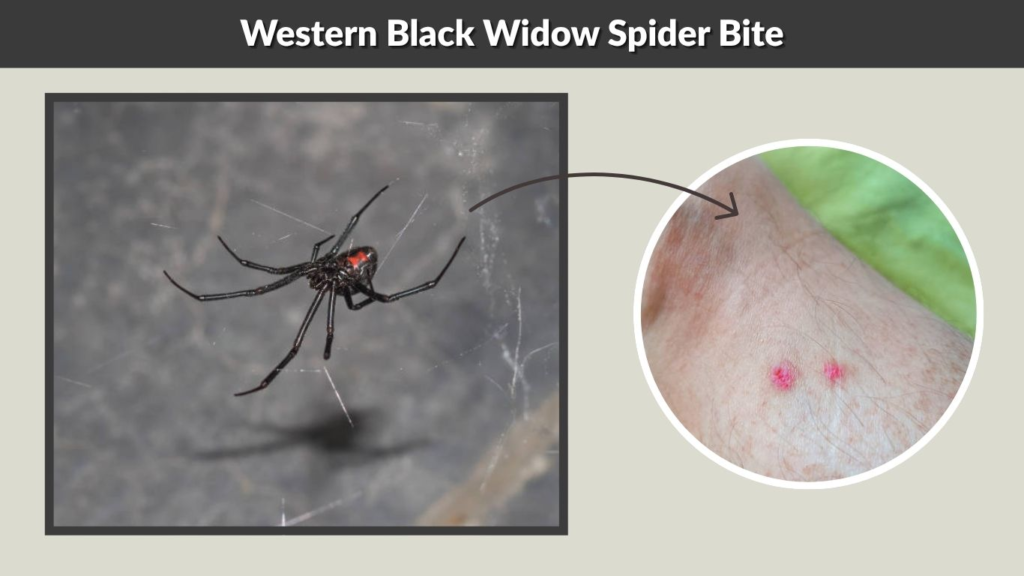
A bite from a western black widow spider can be alarming, but it is rarely life-threatening. These spiders typically bite only when threatened or disturbed. Understanding the symptoms and proper response can help reduce panic and ensure appropriate care if a bite occurs.
Bite Symptoms
Symptoms usually begin with mild pain at the bite site and may gradually intensify. In some cases, people experience muscle cramps, sweating, or nausea. The severity depends on factors such as the amount of venom injected and the individual’s health.
Male vs Female Bite Differences
- Female bites are more serious due to stronger venom
- Male bites are rare and usually mild
- Females are responsible for most reported cases
Basic First Aid Tips
- Clean the bite area with soap and water
- Apply a cold compress to reduce swelling
- Stay calm and avoid unnecessary movement
- Seek medical help if symptoms worsen
Size and Physical Characteristics
The western black widow spider is not as large as many people imagine, but its appearance makes it stand out. Females are significantly larger than males, with a round abdomen and long slender legs. Despite myths about oversized specimens, most individuals remain within a predictable size range.
Western Black Widow Spider Diet and Food Cycle
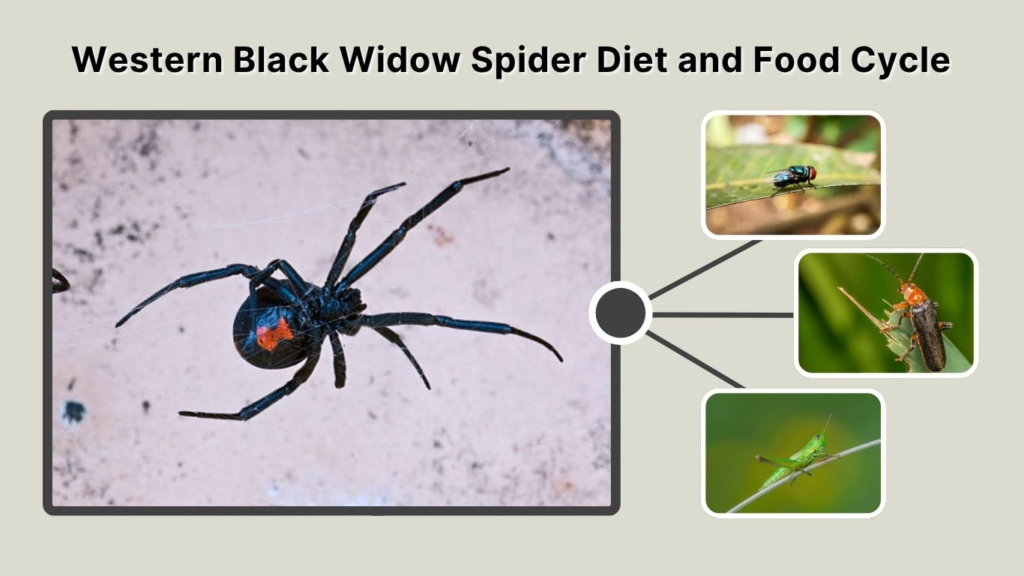
The western black widow spider plays an active role in controlling insect populations. It uses its strong silk web to trap prey and inject venom to immobilize it. This feeding behavior supports ecological balance and reduces pest numbers in both natural and human environments.
Common Prey
- Flies, mosquitoes, and beetles
- Grasshoppers and caterpillars
- Other small spiders and insects
Natural Predators
- Birds and small mammals
- Wasps that target spiders
- Larger insects that invade webs
Ecological Role and Importance
Despite their reputation, western black widow spiders are beneficial to ecosystems. They help control insect populations, which can reduce the spread of pests around homes and gardens. Their presence indicates a functioning ecosystem, and they typically avoid human interaction unless disturbed.
Conservation Status
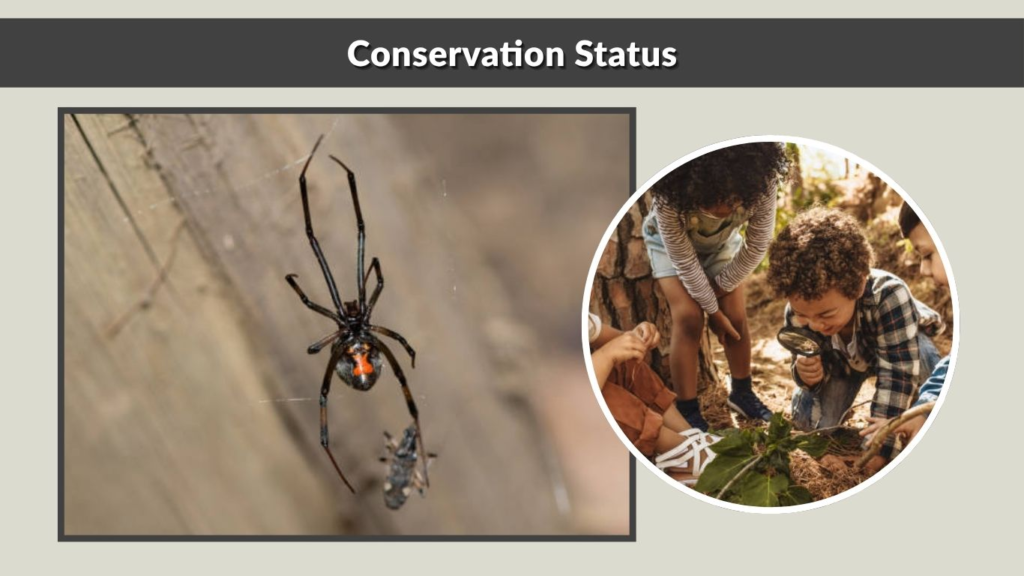
The western black widow spider is not considered endangered. Its population remains stable across most of its range due to its adaptability. However, environmental changes and human activity can influence local populations. Understanding their ecological role encourages a balanced approach to managing their presence.
Interesting Facts About the Western Black Widow Spider
- Females may eat males after mating, though this is not always common
- Their silk is incredibly strong compared to its thickness
- They prefer hiding over confronting threats
- Not every bite injects venom (known as a dry bite)
FAQs
Is the western black widow spider dangerous to humans?
The western black widow spider is venomous, but serious harm is rare. Most bites cause pain and muscle discomfort rather than life-threatening effects, especially with timely medical care.
Where are western black widow spiders commonly found?
They are found in the western United States and parts of Canada, often in dry, sheltered areas like woodpiles, garages, and under rocks where they can remain undisturbed.
How can I identify a western black widow spider?
Females are shiny black with a red hourglass marking, while males and juveniles are smaller with lighter colors and patterns, making them less noticeable.
What should I do if I get bitten by one?
Clean the bite, apply ice, and monitor symptoms. Seek medical attention if severe pain, muscle cramps, or unusual symptoms develop.
Are western black widow spiders aggressive?
No, they are generally shy and avoid humans. Bites usually occur only when the spider feels threatened or is accidentally disturbed.
