
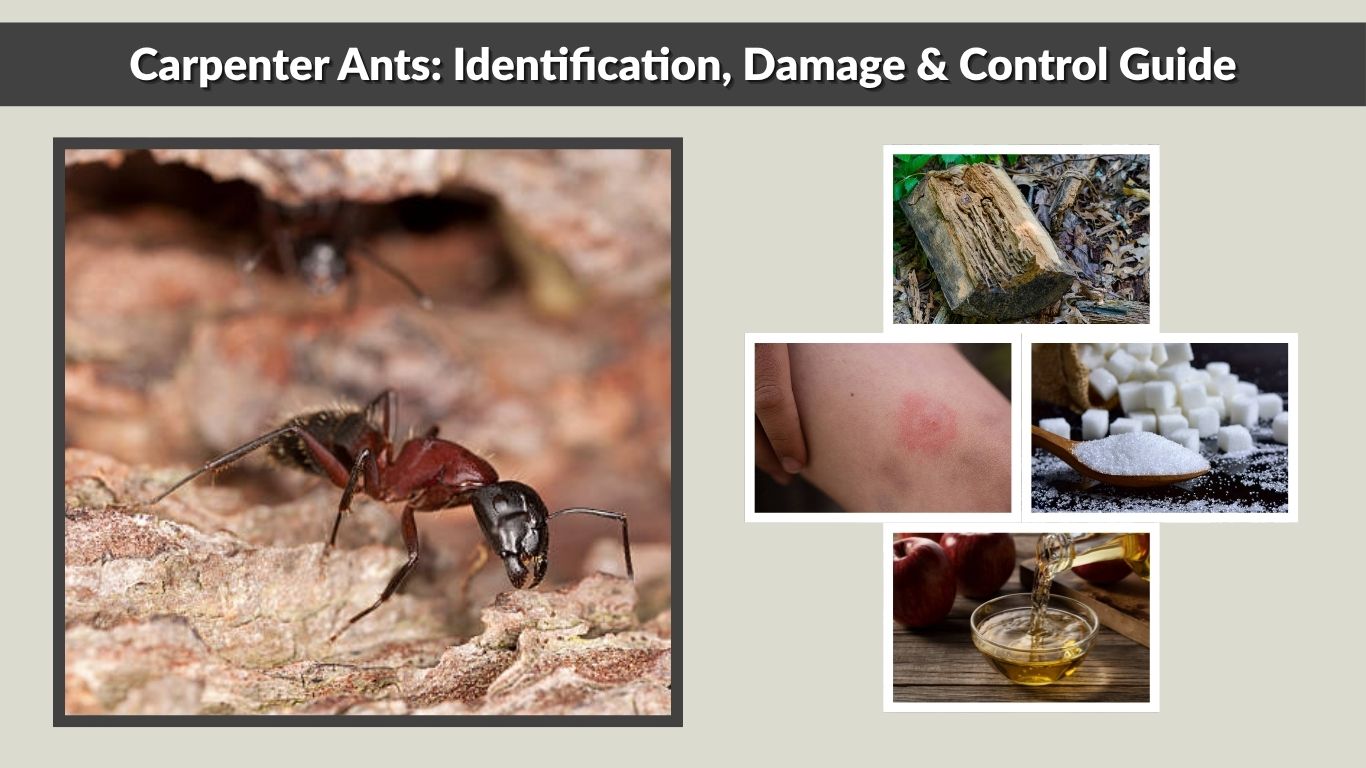
Carpenter ants are among the most common household pests that can quietly damage wooden structures over time. Unlike termites, they don’t eat wood but tunnel through it to build nests, which can weaken parts of your home. Many homeowners mistake them for regular black ants, delaying proper treatment. Understanding how to identify carpenter ants, recognize early warning signs, and apply effective control methods is essential to prevent costly repairs and long-term infestations.
What Are Carpenter Ants?
Carpenter ants are large ants known for nesting inside wood, especially damp or decaying areas. They are commonly found both outdoors and indoors, particularly in homes with moisture issues. These ants create smooth tunnels inside wood, which can lead to structural weakening over time.
Key Characteristics
- Larger than typical household ants
- Black, red, or a mix of both colors
- Prefer moist or damaged wood for nesting
What Do Carpenter Ants Look Like?
Carpenter ants are often confused with other ant species, but their physical traits make them distinguishable when observed closely.
Physical Appearance
They have a segmented body with a narrow waist and elbowed antennae. Worker ants vary in size, while the queen carpenter ant is significantly larger. Their bodies are smooth and rounded, especially around the thorax.
Carpenter Ants With Wings
Winged carpenter ants, also called swarmers, appear during mating season. These ants are often seen indoors, which can indicate a nearby nest. Their wings are longer than their bodies and are used for reproduction rather than daily activity.
Carpenter Ants vs Termites
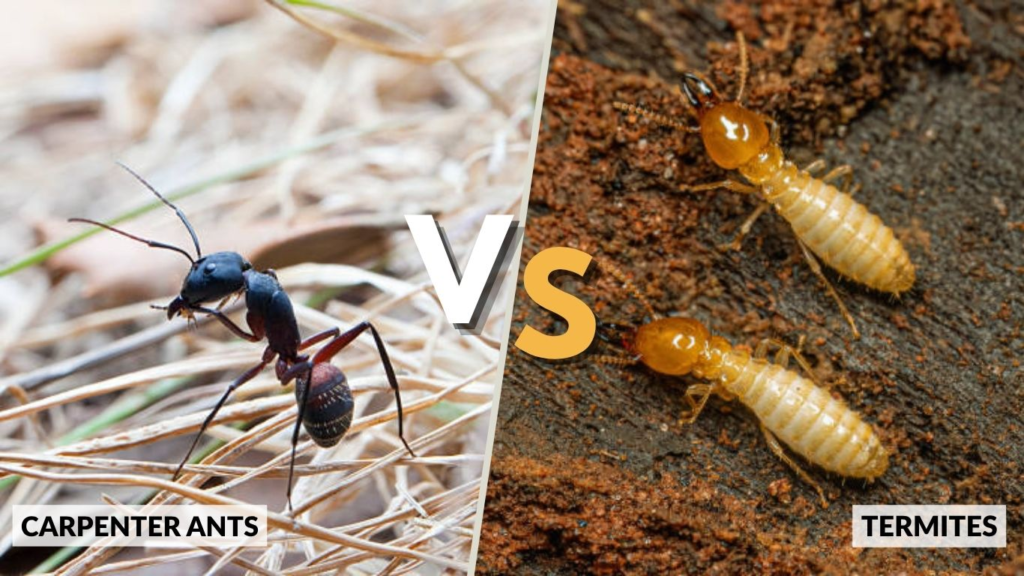
Carpenter ants and termites are frequently mistaken for one another, but they differ in several important ways. Proper identification is critical because treatment methods vary.
Main Differences
- Carpenter ants have a narrow waist, termites have a broad waist
- Ants have elbowed antennae, termites have straight antennae
- Ant wings are uneven in size, termite wings are equal
Damage Comparison
Carpenter ants tunnel through wood to create nests, leaving behind smooth galleries. Termites, on the other hand, consume wood as food. While both can cause damage, termite infestations typically spread faster and are more destructive.
Signs of Carpenter Ants in House
Recognizing early signs of carpenter ants can help prevent a minor issue from becoming a serious infestation. These ants are often active at night, making them harder to detect during the day.
Early Warning Signs
You may notice occasional large ants wandering indoors, especially in kitchens or near moisture-prone areas. These sightings often indicate a nearby nest.
Visible Indicators
- Small piles of sawdust-like material (carpenter ant frass)
- Hollow-sounding wood when tapped
- Faint rustling noises inside walls
Advanced Infestation Signs
- Flying carpenter ants indoors
- Established trails along walls or ceilings
Carpenter Ant Nest and Habitat
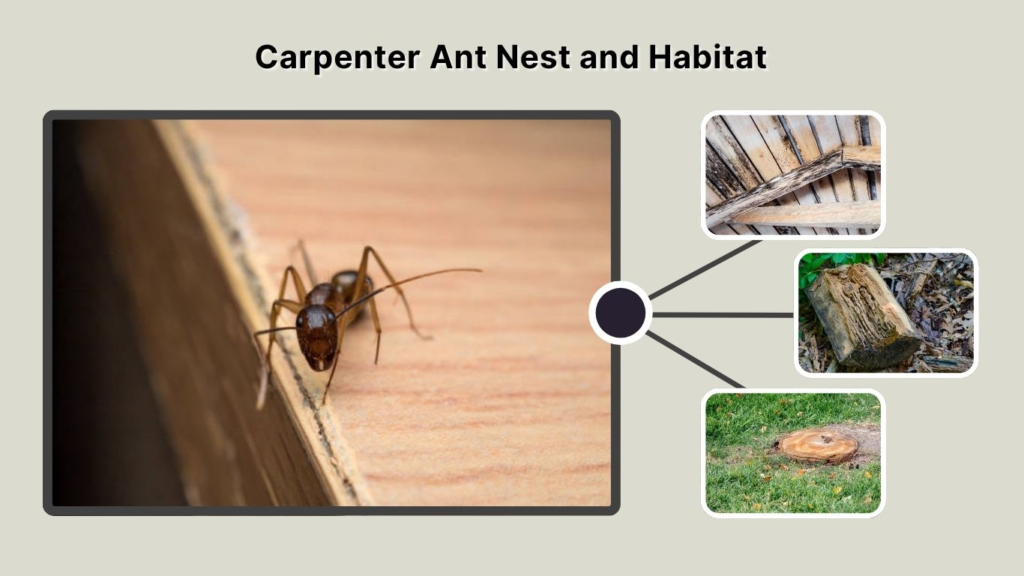
Carpenter ants prefer environments where moisture and wood are present together. Their nesting habits are what make them particularly concerning for homeowners.
Where Carpenter Ants Live
They typically build nests in damp wood, such as rotting logs, tree stumps, or wooden structures exposed to moisture. Inside homes, they are often found in wall voids, attics, or behind insulation where humidity levels are higher.
Why Carpenter Ants Enter Homes
Homes provide a stable environment with access to food and water. Leaking pipes, poor ventilation, and wood damage create ideal nesting conditions. Once inside, carpenter ants may establish satellite colonies, making them harder to eliminate without proper treatment.
What Do Carpenter Ants Eat?
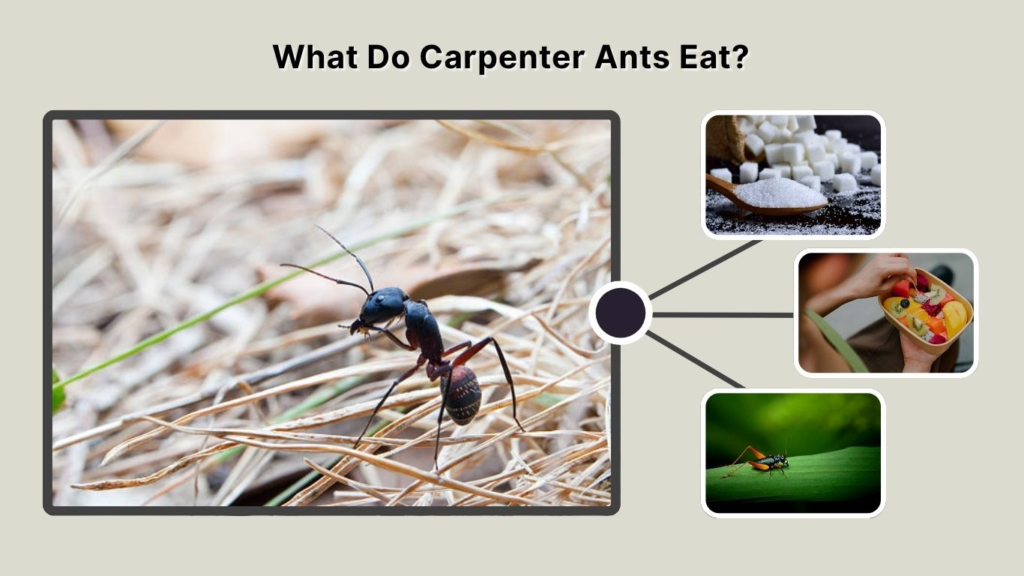
Carpenter ants do not feed on wood, which is a common misconception. Instead, they are attracted to a variety of food sources depending on availability and season.
They primarily seek sugary substances such as honeydew, fruits, and sweet household items. Protein sources like insects and pet food are also important, especially for feeding larvae. Their foraging behavior often leads them into kitchens and storage areas, where food residues can attract large numbers over time.
Carpenter Ant Colony Structure
Carpenter ants live in organized colonies that can grow large over time, especially if left untreated. Understanding their structure helps in targeting the infestation effectively.
Roles Within the Colony
- Queen carpenter ant: Responsible for laying eggs and sustaining the colony
- Worker ants: Gather food, expand tunnels, and care for larvae
- Winged reproductives: Leave the nest to form new colonies
Colony Growth and Spread
- Colonies may contain thousands of ants
- Satellite nests often form inside homes
- Growth increases during warmer seasons
Do Carpenter Ants Bite or Sting?
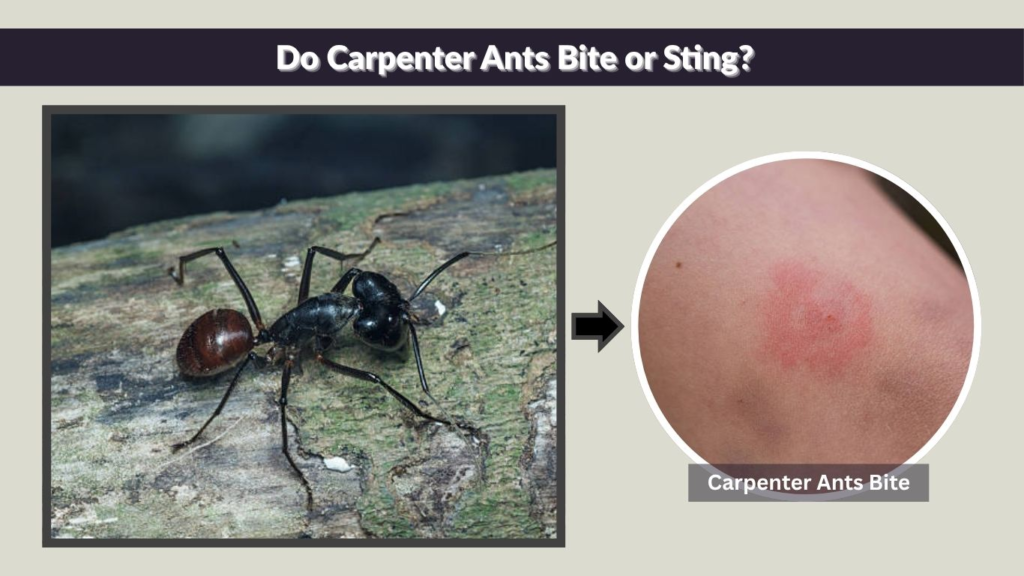
Carpenter ants are not considered highly dangerous, but they can bite if disturbed. Their bites are usually a defensive reaction rather than aggressive behavior.
Do Carpenter Ants Bite?
Yes, carpenter ants can bite using their strong mandibles. While they do not have a stinger, they may spray a small amount of formic acid into the bite, which can cause a mild burning sensation.
Carpenter Ant Bite Symptoms
Most bites result in minor irritation, redness, or slight swelling. In rare cases, individuals with sensitive skin may experience stronger reactions, but serious health risks are uncommon.
Carpenter Ant Damage
Carpenter ants can cause structural issues over time if infestations are not addressed. Unlike termites, they do not consume wood but excavate it to build nests.
They create smooth, hollow tunnels inside wooden structures, weakening beams, walls, and other components. Over time, this damage can compromise the integrity of affected areas, especially when moisture is present. Early detection is important to minimize repair costs and prevent further spread.
How to Get Rid of Carpenter Ants
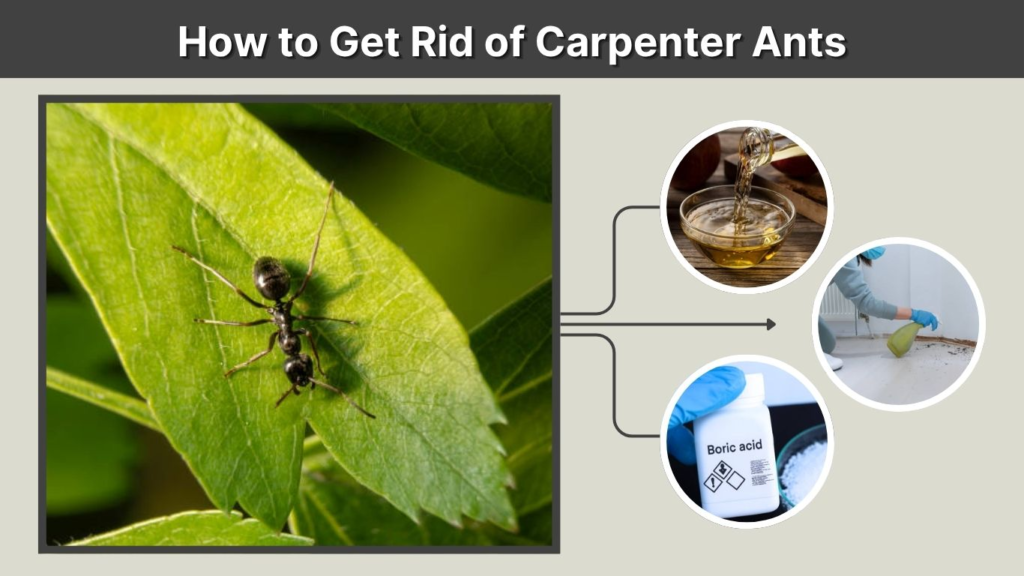
Eliminating carpenter ants requires a combination of targeted treatment and environmental changes. Simply killing visible ants is not enough, as the colony remains hidden.
DIY Methods
- Use boric acid to disrupt the colony
- Apply natural repellents like vinegar or essential oils
- Fix leaks and reduce moisture in affected areas
Chemical Solutions
- Use carpenter ant spray for immediate control
- Apply pesticides in cracks and nesting zones
- Choose products designed specifically for carpenter ants
Carpenter Ant Bait and Traps
Bait systems are one of the most effective ways to eliminate carpenter ant colonies because they target the source rather than just the visible ants.
How Baits Work
Baits attract worker ants, which carry the toxic substance back to the nest. This process gradually eliminates the entire colony, including the queen.
Common Options
- Carpenter ant bait stations
- Advance carpenter ant bait products
- Ant traps designed for indoor use
Preventing Carpenter Ants in Home
Prevention plays a key role in avoiding future infestations. By addressing the conditions that attract carpenter ants, homeowners can significantly reduce the risk.
Indoor Prevention
- Repair leaks and improve ventilation
- Seal cracks and entry points
- Keep food stored properly
Outdoor Prevention
- Remove decaying wood near the home
- Trim tree branches touching the house
- Maintain proper drainage around the foundation
FAQs
What kills carpenter ants instantly?
Fast-acting insecticides and sprays can kill carpenter ants on contact. However, while these methods eliminate visible ants quickly, they do not address the hidden colony. For complete control, bait systems are more effective because they target the entire nest over time.
How do you get rid of carpenter ants permanently?
Permanent removal involves locating and eliminating the nest, using bait to destroy the colony, and fixing moisture issues that attract them. Consistent monitoring and sealing entry points also help prevent reinfestation and ensure long-term protection.
Do carpenter ants have wings?
Yes, carpenter ants develop wings during their reproductive phase. These winged ants, known as swarmers, typically appear during warmer months and are often seen near windows or lights. Their presence indoors can indicate an established colony nearby.
Are carpenter ants dangerous?
Carpenter ants are not highly dangerous to humans, but they can bite if threatened. The main concern is the structural damage they cause by tunneling through wood, which can weaken parts of a home over time if not treated.
What are the first signs of carpenter ants?
Early signs include spotting large ants indoors, especially at night, and noticing small piles of sawdust-like material called frass. You may also hear faint rustling noises inside walls, which can indicate active nesting activity.
