
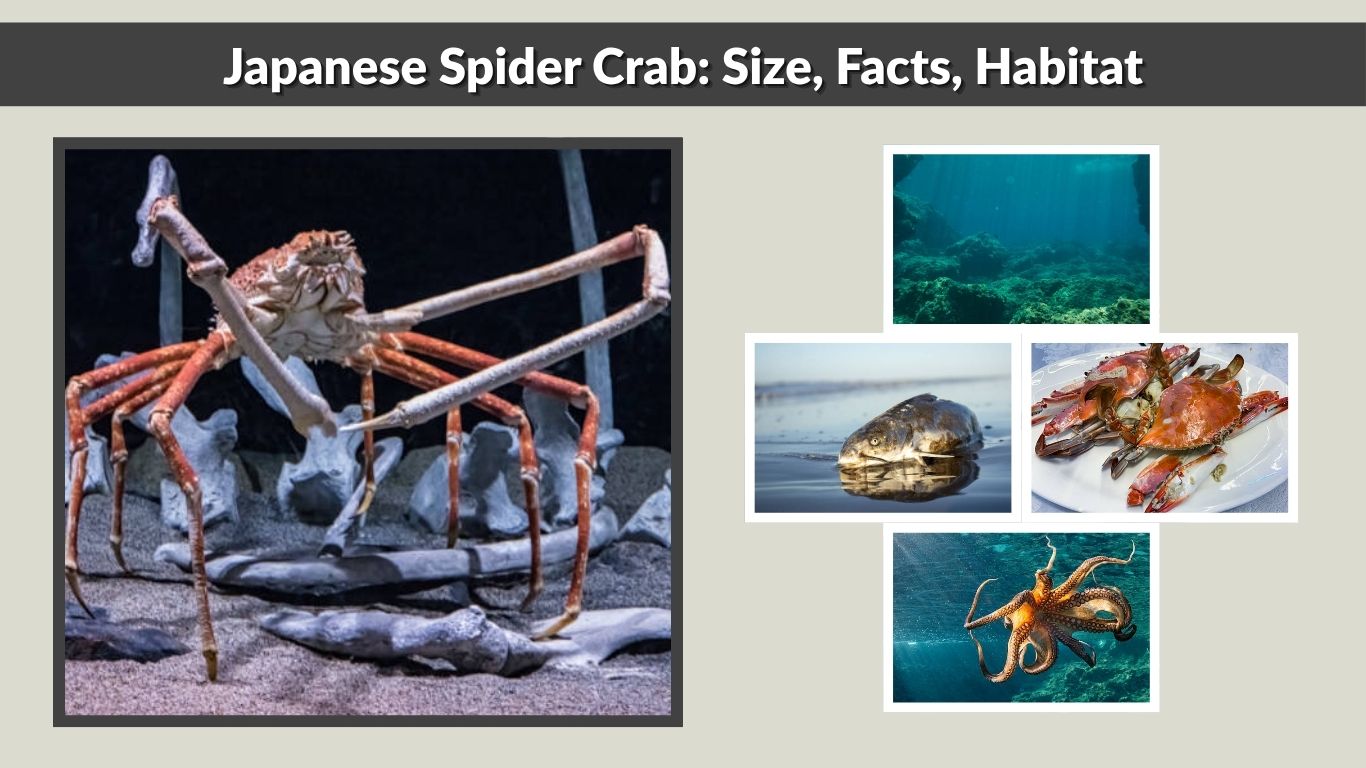
The Japanese spider crab is one of the most fascinating and unusual creatures in the ocean. Known for its enormous leg span and long lifespan, it often sparks curiosity and even fear due to its size. Despite its intimidating appearance, this deep-sea crab plays an important role in marine ecosystems and is far less dangerous than many people assume.
What Is a Japanese Spider Crab?
The Japanese spider crab (Macrocheira kaempferi) is the largest crab species in the world. It belongs to a group of marine crustaceans known for their long legs and slow movements across the ocean floor.
This species is native to the waters surrounding Japan, where it has been studied for centuries. Its name comes from its spider-like appearance, as its long, thin legs resemble those of a spider more than a typical crab.
Japanese spider crabs are deep-sea dwellers, meaning they live far below the ocean surface. Because of this, they are rarely seen by humans in the wild, which adds to their mysterious reputation.
How Big Is a Japanese Spider Crab?
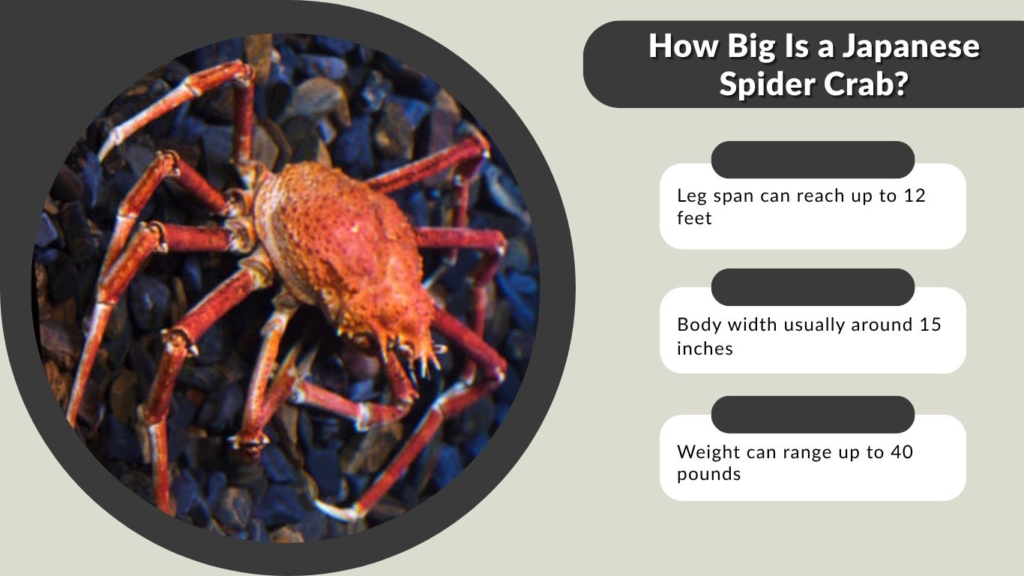
The size of the Japanese spider crab is what makes it truly remarkable. It holds the record as the largest crab in the world by leg span.
Key size facts include:
- Leg span can reach up to 12 feet (3.7 meters)
- Body width is much smaller, usually around 15 inches (38 cm)
- Weight can range up to 40 pounds (18 kg)
While the body itself is not particularly large, the long legs create a dramatic visual effect. This is why the crab often appears much bigger than it actually is.
Its massive size helps it move efficiently across the ocean floor and may also act as a defense against predators.
Japanese Spider Crab Size Compared to Humans
When compared to humans, the Japanese spider crab looks enormous. Its leg span can easily stretch wider than an adult human’s arm span, making it appear almost unreal in photos and videos.
For perspective:
- A fully grown crab can span wider than a person lying down
- Its legs can extend several feet in each direction
- The body, however, remains relatively small compared to its legs
This contrast between body size and leg length is what gives the crab its iconic appearance. It also explains why images of the species often go viral, as they can look almost exaggerated.
Habitat: Where Do Japanese Spider Crabs Live?
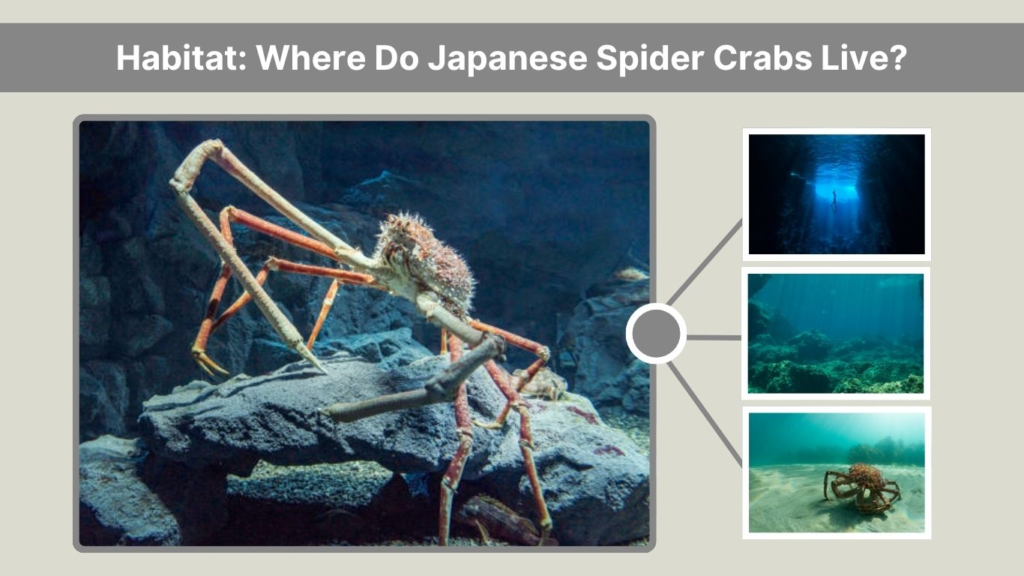
Japanese spider crabs are found primarily in the Pacific Ocean around Japan, particularly along the southern coast of the country.
They typically live in:
- Deep ocean waters ranging from 150 to 300 meters
- Rocky and uneven sea floors
- Areas with plenty of hiding spots and food sources
During different stages of their life cycle, they may move to slightly shallower waters, especially during breeding seasons. However, adults generally prefer deeper environments where they are less exposed to predators.
Their habitat plays a key role in their survival. The deep sea offers cooler temperatures, stable conditions, and access to food, all of which support their long lifespan.
What Do Japanese Spider Crabs Eat?
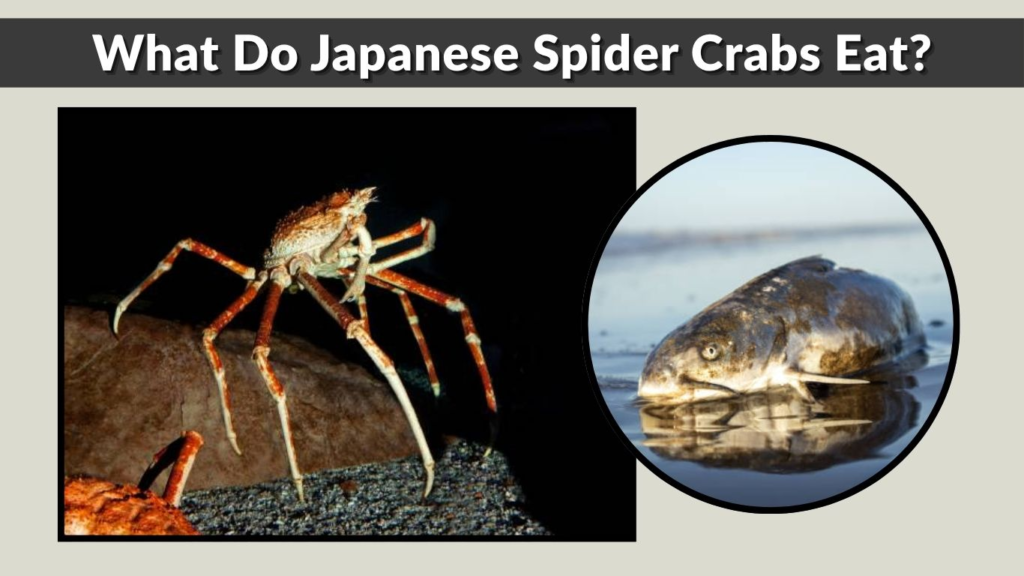
Japanese spider crabs are primarily scavengers, meaning they feed on dead or decaying organisms rather than hunting live prey.
Their diet includes:
- Dead fish and marine animals
- Shellfish and small invertebrates
- Plant material and algae
Because they consume organic debris on the ocean floor, they help keep the environment clean. This makes them an important part of the marine ecosystem.
Although they are capable of catching small prey, they are not active hunters. Instead, they rely on their environment to provide food, moving slowly across the seabed in search of it.
Are Japanese Spider Crabs Dangerous?
Despite their large size and somewhat intimidating appearance, Japanese spider crabs are not dangerous to humans.
Important facts:
- They are slow-moving and non-aggressive
- They do not actively attack humans
- Most human interactions occur only in controlled environments like aquariums
Their claws are strong enough to grasp food, but they are not used for attacking large animals. In the wild, these crabs prefer to avoid confrontation rather than engage in it.
Most fears surrounding Japanese spider crabs come from their unusual appearance rather than their actual behavior.
Can Japanese Spider Crabs Kill You?
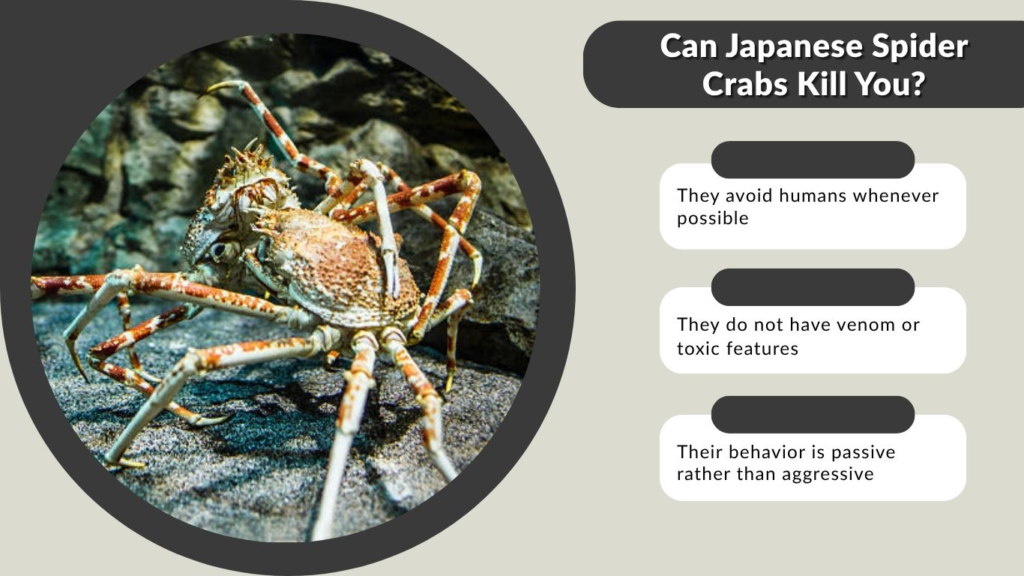
This is a common question due to the crab’s size, but the answer is simple: no, Japanese spider crabs cannot kill humans.
While their legs and claws may look intimidating, they lack the speed and aggression needed to pose a serious threat. They are adapted for scavenging, not hunting large prey.
In reality:
- They avoid humans whenever possible
- They do not have venom or toxic features
- Their behavior is passive rather than aggressive
Encounters with humans are extremely rare in the wild, and when they do occur, the crabs typically move away rather than toward people.
Can You Eat Japanese Spider Crab?
Japanese spider crabs are not only fascinating to look at—they are also edible. In Japan, they are sometimes considered a delicacy, although they are less commonly eaten than other crab species.
Key points about edibility:
- The meat is safe to eat when properly prepared
- It is typically served in coastal regions of Japan
- Availability is limited due to fishing regulations and depth of habitat
Because these crabs live in deep waters, harvesting them is more difficult than catching shallow-water species. This makes them less common in markets and restaurants.
Japanese Spider Crab Taste and Cooking
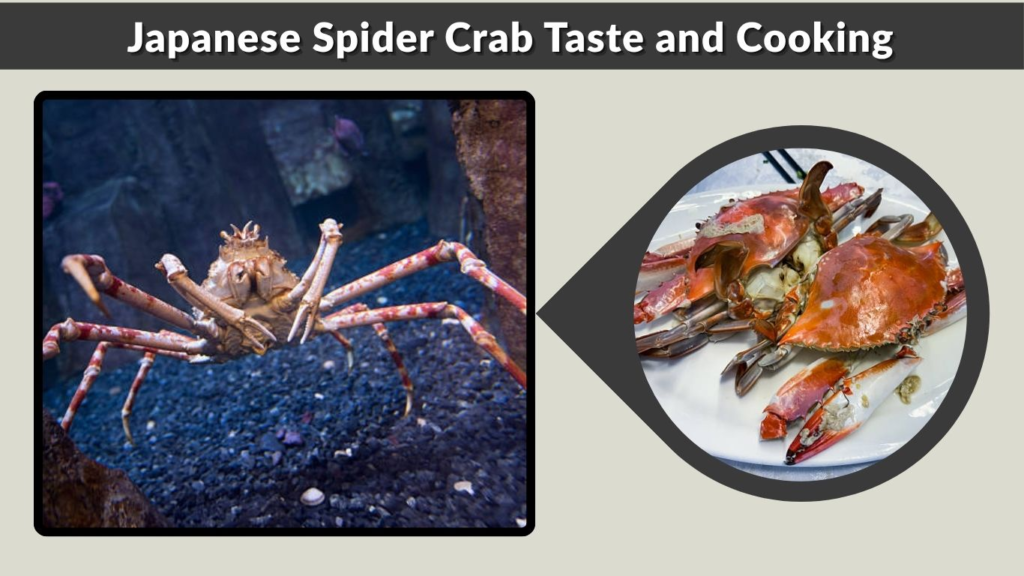
The taste of Japanese spider crab is often described as mild, slightly sweet, and delicate, similar to other types of crab meat.
Common preparation methods include:
- Boiling or steaming to preserve natural flavor
- Serving with simple seasonings
- Using in traditional seafood dishes
The meat is found mainly in the legs and body, though extracting it can be more challenging due to the crab’s structure. Despite this, it is valued for its texture and taste.
In some regions, it is prepared as a specialty dish, especially during certain seasons when it is legally harvested.
Japanese Spider Crab Lifespan and Life Cycle
One of the most surprising facts about the Japanese spider crab is its long lifespan. These crabs can live for decades, with some estimates suggesting up to 100 years under ideal conditions.
Their life cycle includes:
- Eggs laid by females during breeding season
- Larval stage where they float in the ocean
- Gradual growth into adult crabs
As they grow, they go through a process called molting, where they shed their old shell and form a new one. This allows them to increase in size over time.
The combination of slow growth and long lifespan makes them unique among marine animals.
Predators and Survival Adaptations
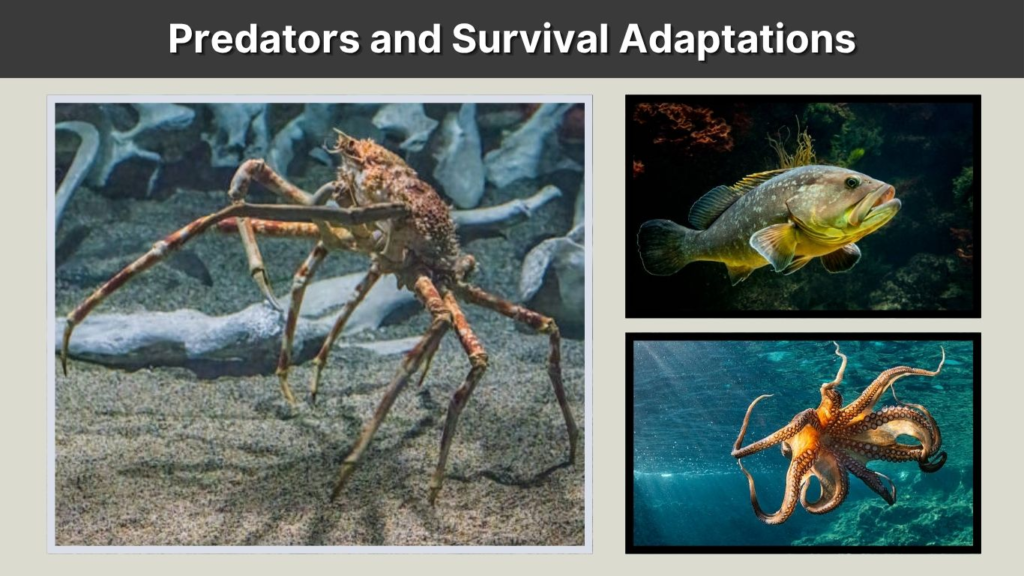
Despite their large size, Japanese spider crabs do have some natural predators, especially when they are young.
Potential threats include:
- Large fish
- Octopuses
- Other marine predators
To survive, these crabs rely on several adaptations:
- Camouflage: They often attach small organisms to their shells to blend into the environment
- Long legs: Help them move efficiently and avoid threats
- Hard exoskeleton: Provides protection from attacks
As they grow larger, they become less vulnerable to predators, which contributes to their long lifespan.
Interesting Facts About Japanese Spider Crabs
Japanese spider crabs are full of unique characteristics that make them stand out among marine species.
- They are the largest crab species in the world by leg span
- Their legs can grow longer as they age
- They can live for several decades, sometimes up to a century
- They play an important role as ocean scavengers
- Their appearance often leads to myths and exaggerations
These facts make them a popular subject in documentaries, aquariums, and online content.
FAQ
How big is the Japanese spider crab?
The Japanese spider crab can reach a leg span of up to 12 feet, making it the largest crab species in the world. Its body is much smaller, but the long legs give it a massive and unusual appearance.
Are Japanese spider crabs dangerous to humans?
No, they are not dangerous. They are slow-moving scavengers that avoid human interaction. Despite their intimidating size, they are generally harmless and non-aggressive.
Can you eat Japanese spider crabs?
Yes, they are edible and sometimes considered a delicacy in Japan. The meat has a mild, slightly sweet flavor and is usually prepared by boiling or steaming.
Where do Japanese spider crabs live?
They live in deep ocean waters around Japan, typically at depths between 150 and 300 meters. They prefer rocky sea floors with plenty of shelter and food sources.
What do Japanese spider crabs eat?
They mainly eat dead animals, shellfish, and plant material. As scavengers, they help clean the ocean floor and maintain a healthy marine ecosystem.
