
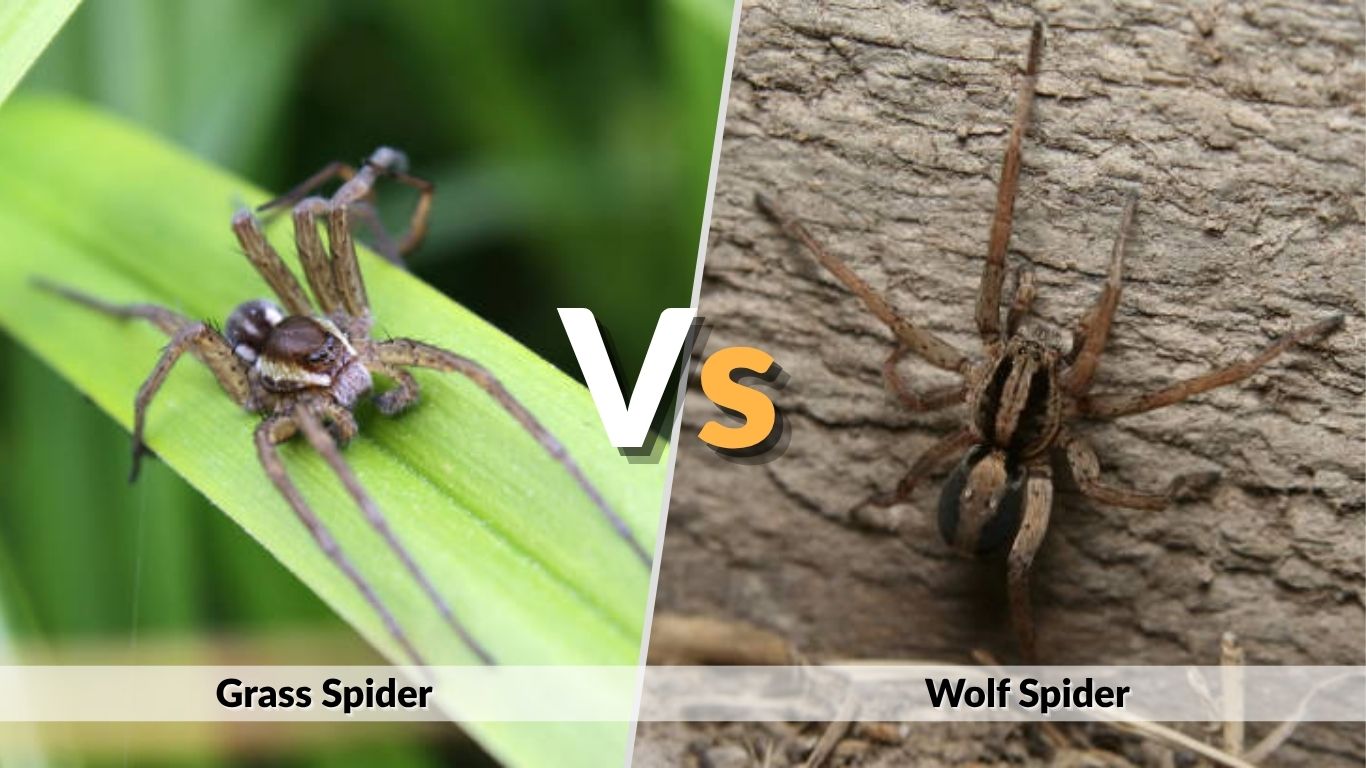
Grass spider vs wolf spider is a common comparison because these two spiders are often seen in similar environments and can look somewhat alike at first glance. Both are fast-moving, brownish spiders commonly found around homes, gardens, and outdoor areas. However, they are very different in behavior, appearance, and how they interact with humans.
Understanding the difference between grass spiders and wolf spiders is important for proper identification. While both are generally harmless, knowing which one you are dealing with can help reduce fear and avoid confusion with more dangerous species.
Grass Spider vs Wolf Spider (Quick Comparison)
| Feature | Grass Spider | Wolf Spider |
| Size | Small to medium | Medium to large |
| Color | Brown with stripes | Brown with patterns |
| Eyes | Small, less noticeable | Large, visible eyes |
| Web Use | Builds funnel webs | Does not use webs |
| Behavior | Stays near web | Active hunter |
What Is a Grass Spider?
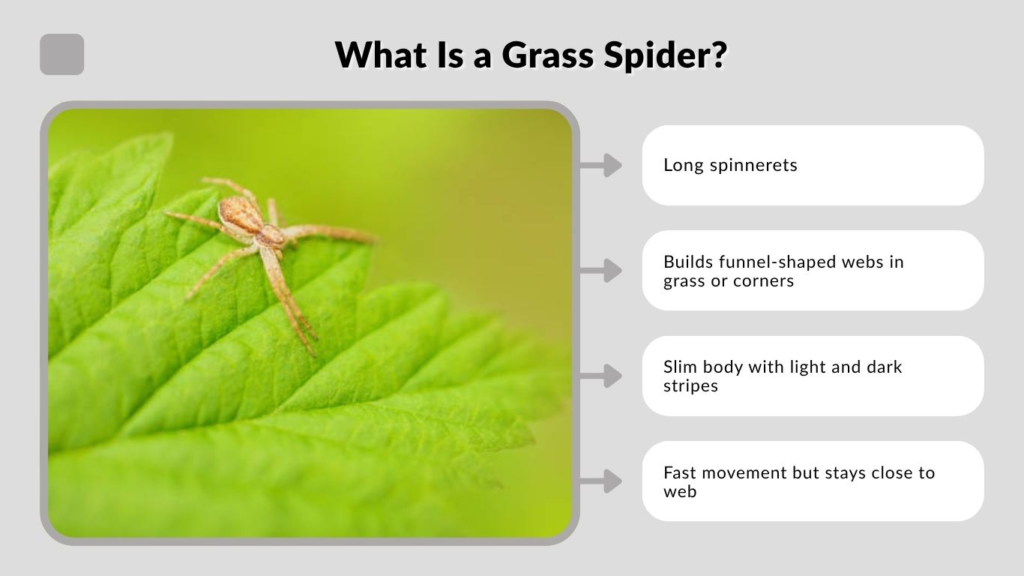
Grass spiders belong to a group of spiders known as funnel weavers. They are commonly found outdoors in grassy areas, gardens, and around structures. These spiders are known for building flat, sheet-like webs with a funnel-shaped retreat where they hide.
Grass spiders are not aggressive and prefer to stay within their webs. When prey touches the web, they quickly rush out, capture it, and retreat back into the funnel.
Key Characteristics of Grass Spider
- Long spinnerets (tail-like structures at the back)
- Builds funnel-shaped webs in grass or corners
- Slim body with light and dark stripes
- Fast movement but stays close to web
What Is a Wolf Spider?
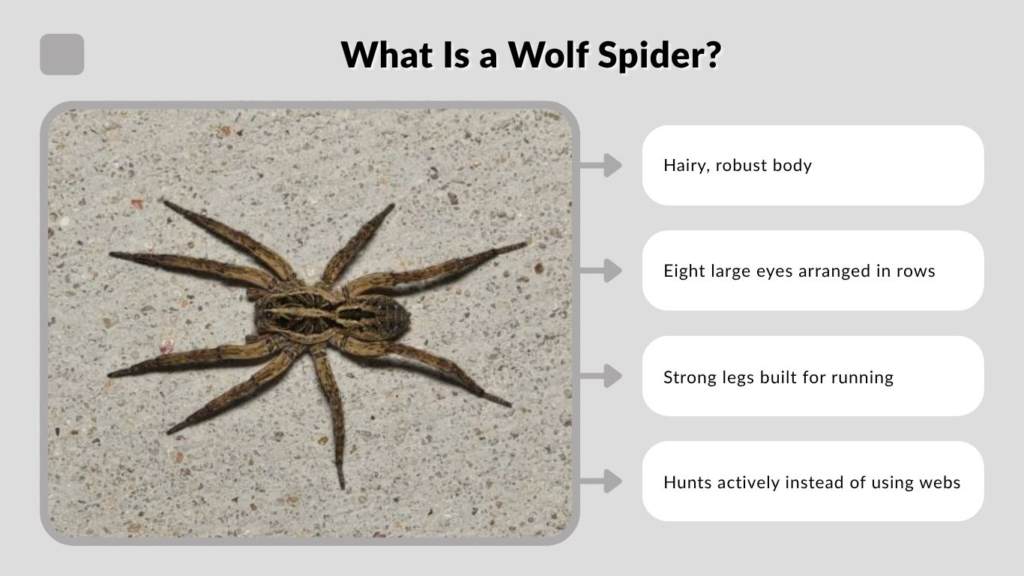
Wolf spiders are active hunters that do not rely on webs to catch prey. Instead, they roam around searching for insects, using their speed and strong vision to capture food. They are commonly found both outdoors and occasionally indoors.
Wolf spiders have a more rugged and hairy appearance compared to grass spiders. They are also larger and more noticeable, which can make them seem more intimidating.
Key Characteristics of Wolf Spider
- Hairy, robust body
- Eight large eyes arranged in rows
- Strong legs built for running
- Hunts actively instead of using webs
Main Differences Between Grass Spider and Wolf Spider
| Factor | Grass Spider | Wolf Spider |
| Web Usage | Builds funnel webs | No web |
| Body Texture | Slim, less hairy | Hairy, thick |
| Eye Visibility | Small eyes | Large eyes |
| Hunting Style | Waits in web | Active hunter |
One of the biggest differences between these spiders is their behavior. Grass spiders rely on webs to catch prey, while wolf spiders actively chase their prey. This makes wolf spiders more likely to be seen moving around, while grass spiders are usually found near their webs.
How to Identify Grass Spider vs Wolf Spider
Correct identification is important, especially when you spot a spider in your home or yard. Looking at multiple features together will give you the most accurate result.
Visual Identification Checklist
- Look for a web: grass spiders build funnel webs, wolf spiders do not
- Check body texture: smooth/slim vs hairy/robust
- Observe movement: staying near web vs actively roaming
- Notice eye size: small vs large and reflective
Eye Differences: Grass Spider vs Wolf Spider
Wolf spiders have large, forward-facing eyes that are easy to notice, especially in light. These eyes help them hunt effectively. Grass spiders, on the other hand, have smaller eyes that are less noticeable, making them harder to identify by eye pattern alone.
Common Misidentification Mistakes
Grass spiders are sometimes confused with wolf spiders because of their similar color and fast movement. However, the presence of a funnel web is a strong indicator of a grass spider.
They are also occasionally mistaken for hobo spiders or even brown recluse spiders. This confusion often leads to unnecessary concern, even though grass spiders are harmless.
Grass Spider vs Wolf Spider Size Comparison
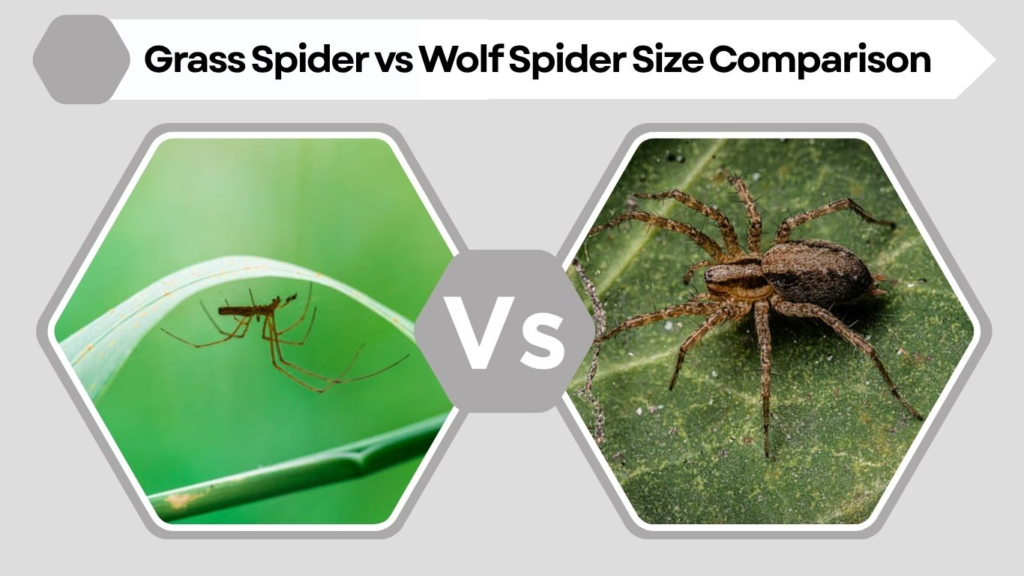
When comparing size, wolf spiders are generally larger and bulkier than grass spiders. Their thick legs and hairy bodies give them a more robust appearance.
Grass spiders are usually slimmer and lighter in build. While they can appear fast and active, they are typically smaller and less intimidating than wolf spiders. However, size alone should not be used for identification, as both spiders can vary depending on species and age.
Species Comparison
American Grass Spider vs Wolf Spider
The American grass spider is one of the most common grass spider species found in outdoor environments. It is known for its funnel web and striped body. Compared to wolf spiders, it is slimmer and less aggressive in behavior.
Rabid Wolf Spider vs Grass Spider
The rabid wolf spider is a specific type of wolf spider known for its speed and hunting ability. Despite its name, it is not dangerous to humans. It is larger and more active than grass spiders, making it easier to distinguish in most cases.
Funnel Web Grass Spider vs Wolf Spider
Grass spiders are often called funnel web spiders because of the unique shape of their webs. This is one of the easiest ways to identify them. Wolf spiders do not create such webs, so seeing a funnel web almost always indicates a grass spider.
Bite Comparison: Grass Spider vs Wolf Spider
| Feature | Grass Spider Bite | Wolf Spider Bite |
| Pain Level | Mild, often unnoticed | Mild to moderate |
| Symptoms | Slight redness, minor irritation | Redness, swelling, mild pain |
| Healing Time | Few days | Few days |
| Danger Level | Harmless | Low risk |
Grass spider bites are extremely rare because these spiders prefer to stay in their webs and avoid human contact. Even if a bite occurs, it is usually mild and may go unnoticed or cause only slight irritation.
Wolf spider bites are also not dangerous in most cases. They may cause mild pain, redness, and swelling, similar to a bee sting. Symptoms usually go away within a few days without any serious complications.
Are Grass Spiders or Wolf Spiders Dangerous?
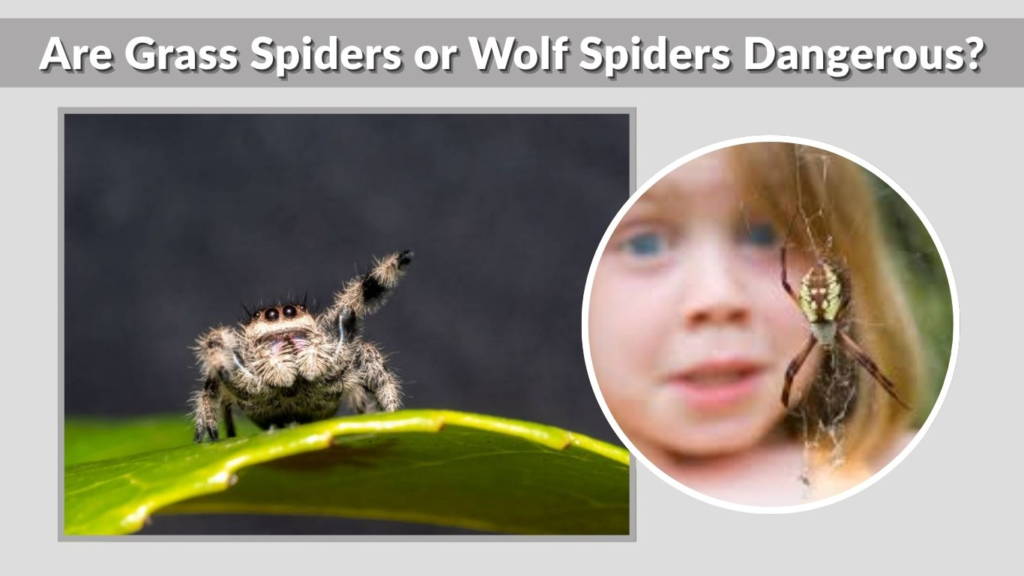
Both grass spiders and wolf spiders are considered harmless to humans. While they are capable of biting, they do so only in self-defense when they feel threatened.
Wolf spiders may appear more intimidating due to their size and speed, but they are not aggressive. Grass spiders are even less likely to bite since they tend to stay hidden in their webs.
Overall, neither spider poses a significant threat, and both play a helpful role in controlling insect populations.
Habitat and Behavior Differences
Where Grass Spiders Live
Grass spiders are commonly found outdoors in grassy areas, gardens, shrubs, and around the edges of buildings. Their funnel-shaped webs are often visible in the morning when covered with dew.
They prefer to stay close to their webs and rarely wander far from them. These spiders rely on their webs to detect and capture prey.
Where Wolf Spiders Are Found
Wolf spiders are highly adaptable and can be found in a wide range of environments. They are commonly seen on the ground, in leaf litter, under rocks, or occasionally inside homes.
Unlike grass spiders, wolf spiders do not depend on webs. They actively move around in search of food, which is why they are more frequently spotted by people.
Hunting vs Web Behavior
The main behavioral difference between these spiders is how they catch prey. Grass spiders build webs and wait for insects to become trapped before attacking.
Wolf spiders are active hunters that chase down their prey. This difference makes wolf spiders more visible and gives them a more aggressive appearance, even though they are not dangerous.
Grass Spider vs Wolf Spider vs Other Spiders
| Spider Type | Key Feature | Main Difference |
| Grass Spider | Funnel web | Long spinnerets |
| Wolf Spider | No web | Active hunter |
| Hobo Spider | Funnel web | Less visible spinnerets |
| Brown Recluse | Smooth body | Violin marking |
Comparing grass spiders and wolf spiders with other spiders can help with identification. For example, hobo spiders also build funnel webs but lack the long spinnerets seen in grass spiders. Brown recluse spiders are different in both appearance and behavior, with smooth bodies and distinct markings.
Grass Spider vs Wolf Spider: Who Would Win?
In a direct encounter, the wolf spider would likely have the advantage due to its size, strength, and hunting ability. Wolf spiders are built for speed and can overpower smaller spiders.
Grass spiders, however, rely on their webs for defense and may avoid confrontation altogether. In natural settings, these spiders rarely interact, as they occupy different niches and behaviors.
Prevention and Safety Tips
How to Avoid Spider Encounters
- Keep grass and vegetation trimmed around your home
- Remove visible webs from corners and outdoor areas
- Seal gaps and cracks in doors, windows, and walls
- Reduce insects that attract spiders
What to Do If You See a Spider
If you encounter a spider, avoid direct contact. Most spiders will try to escape rather than bite. You can safely remove them using a container and release them outside.
If you are unsure about the species, observe from a distance and avoid handling it directly.
FAQs
How can you tell a grass spider from a wolf spider?
The easiest way is to look for a web. Grass spiders build funnel-shaped webs and stay near them, while wolf spiders roam freely and do not rely on webs. Wolf spiders are also hairier and have larger, more noticeable eyes compared to grass spiders.
Do grass spiders bite humans?
Grass spiders rarely bite humans. They prefer to stay hidden in their webs and avoid contact. Even if a bite occurs, it is harmless and causes only minor irritation that resolves quickly without treatment.
Are wolf spiders more dangerous than grass spiders?
Wolf spiders are slightly more likely to bite because they roam around more, but they are still not dangerous. Their bites are mild and do not cause serious harm. Both spiders are considered low-risk to humans.
What is the main difference between grass and wolf spiders?
The main difference is behavior. Grass spiders use funnel webs to catch prey, while wolf spiders actively hunt. This also affects how often they are seen, with wolf spiders being more visible due to their movement.
Can grass spiders and wolf spiders live in the same area?
Yes, both spiders can live in the same general environment, especially in outdoor areas. However, they occupy different roles—grass spiders stay near webs, while wolf spiders roam—so they usually do not compete directly.
