
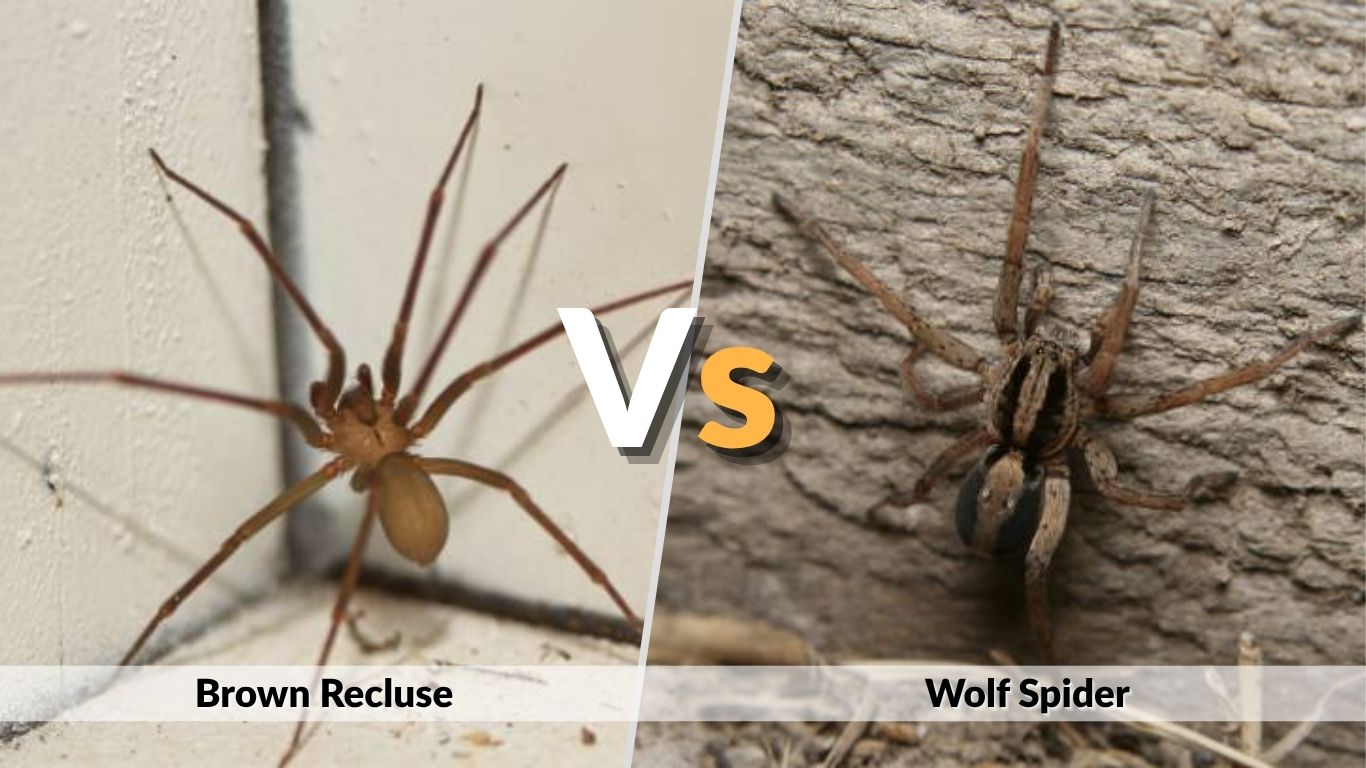
Brown recluse vs wolf spider is one of the most searched spider comparisons because these two species are often confused. While both are brown and commonly found around homes, they differ significantly in appearance, behavior, and level of danger. Understanding these differences is important, especially since one has medically significant venom while the other is generally harmless.
Many people assume any brown spider they see is a brown recluse, but that is rarely the case. Wolf spiders are often mistaken for brown recluses because of their size and coloring. However, wolf spiders are beneficial predators that help control insect populations and typically avoid human interaction.
Brown Recluse vs Wolf Spider Quick Comparison
| Feature | Brown Recluse | Wolf Spider |
| Size | Small to medium | Medium to large |
| Color | Light to dark brown | Brown with patterns |
| Eyes | 6 eyes | 8 eyes |
| Venom | Medically significant | Mild, not dangerous |
| Behavior | Shy, hides in dark areas | Active hunter |
What Is a Brown Recluse Spider?
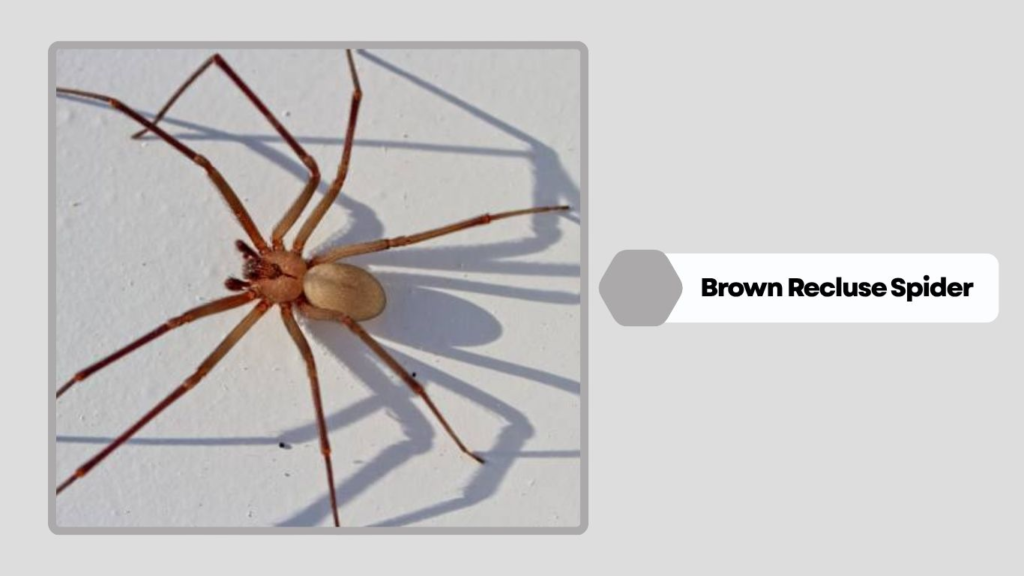
The brown recluse spider is known for its distinctive violin-shaped marking on its back, which points toward its abdomen. It has a smooth, uniform body without noticeable patterns or stripes. Unlike most spiders, it has six eyes arranged in pairs rather than eight.
Brown recluse spiders prefer quiet, undisturbed areas such as closets, basements, woodpiles, and storage boxes. They are called “recluse” because they avoid human contact and only bite when they feel threatened or trapped.
Key Characteristics of Brown Recluse
- Smooth, plain brown body with no bold patterns
- Violin-shaped marking on the cephalothorax
- Six eyes arranged in three pairs
- Thin legs without heavy hair
What Is a Wolf Spider?
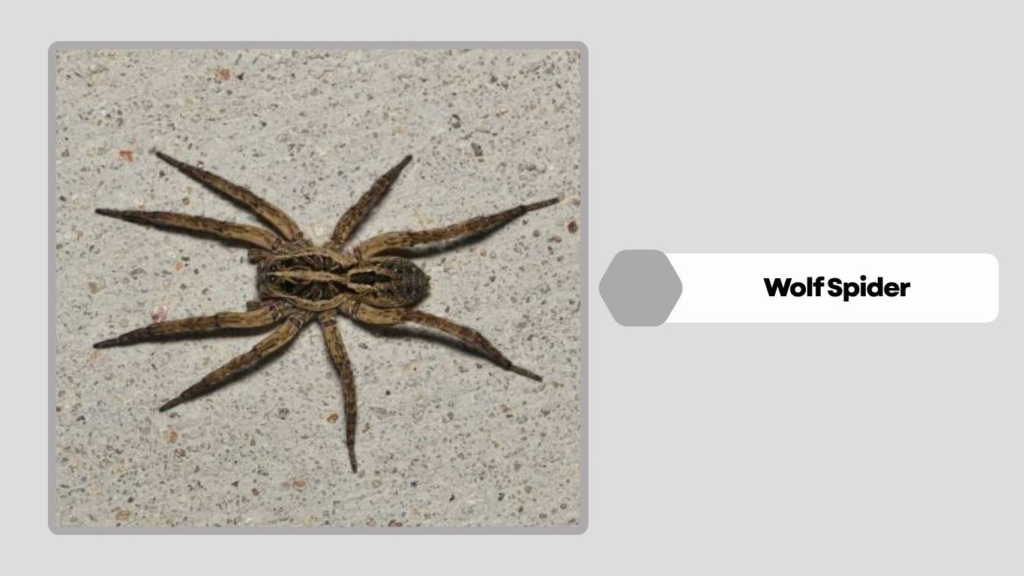
Wolf spiders are large, fast-moving spiders that do not rely on webs to catch prey. Instead, they actively hunt insects, similar to how a wolf hunts, which is how they got their name. They are commonly found both indoors and outdoors.
Unlike brown recluse spiders, wolf spiders have a more rugged and hairy appearance. Their bodies often feature stripes or mottled patterns that help them blend into their surroundings.
Key Characteristics of Wolf Spider
- Hairy body with visible patterns or stripes
- Eight eyes arranged in three rows
- Strong, thick legs adapted for running
- Fast and agile hunting behavior
Main Differences Between Brown Recluse and Wolf Spider
Although they may look similar at first glance, there are several clear differences that can help with identification.
| Factor | Brown Recluse | Wolf Spider |
| Body Texture | Smooth | Hairy |
| Eye Pattern | 6 eyes | 8 eyes |
| Markings | Violin shape | Stripes or patterns |
| Hunting Style | Passive | Active hunter |
One of the easiest ways to distinguish them is by looking at their body texture and markings. Brown recluse spiders appear plain and smooth, while wolf spiders are more textured and patterned. Eye arrangement is another reliable indicator, though it may require close inspection.
How to Identify Brown Recluse vs Wolf Spider
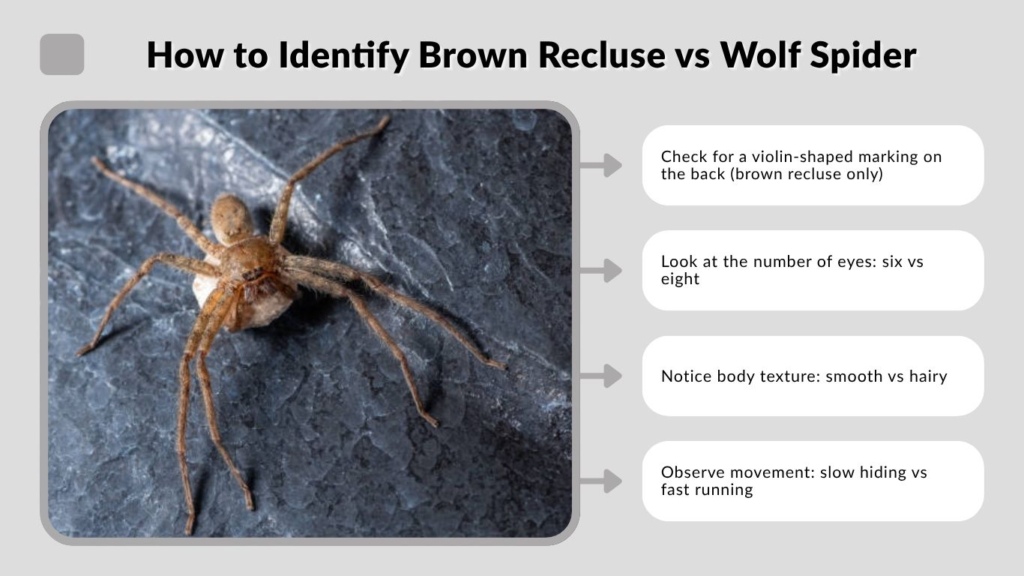
Correct identification is essential, especially when dealing with a potential bite. There are a few practical ways to tell these spiders apart without needing expert knowledge.
Visual Identification Checklist
- Check for a violin-shaped marking on the back (brown recluse only)
- Look at the number of eyes: six vs eight
- Notice body texture: smooth vs hairy
- Observe movement: slow hiding vs fast running
Common Misidentification Mistakes
Many harmless spiders are wrongly identified as brown recluse spiders. Wolf spiders are among the most commonly misidentified species due to their brown coloration. However, their larger size, hairier body, and visible patterns make them quite different upon closer inspection.
People also confuse brown recluse spiders with house spiders or grass spiders. This confusion often leads to unnecessary fear, even though most of these spiders are not dangerous.
Size Comparison
When comparing size, wolf spiders are generally larger and more robust than brown recluse spiders. A wolf spider’s body can appear bulkier due to its thick legs and hairy structure, while a brown recluse looks smaller and more delicate.
However, size alone is not a reliable way to identify them, since both species can vary depending on age and environment. It is always better to rely on multiple identifying features rather than just size.
Bite Comparison: Wolf Spider vs Brown Recluse
| Feature | Brown Recluse Bite | Wolf Spider Bite |
| Pain Level | Often mild at first, worsens later | Immediate sharp pain |
| Symptoms | Blister, necrosis (rare cases) | Redness, swelling |
| Healing Time | Weeks to months (severe cases) | Few days |
| Danger Level | Potentially serious | Generally harmless |
Brown recluse bites are considered medically significant, but they are still rare. In many cases, the bite may go unnoticed at first and later develop into a blister or ulcer. In severe situations, tissue damage (necrosis) can occur, requiring medical attention.
Wolf spider bites, on the other hand, are usually mild. They may cause temporary pain, redness, and slight swelling, similar to a bee sting. Serious reactions are uncommon and typically limited to individuals with allergies.
Which Spider Is More Dangerous?
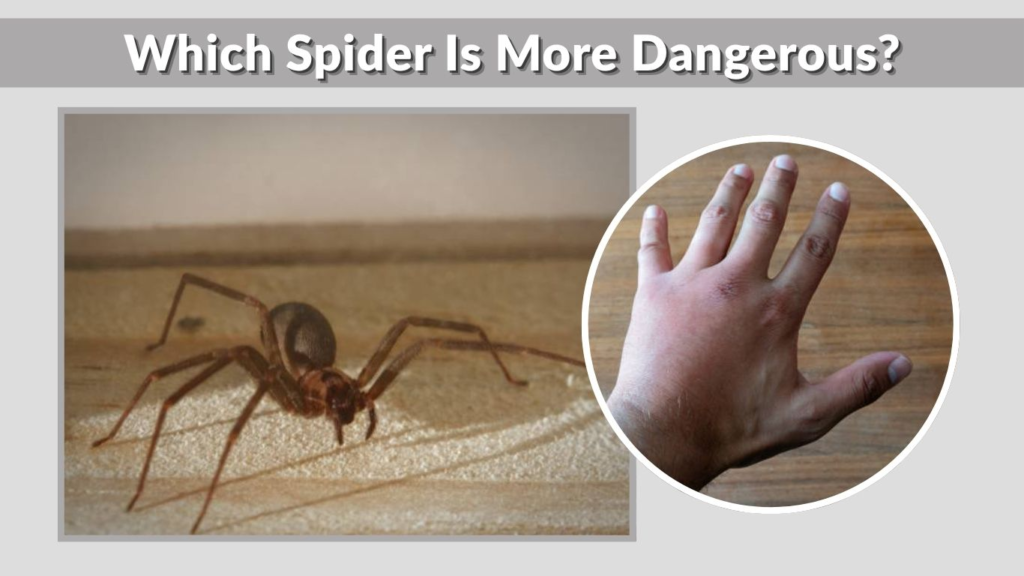
Between the two, the brown recluse is clearly more dangerous due to its venom. However, it is important to understand that bites are uncommon and usually happen only when the spider is pressed against the skin.
Wolf spiders may look intimidating because of their size and speed, but they are not considered dangerous to humans. They are more likely to run away than bite and only defend themselves when threatened.
Habitat and Geographic Differences
Where Brown Recluse Spiders Live
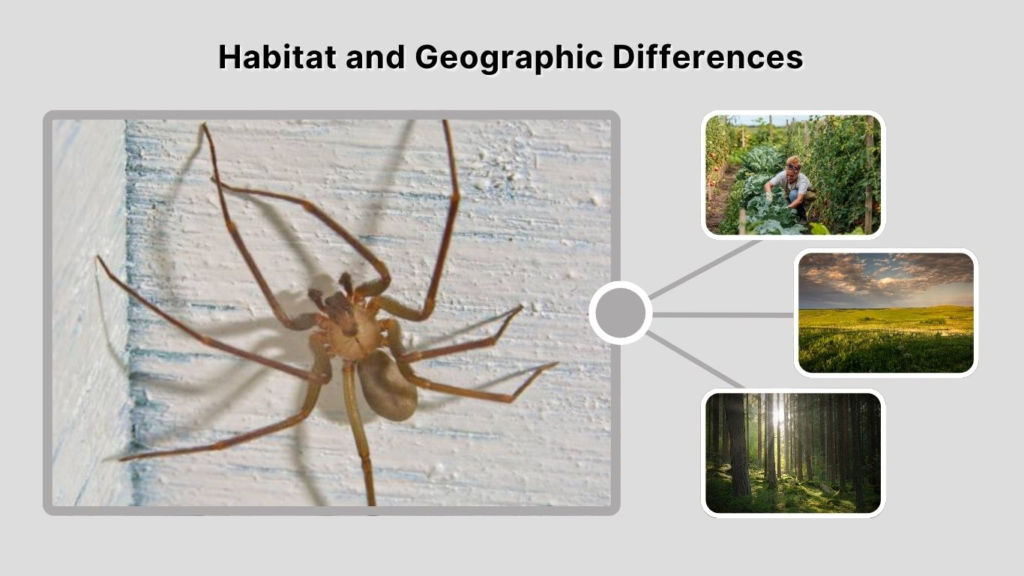
Brown recluse spiders are mostly found in specific regions, particularly in parts of North America. They prefer dry, undisturbed indoor environments such as basements, attics, closets, and storage areas. They often hide in cardboard boxes, clothing, or woodpiles.
Where Wolf Spiders Are Found
Wolf spiders are found worldwide and are highly adaptable. They are commonly seen outdoors in gardens, grasslands, and forests, but they can also enter homes occasionally. Unlike brown recluse spiders, they do not rely on hiding and are often seen moving quickly across surfaces.
Behavior Differences
Hunting Style
Brown recluse spiders are passive hunters. They do not actively chase prey but instead rely on wandering and occasional trapping.
Wolf spiders are active hunters. They chase and capture their prey using speed and strong vision, which makes them more noticeable to humans.
Aggression and Human Interaction
Brown recluse spiders are shy and avoid contact. They usually bite only when trapped against the skin, such as inside clothing or bedding.
Wolf spiders are not aggressive but may bite if handled roughly. However, they typically try to escape rather than confront humans.
Brown Recluse vs Wolf Spider: Who Would Win?
In a direct encounter, the outcome would depend on several factors such as size, speed, and timing. Wolf spiders have the advantage in strength and speed, which could allow them to overpower smaller spiders.
However, the brown recluse has more potent venom. If it successfully bites, it could potentially harm the wolf spider. In reality, such encounters are rare, and these spiders usually avoid each other.
Prevention and Safety Tips

How to Avoid Spider Bites
- Keep storage areas clean and uncluttered
- Shake out clothes and shoes before wearing
- Seal cracks and gaps in walls or windows
- Use gloves when handling firewood or boxes
What to Do If Bitten
If you suspect a spider bite, clean the area with soap and water and apply a cold compress to reduce swelling. Monitor symptoms closely. Seek medical attention if you notice severe pain, spreading redness, or unusual skin changes.
FAQs
How can you tell a brown recluse from a wolf spider?
The easiest way is to look at the markings and body texture. Brown recluse spiders have a smooth body with a violin-shaped marking and six eyes, while wolf spiders are hairy, patterned, and have eight eyes. Movement also helps—wolf spiders are fast runners, while brown recluses tend to hide.
Which bite is worse, wolf spider or brown recluse?
A brown recluse bite is generally worse because its venom can cause tissue damage in rare cases. Wolf spider bites are usually mild and cause only temporary pain and swelling. Most wolf spider bites heal quickly without complications.
Are wolf spiders dangerous to humans?
Wolf spiders are not considered dangerous. While they can bite if threatened, their venom is mild and rarely causes serious symptoms. They are actually beneficial because they help control insect populations in and around homes.
Do brown recluse spiders live everywhere?
No, brown recluse spiders are limited to specific regions, mainly in certain parts of North America. Many reported sightings outside these areas are misidentifications. Knowing your location can help determine whether a brown recluse is likely to be present.
Can a wolf spider kill a brown recluse?
It is possible, especially since wolf spiders are larger and faster hunters. However, such encounters are uncommon in nature. Both spiders tend to avoid conflict and focus on catching insects rather than fighting each other.
