
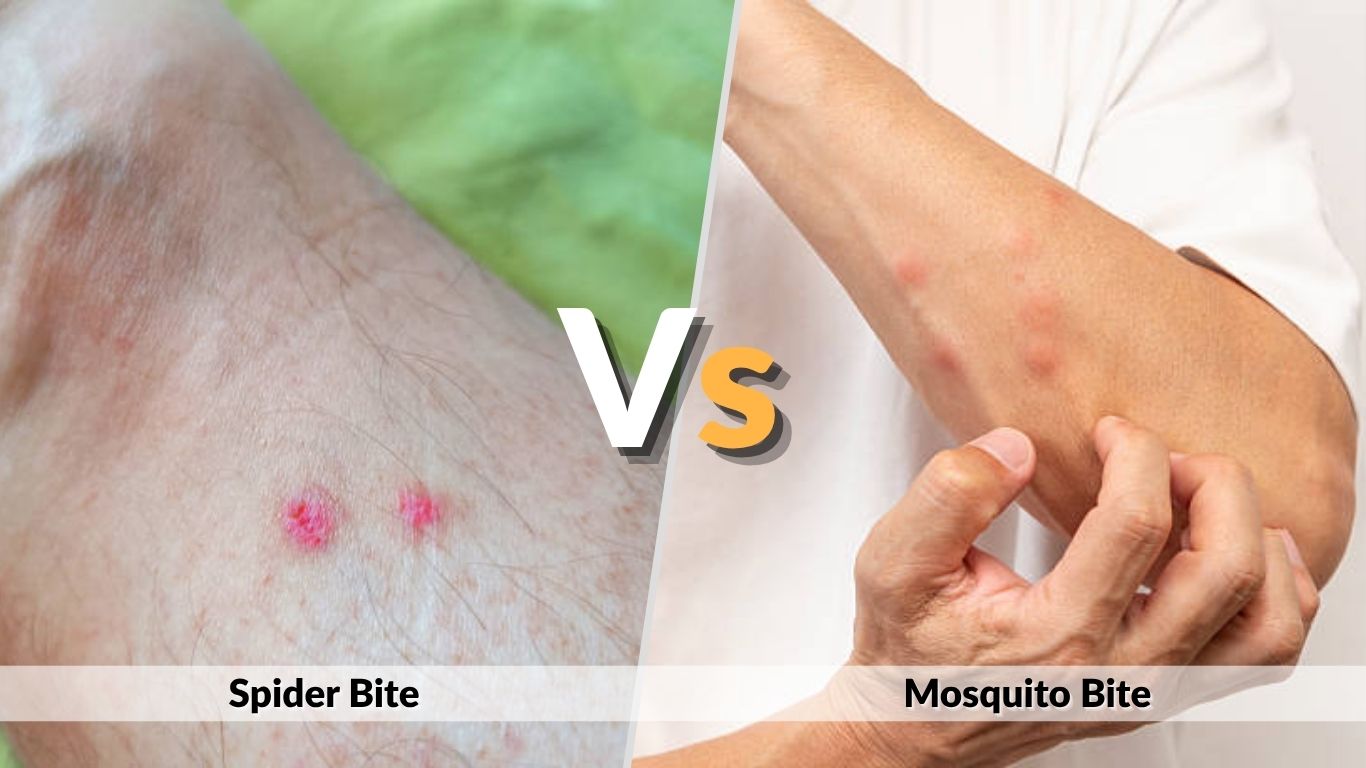
Spider bite vs mosquito bite is a common comparison because both can leave small, red marks on the skin. Many people struggle to tell the difference, especially when the bite appears suddenly without seeing the insect responsible. While most bites are harmless, knowing what caused them can help you respond correctly and avoid unnecessary worry.
Mosquito bites are extremely common and usually harmless, causing itching and minor irritation. Spider bites, on the other hand, are less common and can sometimes cause more noticeable symptoms depending on the species. Understanding how to distinguish between the two is key to proper treatment and peace of mind.
Spider Bite vs Mosquito Bite (Quick Comparison)
| Feature | Spider Bite | Mosquito Bite |
| Cause | Defensive bite | Feeding bite |
| Appearance | Two small punctures | Single raised bump |
| Itching | Mild to moderate | Intense itching |
| Pain | Sometimes painful | Usually painless |
| Frequency | Rare | Very common |
What Is a Spider Bite?
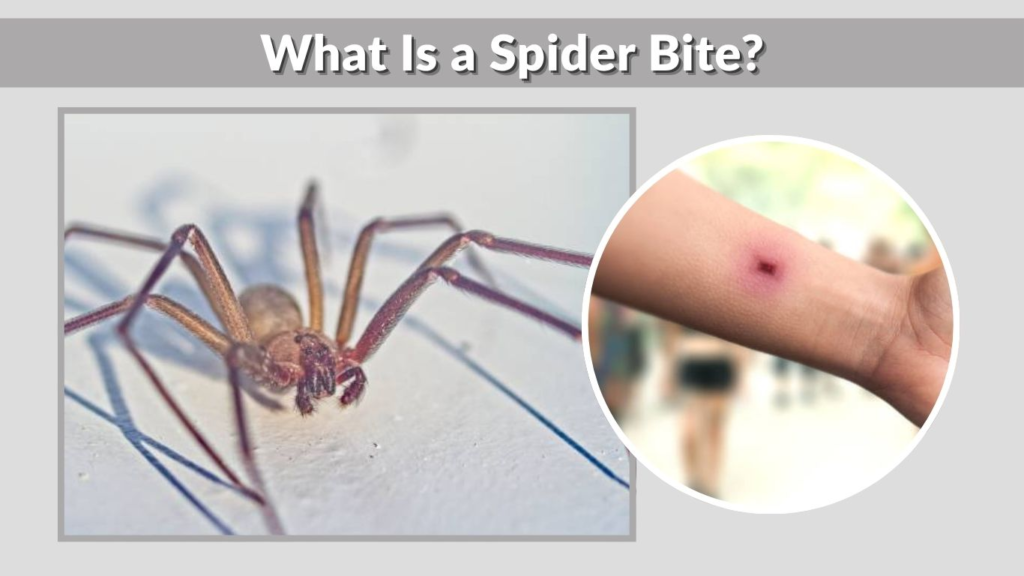
A spider bite occurs when a spider feels threatened and uses its fangs to defend itself. Unlike mosquitoes, spiders do not seek out humans to feed on. Most spider bites happen accidentally when a spider is trapped in clothing, bedding, or shoes.
In most cases, spider bites are harmless and cause only mild symptoms. However, certain species can cause stronger reactions, which is why proper identification is important.
Common Symptoms of Spider Bites
- Redness and slight swelling around the bite area
- Mild pain or burning sensation
- Two small puncture marks (not always visible)
- Occasional blistering in some cases
What Is a Mosquito Bite?
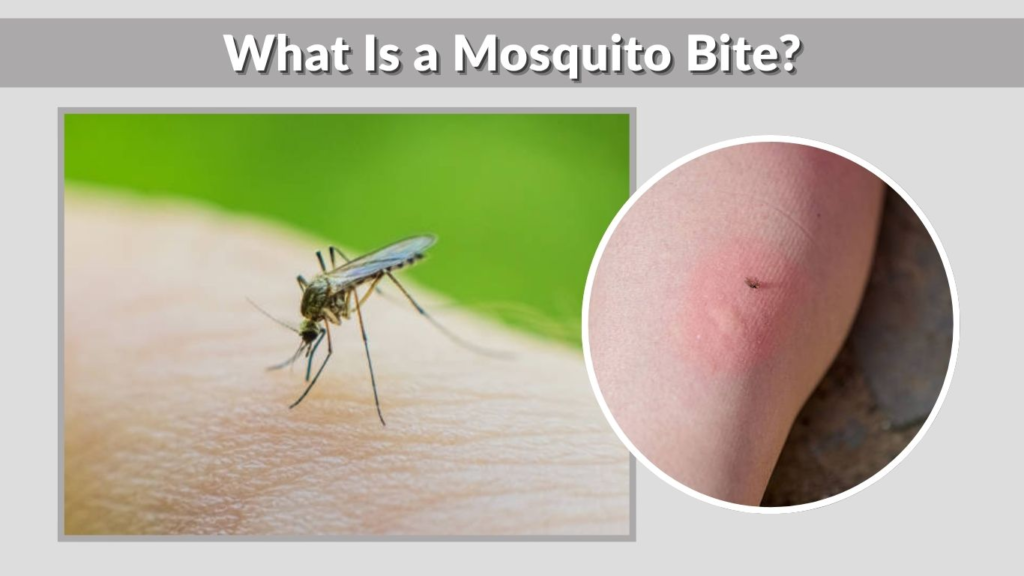
A mosquito bite happens when a female mosquito pierces the skin to feed on blood. During this process, it injects saliva that triggers an immune response, causing itching and swelling.
Mosquito bites are extremely common, especially in warm and humid environments. While they are usually harmless, they can be irritating and sometimes lead to infections if scratched excessively.
Common Symptoms of Mosquito Bites
- Itchy, raised bump on the skin
- Redness and mild swelling
- Immediate reaction after the bite
- Multiple bites in exposed areas
Spider Bite vs Mosquito Bite: Key Differences
| Factor | Spider Bite | Mosquito Bite |
| Bite Marks | Often two punctures | Single bump |
| Reaction Time | Delayed or gradual | Immediate |
| Itching Level | Lower | Higher |
| Occurrence | Rare | Frequent |
One of the easiest ways to tell the difference is by observing how the bite appears and feels. Mosquito bites usually show up quickly and itch intensely, while spider bites may develop more slowly and can sometimes feel painful rather than itchy.
How to Tell Spider Bite vs Mosquito Bite
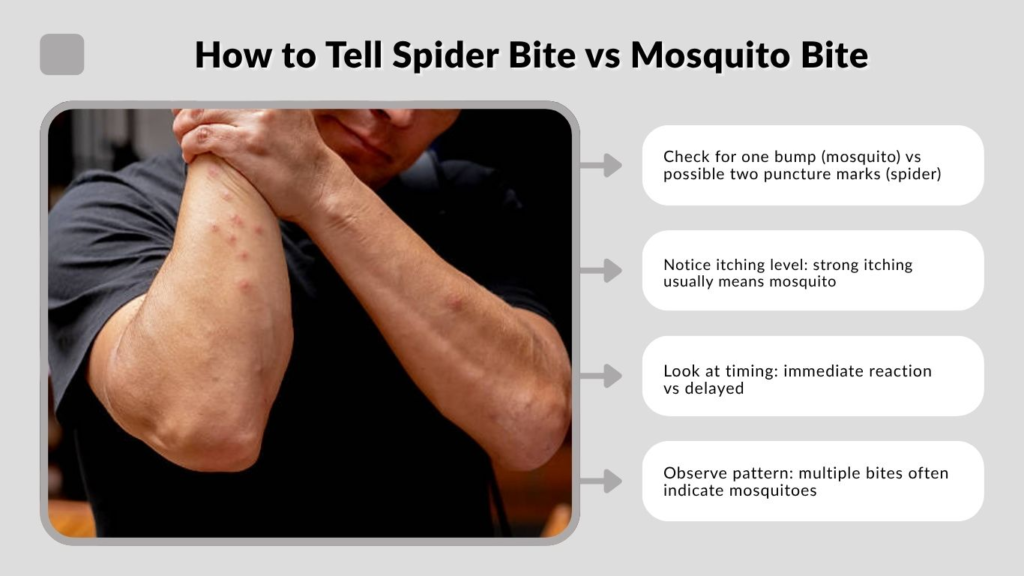
Correct identification depends on a combination of visual signs and symptoms. Looking at one factor alone is often not enough.
Visual Identification Checklist
- Check for one bump (mosquito) vs possible two puncture marks (spider)
- Notice itching level: strong itching usually means mosquito
- Look at timing: immediate reaction vs delayed
- Observe pattern: multiple bites often indicate mosquitoes
What Do Spider Bites Look Like vs Mosquito Bites
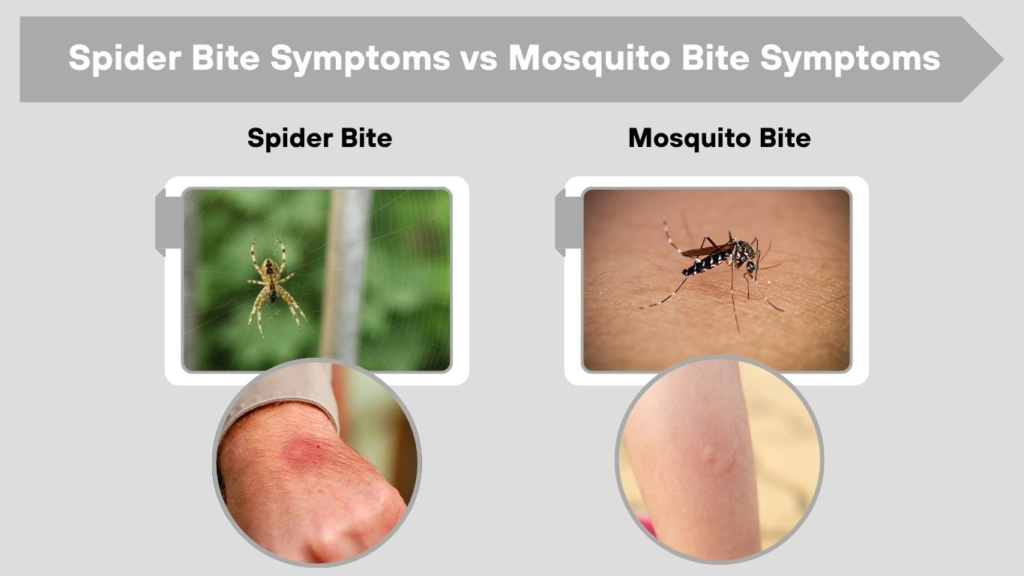
Spider bites can vary in appearance, but they often start as a small red area that may become swollen or slightly painful. In some cases, a blister may form. Mosquito bites are more uniform, typically appearing as round, raised bumps that itch almost immediately.
Because appearances can overlap, especially in mild cases, it’s important to consider other factors like itching intensity and number of bites.
Spider Bite vs Mosquito Bite Pictures and Visual Clues
When comparing images, mosquito bites usually appear as smooth, round bumps with consistent redness. They often occur in clusters or groups on exposed skin such as arms and legs.
Spider bites, however, may look less uniform. They can appear as a single inflamed spot and may show signs of irritation beyond simple swelling, such as a small blister or darker center. Still, visual differences alone are not always reliable, especially in early stages.
Spider Bite Symptoms vs Mosquito Bite Symptoms
Mild Symptoms
Most bites from both spiders and mosquitoes are mild and resolve on their own. Mosquito bites tend to cause itching and slight swelling, while spider bites may cause mild discomfort or irritation.
Severe Symptoms
In rare cases, spider bites can cause more serious symptoms such as increasing pain, spreading redness, or skin damage. Mosquito bites can also become problematic if they are scratched repeatedly, leading to infection or excessive swelling.
Special Cases: When Bites Look Similar
Sometimes, it can be difficult to tell whether a bite is from a spider or a mosquito because the symptoms overlap. In these cases, looking at context and progression becomes more important than appearance alone.
Small Spider Bite vs Mosquito Bite
A small spider bite can look very similar to a mosquito bite, especially in the early stages. Both may appear as small red bumps with mild swelling. However, mosquito bites usually itch more, while spider bites may feel slightly painful or tender instead.
Swollen Mosquito Bite vs Spider Bite
Some people experience strong reactions to mosquito bites, causing large swelling that can resemble a more serious bite. These swollen mosquito bites are often warm, itchy, and appear quickly after being bitten. Spider bites, in contrast, tend to develop more slowly and may include pain rather than just itching.
Infected Mosquito Bite vs Spider Bite
An infected mosquito bite can sometimes be mistaken for a spider bite because it becomes red, swollen, and painful. The key difference is that infection usually follows excessive scratching. Signs of infection include pus, warmth, and increasing redness, whereas a spider bite reaction is caused by venom rather than bacteria.
Spider Bite vs Mosquito Bite vs Other Bites
| Bite Type | Key Feature | Common Sign |
| Spider | Two puncture marks | Pain or swelling |
| Mosquito | Single bump | Intense itching |
| Bed Bug | Cluster bites | Bites in lines |
| Flea | Small grouped bites | Common on ankles |
| Tick | Attached bite | Possible rash |
Comparing bites from different insects can help narrow down the cause. For example, bed bug bites often appear in lines or clusters, while flea bites are usually found around the lower legs. Tick bites are unique because the tick may remain attached to the skin.
Which Bite Is More Dangerous?

In general, spider bites are considered more potentially dangerous than mosquito bites, but they are also much less common. Most spiders are harmless, and serious reactions are rare.
Mosquito bites are usually mild, but in some regions, mosquitoes can carry diseases. However, in most everyday situations, mosquito bites are more of an annoyance than a serious health concern.
The key takeaway is that both types of bites are typically harmless, but unusual symptoms should always be monitored carefully.
When to Worry About a Bite
While most bites heal on their own, there are certain warning signs that should not be ignored.
Warning Signs to Watch For
- Severe or increasing pain around the bite
- Rapidly spreading redness or swelling
- Fever or chills
- Development of an open sore or ulcer
If any of these symptoms appear, it is important to seek medical attention to rule out complications.
Treatment and Home Remedies
Proper treatment can reduce discomfort and prevent complications, regardless of whether the bite is from a spider or mosquito.
How to Treat a Spider Bite
- Clean the area with soap and water
- Apply a cold compress to reduce swelling
- Keep the affected area elevated if possible
- Monitor for worsening symptoms
How to Treat a Mosquito Bite
- Apply anti-itch creams or calamine lotion
- Avoid scratching to prevent infection
- Wash the area to keep it clean
- Use a cold compress to reduce swelling
Prevention Tips
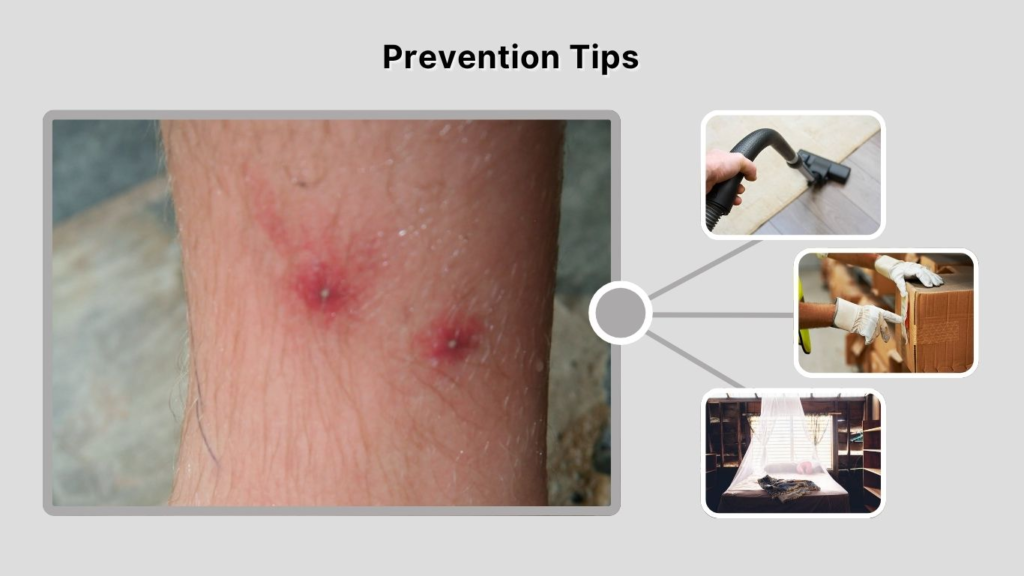
Preventing bites is often easier than treating them. Simple precautions can significantly reduce your risk.
How to Prevent Spider Bites
- Keep living spaces clean and uncluttered
- Shake out clothing, shoes, and bedding
- Wear gloves when handling storage items
- Seal cracks and openings in walls
How to Prevent Mosquito Bites
- Use insect repellent when outdoors
- Eliminate standing water around your home
- Wear long sleeves in high-risk areas
- Use mosquito nets when necessary
FAQs
How can you tell a spider bite from a mosquito bite?
A mosquito bite usually appears as a single, itchy bump that forms quickly after being bitten. A spider bite may show two puncture marks, develop more slowly, and can feel painful rather than itchy. Looking at the number of bites and how they evolve over time helps with identification.
Do spider bites itch like mosquito bites?
Spider bites can itch, but they are generally less itchy than mosquito bites. Mosquito bites trigger a stronger allergic reaction, causing intense itching. Spider bites are more likely to cause mild pain or discomfort instead of constant itching.
Are spider bites more dangerous than mosquito bites?
Spider bites have the potential to be more dangerous because some species have stronger venom. However, most spider bites are harmless. Mosquito bites are usually mild but can be associated with disease in certain regions, making both important to take seriously depending on context.
Why do mosquito bites itch more than spider bites?
Mosquito bites itch more because the insect injects saliva that triggers an immune response. This reaction causes the familiar itching sensation. Spider bites, on the other hand, involve venom that may cause pain or irritation rather than intense itching.
Can a mosquito bite look like a spider bite?
Yes, especially in mild cases. A small spider bite can resemble a mosquito bite, making it difficult to tell the difference at first. Observing symptoms like itching intensity, number of bites, and how the bite changes over time can help distinguish between them.
