
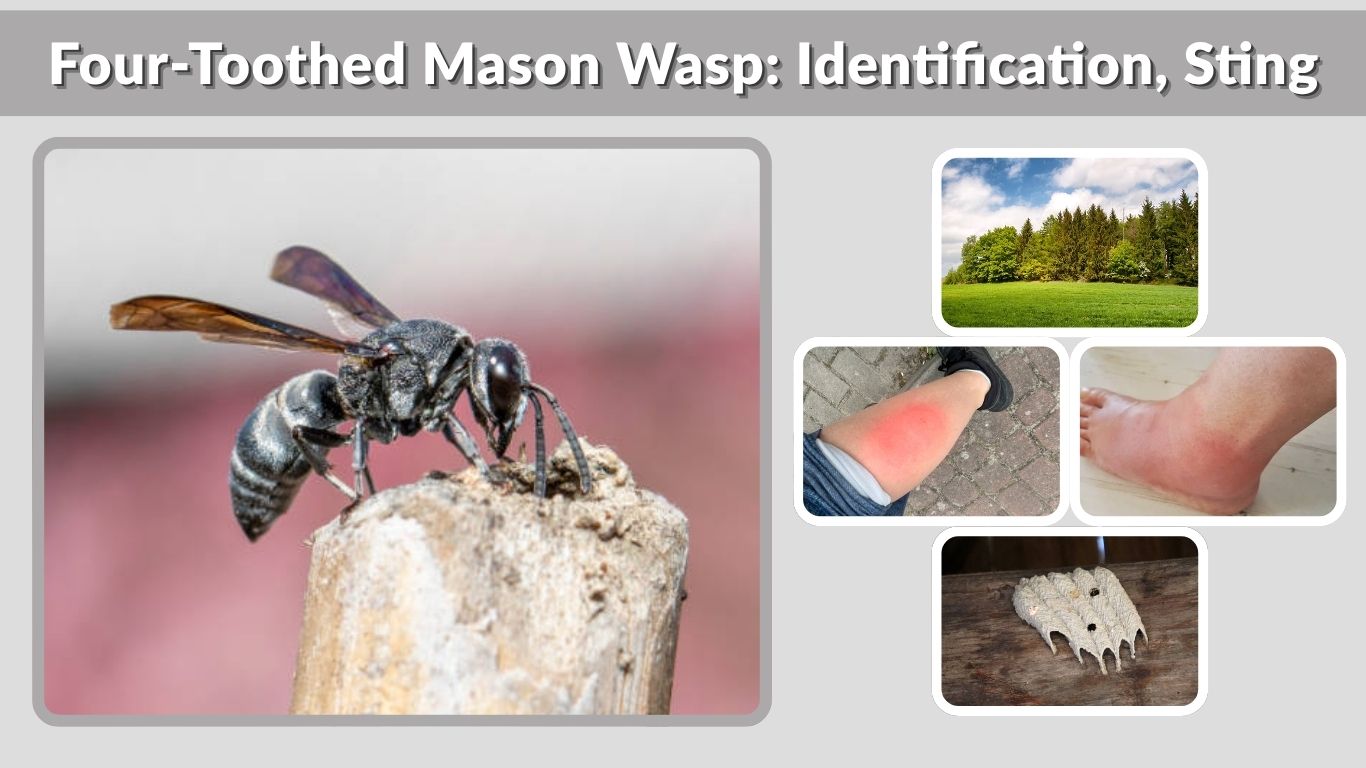
The four-toothed mason wasp is a lesser-known but fascinating insect that often raises concern when spotted around homes or gardens. Many people worry about whether it is aggressive, dangerous, or likely to sting.
In reality, this wasp is quite different from more feared species like yellowjackets or hornets. It is a solitary, non-aggressive insect that plays an important role in controlling pests.
In this guide, we’ll explore everything you need to know—from identification and nesting habits to sting risk and safety—so you can understand whether this wasp is a threat or a benefit.
What Is a Four-Toothed Mason Wasp?
The four-toothed mason wasp, scientifically known as Monobia quadridens, belongs to the Vespidae family, which includes wasps, hornets, and yellowjackets. However, unlike many of its relatives, this species is solitary rather than social.
This means it does not live in colonies or defend large nests aggressively. Each female builds and manages her own nest independently.
The name “four-toothed” comes from small structural features on its body, while “mason” refers to its behavior of using mud to construct and seal its nests.
Four-Toothed Mason Wasp Identification: Size, Color, and Appearance
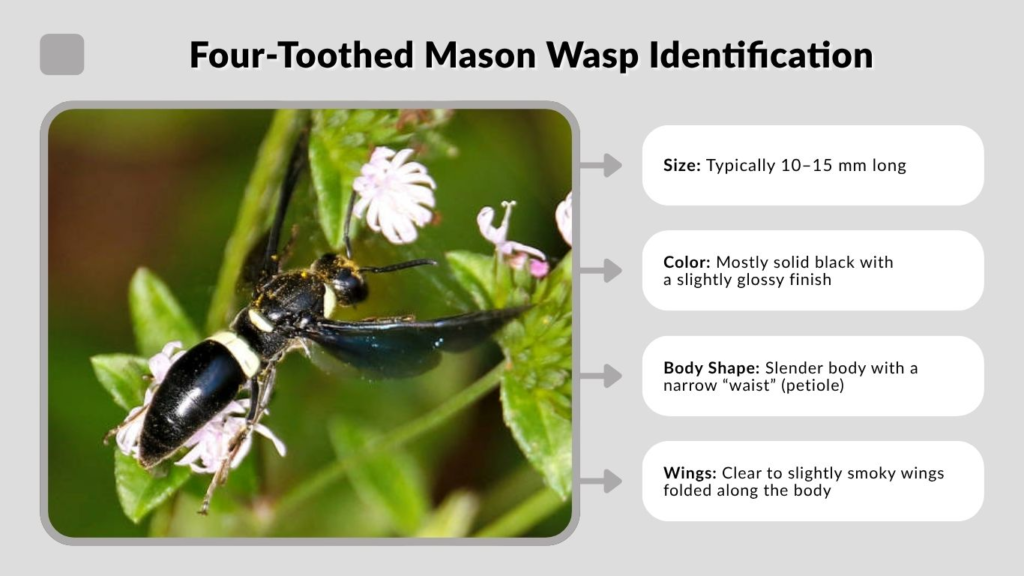
The four-toothed mason wasp has a simple but distinct appearance that can help you identify it quickly. Although it may look similar to more aggressive wasps, its smaller size, solid dark color, and slender body make it easier to distinguish once you know what to look for.
- Size: Typically 10–15 mm long (about 0.4–0.6 inches)
- Color: Mostly solid black with a slightly glossy finish
- Body Shape: Slender body with a narrow “waist” (petiole)
- Wings: Clear to slightly smoky wings folded along the body
- Antennae: Thin, segmented, and slightly curved
- Legs: Dark-colored, relatively long for gripping surfaces
- Male vs Female: Females are slightly larger and have a stinger; males do not
- Overall Look: Less bulky and less intimidating than hornets or yellowjackets
This combination of features helps separate the four-toothed mason wasp from more aggressive species that people often mistake it for.
Four-Toothed Mason Wasp Habitat and Location
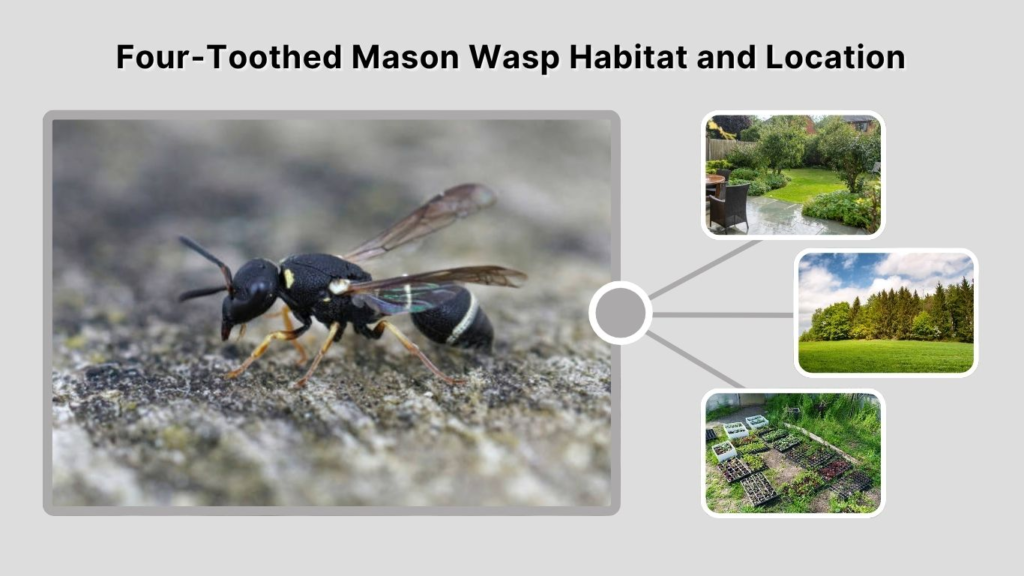
The four-toothed mason wasp is most commonly found in North America, particularly in eastern and central regions. It prefers environments where it can easily find small cavities for nesting.
Typical habitats include:
- Gardens and backyards
- Forest edges
- Wooden structures like fences or sheds
- Areas with plenty of plant life
These wasps are especially attracted to places where natural holes or crevices are available.
Seasonal Activity
They are most active during warmer months, usually from spring through late summer. During this time, females are busy building nests and collecting food for their offspring.
As temperatures drop, their activity decreases, and they enter a dormant stage, typically as pupae.
Four-Toothed Mason Wasp Nest
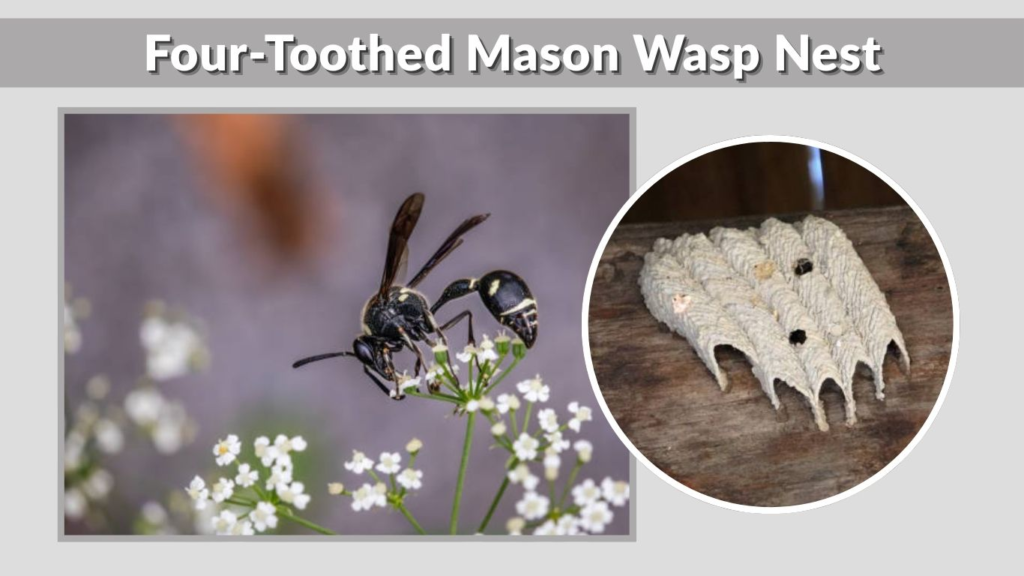
One of the most distinctive features of this species is its nesting behavior.
Where They Build Nests
Unlike social wasps that build large, visible nests, four-toothed mason wasps prefer hidden spaces, such as:
- Hollow wood or stems
- Bamboo poles
- Cracks in walls
- Abandoned insect burrows
Because their nests are concealed, you may not even notice them unless you look closely.
Nest Structure
The female constructs the nest using mud, which is why it is called a “mason” wasp. Inside the cavity, she creates a series of separate chambers, each sealed off with mud walls.
Each chamber is carefully prepared to support one developing larva.
What’s Inside the Nest
Inside each chamber, the female places:
- An egg
- Several paralyzed caterpillars or larvae
These prey items serve as food for the young wasp once it hatches. This behavior also makes the species beneficial, as it helps control pest populations.
Life Cycle of the Four-Toothed Mason Wasp
The life cycle of the four-toothed mason wasp follows a complete metamorphosis, consisting of four main stages.
It begins when the female lays an egg inside a mud-sealed chamber. Within a few days, the egg hatches into a larva.
The larva feeds on the stored prey, gradually growing until it is ready to pupate. During the pupal stage, it transforms into an adult wasp.
Lifecycle Timeline
- Egg stage lasts a few days
- Larval development continues for several weeks
- Pupation may last through winter
- Adults emerge in spring
This cycle ensures that new adults appear when environmental conditions are favorable.
Are Four-Toothed Mason Wasps Aggressive?
One of the most common questions people ask is whether these wasps are aggressive.
The answer is no—they are not aggressive.
Because they are solitary, they do not have a colony to defend. Social wasps like hornets and yellowjackets are aggressive mainly because they protect their nests, but mason wasps do not share this behavior.
When They May Become Defensive
Although generally calm, they may react if:
- They are handled directly
- Their nest is disturbed
- They feel trapped
Even in these situations, they are far less likely to sting compared to other wasps.
Comparison with Aggressive Wasps
- Yellowjackets: highly aggressive and territorial
- Hornets: defensive and capable of repeated stings
- Mason wasps: solitary, and non-threatening
This makes the four-toothed mason wasp one of the least aggressive wasp species you are likely to encounter.
Do Four-Toothed Mason Wasps Sting?
Understanding their sting behavior helps reduce unnecessary fear.
Yes, four-toothed mason wasps can sting, but this happens very rarely. Unlike aggressive wasps, they do not seek out humans or attack without reason.
Only female wasps have a stinger, which they primarily use to paralyze prey for their larvae—not for defense.
When Do They Sting?
Stings usually occur only if the wasp feels directly threatened, such as:
- Being grabbed or handled
- Getting trapped in clothing
- Nest disturbance
In normal situations, they prefer to avoid human interaction entirely.
Sting vs Bite
A common misconception is that these wasps bite. In reality:
- They do not bite humans
- Their only defense is their stinger
- The stinger is used sparingly
Four-Toothed Mason Wasp Sting Pain
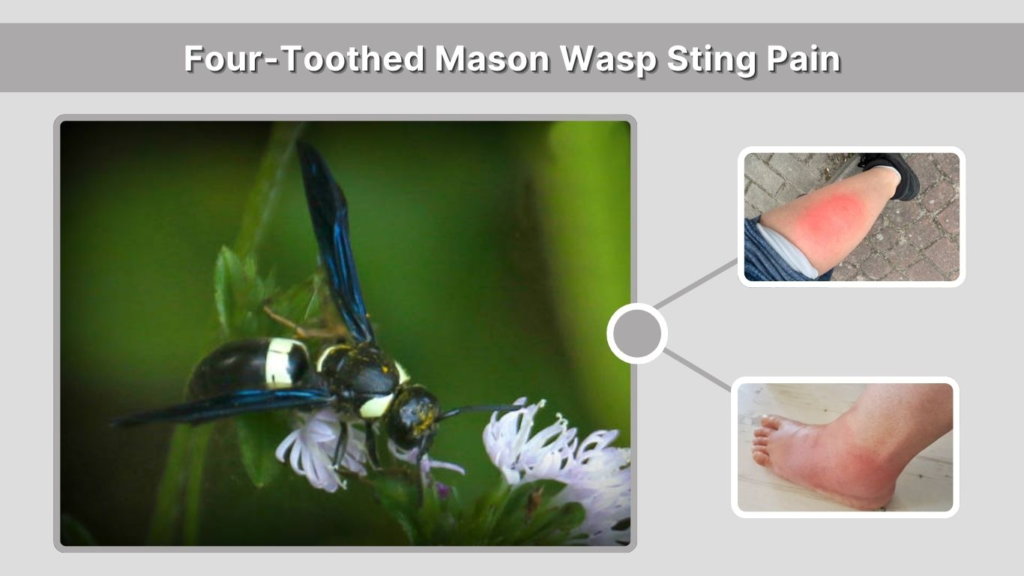
What to expect if you are stung.
The sting of a four-toothed mason wasp is generally described as mild to moderate. It is similar to the sting of a typical small wasp and far less intense than that of hornets.
There is no official ranking on the Schmidt Sting Pain Index, but anecdotal reports suggest it is not severe.
Common Symptoms
After a sting, you may experience:
- Immediate sharp pain
- Redness at the sting site
- Mild swelling
- Slight itching
These symptoms usually subside within a few hours to a day.
Allergic Reactions
Although uncommon, some individuals may experience allergic reactions. Warning signs include:
- Severe swelling beyond the sting area
- Difficulty breathing
- Dizziness or rapid heartbeat
If these symptoms occur, medical attention should be sought immediately.
Are Four-Toothed Mason Wasps Dangerous?
Evaluating the real level of risk.
For most people, four-toothed mason wasps are not dangerous. They do not swarm, chase, or attack like social wasps.
Their sting is mild, and they rarely use it unless provoked.
Risk Level Summary
- Low risk for the general population
- Minimal interaction with humans
- No aggressive colony behavior
When They Can Be a Concern
They may become a concern in specific situations:
- If someone is allergic to insect stings
- If nests are built inside living spaces
- If they are accidentally disturbed frequently
Even in these cases, the risk remains relatively low compared to other wasps.
Four-Toothed Mason Wasp vs Bald-Faced Hornet
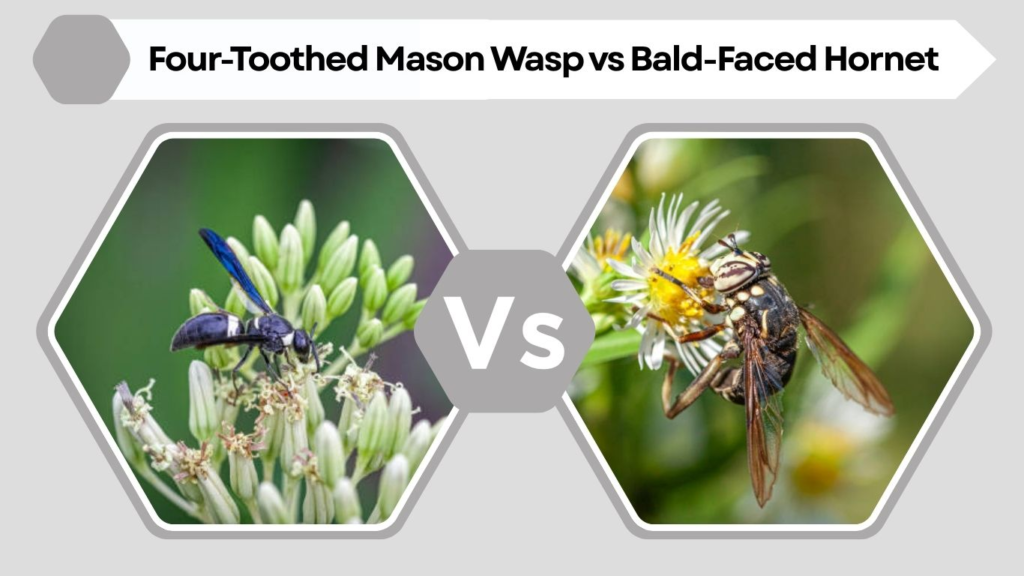
A comparison to prevent confusion with more dangerous species.
Many people mistake the four-toothed mason wasp for the bald-faced hornet, which is much more aggressive.
Key Behavioral Differences
- Mason wasp: solitary and calm
- Bald-faced hornet: social and highly defensive
Nest Comparison
- Mason wasp: small, hidden nests inside cavities
- Hornet: large, exposed paper nests hanging from trees or structures
Danger Level
- Mason wasp: low threat
- Hornet: high threat, especially near nests
Understanding this difference can help avoid unnecessary panic.
Benefits of Four-Toothed Mason Wasps
Why are these wasps actually helpful?
Despite their intimidating appearance, four-toothed mason wasps are beneficial insects.
- They prey on caterpillars and other pests
- Help protect plants and gardens
- Reduce the need for chemical pesticides
Because they do not form large colonies or attack humans, they are considered environmentally friendly allies.
How to Get Rid of Four-Toothed Mason Wasps
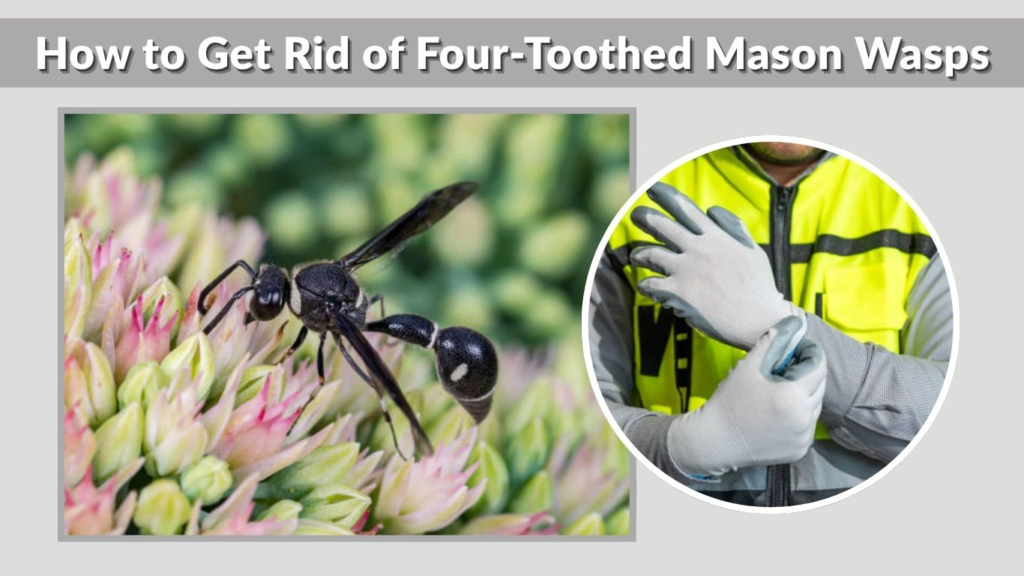
Safe and practical ways to manage them if needed.
In most cases, removal is unnecessary. However, if they become a nuisance, there are safe methods to prevent or relocate them.
Prevention Tips
- Seal cracks, holes, and wall gaps
- Repair damaged wood structures
- Store bamboo, pipes, and hollow materials properly
Natural Deterrents
- Use essential oils like peppermint or eucalyptus
- Keep areas clean to reduce prey insects
Safe Removal Methods
- Remove nests during inactive periods (early morning or evening)
- Wear gloves and protective clothing
- Gently clear mud-sealed openings
When to Call Professionals
- If nests are inside walls or vents
- If you have allergies to stings
- If infestations are repeated or widespread
Quick Facts Summary
A fast, scannable recap.
- Solitary wasp (not aggressive)
- Rarely stings humans
- Mild sting when it occurs
- Builds mud-sealed nests in cavities
- Helps control garden pests
- Not considered dangerous
FAQs
Are four-toothed mason wasps aggressive?
No, they are not aggressive. These wasps live alone and do not defend colonies like hornets or yellowjackets. They typically avoid humans and only react if directly handled or threatened, making them one of the least aggressive wasp species.
Do four-toothed mason wasps sting humans?
Yes, females can sting, but it is uncommon. They use their sting mainly for defense or hunting prey. Most people will never be stung unless they accidentally disturb or handle the wasp.
Is a four-toothed mason wasp dangerous?
No, it is generally harmless. The sting is mild and poses little risk to most individuals. Only those with allergies to insect stings may experience serious reactions.
What does their nest look like?
Their nests are hidden inside small cavities and sealed with mud. You won’t see large hanging nests—only small holes or openings plugged with dried mud.
How painful is the sting?
The sting causes mild to moderate pain, similar to a common wasp sting. Symptoms like redness and swelling are temporary and usually resolve within a short time.
