
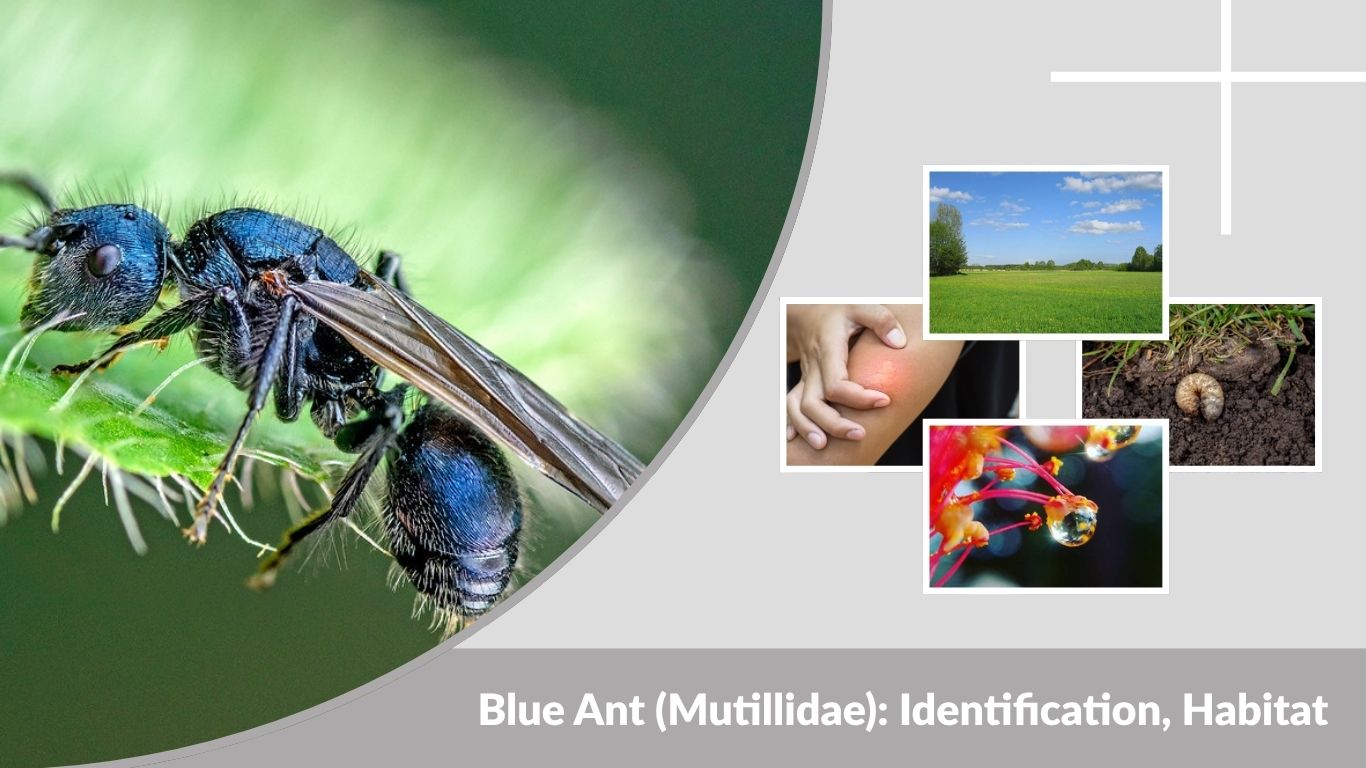
The term “Blue Ant” often sparks curiosity because of its unusual name and striking appearance. Despite being called an ant, this fascinating creature is not actually an ant at all. Instead, it belongs to a group of insects that are closely related to wasps. Its vibrant metallic blue color and unique behavior make it stand out in the insect world.
People commonly search for “blue ant” to understand what it is, whether it is dangerous, and where it can be found. In this article, we will explore its true identity, physical features, habitat, and behavior in detail to give you a clear and accurate understanding.
What is a Blue Ant?
A blue ant is a type of wingless wasp that belongs to the Mutillidae family. These insects are often mistaken for ants due to their similar body structure and ground-dwelling behavior. However, scientifically, they are much closer to wasps than ants.
The name “blue ant” mainly comes from its appearance—especially its bright metallic blue color and ant-like shape. This combination creates confusion among people who are not familiar with insect classification.
Scientific Name and Family
Blue ants are part of the Mutillidae family, commonly known as velvet ants. Despite the name “velvet ant,” they are actually wasps. This family includes many species, some of which display vivid colors like red, orange, or blue.
These insects are parasitic in nature, meaning they lay their eggs in the nests of other insects. The larvae then develop by feeding on the host, which is a common trait among parasitic wasps.
Blue Ant Physical Appearance
One of the most striking features of the blue ant is its metallic blue coloration. This bright color is not just for beauty—it serves as a warning signal to predators that the insect can defend itself.
Key physical features include:
- A shiny blue body
- A segmented structure similar to ants
- Lack of wings in females
- Strong exoskeleton
Females are wingless and resemble ants more closely, while males may have wings and look more like traditional wasps.
Blue Ant Habitat and Distribution

Blue ants are primarily found in Australia, although similar species may exist in nearby regions. They thrive in warm climates and are commonly seen in dry, sandy, or open environments.
Their habitats typically include grasslands, forests, and areas with loose soil where other insects build nests. Since they depend on other insects for reproduction, their presence is often linked to the availability of host species.
Where to Spot Them
You are most likely to see a blue ant moving quickly across the ground rather than flying. They are active during warm parts of the day and prefer areas with minimal disturbance.
Common places to spot them include:
- Sandy pathways
- Garden soil
- Open fields
- Near insect nests
Because of their speed and small size, they can be difficult to notice unless you are actively looking for them.
Blue Ant Behavior and Lifestyle
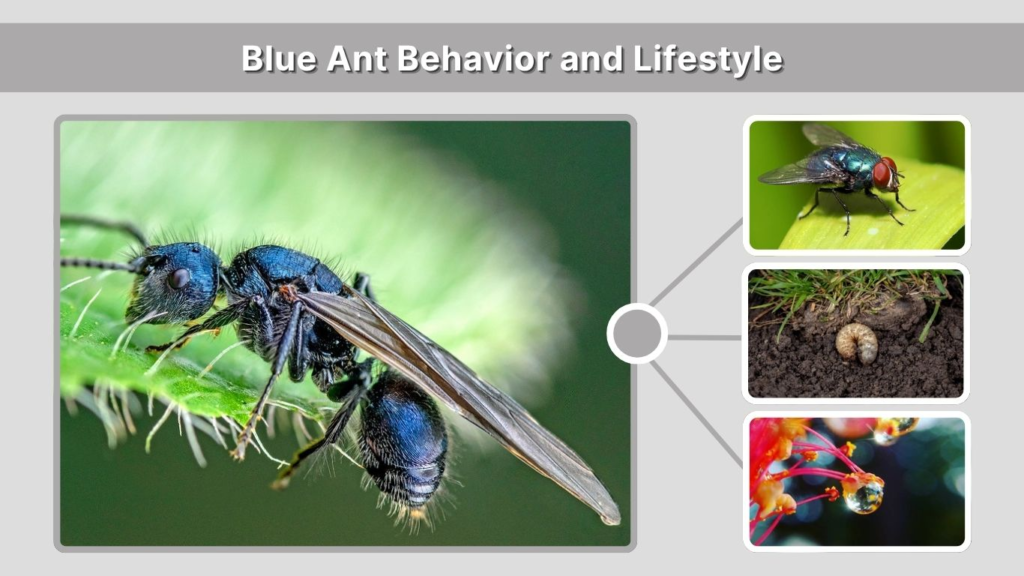
Blue ants are solitary insects, meaning they do not live in colonies like true ants. Each individual operates independently, focusing on survival and reproduction.
They are known for their active movement and strong defensive behavior. Unlike social insects, they do not cooperate with others of their species.
Diet and Feeding
Blue ants are predators and parasites. Adult blue ants typically feed on nectar or small insects, while their larvae depend on host insects for nourishment.
Their feeding behavior plays an important role in controlling other insect populations, which contributes to ecological balance.
Life Cycle
The life cycle of a blue ant is closely tied to its parasitic nature. Females search for the nests of other insects, such as bees or wasps, to lay their eggs.
The process generally follows these stages:
- The female locates a host nest
- She lays eggs inside the nest
- The larvae hatch and feed on the host
- They eventually develop into adult blue ants
This lifecycle strategy allows them to survive without building their own nests.
Blue Ant vs Real Ants
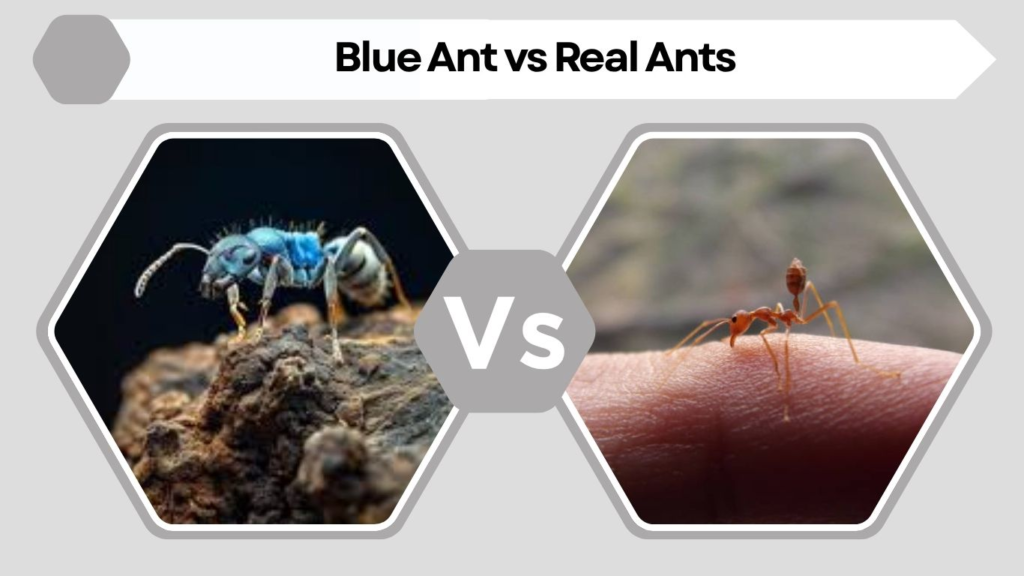
One of the biggest misconceptions about blue ants is that they are true ants. In reality, they differ significantly in both structure and behavior.
Blue ants belong to the wasp family, while true ants belong to the Formicidae family. This difference affects everything from their anatomy to their lifestyle.
Key differences include:
- Blue ants are solitary; ants are social
- Blue ants are parasitic; ants build colonies
- Blue ants can sting; many ants bite or sting differently
Why They Are Mistaken for Ants
The confusion mainly comes from their appearance. Blue ants have a segmented body and move along the ground, just like typical ants.
Additionally, the wingless females look almost identical to ants at first glance. This visual similarity leads many people to assume they are simply a rare or unusual type of ant.
Are Blue Ants Dangerous?
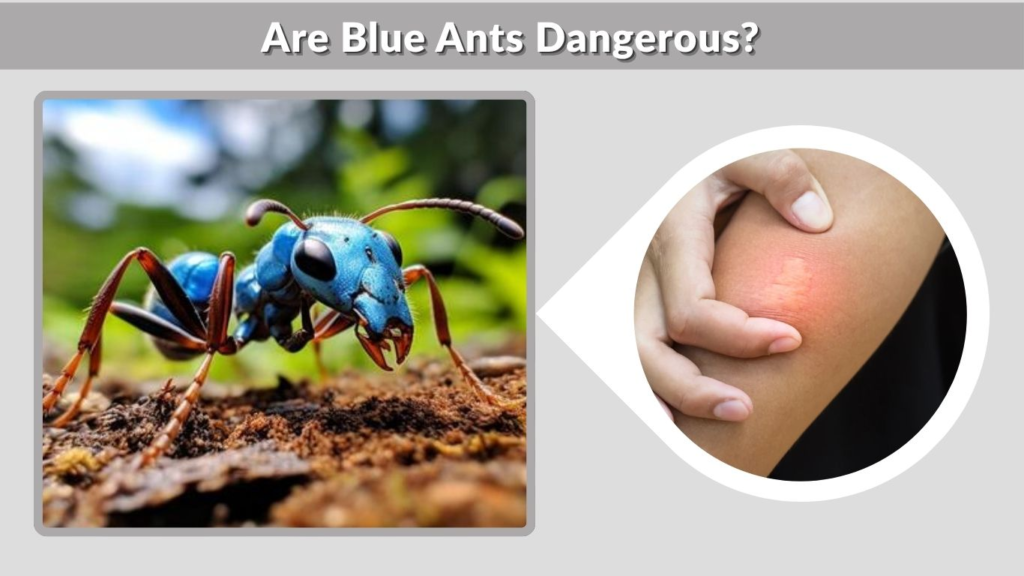
One of the most common concerns about blue ants is whether they are dangerous to humans. While they are not aggressive by nature, they can deliver a painful sting if they feel threatened or handled.
The sting of a blue ant is primarily used for defense rather than attack. These insects prefer to avoid confrontation and will only sting when provoked.
What Happens If You Get Stung
A blue ant sting can be quite painful, often described as sharp and intense. However, for most people, it is not medically dangerous.
Common effects include:
- Immediate sharp pain
- Redness and swelling
- Mild irritation lasting a few hours
In rare cases, individuals who are sensitive to insect stings may experience stronger allergic reactions. Symptoms such as severe swelling, dizziness, or difficulty breathing require immediate medical attention.
First Aid Tips
If you are stung by a blue ant, simple first aid steps can help reduce discomfort and prevent complications.
- Wash the affected area with soap and water
- Apply a cold compress to reduce swelling
- Use antihistamines or pain relief if necessary
- Avoid scratching the area
If symptoms worsen or persist longer than expected, it is best to consult a healthcare professional.
Ecological Importance
Despite their intimidating sting, blue ants play a valuable role in the ecosystem. They contribute to maintaining balance in insect populations and support biodiversity.
As predators and parasites, they help control the numbers of other insects, including those that may be harmful to plants or crops. This natural regulation reduces the need for chemical pest control in some environments.
Blue ants are also part of the food chain. While their bright coloration warns predators, some animals have adapted to hunt them. This interaction helps sustain ecological diversity.
Interesting Facts About Blue Ants
Blue ants are full of surprising features that make them unique among insects.
- They are not true ants but wingless wasps
- Their metallic blue color is a warning signal to predators
- Females are wingless, while males may have wings
- They are solitary and do not form colonies
- Their sting is known to be quite painful compared to their size
These facts highlight how unusual and specialized these insects are in the natural world.
Symbolism and Cultural Meaning
Beyond biology, blue ants can carry symbolic meanings in different contexts. While not widely known in folklore, their characteristics lend themselves to interpretation.
Their bright color often symbolizes warning, strength, and uniqueness. The ability to defend themselves despite their small size can represent resilience and independence.
In a broader sense, the blue ant can be seen as a reminder that appearances can be misleading—something that looks like an ordinary ant may actually be something entirely different.
How to Identify a Blue Ant
Correctly identifying a blue ant is important, especially to avoid accidental contact.
Key identification features include:
- Metallic blue or bluish-purple body
- Ant-like shape with a segmented body
- Fast movement across the ground
- Lack of wings in females
Unlike regular ants, they tend to move alone rather than in groups. Observing their solitary behavior can help distinguish them from true ants.
How to Stay Safe Around Blue Ants
Although blue ants are not aggressive, it is always best to maintain a safe distance when encountering them.
Practical safety tips include:
- Do not touch or attempt to pick them up
- Wear footwear when walking in areas where they may be present
- Be cautious in sandy or dry environments
- Educate children about avoiding unknown insects
By respecting their space, you can avoid stings and safely observe them in their natural habitat.
FAQs
Is a blue ant really an ant?
No, a blue ant is actually a type of wingless wasp from the Mutillidae family. It looks like an ant because of its body shape and movement, but scientifically it is more closely related to wasps.
Are blue ants aggressive?
Blue ants are not naturally aggressive and prefer to avoid humans. However, they will sting if they feel threatened or are handled. Their defensive nature is the main reason for their reputation.
Where can I find blue ants?
Blue ants are mainly found in Australia, especially in warm and dry environments such as grasslands, sandy areas, and open fields. They are often seen moving along the ground.
How painful is a blue ant sting?
The sting of a blue ant can be quite painful but is usually not dangerous. The pain is sharp and immediate, followed by mild swelling that typically fades within a few hours.
Why do blue ants have bright color?
Their bright metallic blue color acts as a warning to predators. It signals that they are capable of defending themselves, which helps reduce the chances of being attacked.
