
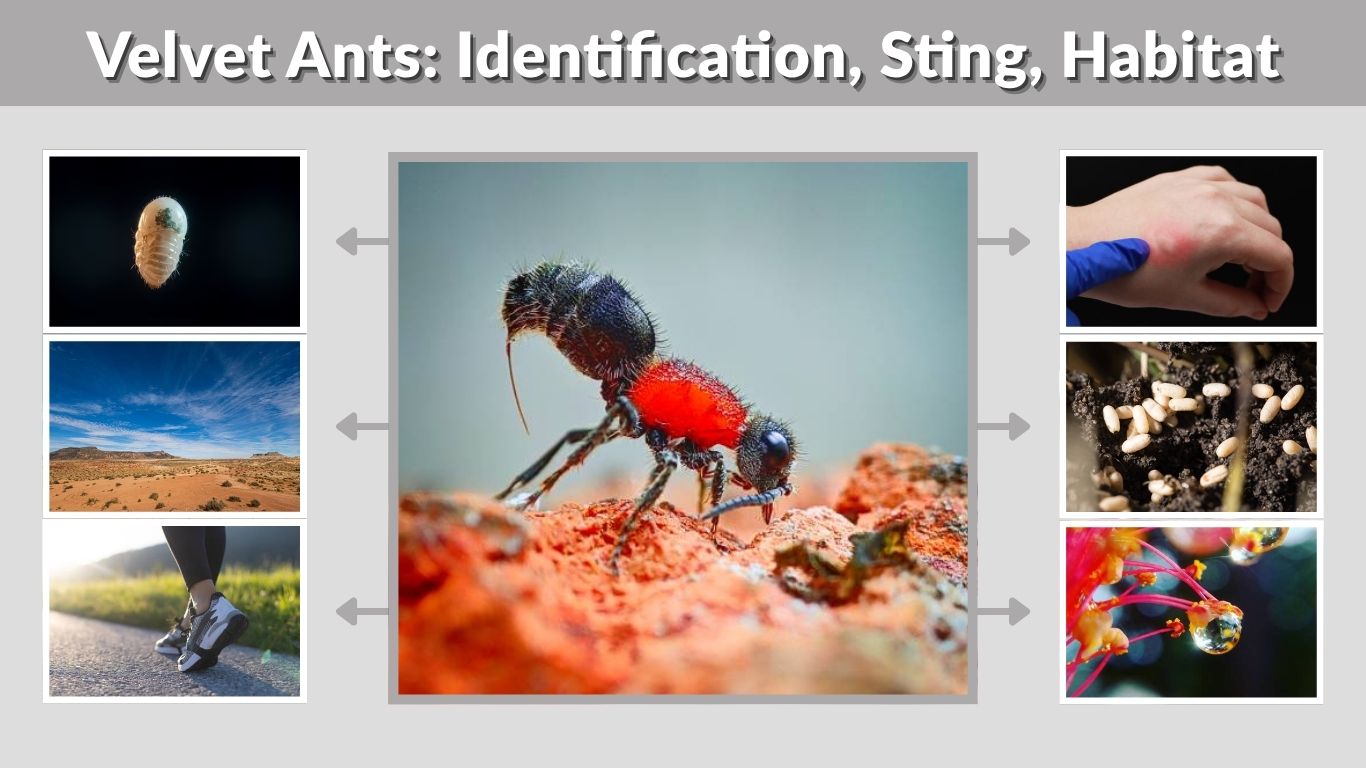
Velvet ants are some of the most fascinating—and misunderstood—insects in the natural world. Despite their name, they are not true ants at all. In fact, velvet ants belong to the wasp family Mutillidae. Their ant-like appearance comes from the wingless females, which often resemble large, fuzzy ants crawling along the ground.
These insects are well known for their bright, eye-catching colors and their extremely painful sting. In some regions, they are even nicknamed “cow killers,” a name that reflects the intensity of their sting rather than any real threat to livestock. Velvet ants are commonly found in warm climates and are especially noticeable during the summer months when they are most active.
In this article, we’ll explore everything you need to know about velvet ants, including how to identify them, where they live, what they eat, and whether they are dangerous to humans.
What Are Velvet Ants?
Scientific Classification
Velvet ants belong to the family Mutillidae, a group of parasitic wasps. There are over 7,000 known species worldwide, making them a diverse and widespread family. Although they are classified as wasps, velvet ants differ significantly in appearance and behavior from the typical flying wasps most people are familiar with.
Why They’re Called “Ants”
The name “velvet ant” comes from the dense, soft hair that covers their bodies, giving them a velvety texture. Female velvet ants are wingless, which makes them look very similar to ants as they move across the ground. However, unlike true ants, velvet ants do not live in colonies or build complex nests.
Males, on the other hand, do have wings and resemble more traditional wasps. Interestingly, only the females can sting, while males are harmless.
Velvet Ant Identification Guide
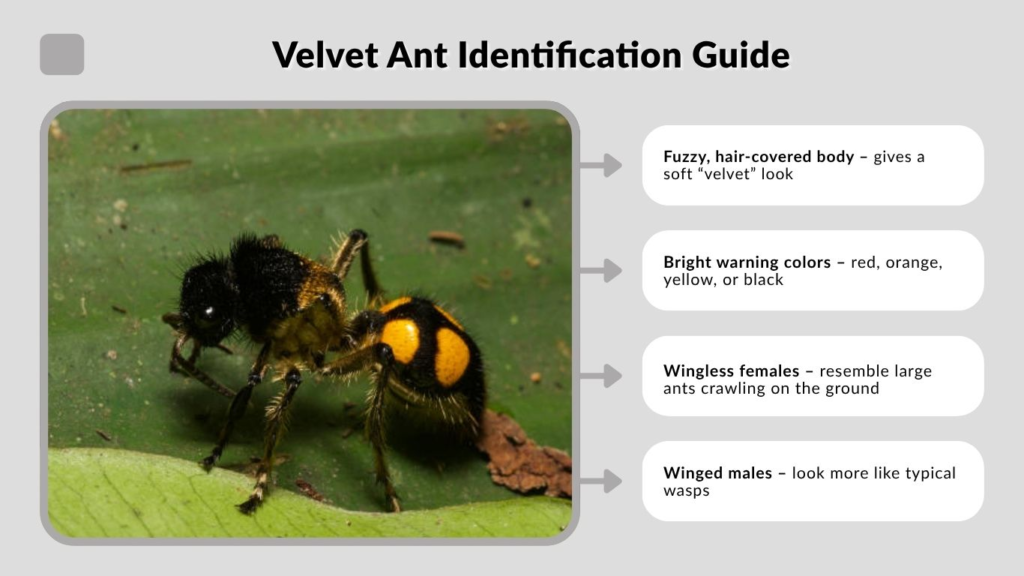
Velvet ants are easy to recognize once you know their key features. Despite their name, they are actually wasps, and their appearance is designed to warn predators of their painful sting. Below are the main identification points to help you quickly spot a velvet ant:
Quick Identification Features
- Fuzzy, hair-covered body – gives a soft “velvet” look
- Bright warning colors – red, orange, yellow, or black
- Wingless females – resemble large ants crawling on the ground
- Winged males – look more like typical wasps
- Strong, compact body – often appears thick and robust
- Visible stinger (females) – used for defense
Size and Shape
- Usually 0.25 to 1 inch long
- Elongated body with a slightly rounded abdomen
- Moves quickly across the ground
Behavior Clues
- Found walking alone (not in groups)
- Often seen in sunny, sandy areas
- Quick, erratic movement when disturbed
How to Tell Them Apart from Real Ants
- Lack of social behavior (no trails or colonies)
- Brighter coloration than most ants
- Thicker, more wasp-like body structure
These simple features make velvet ants relatively easy to identify in the wild, especially when compared to true ants or other similar insects.
Types and Species of Velvet Ants
Common Species
One of the most well-known species is Dasymutilla occidentalis, commonly referred to as the “cow killer ant.” This species is famous for its bright red coloration and extremely painful sting. Despite its intimidating nickname, it does not pose a serious threat to large animals.
There are many other species of velvet ants, each with unique color patterns and behaviors. Some are more brightly colored than others, while some have more subtle appearances that help them blend into their environments.
Global Distribution
Velvet ants are found all over the world, with a particularly high concentration in warm and arid regions. They are especially common in North America, where many species thrive in dry, sandy habitats.
Other regions, including Africa, Asia, and parts of Europe, also host a wide variety of velvet ant species. Their adaptability allows them to survive in diverse environments, although they tend to prefer warmer climates.
Velvet Ant Habitat
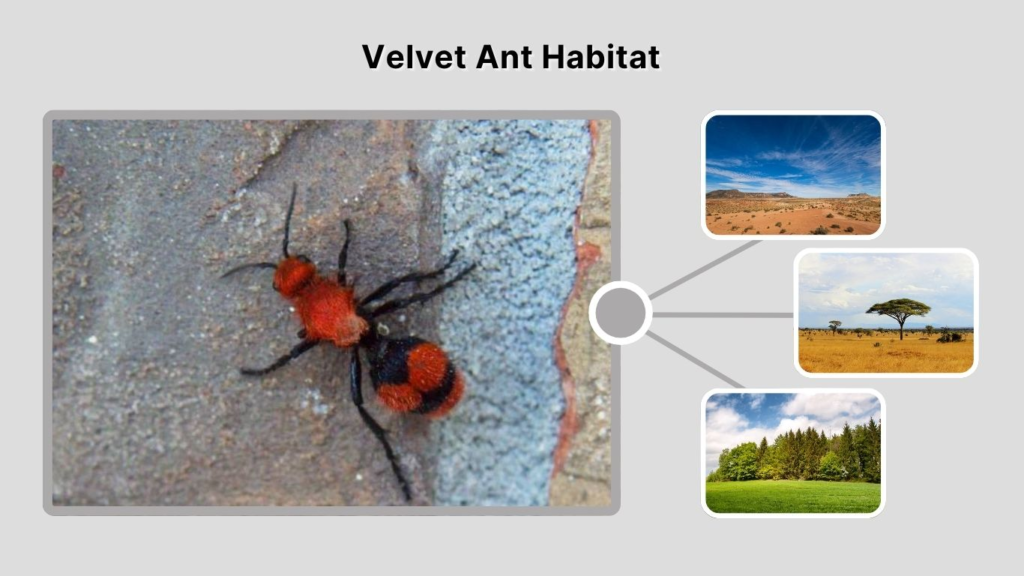
Where Do Velvet Ants Live?
Velvet ants are typically found in open, sunny areas where the soil is loose and easy to dig into. Common habitats include deserts, grasslands, and forest edges. They are particularly fond of sandy soils, which make it easier for them to locate and access the nests of other insects.
These environments also provide plenty of opportunities for feeding and reproduction, as many of the insects they rely on for their life cycle are found in similar habitats.
Geographic Range
In North America, velvet ants are most commonly found in the southern United States, where the climate is warm and dry. However, they can also be seen in other parts of the continent during warmer months.
Globally, velvet ants inhabit a wide range of regions, including tropical and subtropical areas. Their presence in so many different parts of the world highlights their ability to adapt to various environmental conditions.
Velvet Ant Nest and Behavior
Do Velvet Ants Build Nests?
Unlike true ants, velvet ants do not build their own nests or live in organized colonies. They are solitary insects, meaning each individual lives and operates independently. This is one of the key differences that separates them from social ants.
Parasitic Lifestyle
Velvet ants are actually parasitic. Female velvet ants search for the nests of other insects—typically ground-nesting bees or wasps. Once they find a suitable host nest, they sneak inside and lay their eggs.
After the eggs hatch, the larvae feed on the host’s larvae or pupae. This behavior allows velvet ants to rely on other species for reproduction rather than building and maintaining their own nests.
Solitary Nature
Velvet ants are rarely seen in groups. Each female moves independently, searching for food and suitable host nests. This solitary behavior makes encounters with humans relatively rare, but when they do occur, they are often memorable due to their striking appearance.
Velvet Ant Diet
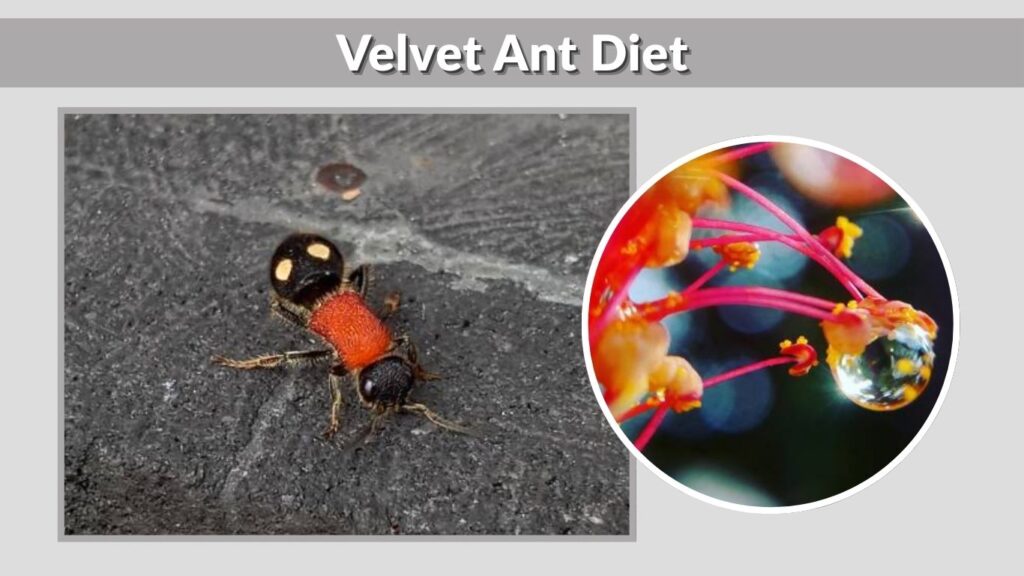
What Do Adult Velvet Ants Eat?
Adult velvet ants primarily feed on nectar and plant fluids. They may visit flowers to consume nectar, making them occasional pollinators, although they are not as efficient as bees.
Larval Feeding Habits
The diet of velvet ant larvae is quite different. After hatching inside a host nest, the larvae feed on the developing young of the host insect. This provides them with a rich source of nutrients necessary for growth.
Hunting and Feeding Behavior
Female velvet ants spend much of their time searching for host nests. They use their keen sense of smell and environmental cues to locate underground nests. Once found, they carefully infiltrate the nest to lay their eggs.
Velvet Ant Life Cycle and Lifespan
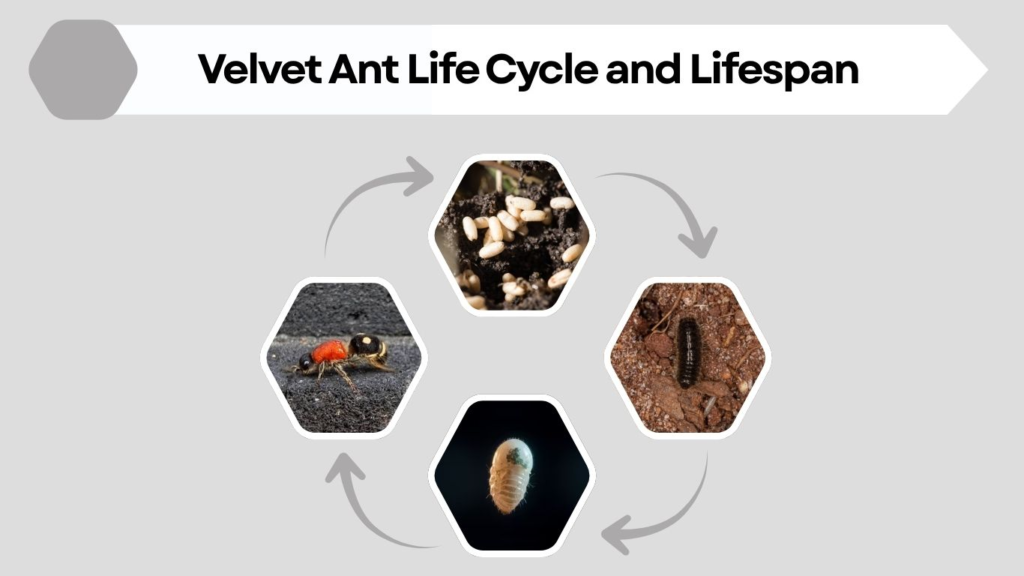
Life Cycle Stages
Velvet ants undergo complete metamorphosis, which includes four stages:
- Egg
- Larva
- Pupa
- Adult
Each stage plays a crucial role in their development, with the larval stage being entirely dependent on the host insect.
Reproduction Process
After mating, the female velvet ant searches for a host nest where she can lay her eggs. This process is critical for the survival of the next generation, as the larvae rely on the host for food.
Lifespan
The lifespan of a velvet ant varies depending on environmental conditions and species. Adults typically live for several weeks to a few months. Their survival depends on factors such as temperature, availability of food, and predation.
Velvet Ant Sting: How Painful Is It?
Why Velvet Ants Sting
Velvet ants use their sting as a defense mechanism. They are not aggressive and will only sting when threatened or handled.
Pain Level Explained
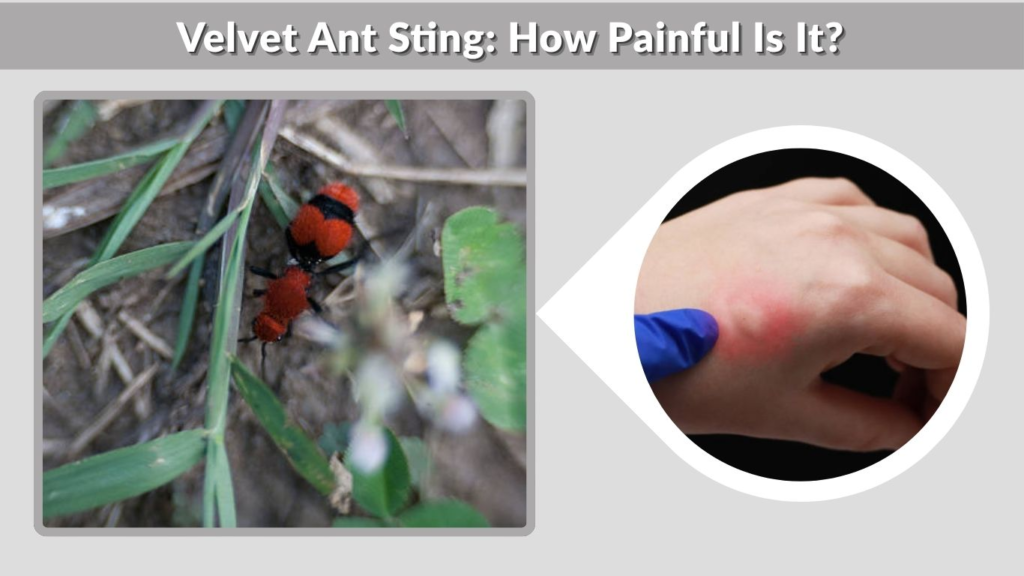
The sting of a velvet ant is famously painful. This is why some species are nicknamed “cow killers.” While the name may sound alarming, it is more of an exaggeration than a literal threat.
The pain is intense and immediate, often described as one of the most painful insect stings. However, it typically subsides after some time without causing long-term harm.
Sting Symptoms
Common symptoms of a velvet ant sting include:
- Sharp, burning pain
- Redness and swelling
- Localized irritation
In most cases, the symptoms are temporary and manageable.
Are Velvet Ants Dangerous to Humans?
Risk Level
Velvet ants are not considered highly dangerous to humans. They do not actively seek out people and will usually avoid contact. However, they can sting if provoked.
Effects on Humans
For most people, a velvet ant sting is extremely painful but not medically serious. The discomfort can last from a few minutes to several hours.
When to Seek Medical Help
Medical attention may be necessary if:
- There is an allergic reaction
- Severe swelling occurs
- Symptoms worsen over time
Individuals with known insect sting allergies should be especially cautious.
Defense Mechanisms of Velvet Ants
Bright Warning Colors
Velvet ants display bright colors as a warning signal to predators. This is known as aposematic coloration, which indicates that the insect is capable of defending itself.
Tough Exoskeleton
Their bodies are extremely tough, making it difficult for predators to crush them. This physical defense adds another layer of protection.
Sound Production
Some velvet ants can produce squeaking sounds when threatened. This sound, known as stridulation, serves as an additional warning to potential predators.
How to Avoid Velvet Ant Stings
Prevention Tips
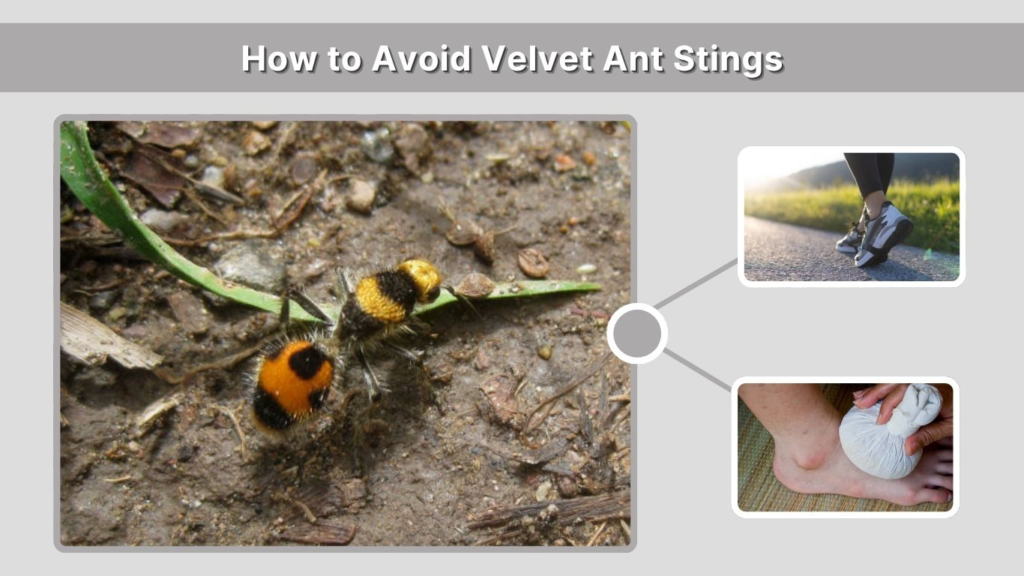
- Avoid touching unfamiliar insects
- Wear shoes when walking outdoors
- Be cautious in sandy or grassy areas
What to Do If You See One
- Do not attempt to pick it up
- Observe from a safe distance
- Allow it to move away naturally
First Aid for Stings
- Clean the affected area with soap and water
- Apply ice to reduce swelling
- Use over-the-counter pain relief if needed
Interesting Facts About Velvet Ants
- Only female velvet ants can sting
- Their sting is one of the most painful among insects
- They have incredibly tough exoskeletons
- Some species mimic others for protection
- They play a role in controlling populations of other insects
FAQs
Are velvet ants really ants?
No, velvet ants are not true ants. They belong to the wasp family (Mutillidae). The confusion comes from the wingless females, which look like large, hairy ants.
How painful is a velvet ant sting?
A velvet ant sting is extremely painful and is often ranked among the most painful insect stings. However, the pain is usually temporary and not life-threatening.
Where are velvet ants commonly found?
Velvet ants are commonly found in warm regions, especially in sandy areas like deserts, grasslands, and forest edges. They are widely seen in the southern United States and other tropical regions.
Do velvet ants live in colonies?
No, velvet ants are solitary insects. They do not form colonies like true ants and do not build their own nests.
What should you do if a velvet ant stings you?
If stung, clean the area, apply ice to reduce swelling, and take pain relief if needed. Seek medical help if you experience severe reactions or allergies.
Conclusion
Velvet ants are unique and intriguing insects that combine striking appearance with powerful defense mechanisms. Although they are not true ants, their behavior and characteristics make them stand out in the insect world.
While their sting is undeniably painful, velvet ants are not aggressive and pose little threat if left undisturbed. Understanding their habitat, diet, and behavior can help you avoid unwanted encounters and appreciate their role in the ecosystem.
By respecting these fascinating insects from a distance, you can safely coexist with them while enjoying the diversity of nature.
