
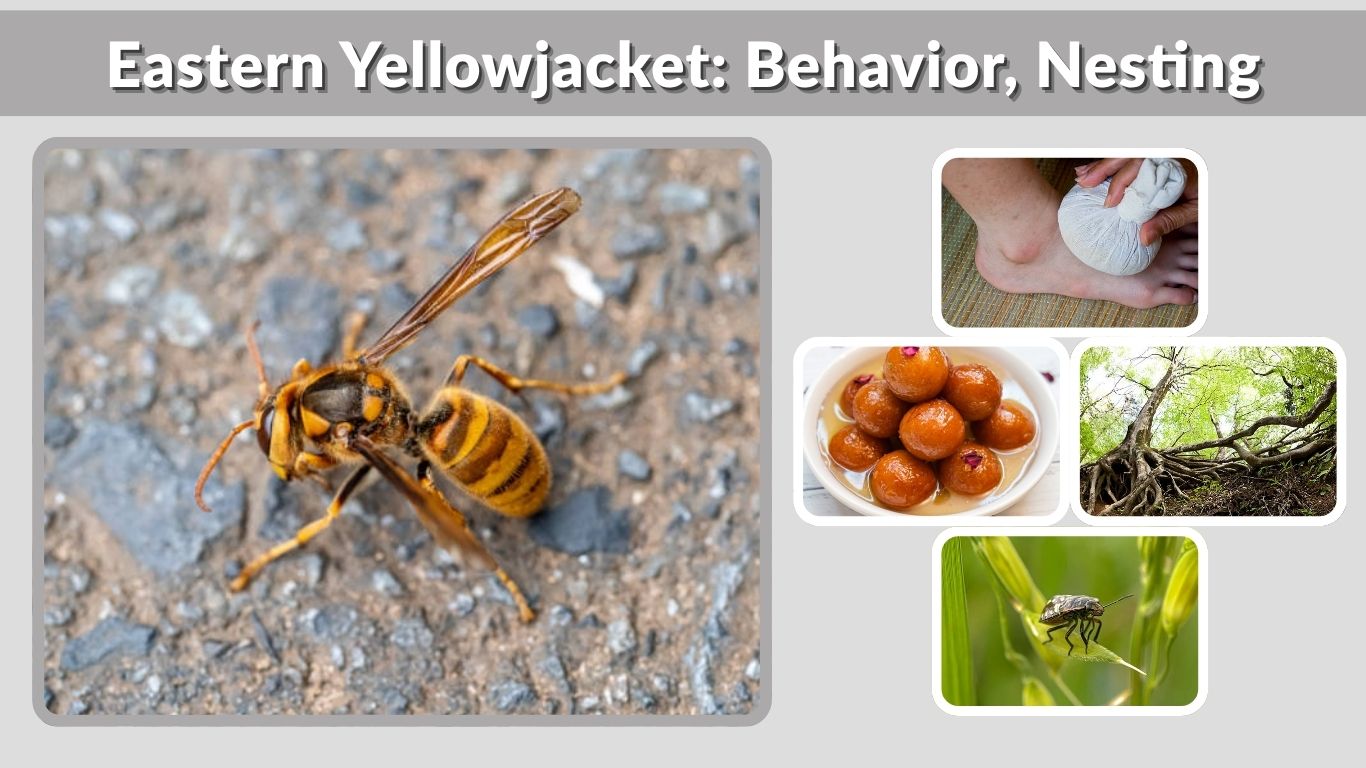
The Eastern yellowjacket (Vespula maculifrons) is a common yet often misunderstood wasp found across North America. Known for its striking yellow-and-black appearance and aggressive behavior, this insect frequently comes into contact with humans, especially during warmer months. While its painful sting makes it a feared pest, the Eastern yellowjacket also plays an important role in controlling other insect populations. Understanding how to identify, avoid, and manage these wasps can help you stay safe while appreciating their place in the ecosystem.
What Is the Eastern Yellowjacket?
The Eastern Yellowjacket (Vespula maculifrons) is one of the most common and recognizable wasp species in North America. Known for its bold yellow-and-black coloration and aggressive defense behavior, this social wasp plays a dual role in the ecosystem—as both a beneficial predator and a nuisance pest.
Eastern yellowjackets are primarily found in the eastern United States and parts of Canada, thriving in forests, suburban areas, and even urban environments. Unlike bees, they are scavengers as well as hunters, feeding on insects, sugary substances, and human food—especially during late summer and early fall.
While they help control pest populations by preying on flies, caterpillars, and other insects, their tendency to build nests near human activity and aggressively defend them often brings them into conflict with people.
How to Identify an Eastern Yellowjacket
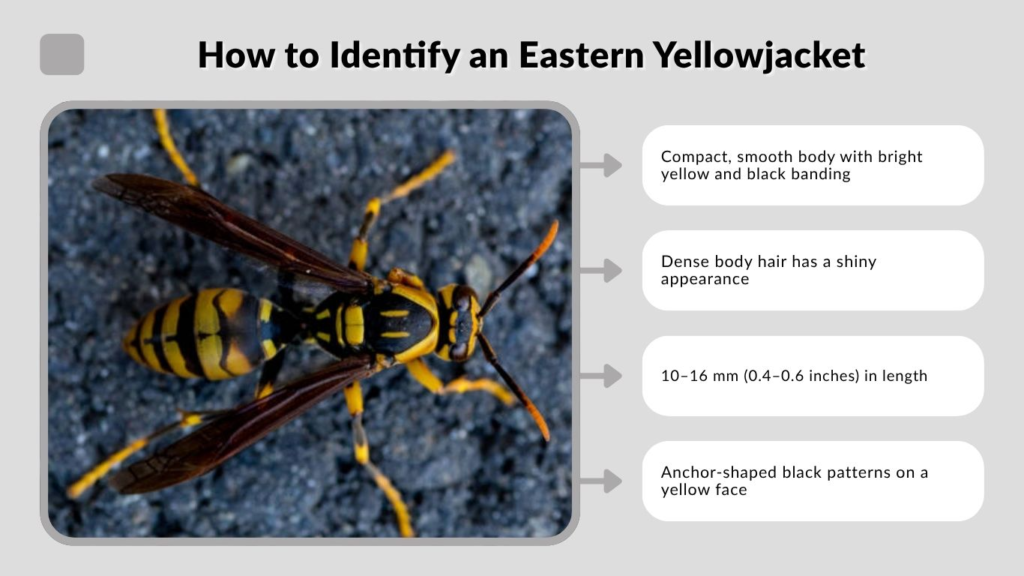
Correct identification is important, especially when dealing with stinging insects. The Eastern yellowjacket has several distinct features that set it apart from bees and other wasps.
Physical Characteristics
Eastern yellowjackets have a compact, smooth body with bright yellow and black banding. Unlike bees, they lack dense body hair and have a shiny appearance. Adults typically measure about 10–16 mm (0.4–0.6 inches) in length.
One key feature is their distinct facial markings, which include anchor-shaped black patterns on a yellow face. Their wings fold lengthwise when at rest, giving them a streamlined look.
Differences Between Workers, Queens, and Males
- Workers: Smaller females responsible for foraging and nest defense
- Queens: Larger and more robust; they start new colonies in spring
- Males: Slightly larger than workers, appear later in the season, and do not sting
These differences become more noticeable as the colony matures throughout the year.
Eastern Yellowjacket vs Other Wasps
Eastern yellowjackets are often confused with other stinging insects, but there are key differences:
- Vs. Bees: Yellowjackets are less hairy, brighter, and more aggressive
- Vs. Paper Wasps: More compact body and faster, more erratic flight
- Vs. Hornets: Smaller in size and typically ground-nesting
Recognizing these differences can help you respond appropriately when encountering them.
Eastern Yellowjacket Behavior
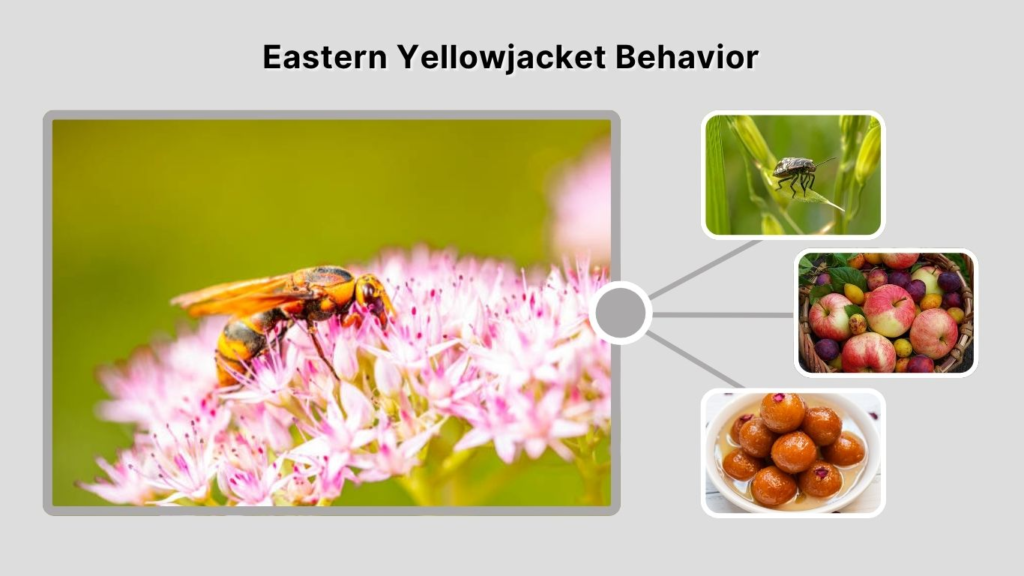
Understanding their behavior explains why these wasps are often considered more aggressive than other species.
Social Structure
Eastern yellowjackets are highly social insects, living in colonies that can contain thousands of individuals. Each colony is organized into:
- A single queen
- Sterile female workers
- Male drones (late season)
The queen’s primary role is reproduction, while workers handle foraging, nest building, and defense.
Feeding Habits
These wasps are omnivorous, meaning they eat both protein and sugar sources:
- Protein: insects, meat scraps
- Sugars: fruit, nectar, soda, and sweets
In early summer, they focus on protein to feed developing larvae. By late summer, their preference shifts toward sugary foods—bringing them into frequent contact with humans at picnics and outdoor gatherings.
Aggression and Defense
Eastern yellowjackets are known for their aggressive defensive behavior, especially when their nest is disturbed. Unlike honeybees, they can sting multiple times because their stingers are smooth (not barbed).
Common triggers for attacks include:
- Stepping near or on a hidden nest
- Vibrations in the ground
- Sudden movements near colony entrances
They can also release chemical signals (pheromones) that alert other colony members, leading to coordinated attacks.
Eastern Yellowjacket Nesting Habits

One of the defining characteristics of this species is its nesting behavior.
Where They Build Nests
Eastern yellowjackets typically build their nests underground, often in:
- Abandoned rodent burrows
- Soil cavities
- Tree root systems
Occasionally, they may also nest in wall voids or hollow structures, especially in urban areas.
Because their nests are often hidden, people may unknowingly get too close—leading to sudden and sometimes intense encounters.
Nest Structure
Their nests are made from a paper-like material, created by chewing wood fibers and mixing them with saliva. Inside, the nest consists of multiple layers of combs where larvae develop.
A mature colony can contain several thousand wasps, making it highly defensive and dangerous to disturb.
Seasonal Nest Lifecycle
The lifecycle of an Eastern yellowjacket colony follows a predictable seasonal pattern:
- Spring: A fertilized queen emerges from hibernation and starts a new nest
- Early Summer: Worker population grows steadily
- Late Summer: Colony reaches peak size and activity
- Fall: Aggression increases as food becomes scarce
By late fall, most of the colony dies off, leaving only newly fertilized queens to overwinter and begin the cycle again the following year.
Eastern Yellowjacket Sting: Risks and Treatment
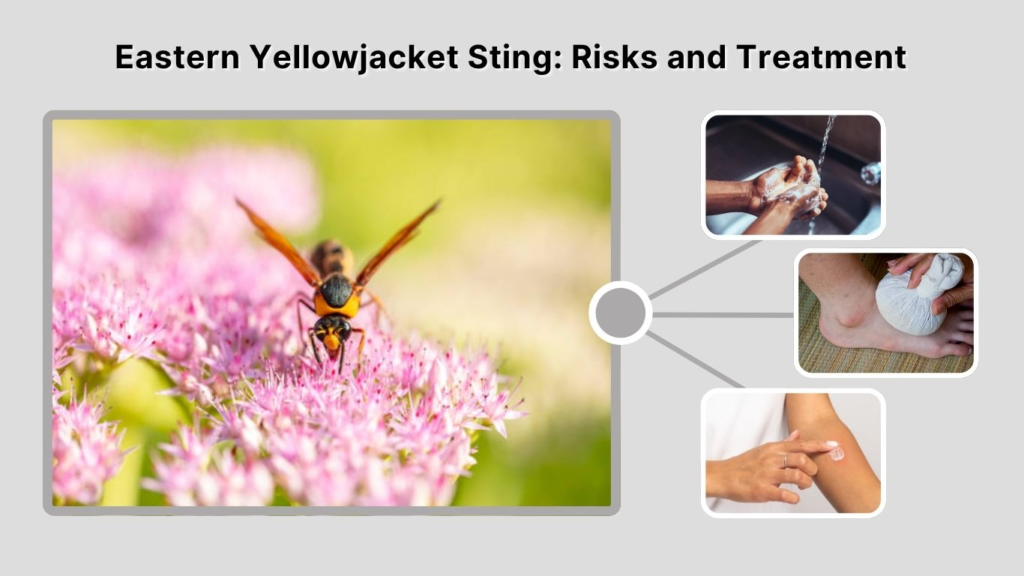
One of the main concerns about Eastern yellowjackets is their ability to sting—and do so repeatedly.
Why They Sting Multiple Times
Unlike honeybees, Eastern yellowjackets have a smooth stinger without barbs, allowing them to sting multiple times without harming themselves. This makes them particularly dangerous when defending their nest, as they can attack in groups.
Symptoms of a Sting
A typical sting causes:
- Immediate sharp pain
- Redness and swelling
- Itching or burning sensation
For most people, symptoms remain mild and localized. However, some individuals may experience severe allergic reactions (anaphylaxis), which can include:
- Difficulty breathing
- Swelling of the face or throat
- Dizziness or fainting
These reactions require immediate medical attention.
First Aid for Stings
If stung by an Eastern yellowjacket:
- Clean the area with soap and water
- Apply a cold compress to reduce swelling
- Use antihistamines or hydrocortisone cream if needed
- Monitor for signs of allergic reaction
Seek medical help immediately if severe symptoms occur.
Are Eastern Yellowjackets Dangerous?
Eastern yellowjackets can be dangerous, particularly in certain situations. While a single sting is usually not life-threatening, multiple stings or allergic reactions can pose serious risks.
They are most dangerous when:
- Their nest is disturbed
- They are abundant in late summer
- Food sources are scarce, increasing aggression
Pets and children are especially vulnerable due to accidental encounters with hidden nests.
How to Get Rid of Eastern Yellowjackets
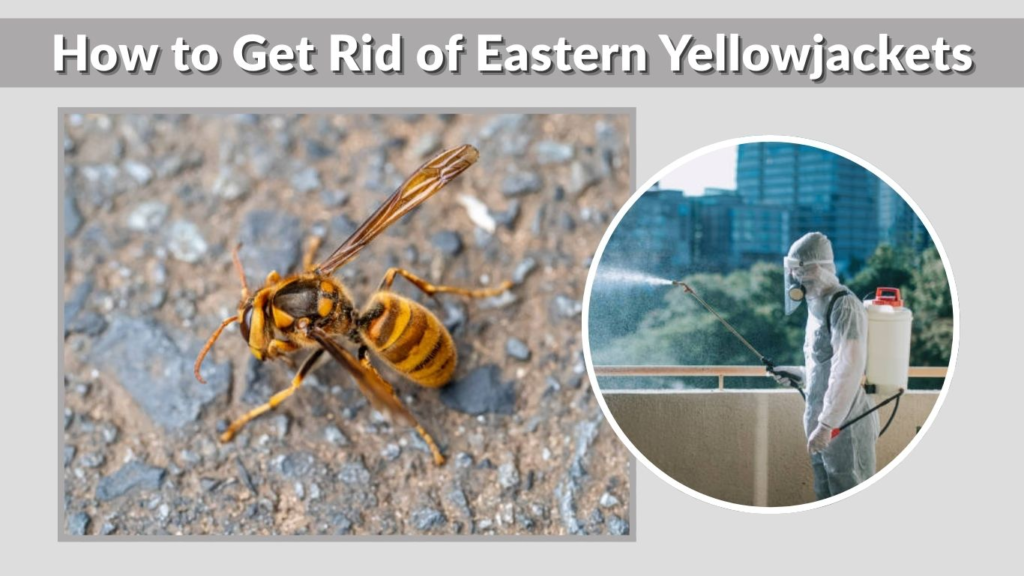
Managing Eastern yellowjackets requires a combination of prevention and control strategies.
Preventive Measures
The best way to avoid problems is to reduce what attracts them:
- Keep food and drinks covered outdoors
- Seal garbage containers tightly
- Clean up spills and food waste quickly
- Avoid leaving sugary items exposed
DIY Removal Methods
For minor problems, some home solutions may help:
- Wasp traps: Use bait to lure and capture workers
- Natural repellents: Peppermint oil and other scents may deter them
- Night treatments: Applying insecticides at night when activity is low
Professional Pest Control
For large or hard-to-reach nests, hiring professionals is the safest option. Pest control experts have the equipment and protective gear needed to remove nests safely and effectively.
Eastern Yellowjacket vs Similar Species
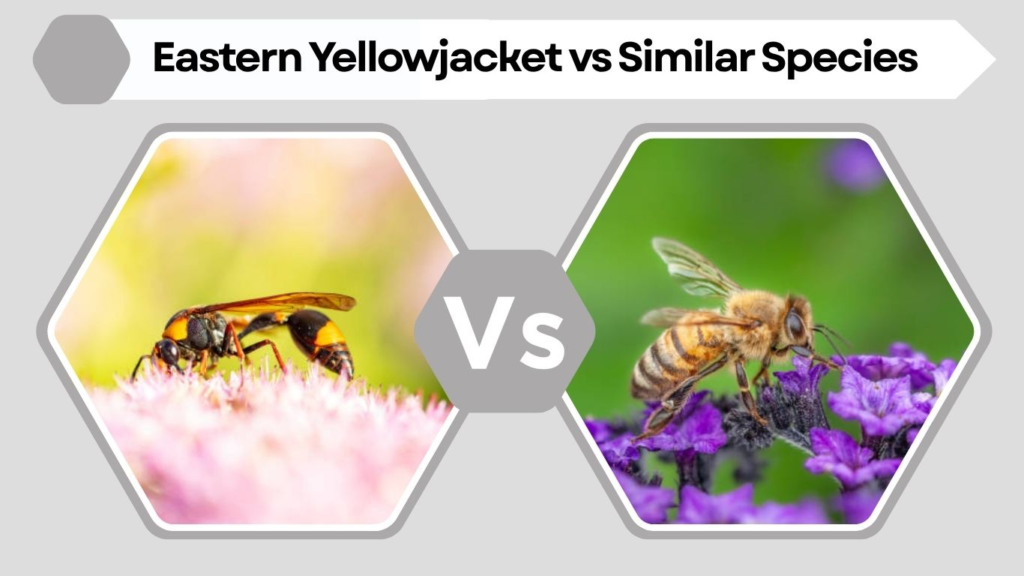
Understanding how Eastern yellowjackets compare to other insects helps avoid confusion:
| Feature | Eastern Yellowjacket | German Yellowjacket | Honeybee | Hornet |
| Nest Location | Underground | Underground/structures | Hives | Aerial |
| Aggression | High | Very high | Low | Moderate |
| Sting Ability | Multiple | Multiple | Once | Multiple |
| Body Type | Smooth, bright | Similar | Hairy | Larger |
This comparison highlights why yellowjackets, especially Eastern species, are often considered more problematic around humans.
Ecological Importance of Eastern Yellowjackets
Despite their reputation, Eastern yellowjackets play an important role in the environment.
Natural Pest Control
They help regulate insect populations by preying on:
- Flies
- Caterpillars
- Other garden pests
This makes them beneficial in agricultural and natural ecosystems.
Pollination Role
While not as efficient as bees, yellowjackets do contribute to minor pollination when feeding on nectar.
Ecosystem Balance
As both predators and scavengers, they help maintain ecological balance by recycling organic matter and controlling pest outbreaks.
FAQs
How can you safely locate an Eastern yellowjacket nest?
You can often identify a nest by observing wasp activity. Watch where multiple yellowjackets repeatedly enter and exit the ground or a structure. However, keep a safe distance—disturbing the area can trigger aggressive behavior.
What time of day are Eastern yellowjackets most active?
They are most active during the daytime, especially in warm, sunny conditions. Activity usually peaks in the afternoon when foraging is at its highest.
Do Eastern yellowjackets die after stinging?
No, unlike honeybees, Eastern yellowjackets do not die after stinging. Their smooth stingers allow them to sting multiple times.
Can Eastern yellowjackets damage property?
Yes, in some cases. If they build nests inside walls or structures, they can cause minor damage by chewing materials to expand their nest.
What smells or scents repel Eastern yellowjackets?
Certain natural scents like peppermint oil, eucalyptus, citronella, and clove oil are known to repel yellowjackets. These can be used as part of a prevention strategy around outdoor spaces.
Conclusion
The Eastern yellowjacket is a fascinating yet often misunderstood insect. While its aggressive nature and painful sting make it a common pest, it also provides valuable ecological benefits by controlling other insect populations.
By understanding how to identify, avoid, and manage these wasps, you can reduce risks while appreciating their role in the environment. Whether you’re dealing with a nest in your yard or simply encountering them outdoors, awareness is the key to staying safe and informed.
