
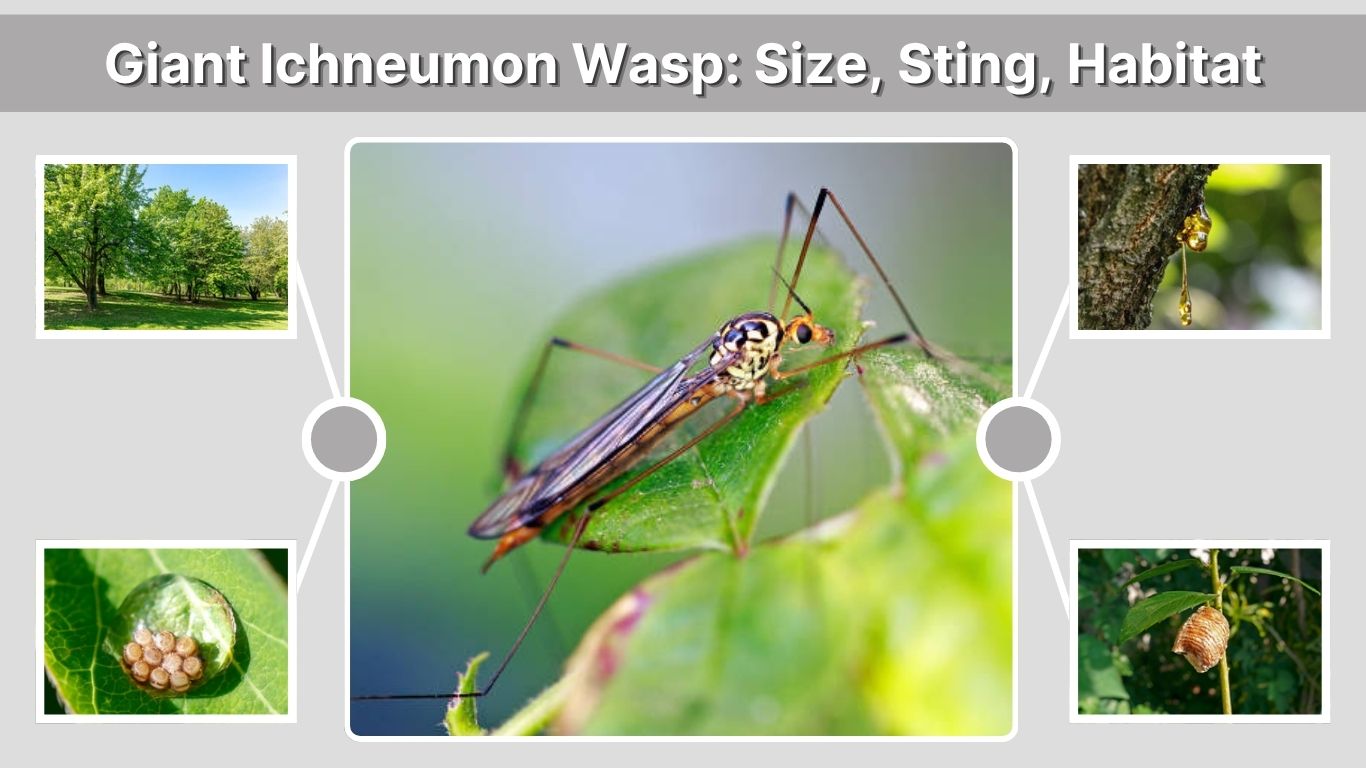
The giant ichneumon wasp is one of the most fascinating—and often misunderstood—insects in the natural world. Belonging to the family Ichneumonidae, this wasp is best known for its unusually long “tail,” which can make it look intimidating at first glance.
One of the most well-known species is Megarhyssa macrurus, commonly found in North America. Despite its alarming appearance, this insect is not aggressive toward humans and plays an important role in maintaining ecological balance.
Unlike typical wasps that build nests or hunt prey, the giant ichneumon wasp is a parasitoid, meaning it lays its eggs inside or on other insects. This unique behavior makes it both intriguing and beneficial to the environment.
Giant Ichneumon Wasp Physical Characteristics
Size and Appearance
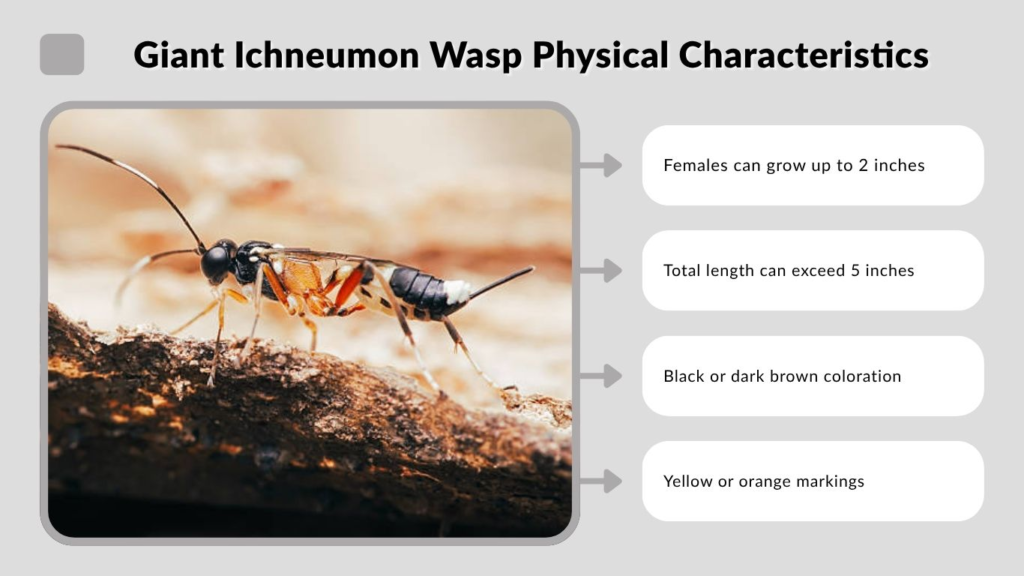
The giant ichneumon wasp is notable for its impressive size. Females can grow up to 2 inches (5 cm) in body length, but when including the long ovipositor, their total length can exceed 5 inches (12–13 cm).
Their bodies are slender and elongated, often featuring:
- Black or dark brown coloration
- Yellow or orange markings
- Transparent wings with a delicate structure
This striking appearance often causes people to mistake them for dangerous stinging insects, but their looks are more dramatic than their behavior.
The Long “Tail” (Ovipositor)
Perhaps the most distinctive feature of the giant ichneumon wasp is its long, thread-like appendage extending from the abdomen. This structure is called an ovipositor, and it is not a stinger.
The ovipositor can be several times longer than the wasp’s body and is used for a very specific purpose: laying eggs. It consists of three parts that work together to drill into wood.
Key facts about the ovipositor:
- It is used only by females
- It cannot be used to sting humans in defense
- It is designed to penetrate wood, not skin
This specialized tool allows the wasp to reach hidden hosts deep inside tree trunks.
Giant Ichneumon Wasp Habitat and Distribution
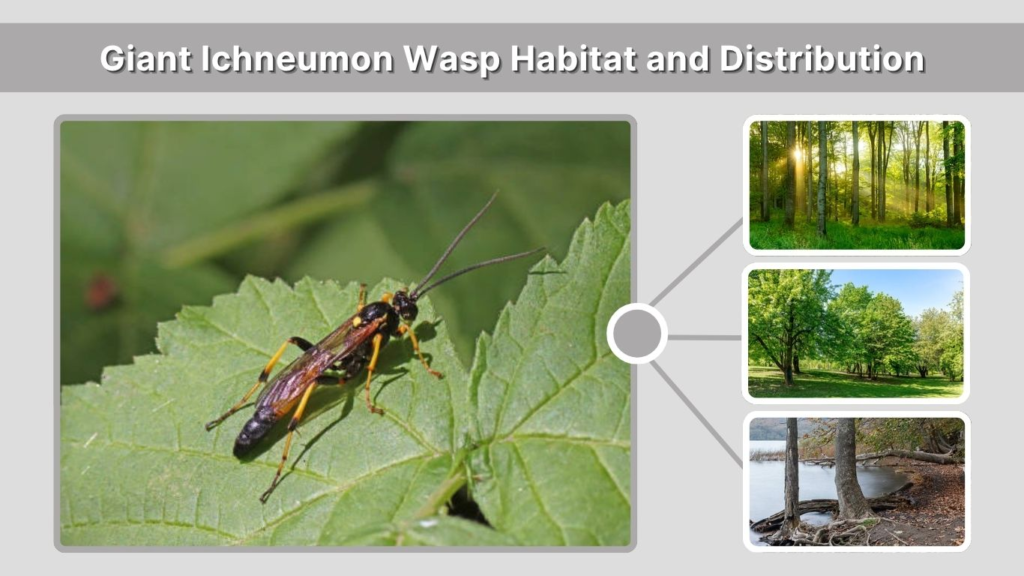
The giant ichneumon wasp is primarily found in North America, particularly in wooded and forested regions. It thrives in environments where trees—especially dead or dying ones—are abundant.
Common habitats include:
- Deciduous forests
- Woodlands and parks
- Areas with fallen logs or dead trees
These locations are ideal because they contain the larvae of wood-boring insects, which are essential for the wasp’s reproduction.
The wasp is most active during the late summer and early fall, when females can often be seen exploring tree trunks in search of hosts.
Giant Ichneumon Wasp Behavior and Lifestyle
How It Finds Hosts
The giant ichneumon wasp has a remarkable ability to locate prey hidden deep within wood. It primarily targets the larvae of wood-boring insects such as horntail wasps.
Using highly sensitive antennae, the female can detect:
- Vibrations made by larvae
- Chemical signals inside the wood
Once a suitable host is found, the wasp prepares to lay her eggs.
Egg-Laying Process
The egg-laying process of the giant ichneumon wasp is both complex and fascinating.
After identifying a host, the female positions herself on the surface of the wood and begins drilling with her ovipositor. This process can take several minutes to hours, depending on the depth of the host.
Steps involved:
- The ovipositor slowly penetrates the wood
- The wasp carefully guides it toward the host larva
- An egg is deposited directly onto or near the host
Once the egg hatches, the larva begins feeding on the host insect, eventually leading to its death.
Life Cycle of the Giant Ichneumon Wasp
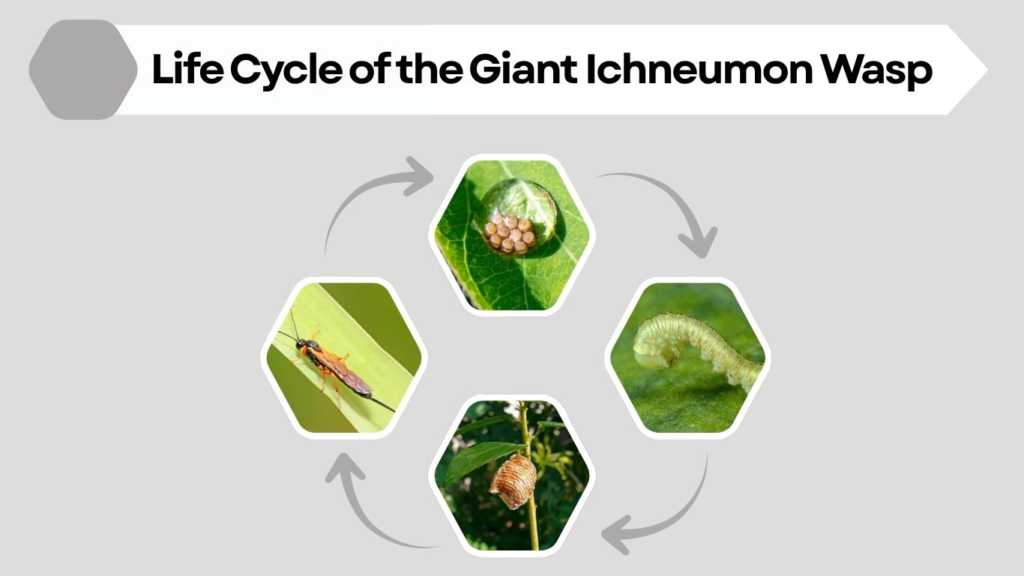
Like many insects, the giant ichneumon wasp undergoes a complete life cycle consisting of four stages:
- Egg
- Larva
- Pupa
- Adult
However, what makes this cycle unique is its parasitic nature.
After the egg is laid inside a host larva, the ichneumon larva begins to develop by feeding on the host. This ensures a steady food supply and protection from external threats.
Over time, the larva grows, eventually pupating within or near the remains of the host. After completing metamorphosis, an adult wasp emerges to continue the cycle.
What Does the Giant Ichneumon Wasp Eat?
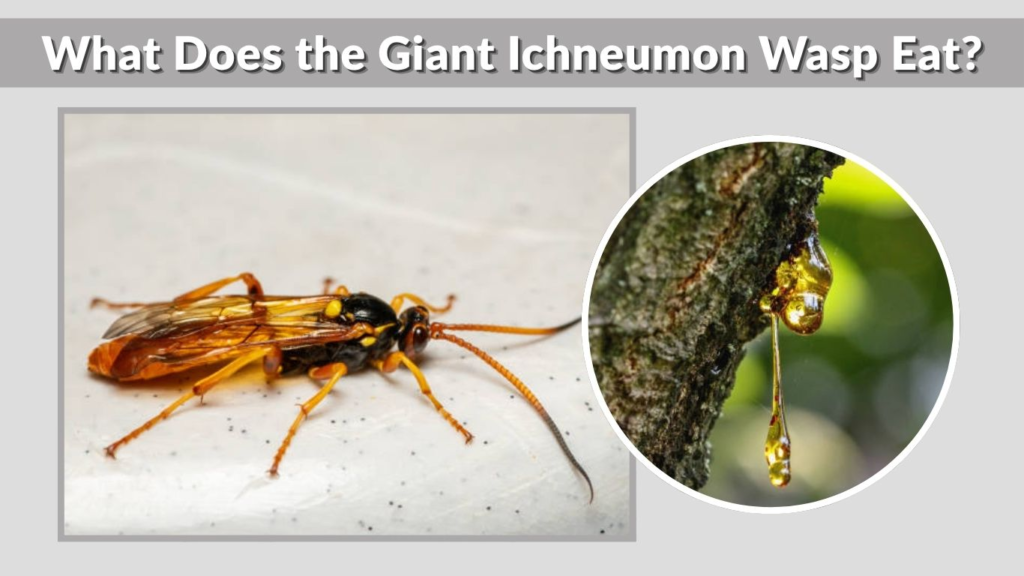
The diet of the giant ichneumon wasp varies depending on its life stage.
Adult Diet
Adult wasps do not hunt or consume other insects. Instead, they feed on:
- Nectar from flowers
- Tree sap
- Other sugary substances
This diet provides them with the energy needed for flight and reproduction.
Larval Feeding Behavior
The larval stage is very different. After hatching, the ichneumon larva feeds on the host insect it was laid upon.
Key points:
- The larva consumes the host gradually
- It keeps the host alive as long as possible
- Eventually, the host is killed
This parasitic feeding strategy ensures maximum nutrition and survival for the developing wasp.
Is the Giant Ichneumon Wasp Dangerous?
Can It Sting Humans?
One of the biggest concerns people have is whether the giant ichneumon wasp can sting. The answer is no, it does not pose a threat to humans.
Although it has a long “tail,” this is actually an ovipositor, not a stinger. It is specialized for laying eggs and cannot be used effectively for defense.
Aggression Level
Giant ichneumon wasps are:
- Non-aggressive
- Solitary
- Focused on reproduction rather than defense
They do not attack humans and will usually ignore people completely.
Myths vs Facts
Myth: The long tail is a dangerous stinger
Fact: It is an egg-laying organ used only for reproduction
Myth: They attack people
Fact: They rarely interact with humans at all
Myth: They damage wood structures
Fact: They do not harm wood; they only drill to reach insects inside
Understanding these facts helps reduce unnecessary fear.
Ecological Importance
The giant ichneumon wasp plays a crucial role in the ecosystem.
Natural Pest Control
By targeting wood-boring insects, these wasps help:
- Control pest populations
- Prevent excessive tree damage
- Maintain forest health
They act as a natural biological control agent, reducing the need for chemical pesticides.
Contribution to Ecosystem Balance
Their presence indicates a healthy environment. By regulating insect populations, they help maintain biodiversity and ecological stability.
Giant Ichneumon Wasp vs Other Wasps
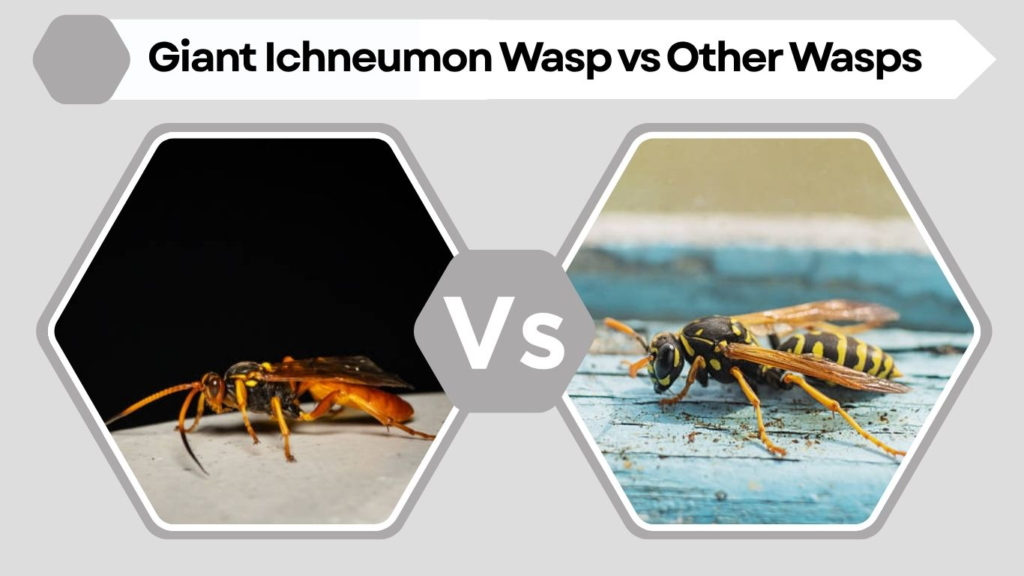
It’s easy to confuse the giant ichneumon wasp with more aggressive species like hornets or yellowjackets, but they are very different.
| Feature | Giant Ichneumon Wasp | Hornets/Yellowjackets |
| Behavior | Non-aggressive | Can be aggressive |
| Sting | Does not sting humans | Can sting repeatedly |
| Social Structure | Solitary | Social colonies |
| Purpose | Parasitic (lays eggs in hosts) | Predatory/scavenger |
The key takeaway: giant ichneumon wasps are harmless compared to typical stinging wasps.
Interesting Facts
- The ovipositor can be longer than the wasp’s body
- It can drill deep into solid wood with precision
- It targets very specific host insects
- It is one of the most specialized parasitoid insects in nature
These features make it a standout species in the insect world.
Should You Be Concerned?
In most cases, there is no reason to worry about giant ichneumon wasps.
When to Leave Them Alone
- If you see one on a tree, it is likely laying eggs
- Avoid disturbing it during this process
Benefits of Having Them Around
- They reduce harmful insect populations
- They do not damage property
- They pose no threat to people or pets
Safety Tips
- Observe from a distance
- Do not attempt to handle them
- Educate others to prevent unnecessary fear
FAQs
How long is the ovipositor of a giant ichneumon wasp?
The ovipositor can be extremely long—often 2 to 3 times the length of the wasp’s body, sometimes reaching over 4 inches (10 cm).
Do male giant ichneumon wasps have a long tail?
No, only females have the long ovipositor. Males look similar in color but lack the long tail-like structure.
What trees do giant ichneumon wasps prefer?
They are commonly found on dead or dying hardwood trees, especially those infested with wood-boring insects like horntail larvae.
Can the ovipositor break while drilling into wood?
Yes, it can occasionally break, but it is flexible and specially adapted to withstand drilling into wood.
Why do people often mistake them for dangerous insects?
Their large size and long “tail” make them look threatening, leading many people to assume they can sting—but this is a misunderstanding.
Final Thoughts
The giant ichneumon wasp may look intimidating, but it is actually a harmless and highly beneficial insect. Its unique biology, especially the use of its long ovipositor, makes it one of the most fascinating species in the insect world.
Rather than fearing it, understanding its role can help us appreciate the delicate balance of nature and the important work these insects do behind the scenes.
