
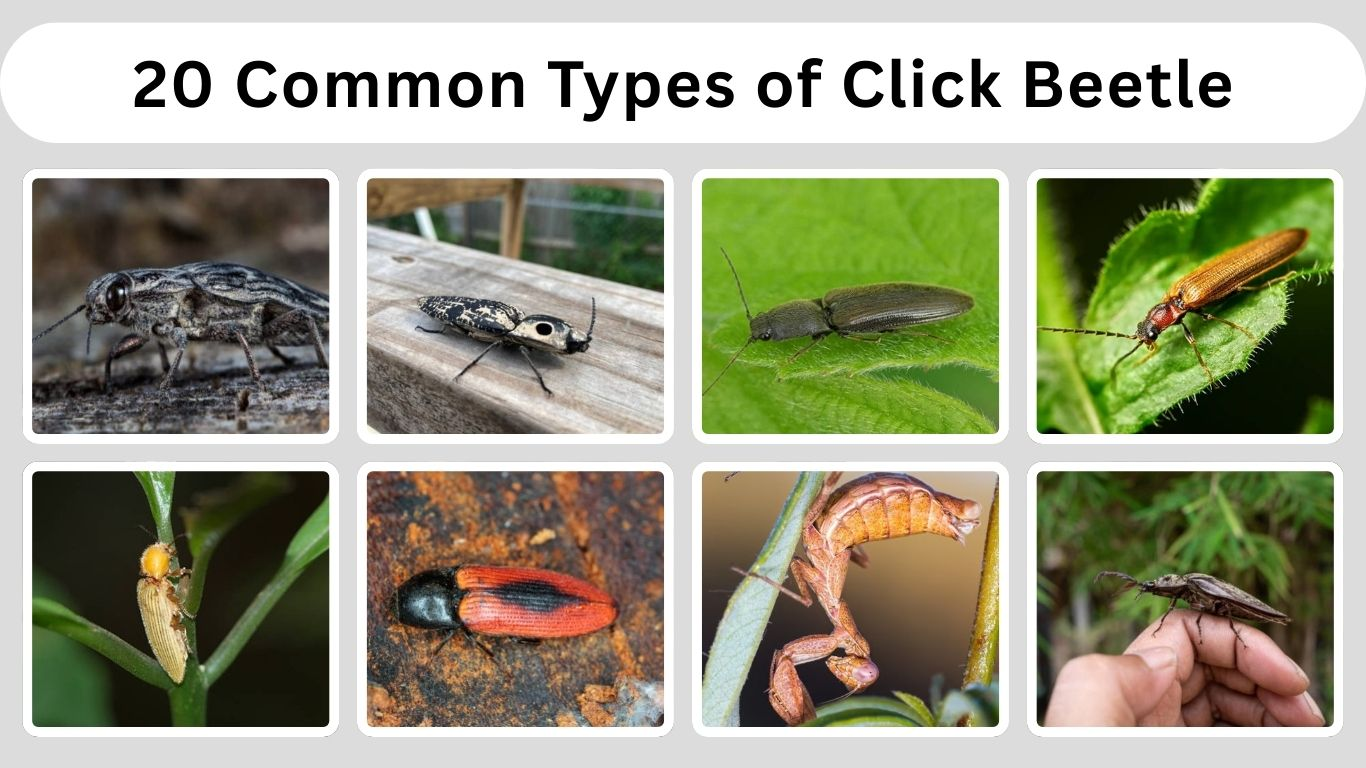
Click beetles are fascinating insects known for their remarkable ability to flip into the air with a distinctive clicking sound when threatened. With over 9,000 species worldwide, these beetles are commonly found in forests, gardens, and agricultural areas. While their adults primarily feed on plant material, the larvae, known as wireworms, are known for their potential to cause damage to plant roots, making click beetles both beneficial and, at times, problematic.
1. Eastern Eyed Click Beetle
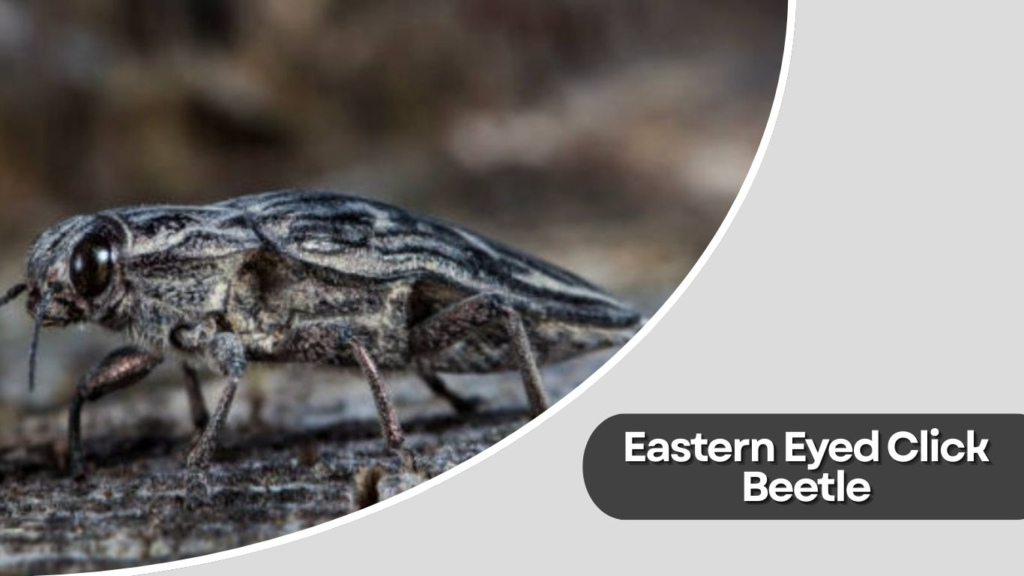
The eastern eyed click beetle is one of the most recognizable click beetles due to the large, eye-like spots on its thorax. These markings help deter predators by making the beetle appear larger and more threatening. Like other click beetles, it is famous for its ability to flip into the air with a sharp clicking sound when overturned.
Identification
- Large, elongated body shape
- Body length typically 25–45 mm
- Dark brown to black coloration
- Two large black “eye” spots outlined in white on the thorax
- Long, narrow wing covers with parallel sides
Habitat
Eastern eyed click beetles are commonly found in forests, woodlands, gardens, and areas with decaying wood. They prefer environments where rotting logs, tree stumps, and loose soil are available for larval development.
Behaviors
This beetle is mostly nocturnal and is often attracted to lights at night. When threatened or flipped onto its back, it snaps its body to produce a clicking sound that launches it into the air, helping it escape predators.
Diet
Adult eastern eyed click beetles feed very little and may consume plant matter or nectar occasionally. The larvae, known as wireworms, live in soil or decaying wood and feed on roots, organic matter, and other insects.
Life Cycle
The life cycle includes egg, larva, pupa, and adult stages. Larvae develop slowly and may take several years to mature. Pupation occurs in soil or rotting wood, and adults usually emerge during warm seasons.
2. Western Eyed Click Beetle
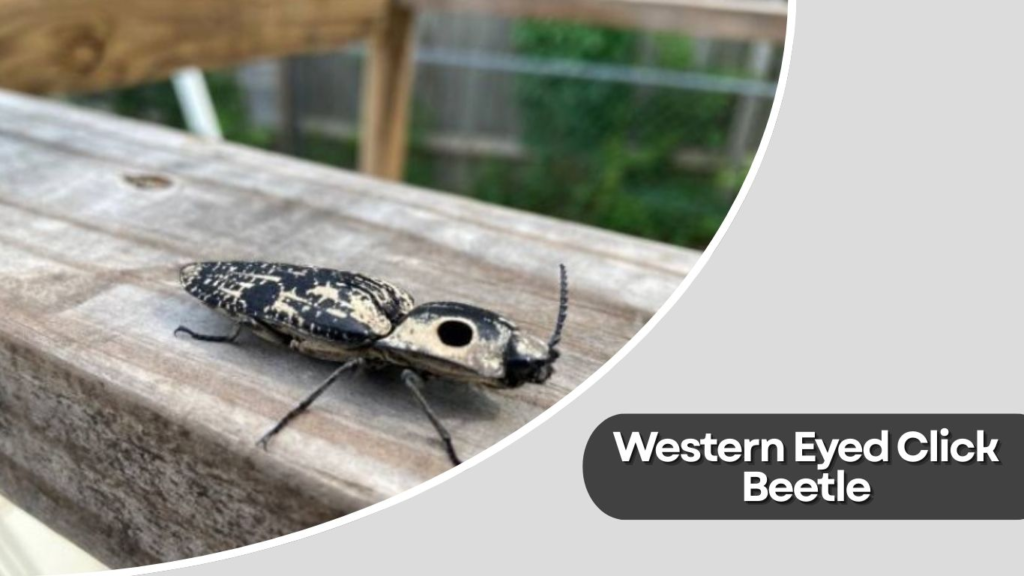
The western eyed click beetle is closely related to the eastern eyed click beetle and is best known for the large, eye-like markings on its thorax. These false eyes help scare predators, while the beetle’s clicking mechanism allows it to escape danger by flipping into the air. It is commonly found in western regions of North America.
Identification
- Large, elongated body
- Body length typically 25–45 mm
- Dark brown to black coloration
- Two prominent eye-like spots on the thorax
- Long, narrow wing covers
Habitat
Western eyed click beetles are usually found in forests, woodlands, grasslands, and areas with decaying wood. Larvae develop in soil, rotting logs, and near plant roots, where moisture and organic matter are available.
Behaviors
This species is mostly nocturnal and is often attracted to artificial lights. When disturbed or turned onto its back, it produces a loud clicking sound and flips into the air to right itself, a behavior typical of click beetles.
Diet
Adult beetles feed sparingly on plant material or nectar. The larvae, known as wireworms, feed on plant roots, seeds, decaying organic matter, and occasionally small insects.
Life Cycle
The life cycle consists of egg, larva, pupa, and adult stages. Larval development may take two to four years in the soil. Pupation occurs underground, and adults usually emerge in late spring or summer.
3. Common Click Beetle
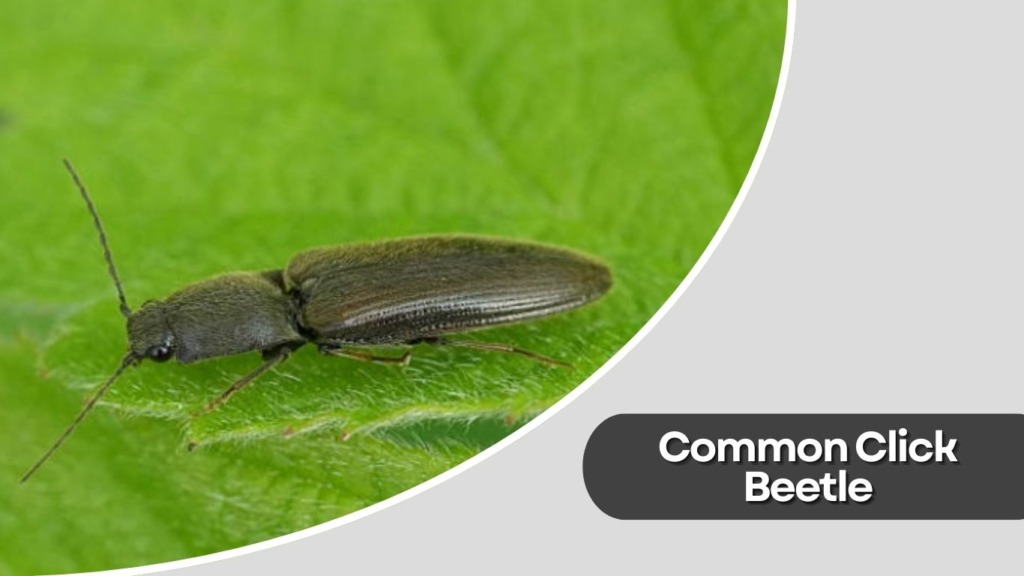
The common click beetle is a widely distributed click beetle known for its distinctive clicking mechanism, which helps it escape predators and flip upright when overturned. It is a familiar sight in gardens, fields, and wooded areas, where both adults and larvae play roles in the ecosystem.
Identification
- Slender, elongated body
- Body length typically 10–20 mm
- Brown to dark brown coloration
- Smooth, narrow wing covers
- Flexible body joint that produces a clicking sound
Habitat
Common click beetles are found in gardens, grasslands, agricultural fields, forests, and lawns. Larvae develop in soil, leaf litter, or decaying organic matter, especially in areas with plant roots.
Behaviors
This beetle is mostly nocturnal and often attracted to lights at night. When threatened or flipped onto its back, it snaps its body to create a clicking sound and jumps into the air to escape danger.
Diet
Adult common click beetles feed lightly on plant material, nectar, or pollen. The larvae, known as wireworms, feed on plant roots, seeds, and decaying organic matter and may become crop pests in some areas.
Life Cycle
The life cycle includes egg, larva, pupa, and adult stages. Larval development can take several years in the soil. Pupation occurs underground, and adults emerge during warm months.
4. Lined Click Beetle
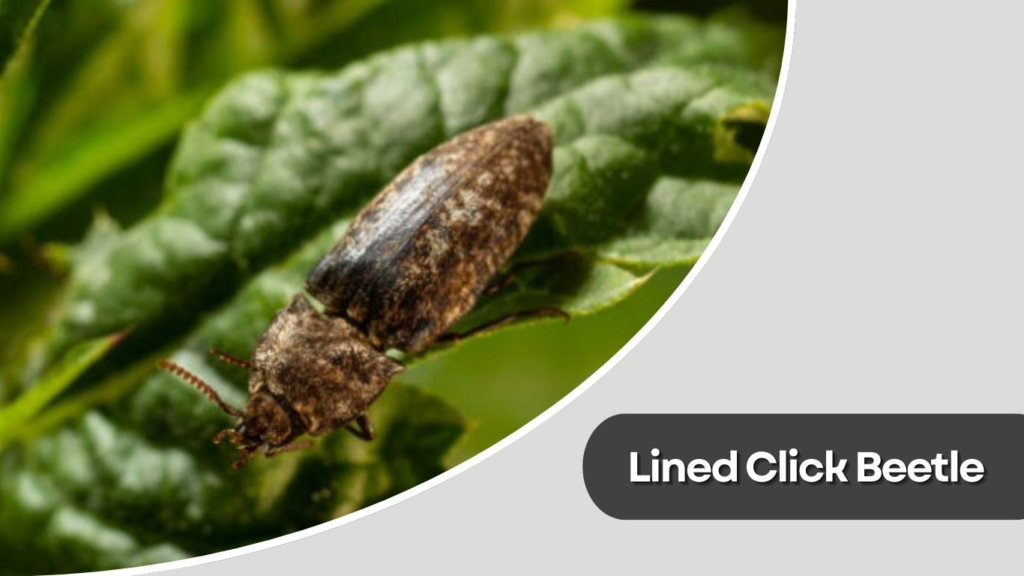
The lined click beetle is a slender click beetle recognized by the fine lines or stripes running along its wing covers. Like other click beetles, it uses a snapping mechanism to flip itself into the air when threatened. This species is commonly found in open habitats and wooded areas.
Identification
- Elongated, narrow body
- Body length typically 12–25 mm
- Brown to dark brown coloration
- Fine longitudinal lines on the wing covers
- Tapered ends with a flexible clicking joint
Habitat
Lined click beetles are commonly found in grasslands, gardens, agricultural fields, and forest edges. Larvae develop in soil rich in organic matter, especially where grasses and crops grow.
Behaviors
This beetle is mostly nocturnal and may be attracted to lights at night. When disturbed or overturned, it produces a sharp clicking sound and flips into the air to escape predators.
Diet
Adult lined click beetles feed on nectar, pollen, and soft plant material. The larvae, known as wireworms, live underground and feed on roots, seeds, and decaying organic matter.
Life Cycle
The life cycle includes egg, larva, pupa, and adult stages. Larvae may take two to four years to mature in the soil. Pupation occurs underground, and adults usually emerge in spring or early summer.
5. Brown Click Beetle
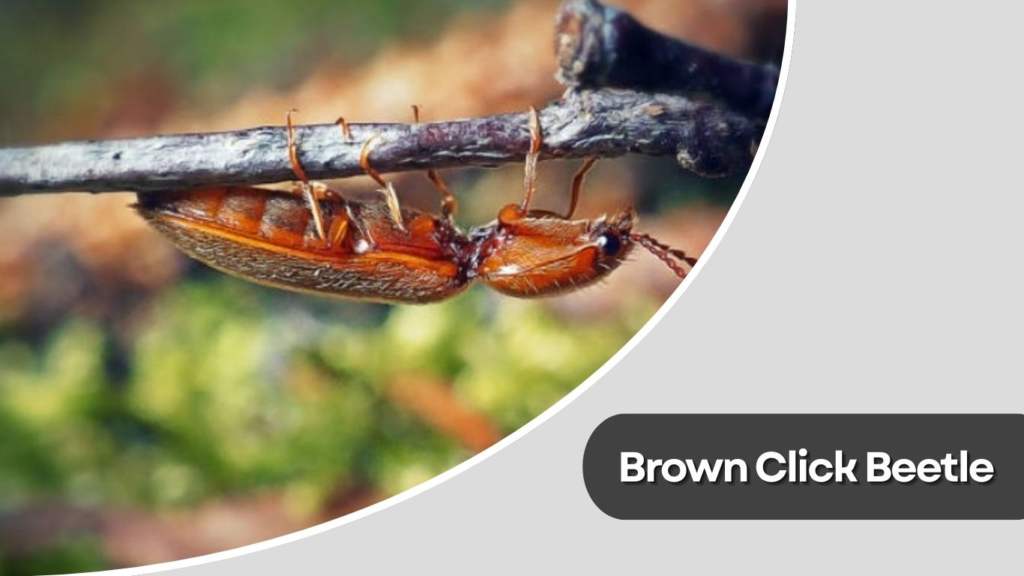
The brown click beetle is a common and widely distributed click beetle known for its simple coloration and strong clicking ability. Although less striking than eyed click beetles, it plays an important role in soil ecosystems. Its larvae, called wireworms, are often noticed more than the adults.
Identification
- Slender, elongated body
- Body length typically 10–22 mm
- Uniform brown to dark brown coloration
- Smooth wing covers with faint grooves
- Flexible thoracic joint used for clicking
Habitat
Brown click beetles are commonly found in gardens, lawns, agricultural fields, grasslands, and forest edges. They prefer areas with loose soil where larvae can easily burrow and feed on plant roots.
Behaviors
This beetle is mostly nocturnal and is often attracted to artificial lights. When flipped onto its back or threatened, it produces a sharp clicking sound and jumps into the air to escape predators.
Diet
Adult brown click beetles feed lightly on plant material, nectar, or pollen. The larvae live underground and feed on roots, seeds, and organic matter, sometimes causing damage to crops.
Life Cycle
The life cycle includes egg, larva, pupa, and adult stages. Larval development may take several years in the soil. Pupation occurs underground, and adults emerge during warm seasons.
6. Red Click Beetle
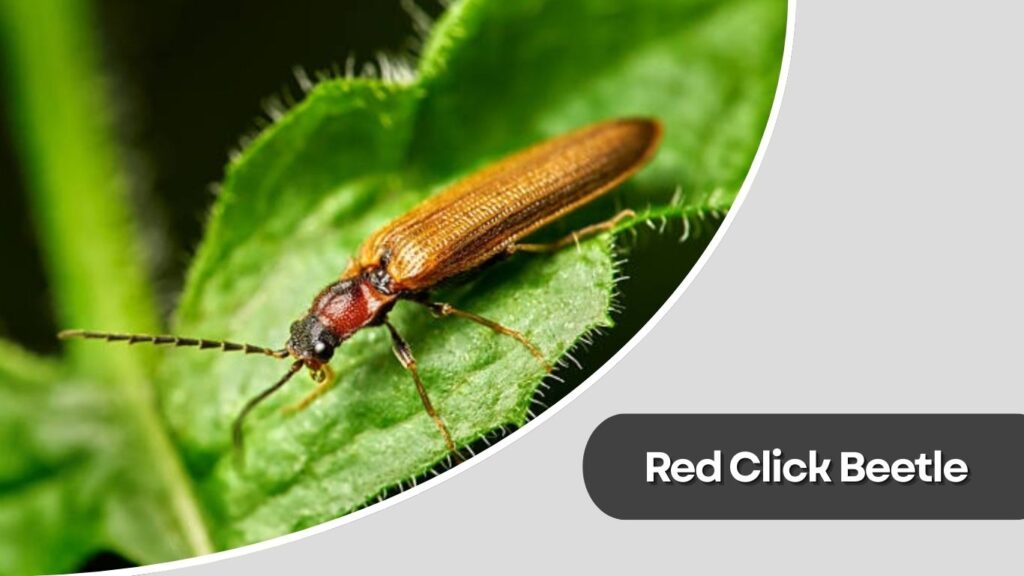
The red click beetle is a brightly colored click beetle known for its reddish to orange tones and the characteristic clicking jump used to escape predators. While adults are easy to spot because of their color, the larvae live hidden in soil and organic matter, where they develop slowly over time.
Identification
- Slender, elongated body
- Body length typically 12–25 mm
- Reddish-brown to orange-red coloration
- Smooth wing covers with fine lines
- Flexible body joint that produces a clicking sound
Habitat
Red click beetles are commonly found in grasslands, gardens, forest edges, and agricultural areas. They prefer habitats with loose soil, leaf litter, or decaying plant material where larvae can develop underground.
Behaviors
This species is mostly nocturnal and may be attracted to lights at night. When disturbed or overturned, it snaps its body to make a clicking sound and flips into the air to escape predators.
Diet
Adult red click beetles feed on nectar, pollen, and soft plant material. The larvae, known as wireworms, feed on plant roots, seeds, and decaying organic matter in the soil.
Life Cycle
The life cycle includes egg, larva, pupa, and adult stages. Larvae develop slowly over two to four years in soil. Pupation occurs underground, and adults usually emerge during warm months.
7. Golden Click Beetle
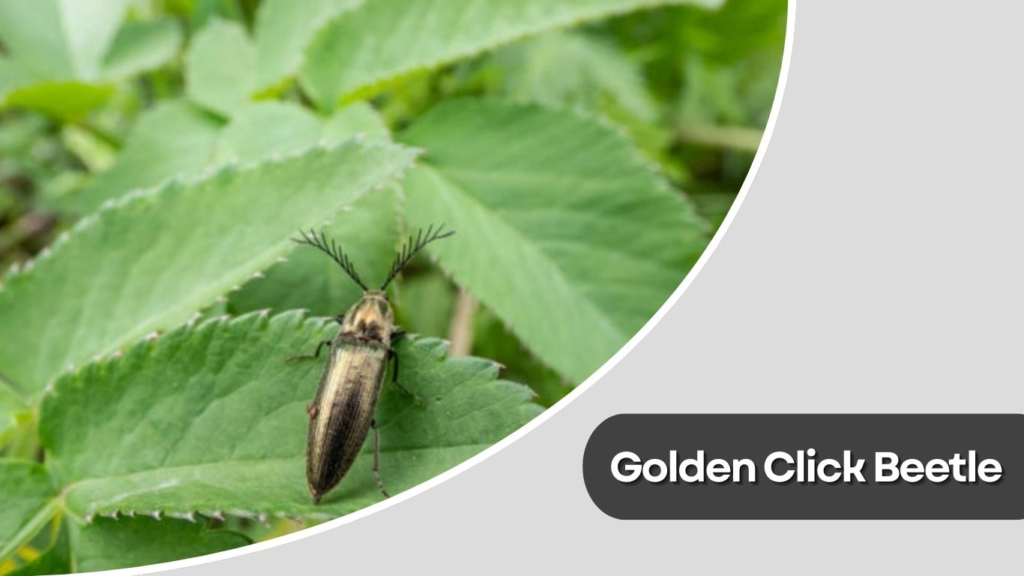
The golden click beetle is a visually striking click beetle recognized for its metallic or golden sheen. Like other members of the click beetle family, it can flip into the air with a sharp clicking sound when threatened. This species is commonly found in natural and semi-natural habitats where soil and organic matter are abundant.
Identification
- Slender, elongated body
- Body length typically 12–25 mm
- Golden, bronze, or metallic yellow coloration
- Smooth wing covers with a glossy shine
- Flexible thoracic joint used for clicking
Habitat
Golden click beetles are usually found in grasslands, woodlands, gardens, and forest edges. They prefer areas with loose, well-drained soil and plenty of organic matter, which supports larval development.
Behaviors
This beetle is mainly nocturnal and may be attracted to lights at night. When disturbed or flipped onto its back, it produces a distinct clicking sound and jumps into the air to escape predators.
Diet
Adult golden click beetles feed lightly on nectar, pollen, and plant material. The larvae, known as wireworms, live underground and feed on plant roots, seeds, and decaying organic matter.
Life Cycle
The life cycle includes egg, larva, pupa, and adult stages. Larval development often lasts several years in the soil. Pupation occurs underground, and adults emerge during warm seasons.
8. Yellow Click Beetle
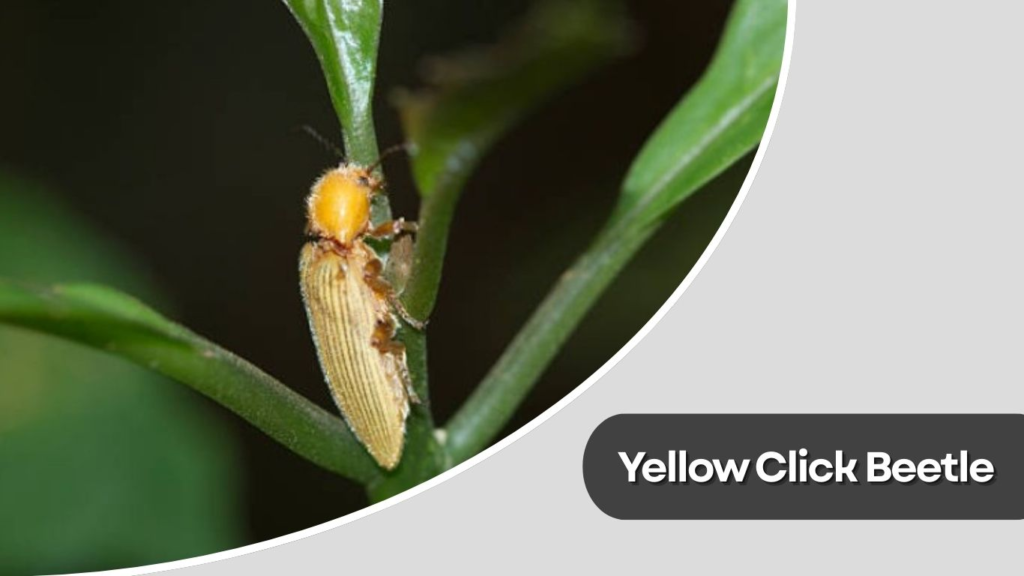
The yellow click beetle is a small to medium-sized click beetle recognized by its yellowish to light brown coloration. Like other click beetles, it uses a snapping mechanism to flip itself upright when disturbed. This species is commonly found in open landscapes and areas with loose, well-drained soil.
Identification
- Slender, elongated body
- Body length typically 10–20 mm
- Yellow to light brown coloration
- Smooth wing covers with faint lines
- Flexible body joint that produces a clicking sound
Habitat
Yellow click beetles are commonly found in grasslands, gardens, agricultural fields, and forest edges. They prefer habitats with sandy or loose soil where larvae can burrow and develop easily.
Behaviors
This beetle is mostly nocturnal and is often attracted to artificial lights. When threatened or overturned, it clicks and jumps into the air to escape predators.
Diet
Adult yellow click beetles feed on nectar, pollen, and soft plant material. The larvae, known as wireworms, live underground and feed on plant roots, seeds, and organic matter.
Life Cycle
The life cycle includes egg, larva, pupa, and adult stages. Larval development may take two to four years in soil. Pupation occurs underground, and adults emerge during warm seasons.
9. Black Click Beetle
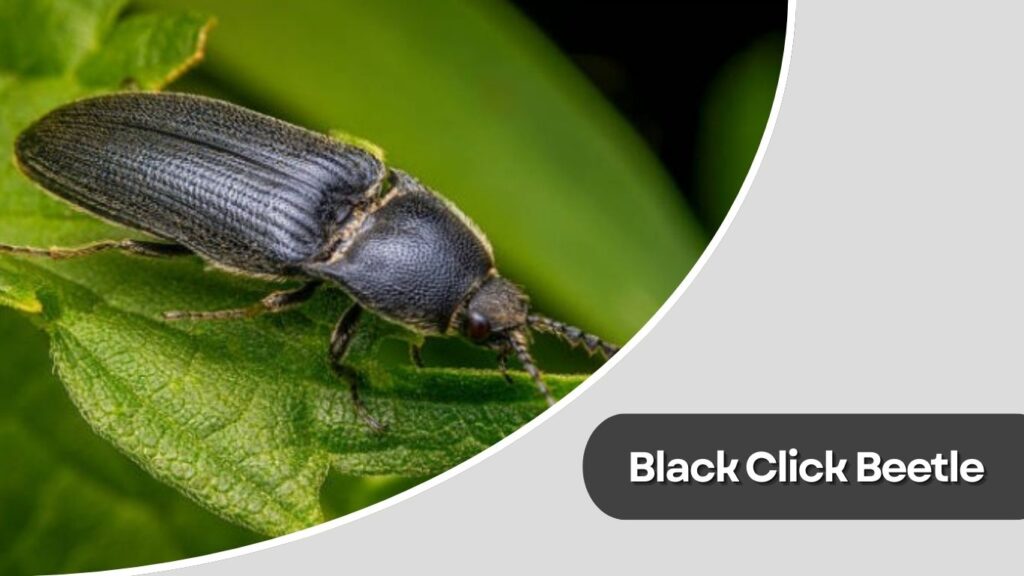
The black click beetle is a common and widely distributed click beetle recognized by its dark coloration and strong clicking ability. Although plain in appearance, it plays an important role in soil ecosystems. Its larvae, known as wireworms, are often more noticeable due to their impact on plant roots.
Identification
- Slender, elongated body
- Body length typically 12–30 mm
- Uniform black to dark brown coloration
- Smooth to slightly grooved wing covers
- Flexible thoracic joint used for clicking
Habitat
Black click beetles are found in gardens, lawns, agricultural fields, grasslands, and forest edges. They prefer areas with loose or sandy soil that allow larvae to burrow and develop underground.
Behaviors
This species is mostly nocturnal and frequently attracted to lights at night. When disturbed or flipped onto its back, it produces a sharp clicking sound and jumps into the air to escape predators.
Diet
Adult black click beetles feed lightly on plant material, nectar, or pollen. The larvae live in soil and feed on plant roots, seeds, and decaying organic matter, sometimes causing damage to crops.
Life Cycle
The life cycle includes egg, larva, pupa, and adult stages. Larval development can take several years underground. Pupation occurs in soil, and adults typically emerge during warm months.
10. Spotted Click Beetle
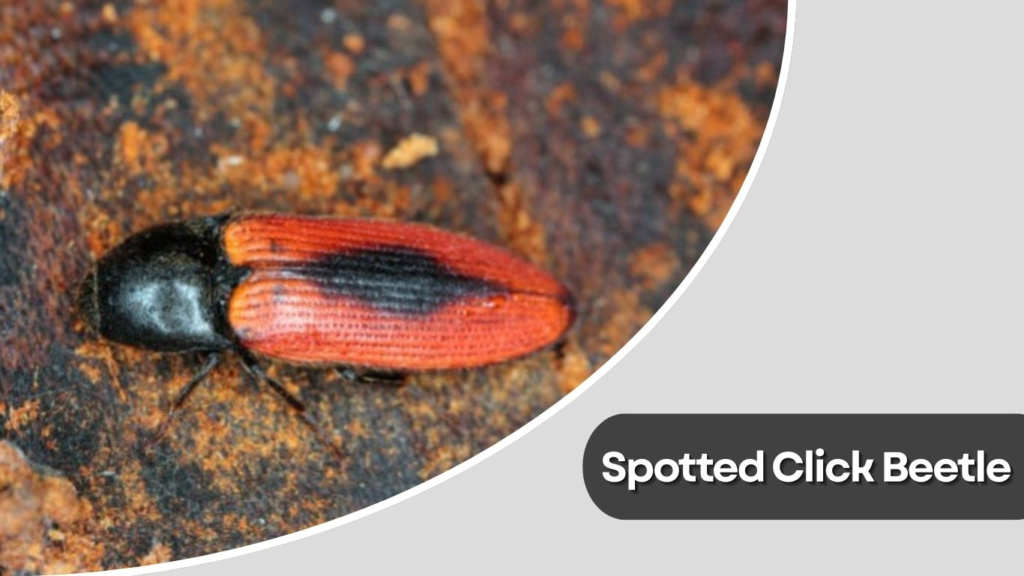
The spotted click beetle is recognized by the distinct spots or markings on its wing covers, which help differentiate it from uniformly colored click beetles. Like other members of the click beetle family, it can produce a clicking sound to flip itself upright and escape predators.
Identification
- Elongated, narrow body
- Body length typically 12–25 mm
- Brown to dark brown coloration with pale or light spots
- Smooth wing covers with visible markings
- Flexible thoracic joint for clicking
Habitat
Spotted click beetles are commonly found in woodlands, gardens, grasslands, and agricultural fields. They prefer areas with loose soil, leaf litter, or decaying organic matter where larvae can develop.
Behaviors
This beetle is mostly nocturnal and may be attracted to lights at night. When threatened or overturned, it snaps its body to create a clicking sound and jumps into the air to escape danger.
Diet
Adult spotted click beetles feed on nectar, pollen, and soft plant material. The larvae, known as wireworms, live in soil and feed on roots, seeds, and decaying organic matter.
Life Cycle
The life cycle includes egg, larva, pupa, and adult stages. Larvae develop underground for several years before pupating in soil. Adults usually emerge during warm seasons.
11. Wireworm Click Beetle
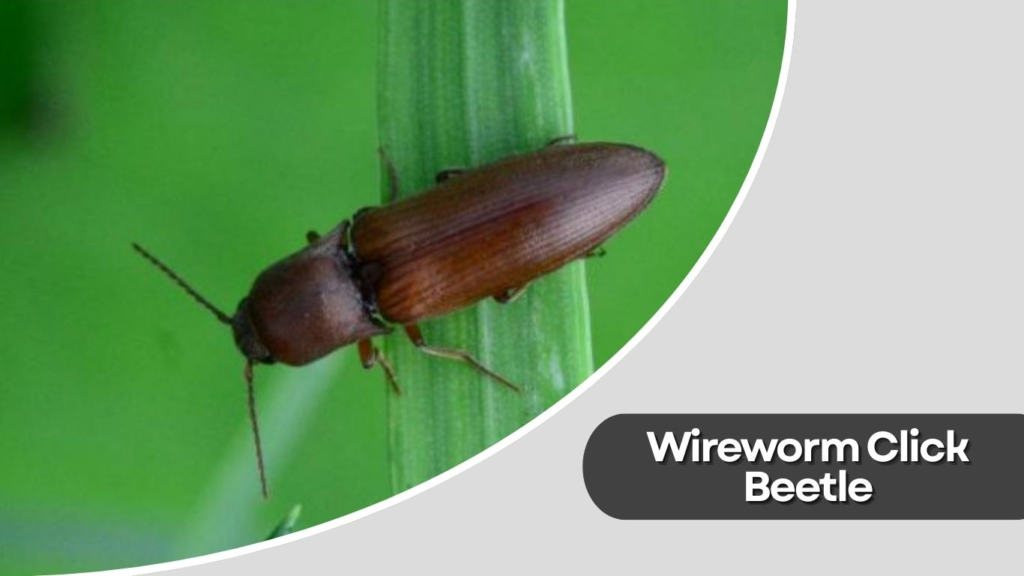
The wireworm click beetle is best known for its larval stage, called a wireworm, which is a common agricultural pest. While the adult beetle is less noticeable, the larvae can cause serious damage by feeding on seeds, roots, and underground stems of crops.
Identification
- Slender, elongated adult body
- Body length typically 10–25 mm
- Brown to dark brown coloration
- Narrow wing covers with parallel sides
- Larvae are hard, wire-like, and yellowish-brown
Habitat
Wireworm click beetles are commonly found in agricultural fields, grasslands, gardens, and pastures. They prefer moist, well-drained soils where grasses and crops are grown, providing abundant food for larvae.
Behaviors
Adults are mostly nocturnal and may be attracted to lights at night. When disturbed, they use the clicking mechanism to flip themselves upright. Larvae live underground and are active feeders for long periods.
Diet
Adult beetles feed lightly on plant material or nectar. The larvae feed on seeds, roots, and underground stems of crops such as corn, wheat, and potatoes.
Life Cycle
The life cycle includes egg, larva, pupa, and adult stages. Larval development can last two to five years in soil. Pupation occurs underground, and adults emerge during warm seasons.
12. Corn Wireworm Beetle
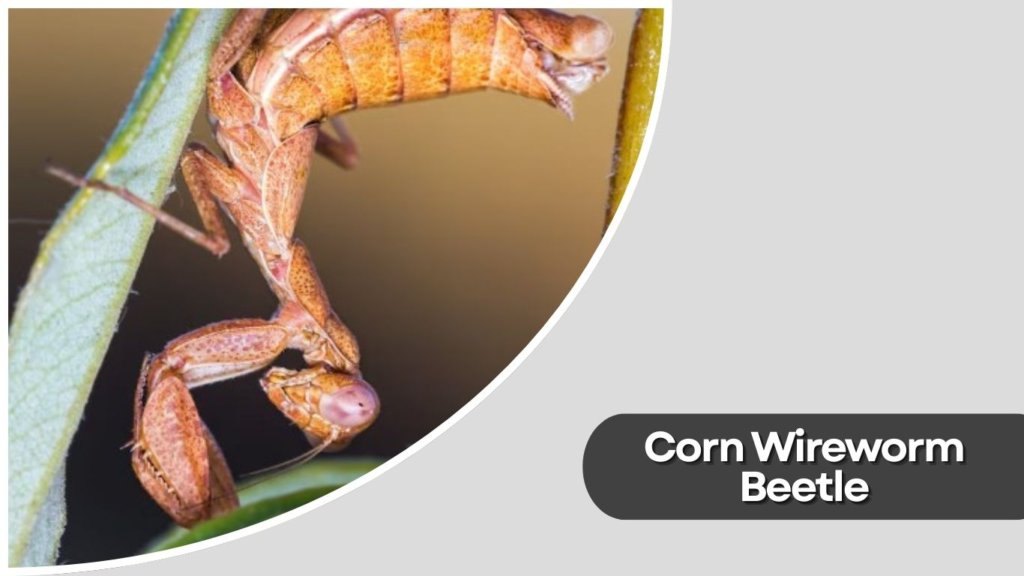
The corn wireworm beetle is a click beetle species best known for its damaging larval stage, which feeds on corn and other cereal crops. While adults are relatively harmless, the larvae can cause significant agricultural losses by attacking seeds and young plants underground.
Identification
- Slender, elongated adult body
- Body length typically 12–25 mm
- Brown to dark brown coloration
- Narrow wing covers with parallel sides
- Larvae are hard, wire-like, and yellow to reddish-brown
Habitat
Corn wireworm beetles are commonly found in agricultural fields, grasslands, and croplands where corn, wheat, and other cereals are grown. Larvae live in soil, especially in moist areas with abundant plant roots.
Behaviors
Adults are mainly nocturnal and may be attracted to lights. When disturbed, they use the clicking mechanism to flip into the air. Larvae remain underground and feed continuously, often going unnoticed until crop damage appears.
Diet
Adult beetles feed lightly on plant material or nectar. Larvae feed on corn seeds, roots, underground stems, and other crop plants, making them serious agricultural pests.
Life Cycle
The life cycle includes egg, larva, pupa, and adult stages. Larval development can take two to five years in the soil. Pupation occurs underground, and adults emerge during warm seasons.
13. Sugarcane Click Beetle
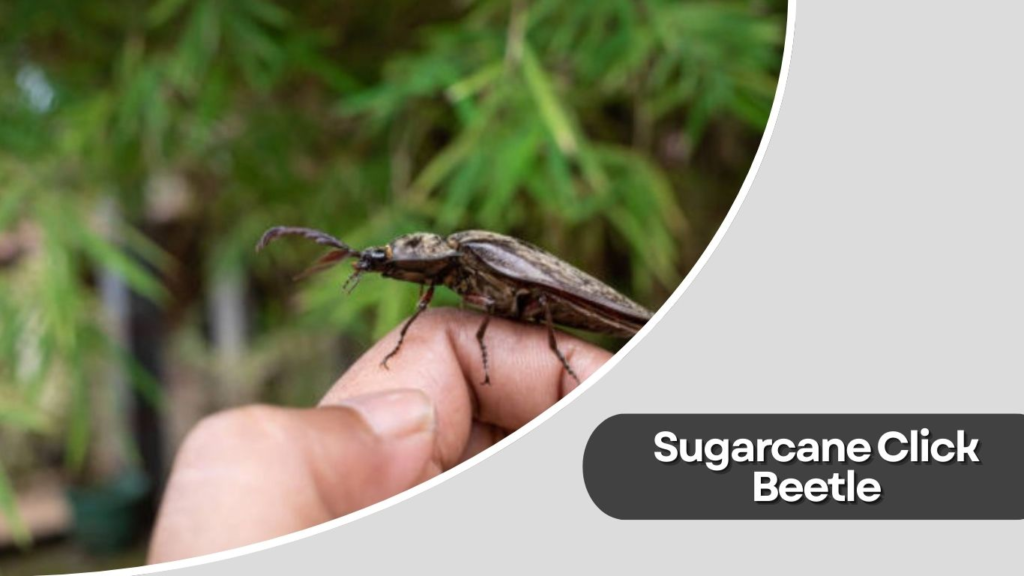
The sugarcane click beetle is an agricultural click beetle species mainly known for its damaging larval stage. It is commonly associated with sugarcane fields and other grassy crops. While adults are rarely noticed, the larvae can cause serious underground damage to roots and stems.
Identification
- Slender, elongated adult body
- Body length typically 12–28 mm
- Brown to dark brown coloration
- Narrow wing covers with parallel sides
- Larvae are hard, wire-like, and yellowish-brown
Habitat
Sugarcane click beetles are commonly found in sugarcane plantations, grasslands, agricultural fields, and tropical farming regions. Larvae live in soil rich in plant roots and organic matter.
Behaviors
Adults are mostly nocturnal and may be attracted to lights at night. When disturbed, they use the clicking mechanism to flip upright. Larvae remain underground and feed continuously on plant roots.
Diet
Adult beetles feed lightly on plant material or nectar. Larvae feed on sugarcane roots, underground stems, and other grass crops, sometimes causing reduced growth or plant death.
Life Cycle
The life cycle includes egg, larva, pupa, and adult stages. Larval development may last several years in soil. Pupation occurs underground, and adults usually emerge during warm and humid seasons.
14. Plains Click Beetle
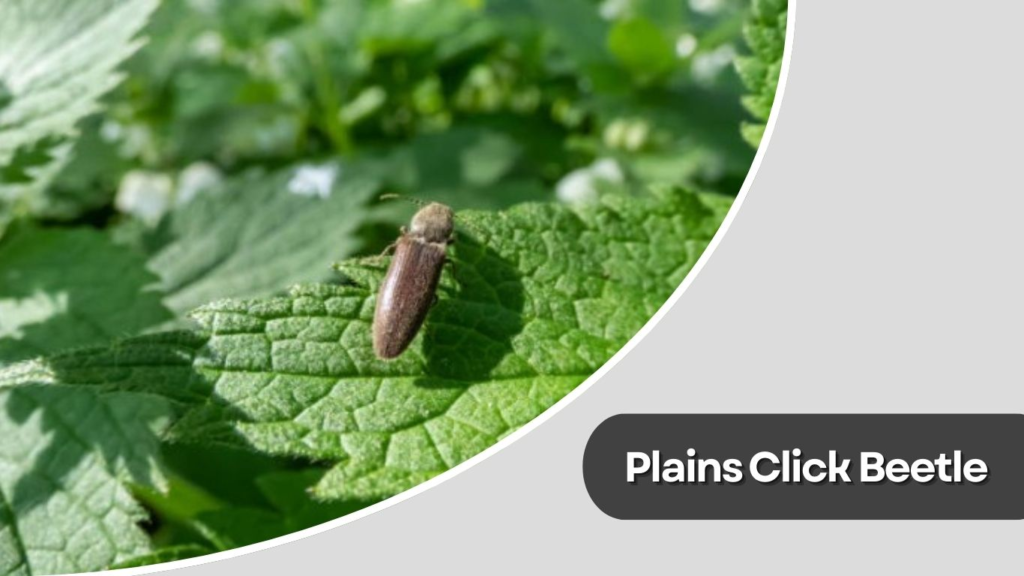
The plains click beetle is a click beetle species commonly found in open landscapes such as grasslands and agricultural plains. It is well adapted to dry, open environments and is known for the strong clicking action it uses to escape predators. Its larvae live hidden in soil for long periods.
Identification
- Slender, elongated body
- Body length typically 10–22 mm
- Light brown to dark brown coloration
- Smooth wing covers with faint grooves
- Flexible thoracic joint for clicking
Habitat
Plains click beetles are mainly found in grasslands, prairies, farmland, and open fields. They prefer loose, well-drained soil where larvae can burrow and feed on underground plant material.
Behaviors
This species is mostly nocturnal and may be attracted to lights at night. When overturned or threatened, it produces a sharp clicking sound and jumps into the air to escape predators.
Diet
Adult plains click beetles feed lightly on plant material, nectar, or pollen. The larvae, known as wireworms, live in soil and feed on grass roots, seeds, and decaying organic matter.
Life Cycle
The life cycle includes egg, larva, pupa, and adult stages. Larval development can take several years underground. Pupation occurs in soil, and adults emerge during warm seasons.
15. Woodland Click Beetle
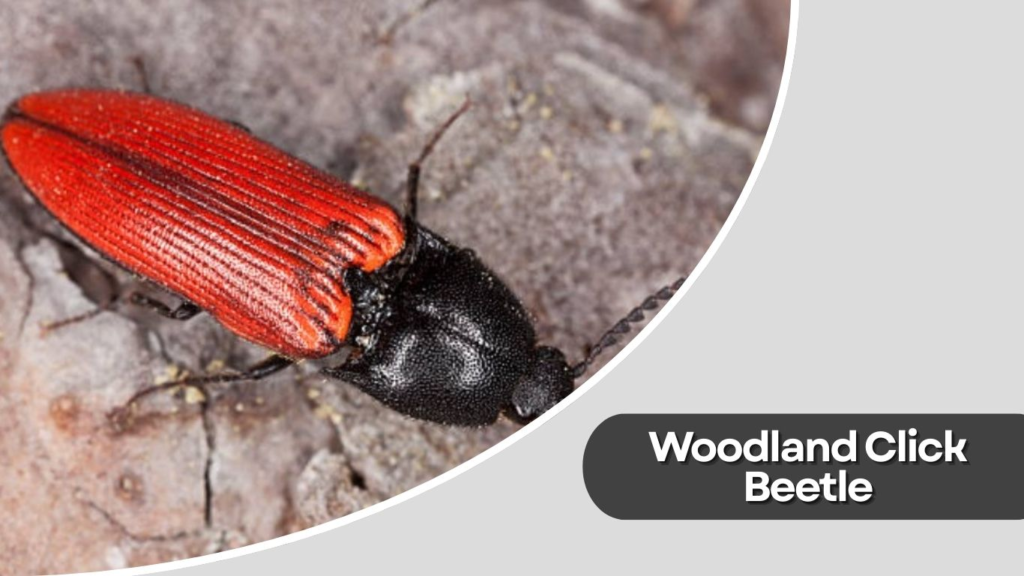
The woodland click beetle is commonly found in forested and wooded environments where soil, leaf litter, and decaying wood are abundant. Like other click beetles, it is known for its clicking mechanism that helps it escape predators and flip upright when overturned.
Identification
- Slender, elongated body
- Body length typically 12–28 mm
- Brown to dark brown coloration
- Smooth wing covers with subtle markings
- Flexible thoracic joint that produces a clicking sound
Habitat
Woodland click beetles inhabit forests, woodlands, forest edges, and areas with rich leaf litter. Larvae develop in soil, rotting wood, or near plant roots within shaded environments.
Behaviors
This species is mostly nocturnal and may be attracted to lights at night. When disturbed or flipped onto its back, it clicks sharply and jumps into the air to escape danger.
Diet
Adult beetles feed lightly on nectar, pollen, and soft plant material. The larvae, known as wireworms, feed on roots, decaying organic matter, and sometimes small soil insects.
Life Cycle
The life cycle includes egg, larva, pupa, and adult stages. Larval development often lasts several years underground. Pupation occurs in soil or rotting wood, and adults emerge during warm seasons.
16. Garden Click Beetle
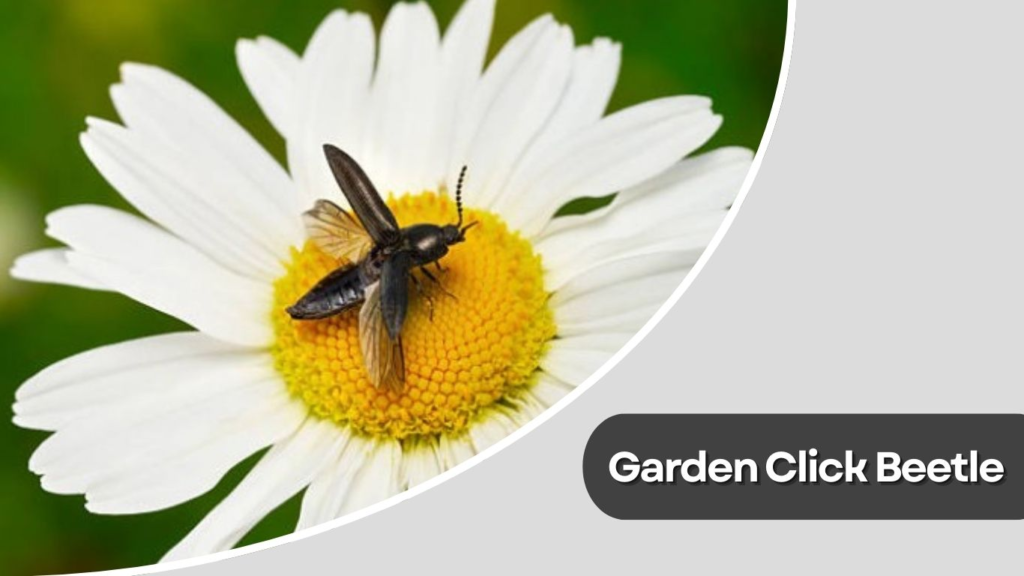
The garden click beetle is a small to medium-sized click beetle commonly encountered in home gardens and landscaped areas. It is best known for its clicking jump, which helps it escape predators. While adults are harmless, the larvae may occasionally affect garden plants.
Identification
- Slender, elongated body
- Body length typically 10–20 mm
- Light brown to dark brown coloration
- Smooth wing covers with faint lines
- Flexible thoracic joint used for clicking
Habitat
Garden click beetles are commonly found in gardens, lawns, flower beds, and vegetable plots. They prefer loose, moist soil rich in organic matter, which supports larval development.
Behaviors
This beetle is mostly nocturnal and may be attracted to outdoor lights. When disturbed or flipped onto its back, it produces a clicking sound and jumps into the air to right itself.
Diet
Adult garden click beetles feed on nectar, pollen, and soft plant material. The larvae, known as wireworms, live underground and feed on roots, seeds, and decaying organic matter.
Life Cycle
The life cycle includes egg, larva, pupa, and adult stages. Larval development can take two to four years in soil. Pupation occurs underground, and adults emerge during warm months.
17. Metallic Click Beetle
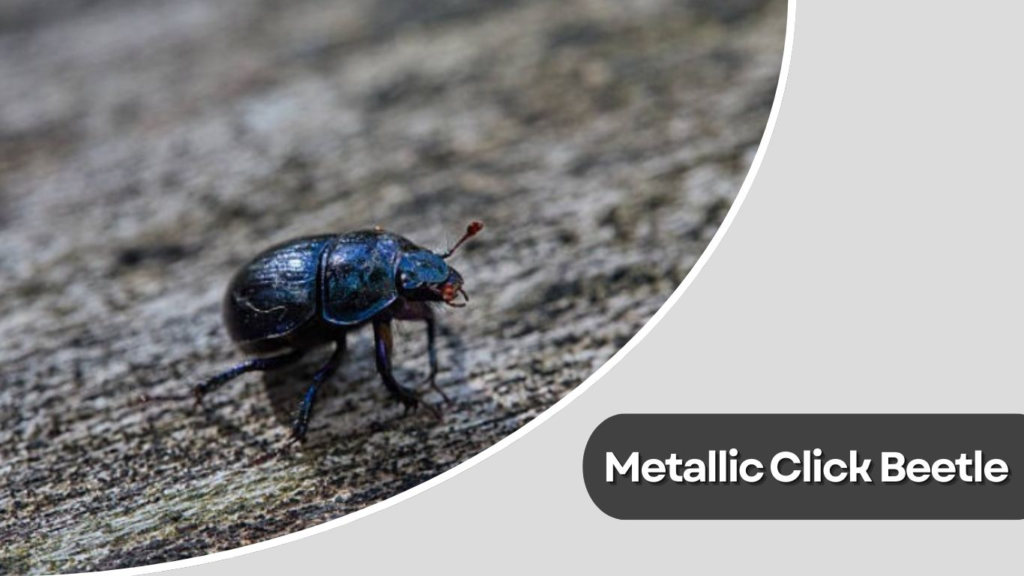
The metallic click beetle is known for its shiny, iridescent body that reflects metallic shades under light. Like other click beetles, it uses a snapping mechanism to flip itself upright when threatened. This species is commonly noticed due to its bright appearance compared to duller click beetles.
Identification
- Slender, elongated body
- Body length typically 12–30 mm
- Metallic green, bronze, or bluish coloration
- Smooth, glossy wing covers
- Flexible thoracic joint used for clicking
Habitat
Metallic click beetles are found in woodlands, gardens, grasslands, and forest edges. They prefer habitats with loose soil, leaf litter, and decaying organic matter where larvae can develop underground.
Behaviors
This beetle is mostly nocturnal and may be attracted to lights at night. When disturbed or overturned, it produces a sharp clicking sound and jumps into the air to escape predators.
Diet
Adult metallic click beetles feed lightly on nectar, pollen, and plant material. The larvae, known as wireworms, live in soil and feed on plant roots, seeds, and organic matter.
Life Cycle
The life cycle includes egg, larva, pupa, and adult stages. Larval development may last several years underground. Pupation occurs in soil, and adults usually emerge during warm seasons.
18. Blue Click Beetle
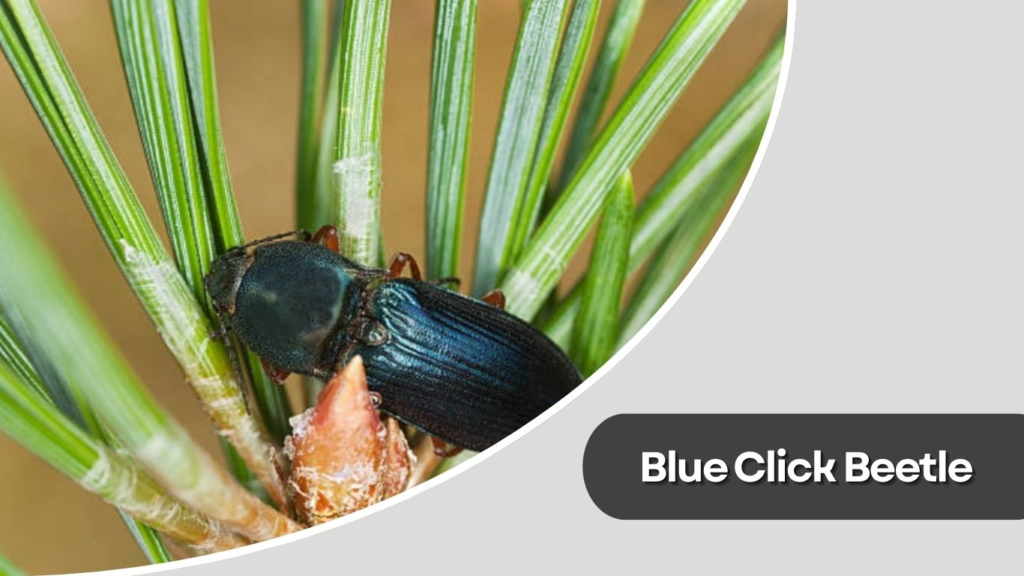
The blue click beetle is a visually striking click beetle recognized for its bluish or steel-blue sheen. Like other click beetles, it can snap its body to produce a clicking sound and flip into the air when threatened. Its bright coloration helps distinguish it from more common brown or black species.
Identification
- Slender, elongated body
- Body length typically 12–28 mm
- Metallic blue to bluish-green coloration
- Smooth, glossy wing covers
- Flexible thoracic joint used for clicking
Habitat
Blue click beetles are commonly found in woodlands, forest edges, gardens, and grassy areas. They prefer habitats with loose soil, leaf litter, and decaying organic matter that support larval development.
Behaviors
This species is mostly nocturnal and is often attracted to lights at night. When disturbed or overturned, it produces a sharp clicking sound and jumps into the air to escape predators.
Diet
Adult blue click beetles feed lightly on nectar, pollen, and soft plant material. The larvae, known as wireworms, live underground and feed on roots, seeds, and decaying organic matter.
Life Cycle
The life cycle includes egg, larva, pupa, and adult stages. Larval development can last several years in soil. Pupation occurs underground, and adults emerge during warm seasons.
19. Green Click Beetle
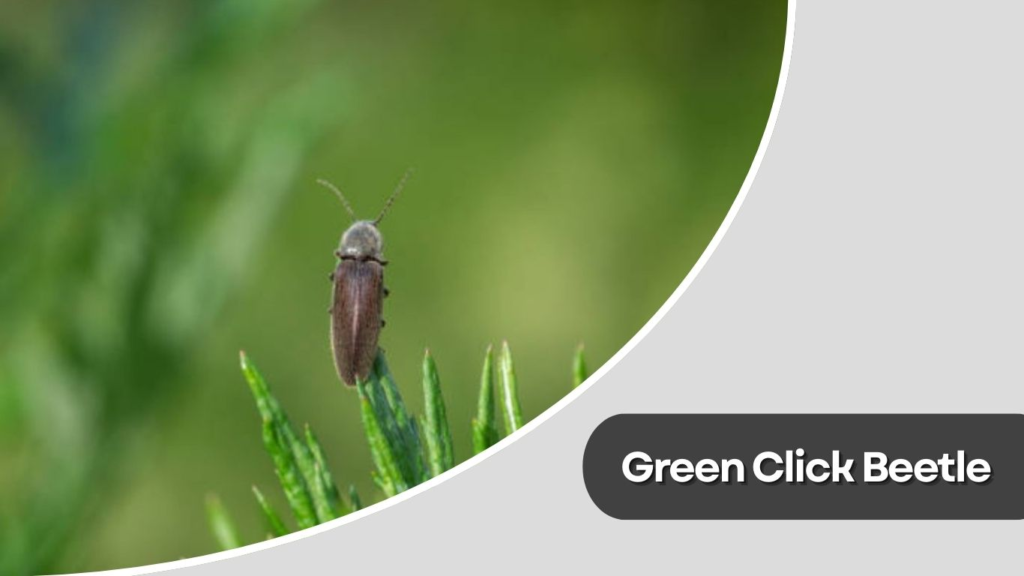
The green click beetle is known for its bright green or emerald-toned body, which makes it stand out among other click beetles. Like all click beetles, it has a unique clicking mechanism that allows it to flip into the air when threatened, helping it escape predators.
Identification
- Slender, elongated body
- Body length typically 12–30 mm
- Bright green to metallic emerald coloration
- Smooth, glossy wing covers
- Flexible thoracic joint used for clicking
Habitat
Green click beetles are commonly found in forests, gardens, grasslands, and forest edges. They prefer areas with loose soil, leaf litter, and decaying organic matter that support larval development.
Behaviors
This species is mostly nocturnal and may be attracted to lights at night. When disturbed or overturned, it snaps its body to produce a clicking sound and jumps into the air to escape danger.
Diet
Adult green click beetles feed lightly on nectar, pollen, and plant material. The larvae, known as wireworms, live in soil and feed on plant roots, seeds, and decaying organic matter.
Life Cycle
The life cycle includes egg, larva, pupa, and adult stages. Larval development often takes several years underground. Pupation occurs in soil, and adults emerge during warm seasons.
20. Giant Click Beetle
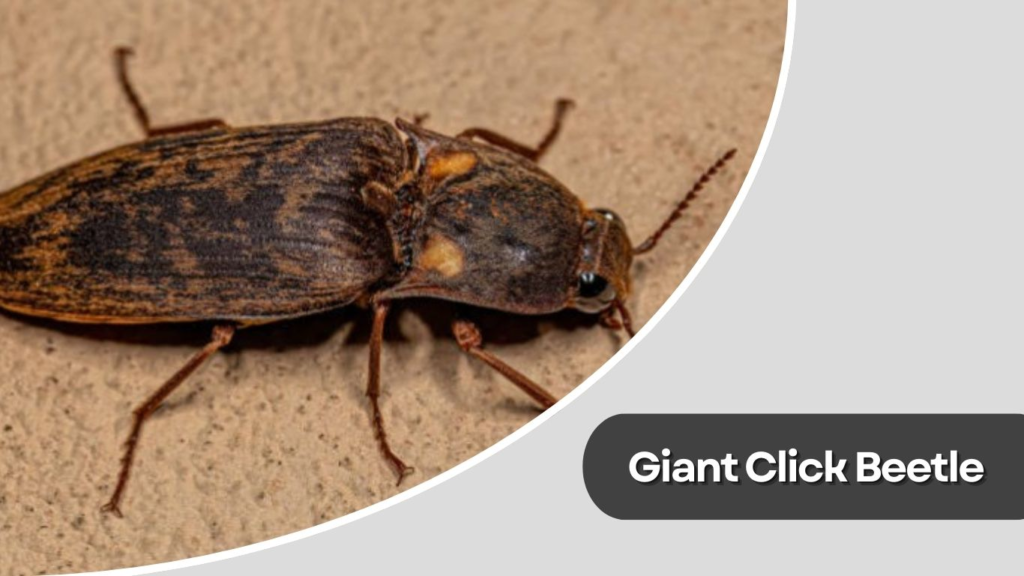
The giant click beetle is one of the largest members of the click beetle family and is best known for its impressive size and powerful clicking jump. This species is also famous for the large eye-like markings on its thorax, which help deter predators. Despite its intimidating appearance, it is harmless to humans.
Identification
- Very large, elongated body
- Body length typically 40–60 mm
- Dark brown to black coloration
- Two large eye-like spots on the thorax
- Strong clicking mechanism that produces a loud snap
Habitat
Giant click beetles are commonly found in tropical and subtropical forests, woodlands, and areas with abundant decaying wood. Larvae develop in soil or rotting wood where organic material is plentiful.
Behaviors
This beetle is mostly nocturnal and is often attracted to lights at night. When threatened or flipped onto its back, it produces a loud clicking sound and launches itself into the air to escape predators.
Diet
Adult giant click beetles feed lightly on plant material, nectar, or sap. The larvae, known as wireworms, live underground or in decaying wood and feed on roots, organic matter, and other insects.
Life Cycle
The life cycle includes egg, larva, pupa, and adult stages. Larval development can take several years. Pupation occurs in soil or rotting wood, and adults usually emerge during warm seasons.
FAQs
What are click beetles?
Click beetles are insects belonging to the family Elateridae, known for their ability to flip themselves into the air with a sharp clicking sound. This unique behavior helps them escape predators when flipped onto their backs. They are commonly found in gardens, forests, and woodlands.
Are click beetles harmful to plants?
While adult click beetles do not generally damage plants, their larvae, known as wireworms, can feed on plant roots, seeds, and stems, sometimes causing damage to crops and garden plants. The impact is usually more significant in agricultural settings.
How do click beetles produce their clicking sound?
Click beetles have a specialized mechanism in their thorax that allows them to snap their bodies and make a clicking sound. This action forces them into the air, helping them flip upright when overturned and escape predators.
Where do click beetles live?
Click beetles are found worldwide in various habitats, including forests, grasslands, gardens, agricultural fields, and woodland edges. They prefer areas with loose soil, decaying organic matter, and plant roots for their larvae to feed on.
How long do click beetles live?
The lifespan of a click beetle varies by species, but adults generally live for a few months. The larvae, or wireworms, may live underground for one to several years, depending on environmental conditions and food availability.
