

Fleas are tiny, parasitic insects that primarily feed on the blood of mammals and birds. While commonly associated with pets like dogs and cats, fleas can infest homes, gardens, and even humans. These pests are not only a source of discomfort but also pose health risks by transmitting diseases and causing allergic reactions. In this article, we explore the different types of fleas, their behavior, and how to manage infestations effectively.
1. Cat Flea (Ctenocephalides felis)

The cat flea, scientifically known as Ctenocephalides felis, is the most common flea species found on cats and dogs. It is also capable of infesting other animals and humans. Cat fleas are small, wingless insects that can jump long distances. They are responsible for transmitting diseases and causing discomfort to pets and humans through their bites. These fleas can also trigger allergic reactions in pets and lead to anemia in severe infestations.
Identification
- Size: 1.5 to 4 mm in length.
- Color: Brownish to dark brown.
- Body: Flattened laterally, allowing them to easily move through fur or hair.
- Antennae: Short, hidden under the head.
- Legs: Strong hind legs designed for jumping.
Habitat
Cat fleas are typically found on pets, especially those that roam outdoors. They prefer warm, humid environments, which is why they are commonly found in homes with pets, particularly in areas where the animals spend most of their time, such as bedding, carpets, and upholstery.
Behaviors
Cat fleas are active parasites that feed on the blood of their hosts. They are highly mobile and can jump up to 200 times their body length. They tend to remain on their hosts, feeding multiple times a day. In high infestations, they can cause significant irritation and discomfort.
Diet and Lifecycle
Cat fleas primarily feed on the blood of their hosts. Their life cycle involves four stages: egg, larva, pupa, and adult. The adult flea lays eggs on the host, which then fall off into the environment. The larvae feed on organic debris before pupating and emerging as adult fleas. Fleas can live anywhere from a few weeks to several months depending on environmental conditions.
2. Dog Flea (Ctenocephalides canis)
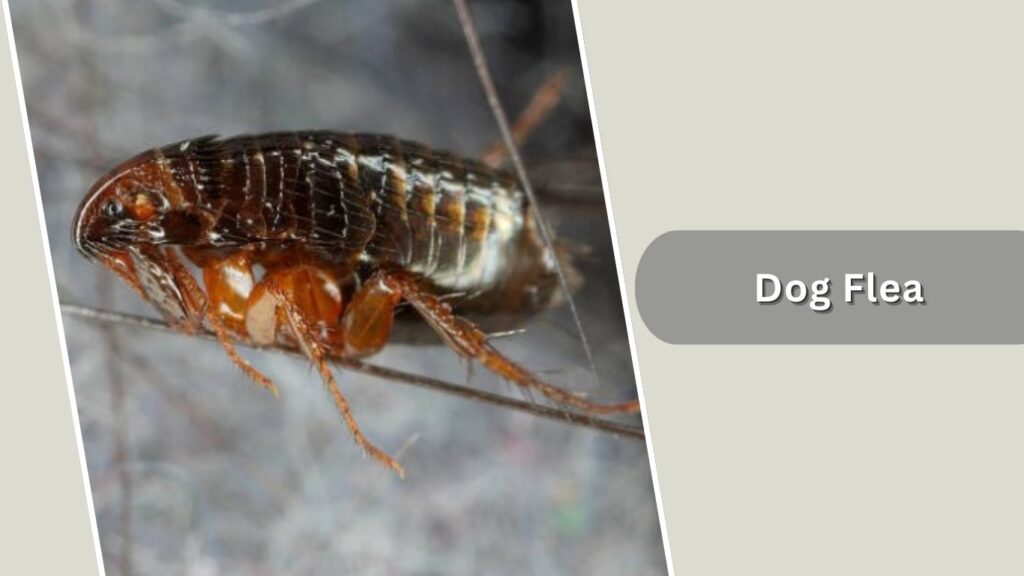
The dog flea, Ctenocephalides canis, is a common external parasite mainly found on dogs, though it can also infest cats and other mammals. It closely resembles the cat flea but is less widespread in many regions. Dog fleas cause itching, skin irritation, and allergic reactions in pets, and heavy infestations may lead to hair loss and anemia, especially in young or weak animals.
Identification
- Size: About 2 to 4 mm long
- Color: Reddish-brown to dark brown
- Body shape: Laterally flattened for easy movement through fur
- Head: Rounded compared to the cat flea
- Legs: Long hind legs adapted for powerful jumping
Habitat
Dog fleas live primarily on dogs and survive in environments where dogs rest frequently. Common habitats include pet bedding, kennels, carpets, cracks in floors, and shaded outdoor areas. They thrive best in warm, humid conditions and can persist indoors year-round.
Behaviors
Dog fleas are active blood-feeding parasites. They jump onto hosts to feed and may bite multiple times a day. Although they prefer dogs, they can temporarily bite humans if pets are unavailable. Fleas are quick movers and difficult to catch once disturbed.
Diet and Lifecycle
Dog fleas feed exclusively on the blood of mammals. Their lifecycle includes four stages: egg, larva, pupa, and adult. Eggs fall into the environment, larvae feed on organic matter, pupae develop in protective cocoons, and adults emerge when a suitable host is nearby.
3. Human Flea (Pulex irritans)
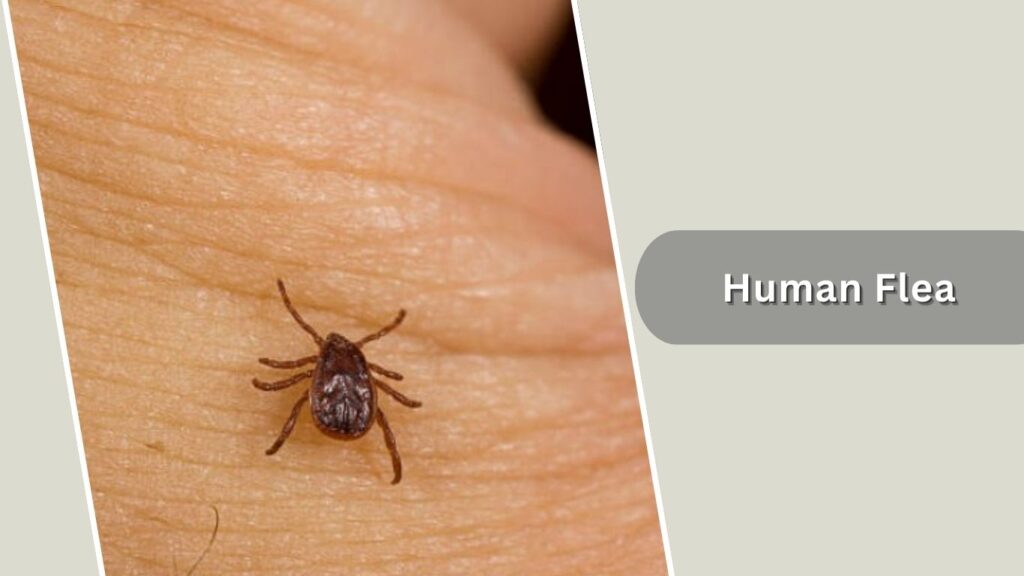
The human flea, Pulex irritans, is a parasitic insect historically associated with humans but also capable of infesting pigs, dogs, cats, and wild animals. Unlike cat and dog fleas, it lacks comb-like spines on its head and thorax. Human fleas were once widespread and are known for causing itchy bites and transmitting diseases in unsanitary living conditions.
Identification
- Size: Around 2 to 3.5 mm long
- Color: Dark brown to black
- Body: Laterally flattened and wingless
- Distinct feature: No genal or pronotal combs
- Legs: Strong hind legs adapted for jumping
Habitat
Human fleas are commonly found in human dwellings with poor sanitation, especially where people live close to animals. They hide in bedding, floor cracks, mats, carpets, and furniture. In rural areas, they may also be found in animal shelters and barns.
Behaviors
Human fleas are aggressive biters and can bite multiple times, often around the ankles and legs. They are capable of jumping between hosts and may survive without feeding for several days. Their bites cause irritation and may lead to allergic reactions.
Diet and Lifecycle
Human fleas feed on the blood of humans and other mammals. Their lifecycle consists of egg, larva, pupa, and adult stages. Eggs fall into the environment, larvae consume organic debris, pupae develop inside cocoons, and adults emerge when they sense body heat or movement from a host.
4. Oriental Rat Flea (Xenopsylla cheopis)
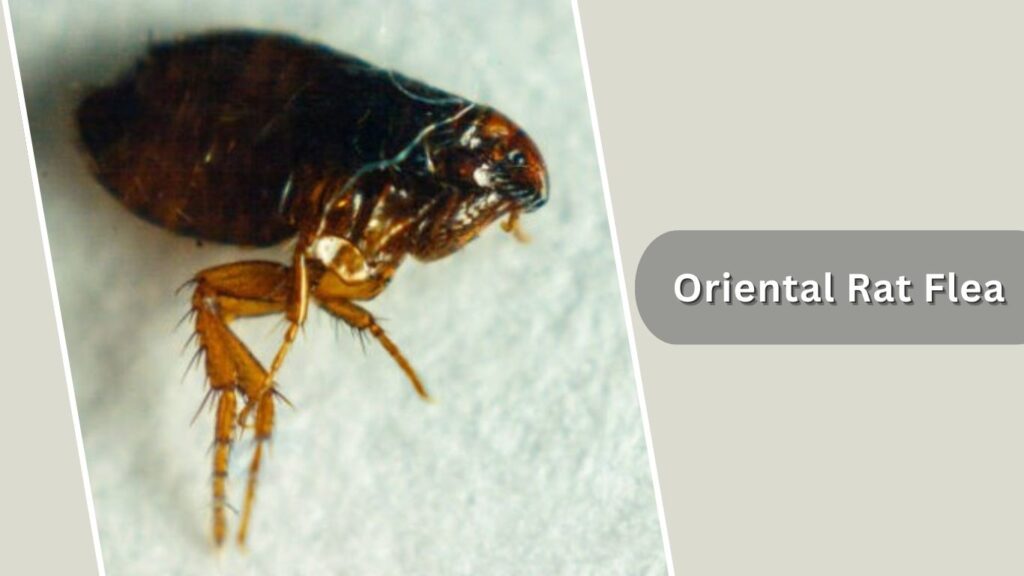
The oriental rat flea, Xenopsylla cheopis, is one of the most medically significant flea species due to its role in transmitting serious diseases. It primarily infests rats but can also bite humans and other mammals when rodent hosts are scarce. This flea is historically linked to plague outbreaks and remains a concern in areas with high rodent populations.
Identification
- Size: About 1.5 to 4 mm long
- Color: Light brown to dark brown
- Body: Laterally flattened and wingless
- Distinct feature: Lacks both genal and pronotal combs
- Legs: Strong hind legs for jumping
Habitat
Oriental rat fleas are commonly found in rodent nests, burrows, warehouses, sewers, and human dwellings with rat infestations. They thrive in warm climates and are especially common in ports, urban slums, and rural areas with poor sanitation.
Behaviors
These fleas are highly mobile and will readily bite humans if their primary rodent hosts die or leave the area. They are capable of surviving for long periods without feeding and can quickly spread between hosts, increasing the risk of disease transmission.
Diet and Lifecycle
Oriental rat fleas feed on the blood of rats, humans, and other mammals. Their lifecycle includes egg, larva, pupa, and adult stages. Eggs are laid in rodent nests, larvae feed on organic debris, pupae develop in cocoons, and adults emerge when a suitable host is detected.
5. Northern Rat Flea (Nosopsyllus fasciatus)
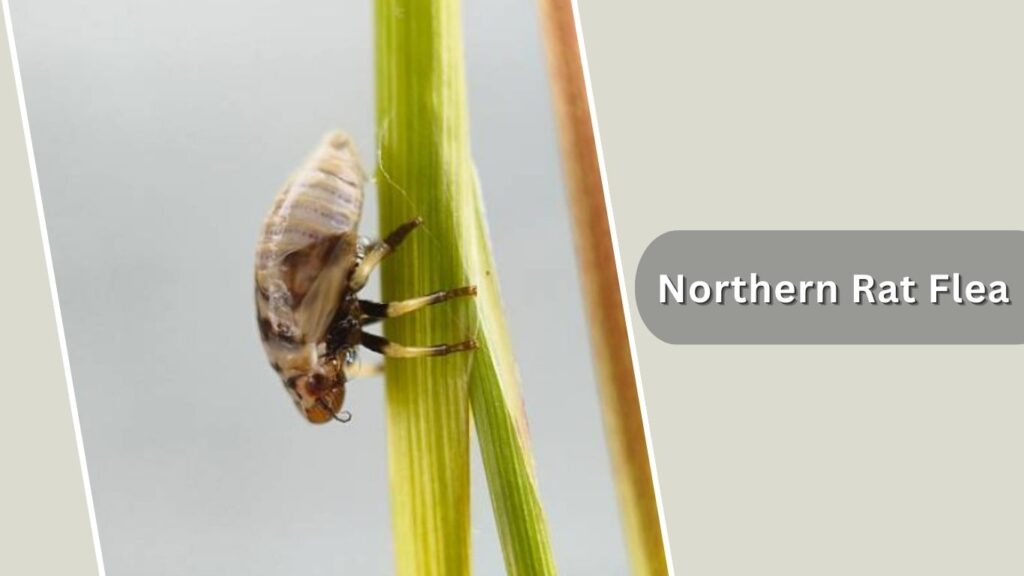
The northern rat flea, Nosopsyllus fasciatus, is a common parasite of rats and mice, especially in temperate regions. It is less notorious than the oriental rat flea but can still bite humans when rodent hosts are unavailable. This flea species is often found in urban and rural settings where rodents live close to human habitation.
Identification
- Size: Around 3 to 4 mm long
- Color: Dark brown
- Body: Laterally flattened and wingless
- Distinct feature: Pronotal comb present, genal comb absent
- Legs: Well-developed hind legs for jumping
Habitat
Northern rat fleas live mainly in rodent nests, wall voids, basements, barns, and storage areas. They prefer cooler, temperate climates and are commonly found in houses, warehouses, and farm buildings with rodent activity.
Behaviors
These fleas remain close to their rodent hosts and are most active when hosts are present. If rodents die or move away, the fleas may bite humans. They are strong jumpers and can survive for extended periods without feeding.
Diet and Lifecycle
Northern rat fleas feed on the blood of rodents and occasionally humans. Their lifecycle includes egg, larva, pupa, and adult stages. Eggs are laid in nesting areas, larvae feed on organic debris, pupae develop inside cocoons, and adults emerge when they detect warmth or movement.
6. Tropical Rat Flea (Xenopsylla brasiliensis)
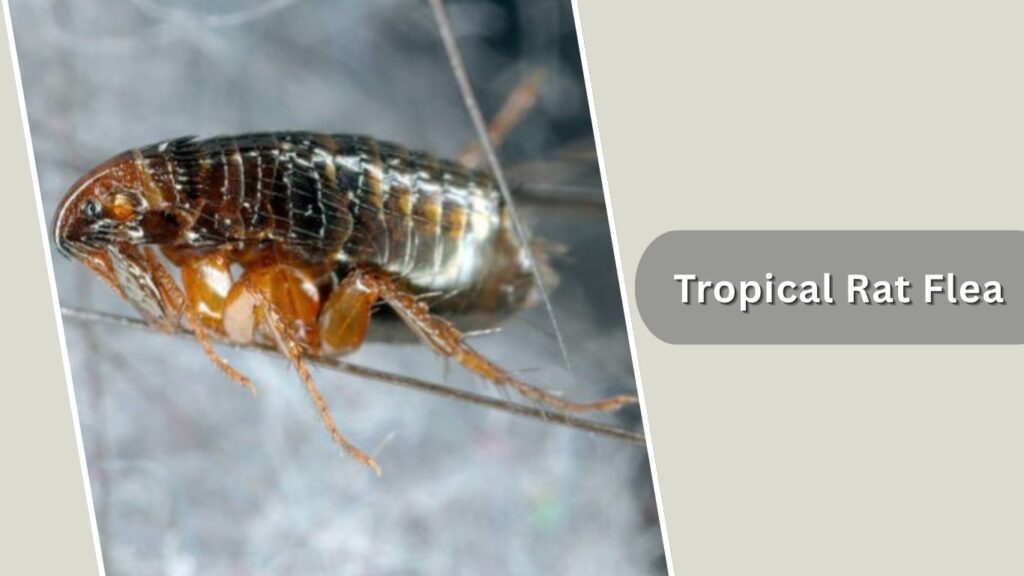
The tropical rat flea, Xenopsylla brasiliensis, is a blood-feeding parasite mainly found in warm, tropical regions. It primarily infests rats but can also bite humans when rodent hosts are scarce. This species is considered medically important because it can transmit diseases in areas with high rodent populations and poor sanitation.
Identification
- Size: About 2 to 4 mm long
- Color: Light brown to dark brown
- Body: Laterally flattened and wingless
- Distinct feature: No genal or pronotal combs
- Legs: Powerful hind legs adapted for jumping
Habitat
Tropical rat fleas are commonly found in rat nests, burrows, homes, warehouses, and port areas. They thrive in hot, humid environments and are frequently associated with densely populated urban areas and rural settlements where rodents are abundant.
Behaviors
These fleas readily move between hosts and will bite humans if rats are not available. They are active jumpers and can survive for long periods without feeding, which allows them to persist even when host numbers fluctuate.
Diet and Lifecycle
Tropical rat fleas feed on the blood of rats, humans, and other mammals. Their lifecycle includes four stages: egg, larva, pupa, and adult. Eggs are laid in nesting areas, larvae feed on organic debris, pupae develop within cocoons, and adults emerge when they sense heat or vibrations from a nearby host.
7. Chigoe Flea (Tunga penetrans)
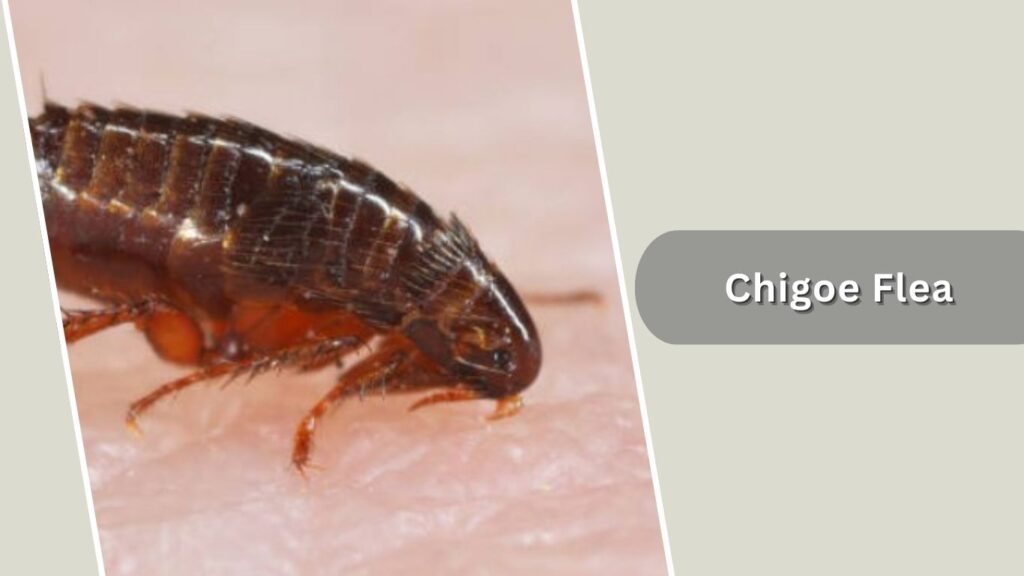
The chigoe flea, Tunga penetrans, is a unique and highly problematic flea species known for burrowing into the skin of its host. It is commonly found in tropical and subtropical regions and affects humans, livestock, and pets. Unlike other fleas, the female embeds itself into the skin, causing a condition known as tungiasis, which can lead to pain, infection, and severe complications if untreated.
Identification
- Size: Very small, about 1 mm before embedding
- Color: Reddish-brown
- Body: Compact and rounded compared to other fleas
- Distinct feature: Female flea embeds into host skin
- Legs: Short but strong for jumping
Habitat
Chigoe fleas live in sandy soils, dry ground, animal pens, beaches, and poorly constructed homes. They are most common in rural communities with warm climates and limited sanitation, where people often walk barefoot.
Behaviors
The female flea penetrates the skin, usually on feet or toes, and remains embedded while feeding and producing eggs. This behavior causes swelling, itching, and pain. Males do not burrow and die after mating.
Diet and Lifecycle
Chigoe fleas feed on the blood and tissue fluids of their hosts. The lifecycle includes egg, larva, pupa, and adult stages. Eggs are expelled from the embedded female into the environment, where larvae develop in soil before emerging as adults.
8. Hedgehog Flea (Archaeopsylla erinacei)
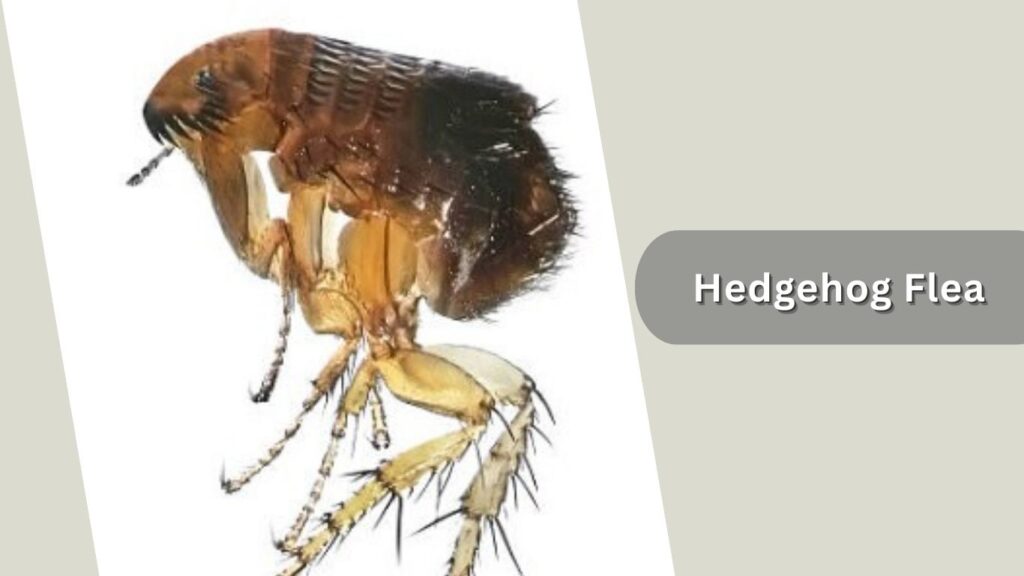
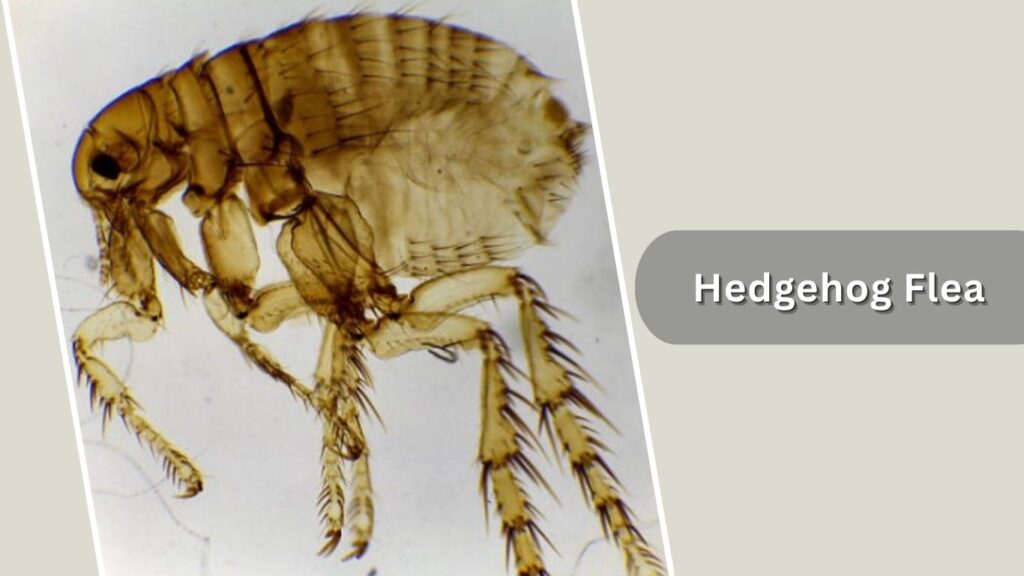
The hedgehog flea, Archaeopsylla erinacei, is a common parasite of hedgehogs but can also infest dogs, cats, and occasionally humans. It is widespread in Europe and parts of Asia, especially where hedgehogs live close to human settlements. Although it prefers hedgehogs, it can bite humans and cause itching and mild skin irritation.
Identification
- Size: About 2.5 to 4 mm long
- Color: Dark brown
- Body: Laterally flattened and wingless
- Distinct feature: Pronotal comb present, genal comb absent
- Legs: Strong hind legs for jumping
Habitat
Hedgehog fleas are mainly found in hedgehog nests, gardens, sheds, woodpiles, and areas where hedgehogs rest. They may enter homes if hedgehogs nest nearby or if pets come into contact with infested animals.
Behaviors
These fleas usually stay close to their primary host but can transfer to pets or humans when disturbed. They are active jumpers and tend to hide in nesting material during the day, becoming more active when a host is present.
Diet and Lifecycle
Hedgehog fleas feed on the blood of hedgehogs and other mammals. Their lifecycle consists of egg, larva, pupa, and adult stages. Eggs are laid in nests, larvae feed on organic debris, pupae develop in cocoons, and adults emerge when they detect warmth or movement.
9. Hedgehog Flea (Spilopsyllus cuniculi)
The rabbit flea, Spilopsyllus cuniculi, is a parasite primarily associated with wild and domestic rabbits. It plays an important role in transmitting diseases among rabbit populations. This flea species is highly adapted to its host and is rarely found on humans, although temporary bites may occur if rabbits are handled frequently.
Identification
- Size: Around 2 to 3 mm long
- Color: Brown to dark brown
- Body: Laterally flattened and wingless
- Distinct feature: Strong host specificity to rabbits
- Legs: Well-developed hind legs for jumping
Habitat
Rabbit fleas are commonly found in rabbit burrows, nests, hutches, and areas where rabbits rest or breed. They prefer dry environments with access to organic debris and are most abundant during rabbit breeding seasons.
Behaviors
These fleas closely follow the breeding cycles of rabbits and are most active when hosts are present. They spend much of their time on rabbits and are less likely to infest other animals unless disturbed or displaced.
Diet and Lifecycle
Rabbit fleas feed on the blood of rabbits. Their lifecycle includes egg, larva, pupa, and adult stages. Eggs are laid in nesting areas, larvae develop by feeding on organic matter, pupae form protective cocoons, and adults emerge in response to host presence.
10. Sticktight Flea (Echidnophaga gallinacea)
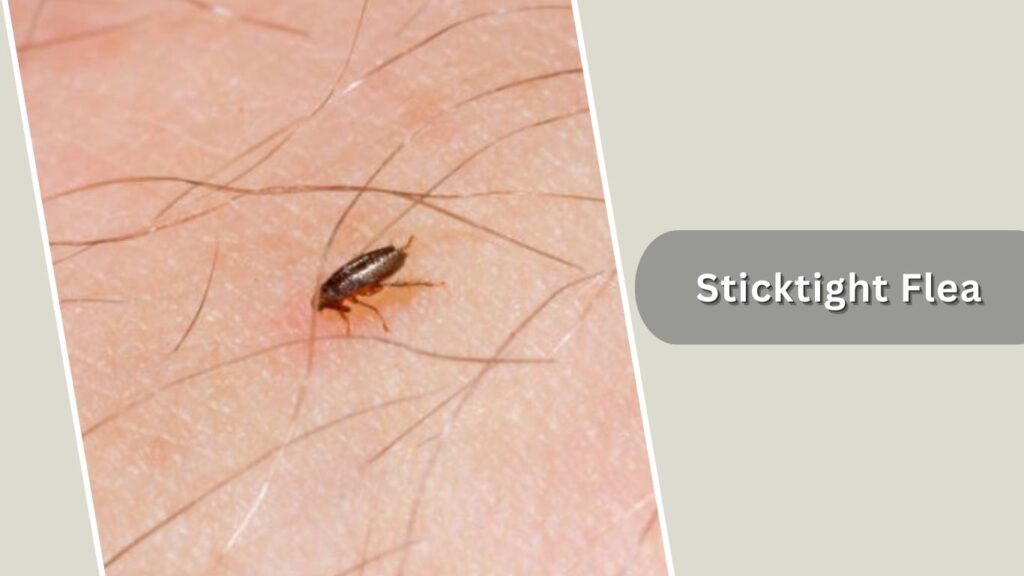
The sticktight flea, Echidnophaga gallinacea, is a parasitic flea commonly found on poultry, birds, dogs, cats, and occasionally humans. Unlike most fleas, it tends to remain firmly attached to its host for long periods. Heavy infestations can cause skin irritation, sores, anemia, and reduced productivity in poultry, making it an important pest in rural and farm environments.
Identification
- Size: About 1.5 to 2.5 mm long
- Color: Dark brown to black
- Body: Short, stout, and laterally flattened
- Distinct feature: Remains attached to host skin
- Legs: Shorter legs compared to jumping fleas
Habitat
Sticktight fleas are commonly found in poultry houses, bird nests, animal shelters, and dry, sandy environments. They prefer warm climates and are often seen around the eyes, combs, and wattles of birds or on the ears and faces of mammals.
Behaviors
Unlike jumping fleas, sticktight fleas embed their mouthparts into the skin and remain attached for days or weeks. They cluster in groups and cause continuous irritation, which may lead to secondary infections or tissue damage.
Diet and Lifecycle
Sticktight fleas feed on the blood of birds and mammals. Their lifecycle includes egg, larva, pupa, and adult stages. Eggs fall into the environment, larvae develop in soil or litter, pupae form cocoons, and adults seek hosts to attach and feed.
11. Pulicidae Flea (Family Classification)
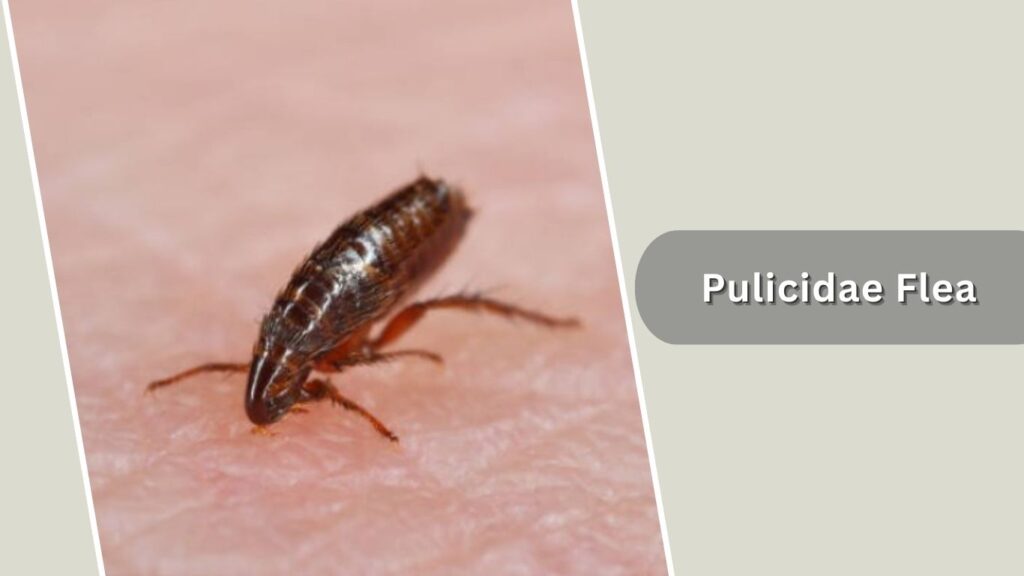
The Pulicidae family encompasses a wide range of flea species, including the cat flea, dog flea, and human flea. This family is known for its blood-feeding behavior and its capacity to transmit various diseases to both animals and humans. Fleas in this family vary in size, host preference, and behavior, but they all share common characteristics such as a flattened body and strong jumping abilities.
Identification
- Size: Varies by species (generally 1 to 4 mm)
- Color: Varies from brown to dark brown
- Body: Flattened laterally, wingless
- Distinct feature: Genal and pronotal combs in most species
- Legs: Long, especially the hind legs for jumping
Habitat
Fleas of the Pulicidae family are commonly found on mammals, particularly domestic pets like cats, dogs, and rodents. They thrive in environments where their host species reside, including homes, farms, and urban areas. These fleas tend to live in bedding, carpets, furniture, and nests.
Behaviors
Members of the Pulicidae family are active parasites, feeding on the blood of mammals. They are quick to jump onto hosts when they detect heat or movement. Some species, such as the cat flea, can cause allergic reactions and transmit diseases like plague and typhus.
Diet and Lifecycle
Fleas in the Pulicidae family feed on the blood of mammals. Their lifecycle consists of egg, larva, pupa, and adult stages. Eggs are laid on the host, fall into the environment, and hatch into larvae. Larvae feed on organic matter, develop into pupae, and emerge as adults when a host is detected.
12. Bird Flea (Ceratophyllus gallinae)
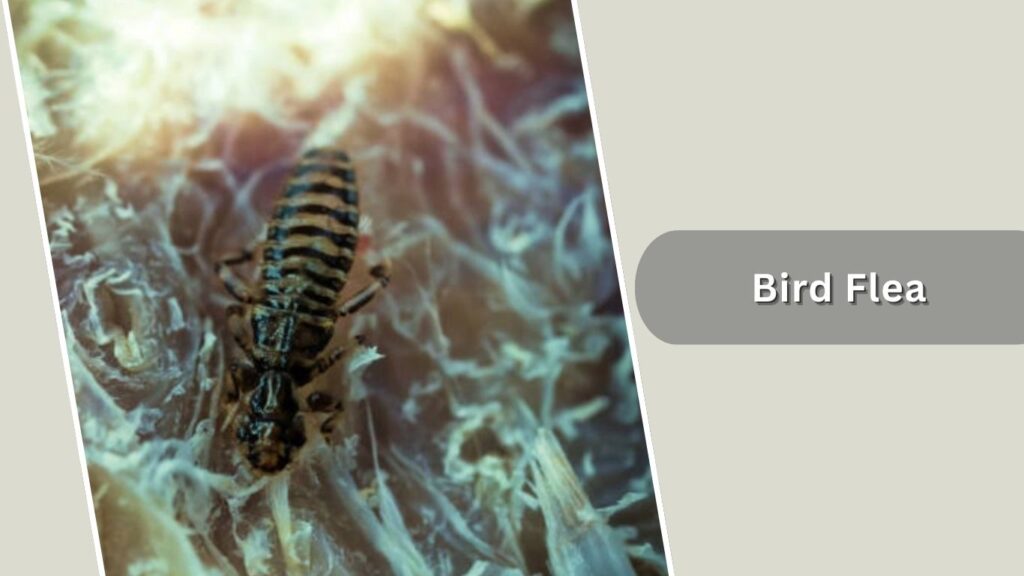
The bird flea, Ceratophyllus gallinae, is a common flea species found on birds, particularly poultry. While it generally targets birds, it can occasionally bite humans, especially in environments with high bird populations. These fleas are known to cause irritation and discomfort to both birds and humans, and they may also play a role in transmitting diseases between birds.
Identification
- Size: About 2 to 3 mm long
- Color: Light to dark brown
- Body: Flattened laterally and wingless
- Distinct feature: Long mouthparts adapted for piercing skin
- Legs: Strong hind legs for jumping
Habitat
Bird fleas are commonly found in bird nests, roosting sites, and poultry houses. They prefer environments where their bird hosts rest, such as in trees, barns, and aviaries. Bird fleas can also be found in areas with high bird populations, such as urban areas, farms, and wild bird habitats.
Behaviors
Bird fleas are highly active and jump between hosts, feeding on blood. They are particularly active during the warmer months and are most often found on birds, but will bite humans when birds are unavailable. Their bites can cause irritation and discomfort, leading to itching and inflammation.
Diet and Lifecycle
Bird fleas feed on the blood of birds and occasionally other mammals, including humans. The lifecycle consists of egg, larva, pupa, and adult stages. Fleas lay their eggs in bird nests or other areas where their hosts rest. The larvae feed on organic matter before pupating, and adults emerge when a suitable host is present.
13. Siphonaptera Flea (Family Classification)
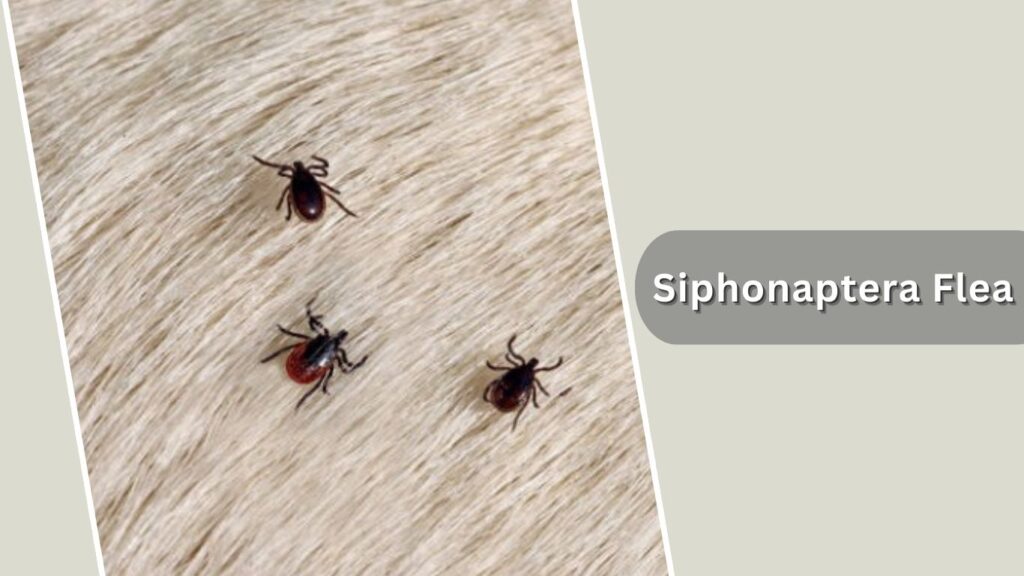
Siphonaptera is the scientific family classification that includes all true fleas. This group encompasses over 2,000 species, all characterized by their wingless, flattened bodies and strong hind legs designed for jumping. Fleas in this family are parasites, primarily feeding on the blood of mammals and birds. While most are host-specific, some species can bite humans and other animals when their primary hosts are not available.
Identification
- Size: Varies by species, typically 1 to 4 mm long
- Color: Typically brown to dark brown
- Body: Laterally compressed, wingless
- Distinct feature: Strong hind legs for jumping, mouthparts adapted for piercing skin
- Legs: Long hind legs designed for jumping
Habitat
Fleas in the Siphonaptera family are found on their host animals, such as pets, livestock, and wild animals. They thrive in environments like animal bedding, carpets, nests, and areas where their hosts frequent. Fleas are often found in homes, farms, and rural environments where animals live close to humans.
Behaviors
Members of the Siphonaptera family are obligate parasites that feed on blood. They are highly mobile and capable of jumping onto their hosts from a distance. Some fleas, such as the cat flea, can trigger allergic reactions and transmit diseases like plague, typhus, and tapeworms.
Diet and Lifecycle
Fleas in the Siphonaptera family feed on the blood of their hosts. Their lifecycle includes four stages: egg, larva, pupa, and adult. Eggs fall off the host and hatch in the environment, where larvae feed on organic matter. After pupating, adult fleas emerge when a host is nearby, ready to begin the cycle again.
FAQs
What are fleas and how do they affect pets?
Fleas are small, blood-feeding parasites that live on mammals and birds. They cause itching, irritation, and can transmit diseases like tapeworms and flea-borne diseases. Pets may experience hair loss, skin infections, and allergic reactions due to flea bites.
How do I identify a flea infestation in my home?
Flea infestations can be identified by seeing fleas on your pets or finding tiny, dark specks (flea dirt) on your pet’s bedding or fur. Pets may scratch excessively, and you may notice red bumps or welts from flea bites on their skin.
What is the lifecycle of a flea?
The flea lifecycle consists of four stages: egg, larva, pupa, and adult. Fleas lay eggs that fall into the environment. Larvae feed on organic debris before pupating in cocoons, and adults emerge when they sense a host’s presence.
Can fleas live on humans?
Fleas can bite humans, but they typically prefer animals like cats and dogs. While fleas do not live on humans for long, their bites cause itching and discomfort. Some fleas, like the human flea, are more likely to infest people in unsanitary environments.
How can I prevent a flea infestation?
To prevent fleas, regularly treat pets with flea prevention products, wash bedding and toys frequently, and vacuum carpets and furniture to remove fleas and eggs. It’s also essential to keep your yard and home clean and free from pests.
