

Blue spiders are some of the most fascinating and visually striking arachnids found in nature. Their blue coloration—ranging from subtle steel tones to vivid metallic shades—comes from unique structural features rather than pigment. These spiders can be found across different habitats, from forests and gardens to deserts and tree canopies. In this guide, we explore 12 types of blue spiders, highlighting their identification traits, color patterns, habitats, behaviors, and how risky their bites are to humans.
1. Cobalt Blue Tarantula

The Cobalt Blue Tarantula is one of the most striking examples of a blue spider, known for its deep metallic blue legs and secretive nature. Native to Southeast Asia, this spider is admired for its color but respected for its defensive temperament and burrowing lifestyle.
Identification
- Scientific name: Cyriopagopus lividus
- Common name: Cobalt Blue Tarantula
- Leg color: vivid metallic blue
- Body color: dark gray to black
- Size: medium to large tarantula
Color Pattern
This blue spider is famous for its intense cobalt-blue legs, which contrast sharply with its darker body. The blue coloration is structural, not pigment-based, giving it a shimmering appearance under light.
Habitat
The Cobalt Blue Tarantula lives in tropical forests, where it creates deep burrows in moist soil. It prefers warm, humid environments and is rarely seen outside its underground retreat.
Behavior
This blue spider is highly reclusive and fast-moving. It spends most of its life hidden in burrows and is known to be defensive rather than aggressive, often choosing to retreat unless threatened.
Danger of Bite
The bite of this blue spider is not considered medically dangerous to humans, but it can be quite painful. Bites may cause localized pain, swelling, and muscle cramps, making it a species best admired from a distance rather than handled.
2. Electric Blue Tarantula

The Electric Blue Tarantula is a rare and visually stunning blue spider, admired for its bright blue sheen and elusive nature. Found mainly in Southeast Asia, this species is popular among enthusiasts due to its vivid coloration and mysterious lifestyle.
Identification
- Scientific name: Chilobrachys natanicharum
- Common name: Electric Blue Tarantula
- Leg color: bright electric blue
- Body color: dark brown to black
- Size: medium to large tarantula
Color Pattern
This blue spider displays an intense electric-blue coloration on its legs, often appearing brighter under direct light. The body remains darker, which enhances the contrast and makes the blue tones stand out dramatically.
Habitat
The Electric Blue Tarantula inhabits tropical and subtropical forests. It prefers underground burrows in soft, humid soil, often near tree roots or shaded forest floors.
Behavior
This blue spider is fast, shy, and defensive. It spends most of its time hidden and will quickly retreat into its burrow when disturbed. Direct interaction is rare due to its secretive habits.
Danger of Bite
The bite of this blue spider is not life-threatening to humans but can be painful. Symptoms may include sharp pain, swelling, and temporary discomfort, so caution is advised when encountering this species.
3. Blue Baboon Tarantula

The Blue Baboon Tarantula is a fascinating blue spider known for its earthy blue-gray tones and powerful build. Native to parts of Africa, this species is respected for its strength, speed, and bold defensive behavior.
Identification
- Scientific name: Hysterocrates spp.
- Common name: Blue Baboon Tarantula
- Leg color: blue-gray to steel blue
- Body color: brown to dark gray
- Size: large tarantula
Color Pattern
This blue spider shows a subtle but attractive blue coloration, mainly on its legs and carapace. The blue is less vibrant than some Asian species but has a smooth, metallic sheen that becomes more visible in certain lighting.
Habitat
The Blue Baboon Tarantula lives in tropical regions, favoring areas with loose soil where it can dig deep burrows. It is often found in savannas, forest edges, and humid ground environments.
Behavior
This blue spider is highly defensive and known for its strong temperament. It is a skilled burrower and spends most of its life underground, emerging mainly at night to hunt.
Danger of Bite
The bite of this blue spider is not considered medically serious but can be painful. Defensive strikes may result in swelling, intense pain, and discomfort, making this species best observed without close contact.
4. Gooty Sapphire Tarantula
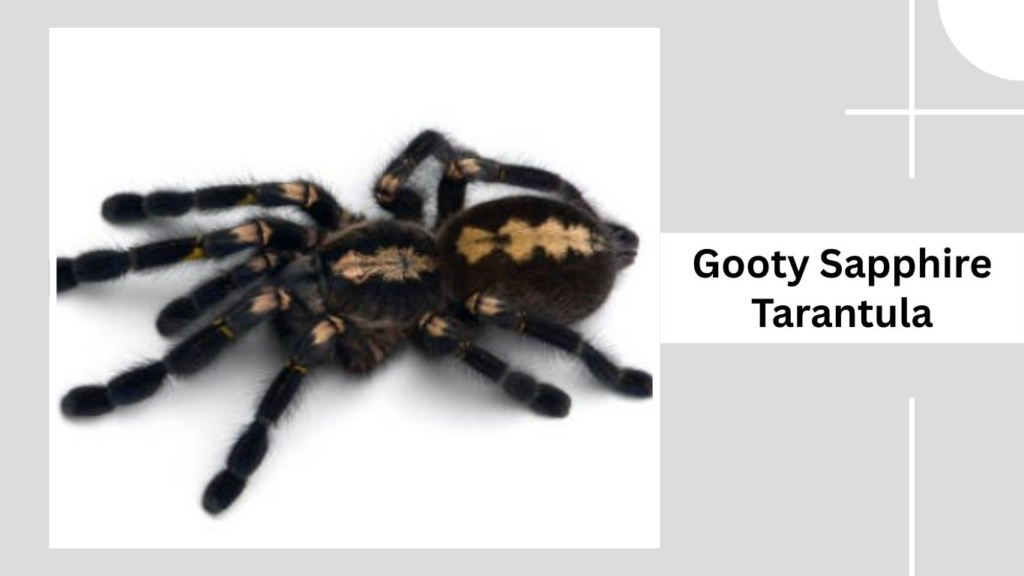
The Gooty Sapphire Tarantula is one of the most visually spectacular spiders in the world, admired for its vivid sapphire-blue coloration. This rare species is native to India and is often highlighted for both its beauty and conservation importance.
Identification
- Scientific name: Poecilotheria metallica
- Common name: Gooty Sapphire Tarantula
- Leg color: bright sapphire blue with yellow markings
- Body color: metallic blue-gray
- Size: large tarantula
Color Pattern
This species displays intense metallic blue coloring across its legs and body, accented with striking yellow and white patterns. The contrast makes it one of the most recognizable blue-colored tarantulas.
Habitat
The Gooty Sapphire Tarantula inhabits dry deciduous forests, living in tree hollows and bark crevices. Unlike many burrowing tarantulas, it is primarily arboreal and depends on forest cover for survival.
Behavior
This tarantula is fast, alert, and defensive. It prefers to retreat into tree cavities but may display threat postures if cornered. It is mostly nocturnal and relies on speed rather than aggression.
Danger of Bite
The bite is not considered life-threatening but can cause significant pain. Possible effects include localized swelling, muscle cramps, and discomfort, so handling or provoking this species is not recommended.
5. Greenbottle Blue Tarantula
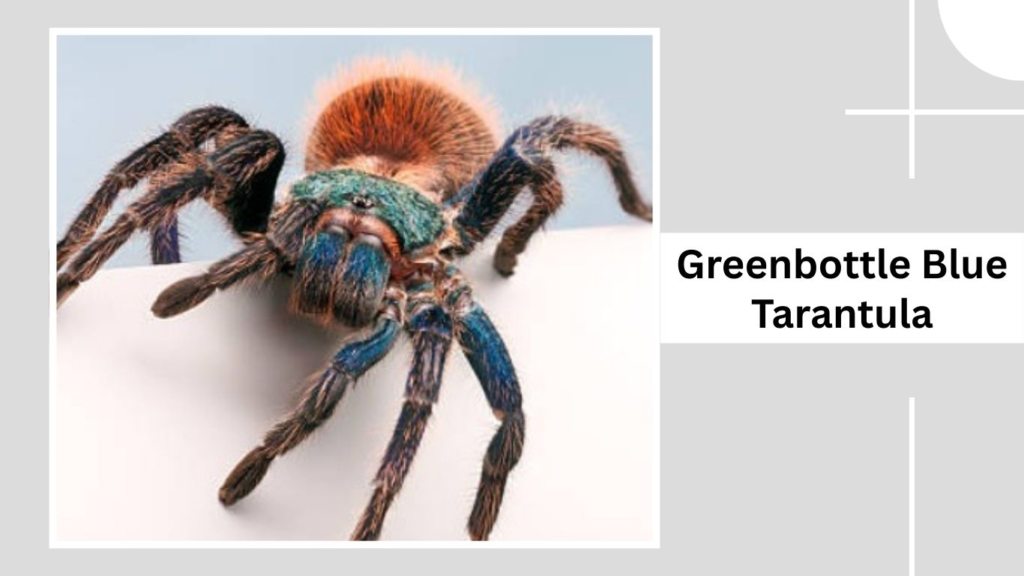
The Greenbottle Blue Tarantula is a colorful and eye-catching species known for its mix of blue legs, green carapace, and orange abdomen. It is widely admired for its unique appearance and active nature.
Identification
- Scientific name: Chromatopelma cyaneopubescens
- Common name: Greenbottle Blue Tarantula
- Leg color: metallic blue
- Carapace color: green
- Abdomen color: orange with black hairs
- Size: medium to large tarantula
Color Pattern
This tarantula features vibrant blue legs combined with a bright green carapace and a fiery orange abdomen. The bold contrast makes it one of the most colorful tarantulas in the world.
Habitat
The Greenbottle Blue Tarantula originates from dry, scrubby regions and semi-desert environments. It prefers low humidity and builds silk-lined burrows or shelters close to the ground.
Behavior
This species is active and an enthusiastic webber. It is less aggressive than many other tarantulas but may display defensive behavior if threatened. It is often visible outside its retreat.
Danger of Bite
The bite is not dangerous to humans but can cause mild to moderate pain and irritation. Defensive biting is uncommon, and this species generally prefers to flee rather than confront.
6. Blue Orb-Weaver Spider
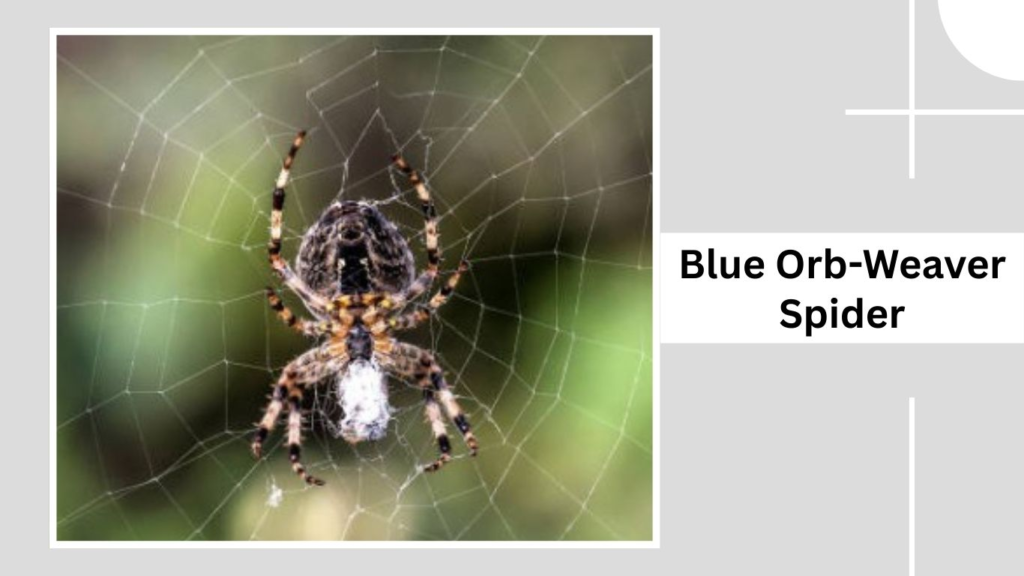
The Blue Orb-Weaver Spider is a visually striking species recognized for its blue-toned body and classic circular web. It is commonly found in gardens and forested areas, where it plays an important role in controlling insect populations.
Identification
- Scientific name: Araneus spp.
- Common name: Blue Orb-Weaver Spider
- Body color: blue to blue-green
- Abdomen shape: rounded
- Size: medium-sized spider
Color Pattern
This spider displays shades of blue mixed with green or gray, often with subtle markings on the abdomen. The coloration may vary depending on age, light, and environment.
Habitat
The Blue Orb-Weaver Spider lives in forests, gardens, and grassy areas. It builds large circular webs between trees, shrubs, or man-made structures, usually in areas with good insect activity.
Behavior
This species is calm and non-aggressive. It spends most of its time sitting at the center of its web or hiding nearby, waiting for prey to become trapped in the silk.
Danger of Bite
Bites are very rare and generally harmless to humans. If a bite does occur, it may cause mild redness or irritation but poses no serious medical concern.
7. Blue Crab Spider

The Blue Crab Spider is a small but fascinating spider known for its crab-like stance and ability to blend into its surroundings. Its blue coloration helps it ambush prey effectively, making it a skilled hunter despite its size.
Identification
- Scientific name: Thomisus spp.
- Common name: Blue Crab Spider
- Body color: pale blue to bluish-white
- Leg shape: laterally extended, crab-like
- Size: small spider
Color Pattern
This spider shows soft blue or bluish-white tones across its body and legs. The coloration may shift slightly depending on environment and lighting, aiding in camouflage.
Habitat
The Blue Crab Spider is commonly found on flowers, leaves, and shrubs. It prefers open vegetation where it can wait motionless for insects such as bees and butterflies.
Behavior
This species does not build webs to catch prey. Instead, it relies on ambush hunting, remaining still until prey comes within reach. It moves sideways like a crab, which gives it its name.
Danger of Bite
Bites are extremely rare and harmless to humans. If bitten, symptoms are usually limited to minor pain or irritation, similar to a mild insect sting.
8. Blue Jumping Spider
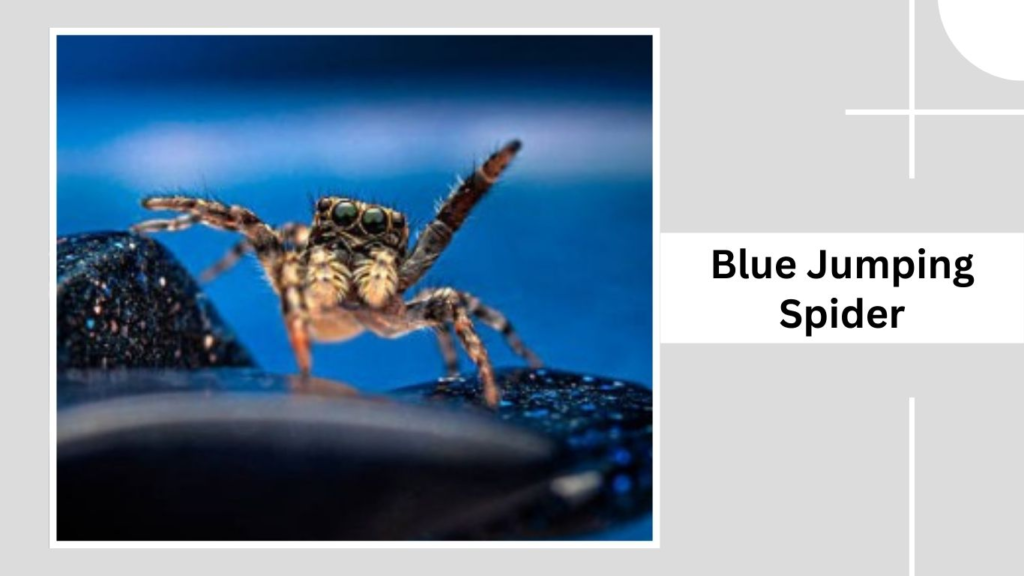
The Blue Jumping Spider is a small, energetic spider famous for its excellent vision and quick movements. Its blue coloration and curious behavior make it one of the most interesting spiders to observe.
Identification
- Scientific name: Salticidae (family)
- Common name: Blue Jumping Spider
- Body color: blue or blue-black with iridescent tones
- Eyes: large forward-facing eyes
- Size: small spider
Color Pattern
This spider often displays iridescent blue scales or hairs that shimmer in sunlight. The blue coloration may appear more vivid during movement or courtship displays.
Habitat
Blue Jumping Spiders are found in a wide range of environments, including gardens, walls, tree trunks, and grasslands. They prefer sunny areas where their vision is most effective.
Behavior
This species is highly active and intelligent compared to many spiders. It does not use webs to catch prey but instead stalks and leaps onto insects with remarkable accuracy.
Danger of Bite
Bites are very uncommon and not dangerous. If handled roughly, a bite may cause slight pain or redness, but no serious effects are expected.
9. Blue Wolf Spider
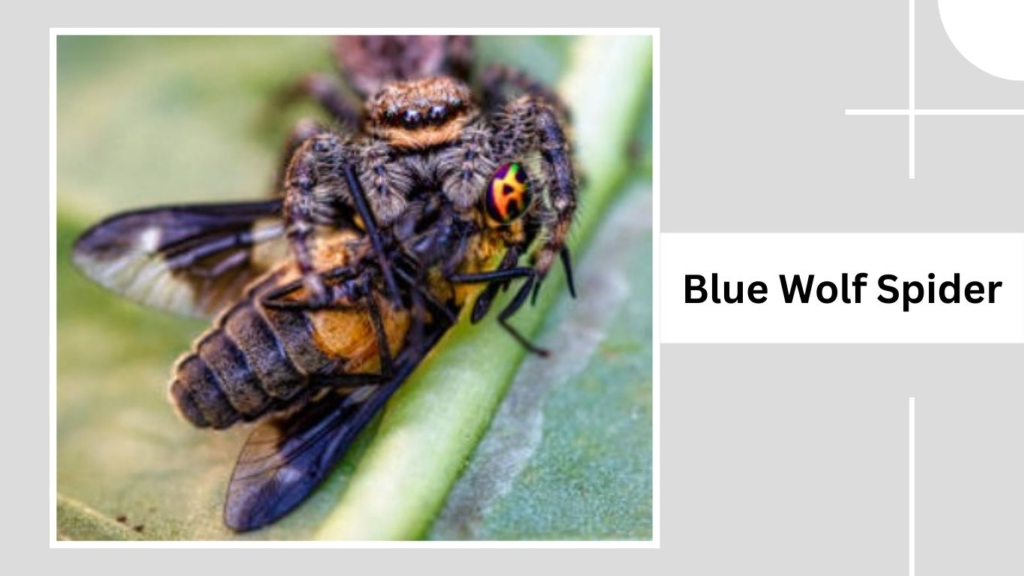
The Blue Wolf Spider is a ground-dwelling hunter known for its speed, strength, and subtle blue coloration. Unlike web-building spiders, it actively chases prey, relying on agility and sharp senses.
Identification
- Scientific name: Lycosidae (family)
- Common name: Blue Wolf Spider
- Body color: gray to brown with bluish tones
- Eye pattern: large central eyes with smaller surrounding eyes
- Size: medium to large spider
Color Pattern
This spider shows muted blue or steel-blue highlights mixed with brown or gray. The blue tones are usually more noticeable under certain lighting conditions rather than being яр and vivid.
Habitat
Blue Wolf Spiders are commonly found in grasslands, forests, gardens, and near water sources. They live on the ground, hiding under rocks, logs, or leaf litter.
Behavior
This species is a fast and efficient hunter. It does not spin webs for prey capture and is mostly nocturnal. Females are known for carrying their egg sacs and young on their bodies.
Danger of Bite
Bites are uncommon and occur mainly when the spider is threatened. The bite may cause temporary pain, redness, or swelling but is not considered medically dangerous.
10. Blue Peacock Spider
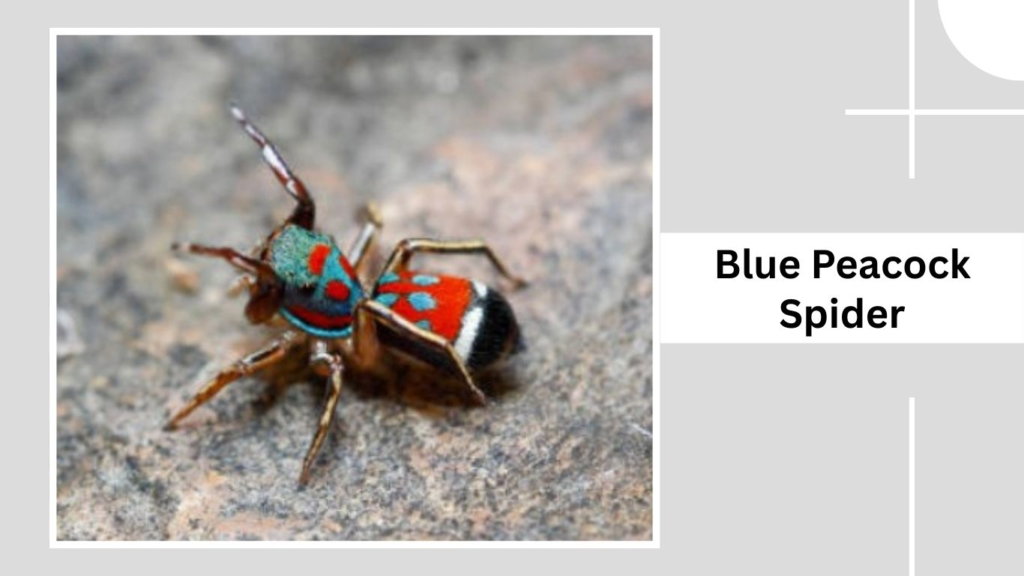
The Blue Peacock Spider is a tiny yet spectacular spider best known for its dazzling courtship displays. Despite its small size, it stands out due to its vivid blue coloration and animated movements.
Identification
- Scientific name: Maratus spp.
- Common name: Blue Peacock Spider
- Body color: bright blue with iridescent patterns
- Size: very small spider
- Distinct feature: colorful abdominal fan in males
Color Pattern
This spider exhibits intense blue and rainbow-like iridescent markings, especially in males. The abdomen displays intricate patterns that reflect light during courtship dances.
Habitat
Blue Peacock Spiders are mainly found in Australia, living in grasslands, leaf litter, and open woodland areas. They prefer dry environments with plenty of sunlight.
Behavior
This species is famous for its elaborate mating dances. Males raise and wave their colorful abdomen while performing rhythmic movements to attract females.
Danger of Bite
Bites are extremely rare and harmless. Due to their tiny size, they pose no medical risk to humans and are considered completely safe.
11. Blue Garden Spider
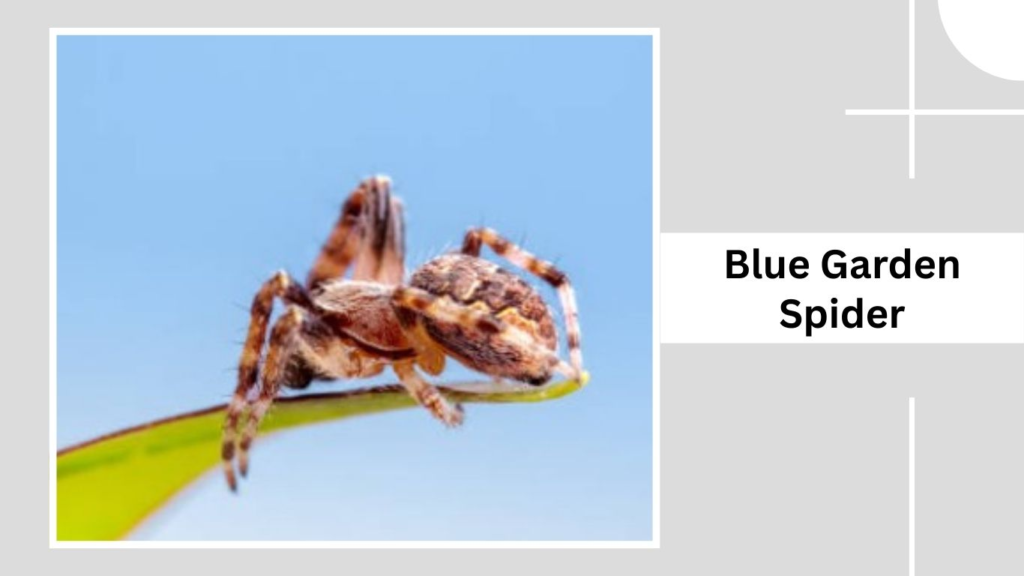
The Blue Garden Spider is a visually appealing spider often noticed in gardens due to its web-building habits and subtle blue tones. It plays a beneficial role by controlling insect populations.
Identification
- Scientific name: Argiope spp.
- Common name: Blue Garden Spider
- Body color: blue-gray with yellow or white markings
- Abdomen shape: elongated
- Size: medium to large spider
Color Pattern
This spider shows a mix of blue-gray hues combined with bright yellow, white, or black markings on the abdomen. The contrast makes it easy to spot on its web.
Habitat
Blue Garden Spiders are commonly found in gardens, fields, and open woodland areas. They build large orb-shaped webs between plants and shrubs.
Behavior
This species is calm and mostly stationary. It sits in the center of its web during the day and waits for flying insects to become trapped in the silk.
Danger of Bite
Bites are rare and usually occur only when the spider is handled. The bite may cause mild pain or redness but is not dangerous to humans.
12. Blue Metallic Tarantula
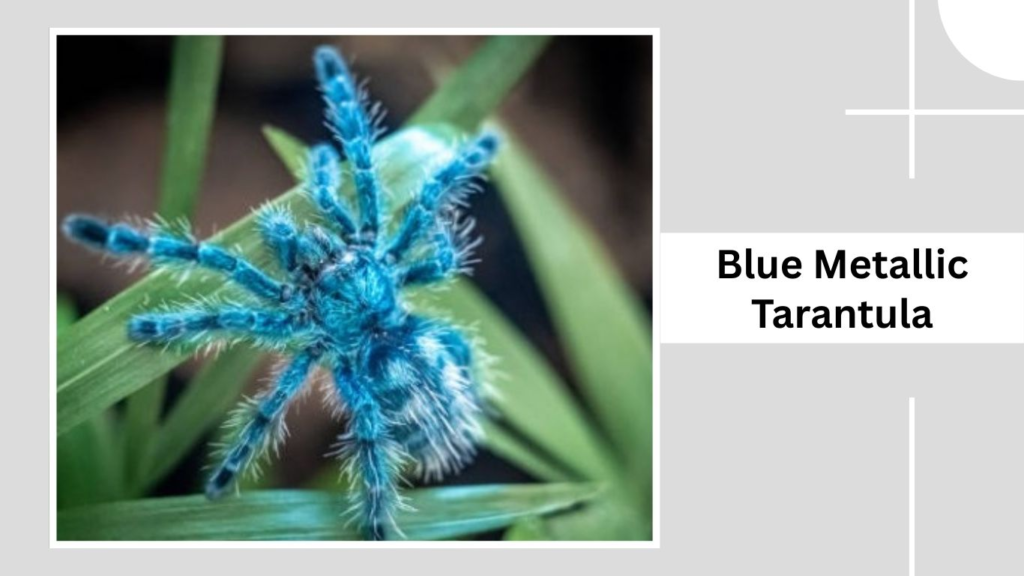
The Blue Metallic Tarantula is a rare and eye-catching tarantula admired for its shimmering blue coloration. It is less commonly seen than other blue-toned tarantulas, adding to its appeal among spider enthusiasts.
Identification
- Scientific name: Poecilotheria spp.
- Common name: Blue Metallic Tarantula
- Leg color: metallic blue with patterned markings
- Body color: gray to bluish-black
- Size: large tarantula
Color Pattern
This tarantula displays a glossy metallic blue sheen across its legs, often combined with pale yellow or cream patterns. The blue tones appear more intense under natural light.
Habitat
Blue Metallic Tarantulas are typically found in forested regions, where they live in tree hollows or crevices. They prefer warm climates with moderate humidity.
Behavior
This species is fast-moving and alert. It relies on speed and retreat rather than aggression, but it may show defensive postures if threatened.
Danger of Bite
The bite is not considered life-threatening but can be painful. Symptoms may include localized pain, swelling, and muscle discomfort, so caution is advised when encountering this tarantula.
