

The orb weaver spider web is one of the most recognizable natural structures in the world. Often seen glistening with morning dew or stretching neatly between trees and garden posts, these webs are both delicate and highly functional. Built primarily to capture flying insects, orb weaver webs reflect an impressive balance of strength, precision, and efficiency. While they may look fragile, these webs are carefully engineered tools that play a vital role in the spider’s survival and in controlling insect populations.
Scientific Background and Overview
What Is an Orb Weaver Spider Web
An orb weaver spider web is a circular, wheel-shaped web designed to trap flying prey. It consists of a strong outer frame, radiating spokes, and a spiral of sticky capture silk. This design allows the web to absorb the impact of fast-moving insects while alerting the spider to vibrations that signal a successful catch.
Orb Weaver Spider Families That Build These Webs
Orb-shaped webs are constructed by many spiders belonging to the orb-weaver group. While individual spider species may vary in size and behavior, the basic web design remains largely consistent. This shared structure has proven so effective that it has remained largely unchanged through millions of years of spider evolution.
Size and Overall Web Structure
Orb weaver spider webs can range widely in size depending on the species and environment. Smaller webs may measure less than 30 centimeters across, while larger webs can exceed one meter in diameter. The web is anchored to surrounding vegetation or structures using strong support threads that keep it stable.
At the center of the web lies the hub, where the spider often rests or monitors vibrations. From this hub, straight radial threads extend outward like spokes on a wheel. These radial lines provide the main framework and allow the spider to move quickly across the web without getting stuck.
The circular spiral threads form the capture zone. These threads are coated with sticky droplets that trap insects upon contact. Together, the frame, spokes, and spiral create a structure that is both lightweight and remarkably durable.
Web Design and Visual Appearance
The classic orb shape is what makes these webs so easy to identify. When viewed head-on, the web appears almost symmetrical, though slight imperfections are common and do not affect performance. In sunlight or early morning dew, the web becomes highly visible, revealing its intricate design.
Freshly built webs appear clean and evenly spaced, while older webs may look irregular due to damage from wind, insects, or debris. Some orb weaver species create webs with visible gaps or decorative patterns, which may help reduce damage from larger animals or birds flying through.
Although the silk itself is usually colorless, reflections of light can make the web shimmer or appear silvery. This visual effect is one reason orb weaver webs are often noticed at dawn.
Identification Features of an Orb Weaver Web
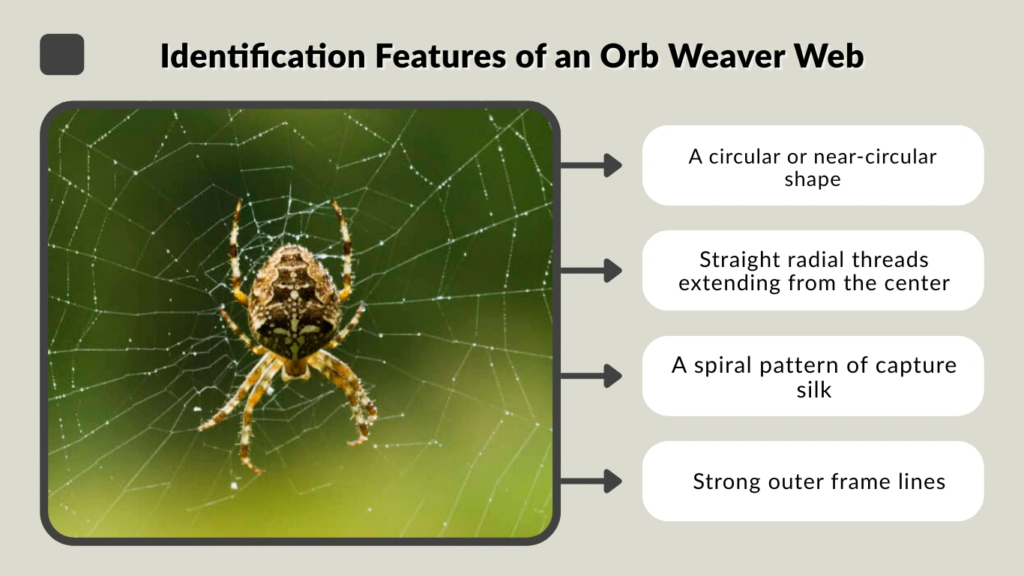
Key features that help identify an orb weaver spider web include:
- A circular or near-circular shape
- Straight radial threads extending from the center
- A spiral pattern of capture silk
- Strong outer frame lines
- A central hub where the spider rests
Habitat and Web Placement
Common Locations for Web Construction
Orb weaver webs are commonly found in gardens, forests, fields, and near buildings. Spiders choose locations where flying insects are abundant, such as near lights, flowering plants, or open pathways. Human-made structures often provide ideal anchor points for web construction.
Height and Positioning Preferences
Web height varies by species. Some orb weavers build low webs close to the ground, while others place them several feet above ground level. The positioning often depends on the typical flight paths of their preferred prey and the availability of stable attachment points.
Silk Types Used in Orb Weaver Webs
Orb weaver spiders use multiple types of silk within a single web. Structural silk forms the frame and radial threads, providing strength and support. This silk is non-sticky, allowing the spider to move freely across it.
The spiral capture threads are coated with sticky droplets that trap insects on contact. This silk is highly elastic, helping absorb the impact of fast-flying prey. Each type of silk serves a specific purpose, contributing to the web’s overall effectiveness.
Web-Building Behavior
When Orb Weaver Webs Are Built
Most orb weaver spiders build or repair their webs during the evening or early morning hours. Constructing webs during low-activity periods reduces the risk of damage while building and ensures the web is fresh and effective during peak insect activity.
How the Web Is Constructed
Web construction follows a consistent sequence. The spider first creates anchor lines, then builds the frame and radial spokes. A temporary spiral is added to guide spacing, followed by the final sticky spiral. Once complete, the spider removes the temporary threads and waits at the hub for prey.
Function of the Orb Weaver Web
The primary function of an orb weaver spider web is efficient prey capture. Its circular design allows flying insects to strike the web from multiple angles, increasing capture success. The elastic silk absorbs impact energy, preventing prey from bouncing free while sending vibrations that alert the spider.
Beyond hunting, the web also helps the spider conserve energy. Rather than actively chasing prey, the spider relies on the web to do most of the work. This passive hunting strategy allows orb weavers to survive while expending minimal effort, especially in areas with abundant insects.
Prey Commonly Caught in Orb Weaver Webs
Orb weaver webs are designed to trap a wide range of flying insects, including:
- Flies and mosquitoes
- Moths and butterflies
- Bees and wasps
- Small flying beetles
The size and spacing of the web often determine the type of prey caught. Larger webs tend to capture bigger insects, while smaller webs are more effective against lightweight prey.
Damage, Repair, and Web Rebuilding
Orb weaver webs are frequently damaged by wind, rain, animals, or large insects. When damage occurs, the spider assesses whether the web can be repaired or needs to be replaced entirely. Minor breaks are often fixed quickly by reinforcing silk strands.
In cases of heavy damage or reduced effectiveness, the spider may dismantle the web and rebuild it from scratch. Many orb weavers recycle silk proteins by consuming old web material, allowing them to conserve resources while constructing a new web.
Natural Threats to Orb Weaver Webs
Several factors can threaten the integrity of orb weaver spider webs:
- Strong wind and heavy rainfall
- Birds or bats flying through webs
- Human activity near gardens and homes
- Falling leaves or debris
Despite these challenges, orb weavers are highly adaptable and capable of rebuilding quickly when conditions allow.
Relationship With Humans
Orb weaver spider webs are harmless to humans and pose no direct danger. While walking into a web can be unpleasant, the spiders themselves are non-aggressive and rarely bite. If a bite does occur, symptoms are usually mild and short-lived.
These webs provide a natural benefit by reducing insect populations around homes and gardens. Many people choose to leave orb weaver webs undisturbed, recognizing their role in maintaining ecological balance and controlling pests naturally.
FAQs
Why are orb weaver spider webs so perfectly round?
Orb weaver webs are round because the circular shape distributes tension evenly across the structure. This design improves stability and allows the web to absorb the impact of flying insects from multiple directions, increasing the chances of successful prey capture without tearing.
Do orb weaver spiders rebuild their webs every day?
Many orb weaver spiders rebuild or heavily repair their webs daily, especially if the web has been damaged or filled with debris. However, some spiders only repair sections as needed, depending on environmental conditions and prey availability.
Are orb weaver webs sticky everywhere?
No, orb weaver webs are not sticky throughout. Only the spiral capture threads contain sticky droplets. The radial spokes and frame lines are non-sticky, allowing the spider to move freely across the web without becoming trapped.
Where are orb weaver spider webs most commonly found?
Orb weaver webs are commonly found in gardens, forests, fields, and near buildings. They are often placed in areas with high insect traffic, such as near lights, flowering plants, or open pathways between trees and structures.
What happens if an orb weaver web is destroyed?
If a web is destroyed, the spider typically rebuilds it when conditions are favorable. Some spiders repair damaged sections, while others consume the old web and construct a new one, recycling silk proteins to conserve energy.
