
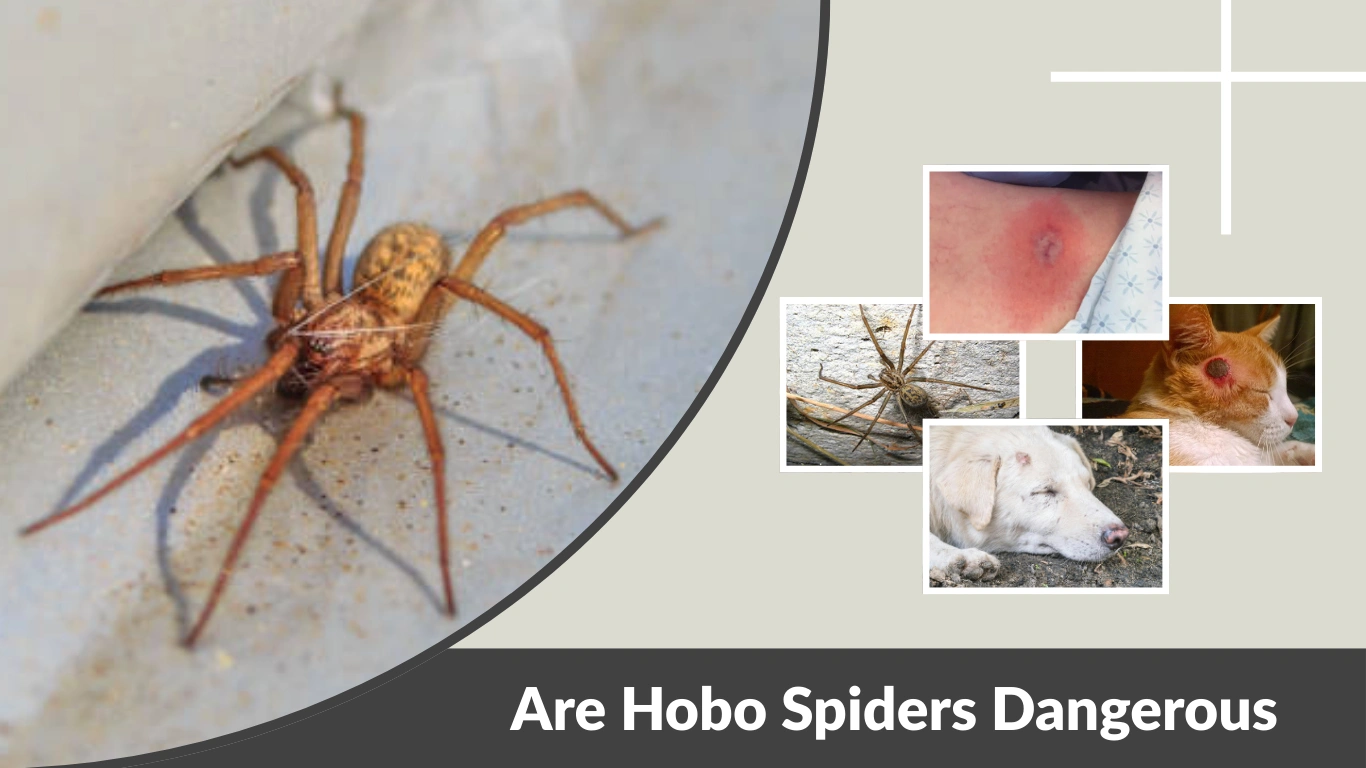
Hobo spiders are often surrounded by fear and misinformation, leading many people to ask whether they are truly dangerous. Searches about hobo spider danger commonly focus on risks to humans as well as pets like dogs and cats. For years, hobo spiders were believed to have highly dangerous venom, but modern research has challenged that idea. This article explains how dangerous hobo spiders really are, why they gained a bad reputation, and what risk they pose to people and animals based on current scientific understanding.
What Is a Hobo Spider?
The hobo spider (Tegenaria agrestis) is a funnel-weaving spider in the Agelenidae family. It is native to Europe and became established in parts of the United States during the 20th century. Hobo spiders are ground-dwelling spiders that prefer dry, undisturbed areas and often build funnel-shaped webs near foundations, basements, and outdoor structures.
These spiders are fast runners but are not aggressive. They typically avoid humans and bite only in self-defense when accidentally pressed against the skin.
Are Hobo Spiders Dangerous?
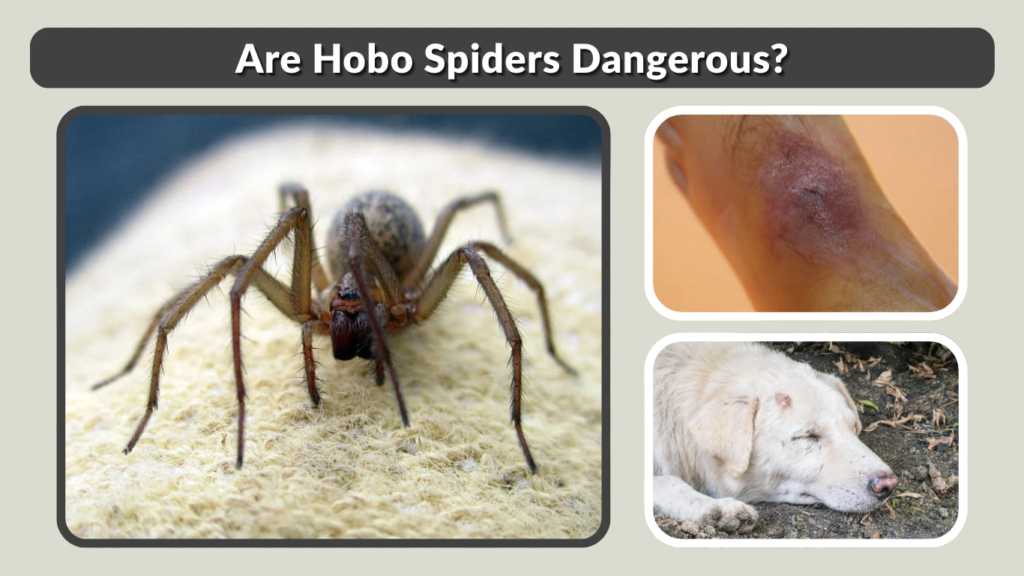
The short answer is no—hobo spiders are not considered dangerous to humans or pets. While they are venomous, like most spiders, venomous does not automatically mean harmful. Current scientific evidence shows that hobo spider venom is mild and not medically significant.
Most fear surrounding hobo spiders comes from outdated studies and widespread misidentification. When left undisturbed, hobo spiders pose little to no threat.
How Dangerous Are Hobo Spiders to Humans?
Risk of Being Bitten
Hobo spider bites are rare. These spiders do not actively seek out humans and are more likely to flee than bite. Bites usually occur only when a spider becomes trapped in clothing, bedding, or shoes.
Because spider bites are difficult to confirm without capturing the spider, many reported bites are actually caused by insects, allergic reactions, or skin infections rather than hobo spiders.
Effects of a Hobo Spider Bite on Humans
When bites do occur, symptoms are typically mild. Most people experience minor redness, slight swelling, or itching at the bite site. Pain is usually minimal and short-lived.
There is no consistent evidence that hobo spider bites cause necrotic wounds. Most symptoms resolve on their own within a few days without medical treatment.
Are Hobo Spiders Actually Dangerous?
Early research in the 1990s suggested that hobo spider venom could cause tissue damage. These claims led to the spider being labeled as dangerous. However, later studies failed to reproduce those results.
Modern research and medical reviews now agree that hobo spiders are not responsible for the severe wounds once attributed to them. Many of those cases were later linked to bacterial infections, particularly MRSA, or other medical conditions.
Why Are Hobo Spiders Considered Dangerous?
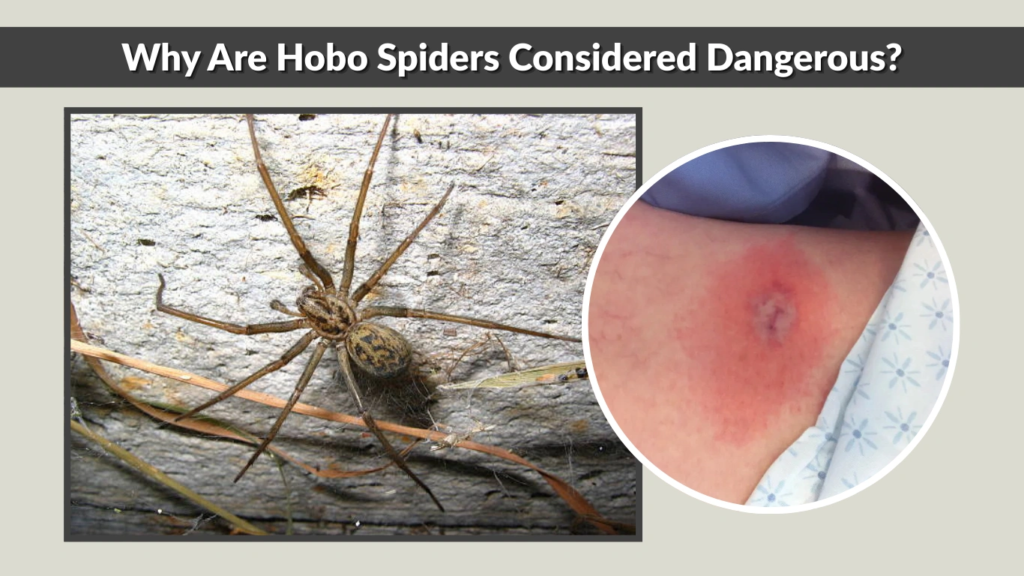
Hobo spiders gained their dangerous reputation due to a combination of misinformation, media coverage, and confusion with other spiders. The brown recluse spider, which can cause necrotic wounds, is frequently mistaken for the hobo spider.
Additionally, unexplained skin lesions are often blamed on spiders even when no spider was seen. Over time, this reinforced the false belief that hobo spiders are highly dangerous.
Do Hobo Spiders Have Dangerous Venom?
Hobo spider venom is relatively weak compared to medically significant spiders. While it is capable of subduing small insects, it does not pose a serious threat to humans.
Venom strength alone does not determine danger. The amount delivered, how the body reacts, and the spider’s behavior all matter. In the case of hobo spiders, the overall risk remains low.
Are Hobo Spiders Dangerous to Dogs?
Can Hobo Spiders Bite Dogs?
Hobo spider bites in dogs are rare. Dogs may encounter spiders while sniffing, digging, or exploring dark spaces, but most interactions do not result in bites.
If a bite occurs, it is usually accidental and defensive rather than aggressive.
Symptoms of a Hobo Spider Bite in Dogs
Symptoms in dogs are typically mild and may include slight swelling, redness, or localized discomfort. Serious reactions are uncommon. If a dog shows persistent pain, lethargy, or worsening symptoms, a veterinarian should be consulted.
Are Hobo Spiders Dangerous to Cats?
Cat and Spider Encounters
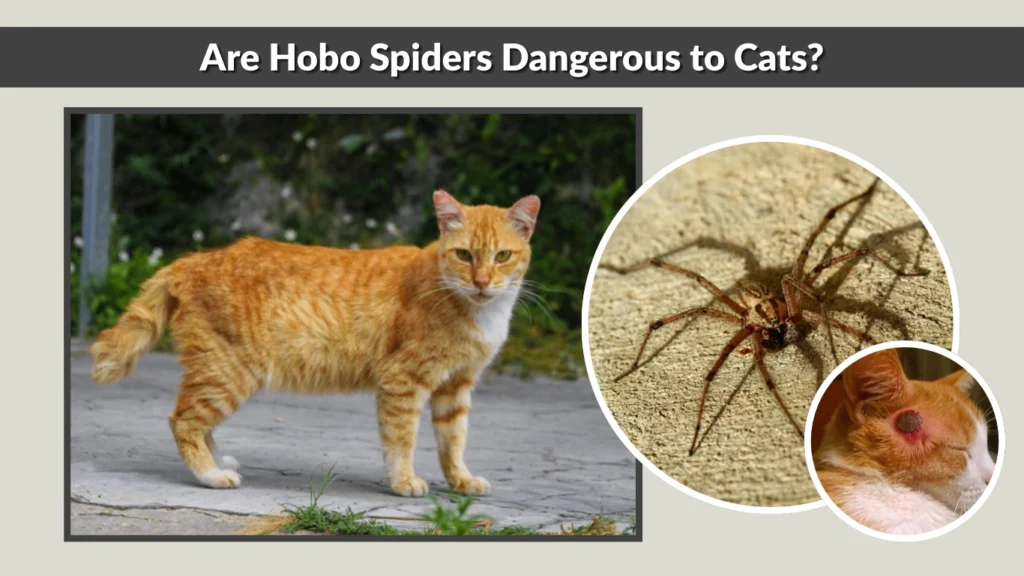
Cats are naturally curious and more likely than dogs to interact with spiders. A cat may paw at or attempt to catch a hobo spider if it encounters one indoors or near the ground. Even in these situations, bites are uncommon because hobo spiders tend to flee rather than defend themselves aggressively.
Most encounters between cats and hobo spiders end without injury.
Risk Level for Cats
Hobo spiders are not considered dangerous to cats. If a bite does occur, symptoms are usually mild and may include slight swelling or irritation at the bite site. Serious reactions are rare. A veterinarian should be contacted if a cat shows unusual behavior, prolonged swelling, or signs of pain that do not improve.
Hobo Spiders Compared to Other Common Spiders
Hobo Spider vs Brown Recluse
Hobo spiders are often mistaken for brown recluse spiders, but the risk level is very different. Brown recluse spiders have medically significant venom that can cause tissue damage in some cases. They are primarily found in the central and southern United States.
Hobo spiders lack the distinctive violin-shaped marking of the brown recluse and are mainly found in the Pacific Northwest. Their bites are mild and not considered dangerous.
Hobo Spider vs Wolf Spider
Wolf spiders are larger and hairier than hobo spiders and do not rely on webs to hunt prey. While wolf spider bites may be slightly more painful, they are also considered low risk.
Both species are frequently misidentified as dangerous spiders, but neither poses a serious threat to humans or pets.
What Should You Do If You Find a Hobo Spider?
Finding a hobo spider in or around the home is not a cause for alarm. The safest approach is to leave the spider alone or gently remove it using a cup and piece of paper. Sealing cracks and reducing clutter can help prevent spiders from entering indoor spaces.
Professional pest control is usually unnecessary unless spiders are appearing in large numbers or causing ongoing concern.
How to Reduce the Risk of Hobo Spider Encounters
Simple preventive measures can reduce the chance of encountering hobo spiders indoors. Sealing gaps around doors and windows, removing debris near foundations, and keeping basements clean can limit suitable habitats.
Reducing insects around the home also helps, as spiders are attracted to areas with abundant prey. These steps lower the risk without the need for chemical treatments.
FAQs
Are hobo spiders dangerous to humans?
No. Current scientific evidence shows that hobo spiders are not dangerous to humans. Their bites are rare and usually cause only mild symptoms.
How dangerous are hobo spiders really?
Hobo spiders are considered low-risk. Most fear comes from outdated information and misidentification rather than verified medical cases.
Are hobo spiders dangerous to dogs?
Hobo spiders are not dangerous to dogs. Bites are rare and typically result in mild, temporary symptoms.
Are hobo spiders dangerous to cats?
Hobo spiders are not considered dangerous to cats. Serious reactions are extremely uncommon.
Why do people think hobo spiders are dangerous?
This belief comes from older studies, media reports, and confusion with brown recluse spiders, as well as misdiagnosed skin conditions.
Conclusion
Hobo spiders have long been misunderstood and unfairly labeled as dangerous. Modern research shows that they pose little risk to humans, dogs, or cats. While they may look intimidating, their behavior is shy, and bites are rare and mild. Understanding the facts helps replace fear with informed awareness, making it easier to coexist safely with these common spiders.
