

Some wasps grow impressively large—so much so that they often get mistaken for hornets or even flying predators. These wasp-type insects, found in regions like Florida, California, and beyond, play key roles in nature as predators, pollinators, and pest controllers. This list highlights nine of the largest wasp-like species known for their size, unique behaviors, and remarkable appearances.
1. Tarantula Hawk Wasp
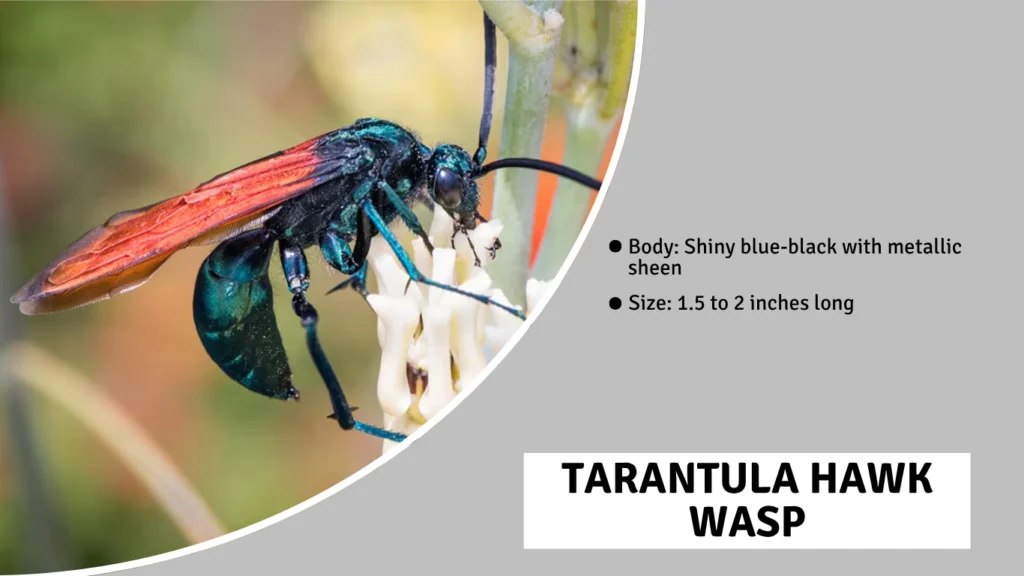
The Tarantula Hawk Wasp is one of the largest and most striking wasp species in the world. Known for its powerful sting and impressive size, this solitary wasp hunts tarantulas to feed its larvae. Despite its fearsome reputation, it is generally non-aggressive toward humans.
Identification
- Size: 1.5 to 2 inches long
- Body: Shiny blue-black with metallic sheen
- Wings: Bright orange or rust-colored
- Legs: Long with hooked claws
Nesting Behavior
Females search for tarantulas, sting them to paralyze, and drag them to a burrow. They lay a single egg on the spider, and the larva feeds on it over time.
Behavior and Sting
While not aggressive, the female’s sting is considered one of the most painful insect stings in the world. It is brief but intensely sharp. Males do not sting.
Habitat
Commonly found in deserts, scrublands, and open areas in the southwestern U.S., including parts of California. They are less common but occasionally spotted in southern Florida.
2. Cicada Killer Wasp
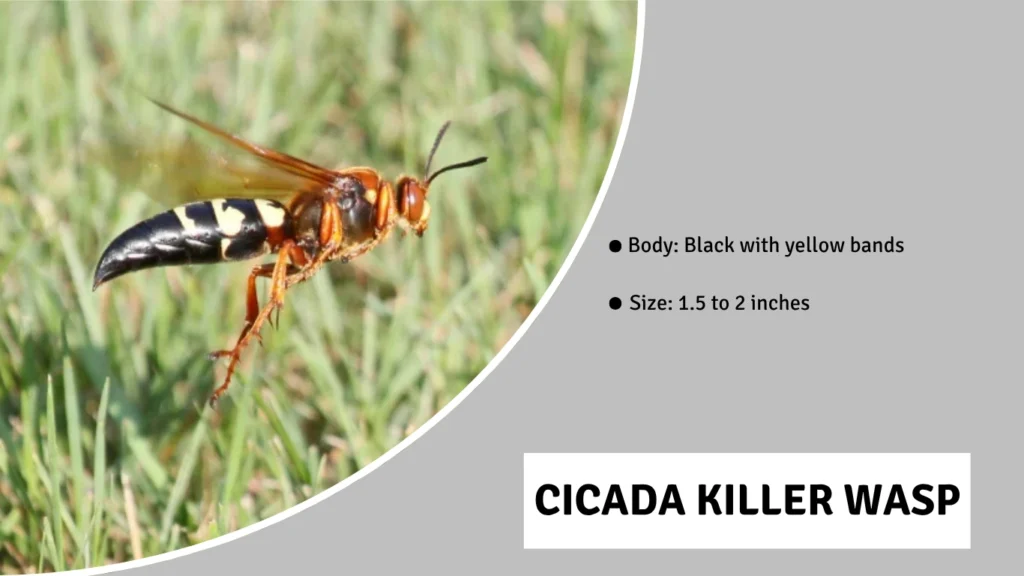
The Cicada Killer Wasp is a massive, solitary wasp known for hunting cicadas. Despite its intimidating appearance, it is not aggressive toward humans and rarely stings unless provoked.
Identification
- Size: 1.5 to 2 inches
- Body: Black with yellow bands
- Wings: Amber-colored
- Head: Large with strong mandibles
Nesting Behavior
Females dig tunnels in sandy or loose soil. They paralyze cicadas, drag them into the burrow, and lay eggs on them for their larvae to feed.
Behavior and Sting
Non-aggressive. Males may hover around people but can’t sting. Females sting only if handled.
Habitat
Found in lawns, gardens, and dry, sandy areas throughout the eastern U.S., including Florida, and western regions like California.
3. Giant Ichneumon Wasp

The Giant Ichneumon Wasp is a parasitic wasp with an incredibly long ovipositor, used to lay eggs deep inside wood where host larvae live. It’s large and dramatic in appearance but entirely harmless to humans.
Identification
- Size: Up to 2 inches (ovipositor may add 3+ inches)
- Body: Slender, brown or black with yellow markings
- Antennae: Very long and thread-like
- Ovipositor: Needle-like and longer than the body (not a stinger)
Nesting Behavior
They lay eggs on wood-boring insect larvae deep in trees. The larva feeds on the host as it develops.
Behavior and Sting
Harmless to humans. Does not sting. The ovipositor is used solely for egg-laying.
Habitat
Found in wooded areas, near dead or decaying trees. Common in both forested parts of Florida and California.
4. Great Golden Digger Wasp

The Great Golden Digger Wasp is a large, solitary species known for its striking colors and gentle behavior. It preys on insects like crickets and katydids, which it uses to feed its young. Despite its size, it’s non-aggressive and beneficial for gardens.
Identification
- Size: 0.8 to 1.2 inches
- Body: Black and reddish-orange with golden hairs on the thorax
- Wings: Transparent with a slightly amber tint
- Legs: Long and orange
Nesting Behavior
Females dig burrows in loose, sandy soil. Inside, they create multiple chambers and place a paralyzed insect in each, laying one egg per chamber. The larvae consume the prey once they hatch.
Behavior and Sting
Docile and rarely stings. Females are focused on nest building and hunting. Males are territorial but harmless.
Habitat
Common in open fields, gardens, sandy lots, and grassy areas throughout Florida and California during summer and early fall. They are often seen flying low to the ground.
5. European Hornet

The European Hornet is one of the few true hornets in the U.S., introduced from Europe. It is large, social, and capable of stinging multiple times. Though more common in the eastern U.S., it is increasingly reported in parts of northern California.
Identification
- Size: 1 to 1.5 inches
- Body: Brown with yellow bands and a reddish-brown head
- Wings: Reddish-brown, translucent
- Shape: Thick-bodied and robust
Nesting Behavior
Nests are built in hollow trees, wall voids, attics, or barns. Made of paper-like material, the colony can grow to several hundred hornets by late summer.
Behavior and Sting
Moderately aggressive. Will defend their nest if disturbed. Can sting repeatedly, and the sting is painful. Attracted to lights at night.
Habitat
Prefers wooded and rural areas but may also be found near human dwellings in both California and Florida. Most active from spring to early fall.
6. Asian Giant Hornet
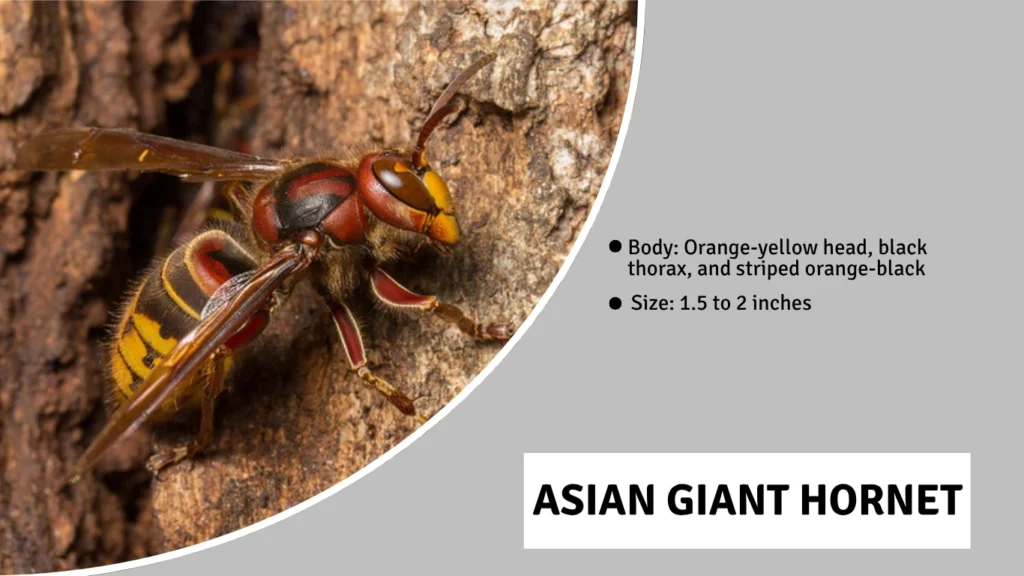
The Asian Giant Hornet, often dubbed the “murder hornet,” is the largest hornet species in the world. Though native to Asia, isolated sightings have raised concern in parts of North America. It’s known for its potent sting and aggressive behavior toward honeybees.
Identification
- Size: 1.5 to 2 inches
- Body: Orange-yellow head, black thorax, and striped orange-black abdomen
- Eyes: Large and prominent
- Wings: Dark brown, strong flier
Nesting Behavior
Nests are usually built underground or in hollow trees. Colonies can grow to include hundreds of hornets. They raid beehives by decapitating bees and feeding the brood with the protein.
Behavior and Sting
Highly aggressive near their nests. The sting is extremely painful and can be dangerous, especially in groups. Unlike bees, they can sting multiple times.
Habitat
Native to Asia, but sightings have occurred in the Pacific Northwest. Not yet established in Florida, but climate could support them if introduced. Suitable habitats include forests, hills, and farmlands.
7. Red Paper Wasp

The Red Paper Wasp is a large, social wasp known for its reddish coloration and paper-like nest structures. It is common in the southern U.S., especially Florida, and parts of California.
Identification
- Size: 1 to 1.2 inches
- Body: Reddish-brown with little to no striping
- Legs: Long and dangling when flying
- Wings: Reddish translucent
Nesting Behavior
Builds open, umbrella-shaped nests with exposed cells, usually under eaves, tree branches, or outdoor furniture. Colonies are relatively small.
Behavior and Sting
Moderately aggressive. Will defend the nest if approached too closely. The sting is painful but not typically life-threatening unless allergic.
Habitat
Found in suburban yards, gardens, and wooded areas throughout Florida and southern California. Active from spring through early fall, especially near human structures.
8. Steel-Blue Cricket Hunter

The Steel-Blue Cricket Hunter is a large, solitary wasp with a metallic sheen. It preys primarily on crickets and is known for its silent and efficient hunting behavior. While large and intimidating in appearance, it is not aggressive toward humans.
Identification
- Size: 1 to 1.2 inches
- Body: Shiny steel-blue or metallic purple
- Wings: Clear to smoky-gray
- Shape: Sleek, narrow abdomen with long legs
Nesting Behavior
Females dig burrows in sandy or loose soil. They hunt and paralyze crickets, place them in the burrow, and lay an egg on the prey. The larva feeds on the cricket as it grows.
Behavior and Sting
Very calm and non-aggressive. Will not sting unless handled. Helps reduce cricket populations.
Habitat
Found in open fields, gardens, and near woodland edges in both Florida and California. Most active during summer months.
9. Mammoth Wasp

The Mammoth Wasp is the largest wasp species in Europe and occasionally spotted in parts of the U.S. due to international transport. Though not native, it’s worth noting due to its size and unique appearance.
Identification
- Size: Up to 2 inches
- Body: Black with bright yellow markings on the head and thorax
- Wings: Reddish-brown, powerful flier
- Appearance: Stout and hairy
Nesting Behavior
Females seek beetle larvae (especially scarab beetles), paralyze them, and lay eggs on them. The larvae consume the host as they develop.
Behavior and Sting
Rarely aggressive. While capable of stinging, they are generally non-confrontational and avoid human contact.
Habitat
In Europe, they’re found in warm, dry regions with sandy soil. U.S. sightings are rare and mostly accidental in ports or greenhouses. Not established in Florida or California but noteworthy for their size.
