
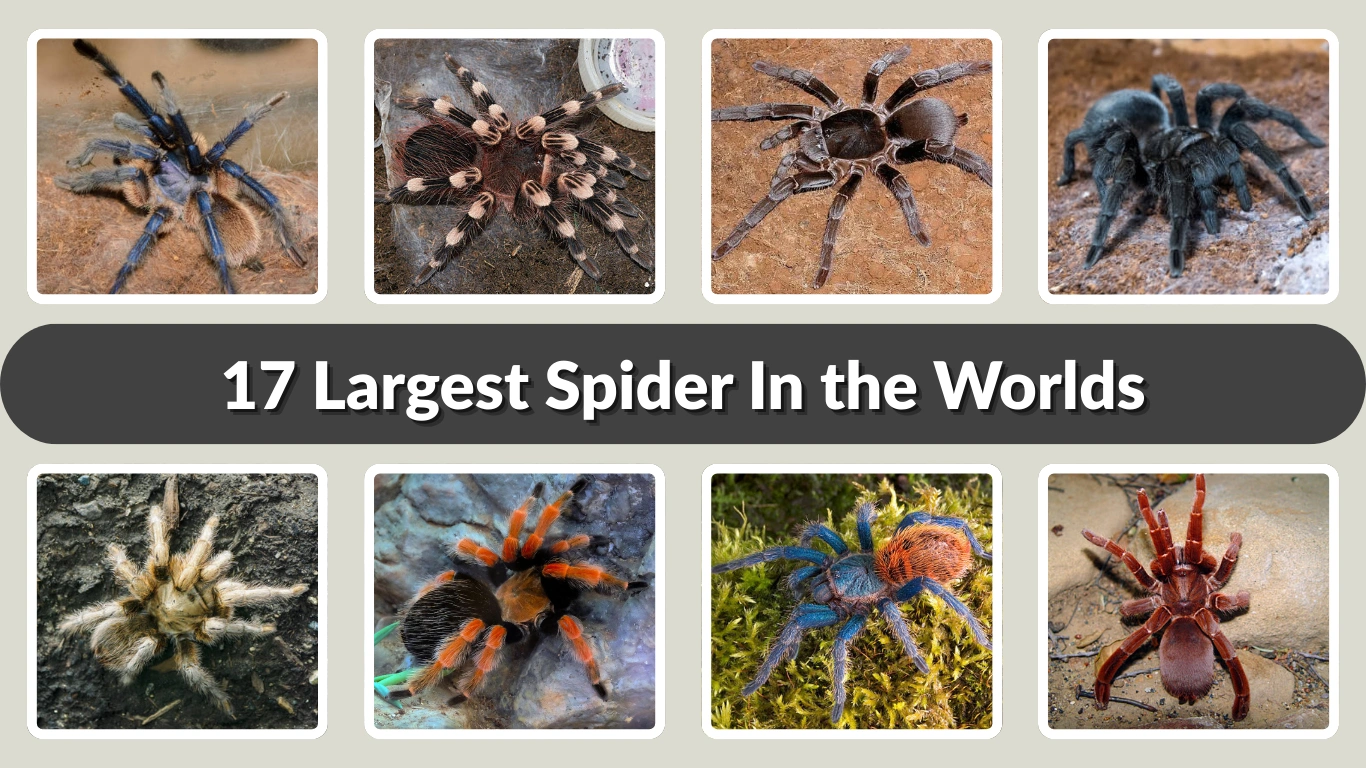
The largest spiders in the world are some of the most fascinating and misunderstood creatures on Earth. Found mainly in tropical and subtropical regions, these giant arachnids are known for their impressive leg spans, heavy bodies, and powerful hunting abilities. While their size can be intimidating, most large spiders are not aggressive toward humans and play an important role in controlling insect and small animal populations within their ecosystems.
1. Goliath Birdeater (Theraphosa blondi)
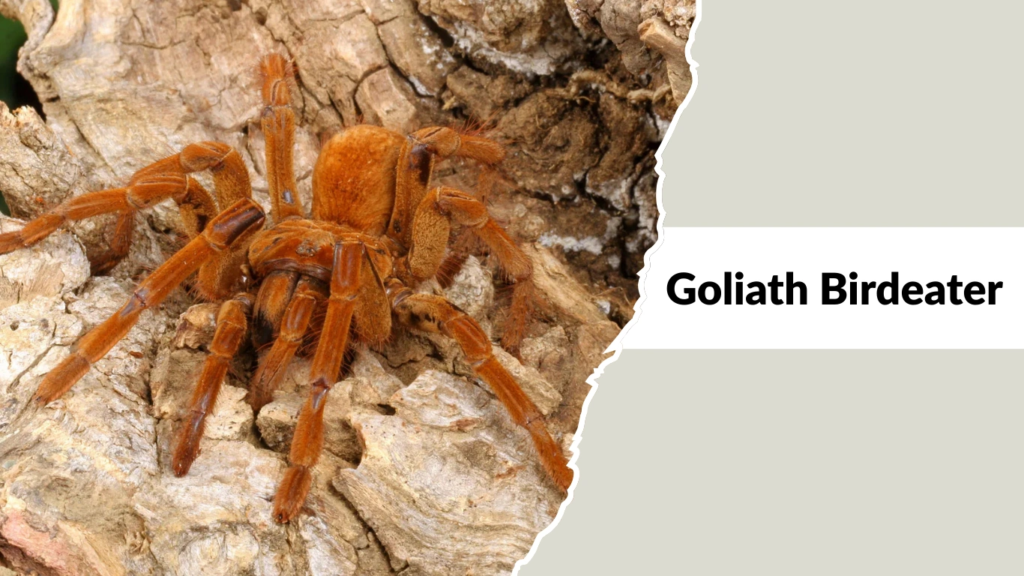
The Goliath Birdeater is widely recognized as the largest spider in the world by mass and body size. Native to the rainforests of northern South America, this massive tarantula is known for its intimidating appearance, powerful fangs, and impressive leg span, making it one of the most famous spiders on Earth.
Identification
- Leg span can reach up to 30 cm (12 inches)
- Body weight may exceed 170 grams
- Dark brown to black body with thick, hairy legs
- Large fangs capable of piercing tough prey
Habitat and Behavior
This species inhabits humid tropical rainforests, where it lives in deep burrows near swamps or forest floors. The Goliath Birdeater is mostly nocturnal and prefers to avoid confrontation. When threatened, it may hiss by rubbing its legs together and can release irritating urticating hairs as a defense mechanism.
Diet and Lifecycle
Despite its name, the Goliath Birdeater mainly feeds on insects, frogs, small rodents, and reptiles. It hunts at night and uses its strong fangs to subdue prey. The lifecycle includes egg, spiderling, juvenile, and adult stages, with females capable of living up to 20 years in the wild.
2. Giant Huntsman Spider (Heteropoda maxima)
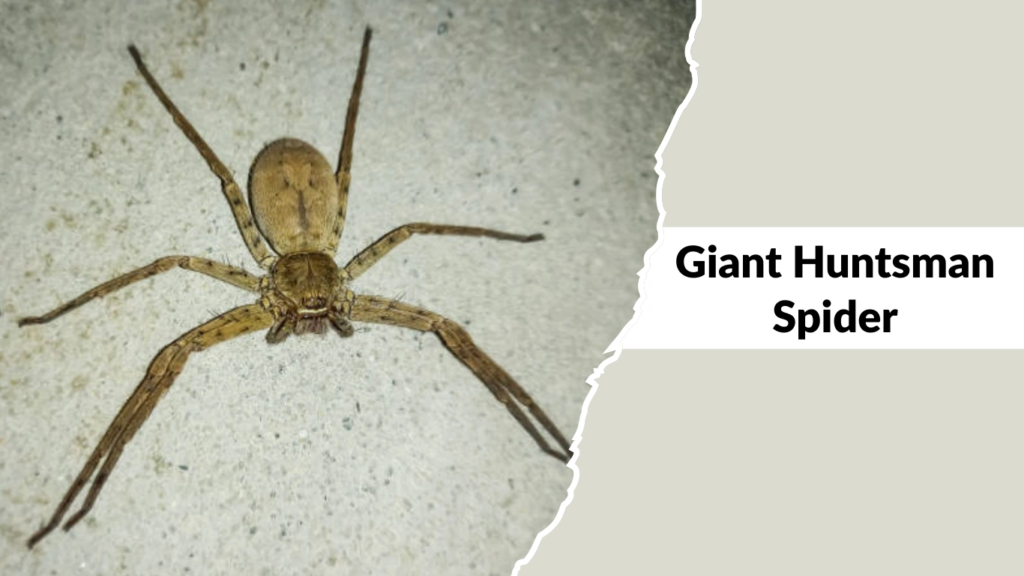
The Giant Huntsman Spider is considered the largest spider in the world by leg span. Discovered in Laos, this impressive species is known for its wide, crab-like stance and remarkable speed, giving it a striking appearance despite its relatively flat body.
Identification
- Leg span can reach up to 30 cm (12 inches)
- Flattened body adapted for squeezing into narrow spaces
- Light brown to gray coloration with darker markings
- Long, sideways-oriented legs
Habitat and Behavior
This spider is typically found in caves, rock crevices, and forested areas. It does not build capture webs and instead hunts prey by ambushing and chasing it down. The Giant Huntsman is fast, agile, and mostly nocturnal, preferring to hide during the day and become active at night.
Diet and Lifecycle
The Giant Huntsman Spider feeds on insects, small reptiles, and other arthropods. It captures prey using speed and strong legs rather than webs. Its lifecycle follows the standard spider stages from egg to adult, with females guarding their egg sacs until spiderlings emerge.
3. Brazilian Salmon Pink Birdeater (Lasiodora parahybana)
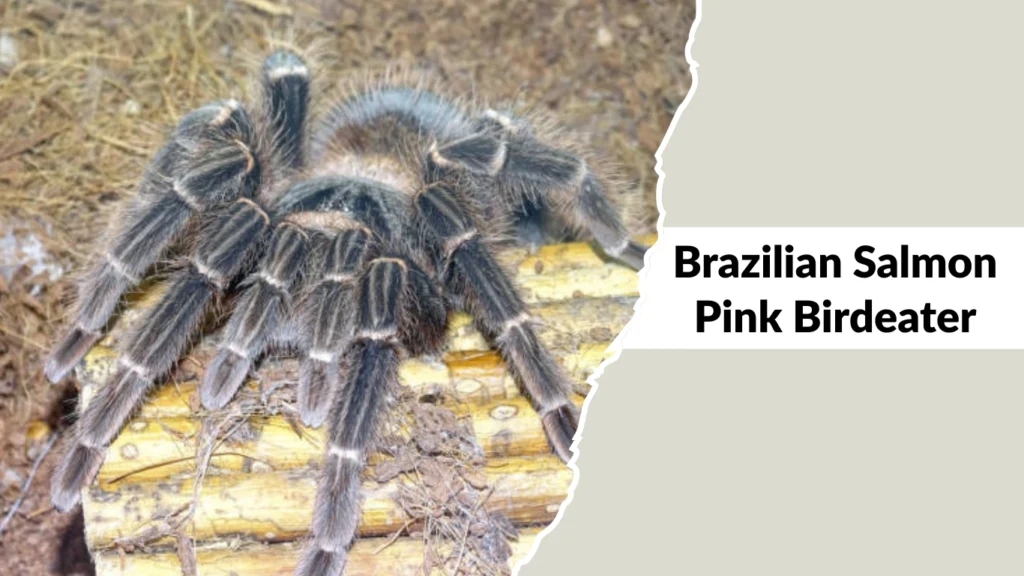
The Brazilian Salmon Pink Birdeater is one of the largest and fastest-growing tarantulas in the world. Native to Brazil, it is well known for its massive size, salmon-pink hairs, and relatively calm temperament, which has made it popular among tarantula enthusiasts.
Identification
- Leg span can reach up to 28 cm (11 inches)
- Dark brown body covered with salmon-pink hairs
- Thick, muscular legs with dense hair coverage
- Large, powerful fangs
Habitat and Behavior
This species inhabits tropical and subtropical forests, where it lives in burrows or sheltered ground areas. It is primarily nocturnal and spends the daytime hidden. While generally calm, it can flick urticating hairs when threatened and may rear up defensively if provoked.
Diet and Lifecycle
The Brazilian Salmon Pink Birdeater feeds on insects, small mammals, reptiles, and amphibians. It is an active hunter that relies on strength rather than webs. Females can live up to 15 years or more, while males have a shorter lifespan, usually a few years after reaching maturity.
4. Colombian Giant Redleg (Megaphobema robustum)
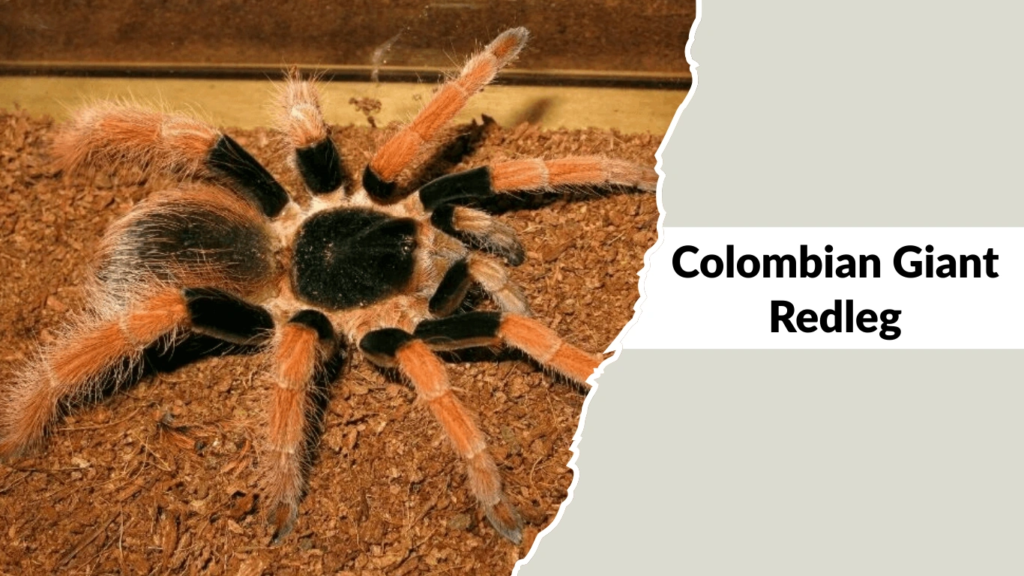
The Colombian Giant Redleg is a large and visually striking tarantula known for its powerful build and aggressive defensive displays. Native to Colombia and parts of South America, this species is recognized for its impressive size and distinctive reddish leg coloration.
Identification
- Leg span can reach up to 20–22 cm (8–9 inches)
- Dark brown to black body with reddish-orange leg hairs
- Thick, muscular legs and a robust abdomen
- Strong fangs used for defense and hunting
Habitat and Behavior
This tarantula inhabits tropical forests and savanna regions, where it lives in burrows hidden beneath vegetation. It is mostly nocturnal and can be highly defensive when disturbed. Unlike many tarantulas, it may spin rapidly in place to confuse threats and is known for its aggressive posture.
Diet and Lifecycle
The Colombian Giant Redleg feeds on insects, small rodents, lizards, and amphibians. It is an active ground hunter that relies on strength and speed. Females can live for more than 15 years, while males typically live much shorter lives after maturity.
5. Chaco Golden Knee (Grammostola pulchripes)
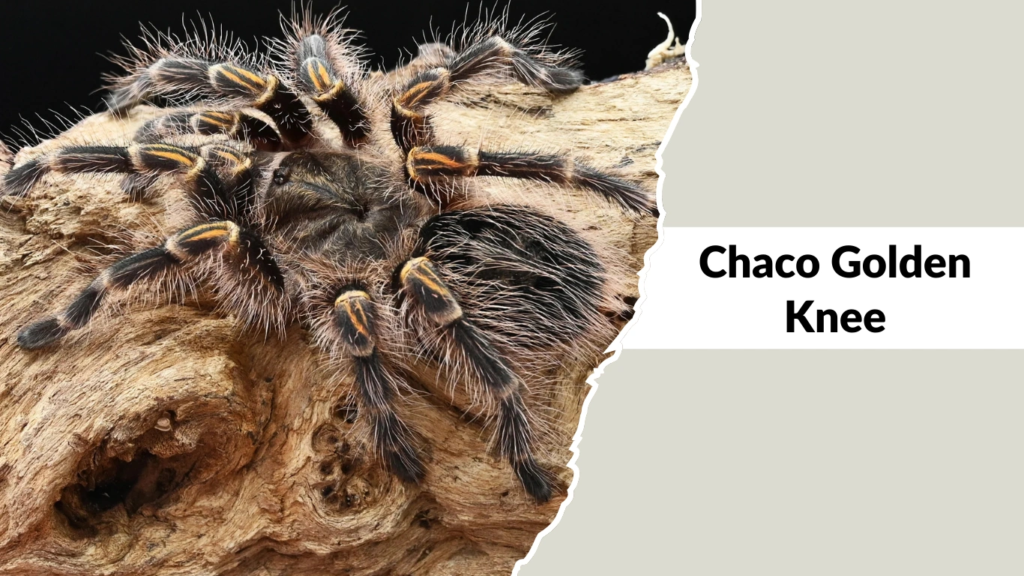
The Chaco Golden Knee is a large, ground-dwelling tarantula admired for its calm nature and striking coloration. Native to Argentina and Paraguay, it is one of the most recognizable large spiders due to the bold golden bands on its legs.
Identification
- Leg span can reach up to 20 cm (8 inches)
- Dark brown to black body with golden knee bands
- Thick, hairy legs and a sturdy body structure
- Large fangs typical of tarantulas
Habitat and Behavior
This species lives in grasslands and dry forest regions, where it creates burrows for shelter. It is mostly nocturnal but may be seen at dusk. The Chaco Golden Knee is known for its docile temperament, making it less aggressive compared to many other large spiders.
Diet and Lifecycle
The Chaco Golden Knee feeds on insects, small rodents, and other invertebrates. It hunts from the ground and does not rely on webs. Females are long-lived, often surviving 15–20 years, while males typically live only a few years after maturity.
6. King Baboon Spider (Pelinobius muticus)
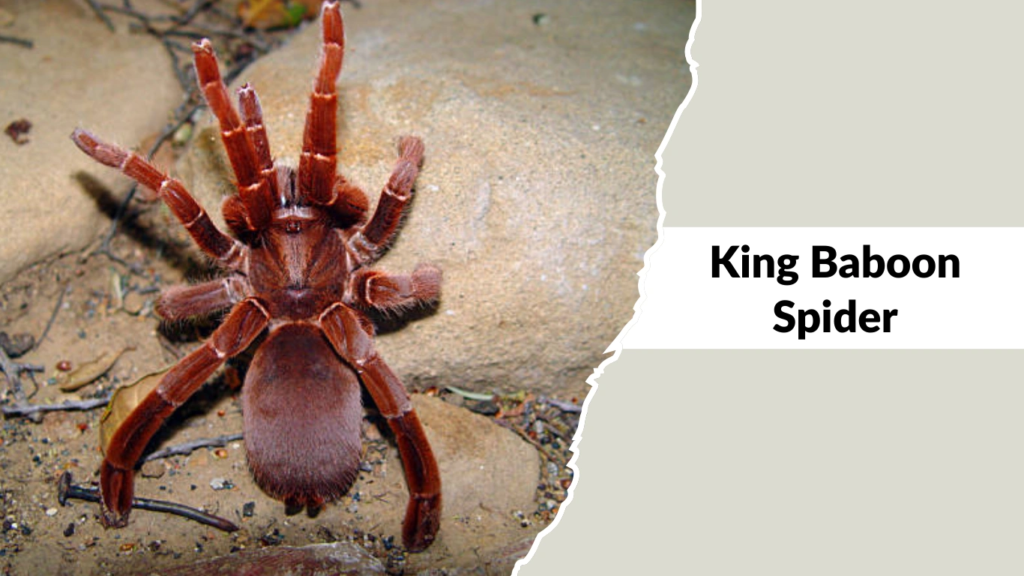
The King Baboon Spider is one of the largest and heaviest spiders found in Africa. Known for its thick legs and aggressive defensive behavior, this massive tarantula-like spider commands attention due to both its size and strength.
Identification
- Leg span can reach up to 20 cm (8 inches)
- Reddish-brown to dark brown body coloration
- Very thick, muscular legs with dense hair
- Large, powerful fangs capable of deep bites
Habitat and Behavior
This species inhabits dry savannas and scrublands of East Africa, where it constructs deep burrows. It is highly defensive and known for its fast, aggressive responses when threatened. The King Baboon Spider is nocturnal and spends most daylight hours hidden underground.
Diet and Lifecycle
The King Baboon Spider feeds on insects, small mammals, reptiles, and amphibians. It ambushes prey near its burrow entrance. Females can live over 20 years, while males have a much shorter lifespan after reaching maturity.
7. Hercules Baboon Spider (Hysterocrates hercules)
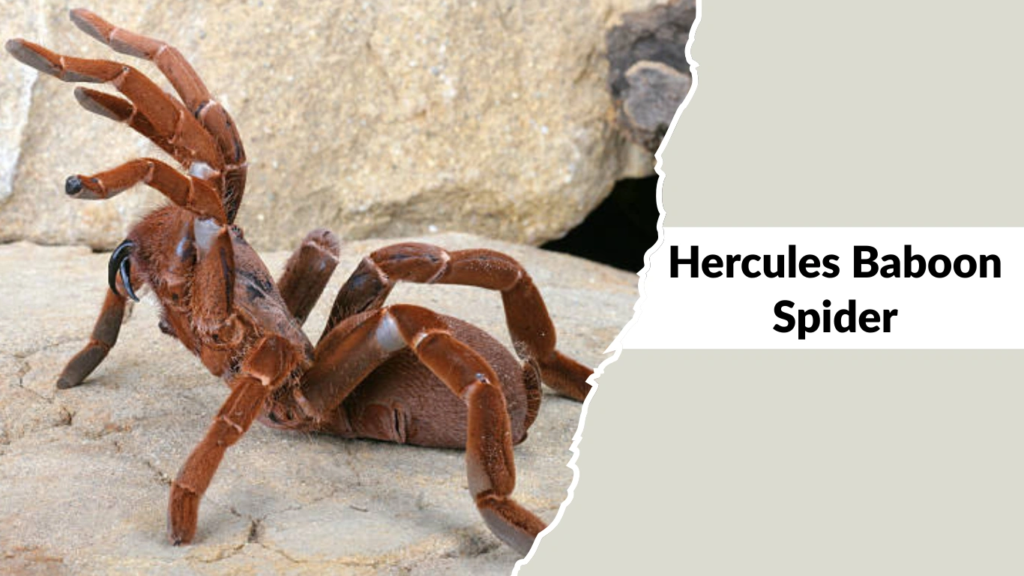
The Hercules Baboon Spider is considered one of the largest spiders ever recorded in Africa and is often cited as one of the biggest spiders in the world by leg span. Native to West Africa, this rare species is known mainly from limited specimens and remains somewhat mysterious.
Identification
- Estimated leg span up to 22 cm (8.5 inches)
- Dark brown to black body coloration
- Thick, powerful legs with sparse hair
- Large, robust body built for strength
Habitat and Behavior
This spider is believed to inhabit tropical forest regions, where it likely lives in deep burrows near rivers or moist soil. Like other baboon spiders, it is assumed to be highly defensive and fast-moving when threatened. Due to its rarity, much of its natural behavior remains undocumented.
Diet and Lifecycle
The Hercules Baboon Spider likely feeds on large insects, small reptiles, and other ground-dwelling prey. It probably follows a typical tarantula lifecycle, with long-lived females and much shorter-lived males, though exact lifespan data is not well established.
8. Poecilotheria rajaei
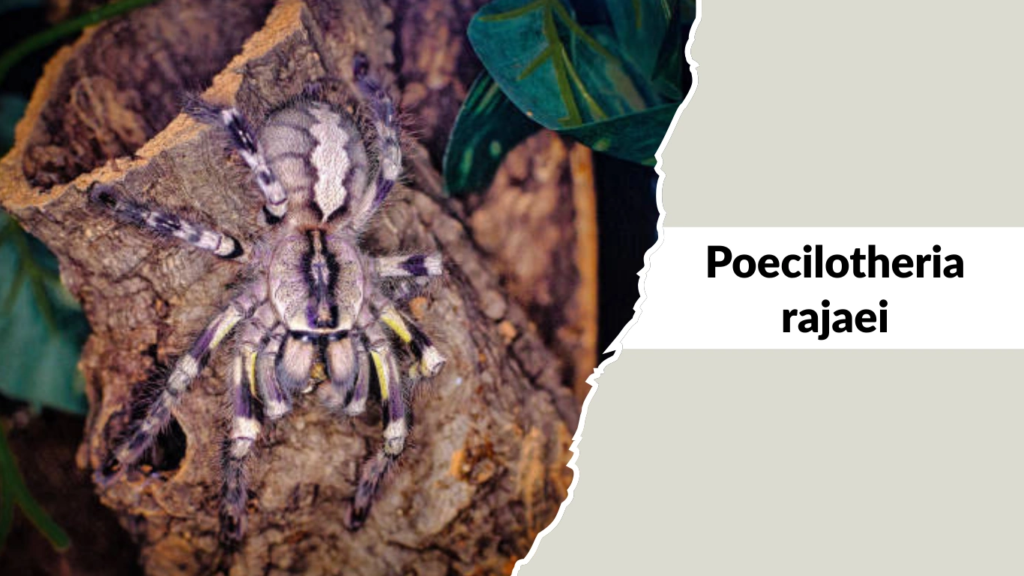
Poecilotheria rajaei is one of the largest arboreal spiders in the world and is known for its striking pattern and impressive leg span. Discovered in Sri Lanka, this rare tarantula is also referred to as the Sri Lankan Giant Ornamental Tarantula.
Identification
- Leg span can reach up to 20–22 cm (8–9 inches)
- Gray to brown body with bold black and white markings
- Long, slender legs with intricate patterns
- Large eyes adapted for arboreal hunting
Habitat and Behavior
This species inhabits tree hollows, old buildings, and forested areas. It is fast-moving, agile, and primarily nocturnal. Poecilotheria rajaei is defensive when threatened and may bite if provoked, making it less suitable for handling.
Diet and Lifecycle
Poecilotheria rajaei feeds on insects, small lizards, and even small birds. It hunts at night, relying on speed and ambush rather than webs. Females can live over 12 years, while males have significantly shorter lifespans.
9. Cobalt Blue Tarantula (Cyriopagopus lividus)
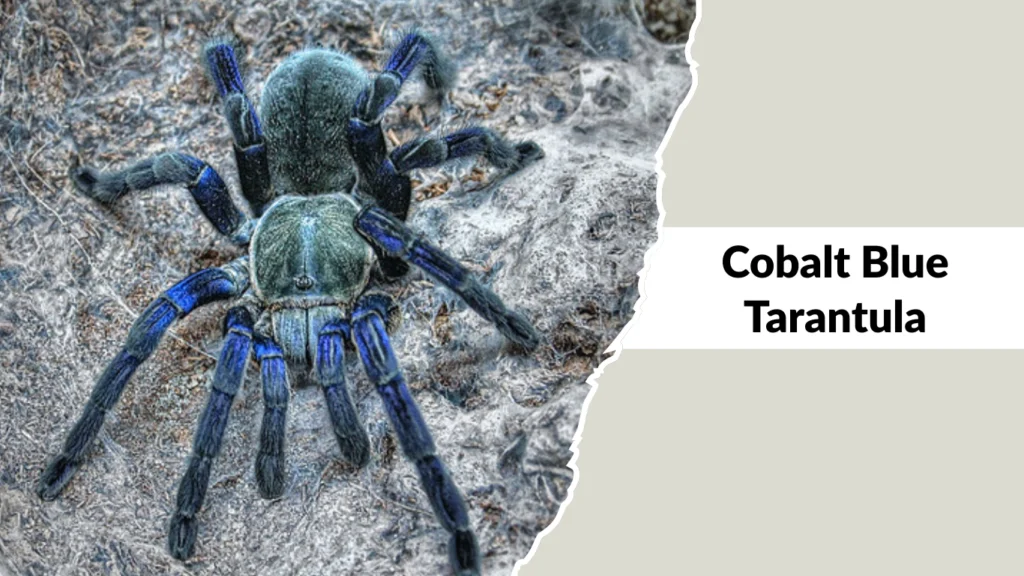
The Cobalt Blue Tarantula is a large, visually stunning spider famous for its deep metallic blue legs. Native to Southeast Asia, this species is highly defensive and fast, making it one of the most striking yet intimidating large spiders in the world.
Identification
- Leg span can reach up to 15–18 cm (6–7 inches)
- Brilliant cobalt blue legs with a darker body
- Stocky, muscular build with thick legs
- Large fangs used for defense
Habitat and Behavior
This tarantula lives in deep burrows within tropical forests and moist lowland areas. It is extremely fast and aggressive when disturbed. The Cobalt Blue Tarantula is nocturnal and rarely leaves its burrow during the day, relying on ambush tactics to catch prey.
Diet and Lifecycle
It feeds on insects, small mammals, reptiles, and amphibians. The spider hunts from its burrow entrance and quickly subdues prey. Females can live up to 15 years or more, while males typically survive only a few years after reaching maturity.
10. Mexican Redknee Tarantula (Brachypelma hamorii)
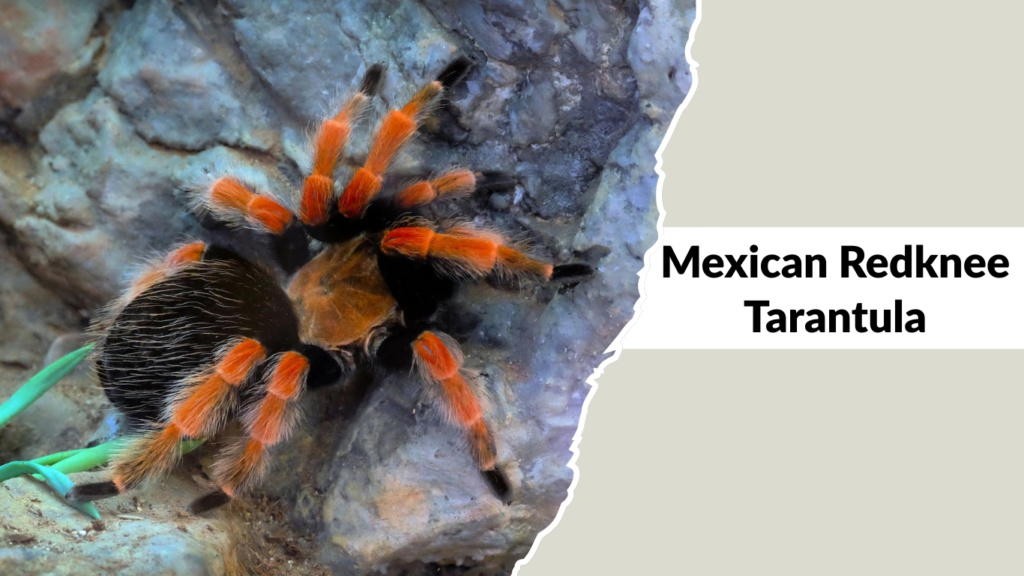
The Mexican Redknee Tarantula is one of the most recognizable large spiders in the world, famous for its striking red-and-black leg pattern. Native to Mexico, it is known for its calm demeanor compared to many other giant spiders.
Identification
- Leg span can reach up to 16–18 cm (6–7 inches)
- Black body with bright red or orange knee bands
- Thick, hairy legs and a robust abdomen
- Large but slow-moving build
Habitat and Behavior
This species inhabits dry scrublands and desert edges, where it lives in burrows or under rocks. It is mostly nocturnal and spends daytime hours hidden. The Mexican Redknee Tarantula is generally docile and prefers to retreat rather than attack, though it can flick urticating hairs if threatened.
Diet and Lifecycle
It feeds on insects, small rodents, lizards, and other invertebrates. Hunting is done from the ground without using webs. Females are long-lived, often reaching 20–25 years, while males typically live much shorter lives after maturity.
11. Greenbottle Blue Tarantula (Chromatopelma cyaneopubescens)
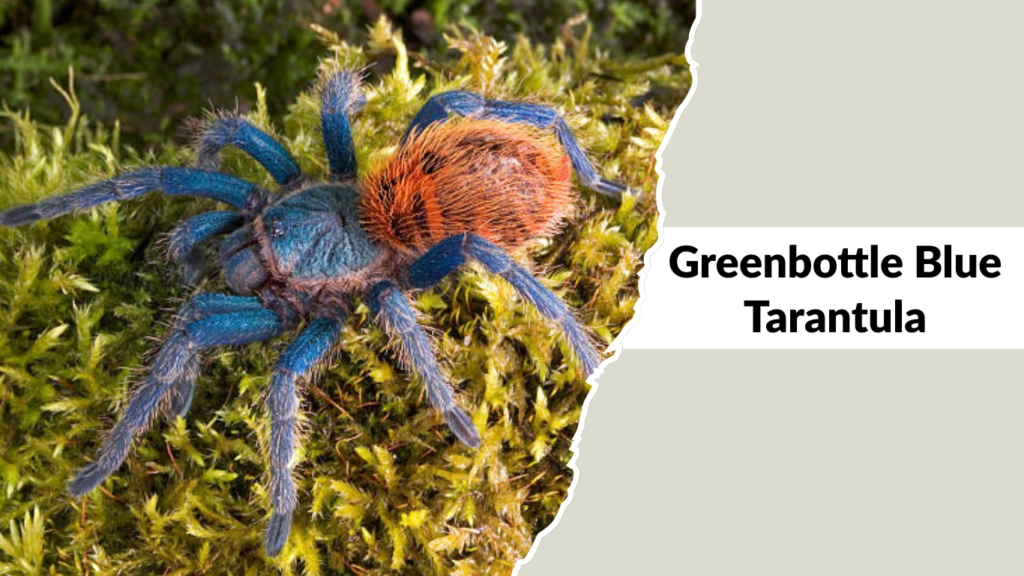
The Greenbottle Blue Tarantula is a large, colorful spider admired for its vivid blue legs and metallic green carapace. Native to Venezuela, it stands out among large spiders due to its bright coloration and energetic nature.
Identification
- Leg span can reach up to 15–18 cm (6–7 inches)
- Bright blue legs with a greenish-blue carapace
- Orange to reddish abdomen with fine hairs
- Slim but agile body structure
Habitat and Behavior
This species inhabits dry, scrubby environments and semi-desert regions. It is more active than many tarantulas and builds extensive webbing around its shelter. While not overly aggressive, it is fast and may defend itself if disturbed.
Diet and Lifecycle
The Greenbottle Blue Tarantula feeds on insects and small vertebrates. It hunts both on the ground and within its webbed area. Females can live 12–15 years, while males generally live only a few years after reaching maturity.
12. Desert Blonde Tarantula (Aphonopelma chalcodes)
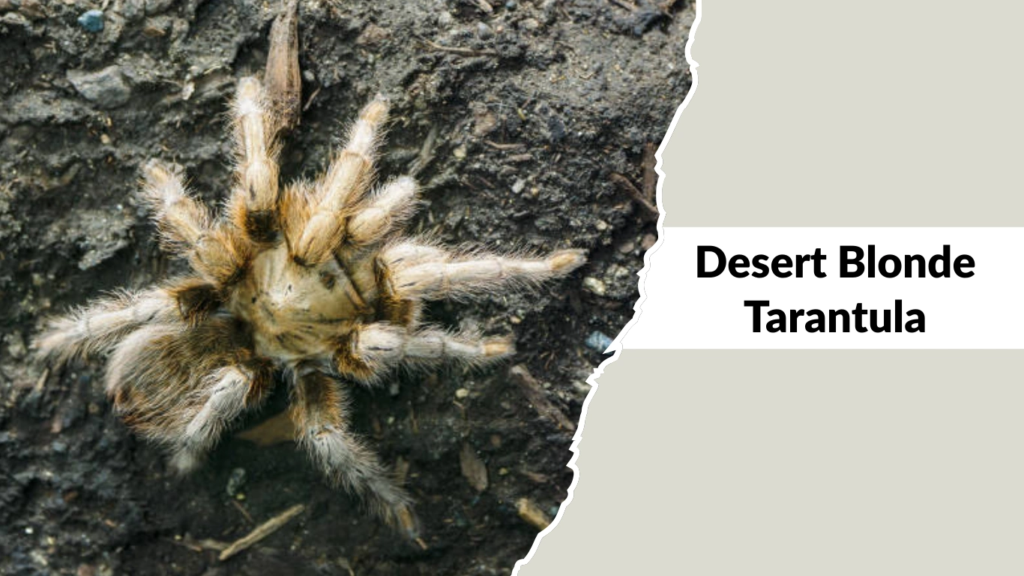
The Desert Blonde Tarantula is a large, slow-moving spider native to the deserts of the southwestern United States and northern Mexico. It is well known for its light-colored body and calm nature, making it one of the most commonly encountered large spiders in arid regions.
Identification
- Leg span can reach up to 13–16 cm (5–6 inches)
- Light tan to blonde body coloration
- Thick, hairy legs and a rounded abdomen
- Large but relatively blunt appearance
Habitat and Behavior
This species lives in desert scrublands and dry grasslands, where it creates deep burrows for protection from heat. It is mostly nocturnal and becomes more active during cooler evenings. The Desert Blonde Tarantula is generally docile and prefers retreat over aggression when disturbed.
Diet and Lifecycle
The Desert Blonde Tarantula feeds on insects, small lizards, and rodents. It hunts from the ground near its burrow entrance. Females are exceptionally long-lived, often surviving 20–30 years, while males typically live only a few years after reaching maturity.
13. Texas Brown Tarantula (Aphonopelma hentzi)
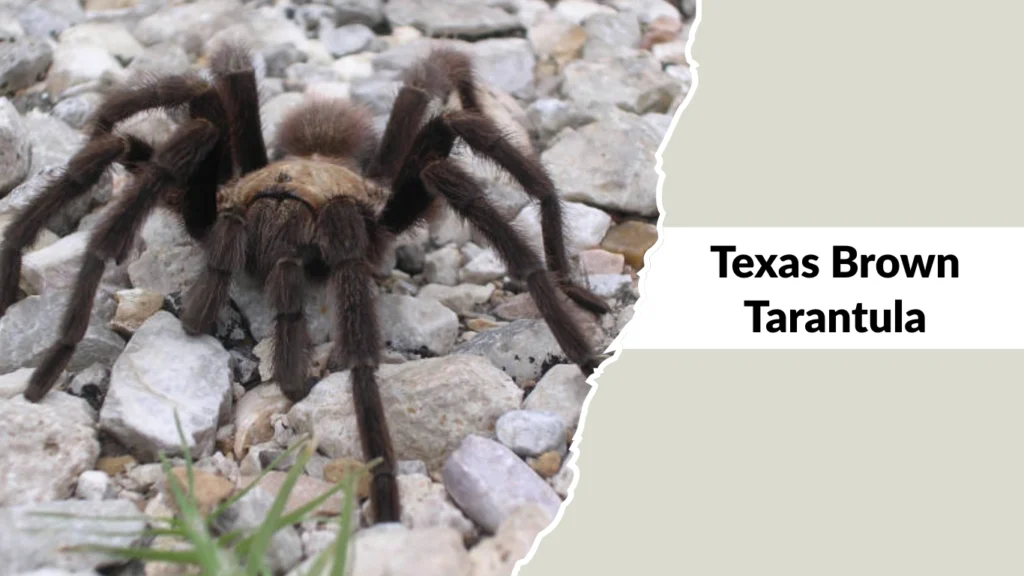
The Texas Brown Tarantula is one of the most widespread large spiders in the southern United States. Known for its robust build and calm behavior, it is often seen during seasonal migrations, especially in late summer and fall.
Identification
- Leg span can reach up to 13–15 cm (5–6 inches)
- Uniform brown to dark brown coloration
- Thick, hairy legs and sturdy body
- Rounded abdomen with dense hair coverage
Habitat and Behavior
This species inhabits grasslands, deserts, and open woodland areas. It lives in burrows and is mostly nocturnal, although males may be seen during the day while searching for mates. The Texas Brown Tarantula is generally non-aggressive and prefers to flee rather than confront threats.
Diet and Lifecycle
It feeds on insects, small reptiles, and other invertebrates. Hunting occurs near the burrow entrance without the use of webs. Females can live over 20 years, while males usually survive only one or two years after reaching maturity.
14. Brazilian Black Tarantula (Grammostola pulchra)
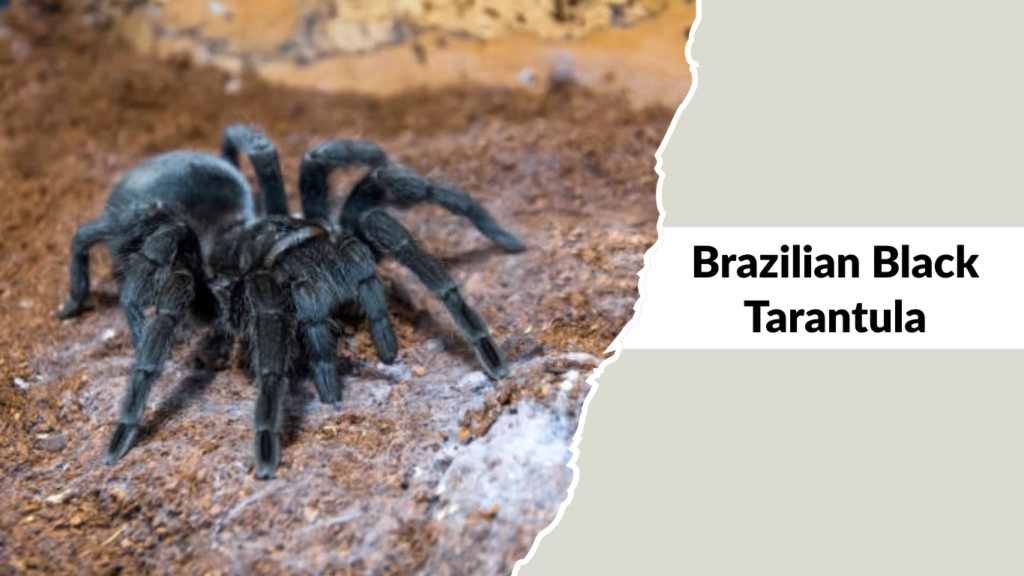
The Brazilian Black Tarantula is one of the most impressive large spiders due to its jet-black coloration and heavy body. Native to Brazil and Uruguay, it is widely regarded as one of the most beautiful and calm giant tarantulas in the world.
Identification
- Leg span can reach up to 18–20 cm (7–8 inches)
- Solid glossy black coloration across the entire body
- Thick, muscular legs with dense hair
- Large, heavy-bodied appearance
Habitat and Behavior
This species inhabits grasslands and open forest areas, where it lives in burrows or natural ground shelters. It is slow-moving and mostly nocturnal. The Brazilian Black Tarantula is known for its docile temperament and rarely shows aggression unless heavily provoked.
Diet and Lifecycle
It feeds on insects, small rodents, reptiles, and amphibians. Hunting is done from the ground without webs. Females are extremely long-lived, often surviving 20 years or more, while males live significantly shorter lives after maturity.
15. Cameroon Red Baboon Spider (Hysterocrates gigas)
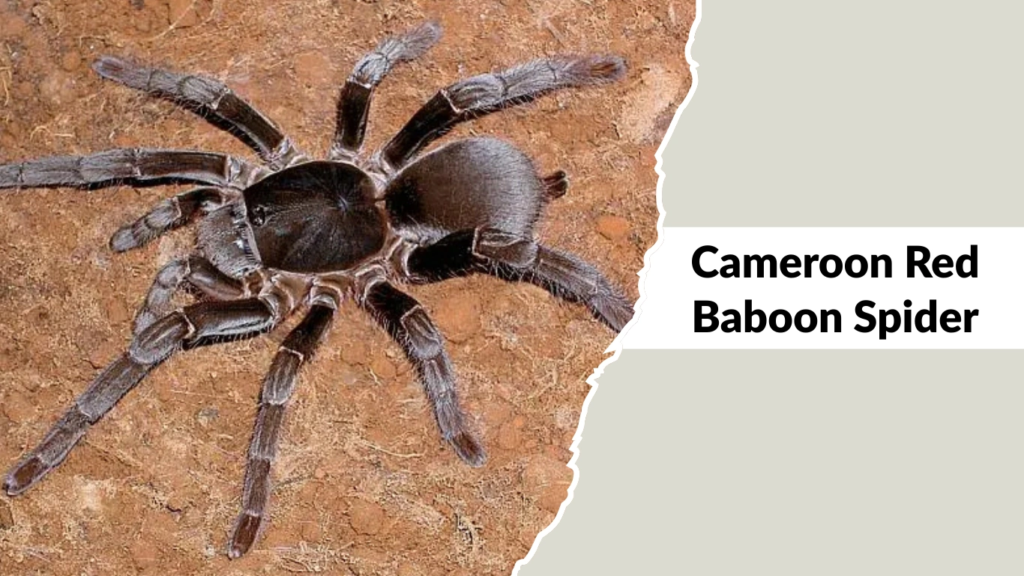
The Cameroon Red Baboon Spider is a massive African spider known for its size, strength, and defensive nature. Native to Central Africa, this species is often considered one of the heaviest baboon spiders and is well adapted to a semi-aquatic lifestyle.
Identification
- Leg span can reach up to 20 cm (8 inches)
- Dark brown to black body with reddish leg hairs
- Thick, powerful legs and a heavy abdomen
- Large fangs capable of delivering painful bites
Habitat and Behavior
This spider inhabits tropical forests and riverbank areas, where it digs deep burrows, often near water. Unlike many large spiders, it is an excellent swimmer. The Cameroon Red Baboon Spider is highly defensive, fast, and aggressive when threatened, preferring intimidation over retreat.
Diet and Lifecycle
It feeds on insects, frogs, small fish, rodents, and other ground-dwelling animals. Hunting usually occurs near the burrow entrance. Females can live 15–20 years, while males typically live only a few years after reaching maturity.
16. Pink Zebra Beauty Tarantula (Eupalaestrus campestratus)
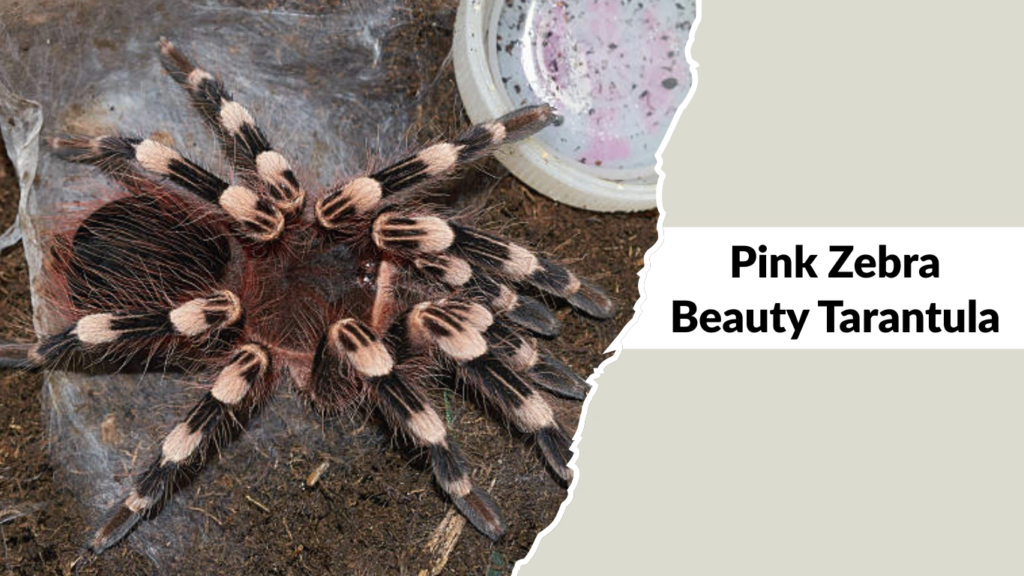
The Pink Zebra Beauty Tarantula is a large, visually striking spider known for its contrasting black body and pale pink or cream striping. Native to South America, especially Paraguay, Argentina, and Brazil, it is admired for both its size and relatively calm disposition.
Identification
- Leg span can reach up to 15–17 cm (6–7 inches)
- Black body with distinctive pink or cream zebra-like bands
- Thick, hairy legs and a sturdy build
- Rounded abdomen with dense hair coverage
Habitat and Behavior
This species inhabits grasslands and open forest areas, where it lives in shallow burrows or under natural cover. It is mostly nocturnal and tends to remain hidden during the day. The Pink Zebra Beauty Tarantula is generally docile and slow-moving, making it less aggressive than many other large spiders.
Diet and Lifecycle
It feeds on insects, small reptiles, and other invertebrates. Hunting is done on the ground without the use of webs. Females can live 15 years or more, while males typically have a much shorter lifespan after reaching maturity.
17. Golden Blue Leg Baboon Spider (Harpactira pulchripes)

The Golden Blue Leg Baboon Spider is a large and visually stunning African tarantula known for its vivid blue legs accented with golden striping. Native to South Africa, this species is considered one of the most colorful large spiders in the world and is admired for its striking appearance.
Identification
- Leg span can reach up to 14–16 cm (5.5–6.5 inches)
- Bright blue legs with golden-yellow bands
- Dark gray to black body coloration
- Thick, powerful legs and a robust build
Habitat and Behavior
This spider inhabits dry savannas and grasslands, where it lives in deep silk-lined burrows. It is highly defensive and extremely fast when threatened. The Golden Blue Leg Baboon Spider is mostly nocturnal and rarely leaves its burrow during daylight hours.
Diet and Lifecycle
It feeds on insects, small reptiles, and other ground-dwelling prey. Hunting occurs near the burrow entrance using ambush tactics. Females can live 15–20 years, while males usually survive only a few years after reaching maturity.
FAQs
What is the largest spider in the world?
The Goliath Birdeater (Theraphosa blondi) is considered the largest spider in the world by body mass and weight, while the Giant Huntsman Spider holds the record for the largest leg span.
Are the world’s largest spiders dangerous to humans?
Most large spiders are not deadly to humans. Although their bites can be painful, they usually cause mild to moderate symptoms and are rarely life-threatening.
Where are the largest spiders commonly found?
The largest spiders are mainly found in tropical and subtropical regions, including South America, Africa, Asia, and Australia, where warm climates support their growth.
Do large spiders use webs to catch prey?
Most giant spiders, especially tarantulas and huntsman spiders, do not use webs to hunt. Instead, they rely on ambush, speed, and strength to capture prey.
Why do some spiders grow so large?
Large size helps spiders capture bigger prey, defend against predators, and survive in stable, resource-rich environments. Genetics and habitat conditions play a major role in their growth.
