
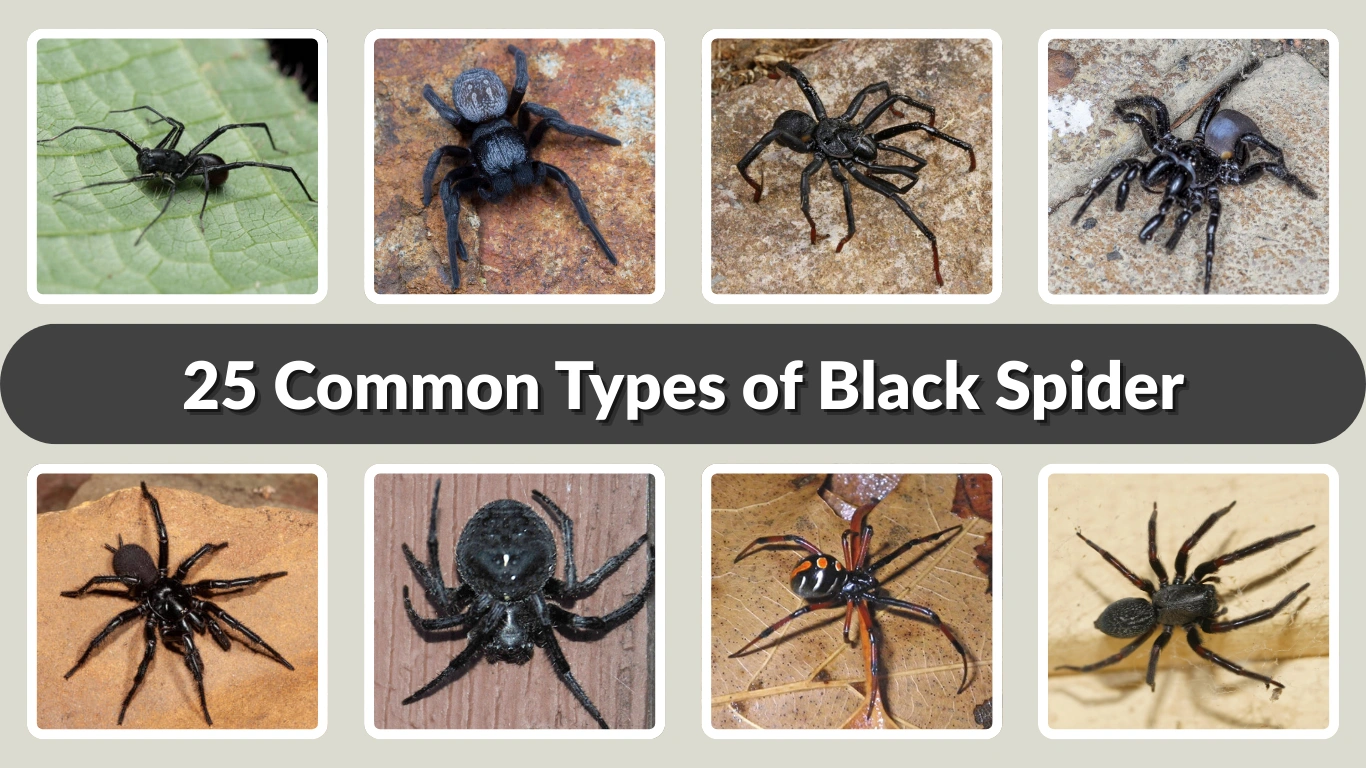
Black spiders are fascinating creatures found across the globe, ranging from tiny, harmless species to larger, venomous ones like the Black Widow. Known for their dark coloration, these spiders play a crucial role in controlling insect populations. Understanding their identification, habitats, and behaviors can help you coexist safely with them and appreciate their ecological importance while avoiding unnecessary fear or panic.
1. Black Widow Spider
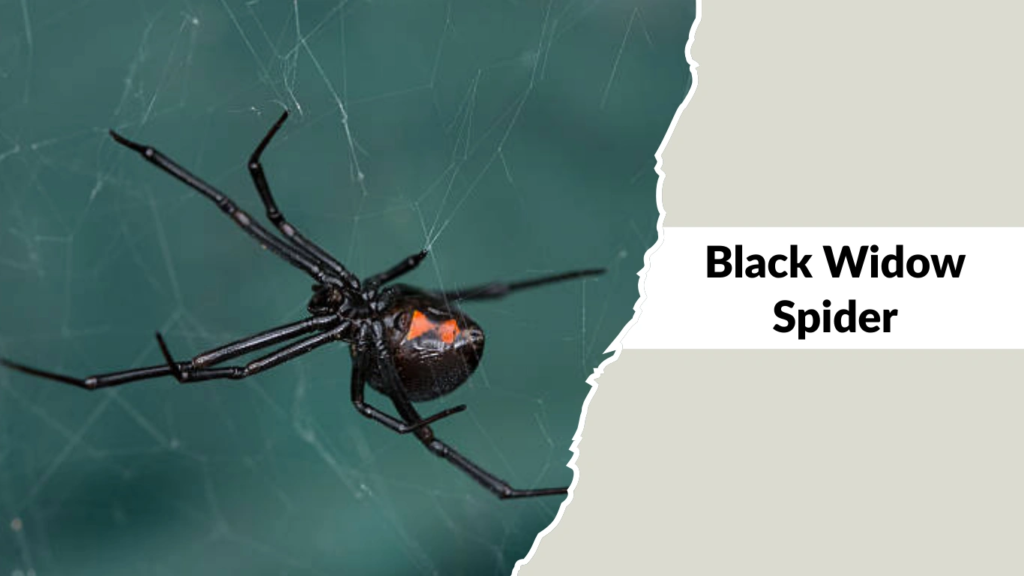
The Black Widow spider is one of the most famous black spiders in the world, known for its glossy black appearance and strong venom. Despite its intimidating reputation, it is not naturally aggressive and usually bites only when threatened or disturbed. This spider plays an important role in controlling insect populations and is more beneficial than harmful in natural ecosystems.
Identification
- Shiny jet-black body with a smooth surface
- Red or orange hourglass-shaped marking on the underside of the abdomen
- Adult females are much larger than males
- Long, thin legs that appear delicate but are strong
- Body length of females typically ranges from 1 to 1.5 cm (excluding legs)
Habitat and Behaviors
Black Widow spiders prefer dark, dry, and undisturbed locations. They are commonly found in woodpiles, garages, sheds, basements, crawl spaces, and outdoor debris. Outdoors, they often live under rocks, logs, or abandoned equipment. They build messy, irregular cobwebs close to the ground and usually remain hidden during the day. Black Widows are nocturnal and spend most of their time waiting in their webs for prey rather than actively hunting.
Diet and Lifecycle
Their diet mainly consists of insects such as flies, mosquitoes, grasshoppers, beetles, and sometimes other spiders. Once prey is trapped in the web, the spider injects venom and wraps it in silk. After mating, the female lays eggs inside silk egg sacs, each containing hundreds of eggs. Spiderlings hatch within weeks and disperse, molting several times before reaching adulthood, which usually takes a few months.
2. Southern Black Widow Spider
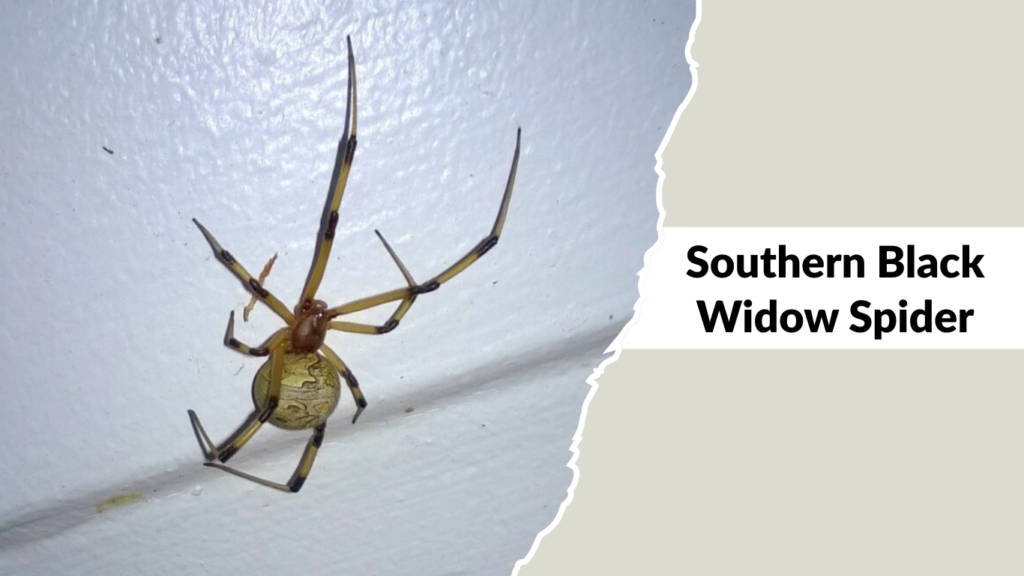
The Southern Black Widow spider is a close relative of the common Black Widow and is widely found in warmer regions. It shares the same glossy black appearance and venomous bite but is generally shy and avoids human contact. This species is important for natural pest control despite its fearful reputation.
Identification
- Shiny black body with a red hourglass marking
- Hourglass may appear broken or thinner than other Black Widows
- Females are much larger and darker than males
- Males are smaller with lighter markings and sometimes stripes
- Smooth, round abdomen with long slender legs
Habitat and Behaviors
Southern Black Widows prefer warm climates and are commonly found in the southern United States and nearby regions. They live in quiet, dark places such as woodpiles, sheds, outdoor furniture, mailboxes, and under rocks. Their webs are irregular and tangled, usually built close to the ground. These spiders are nocturnal and remain hidden during the day. They are not aggressive and typically bite only when trapped or directly threatened.
Diet and Lifecycle
Their diet mainly includes insects like flies, ants, beetles, crickets, and occasionally other spiders. Prey caught in the web is quickly immobilized with venom and wrapped in silk. After mating, females produce egg sacs containing hundreds of eggs. Spiderlings hatch within a few weeks and disperse to new areas. They go through several molts before reaching maturity, usually within a few months under favorable conditions.
3. Northern Black Widow Spider
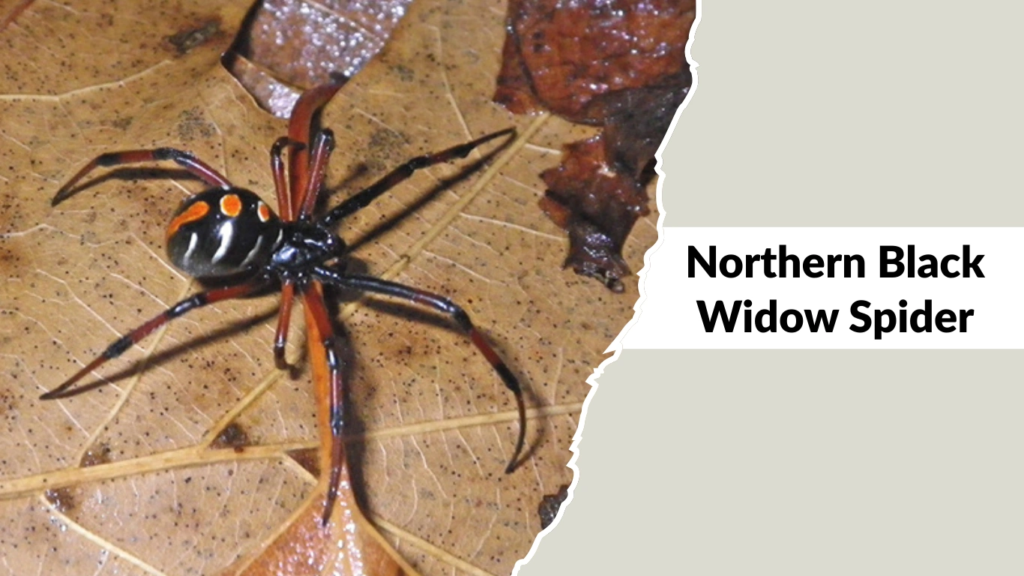
The Northern Black Widow spider is a venomous species closely related to other black widows, known for its dark coloration and distinctive red markings. It is less commonly encountered than its southern counterpart but shares similar characteristics and ecological importance. Although its bite can be medically significant, this spider is shy and avoids human interaction whenever possible.
Identification
- Glossy black body with a red or orange hourglass marking
- Hourglass marking may appear incomplete or split
- Females are larger, rounder, and darker than males
- Males are smaller with lighter body color and faint striping
- Long, thin legs with a smooth texture
Habitat and Behaviors
Northern Black Widows are typically found in cooler regions compared to other widow species. They prefer dark, undisturbed areas such as basements, crawl spaces, garages, woodpiles, and under rocks or logs outdoors. Their webs are irregular and tangled, often located near ground level. These spiders are nocturnal and spend most of the day hidden in their webs. They are not aggressive and usually bite only when accidentally pressed or threatened.
Diet and Lifecycle
Their diet consists mainly of insects including flies, beetles, ants, and crickets. Once prey becomes entangled in the web, the spider injects venom and wraps it tightly in silk before feeding. After mating, the female produces silk egg sacs containing many eggs. Spiderlings hatch within a few weeks and disperse to nearby areas. They molt several times before reaching adulthood, usually within a few months depending on environmental conditions.
4. Western Black Widow Spider
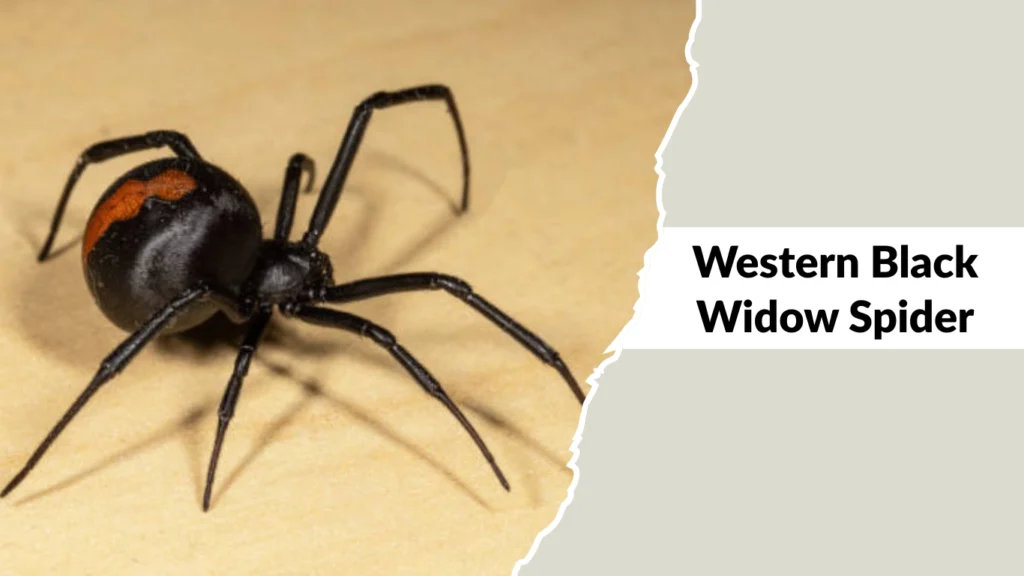
The Western Black Widow spider is a well-known venomous species found primarily in western regions. It is famous for its shiny black body and vivid red hourglass marking, which serves as a warning sign to predators. Despite its dangerous reputation, this spider is generally timid and avoids confrontation with humans.
Identification
- Glossy black body with a bright red hourglass marking
- Hourglass marking is usually complete and clearly defined
- Females are larger with a round abdomen
- Males are smaller and lighter in color with faint markings
- Long, slender legs with a smooth appearance
Habitat and Behaviors
Western Black Widows prefer dry, warm environments and are commonly found in deserts, grasslands, and suburban areas. They live in undisturbed places such as woodpiles, sheds, garages, outdoor furniture, and beneath rocks. Their webs are irregular, messy, and built close to the ground. These spiders are nocturnal and spend daylight hours hidden in retreats near their webs. They are not aggressive and will usually flee rather than bite unless trapped or disturbed.
Diet and Lifecycle
Their diet mainly includes insects such as flies, grasshoppers, beetles, and crickets. When prey is caught in the web, the spider injects venom and wraps it in silk for consumption. After mating, females lay eggs in silk sacs that contain hundreds of eggs. Spiderlings hatch within a few weeks and disperse by ballooning. They undergo several molts before reaching adulthood, typically within a few months in favorable conditions.
5. False Black Widow Spider
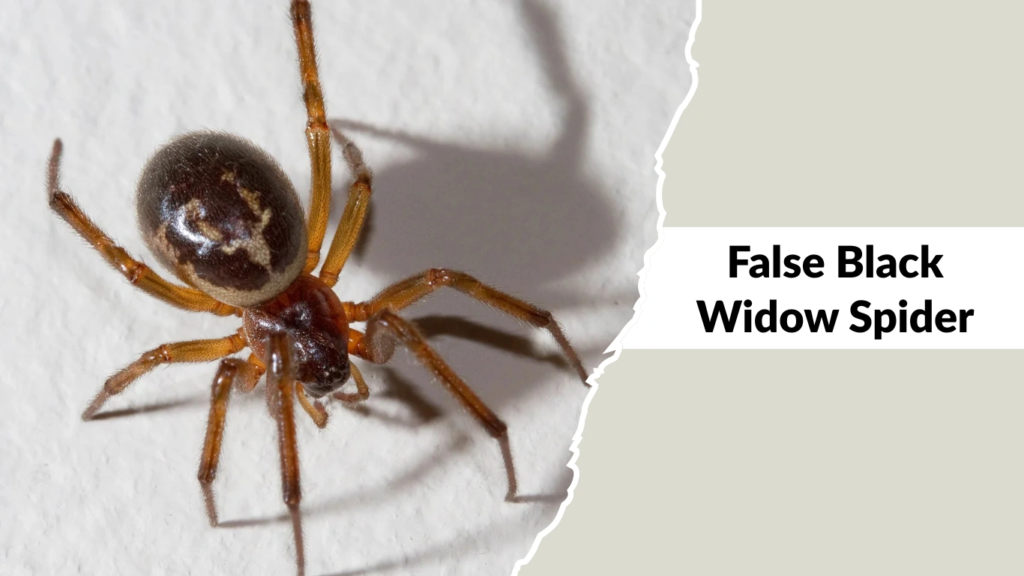
The False Black Widow spider closely resembles the true Black Widow but is generally less dangerous. It has a dark, glossy appearance that often causes confusion and fear, although its bite is usually mild and not considered medically significant for most people.
Identification
- Dark brown to purplish-black body with a shiny surface
- Abdomen is bulbous but lacks a red hourglass marking
- Light cream or pale markings may be present on the abdomen
- Females are larger than males
- Legs are thick and slightly shorter than true Black Widows
Habitat and Behaviors
False Black Widows are commonly found around human dwellings. They prefer warm, sheltered locations such as behind furniture, inside sheds, garages, window frames, and outdoor crevices. Their webs are tangled and irregular, similar to those of true widows. These spiders are mostly nocturnal and tend to stay hidden during the day. Although they may appear intimidating, they are shy and bite only when threatened.
Diet and Lifecycle
Their diet includes flies, ants, woodlice, beetles, and other small insects. Prey caught in the web is wrapped in silk and subdued with venom. After mating, females produce egg sacs that contain numerous eggs. Spiderlings hatch within a few weeks and remain near the web initially before dispersing. They molt several times before reaching maturity, which can take several months depending on environmental conditions.
6. Black House Spider
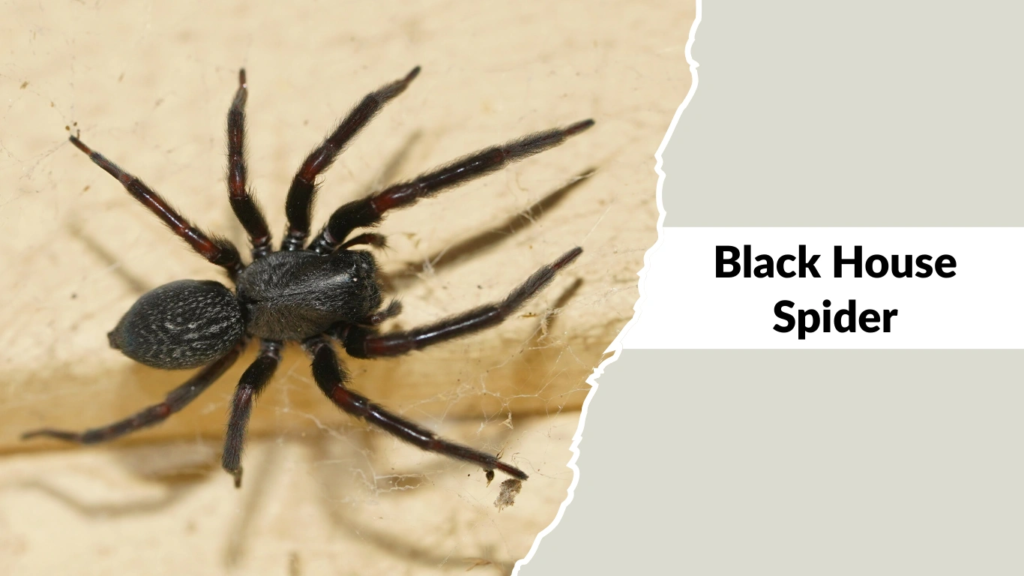
The Black House Spider is a common dark-colored spider often found living in and around buildings. While its appearance may look intimidating, it is generally harmless to humans and helps control insect populations. It is known for building long-lasting webs in the same location.
Identification
- Dark brown to black body with a velvety texture
- Abdomen is oval and slightly hairy
- Females are larger and darker than males
- Legs are sturdy and covered with fine hairs
- Body length typically ranges from 1 to 1.8 cm
Habitat and Behaviors
Black House Spiders are commonly found on walls, window frames, under eaves, and in corners of buildings. They prefer sheltered, dry areas and often reuse the same web for long periods. Their webs are messy and sheet-like with a funnel retreat where the spider hides. These spiders are mostly nocturnal and stay within their web rather than roaming. They are shy and rarely bite unless provoked.
Diet and Lifecycle
Their diet mainly consists of flying insects such as flies, moths, mosquitoes, and beetles. When prey becomes trapped in the web, the spider quickly immobilizes it with venom and wraps it in silk. Females lay eggs in silk sacs attached near the web. Spiderlings hatch after a few weeks and remain nearby before dispersing. They grow through multiple molts and may live for several years, especially females.
7. Black Jumping Spider
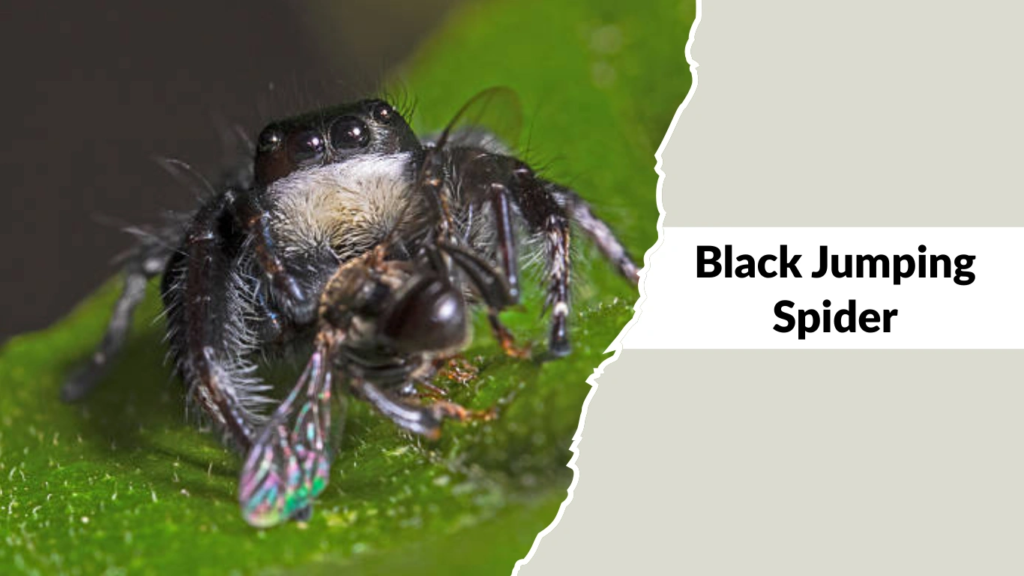
The Black Jumping Spider is a small but highly active spider known for its excellent vision and jumping ability. Unlike web-building spiders, it hunts by stalking and pouncing on its prey. Its curious behavior and quick movements make it one of the most fascinating black spiders.
Identification
- Compact black body, often with white or metallic markings
- Large forward-facing eyes that provide sharp vision
- Short, strong legs adapted for jumping
- Males often have more vivid markings than females
- Body length usually less than 1.5 cm
Habitat and Behaviors
Black Jumping Spiders are commonly found in gardens, on walls, fences, and near windows. They prefer sunny areas where insects are active. Instead of spinning capture webs, they use silk draglines for safety while jumping. These spiders are active during the day and are often seen moving quickly or turning to observe movement. They are curious rather than aggressive and rarely bite humans.
Diet and Lifecycle
Their diet consists of flies, ants, small beetles, and other spiders. They hunt by carefully approaching prey and leaping onto it with precision. After mating, females lay eggs in silk nests attached to surfaces. The eggs hatch within a few weeks, and the spiderlings stay protected in the nest for a short time. They molt several times before reaching adulthood, usually within a few months.
8. Black Wolf Spider
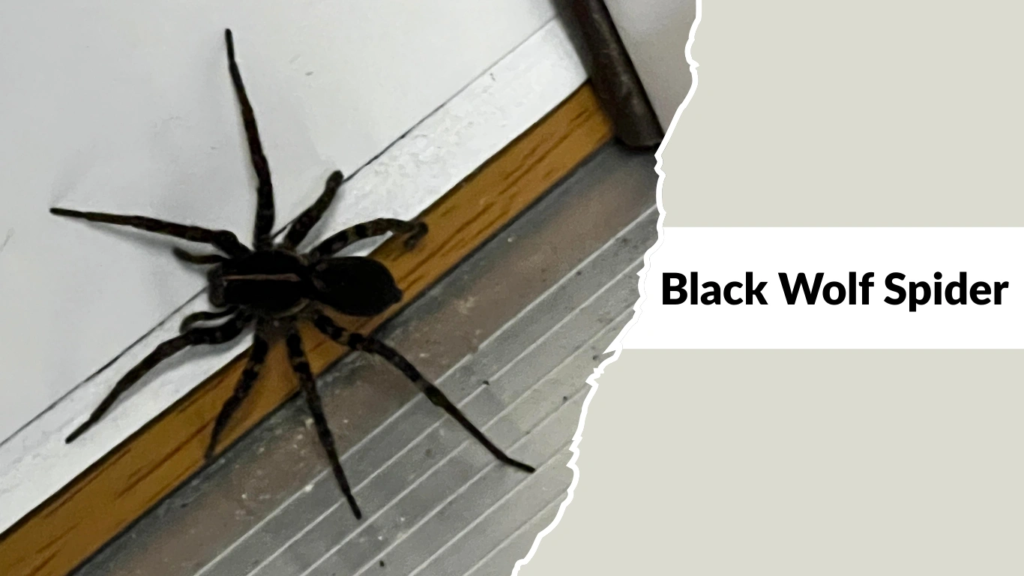
The Black Wolf Spider is a fast-moving, ground-dwelling spider known for its hunting skills. Unlike many spiders, it does not rely on webs to catch prey, instead actively chasing or ambushing insects. Its dark coloration helps it blend into its surroundings.
Identification
- Dark brown to black body with a robust build
- Hairy appearance with strong, thick legs
- Eyes arranged in three rows, with two large central eyes
- Females are larger and heavier than males
- Body length typically ranges from 1 to 3 cm
Habitat and Behaviors
Black Wolf Spiders are commonly found in grasslands, forests, gardens, and sometimes inside homes. They prefer living on the ground, hiding under rocks, logs, or leaf litter during the day. These spiders are mostly nocturnal hunters and are often seen running quickly across the ground at night. They do not build capture webs and rely on speed and eyesight to hunt. Although they may look intimidating, they are not aggressive toward humans.
Diet and Lifecycle
Their diet includes insects such as crickets, ants, beetles, and other small arthropods. They catch prey by chasing and overpowering it with strong jaws and venom. After mating, females carry their egg sacs attached to their abdomen. Once the spiderlings hatch, they ride on the mother’s back for a short period. The young spiders then disperse and grow through multiple molts until adulthood.
9. Black Garden Spider
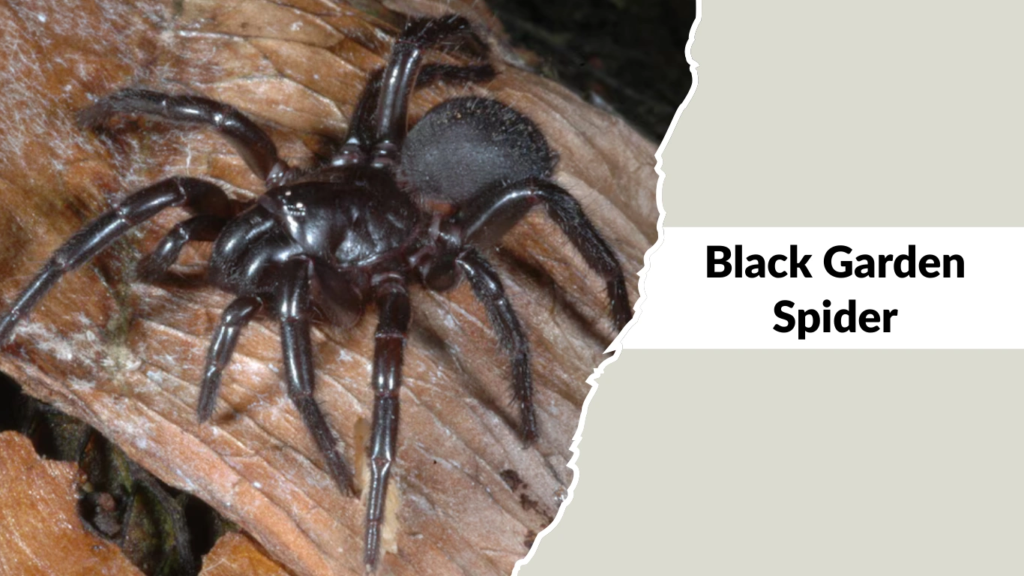
The Black Garden Spider is a common orb-weaving spider known for its striking black coloration and large circular webs. It is beneficial for gardens as it helps control pest insects. Despite its size and appearance, it is generally harmless to humans.
Identification
- Shiny black or dark brown body with sometimes lighter markings
- Large, rounded abdomen
- Long, spindly legs often with slight banding
- Females are significantly larger than males
- Body length ranges from 1 to 2.5 cm
Habitat and Behaviors
Black Garden Spiders are typically found in gardens, shrubs, fences, and corners of buildings. They prefer areas with ample insect activity and construct large, vertical orb-shaped webs. These spiders are mostly stationary in their webs, waiting for prey to get caught. They are more active at night and tend to retreat during daylight hours. Though their bite is venomous, it is rarely harmful to humans.
Diet and Lifecycle
Their diet consists mainly of flying insects such as flies, moths, mosquitoes, and beetles. Once prey is trapped in the web, the spider immobilizes it with venom and wraps it in silk. After mating, females lay eggs in silk sacs, often attached near the web. Spiderlings hatch within a few weeks and disperse to find their own territory. They molt several times before reaching adulthood, typically within several months depending on environmental conditions.
10. Black Lace-Weaver Spider
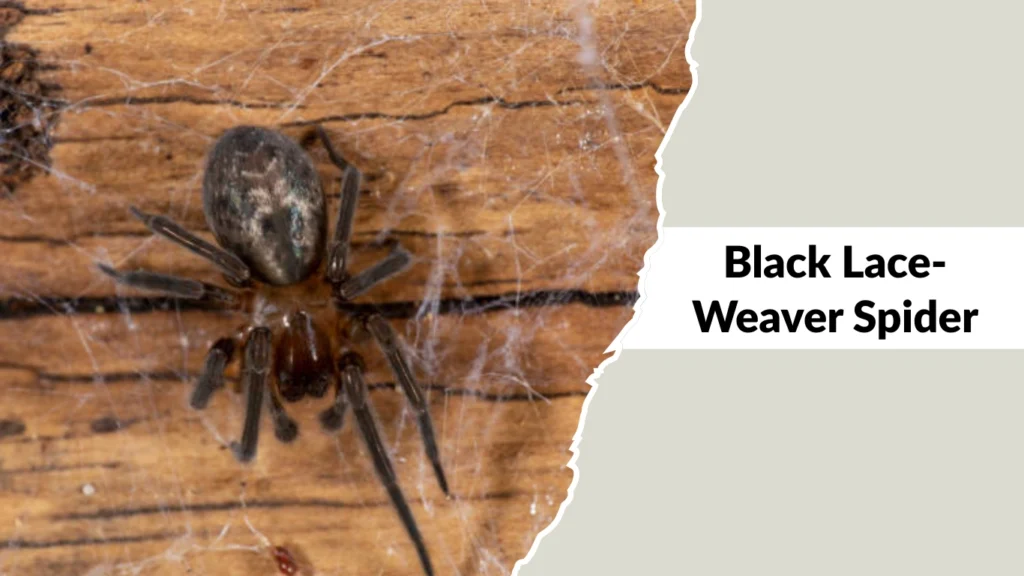
The Black Lace-Weaver Spider is a medium-sized spider known for its dark body and delicate, lace-like webs. It is non-aggressive and primarily helps control insect populations in its habitat. Its intricate web patterns are often a sign of its presence.
Identification
- Dark black or brown body with a slightly glossy finish
- Slender legs with fine hairs
- Abdomen is elongated and slightly oval
- Females are larger than males
- Body length typically ranges from 0.8 to 1.5 cm
Habitat and Behaviors
Black Lace-Weavers are commonly found in leaf litter, under rocks, around shrubs, and in corners of buildings. They prefer quiet, undisturbed areas where they can anchor their delicate webs. These spiders are nocturnal and spend the day hidden in retreats near their webs. Their lace-like webs are irregular but effective for trapping small insects. They are shy and avoid human contact, biting only if directly threatened.
Diet and Lifecycle
Their diet mainly consists of small insects such as flies, ants, and other arthropods. Once prey gets trapped in the web, the spider immobilizes it with venom and wraps it in silk. Females lay eggs inside silk sacs attached to hidden spots near the web. Spiderlings hatch in a few weeks and disperse shortly afterward. They undergo multiple molts before reaching adulthood, usually within a few months, depending on temperature and food availability.
11. Black Cellar Spider
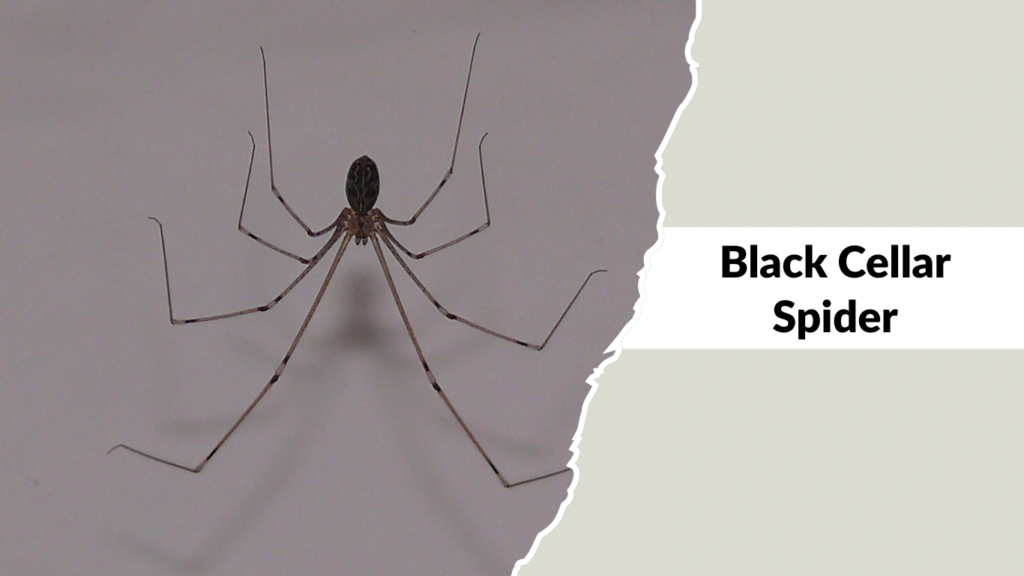
The Black Cellar Spider, often called the “daddy long-legs spider,” is a slender, long-legged spider commonly found in homes and dark corners. Despite myths, it is not dangerous to humans and is known for preying on other small spiders and insects.
Identification
- Small, dark-colored body, usually brown to black
- Extremely long, thin legs relative to body size
- Oval-shaped abdomen
- Females are slightly larger than males
- Body length ranges from 0.5 to 1 cm, legs much longer
Habitat and Behaviors
Black Cellar Spiders prefer dark, damp, and undisturbed areas such as basements, cellars, crawl spaces, and corners of rooms. They build messy, irregular webs that often hang in corners or near ceilings. These spiders are sedentary and rarely leave their webs. They are nocturnal and primarily active during the night. While their appearance may seem intimidating, they are harmless and avoid confrontation with humans.
Diet and Lifecycle
Their diet mainly consists of small insects and other spiders that get caught in their webs. They immobilize prey using silk and mild venom. After mating, females lay eggs in silk sacs attached near the web. Spiderlings hatch within a few weeks and often stay near the web initially. They go through multiple molts before reaching maturity, which generally takes a few months depending on conditions.
12. Black Crab Spider
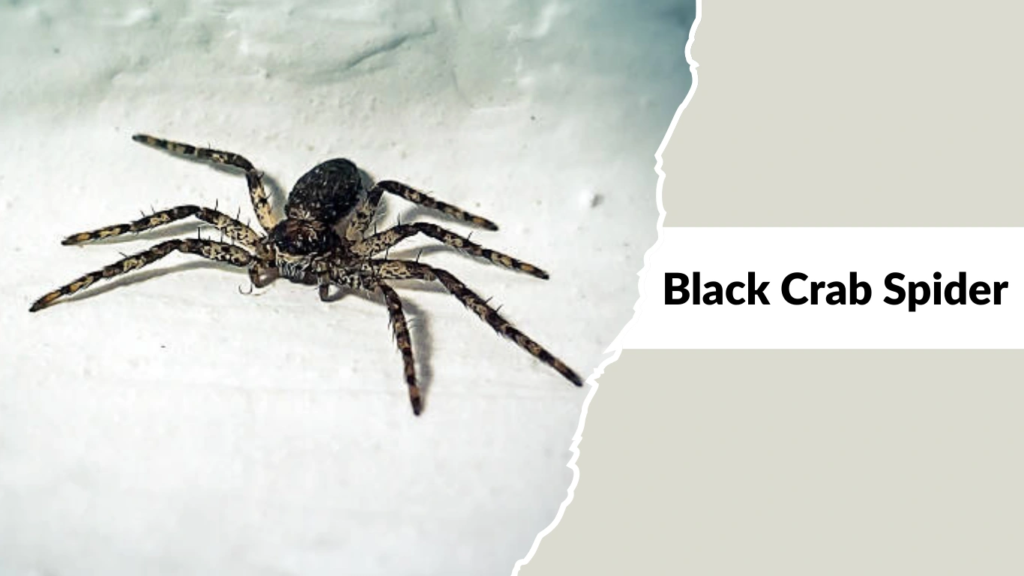
The Black Crab Spider is a small, stealthy spider known for its crab-like appearance and ability to walk sideways. It is an ambush predator, relying on camouflage rather than webs to catch prey. Its dark coloration helps it blend into its surroundings.
Identification
- Glossy black or dark brown body
- Flat, wide body with legs positioned like a crab
- Can walk sideways and backwards
- Females are larger and more robust than males
- Body length ranges from 0.5 to 1.2 cm
Habitat and Behaviors
Black Crab Spiders are commonly found on plants, flowers, shrubs, and sometimes on walls. They prefer areas where they can remain hidden while waiting to ambush prey. Unlike web-building spiders, they do not spin capture webs. Instead, they rely on camouflage and patience. These spiders are mostly diurnal, actively hunting during the day, and remain motionless for long periods. They are shy and avoid human interaction.
Diet and Lifecycle
Their diet consists mainly of insects such as flies, bees, moths, and other small arthropods that visit flowers. Once prey is within reach, the spider quickly seizes it and injects venom to immobilize it. Females lay eggs in silk sacs hidden under leaves or in plant crevices. Spiderlings hatch within a few weeks, stay near the egg sac for some time, and gradually disperse. They molt multiple times before reaching adulthood.
13. Black Orb-Weaver Spider
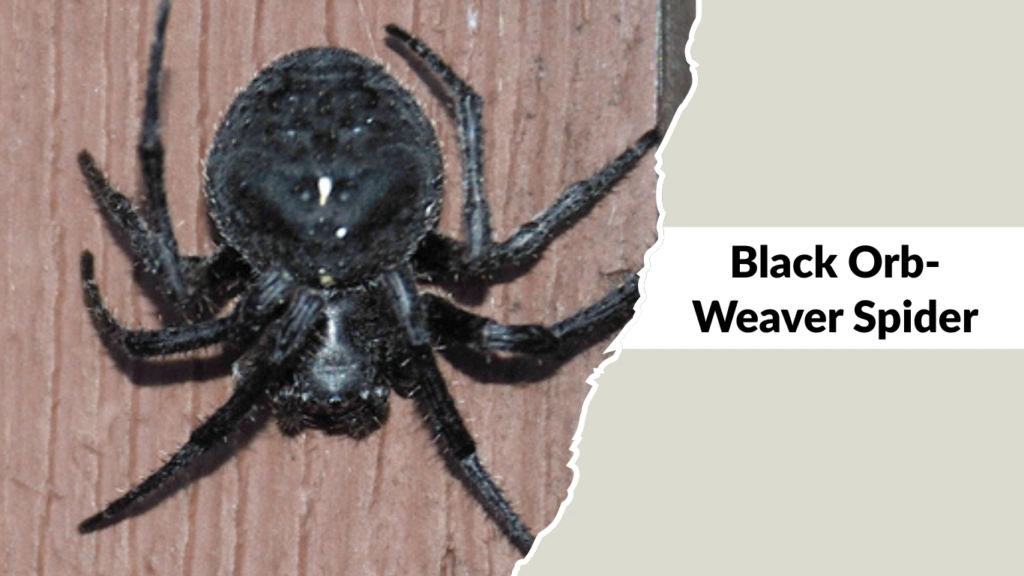
The Black Orb-Weaver Spider is a large, striking spider known for spinning intricate circular webs. Its dark coloration and web-building skills make it an effective predator of flying insects. Despite its size, it is generally harmless to humans.
Identification
- Shiny black or dark brown body
- Large, rounded abdomen, sometimes with faint markings
- Long, spindly legs often with subtle banding
- Females are significantly larger than males
- Body length ranges from 1 to 3 cm
Habitat and Behaviors
Black Orb-Weavers are commonly found in gardens, forests, fields, and near human structures. They prefer locations with plenty of insects and build large, vertical orb-shaped webs between branches, shrubs, or man-made structures. These spiders are mostly nocturnal, often retreating to a hidden spot during the day. They are non-aggressive and usually bite only if provoked. Their webs are rebuilt regularly, especially after damage.
Diet and Lifecycle
Their diet primarily consists of flying insects such as flies, moths, mosquitoes, and beetles. When prey becomes trapped in the web, the spider quickly immobilizes it with venom and wraps it in silk. After mating, females lay eggs inside silk sacs attached near the web. Spiderlings hatch within a few weeks and disperse to find new locations. They molt several times before reaching adulthood, typically within a few months.
14. Black Tarantula
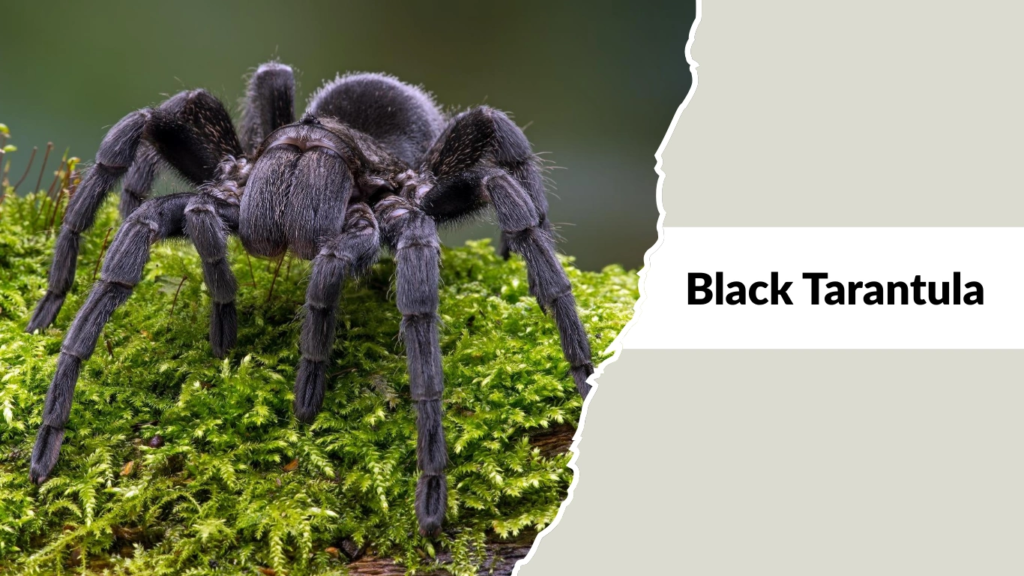
The Black Tarantula is a large, hairy spider known for its impressive size and dark coloration. Despite their fearsome appearance, most tarantulas are not aggressive toward humans and only bite when threatened. They are slow-moving but strong predators.
Identification
- Large, robust body covered with dark hairs
- Black or very dark brown coloration
- Thick, strong legs with noticeable bristles
- Females are larger and longer-lived than males
- Body length ranges from 3 to 10 cm, depending on species
Habitat and Behaviors
Black Tarantulas are commonly found in grasslands, deserts, forests, and scrublands. They live in burrows, under rocks, or in natural crevices, rarely venturing far from their shelters. These spiders are primarily nocturnal hunters, emerging at night to search for prey. They are solitary and mostly inactive during the day. Tarantulas are generally defensive rather than aggressive, relying on their size and appearance to deter threats.
Diet and Lifecycle
Their diet consists mainly of insects, small reptiles, and occasionally small mammals. They use venom to immobilize prey before consuming it. Females lay eggs in silk-lined burrows or egg sacs, which they guard until hatching. Spiderlings remain near the burrow initially before dispersing. They molt multiple times over several years before reaching adulthood, with females living much longer than males, sometimes over 10 years.
15. Black Mouse Spider
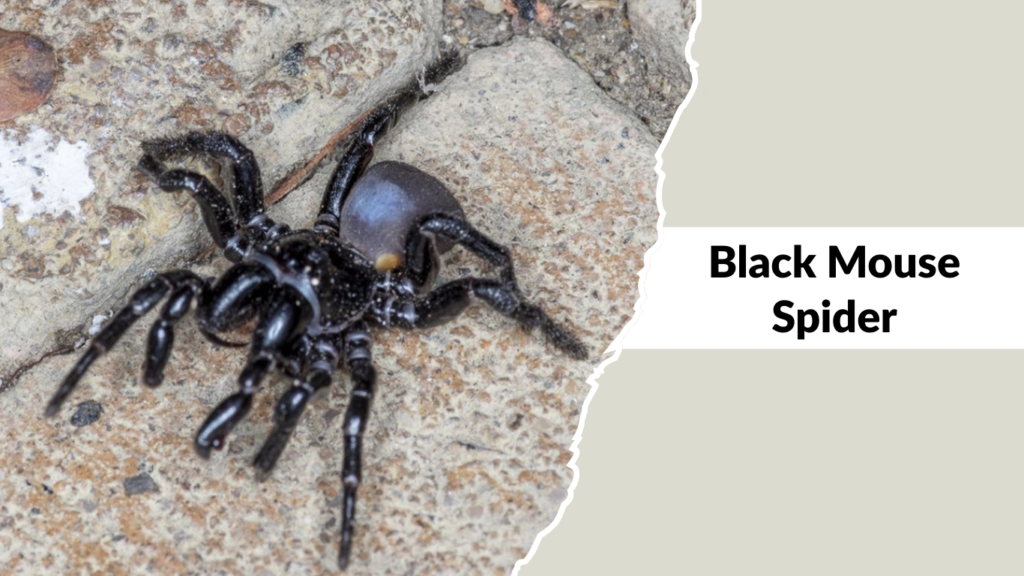
The Black Mouse Spider is a large, ground-dwelling spider known for its glossy black coloration and burrowing habits. Though venomous, it is generally non-aggressive and prefers to retreat rather than bite humans.
Identification
- Shiny black body with a robust, elongated shape
- Large, powerful fangs
- Females are larger and darker than males
- Stout legs covered with fine hairs
- Body length typically ranges from 2 to 4 cm
Habitat and Behaviors
Black Mouse Spiders are commonly found in burrows in sandy or loamy soil, often under rocks, logs, or leaf litter. They prefer dry habitats and construct silk-lined burrows for shelter. These spiders are mostly nocturnal hunters, emerging at night to catch prey. They are defensive if threatened but rarely bite unless provoked.
Diet and Lifecycle
Their diet mainly includes insects such as beetles, grasshoppers, and other arthropods. They rely on ambushing prey near their burrows, using venom to immobilize it. After mating, females produce silk egg sacs and guard them in their burrows until hatching. Spiderlings remain in the burrow for some time before dispersing. They molt several times before reaching adulthood, which can take 1–2 years depending on environmental conditions.
16. Black Tube-Web Spider
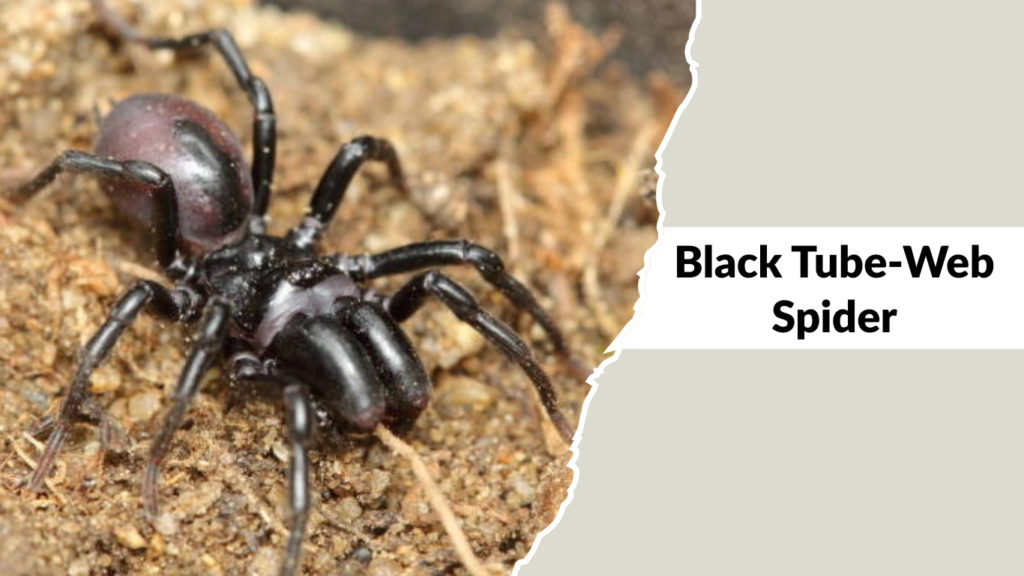
The Black Tube-Web Spider is a medium-sized, dark-colored spider known for building tubular silk retreats. It is mostly nocturnal and rarely encountered outside its habitat. While venomous, it is not typically dangerous to humans.
Identification
- Glossy black or dark brown body
- Elongated, cylindrical abdomen
- Strong, thick legs adapted for digging and climbing
- Females are larger and heavier than males
- Body length ranges from 1 to 2.5 cm
Habitat and Behaviors
Black Tube-Web Spiders prefer sheltered locations such as under rocks, logs, bark, or in crevices. They construct tubular silk retreats where they hide during the day. These spiders are nocturnal hunters, emerging at night to catch passing insects near the entrance of their tube. They are reclusive and avoid human contact.
Diet and Lifecycle
Their diet consists mainly of insects like beetles, ants, and small arthropods. Prey that comes close to the tube is seized and immobilized with venom. After mating, females lay eggs in silk sacs within their tube retreats. Spiderlings hatch in a few weeks and remain in the silk tube for protection before dispersing. They undergo multiple molts before reaching maturity, usually within several months.
17. Black Funnel-Web Spider
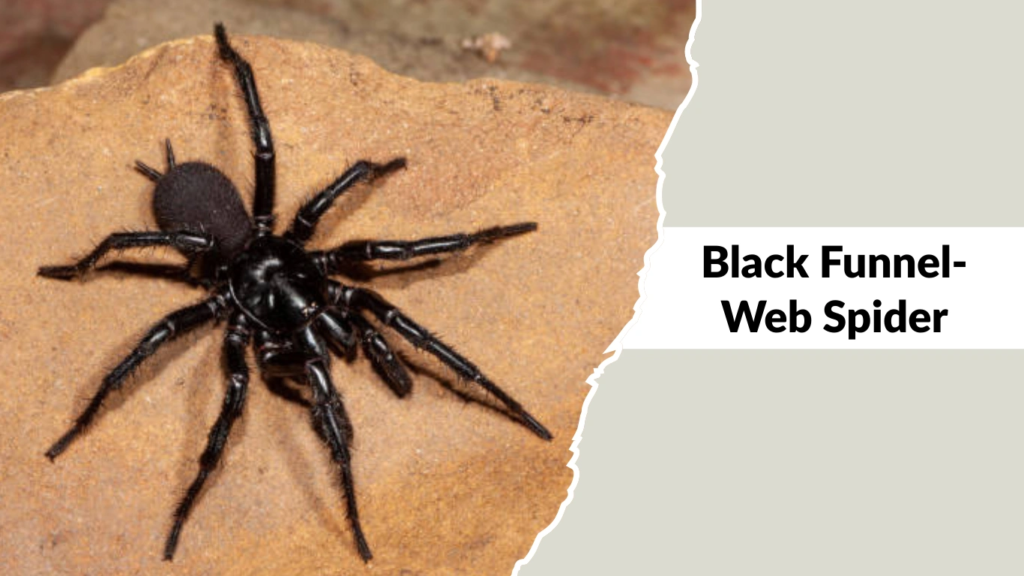
The Black Funnel-Web Spider is a venomous spider known for its glossy black body and funnel-shaped web. It is highly defensive and can deliver a painful bite, but it usually avoids humans unless provoked.
Identification
- Shiny black, robust body with a smooth surface
- Large, powerful chelicerae (fangs)
- Females are larger and heavier than males
- Long, strong legs
- Body length ranges from 1.5 to 3 cm
Habitat and Behaviors
Black Funnel-Web Spiders are commonly found in moist forests, under logs, rocks, and leaf litter. They construct funnel-shaped silk webs with a tubular retreat where the spider hides. These spiders are mostly nocturnal and extremely territorial, often remaining in or near their webs for most of their life. They are defensive and can bite if threatened.
Diet and Lifecycle
Their diet consists primarily of insects, small arthropods, and occasionally other spiders. Prey that ventures near the web is quickly seized and envenomated. After mating, females lay eggs in silk sacs inside the funnel retreat, guarding them until they hatch. Spiderlings stay in the retreat for protection before dispersing. They molt multiple times before reaching adulthood, which usually takes several months to a year depending on environmental conditions.
18. Black Huntsman Spider
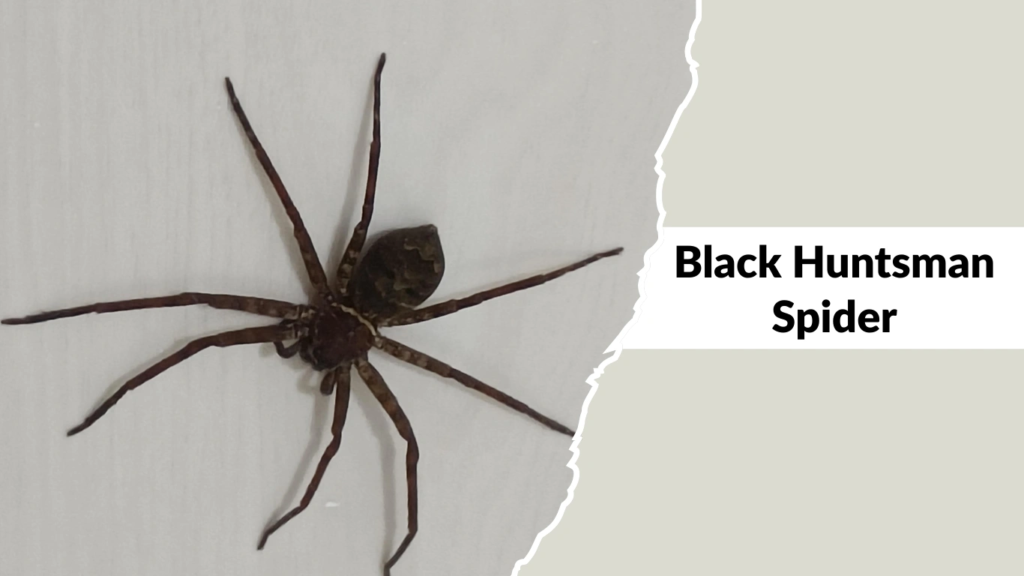
The Black Huntsman Spider is a large, dark-colored spider known for its speed and agility. Unlike web-building spiders, it actively hunts its prey and is mostly harmless to humans, though it can bite if provoked.
Identification
- Glossy black or dark brown body
- Long, flattened legs that allow sideways movement
- Large, prominent eyes for hunting
- Females are slightly larger than males
- Body length ranges from 1.5 to 2.5 cm, legs can span up to 15 cm
Habitat and Behaviors
Black Huntsman Spiders are commonly found under tree bark, rocks, or inside buildings such as sheds and garages. They prefer sheltered, dry environments and are mostly nocturnal hunters. These spiders do not build webs for catching prey but may leave silken retreats for protection. They are fast, agile, and tend to flee rather than confront humans.
Diet and Lifecycle
Their diet mainly consists of insects, small spiders, and other arthropods. Huntsman spiders actively chase and overpower their prey using speed and venom. After mating, females lay eggs in silken sacs and guard them until hatching. Spiderlings remain near the sac for a short time before dispersing. They molt multiple times before reaching adulthood, which usually takes several months.
19. Black Ground Spider
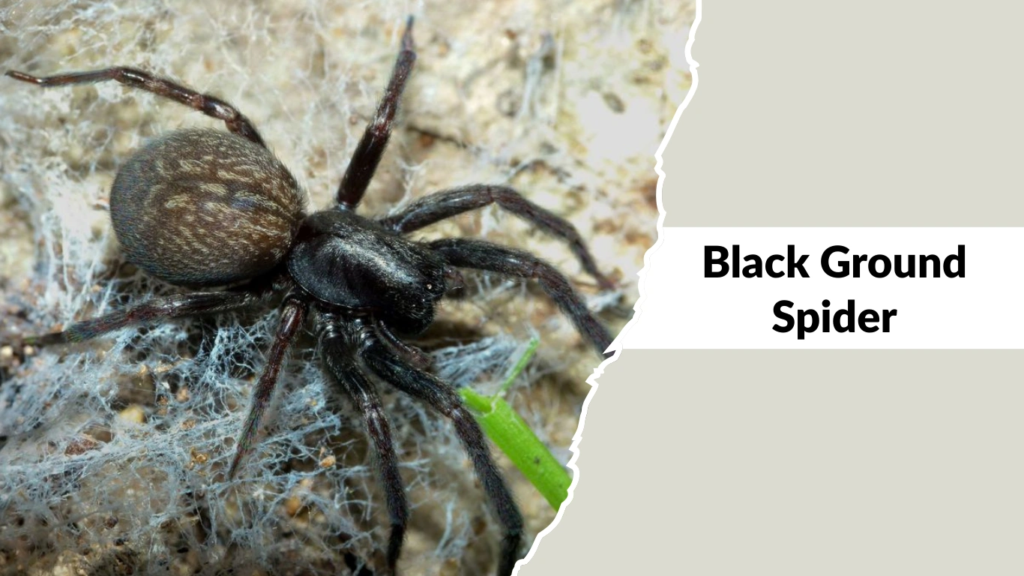
The Black Ground Spider is a small to medium-sized, dark-colored spider that primarily lives on the ground. It is an active hunter and does not rely on webs to catch prey. This spider is harmless to humans and helps control insect populations.
Identification
- Shiny black or dark brown body
- Flattened, robust build suitable for ground movement
- Short to medium-length legs
- Females are larger and darker than males
- Body length typically ranges from 0.8 to 1.5 cm
Habitat and Behaviors
Black Ground Spiders are commonly found under rocks, logs, leaf litter, and in soil crevices. They prefer dry, sheltered areas close to the ground and are mostly nocturnal hunters. These spiders are fast-moving and rely on stealth and speed to capture prey. They are solitary and avoid human interaction, rarely biting unless provoked.
Diet and Lifecycle
Their diet consists of small insects such as ants, beetles, and other arthropods. They actively hunt prey rather than trapping it in webs. After mating, females lay eggs in silk sacs hidden in soil or under debris. Spiderlings hatch in a few weeks, remaining near the egg sac briefly before dispersing. They molt multiple times before reaching adulthood, which usually occurs within a few months depending on environmental conditions.
20. Black Sheet-Web Spider
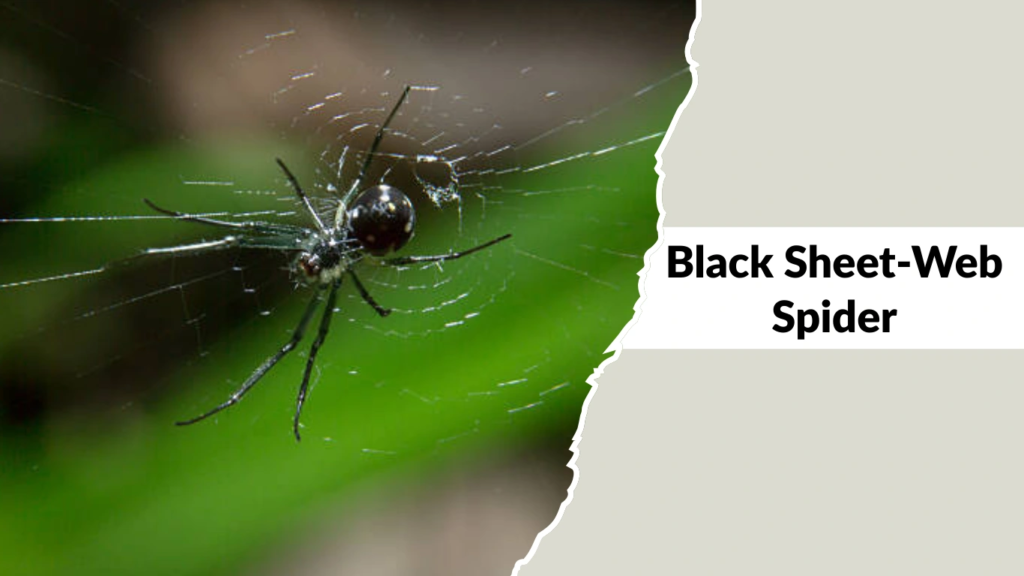
The Black Sheet-Web Spider is a medium-sized spider known for creating horizontal, sheet-like webs. Its dark coloration allows it to blend into shaded areas, making it an effective ambush predator. It is generally non-aggressive toward humans.
Identification
- Shiny black or dark brown body
- Flattened, oval abdomen
- Legs are long and slightly hairy
- Females are larger and more robust than males
- Body length typically ranges from 1 to 2 cm
Habitat and Behaviors
Black Sheet-Web Spiders are commonly found in gardens, under rocks, logs, and inside buildings near corners or ceilings. They construct horizontal sheet-like webs with a retreat underneath where they hide during the day. These spiders are mostly nocturnal and wait on the web for insects to fall onto it. They are shy and rarely bite humans.
Diet and Lifecycle
Their diet consists mainly of small insects such as flies, beetles, ants, and moths. Prey that lands on the web is immobilized with venom and wrapped in silk before consumption. After mating, females lay eggs in silk sacs, which are attached near or under the web. Spiderlings hatch within a few weeks and disperse to find suitable locations. They molt several times before reaching adulthood, usually within a few months.
21. Black Cobweb Spider
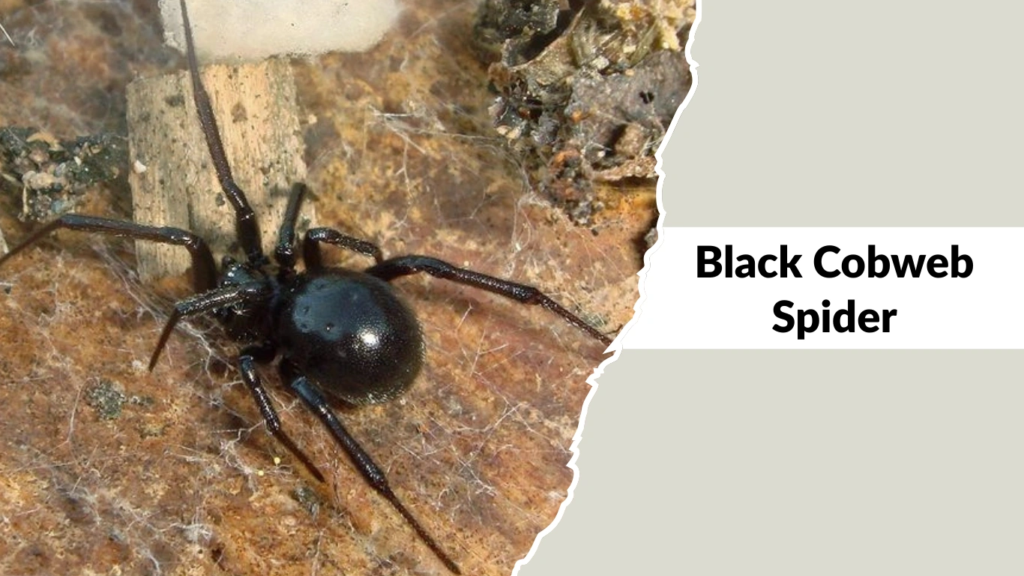
The Black Cobweb Spider is a small, dark-colored spider known for spinning irregular, tangled cobwebs. It is generally harmless to humans and helps control insect populations in and around homes.
Identification
- Glossy black or dark brown body
- Small, rounded abdomen
- Long, thin legs relative to body size
- Females are larger than males
- Body length ranges from 0.5 to 1.2 cm
Habitat and Behaviors
Black Cobweb Spiders are commonly found in corners of rooms, basements, garages, sheds, and outdoor structures. They prefer dark, undisturbed areas where they can anchor their messy, tangled webs. These spiders are mostly nocturnal and stay hidden during the day. They are shy and rarely bite humans, usually retreating when disturbed.
Diet and Lifecycle
Their diet mainly consists of small insects like flies, ants, mosquitoes, and other tiny arthropods. Prey becomes trapped in their sticky webs and is immobilized with venom before being consumed. After mating, females lay eggs in silk sacs attached near the web. Spiderlings hatch within a few weeks and initially remain close to the web before dispersing. They molt multiple times before reaching adulthood, typically within a few months.
22. Black Sac Spider
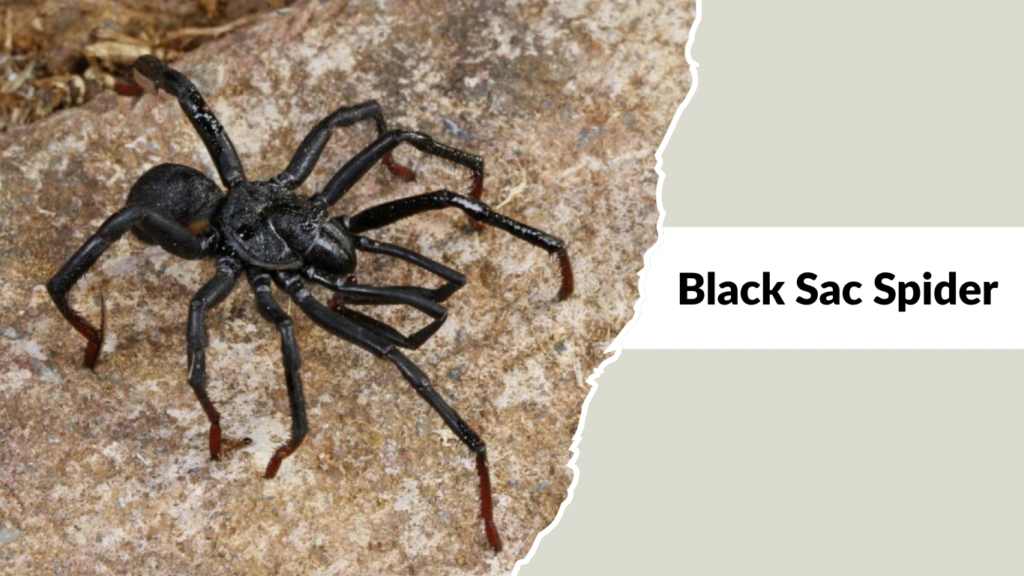
The Black Sac Spider is a small, dark spider that does not rely on webs for hunting. It is primarily nocturnal and known for creating small silk sacs to rest in during the day. Its bite can cause mild irritation in humans but is rarely serious.
Identification
- Glossy black or dark brown body
- Cylindrical, slightly elongated abdomen
- Short to medium-length legs
- Females are larger and more robust than males
- Body length typically ranges from 0.5 to 1.5 cm
Habitat and Behaviors
Black Sac Spiders are commonly found inside homes, under furniture, in corners, or in crevices. Outdoors, they inhabit leaf litter, bark, or rocks. They are nocturnal hunters, actively stalking insects at night rather than trapping them in webs. During the day, they hide in silk sacs, which they construct for shelter and protection.
Diet and Lifecycle
Their diet mainly consists of small insects like flies, ants, and other tiny arthropods. They actively hunt prey using stealth and speed, injecting venom to immobilize it before feeding. After mating, females lay eggs in silk sacs hidden in safe locations. Spiderlings hatch within a few weeks and initially remain in the sac before dispersing. They molt multiple times before reaching adulthood, usually within a few months depending on environmental conditions.
23. Black Fishing Spider
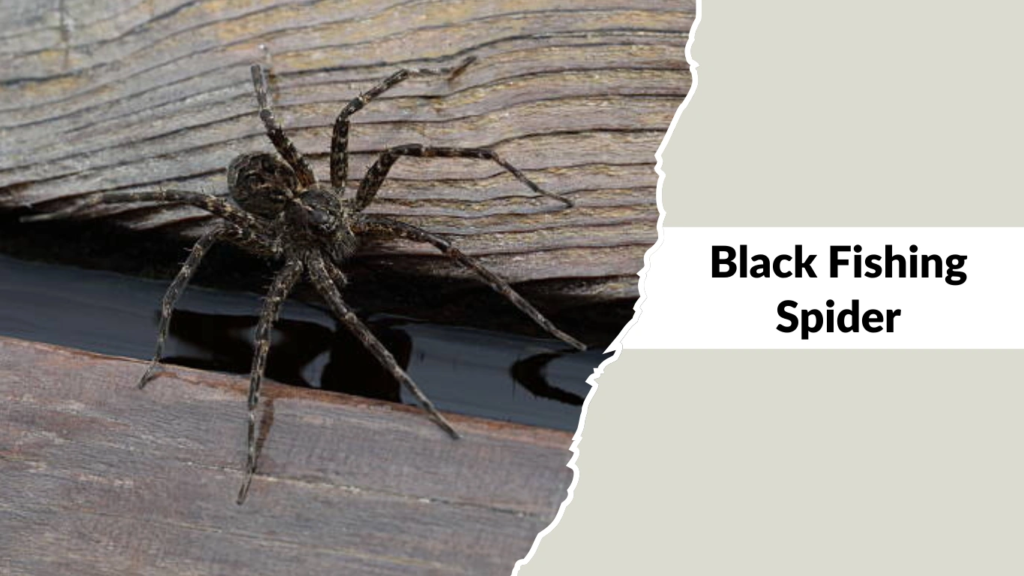
The Black Fishing Spider is a large, dark-colored spider often found near water. It is an agile hunter capable of walking on water surfaces and catching aquatic insects or small fish. It is generally non-aggressive toward humans.
Identification
- Glossy black or dark brown body with long, strong legs
- Large, flattened abdomen
- Females are larger and heavier than males
- Legs often have faint banding
- Body length ranges from 1.5 to 3 cm
Habitat and Behaviors
Black Fishing Spiders are commonly found near streams, ponds, lakes, and marshes. They build silk retreats under rocks, vegetation, or logs near water. These spiders are nocturnal hunters, actively pursuing prey on land or water surfaces. They are fast and agile but avoid humans unless provoked.
Diet and Lifecycle
Their diet includes aquatic insects, small fish, tadpoles, and terrestrial insects. They ambush prey near water or actively hunt it using speed and venom. After mating, females lay eggs in silk sacs hidden in their retreats. Spiderlings hatch in a few weeks, staying close to the sac initially before dispersing. They undergo multiple molts before reaching adulthood, usually within several months.
24. Black Velvet Spider
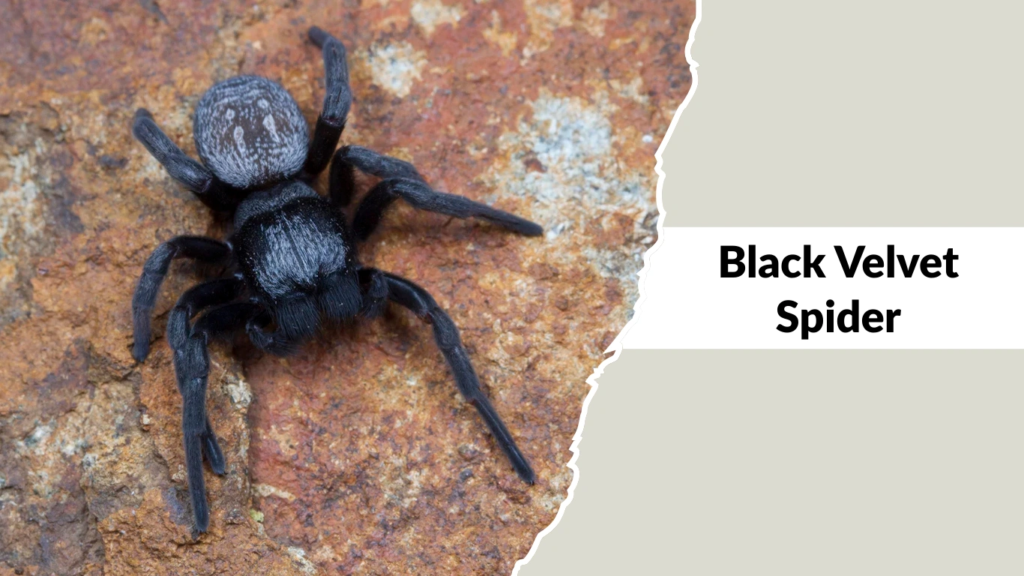
The Black Velvet Spider is a small, shiny black spider known for its velvety appearance. It is primarily a ground-dwelling, nocturnal hunter and is harmless to humans. Some species of velvet spiders are also known for social behavior, which is rare among spiders.
Identification
- Deep black, velvety body
- Compact, rounded abdomen
- Short to medium-length legs
- Females are larger and more robust than males
- Body length ranges from 0.7 to 1.5 cm
Habitat and Behaviors
Black Velvet Spiders are commonly found in leaf litter, under rocks, or within soil crevices in dry, warm habitats. They construct silk retreats to hide during the day. Some species exhibit social behavior, living in small colonies and cooperating in web maintenance and hunting. They are nocturnal and avoid human contact.
Diet and Lifecycle
Their diet consists of small insects, other spiders, and arthropods. They actively hunt prey rather than trapping it in webs. Females lay eggs in silk sacs, often within their retreats, and guard them until hatching. Spiderlings remain nearby for a short period before dispersing. They molt multiple times before reaching adulthood, which generally occurs within several months.
25. Black Spitting Spider
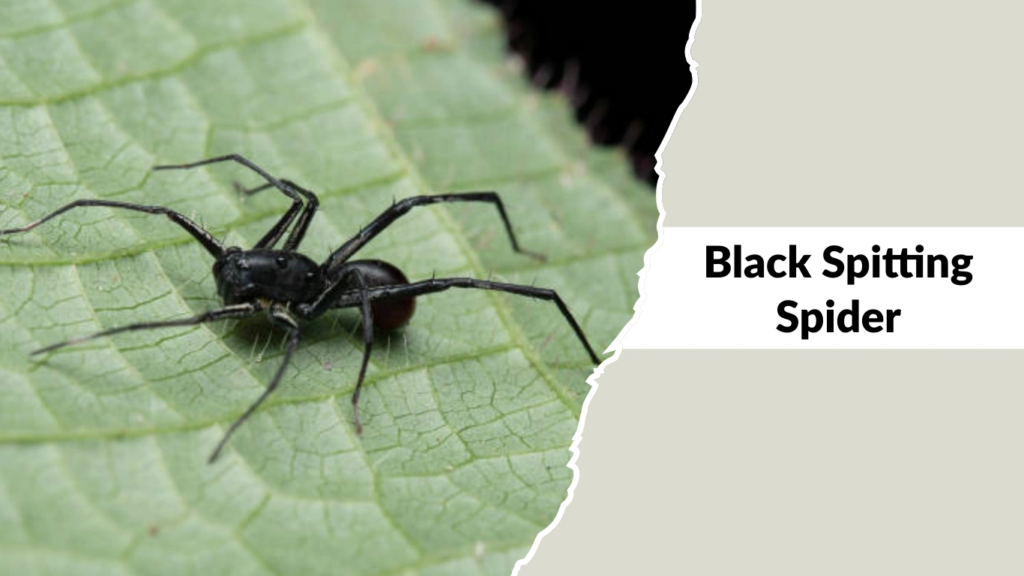
The Black Spitting Spider is a small, dark-colored spider known for its unique hunting technique of spitting a sticky, venomous silk to immobilize prey. It is harmless to humans and uses its specialized method to capture insects efficiently.
Identification
- Glossy black or dark brown body
- Small, compact abdomen
- Short legs relative to body size
- Females are slightly larger than males
- Body length typically ranges from 0.5 to 1.2 cm
Habitat and Behaviors
Black Spitting Spiders are commonly found under rocks, logs, bark, and leaf litter. They prefer sheltered, dark environments where insects are abundant. These spiders are nocturnal hunters, ambushing prey and spitting a sticky, venomous silk to immobilize it. They construct small retreats using silk for protection during the day and are generally shy around humans.
Diet and Lifecycle
Their diet primarily consists of small insects such as ants, flies, and beetles. The spider immobilizes prey by spitting a silk mixture containing venom before consuming it. After mating, females lay eggs in silk sacs hidden within their retreats. Spiderlings hatch within a few weeks and initially remain close to the sac before dispersing. They molt multiple times.
FAQs
1. Are all black spiders dangerous to humans?
Not all black spiders are dangerous. While some species, like the Black Widow or Funnel-Web Spider, have venom that can cause serious reactions, most black spiders are harmless and avoid humans. They play an important role in controlling insect populations.
2. How can I identify a venomous black spider?
Venomous black spiders often have distinctive markings, such as the red hourglass on a Black Widow. Other signs include a glossy black body, robust chelicerae (fangs), or specific habitats like burrows or funnel-shaped webs. However, identification can be tricky, so it’s best to observe from a distance.
3. Where are black spiders commonly found?
Black spiders are adaptable and can be found in various habitats: indoors in basements, garages, and corners; outdoors under rocks, logs, leaf litter, or on plants. Some prefer warm, dry areas, while others, like fishing or funnel-web spiders, live near water or moist environments.
4. What do black spiders eat?
Black spiders primarily feed on insects such as flies, mosquitoes, ants, beetles, and sometimes smaller spiders. Some larger species, like tarantulas or fishing spiders, may also prey on small reptiles, amphibians, or fish. Their hunting strategies vary from web-trapping to active hunting or ambushing.
5. How can I prevent black spiders in my home?
To reduce black spider presence:
- Keep spaces clean and clutter-free.
- Seal cracks, gaps, and entry points.
- Remove piles of wood, rocks, or debris near your home.
- Use screens on windows and doors.
- Regularly vacuum and dust corners and hidden areas.
