
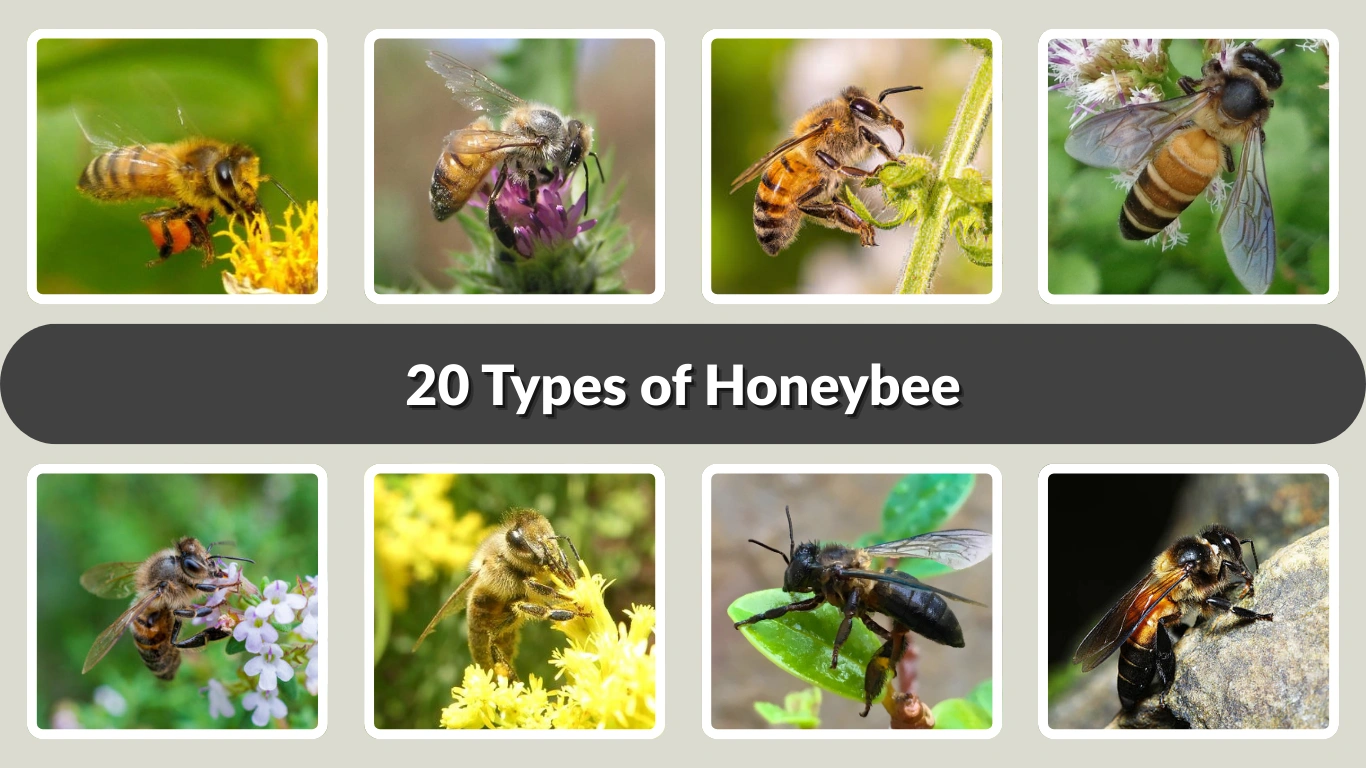
Honeybees are essential pollinators that play a major role in agriculture, ecosystems, and food production. Found across diverse climates, different honeybee species and subspecies have evolved unique traits to survive in forests, deserts, mountains, and farmlands. From highly domesticated bees used in commercial beekeeping to wild species living on cliffs and trees, each type contributes differently to pollination, honey production, and ecological balance worldwide.
1. Western Honey Bee (Apis mellifera)
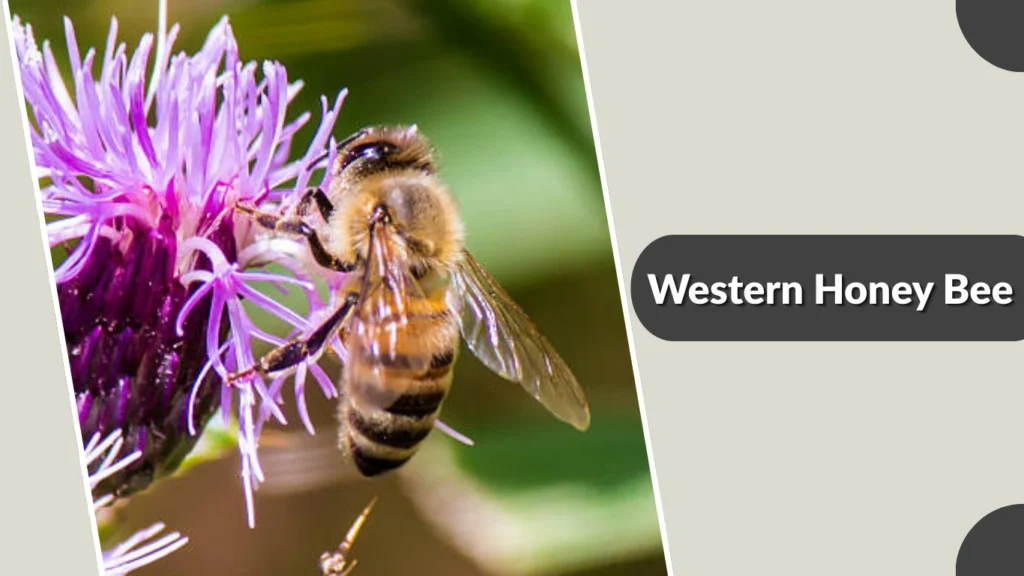
The Western honey bee is the most widespread and well-known honeybee species in the world. It is widely domesticated for honey production, pollination, and beeswax. Native to Europe, Africa, and parts of Asia, it has been introduced to almost every continent due to its adaptability and economic importance.
Identification
- Medium-sized body with yellow and black banded abdomen
- Covered in fine hairs that help collect pollen
- Two pairs of transparent wings
- Distinct queen, worker, and drone castes
- Workers have pollen baskets on their hind legs
Habitat
Western honey bees thrive in a wide range of environments, including forests, grasslands, farms, and urban areas. They commonly nest in hollow trees, rock crevices, or man-made hives provided by beekeepers. Their adaptability allows them to survive in both temperate and subtropical climates.
Behaviors
This species is highly social and lives in large colonies with complex communication systems. Workers perform the famous “waggle dance” to share information about food sources. They are cooperative, defensive when threatened, and known for efficient division of labor within the colony.
Diet and Lifecycle
Western honey bees feed primarily on nectar and pollen collected from flowering plants. Nectar is converted into honey, while pollen provides protein for growth. Their lifecycle includes four stages: egg, larva, pupa, and adult, with queens, workers, and drones developing at different rates and fulfilling distinct roles.
2. Eastern Honey Bee (Apis cerana)
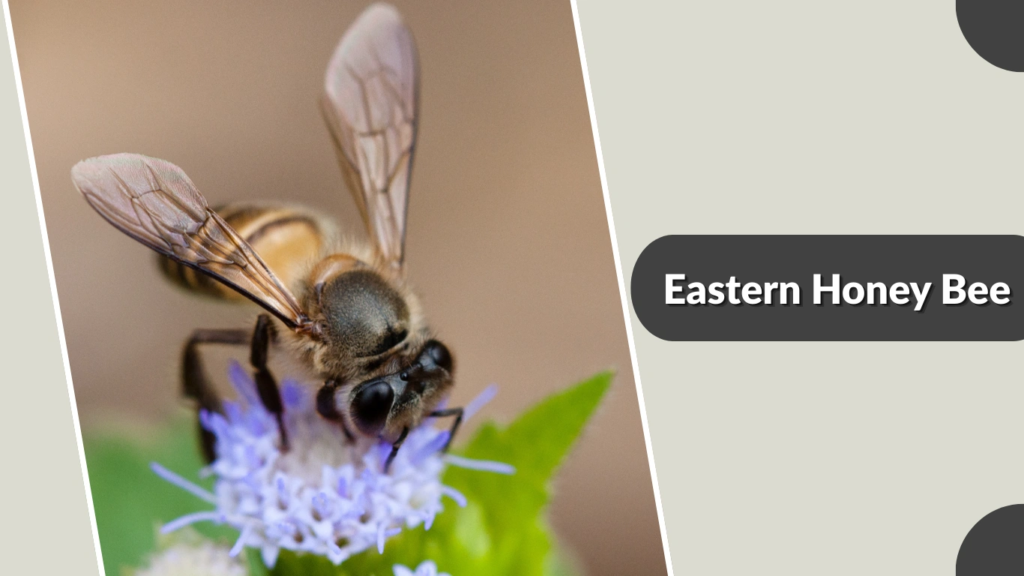
The Eastern honey bee is a native honeybee species of South and Southeast Asia. It has been traditionally managed by humans for centuries and is well adapted to local climates, pests, and predators, making it an important pollinator in its natural range.
Identification
- Slightly smaller than the Western honey bee
- Dark brown to black body with subtle abdominal bands
- Compact and slender body shape
- Presence of queen, worker, and drone castes
- Shorter wings compared to Apis mellifera
Habitat
Eastern honey bees are commonly found in forests, agricultural lands, gardens, and rural settlements. They prefer nesting in tree cavities, rock crevices, and wall holes, but they are also kept in traditional wooden or clay hives across Asia.
Behaviors
This species is known for strong defensive behavior against predators, including coordinated attacks on hornets. Colonies are smaller than those of Western honey bees, and they are less aggressive toward humans. They show effective communication and organized colony roles.
Diet and Lifecycle
Eastern honey bees feed on floral nectar and pollen from a wide variety of plants. Nectar is processed into honey for energy storage. Their lifecycle follows four stages—egg, larva, pupa, and adult—with development time slightly shorter than that of Western honey bees, especially for worker bees.
3. Giant Honey Bee (Apis dorsata)
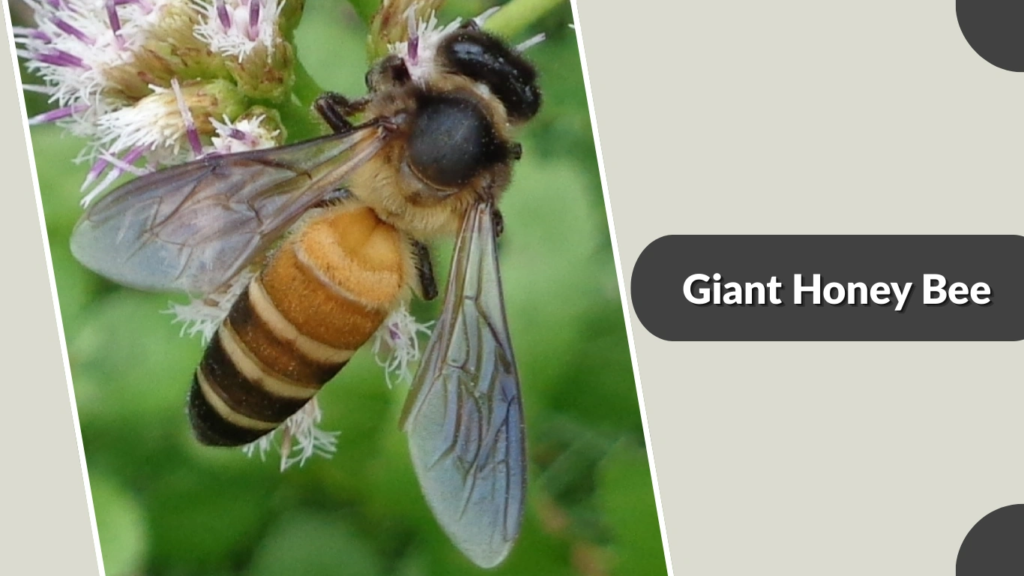
The Giant honey bee is the largest honeybee species in the world and is known for its impressive size and aggressive nest defense. It is native to South and Southeast Asia and is not domesticated, as it prefers open nesting sites high above the ground.
Identification
- Very large body size compared to other honeybees
- Golden-brown abdomen with dark black bands
- Long, powerful wings
- Large eyes and strong mandibles
- No domesticated castes, but clear queen, worker, and drone roles
Habitat
Giant honey bees inhabit tropical forests, cliffs, mangroves, and mountainous regions. They build large, single exposed combs on tall trees, rock faces, or buildings, often at great heights to avoid predators and human disturbance.
Behaviors
This species is highly defensive and known for mass stinging attacks when threatened. Colonies use coordinated “shimmering” waves—synchronized body movements—to deter predators. They are migratory and often abandon nests seasonally in response to environmental changes.
Diet and Lifecycle
Giant honey bees forage over long distances, collecting nectar and pollen from forest flowering trees and plants. Honey is stored in large quantities but harvested only from wild nests. Their lifecycle follows the standard egg, larva, pupa, and adult stages, with slower development due to their larger body size.
4. Dwarf Honey Bee (Apis florea)

The Dwarf honey bee is the smallest honeybee species and is easily recognized by its tiny size and exposed nesting style. It is native to South and Southeast Asia and plays an important role in pollinating wild and cultivated plants.
Identification
- Very small body size
- Reddish-brown abdomen with pale bands
- Slender body and narrow wings
- Prominent large eyes relative to body size
- Clear distinction between queen, worker, and drone
Habitat
Dwarf honey bees prefer warm climates and are commonly found in open woodlands, scrublands, gardens, and agricultural areas. They build small, single comb nests on thin branches, shrubs, or low tree limbs, usually in shaded locations.
Behaviors
This species is generally non-aggressive and relies more on avoidance than defense. When threatened, colonies may abandon the nest entirely. They are active foragers and can be seen visiting small flowers that larger honey bees often ignore.
Diet and Lifecycle
Dwarf honey bees feed on nectar and pollen from a wide range of flowering plants, especially small blossoms. Honey production is minimal due to their small colony size. Their lifecycle includes egg, larva, pupa, and adult stages, with rapid development compared to larger honeybee species.
5. Himalayan Giant Honey Bee (Apis laboriosa)
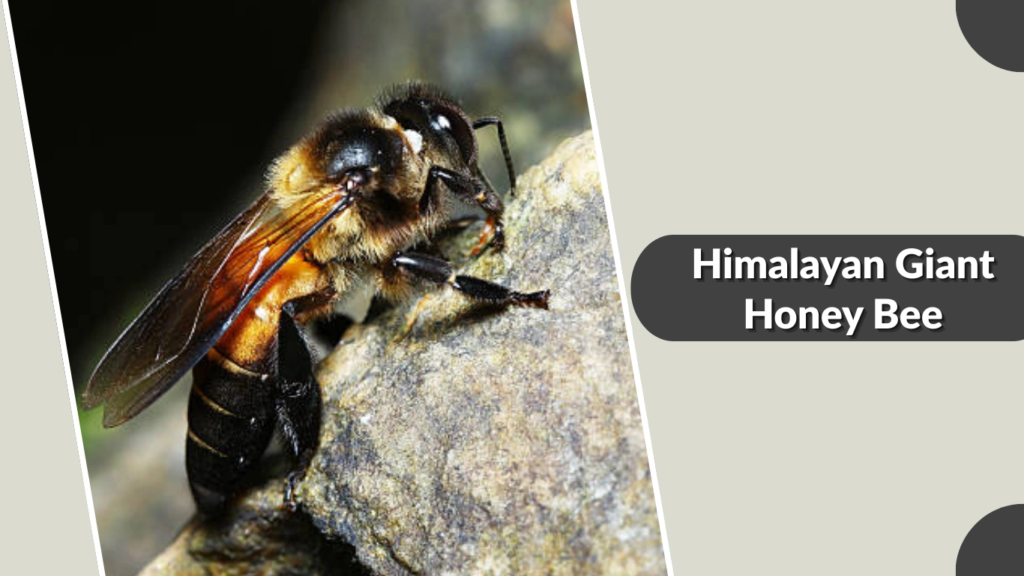
The Himalayan giant honey bee is a rare and impressive species known for living at the highest altitudes of any honeybee. Closely related to the giant honey bee, it is native to the Himalayan region and famous for producing the potent “mad honey.”
Identification
- Very large body size, larger than Apis dorsata
- Dark brown to black abdomen with pale bands
- Thick body covered with dense hairs
- Long, strong wings adapted for high-altitude flight
- Clear queen, worker, and drone castes
Habitat
This species inhabits high-altitude cliffs and rocky outcrops in the Himalayan mountains, often at elevations above 2,500 meters. Nests are built as large, exposed single combs attached to steep rock faces, usually in cold and windy environments.
Behaviors
Himalayan giant honey bees are extremely defensive and known for aggressive nest protection. They use coordinated group movements to repel predators and humans. Colonies are migratory, moving seasonally between higher and lower elevations in response to climate and flowering cycles.
Diet and Lifecycle
They forage on high-altitude flowering plants, including rhododendrons, whose nectar can make their honey toxic. The lifecycle follows the standard honeybee stages of egg, larva, pupa, and adult, with development adapted to colder mountain conditions.
6. Koschevnikov’s Honey Bee (Apis koschevnikovi)
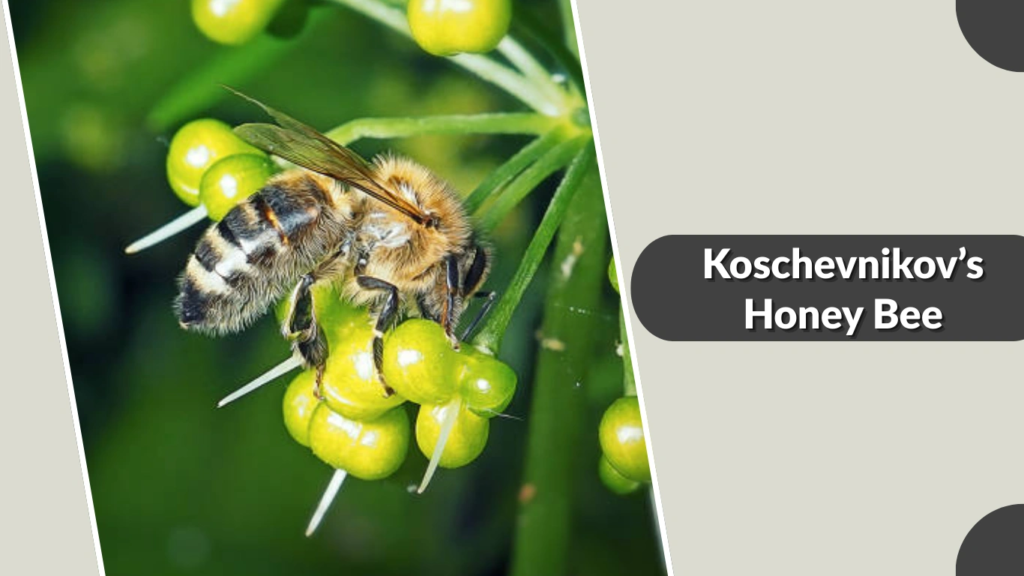
Koschevnikov’s honey bee is a lesser-known Asian honeybee species closely related to the Eastern honey bee. It is native to parts of Southeast Asia and is valued for its adaptation to tropical forest environments and resistance to certain local pests.
Identification
- Medium-sized body, similar to Apis cerana
- Reddish-brown body coloration
- Slightly darker abdomen bands
- Hairy thorax for pollen collection
- Distinct queen, worker, and drone castes
Habitat
This species is mainly found in tropical rainforests and forest edges of Southeast Asia, particularly in Borneo and surrounding regions. It nests in tree cavities and occasionally in hollow logs, preferring undisturbed forest habitats with abundant floral resources.
Behaviors
Koschevnikov’s honey bee is generally calm and less aggressive toward humans. Colonies are smaller than those of Western honey bees and show strong defensive responses against predators like hornets. They exhibit organized social behavior and effective communication within the hive.
Diet and Lifecycle
They feed on nectar and pollen from a wide variety of tropical flowering plants. Nectar is converted into honey for storage, while pollen supports brood development. The lifecycle includes egg, larva, pupa, and adult stages, with development patterns similar to other cavity-nesting honeybees.
7. Philippine Honey Bee (Apis nigrocincta)
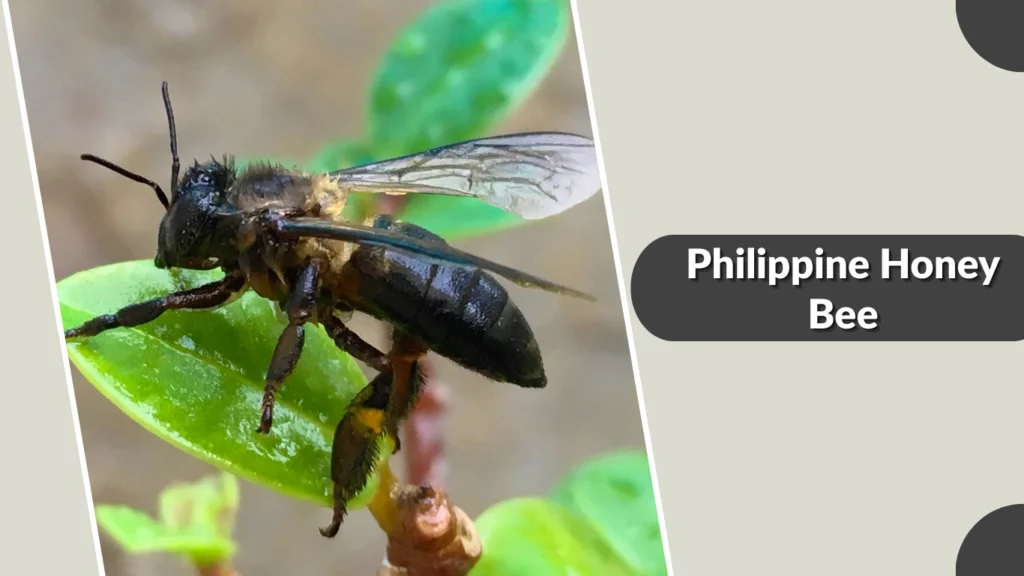
The Philippine honey bee is a native species of the Philippines and nearby regions. It closely resembles the Eastern honey bee but is genetically distinct, playing an important role in local ecosystems and natural pollination.
Identification
- Medium-sized body similar to Apis cerana
- Dark brown to black abdomen with narrow yellow bands
- Slender body structure
- Hair-covered thorax
- Clear queen, worker, and drone castes
Habitat
This species is commonly found in forests, coastal areas, agricultural lands, and rural environments. It typically nests in tree cavities, hollow trunks, and occasionally man-made structures, favoring warm and humid tropical conditions.
Behaviors
Philippine honey bees are moderately defensive and show strong colony coordination. They are efficient foragers and demonstrate organized division of labor. Compared to Western honey bees, their colonies are smaller and less aggressive toward humans.
Diet and Lifecycle
They feed on nectar and pollen from native and cultivated flowering plants. Nectar is processed into honey mainly for colony survival rather than large-scale storage. Their lifecycle follows the standard honeybee stages of egg, larva, pupa, and adult, with development well adapted to tropical climates.
8. Sulawesi Honey Bee (Apis nigrocincta)
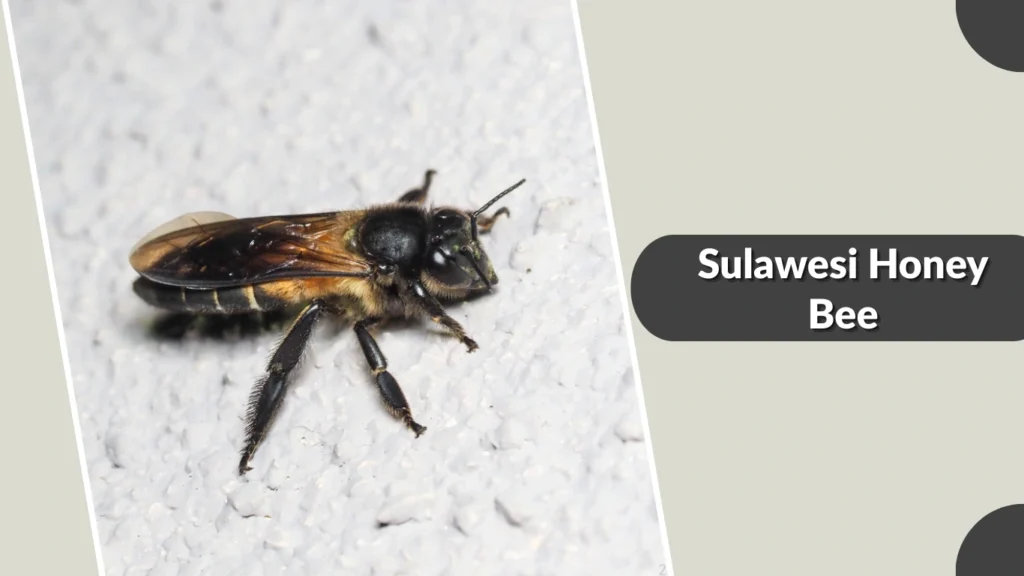
The Sulawesi honey bee is a regional honeybee species found primarily on the Indonesian island of Sulawesi. It is closely related to other Asian honey bees and is important for pollination in tropical island ecosystems.
Identification
- Medium-sized body
- Dark abdomen with thin yellow bands
- Compact and slightly elongated body shape
- Hairy thorax for pollen collection
- Distinct queen, worker, and drone castes
Habitat
This species inhabits tropical forests, forest edges, plantations, and rural landscapes. It typically nests in tree cavities or hollow logs and is well adapted to the warm, humid climate of island environments.
Behaviors
Sulawesi honey bees are social and cooperative, forming well-organized colonies. They show moderate defensive behavior when disturbed but are generally less aggressive than giant honey bees. Foraging activity is consistent throughout the year due to stable tropical conditions.
Diet and Lifecycle
They collect nectar and pollen from a wide range of tropical flowering plants. Honey production is modest and mainly supports colony needs. The lifecycle includes egg, larva, pupa, and adult stages, with development cycles similar to other Asian cavity-nesting honeybees.
9. Saba Honey Bee (Apis nuluensis)

The Saba honey bee is a rare honeybee species native to the highland regions of Borneo, particularly in Sabah, Malaysia. It is closely related to the Eastern honey bee but is adapted to cooler mountainous environments.
Identification
- Medium-sized body similar to Apis cerana
- Dark brown to black coloration
- Slightly broader abdomen
- Dense body hairs for insulation
- Distinct queen, worker, and drone castes
Habitat
This species is mainly found in montane forests at higher elevations. It prefers cool, moist environments and typically nests in tree cavities or hollow trunks within dense forested areas.
Behaviors
Saba honey bees are generally calm and less aggressive toward humans. Colonies are relatively small and well organized. They show good defensive coordination against predators and are efficient foragers in cooler conditions.
Diet and Lifecycle
They feed on nectar and pollen from highland flowering plants and forest vegetation. Honey production is limited and used primarily for colony survival. Their lifecycle follows the standard stages of egg, larva, pupa, and adult, with adaptations suited to mountainous climates.
10. Black Dwarf Honey Bee (Apis andreniformis)
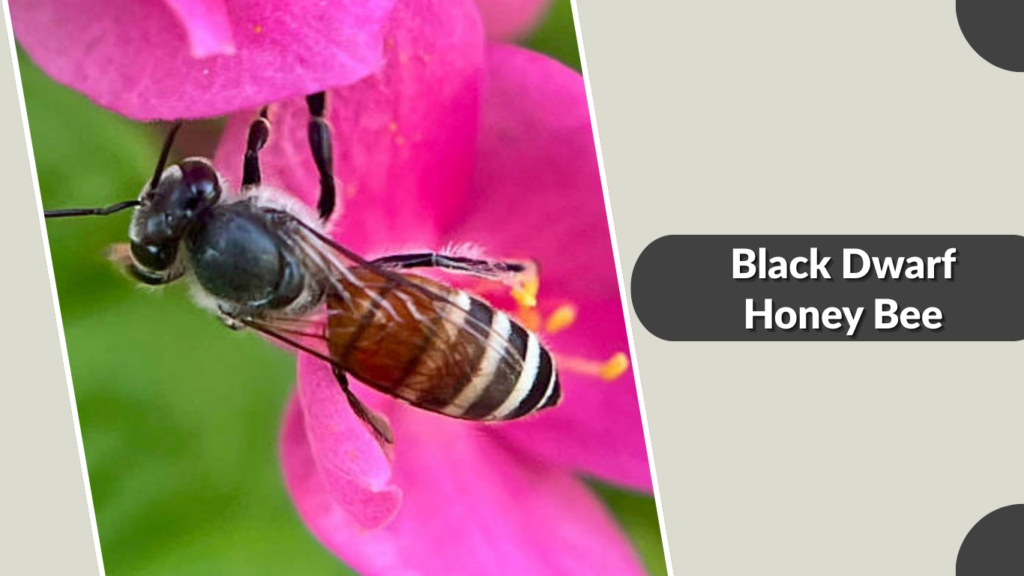
The black dwarf honey bee is a small, primitive honeybee species closely related to the dwarf honey bee. It is native to Southeast Asia and is known for its dark coloration and open-comb nesting behavior.
Identification
- Very small body size
- Dark brown to nearly black coloration
- Slender abdomen with faint banding
- Narrow wings proportional to body size
- Distinct queen, worker, and drone castes
Habitat
This species inhabits tropical forests, forest edges, and rural landscapes. It builds small, exposed single-comb nests on thin branches, shrubs, or low trees, often in shaded and protected locations.
Behaviors
Black dwarf honey bees are generally non-aggressive and rely on camouflage and nest abandonment rather than stinging for defense. Colonies are small and highly mobile, frequently relocating when disturbed or when resources become scarce.
Diet and Lifecycle
They forage on nectar and pollen from a variety of small flowering plants. Honey production is minimal and mainly supports colony survival. The lifecycle includes egg, larva, pupa, and adult stages, with relatively rapid development compared to larger honeybee species.
11. Cape Honey Bee (Apis mellifera capensis)
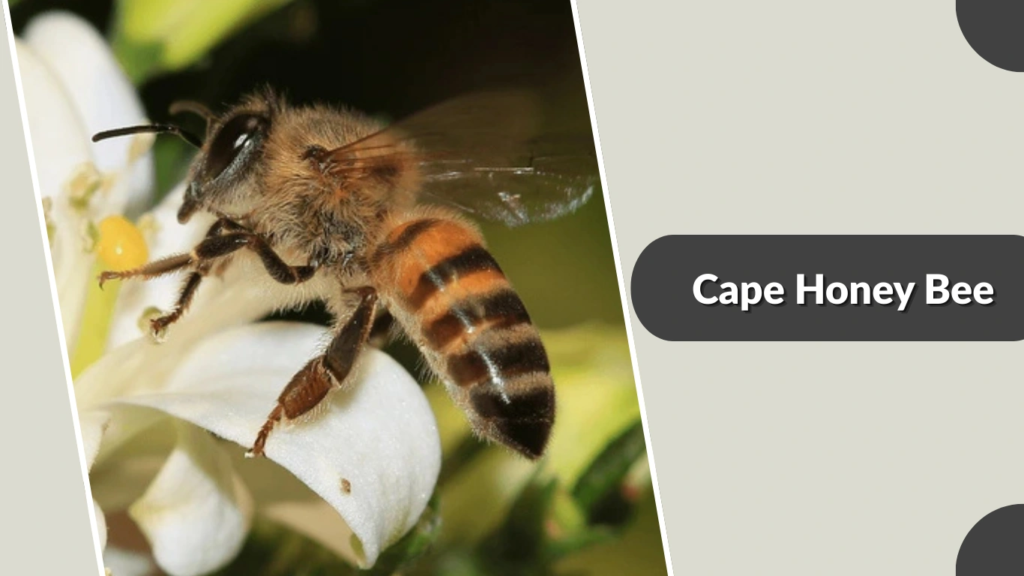
The Cape honey bee is a unique subspecies of the Western honey bee found in southern Africa. It is well known for its unusual reproductive abilities and its importance in regional pollination.
Identification
- Medium-sized body
- Dark brown to black coloration
- Slightly broader abdomen than other subspecies
- Dense body hairs
- Clear queen, worker, and drone castes
Habitat
Cape honey bees are native to the Cape region of South Africa. They inhabit fynbos, grasslands, forests, and agricultural areas, nesting in tree cavities, rock crevices, and managed beehives.
Behaviors
This subspecies is famous for worker bees that can reproduce without mating, a trait called thelytokous parthenogenesis. Colonies are generally calm but highly competitive and can invade other honeybee colonies.
Diet and Lifecycle
They feed on nectar and pollen from a wide range of flowering plants native to southern Africa. The lifecycle follows the standard honeybee stages of egg, larva, pupa, and adult, with workers capable of producing female offspring under certain conditions.
12. Italian Honey Bee (Apis mellifera ligustica)
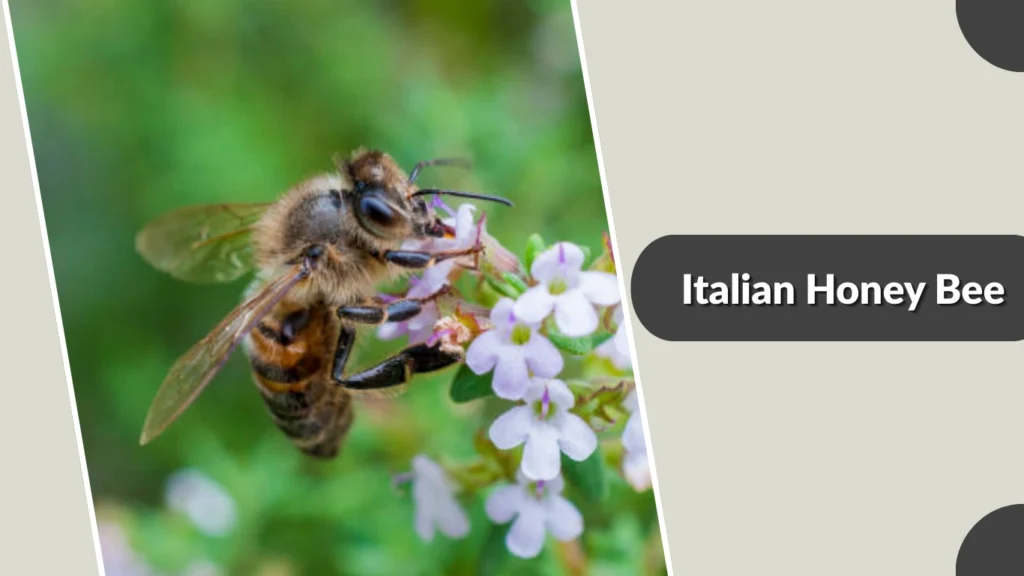
The Italian honey bee is one of the most popular and widely kept honeybee subspecies in the world. It is prized by beekeepers for its gentle nature, strong honey production, and excellent adaptability.
Identification
- Medium-sized body
- Golden yellow to light brown coloration
- Distinct bright yellow abdominal bands
- Slender, elegant body shape
- Clear queen, worker, and drone castes
Habitat
Italian honey bees thrive in a wide range of environments, including farmland, orchards, gardens, and urban areas. They are commonly kept in managed hives but can also survive in natural cavities in warm and temperate climates.
Behaviors
This subspecies is known for its gentle temperament and low aggression. Colonies are strong foragers and maintain large populations. They are less prone to swarming and are well suited for commercial beekeeping operations.
Diet and Lifecycle
They feed on nectar and pollen from diverse flowering plants, converting nectar into honey efficiently. The lifecycle follows the typical honeybee stages of egg, larva, pupa, and adult, with robust brood rearing during favorable seasons.
13. Carniolan Honey Bee (Apis mellifera carnica)
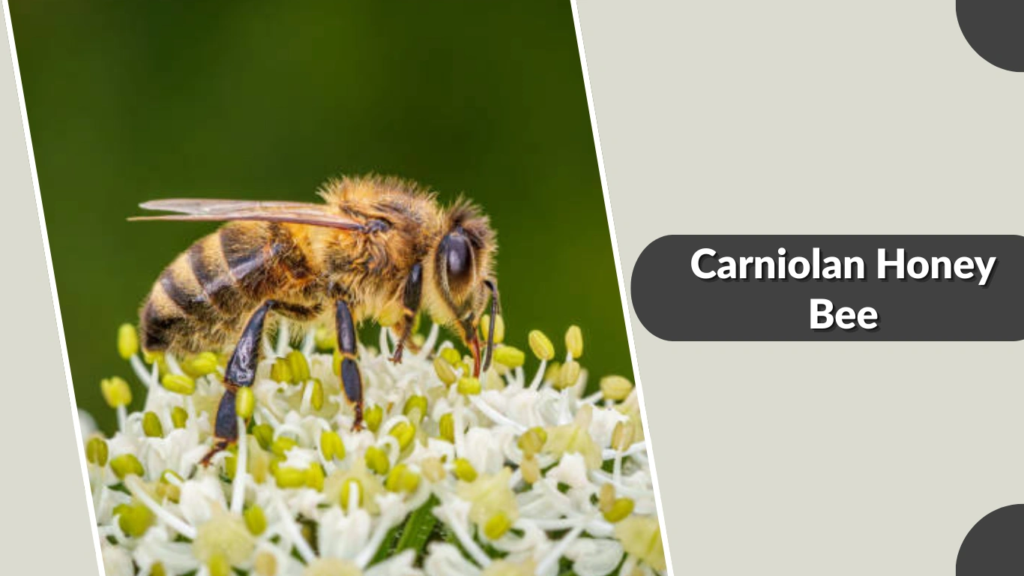
The Carniolan honey bee is a highly regarded honeybee subspecies native to Central and Southeastern Europe. It is especially valued for its gentle behavior, rapid spring buildup, and ability to adapt to cooler climates.
Identification
- Medium-sized body
- Dark gray to brown coloration
- Light gray bands on the abdomen
- Dense body hairs giving a silvery appearance
- Clear queen, worker, and drone castes
Habitat
Carniolan honey bees are well adapted to mountainous regions, forests, and agricultural landscapes. They thrive in cooler climates and are commonly kept in managed hives, though they can also nest in natural cavities.
Behaviors
This subspecies is known for its calm temperament and excellent overwintering ability. Colonies adjust population size efficiently based on food availability and are quick to exploit early spring nectar sources.
Diet and Lifecycle
They collect nectar and pollen from a wide variety of flowering plants, particularly early-blooming species. The lifecycle follows the standard honeybee development stages, with strong brood production during favorable environmental conditions.
14. Caucasian Honey Bee (Apis mellifera caucasica)
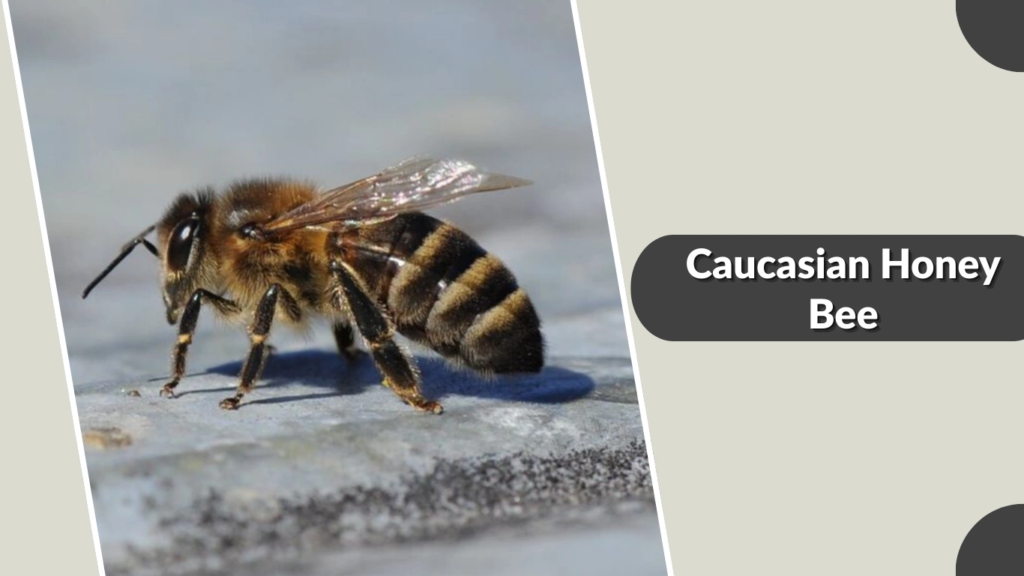
The Caucasian honey bee is a subspecies native to the Caucasus Mountains between Eastern Europe and Western Asia. It is well known for its long tongue length, which allows it to forage efficiently on deep, tubular flowers.
Identification
- Medium-sized body
- Dark gray to black coloration
- Narrow, subtle abdominal bands
- Very long proboscis compared to other subspecies
- Clear queen, worker, and drone castes
Habitat
Caucasian honey bees are adapted to mountainous and forested regions with cool, moist climates. They are commonly kept in managed hives but can also survive in natural cavities in forested landscapes.
Behaviors
This subspecies is gentle and calm but tends to use excessive propolis inside the hive. Colonies build up slowly in spring but maintain strong populations once established. They are excellent foragers in cooler and overcast conditions.
Diet and Lifecycle
They feed on nectar and pollen from a wide range of flowering plants, especially those with deep corollas. The lifecycle follows the standard egg, larva, pupa, and adult stages, with steady brood development throughout the season.
15. Buckfast Honey Bee (Apis mellifera Buckfast)
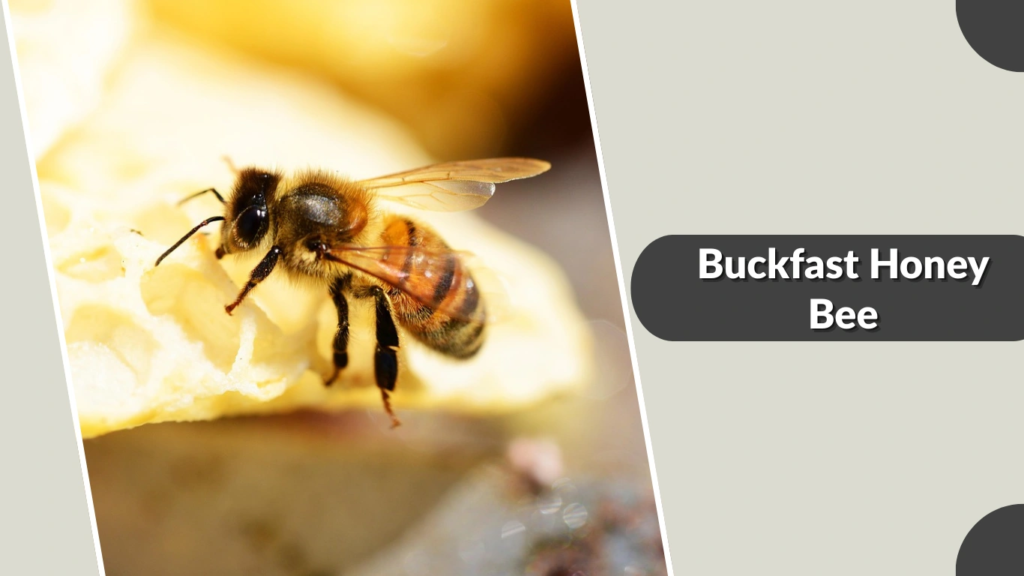
The Buckfast honey bee is a carefully bred honeybee strain developed for productivity, disease resistance, and gentle behavior. It is widely used in modern beekeeping and is known for its adaptability to different climates.
Identification
- Medium-sized body
- Light brown to yellow coloration
- Evenly banded abdomen
- Smooth and well-proportioned body shape
- Clear queen, worker, and drone castes
Habitat
Buckfast honey bees thrive in diverse environments, including farmland, gardens, forests, and urban areas. They are primarily kept in managed hives and adapt well to both temperate and warm climates.
Behaviors
This strain is known for its calm temperament and strong resistance to pests and diseases. Colonies are excellent foragers, maintain strong populations, and show reduced swarming behavior, making them ideal for commercial and hobby beekeeping.
Diet and Lifecycle
They feed on nectar and pollen from a wide range of flowering plants, converting nectar into honey efficiently. The lifecycle follows the standard honeybee development stages, with consistent brood rearing and long-lived worker bees.
16. Russian Honey Bee (Apis mellifera)
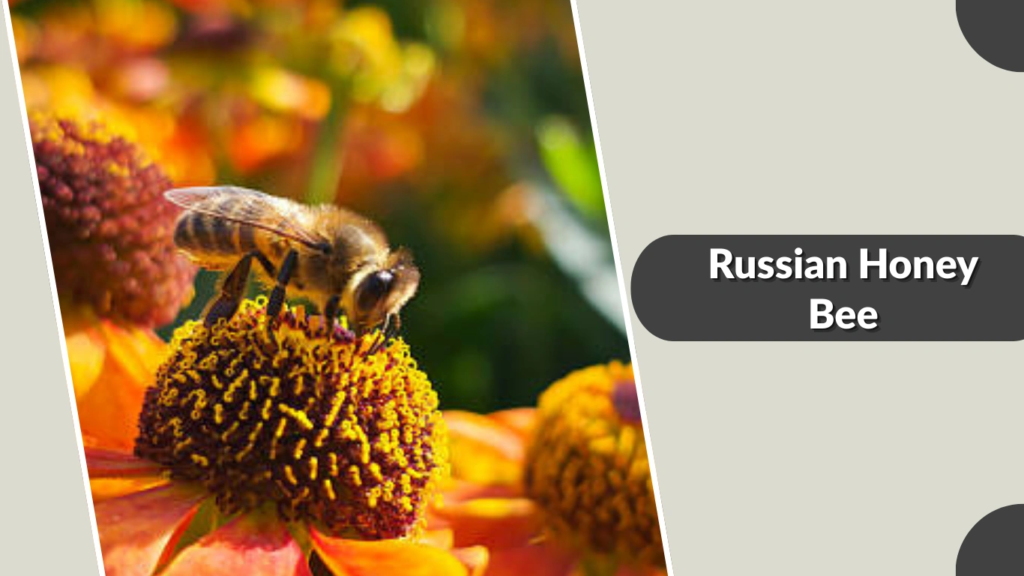
The Russian honey bee is a hardy honeybee strain originally imported from eastern Russia. It is best known for its natural resistance to parasitic mites and its ability to survive in harsh climatic conditions.
Identification
- Medium-sized body
- Dark brown to black coloration
- Subtle abdominal banding
- Robust and compact body structure
- Clear queen, worker, and drone castes
Habitat
Russian honey bees are well adapted to cold and temperate climates. They are commonly kept in managed hives and can thrive in regions with long winters and short flowering seasons.
Behaviors
This strain shows strong defensive behavior against mites and pests. Colonies regulate brood production based on food availability and are efficient overwintering bees. They may be more defensive than Italian honey bees.
Diet and Lifecycle
They collect nectar and pollen from diverse flowering plants and store honey efficiently for winter survival. The life cycle follows the typical egg, larva, pupa, and adult stages, with seasonal brood cycles adapted to colder environments.
17. Africanized Honey Bee (Apis mellifera hybrid)
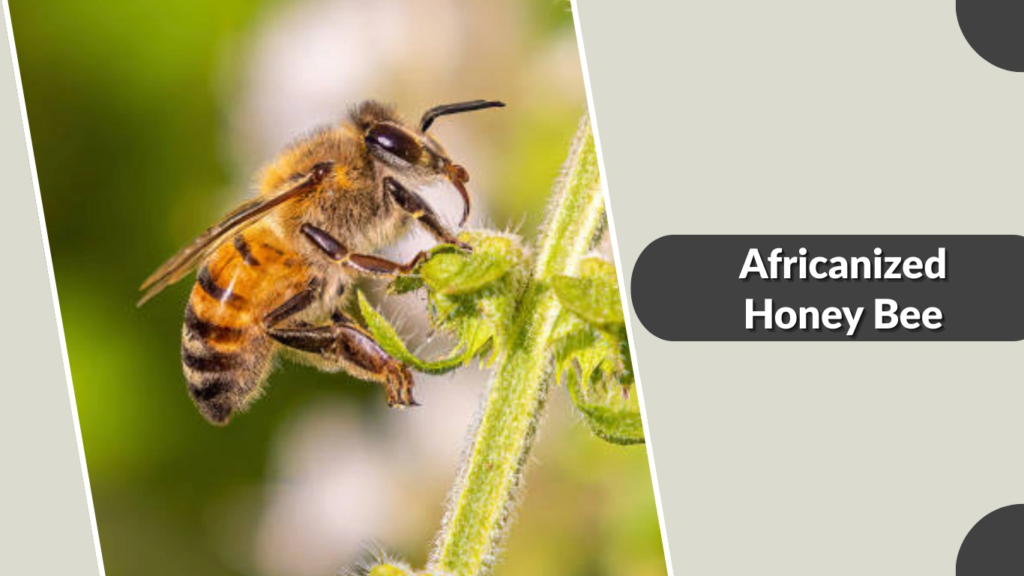
The Africanized honey bee is a hybrid strain derived from African and European honey bees. It is well known for its strong survival instincts, rapid reproduction, and high adaptability to tropical and subtropical environments.
Identification
- Medium-sized body similar to Western honey bees
- Dark brown to golden coloration
- Slightly smaller than European subspecies
- Fast and agile flight pattern
- Clear queen, worker, and drone castes
Habitat
Africanized honey bees thrive in tropical, subtropical, and warm temperate regions. They nest in tree cavities, hollow structures, abandoned containers, and man-made spaces, often choosing smaller and more exposed nesting sites.
Behaviors
This strain is highly defensive and responds quickly to perceived threats. Colonies swarm frequently and are very resilient to environmental stress. They are efficient foragers but are less suitable for traditional beekeeping due to aggressive behavior.
Diet and Lifecycle
They feed on nectar and pollen from a wide variety of flowering plants and can survive in areas with limited resources. The lifecycle follows the standard honeybee stages, with rapid colony growth and frequent reproduction cycles.
18. German Black Honey Bee (Apis mellifera mellifera)
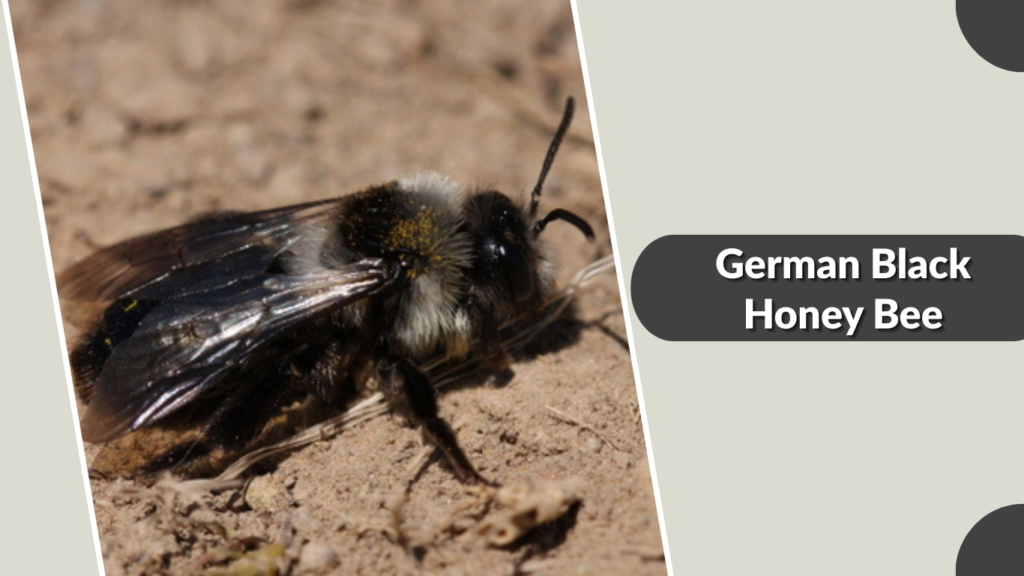
The German black honey bee is one of the oldest European honeybee subspecies. It is well adapted to cold climates and historically played a major role in traditional beekeeping across Northern and Western Europe.
Identification
- Medium-sized, stocky body
- Dark brown to nearly black coloration
- Broad abdomen with minimal banding
- Shorter tongue compared to other subspecies
- Clear queen, worker, and drone castes
Habitat
This subspecies thrives in cool and temperate regions, including forests, meadows, and agricultural landscapes. It nests in tree cavities and managed hives and is especially suited to areas with long winters.
Behaviors
German black honey bees are hardy and excellent at conserving food. Colonies overwinter well but can be more defensive than southern subspecies. They are strong foragers during short flowering seasons.
Diet and Lifecycle
They collect nectar and pollen from native European plants and store large honey reserves for winter. The lifecycle follows the standard honeybee stages, with brood production closely tied to seasonal conditions.
19. Egyptian Honey Bee (Apis mellifera lamarckii)
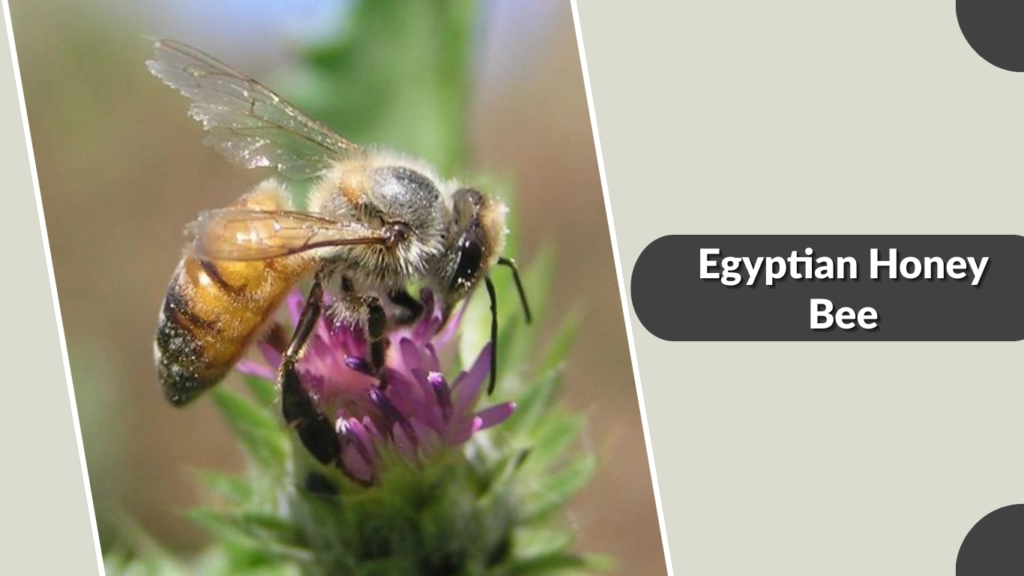
The Egyptian honey bee is an ancient honeybee subspecies native to the Nile Valley and surrounding regions. It has been kept by humans since ancient times and is well adapted to hot, arid environments.
Identification
- Small to medium body size
- Slender body shape
- Yellowish to light brown coloration
- Narrow abdominal bands
- Clear queen, worker, and drone castes
Habitat
This subspecies thrives in hot, dry regions such as deserts, river valleys, and agricultural areas. It commonly nests in tree cavities, mud walls, rock crevices, and managed hives, especially near water sources.
Behaviors
Egyptian honey bees are active and fast-moving, with strong survival instincts. Colonies tend to swarm frequently and are highly adapted to heat tolerance. They may be more defensive compared to European subspecies.
Diet and Lifecycle
They forage on nectar and pollen from desert and riverine flowering plants. Honey production is moderate and mainly supports colony survival. The lifecycle follows the standard egg, larva, pupa, and adult stages, with rapid brood cycles in warm conditions.
20. Saharan Honey Bee (Apis mellifera sahariensis)
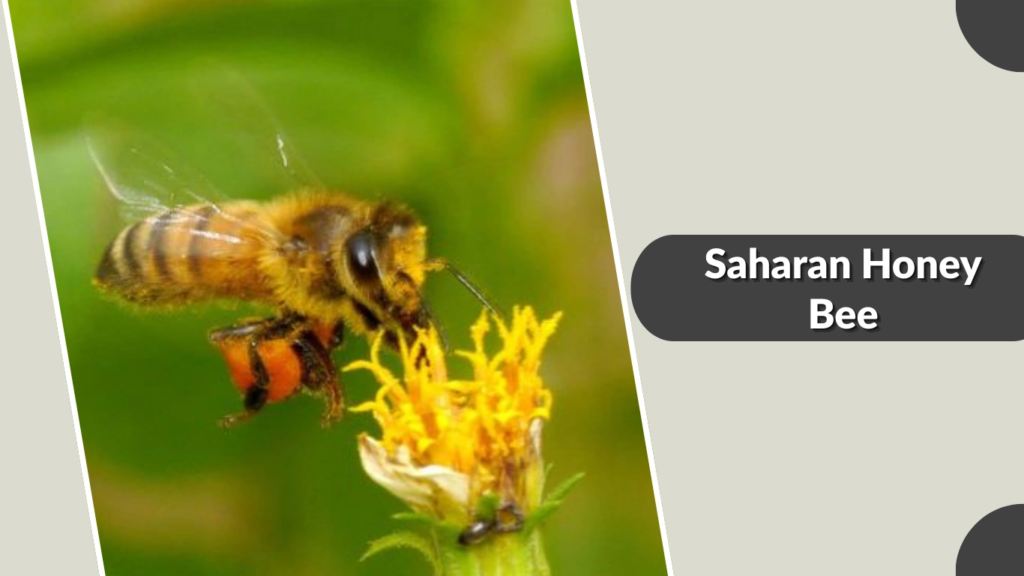
The Saharan honey bee is a rare and resilient honeybee subspecies adapted to some of the harshest desert conditions on Earth. It is native to the Sahara and surrounding arid regions, where few other honeybees can survive.
Identification
- Small to medium body size
- Light yellow to golden coloration
- Slender abdomen with faint banding
- Sparse body hair adapted to heat
- Clear queen, worker, and drone castes
Habitat
This subspecies inhabits desert oases, semi-arid regions, and dry savannas. It typically nests in rock crevices, underground cavities, mud structures, and managed hives near water and flowering plants.
Behaviors
Saharan honey bees are extremely heat-tolerant and capable of foraging during high temperatures. Colonies are resilient and efficient in conserving water and food. They tend to be defensive when disturbed but are highly adapted to desert survival.
Diet and Lifecycle
They collect nectar and pollen from drought-resistant flowering plants and oasis vegetation. Honey production is limited but vital for survival. The lifecycle follows the standard honeybee stages, with development cycles adapted to extreme heat and scarce resources.
FAQs
What is the most common honeybee species in the world?
The Western honey bee (Apis mellifera) is the most common and widely distributed honeybee species. It is used globally for honey production and crop pollination because of its adaptability, manageable behavior, and ability to thrive in many climates.
Which honeybee species is the largest?
The Giant honey bee (Apis dorsata) and the Himalayan giant honey bee (Apis laboriosa) are the largest honeybee species. They build large, exposed combs and are known for their strong defensive behavior and long-distance foraging ability.
Are all honeybee species domesticated?
No, not all honeybee species are domesticated. Only a few, such as Apis mellifera and Apis cerana, are commonly kept by humans. Many species, including dwarf and giant honey bees, live entirely in the wild.
Which honeybees are most aggressive?
Africanized honey bees and giant honey bees are considered the most aggressive. They respond quickly to threats and defend their nests vigorously, making them less suitable for traditional beekeeping compared to gentler subspecies.
Why are honeybees important to ecosystems?
Honeybees are vital pollinators for wild plants and agricultural crops. Their pollination supports biodiversity, food production, and healthy ecosystems, making them one of the most economically and ecologically important insect groups in the world.
