
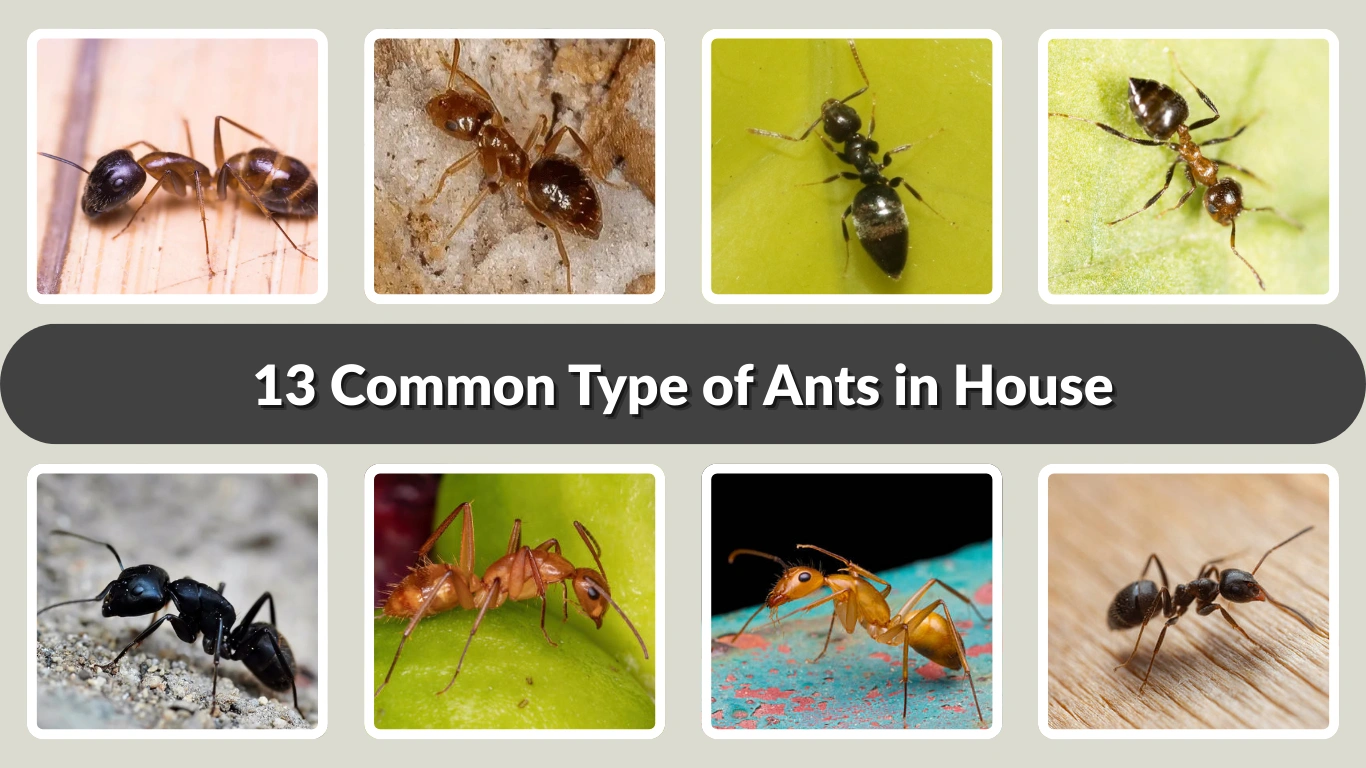
Ants are among the most frequent household pests, often invading kitchens, bathrooms, and living spaces in search of food and moisture. While many species are harmless, some can contaminate food or cause structural concerns. Different types of ants vary in size, color, nesting habits, and behavior. Knowing the most common ants found in homes helps with accurate identification, effective prevention, and choosing the right control methods to stop recurring infestations.
1. Carpenter Ant
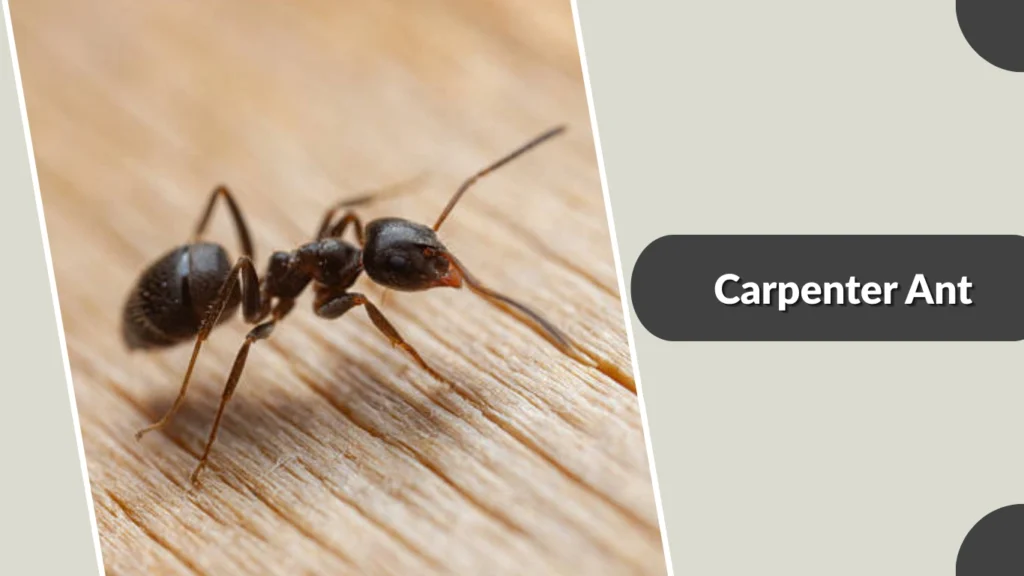
Carpenter ants are large household ants best known for nesting inside wood structures. While they do not eat wood like termites, their tunneling behavior can cause structural damage over time, making them a serious indoor pest.
Identification
- Large-sized ants, usually black or dark brown
- Smooth, rounded thorax with no spines
- Elbowed antennae and strong mandibles
- Workers vary in size within the same colony
Habitat
Carpenter ants prefer damp or decaying wood and often nest in wall voids, wooden beams, door frames, and window sills. Outdoors, they are commonly found in tree stumps, logs, and firewood near homes.
Behavior
These ants are mostly active at night and forage long distances for food. They often enter homes in search of moisture or sweets and may form satellite colonies indoors separate from the main nest.
Diet and Lifecycle
Carpenter ants feed on sugary substances, plant juices, insects, and food scraps. The queen lays eggs that develop into larvae, pupae, and then adults. Colonies grow slowly but can become very large over time.
2. Pharaoh Ant
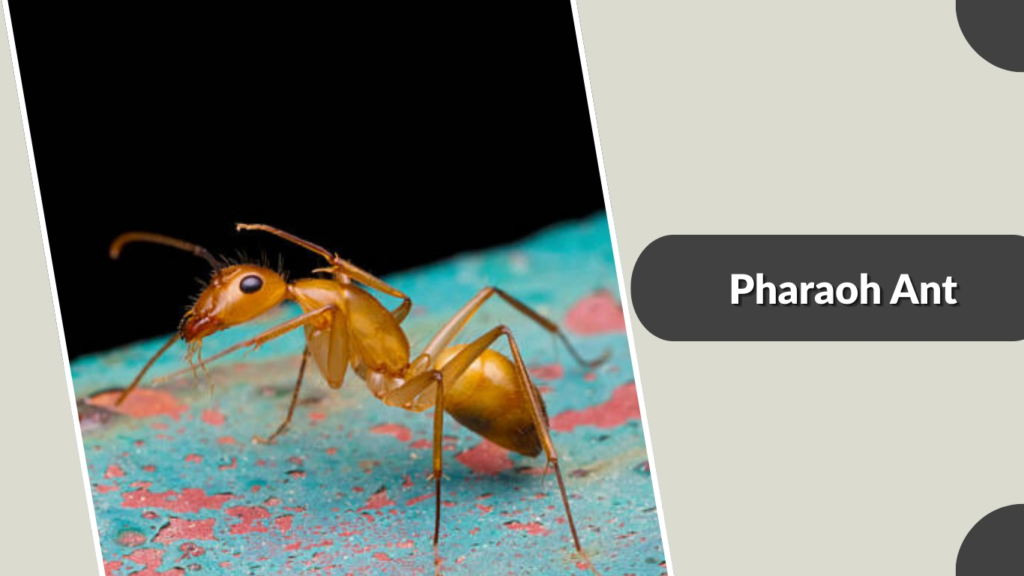
Pharaoh ants are tiny but troublesome household pests known for their ability to spread quickly indoors. They commonly infest kitchens, bathrooms, and hospitals due to their preference for warm, humid environments.
Identification
- Very small ants, usually light yellow to pale brown
- Darker abdomen compared to the head and thorax
- Elbowed antennae with a distinct three-segmented club
- Slender body and smooth appearance
Habitat
Pharaoh ants nest indoors in warm, hidden locations such as wall voids, behind baseboards, under appliances, and inside electrical outlets. They rarely survive outdoors in colder climates.
Behavior
These ants form multiple colonies and spread easily when disturbed. They are active year-round indoors and use strong scent trails to recruit workers to food sources.
Diet and Lifecycle
Pharaoh ants feed on sweets, proteins, fats, and greasy foods. Queens lay eggs continuously, allowing colonies to expand rapidly. Their complete lifecycle—from egg to adult—can occur in as little as a few weeks.
3. Odorous House Ant
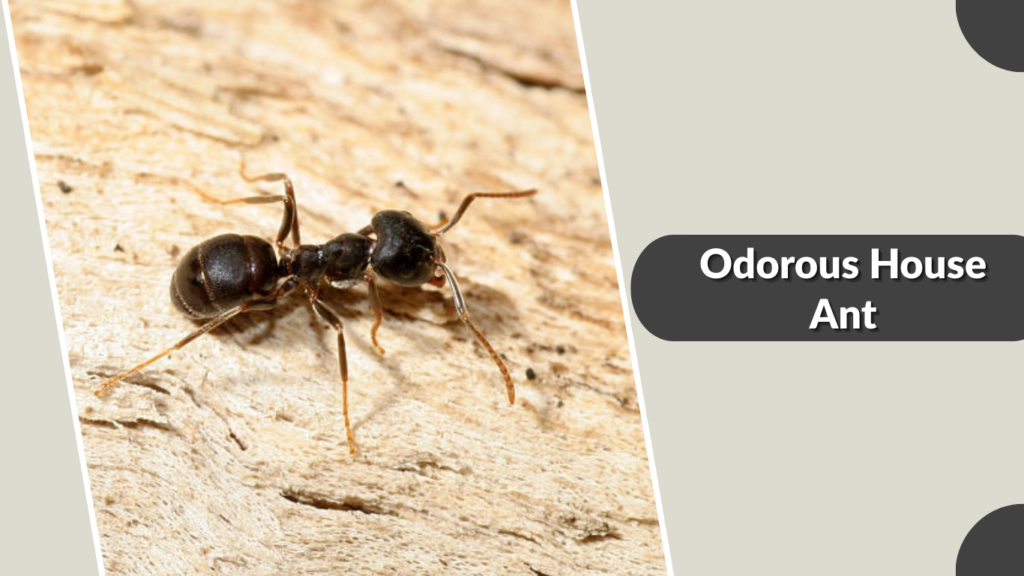
Odorous house ants are common indoor pests known for the strong, rotten coconut–like smell they release when crushed. They frequently invade homes in large numbers while searching for food.
Identification
- Small ants, usually dark brown or black
- Soft-bodied with a smooth, shiny appearance
- Uneven thorax with no spines
- Gives off a strong odor when crushed
Habitat
Odorous house ants nest both indoors and outdoors. Inside homes, they are found in wall voids, under floors, and near moisture sources. Outdoors, they nest under stones, mulch, logs, and soil.
Behavior
These ants move quickly and form long foraging trails. Colonies can relocate rapidly when disturbed and may contain multiple queens, allowing them to spread efficiently throughout a building.
Diet and Lifecycle
They primarily feed on sugary foods but will also consume proteins and household scraps. Queens lay eggs that develop through larval and pupal stages before becoming adults, with colonies growing quickly under favorable conditions.
4. Pavement Ant
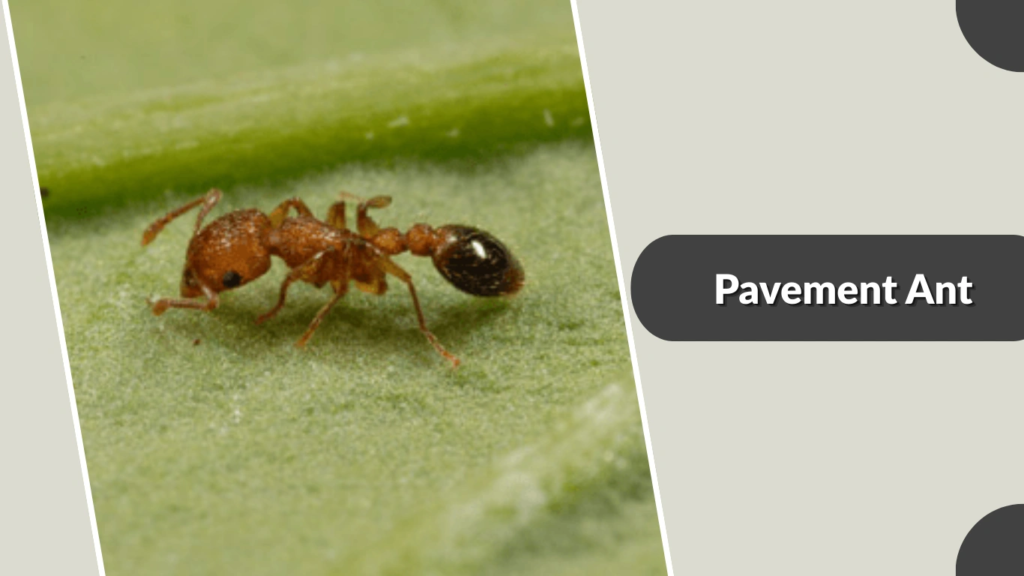
Pavement ants are small but aggressive household ants often seen trailing along sidewalks, driveways, and building foundations. They commonly enter homes in search of food, especially during warmer months.
Identification
- Small ants, dark brown to black in color
- Parallel grooves on the head and thorax
- Short legs and antennae with a segmented club
- Workers are similar in size
Habitat
Pavement ants nest under concrete slabs, sidewalks, foundations, and stones. Indoors, they may nest beneath floors, inside walls, or under insulation near ground level.
Behavior
These ants are active during the day and night and are known for territorial battles with neighboring colonies. They follow established trails and often invade kitchens and pantries.
Diet and Lifecycle
Pavement ants feed on greasy foods, sweets, meats, and insects. The queen lays eggs that develop into larvae and pupae before emerging as adults. Colonies can contain thousands of workers.
5. Argentine Ant
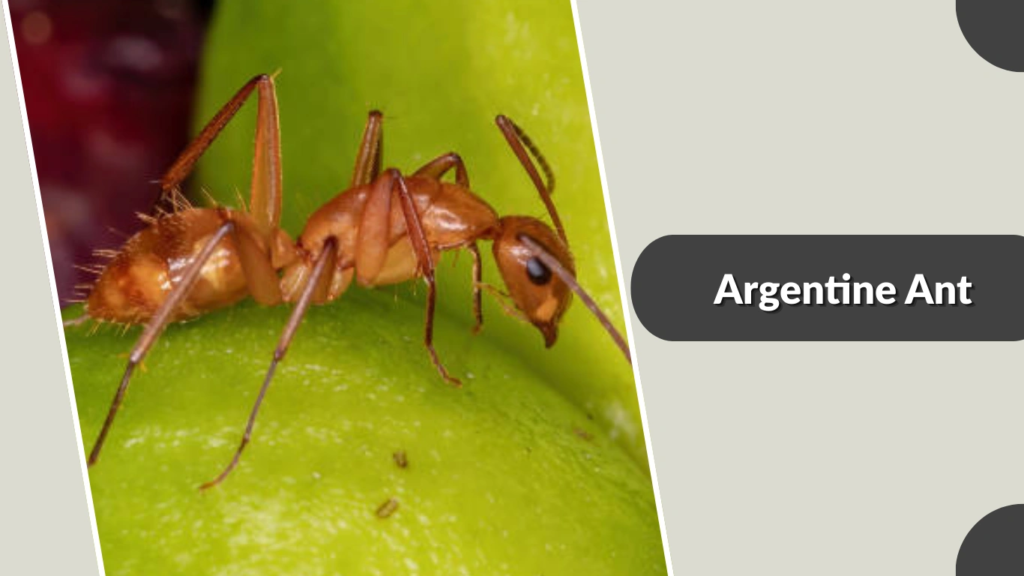
Argentine ants are invasive household pests known for forming massive colonies and displacing native ant species. They frequently invade homes in large numbers while searching for food and water.
Identification
- Small to medium-sized ants, light to dark brown
- Slender body with a smooth appearance
- One-node waist and long antennae
- Workers are uniform in size
Habitat
Argentine ants nest outdoors in soil, under rocks, mulch, and near foundations. Indoors, they may establish nests in wall voids, crawl spaces, and around plumbing where moisture is present.
Behavior
These ants are highly social and form supercolonies with multiple queens. They create strong foraging trails and can quickly overwhelm food sources inside homes.
Diet and Lifecycle
Argentine ants prefer sugary foods but also consume proteins, fats, and insects. Queens lay eggs continuously, allowing rapid colony expansion. Their lifecycle progresses from egg to larva, pupa, and adult.
6. Ghost Ant
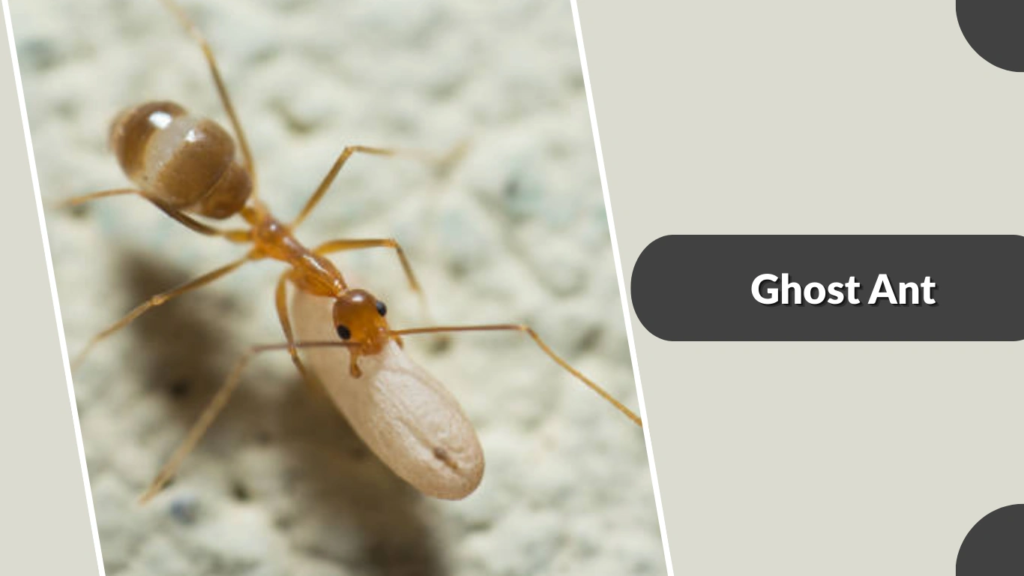
Ghost ants are tiny, hard-to-spot household ants named for their pale, almost transparent legs and abdomen. They commonly infest kitchens and bathrooms in warm climates.
Identification
- Very small ants with dark head and thorax
- Pale, translucent legs and abdomen
- One-node waist
- Fast-moving and difficult to see
Habitat
Ghost ants prefer warm, humid environments. Indoors, they nest in wall voids, behind cabinets, inside potted plants, and near sinks or plumbing. Outdoors, they are found in soil and under debris.
Behavior
These ants form large colonies with multiple queens and frequently split into new nests. They create wandering foraging trails and quickly relocate when disturbed.
Diet and Lifecycle
Ghost ants feed mainly on sweets, honeydew, and greasy foods. Queens lay eggs year-round in warm conditions. The lifecycle includes egg, larva, pupa, and adult stages, with rapid population growth indoors.
7. Thief Ant
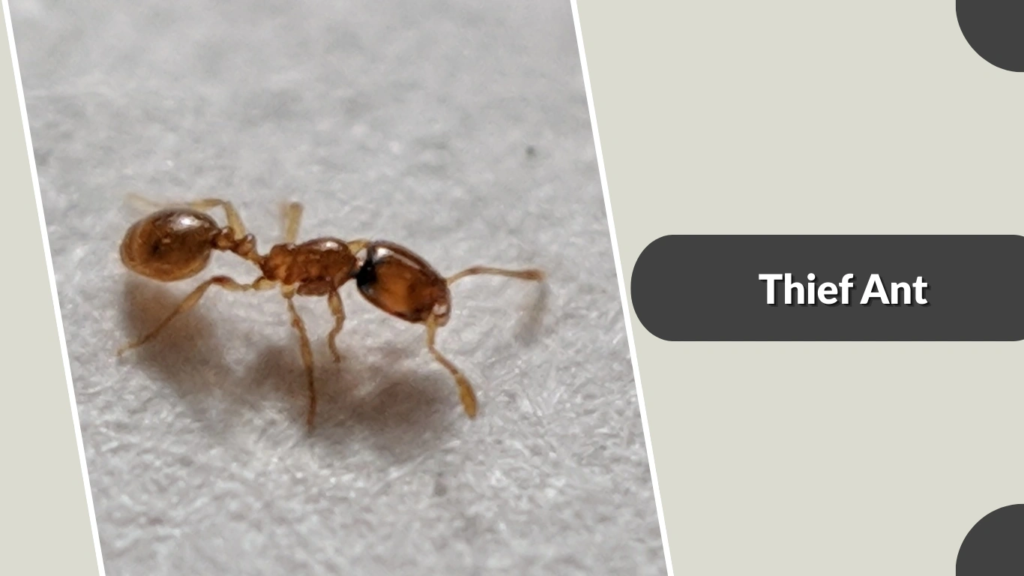
Thief ants are very small household ants known for stealing food and larvae from other ant colonies. They often go unnoticed due to their size but can become a persistent indoor nuisance.
Identification
- Extremely small ants, yellow to light brown
- Narrow waist with two nodes
- Tiny eyes and smooth body
- Similar in size to grease ants
Habitat
Thief ants nest near other ant colonies, in wall voids, under floors, and inside cracks near kitchens. Outdoors, they nest in soil, under rocks, or near foundations.
Behavior
These ants use small cracks to access food and often avoid visible trails. They are less aggressive but highly persistent once established inside a home.
Diet and Lifecycle
Thief ants prefer greasy and protein-rich foods such as meats and cheese. Queens lay eggs that develop through larval and pupal stages before becoming adults. Colonies grow steadily over time.
8. Little Black Ant
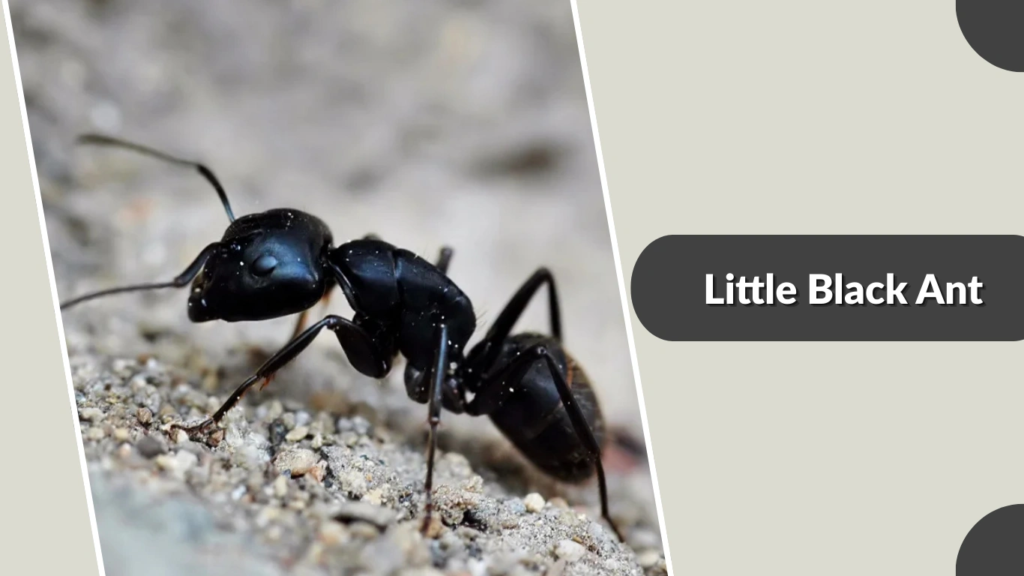
Little black ants are tiny household pests that often invade homes in large numbers. They are commonly seen trailing along baseboards, countertops, and walls while searching for food.
Identification
- Very small ants with shiny black coloration
- Rounded thorax and smooth body
- Two-node waist
- Slow-moving compared to other house ants
Habitat
Little black ants nest both indoors and outdoors. Inside homes, they are found in wall voids, under floors, and near moisture sources. Outdoors, they nest in soil, mulch, rotting wood, and beneath stones.
Behavior
These ants form well-defined foraging trails and can enter homes through small cracks. Colonies may contain thousands of workers and multiple queens, making infestations persistent.
Diet and Lifecycle
They feed on sweets, grease, meats, and household crumbs. The queen lays eggs that pass through larval and pupal stages before becoming adults. Colonies expand steadily under favorable conditions.
9. Crazy Ant
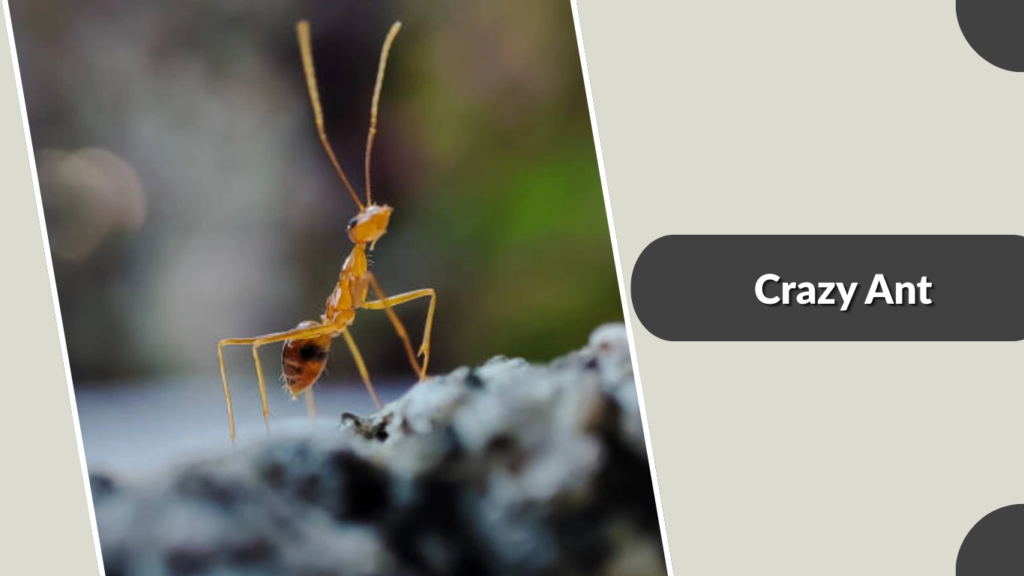
Crazy ants are named for their erratic, fast-moving behavior. They are common household invaders and can quickly become a nuisance due to their large colony sizes and constant activity.
Identification
- Small to medium-sized ants, dark brown to black
- Long legs and antennae
- One-node waist
- Erratic, “crazy” movement patterns
Habitat
Crazy ants nest both indoors and outdoors. Inside homes, they are found in wall voids, attics, potted plants, and around moisture sources. Outdoors, they nest in soil, mulch, trash piles, and under debris.
Behavior
These ants move rapidly and unpredictably, making trails difficult to follow. They readily invade homes in search of food and water and can displace other ant species once established.
Diet and Lifecycle
Crazy ants are omnivorous, feeding on sweets, proteins, grease, insects, and plant secretions. Queens lay eggs that develop through larval and pupal stages before becoming adults, allowing colonies to grow quickly.
10. Acrobat Ant
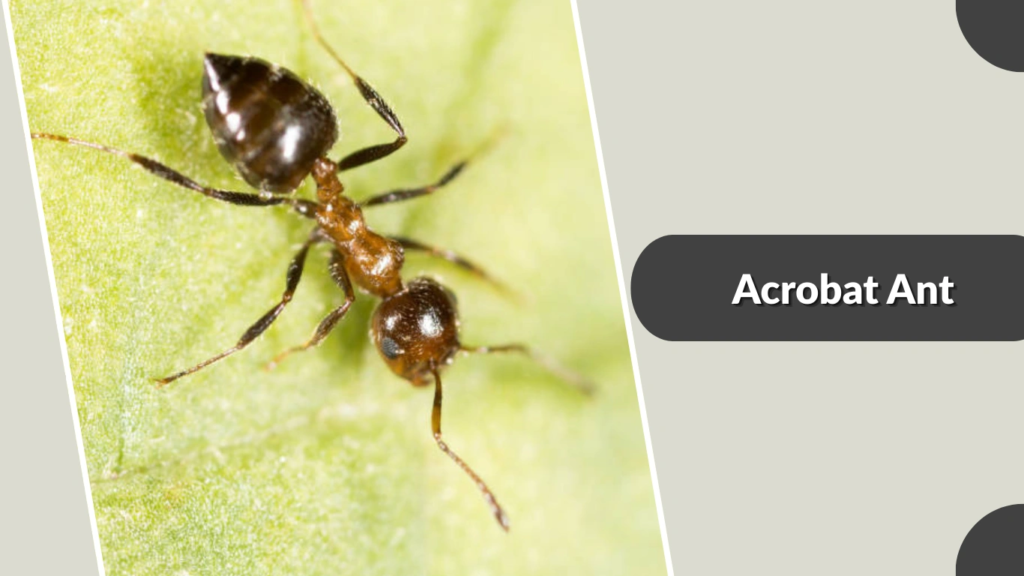
Acrobat ants are named for their defensive behavior of raising their abdomen over their head when threatened. They are common household ants and may indicate moisture problems when found indoors.
Identification
- Small to medium-sized ants, light brown to black
- Heart-shaped abdomen when raised
- Two-node waist
- Shiny body with spines on the thorax
Habitat
Acrobat ants prefer moist or decaying wood. Indoors, they nest in wall voids, insulation, and damp wooden structures. Outdoors, they are found in tree cavities, stumps, logs, and under bark.
Behavior
These ants are active both day and night and may bite if disturbed. They forage widely and often enter homes searching for sweets or moisture.
Diet and Lifecycle
Acrobat ants feed on sugary substances, honeydew, insects, and food scraps. Queens lay eggs that develop through larval and pupal stages. Colonies can expand over time, especially in moisture-rich environments.
11. White-footed Ant
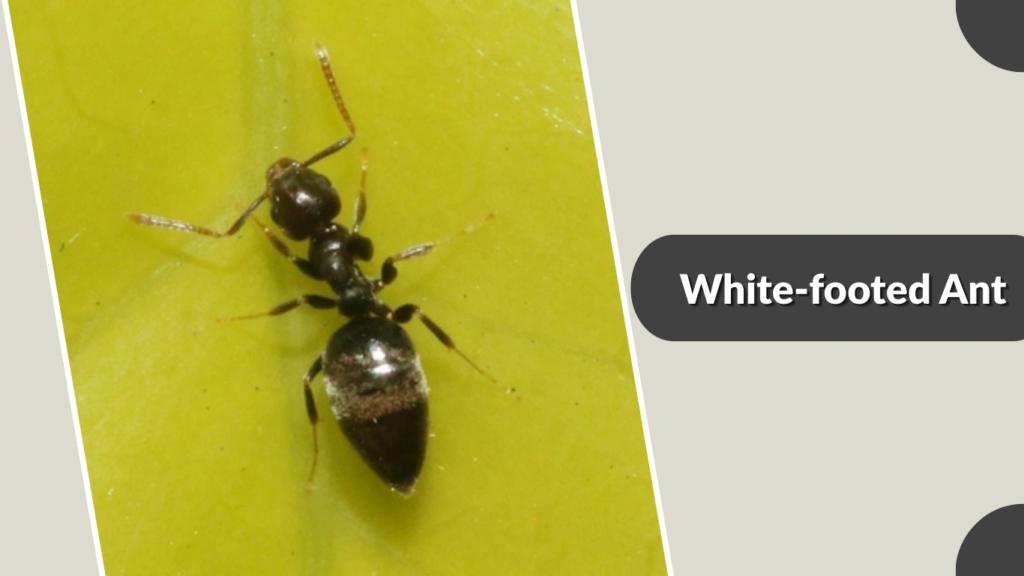
White-footed ants are small household ants named for their pale-colored feet. They often invade homes in large numbers and are common in warm, humid regions.
Identification
- Small ants with dark brown to black bodies
- Pale or white-colored feet
- One-node waist
- Smooth, shiny appearance
Habitat
White-footed ants nest outdoors in trees, shrubs, and plant debris. Indoors, they may enter through cracks and nest in wall voids, attics, or near windows and doors.
Behavior
These ants are active at night and form large colonies with multiple queens. They create long foraging trails and frequently enter homes in search of sweets.
Diet and Lifecycle
They primarily feed on sugary substances such as honeydew, nectar, and sweets, but will also consume insects. Queens lay eggs year-round in warm climates, allowing colonies to grow rapidly.
12. Rover Ant
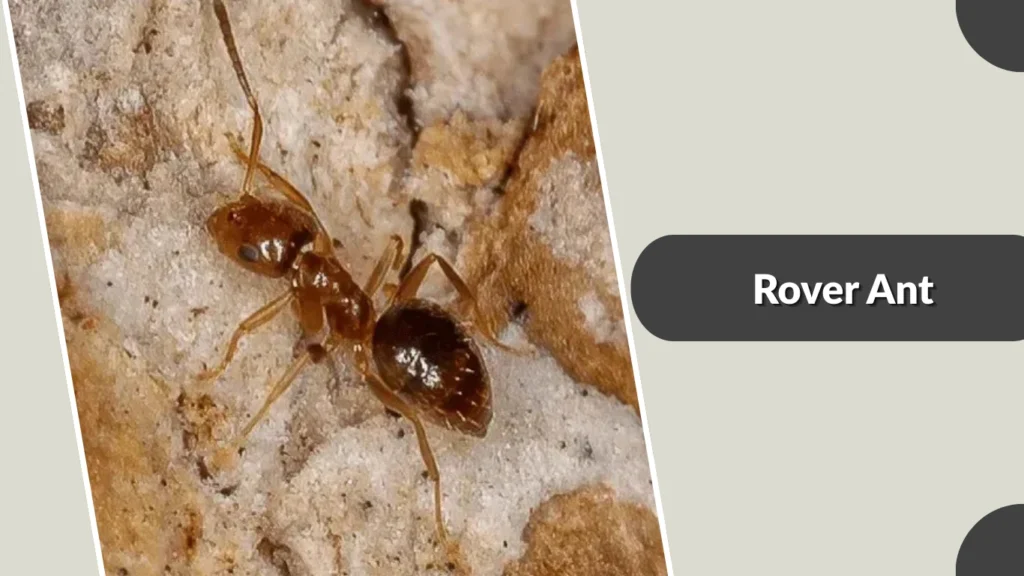
Rover ants are tiny household ants that often appear suddenly indoors, especially in kitchens and bathrooms. They are commonly mistaken for other small ants due to their size and pale coloration.
Identification
- Very small ants, pale brown to yellowish
- One-node waist
- Slender body with smooth texture
- Darker head compared to the abdomen
Habitat
Rover ants nest both indoors and outdoors. Inside homes, they are found in wall voids, behind baseboards, under floors, and near moisture sources. Outdoors, they nest in soil, mulch, and under debris.
Behavior
These ants are fast-moving and form loose, irregular trails. Colonies may contain multiple queens, allowing them to spread quickly indoors when conditions are favorable.
Diet and Lifecycle
Rover ants feed on sweets, greasy foods, and small insects. Queens lay eggs that develop through larval and pupal stages before becoming adults, leading to steady colony growth.
13. Sugar Ant
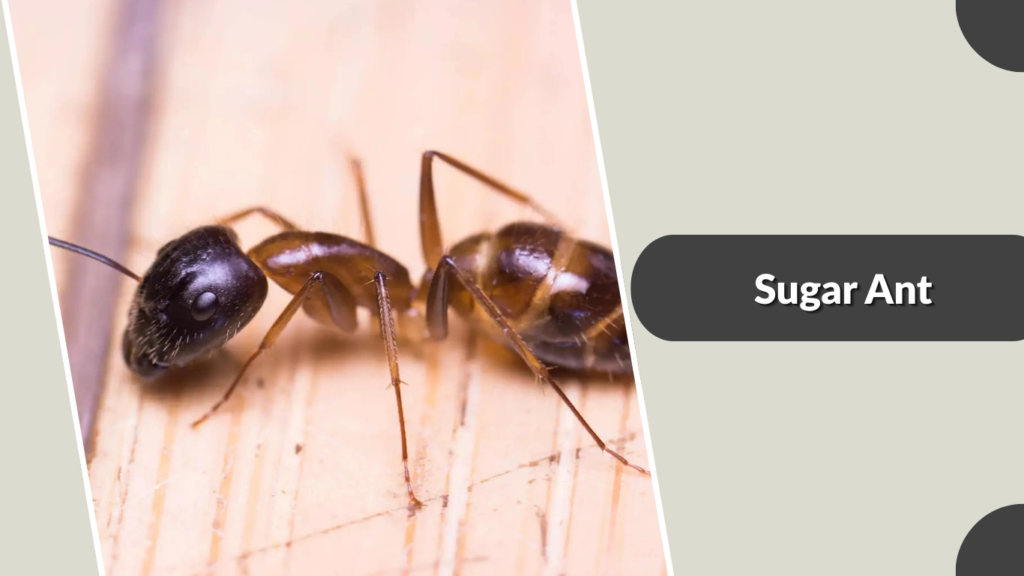
Sugar ants are common household ants best known for their strong attraction to sweet foods. They frequently invade kitchens and pantries, especially during warm weather, in search of sugar-based items.
Identification
- Small to medium-sized ants, brown to black in color
- Smooth, oval-shaped body
- One-node waist
- Often seen in large foraging trails
Habitat
Sugar ants nest outdoors in soil, under rocks, logs, and around building foundations. Indoors, they do not usually nest but enter homes through cracks, doors, and windows while foraging for food.
Behavior
These ants are highly active foragers and quickly recruit others once a food source is found. They commonly follow well-defined trails and may return repeatedly if food is not removed.
Diet and Lifecycle
Sugar ants primarily feed on sweets, syrups, honeydew, fruits, and sugary spills, but may also eat insects. The queen lays eggs that pass through larval and pupal stages before becoming adults, allowing colonies to grow steadily.
FAQs
Why do ants come into houses?
Ants usually enter houses in search of food, water, and shelter. Crumbs, spills, pet food, and moisture attract them, especially during hot, cold, or rainy weather when outdoor conditions are less favorable.
Which household ants cause structural damage?
Carpenter ants are the primary household ants that can cause structural damage. They tunnel through wood to create nests, which can weaken wooden structures over time, especially in damp conditions.
Are house ants harmful to humans?
Most house ants are harmless, but they can contaminate food and surfaces. Some species may bite or sting if disturbed, and large infestations can become a persistent nuisance.
How can I prevent ants from entering my home?
Sealing cracks, keeping food stored in airtight containers, cleaning spills promptly, reducing moisture, and trimming vegetation near the home can help prevent ant infestations.
What is the best way to get rid of ants indoors?
Using bait-based ant control methods is often most effective. Baits allow workers to carry poison back to the colony, helping eliminate the queen and reducing the infestation over time.
