

Yellow jacket wasps are some of the most recognizable and feared stinging insects, especially during the warmer months. Known for their aggressive defense of their nests and painful stings, these wasps play a crucial role in the ecosystem—but they don’t live long lives. Understanding the lifespan of yellow jackets can help you manage them better around your home or garden and prepare for seasonal behavior changes.
Yellow Jacket Wasp Overview

Scientific Name and Appearance
Yellow jackets belong to the genera Vespula and Dolichovespula. They have black and bright yellow banded bodies, smooth exoskeletons, and a compact, hairless appearance that sets them apart from bees. Most adults measure between 10–16 mm in length.
Habitat and Behavior
These wasps are social insects that live in colonies ranging from a few hundred to thousands. They often nest underground, in wall voids, or under eaves. Yellow jackets are especially active during late summer and early fall and become highly aggressive if their nest is disturbed. Unlike bees, they can sting multiple times.
Life Cycle of a Yellow Jacket Wasp

Yellow jackets go through a complete metamorphosis, consisting of four main stages: egg, larva, pupa, and adult.
Egg Stage
In spring, the overwintered queen emerges from hibernation and searches for a suitable nesting site. Once she finds it, she starts laying fertilized eggs in small hexagonal cells she constructs from chewed wood fibers.
- Duration: 3–5 days
- Eggs are laid one per cell and are tended to by the queen herself until the first generation of workers emerges.
Larval Stage
The eggs hatch into legless, white larvae. The queen continues to forage for food, feeding the larvae with protein-rich insects such as caterpillars and flies.
- Duration: 10–14 days
- The larvae grow rapidly and molt several times.
Pupal Stage
Once fully grown, the larvae spin a silk cap over their cell and enter the pupal stage. During this time, they undergo transformation into adult wasps.
- Duration: 6–10 days
- No feeding occurs; internal reorganization into adult form takes place.
Adult Stage
The adult yellow jacket emerges from the capped cell, fully formed and ready to perform its role in the colony.
Lifespan by Role in the Colony
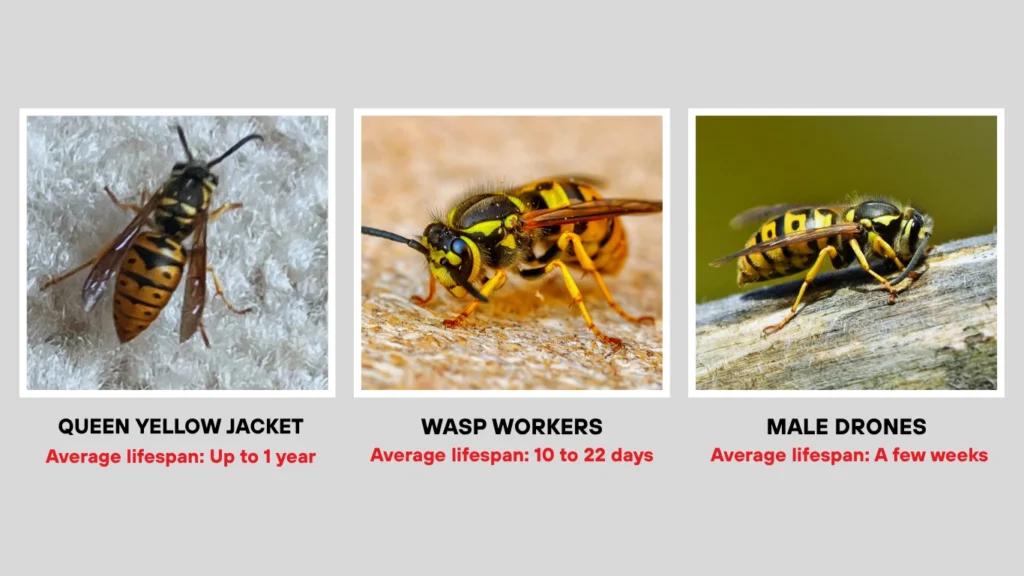
Each caste in the yellow jacket colony—queen, worker, and male—has a different purpose and lifespan.
Queen Yellow Jacket
The queen’s primary job is to lay eggs and establish the colony. After mating in the fall, she finds a secure place to hibernate through winter. Only fertilized queens survive the winter; all others die with the cold.
- Average lifespan: Up to 1 year
- She is the only member of the colony to live through winter.
Worker Wasps
Workers are sterile females that take over foraging, feeding larvae, defending the nest, and maintaining the structure. They are most active during summer and early fall.
- Average lifespan: 10 to 22 days
- Their lifespan is cut short by cold temperatures or nest collapse.
Male Drones
Male yellow jackets, known as drones, have one job: to mate with the queen. They typically appear in late summer when the colony produces new queens and males. Once mating is complete, their purpose is fulfilled.
- Average lifespan: A few weeks
- After mating, males die naturally or succumb to cold weather as winter sets in.
Factors That Affect Lifespan
Environmental Conditions
Climate has a major influence on the lifespan of yellow jackets. In regions with cold winters, only the queens survive by hibernating. The rest of the colony dies off as temperatures drop. In warmer climates, some colonies can survive into winter or even continue for multiple seasons in protected environments.
- Harsh winters = shorter colony lifespan
- Mild winters or warm indoor areas = extended colony activity
Predators and Threats
Yellow jackets face a variety of natural predators, including:
- Birds (especially kingbirds and mockingbirds)
- Spiders
- Praying mantises
- Other wasps or hornets
In addition, human pest control methods—like traps, insecticides, or nest destruction—can drastically shorten colony life or prevent new colonies from forming in spring.
Access to Food
Food availability can determine how long individual wasps survive, especially workers.
- In early summer, they need protein to feed larvae (like insects and meat scraps).
- In late summer, they switch to sugars—fruit, nectar, and soda-like drinks.
- Scarce food means more rapid decline in worker populations.
What Happens at the End of Their Life Cycle?
Colony Collapse in Fall
By mid to late fall, the queen stops laying eggs. Most workers and drones die due to age or cold, and the colony begins to collapse. Yellow jacket nests are not reused the next year, and the entire structure breaks down naturally or is scavenged.
- Only mated queens survive to start new nests the next spring.
- All other colony members perish.
Winter Survival
Surviving queens seek out protected places like tree bark crevices, loose soil, attic spaces, or wall voids to hibernate.
- If temperatures stay mild and there’s shelter, she may live through the season.
- However, many queens don’t make it through due to starvation, fungus, predation, or freezing.
Comparison With Other Wasps and Bees
Here’s a quick comparison of lifespan between yellow jackets and similar insects:
| Insect | Queen Lifespan | Worker Lifespan | Drone Lifespan |
| Yellow Jacket Wasp | Up to 1 year | 10–22 days | Few weeks |
| Paper Wasp | ~1 year | 12–24 days | Few weeks |
| Bald-Faced Hornet | ~1 year | 15–25 days | Few weeks |
| Honey Bee | 1–5 years | 5–7 weeks | ~8 weeks |
FAQs
Do yellow jackets live through winter?
Only the mated queen survives winter by hibernating. Workers and males all die off before winter begins.
Can yellow jacket wasps live indoors?
Yes, especially hibernating queens may enter attics, garages, or sheds for shelter. But without proper temperature and food, they won’t start a colony indoors.
How do I know if a queen yellow jacket is nearby?
Look for a larger wasp flying solo in early spring or late fall. They often explore sheltered areas like woodpiles, crevices, or structures for nesting.
Final Thoughts
While yellow jacket wasps might seem like a summer-long threat, their time is short-lived—especially for the worker and drone classes. The queen, however, can survive for up to a year if she successfully hibernates and restarts the cycle. Knowing how their lifespan works helps in understanding their patterns and dealing with them safely during peak seasons.
