
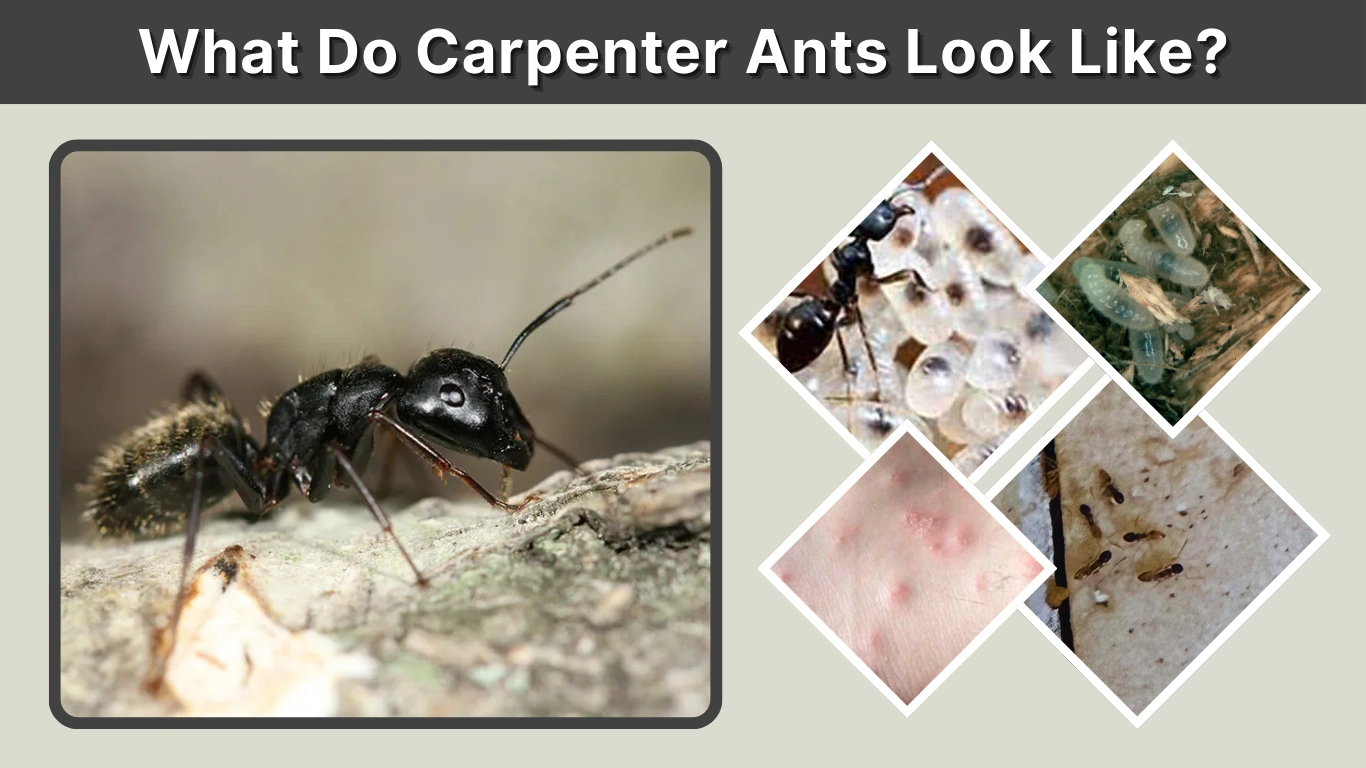
Carpenter ants are one of the most commonly misunderstood household pests. Many people confuse them with termites or regular black ants, which often leads to delayed treatment and costly damage. Knowing what carpenter ants look like is essential for early identification and prevention. These ants vary in size, color, and behavior depending on their role in the colony and location. In this guide, you’ll learn how to identify carpenter ants, including workers, queens, winged ants, and young ants, so you can recognize an infestation before serious damage occurs.
What Do Carpenter Ants Look Like?
Carpenter ants are generally large compared to most household ants. Adult carpenter ants usually measure between ¼ inch and ½ inch long, though size can vary within the same colony. Their bodies are segmented into three parts: head, thorax, and abdomen, with a clearly defined narrow waist.
Most carpenter ants are black, but some species appear red, reddish-brown, or a mix of red and black. They have bent (elbowed) antennae, strong jaws, and a smooth, rounded thorax. Unlike termites, carpenter ants have a pinched waist and uneven wing sizes when wings are present. Their overall appearance is sturdy and well-defined rather than soft-bodied.
Different Types of Carpenter Ants by Appearance
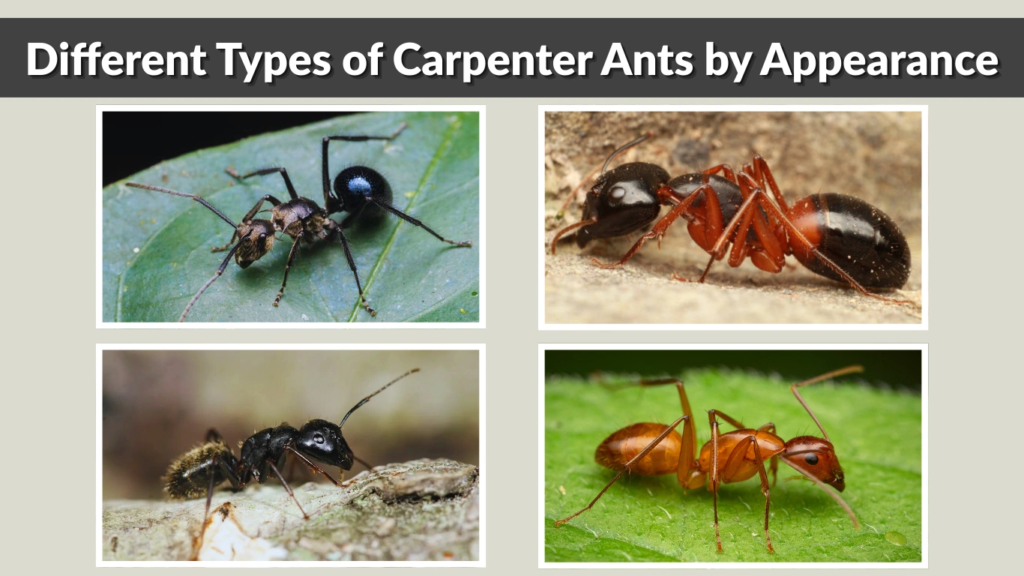
Carpenter ants can look different depending on species and role within the colony.
Black Carpenter Ants
Black carpenter ants are the most common type found in homes across North America. They have shiny, jet-black bodies and are often seen crawling along walls, decks, or window frames. Indoors, they may appear near kitchens, bathrooms, or damp wood. Because of their size and color, they are frequently mistaken for termites, especially when wings are present.
Red and Red-Black Carpenter Ants
Red carpenter ants usually have a reddish or dark brown thorax with a black abdomen. These ants are more commonly found outdoors in wooded areas, tree stumps, and firewood piles. However, they may enter homes if conditions are damp or if food sources are nearby.
Small, Young, and Baby Carpenter Ants
Within a carpenter ant colony, not all ants are the same size. Worker ants vary greatly in size, which often leads people to believe they are seeing different species. Young or smaller carpenter ants are simply worker ants at different growth stages. True baby carpenter ants are rarely seen because they remain hidden inside the nest.
What Do Carpenter Ants With Wings Look Like?
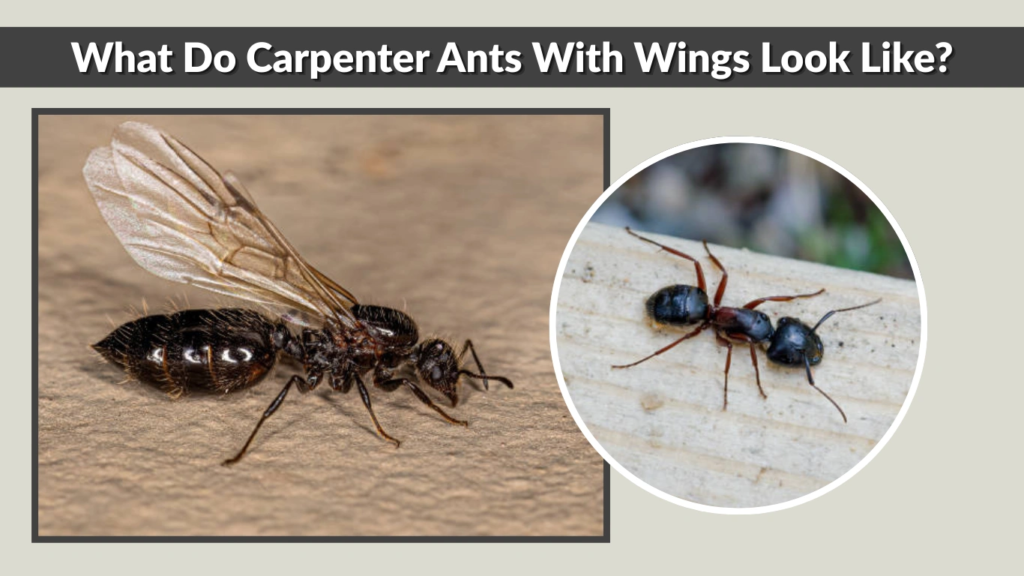
Winged carpenter ants, also called swarmers, are often the first sign of a serious infestation.
Winged Carpenter Ants (Swarmers)
Winged carpenter ants are larger than regular workers and have two pairs of wings. The front wings are noticeably longer than the back wings, which helps distinguish them from termites. Their bodies remain dark and segmented, and their antennae are still bent. These ants usually appear indoors during spring or early summer when they are looking to start new colonies.
Flying Carpenter Ants vs Termites
Flying carpenter ants are often confused with termites, but there are clear differences. Carpenter ants have a narrow waist, bent antennae, and uneven wing sizes. Termites have straight antennae, thick waists, and equal-sized wings. Recognizing these differences is critical because carpenter ants and termites require different treatment methods.
What Does a Carpenter Ant Queen Look Like?
The carpenter ant queen is the largest member of the colony. She can grow up to ¾ inch long and has a thick, powerful body. During mating season, the queen has wings, which she later sheds after establishing a nest. Her thorax is noticeably larger than that of worker ants because it supports wing muscles.
If you see a carpenter ant queen indoors, it usually means a colony is nearby or already established. Queen sightings are a strong indicator of a developing or mature infestation.
What Do Carpenter Ant Eggs, Larvae, and Babies Look Like?
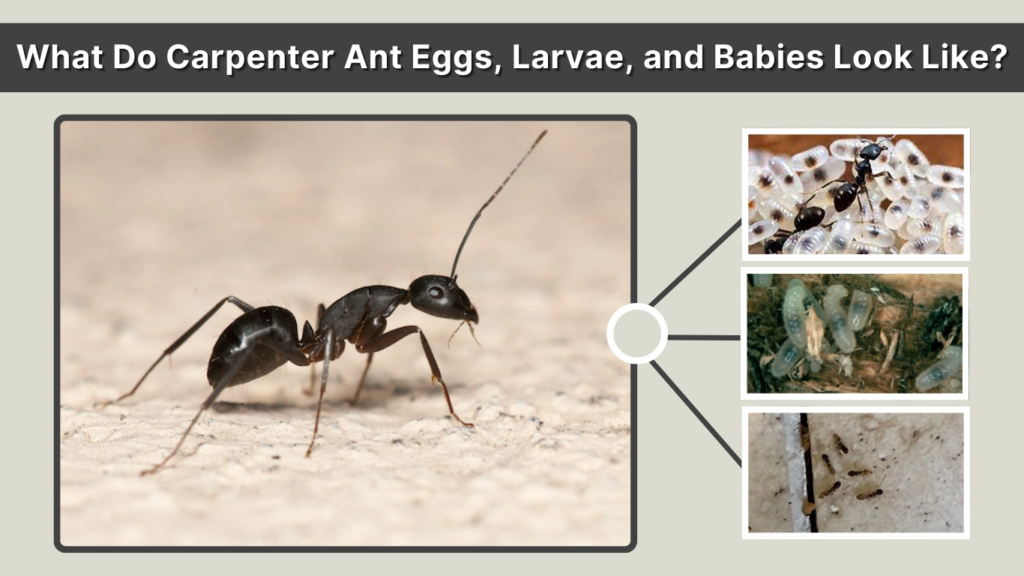
Carpenter ant eggs are very small, white, and oval-shaped. They are often clustered together and kept deep inside the nest, making them difficult to spot. As the eggs hatch, they turn into larvae.
Carpenter ant larvae are white, soft-bodied, and legless. They are often compared to grains of rice in appearance. Baby or young carpenter ants remain inside the nest until they mature into worker ants, which is why homeowners rarely see them.
What Do Carpenter Ant Nests Look Like?
Carpenter ant nests are usually hidden inside wood, walls, ceilings, or trees, making them difficult to detect early. Unlike termites, carpenter ants do not eat wood. Instead, they tunnel through it to create smooth, clean galleries where they live and raise their young. These tunnels follow the grain of the wood and look polished rather than muddy.
Nests are commonly found in damp or decaying wood, such as window frames, roof eaves, decks, basements, or areas with plumbing leaks. Outdoor nests may be located in tree stumps, firewood piles, or wooden fences. In many cases, carpenter ants create satellite nests inside homes while the main nest remains outdoors.
Signs of Carpenter Ant Damage
Recognizing the signs of carpenter ant damage early can help prevent serious structural problems.
Carpenter Ant Holes and Tunnels
Small, smooth holes in wood may indicate carpenter ant activity. These openings are often used as exit points for ants or to push out wood debris. Unlike termite damage, the wood around these holes usually looks clean and solid.
Carpenter Ant Droppings and Shavings
Carpenter ant droppings, also called frass, look like fine sawdust mixed with tiny insect parts. You may find small piles of this material near baseboards, window sills, decks, or beneath wooden structures. The presence of frass is a strong sign that a nest is nearby.
Carpenter Ant Trails and Activity
Carpenter ants often travel in visible trails, especially at night. These trails may appear along walls, foundations, electrical wires, or tree branches leading into the home. Seeing large black ants regularly indoors is another warning sign of an established colony.
What Do Carpenter Ant Bites Look Like?
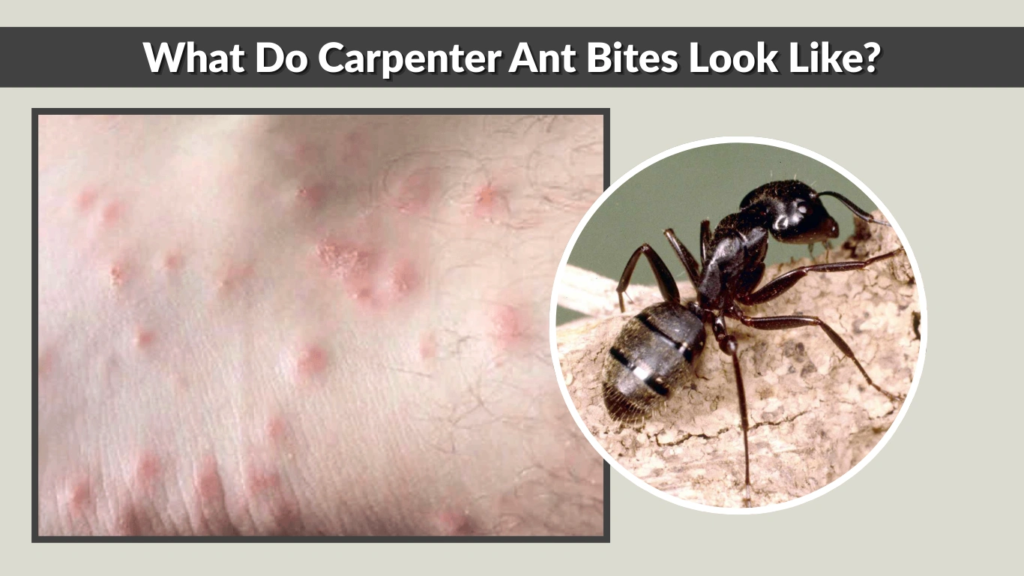
Carpenter ants can bite, but they rarely do unless threatened. A carpenter ant bite typically appears as a small red bump on the skin and may cause mild pain or itching. Some people may experience slight swelling around the bite area.
Carpenter ants do not carry venom like fire ants, so their bites are generally harmless. Washing the bite with soap and water and applying a cold compress usually provides relief. Seek medical attention if signs of an allergic reaction occur.
Carpenter Ants vs Termites
Carpenter ants and termites are often confused, but their appearance and behavior are different. Carpenter ants have a narrow waist, bent antennae, and uneven wing sizes when winged. Termites have straight antennae, thick waists, and equal-sized wings.
The type of damage they cause also differs. Carpenter ants hollow out wood to create nests, while termites actually eat the wood. Carpenter ant frass looks like sawdust, whereas termite droppings appear as small pellets. Correct identification is important because treatment methods are not the same.
Carpenter Ants vs Sugar Ants
Sugar ants are much smaller than carpenter ants and are mainly attracted to sweet foods. They do not damage wood or create nests inside structures. Carpenter ants, on the other hand, are larger and may indicate a serious nesting problem when found indoors. The size difference alone is often enough to tell them apart.
Where Carpenter Ants Are Commonly Found
Carpenter ants are commonly found in wooded areas, but they can also thrive in residential settings. Inside homes, they may nest in walls, ceilings, crawl spaces, or around plumbing. Outdoors, they are often found in trees, stumps, decks, and damp wood.
They are widespread across North America, including Florida, Texas, the Midwest, Canada, and other regions with moisture and wooden structures. Climate affects activity levels, but carpenter ants can survive in both warm and cooler environments.
FAQs
What do carpenter ants look like inside a house?
Inside homes, carpenter ants appear as large black or red-black ants crawling along walls, floors, or ceilings. Seeing them regularly indoors often indicates a nearby nest.
What do flying carpenter ants look like?
Flying carpenter ants are larger than workers and have long, uneven wings. They usually appear during spring or early summer when colonies are expanding.
How can I tell carpenter ants from termites?
Carpenter ants have bent antennae, narrow waists, and uneven wings. Termites have straight antennae, thick waists, and equal-sized wings.
What do carpenter ant nests look like?
Carpenter ant nests consist of smooth tunnels carved into wood and are often hidden inside walls, trees, or damp wood.
Are carpenter ants dangerous?
Carpenter ants are not dangerous to humans, but they can cause structural damage if left untreated.
