
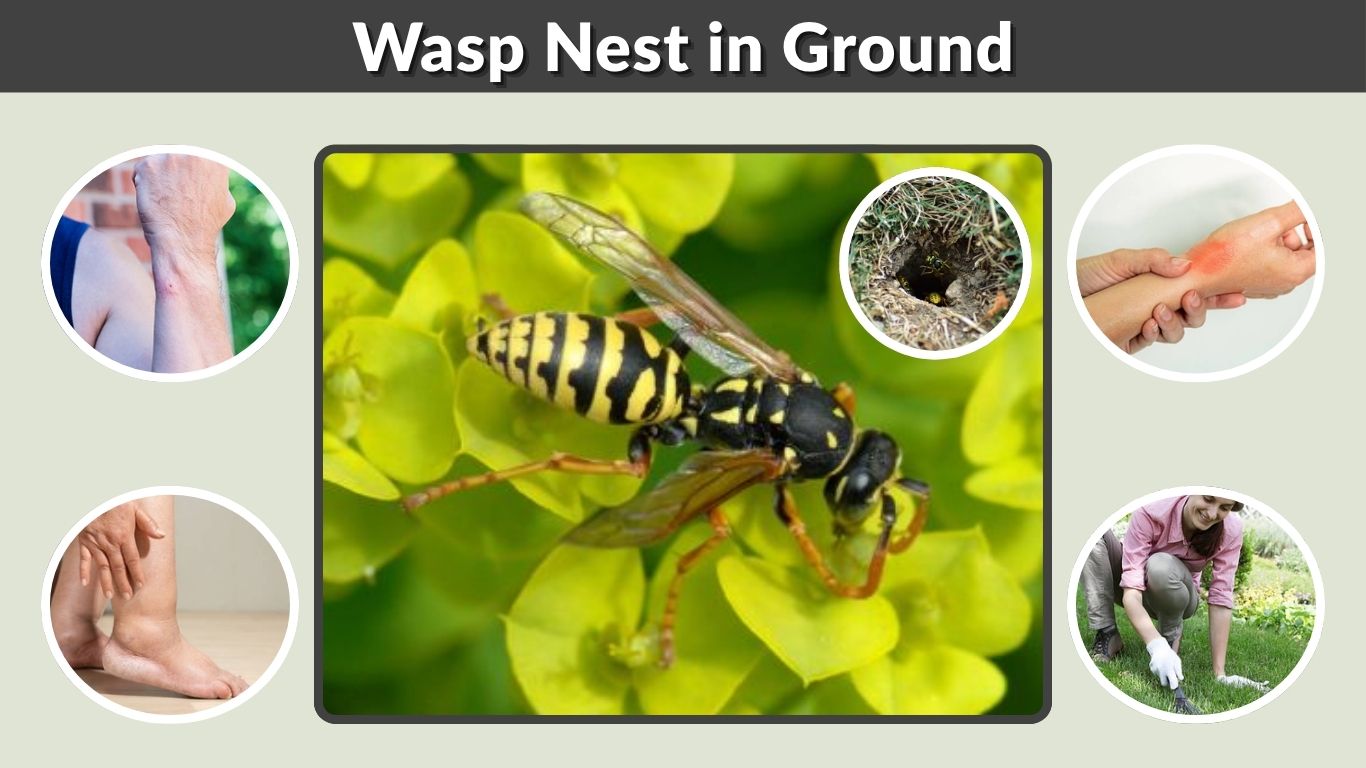
Have you noticed wasps flying in and out of a small hole in your lawn or garden? You might have a wasp nest in the ground. Several wasp species build underground nests, and some can become aggressive when their colonies are disturbed. However, not every ground-nesting wasp presents the same danger. Learning how to identify these nests, recognize different wasp species, and understand safe removal methods can help you protect your family while avoiding unnecessary harm to beneficial insects.
Do Wasps Make Nests in the Ground?
Yes, several species of wasps nest underground, particularly yellowjackets, cicada killers, and different types of digger wasps. Some construct their own tunnels, while others occupy abandoned animal burrows or existing soil cavities. Ground nests offer protection against weather, predators, and environmental changes, making lawns, gardens, and open fields suitable nesting locations.
Why Do Wasps Build Underground Nests?
Underground spaces provide sheltered conditions for raising young. Social species such as yellowjackets often take advantage of abandoned rodent burrows, expanding their paper nests inside the cavity.
Solitary digger wasps behave differently. Individual females excavate tunnels and create chambers where they deposit eggs and provide food for developing larvae. These insects generally do not form defensive colonies.
What Does a Wasp Nest in the Ground Look Like?
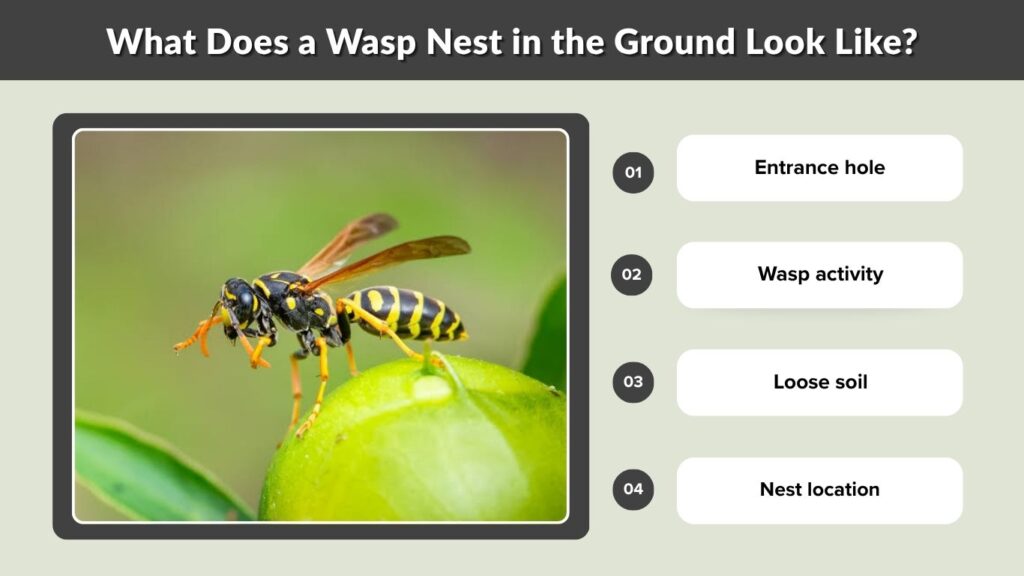
A wasp nest in the ground often appears as a small opening surrounded by soil, grass, or loose dirt. Unlike hanging paper nests, most of the underground structure remains hidden. The visible entrance may look similar to an ordinary insect burrow, making identification difficult without observing the insects from a safe distance.
Ground Wasp Nest Identification
Several signs can help you recognize an active underground wasp nest.
- Entrance hole: A round or irregular opening in the soil.
- Wasp activity: Insects repeatedly entering and leaving the same location.
- Loose soil: Freshly excavated dirt surrounding some burrows.
- Nest location: Open lawns, garden beds, embankments, or sheltered areas.
- Underground structure: Hidden chambers or paper combs, depending on the species.
- Defensive behavior: Social wasps may become agitated when people approach their entrance.
A single hole cannot confirm the insect species. Observe activity only from a safe distance.
Ground Wasp Nest vs. Ground Bee Nest
Ground-nesting bees are frequently mistaken for wasps. Many solitary bees create individual tunnels, sometimes forming groups of small holes across exposed soil.
Yellowjackets usually have multiple workers sharing an entrance, while solitary bees typically maintain separate nesting tunnels.
Bees are also generally hairier than wasps. Because many ground-nesting bees are valuable pollinators and rarely sting, accurate identification can prevent unnecessary removal.
Types of Wasps That Nest in the Ground
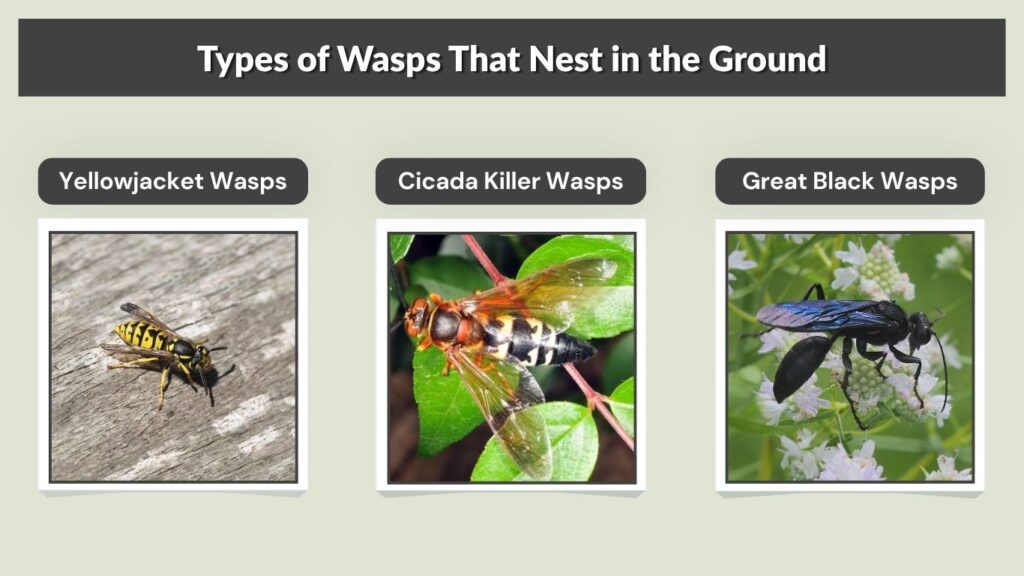
Different ground-nesting wasps have distinct appearances, nesting habits, and defensive behaviors. Some live in large social colonies, while others raise their offspring independently. Identifying the type of wasp is particularly important before considering removal because the risks associated with an underground yellowjacket colony differ considerably from those of solitary digging wasps.
1. Yellowjacket Wasps
Yellowjackets are among the most common social wasps found nesting underground. They have black-and-yellow bodies and often occupy abandoned rodent burrows.
Their nests contain enclosed paper combs that support developing larvae. Colonies grow throughout the warmer months and can contain hundreds or more workers.
Yellowjackets aggressively defend their nests when disturbed. Underground colonies near walkways, playgrounds, or frequently used lawns can therefore create significant sting hazards.
2. Cicada Killer Wasps
Cicada killers are large solitary wasps with black bodies and yellow markings. Females excavate tunnels in sunny, well-drained soil, often leaving noticeable piles of loose dirt.
They capture cicadas and transport them underground to feed their developing young.
Despite their intimidating size, cicada killers are generally not aggressive toward people. Females can sting when handled, while males cannot sting at all.
3. Great Black Wasps
Great black wasps are solitary digging wasps recognized by their dark bodies and slightly iridescent wings. They commonly nest in soft soil around gardens, fields, and other open areas.
Female wasps create underground chambers and supply them with paralyzed katydids or related insects.
Unlike social yellowjackets, great black wasps generally do not defend large colonies. They are beneficial predators and usually do not require removal.
4. Red Wasps and Paper Wasps
Red paper wasps generally construct exposed or sheltered paper nests rather than underground burrows. Their nests are commonly found beneath roof eaves, decks, and protected building structures.
If reddish wasps appear to emerge from a hole in the ground, identification should be confirmed before assuming they are red paper wasps.
Some ground-digging wasps also have reddish coloration, making body color alone unreliable.
Where Are Ground Wasp Nests Commonly Found?
Ground-nesting wasps select locations based on shelter, soil conditions, and available nesting spaces. Different species prefer different environments, although residential lawns and gardens frequently provide suitable habitat. Understanding their preferred nesting locations makes it easier to recognize potential activity before accidentally disturbing an established colony.
Common Ground Nesting Locations
Yellowjackets may occupy old rodent burrows beneath lawns, around tree roots, or along landscaped borders.
Cicada killers and other digging wasps often prefer sandy, loose, or sparsely vegetated soil.
Nests may also occur near sidewalks, driveways, flower beds, and playgrounds. Any opening with repeated insect traffic should be treated cautiously until the species is identified.
How Deep Is a Wasp Nest in the Ground?
The depth varies considerably between species and individual nests.
Cicada killer tunnels commonly extend several inches below the surface and may reach considerably deeper.
Yellowjackets frequently use existing underground cavities, so their nest depth depends partly on the original burrow.
Because hidden tunnels can extend beyond the visible entrance, digging into an active nest is unsafe.
Are Wasp Nests in the Ground Dangerous?
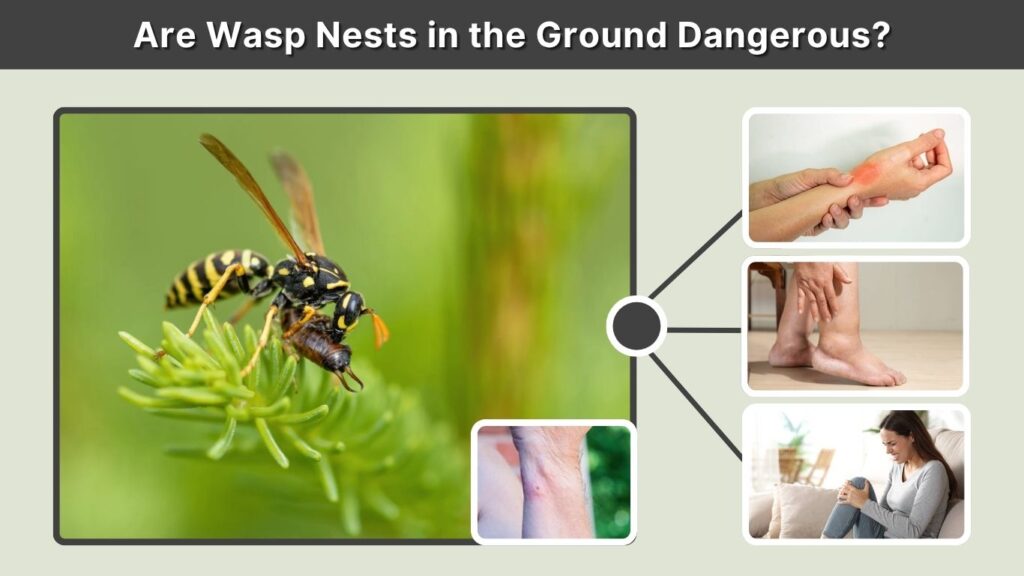
Some underground wasp nests present substantial risks, especially those occupied by social yellowjackets. These insects defend their colonies and may deliver multiple stings when threatened. Solitary ground wasps are usually much less defensive, although females can still sting if handled or trapped.
When Do Ground Wasps Attack?
Ground-nesting yellowjackets may respond defensively to vibrations, nearby movement, or direct disturbance.
Mowing over a nest, stepping close to its entrance, or attempting to dig it out can provoke attacks.
An established colony may contain many workers capable of stinging repeatedly. Keeping people and pets away from an active entrance is the safest immediate precaution.
What Happens After a Ground Wasp Sting?
Most stings produce immediate pain, redness, and localized swelling.
Move away from the nest, clean the affected area, and apply a cold compress to relieve discomfort.
Difficulty breathing, throat swelling, faintness, or widespread allergic symptoms may indicate anaphylaxis. Seek emergency medical attention immediately and use prescribed epinephrine if available.
How to Get Rid of a Wasp Nest in the Ground
Removing an underground wasp nest requires careful identification and risk assessment. A small solitary wasp burrow may be harmless enough to leave undisturbed, while a large yellowjacket colony near daily activities may require professional treatment. The safest approach depends on the species, nest location, and possible exposure to stings.
Identify the Nest Before Taking Action
Observe the entrance from a safe distance without blocking the insects’ flight path.
Look for repeated activity, insect coloration, and whether numerous wasps share one opening.
Avoid mowing, digging, or allowing children and pets near the area while identification is uncertain.
A local extension service or qualified pest-control professional can help determine the species.
Professional Ground Wasp Nest Removal
Professional pest-control services are particularly appropriate for active yellowjacket colonies, inaccessible nests, or households with known sting allergies.
Professionals can assess nest entrances and use suitable control products when necessary.
Insecticides must be specifically labeled for the intended wasp species and application site, with all label directions followed. Treatment should not be attempted by someone unable to approach and leave the location safely.
Removal Methods You Should Avoid
Pouring gasoline, bleach, boiling water, or other household substances into underground nests creates unnecessary hazards.
Burning, flooding, or digging into an active colony may provoke defensive wasps and injure people nearby.
Do not immediately block an active entrance because insects may attempt to escape through other openings.
Professional guidance is preferable when safe removal is uncertain.
How to Prevent Wasp Nests in the Ground
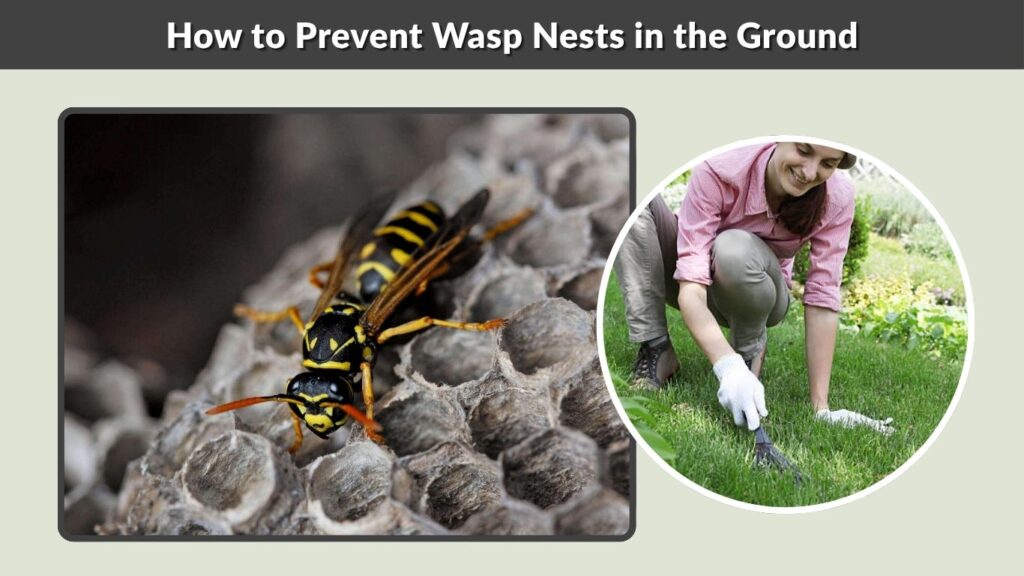
Preventing every underground wasp nest is unrealistic, but regular yard maintenance can reduce attractive nesting conditions. Different species require different approaches because yellowjackets frequently occupy existing cavities, while many solitary digging wasps prefer exposed, easily excavated soil.
Ground Wasp Nest Prevention Tips
Maintain healthy lawn coverage, reduce exposed patches of loose soil, and mulch suitable garden beds to discourage some solitary digging wasps.
Inspect abandoned animal burrows and potential nesting sites before peak wasp activity. Fill unused cavities only after confirming they are unoccupied.
Regularly inspect high-traffic outdoor spaces during warmer months so potentially dangerous colonies can be identified early.
FAQs
1. Do All Wasps Build Nests in the Ground?
No. Yellowjackets and several solitary digging wasps commonly nest underground. Many paper wasps and hornets prefer aboveground or sheltered cavities.
2. How Many Wasps Live in a Ground Nest?
Yellowjacket nests may contain hundreds or more individuals. Solitary digging wasps generally maintain individual nests rather than shared colonies.
3. What Is the Best Time to Remove a Ground Wasp Nest?
Yellowjackets are generally less active after dark. However, reduced activity does not eliminate sting risks, so professional treatment is the safer choice.
4. Can You Flood a Wasp Nest in the Ground?
Flooding is unreliable and may provoke defensive wasps. It can also damage surrounding soil and landscaping. Avoid using water to destroy an active colony.
5. Do Ground Wasps Return to the Same Nest Every Year?
Most temperate-region yellowjacket colonies do not reuse their old nests the following year. However, new colonies or solitary wasps may occupy the same favorable nesting area in subsequent seasons.
