
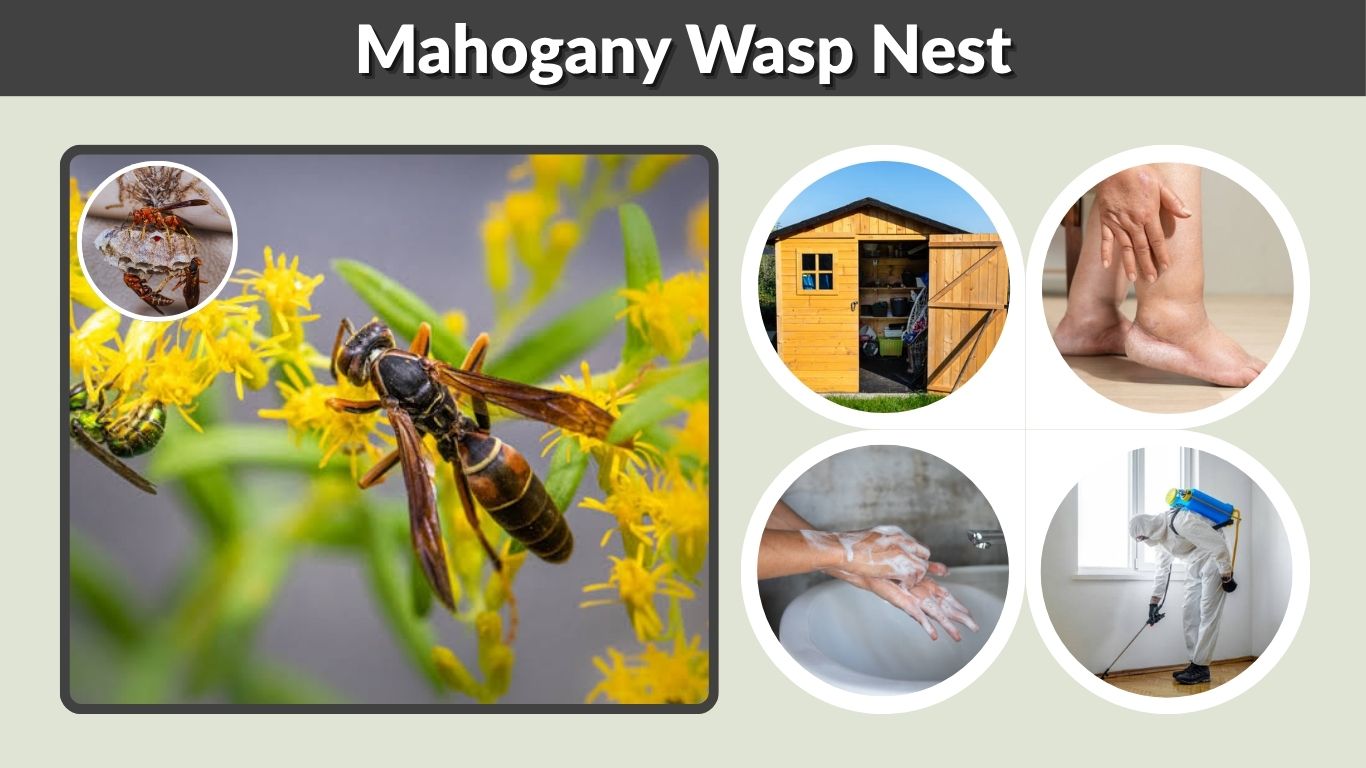
Finding a mahogany wasp nest near your home can be concerning, especially when several reddish-brown wasps are flying around your porch, roof, or garden. These insects are generally paper wasps that construct distinctive nests from chewed wood fibers. Although they help control garden pests, they can deliver painful stings when disturbed. Understanding what a mahogany wasp nest looks like, where it develops, and how the insects behave will help you identify potential risks and decide whether removal is necessary.
What Is a Mahogany Wasp?
A mahogany wasp is an informal name used for certain reddish-brown paper wasps belonging to the genus Polistes. The name describes their dark red, wood-like appearance rather than a single scientifically recognized species. These social insects live in colonies and construct paper nests to protect their developing young.
Mahogany Wasp Identification
Several reddish species may be called mahogany wasps, including Polistes rubiginosus and Polistes carolina. Their appearance shares several recognizable characteristics.
- Body color: Dark reddish-brown, rust-red, or mahogany.
- Wings: Smoky brown or dark translucent wings.
- Body shape: Slender abdomen with a narrow waist.
- Legs: Long legs that often dangle during flight.
- Behavior: Frequently seen visiting flowers, hunting insects, or guarding nests.
Because related species look similar, exact identification may require examining features beyond body color.
What Does a Mahogany Wasp Nest Look Like?
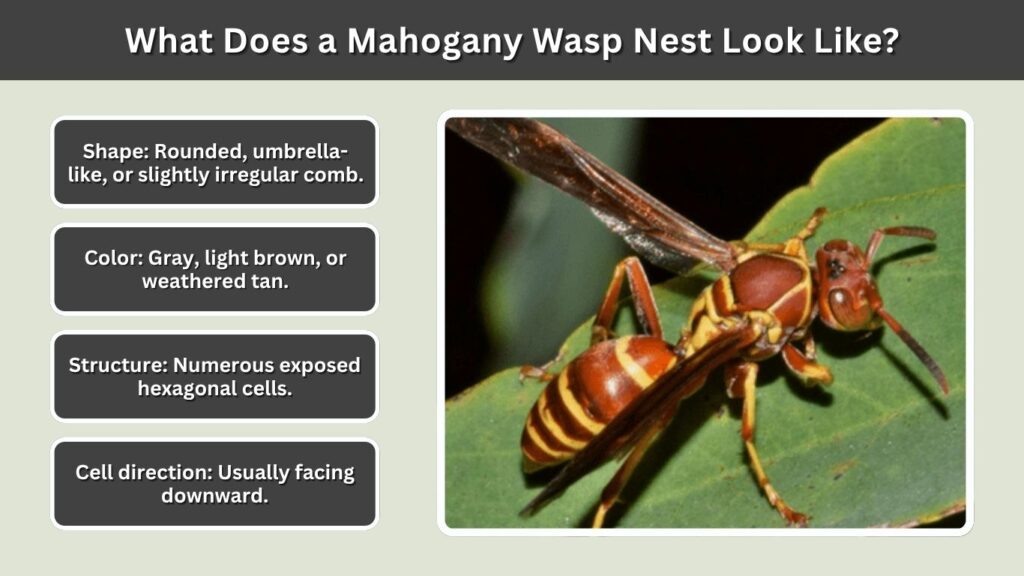
A mahogany wasp nest usually resembles a small, upside-down umbrella made from gray or brown paper. Unlike enclosed hornet nests, its individual cells remain visible. Wasps create this structure by chewing weathered wood or plant fibers and mixing them with saliva, producing a lightweight material that protects their developing offspring.
Key Nest Identification Features
Several physical characteristics can help distinguish a mahogany wasp nest from other insect nests.
- Shape: Rounded, umbrella-like, or slightly irregular comb.
- Color: Gray, light brown, or weathered tan.
- Structure: Numerous exposed hexagonal cells.
- Attachment: A short stalk connecting the nest to a supporting surface.
- Cell direction: Usually facing downward.
- Activity: Reddish-brown adult wasps moving across the comb.
Young nests may have only a few cells, while mature colonies can produce nests several inches wide.
Mahogany Wasp Nest vs. Hornet Nest
The most noticeable difference is the outer covering. Mahogany paper wasps generally construct exposed combs, allowing individual cells to remain visible.
Hornets and yellowjackets typically build enclosed nests with protective paper envelopes. Some yellowjackets also nest underground or inside building cavities. Observing the structure from a safe distance is more reliable than identifying the insects by nest color alone.
Where Do Mahogany Wasps Build Their Nests?
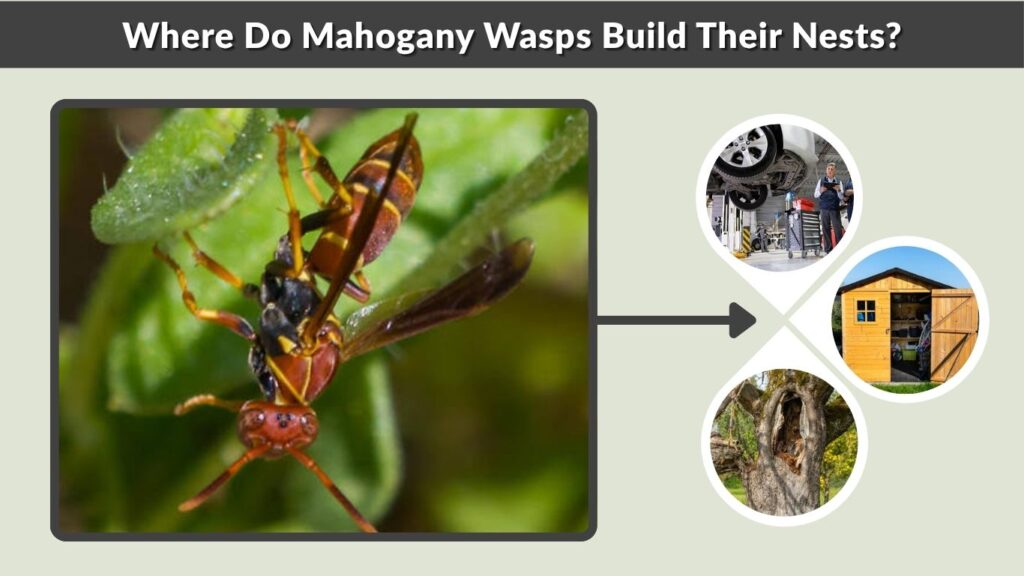
Mahogany wasps prefer places that offer shelter from rain, wind, and repeated disturbance. Their nesting habits vary between species, with some favoring exposed overhead surfaces and others occupying sheltered cavities. Residential structures often provide suitable attachment points, allowing colonies to develop close to human activity.
Common Nesting Locations
Mahogany wasp nests may appear in several protected outdoor areas, including:
- Roof eaves and porch ceilings
- Garages, sheds, and barns
- Hollow trees and branches
- Birdhouses and outdoor containers
- Window shutters and deck structures
- Wall cavities and sheltered roof openings
The coarse-backed red paper wasp, Polistes rubiginosus, commonly uses hollow spaces. The Carolina red paper wasp, Polistes carolina, is frequently observed nesting beneath exposed building overhangs.
Mahogany Wasp Nests Inside Walls
Repeated wasp activity around a narrow opening may indicate a concealed nest. However, other wasp species also use wall cavities, so the entrance alone cannot confirm identification.
Avoid sealing an opening while wasps remain active inside. Trapped insects may find alternative routes into living spaces. A qualified pest-control professional can inspect the cavity and recommend appropriate treatment.
Mahogany Wasp Nest Life Cycle and Behavior
Mahogany paper wasps live in organized colonies where reproductive females lay eggs and workers care for developing larvae. Nest activity changes throughout the warmer months as the colony grows. Understanding this seasonal pattern helps homeowners recognize when nests are most active and when they are likely to become abandoned.
How a Mahogany Wasp Nest Develops
In spring, an overwintered reproductive female typically begins building a small nest and laying eggs inside individual cells. The developing larvae receive insects captured by adults.
As workers emerge, they expand the comb, gather food, and defend the colony. Nest activity generally increases during summer, although colony size varies by species and environmental conditions.
Paper wasps also benefit gardens by hunting caterpillars and other small insects.
Do Mahogany Wasps Reuse Old Nests?
In temperate regions, native red paper wasp colonies generally last one season. Workers and males die as cold weather arrives, while newly mated females seek sheltered overwintering locations.
The following spring, surviving females usually construct new nests rather than reuse old combs. However, attractive nesting locations may support new colonies in subsequent years.
Are Mahogany Wasp Nests Dangerous?
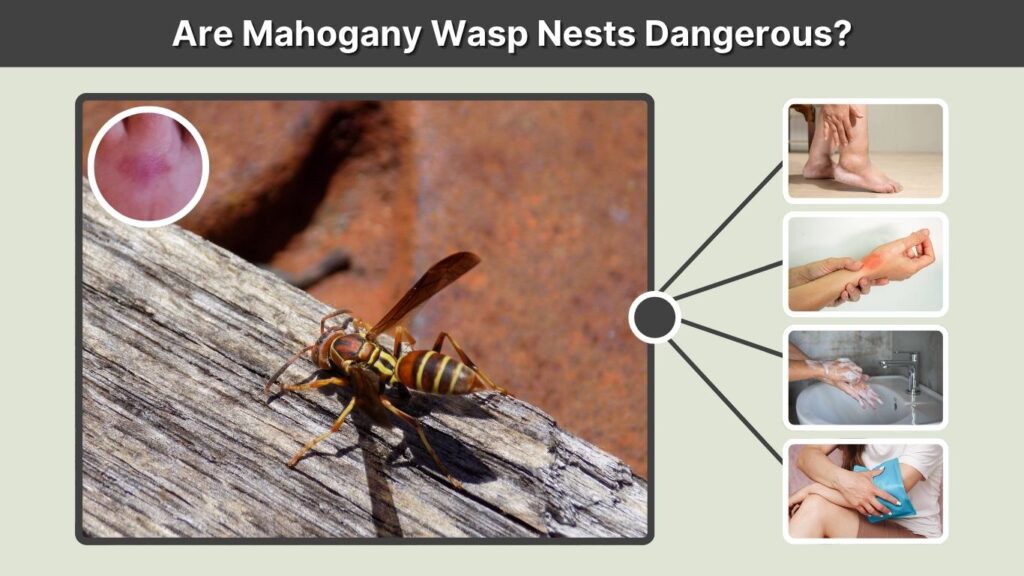
Mahogany wasps are capable of delivering painful stings, particularly when protecting their colony. They do not normally pursue people without a reason, but sudden movements or disturbances near their nest may provoke defensive behavior. Nests near entrances, playgrounds, or frequently used outdoor spaces deserve special attention.
When Do Mahogany Wasps Sting?
Paper wasps become defensive when they perceive a threat to themselves or their nest.
Common triggers include accidentally touching the comb, shaking its supporting structure, swatting nearby wasps, or attempting removal.
Unlike honey bees, individual paper wasps can sting more than once. People with known insect-sting allergies face additional risks and should avoid approaching active colonies.
What Happens After a Mahogany Wasp Sting?
A typical sting causes immediate pain, redness, and localized swelling. Most mild reactions improve with basic first aid.
Wash the affected area with soap and water, apply a cold compress, and avoid scratching. Seek medical advice if symptoms worsen or persist.
Seek emergency medical care immediately for breathing difficulties, throat or facial swelling, faintness, or other signs of a severe allergic reaction. Use prescribed emergency epinephrine as directed.
How to Handle a Mahogany Wasp Nest Safely
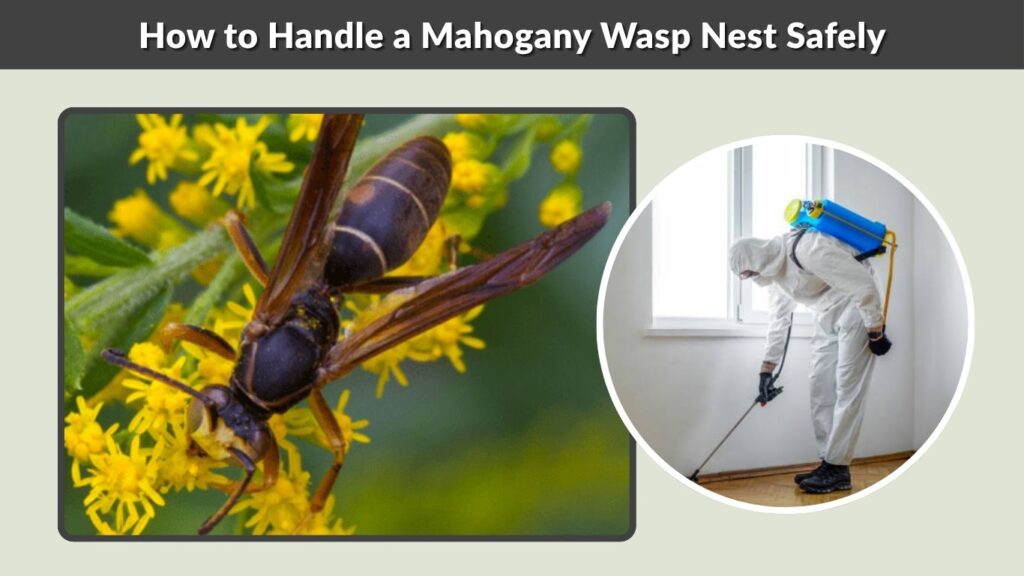
Finding a nest does not automatically mean it must be destroyed. Paper wasps provide natural insect control, making them valuable garden inhabitants. The appropriate response depends on the colony’s activity, nest location, accessibility, and the likelihood of people accidentally disturbing it.
When Should You Leave the Nest Alone?
A nest positioned away from people, pets, and regular outdoor activities can often remain undisturbed.
Avoid approaching the comb unnecessarily, and keep children from playing directly beneath it. In colder regions, waiting until the colony naturally dies out may eliminate the need for active removal.
When Is Professional Nest Removal Necessary?
Professional removal is advisable when nests are large, difficult to reach, concealed inside walls, or located near frequently used entrances.
A pest-control specialist can identify the insects, evaluate sting risks, and select suitable control methods.
Never burn a nest, strike an active colony, or attempt removal from an unstable ladder. Avoid applying unapproved chemicals or spraying substances into electrical fixtures.
How to Prevent Future Mahogany Wasp Nests
Regular inspections during spring can help detect early nest construction.
Repair damaged screens, seal exterior openings after confirming they are empty, and inspect sheltered spaces beneath roof edges.
Removing abandoned combs where accessible and maintaining building exteriors can reduce convenient nesting opportunities. However, no prevention method guarantees that wasps will never return to the area.
FAQs
1. What Color Is a Mahogany Wasp Nest?
Mahogany wasp nests are usually gray, tan, or light brown. Their name refers to the reddish-brown wasps rather than the color of their paper nests.
2. How Big Can a Mahogany Wasp Nest Get?
A newly established nest may measure only an inch or two across. Mature colonies can build combs several inches wide, depending on the species.
3. How Many Wasps Live in a Mahogany Wasp Nest?
Colony populations vary throughout the year. Mature paper wasp nests commonly contain several dozen adults, although some colonies remain considerably smaller.
4. Can Mahogany Wasps Damage Wooden Structures?
Mahogany wasps do not tunnel through structural wood like termites. They collect small quantities of exposed wood fibers to manufacture their paper nests.
5. Will Mahogany Wasps Attack If I Walk Near Their Nest?
Simply walking nearby does not always trigger an attack. However, approaching too closely or disturbing the nest can provoke defensive stinging, particularly in established colonies.
