
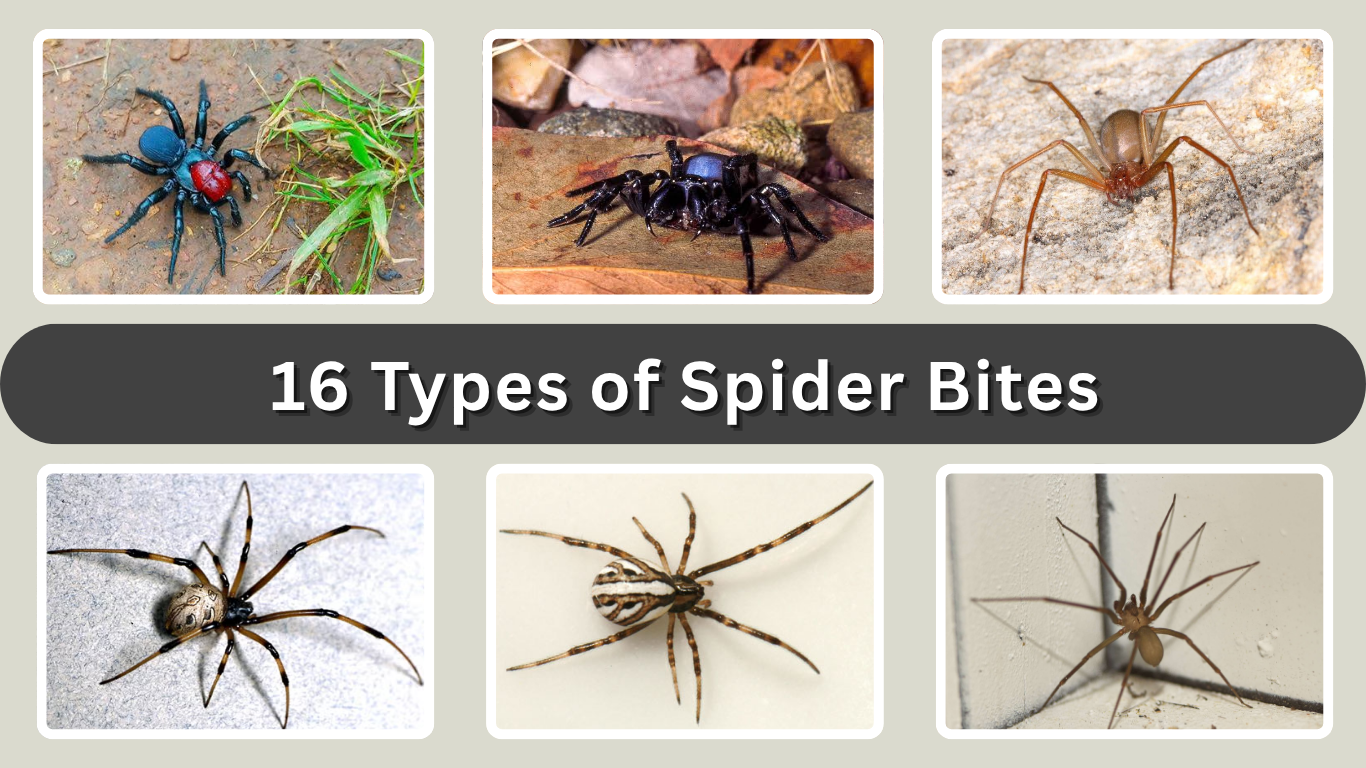
Spider bites can range from mild irritation to serious medical emergencies, depending on the species and amount of venom involved. Some dangerous spiders may cause intense pain, muscle cramps, nerve problems, tissue damage, or other severe reactions. Knowing the signs of different spider bites can help you understand when medical attention may be necessary. Here are 16 types of dangerous spider bites, covering bite identification, common symptoms, pain levels, potential risks, severity, and what you should do after being bitten.
1. Sydney Funnel-Web Spider Bite
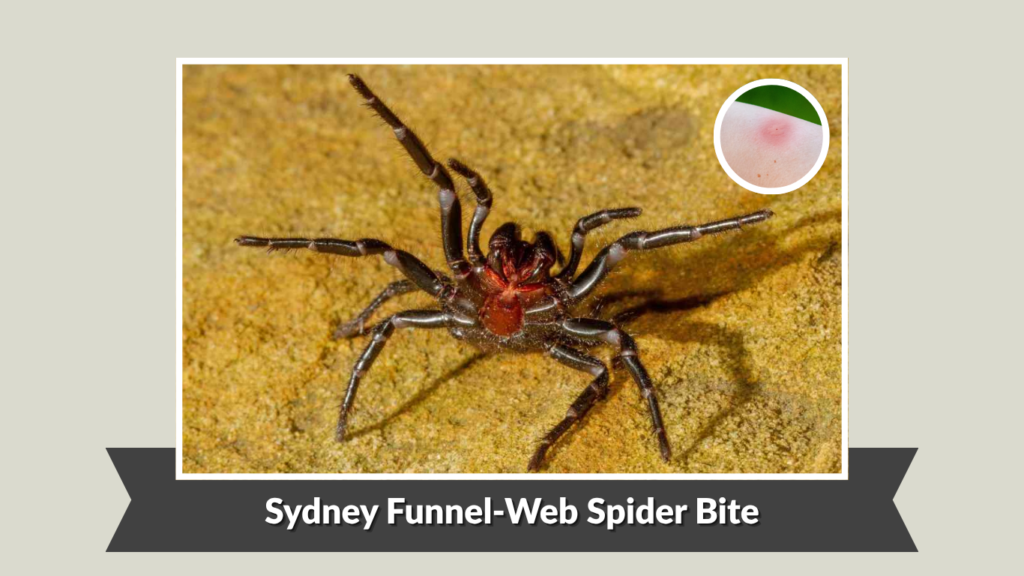
The Sydney funnel-web spider (Atrax robustus) is one of the most medically significant spiders in Australia. It is mainly found around Sydney and nearby parts of New South Wales. Males are especially concerning because their venom can strongly affect the human nervous system. A bite should always be treated as a medical emergency, even if serious symptoms have not yet appeared.
Bite Identification & Reaction
A Sydney funnel-web spider bite may cause immediate pain and visible puncture marks. The bite area can become red, swollen, or uncomfortable. Symptoms may develop quickly because the venom acts on the nervous system.
Common reactions can include:
- Severe pain at the bite site
- Tingling around the mouth
- Heavy sweating
- Excessive saliva production
- Muscle twitching
- Nausea or vomiting
- Difficulty breathing
- Rapid or irregular heartbeat
Some people may deteriorate rapidly after a serious envenomation.
How Dangerous Is the Bite?
The Sydney funnel-web spider has highly potent venom capable of causing life-threatening neurological effects. Severe poisoning may interfere with breathing, blood pressure, and normal muscle function.
Before antivenom became available, funnel-web bites caused a number of human deaths. Today, fatalities are extremely rare when victims receive rapid medical treatment. Children and people who receive a large amount of venom may develop severe symptoms particularly quickly.
What Should You Do After a Bite?
Call emergency medical services immediately. Keep the bitten person calm and as still as possible.
For bites on an arm or leg, apply a firm pressure-immobilization bandage over the affected limb and keep it immobilized with a splint if possible. Avoid unnecessary walking or movement because muscle activity can help venom move through the lymphatic system.
What Should You Avoid Doing?
Do not wash the bite site, cut the wound, suck out venom, or apply ice directly to the bite. A tourniquet should also not be used.
If the spider can be safely photographed or contained without risking another bite, identification may help medical professionals. Never attempt to catch the spider if doing so puts anyone in danger.
2. Northern Tree Funnel-Web Spider Bite
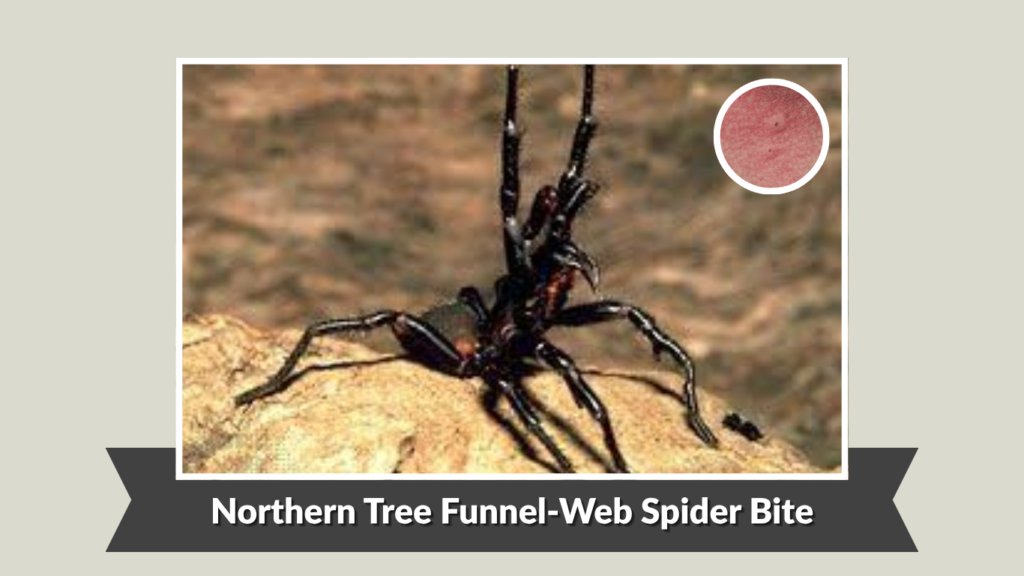
The Northern tree funnel-web spider (Hadronyche formidabilis) is a large, medically important funnel-web found in parts of eastern Australia. It is the largest known Australian funnel-web species, and its venom can produce severe systemic envenomation. Any suspected bite from this spider should be treated as an immediate medical emergency.
Bite Identification & Reaction
The bite can be painful, and fang punctures may sometimes be visible. Serious symptoms can develop rapidly as the venom affects the nervous system.
Possible reactions include:
- Intense pain around the bite
- Heavy sweating
- Tingling around the mouth
- Excessive saliva
- Nausea or vomiting
- Muscle twitching or spasms
- Difficulty breathing
- Rapid heartbeat
The severity depends partly on how much venom is injected, and not every bite produces the same reaction.
How Dangerous Is the Bite?
Northern tree funnel-web bites are considered potentially life-threatening. Tree-dwelling funnel-web species, including H. formidabilis, have been associated with severe funnel-web envenomation. Their venom can interfere with nerve signaling and may eventually affect breathing and cardiovascular function.
What Should You Do After a Bite?
Call emergency medical services immediately. Keep the person lying down and as still as possible. If the bite is on a limb, apply a pressure-immobilization bandage and immobilize the limb with a splint. Keep the bandage in place until medical professionals take over.
What Should You Avoid Doing?
Do not allow the victim to walk around unnecessarily. Do not cut the wound, attempt to suck out venom, or use a tourniquet. Never try to catch the spider if doing so creates another bite risk. A photograph can be useful if it can be taken safely.
3. Southern Tree Funnel-Web Spider Bite
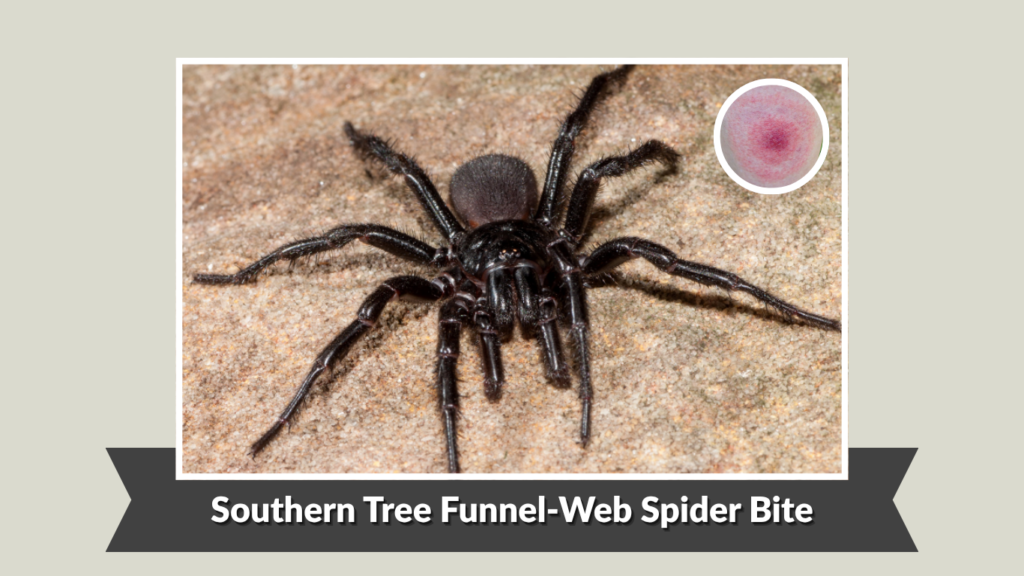
The Southern tree funnel-web spider (Hadronyche cerberea) is another medically important Australian funnel-web. It is associated with moist forested areas and commonly shelters in crevices and hollows in trees. Although encounters are uncommon, a suspected bite requires the same emergency response used for other dangerous funnel-web spiders.
Bite Identification & Reaction
A bite may cause immediate pain around the fang punctures. If significant envenomation occurs, symptoms can spread beyond the bite site fairly quickly.
Signs may include:
- Severe local pain
- Sweating
- Tingling sensations
- Salivation
- Nausea or vomiting
- Muscle twitching
- Breathing difficulties
- Changes in heart rate
A person should not wait for these symptoms before seeking help because serious funnel-web envenomation can progress rapidly.
How Dangerous Is the Bite?
The Southern tree funnel-web is one of the tree-dwelling funnel-web species linked with severe human envenomation. Funnel-web venom primarily affects the nervous system, and serious cases can cause widespread neurological and cardiovascular symptoms. Hospital treatment and funnel-web antivenom may be required when systemic symptoms develop.
What Should You Do After a Bite?
Treat the bite as an emergency. Call an ambulance, keep the person still, and use the pressure-immobilization technique on a bitten arm or leg. Wrap an elastic bandage over the bite and then around the entire limb before immobilizing it with a splint.
What Should You Avoid Doing?
Do not remove the pressure bandage to inspect the wound once it has been properly applied. Avoid walking, running, or unnecessary movement. Do not cut the bite, suck the venom, or attempt dangerous home treatments. Leave spider capture to professionals unless identification can be achieved without risk.
4. Brazilian Wandering Spider Bite
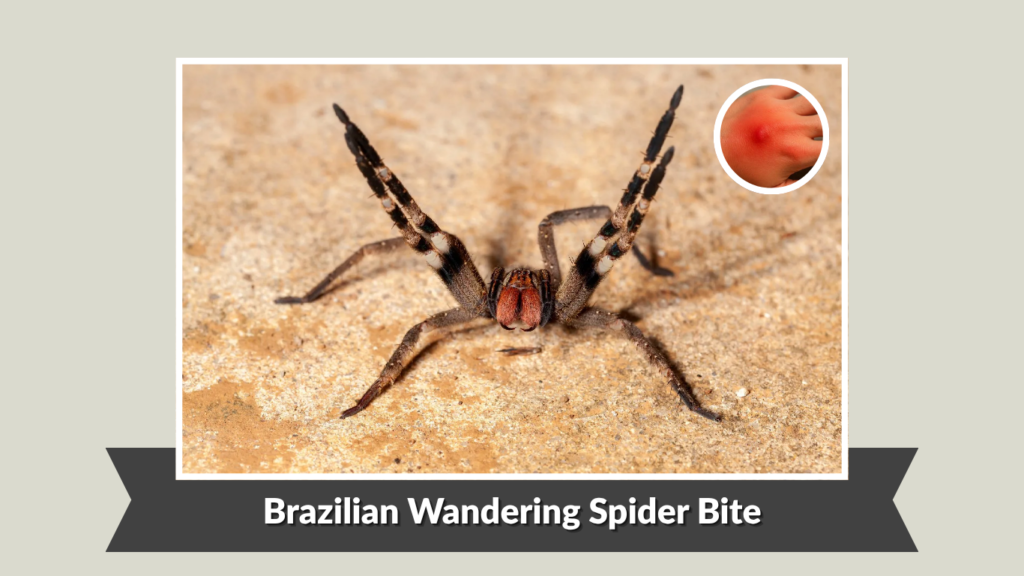
Brazilian wandering spiders (Phoneutria species), sometimes called armed spiders, are medically significant spiders found in South America. They are active hunters rather than permanent web dwellers. Most bites cause local symptoms, but significant envenomation can produce neurological and cardiovascular effects, making prompt medical assessment important when a Phoneutria bite is suspected.
Bite Identification & Reaction
Intense pain at the bite site is one of the most characteristic early symptoms. The surrounding area may become red or swollen, while more serious cases can produce symptoms throughout the body.
Possible reactions include:
- Severe burning pain
- Local swelling
- Heavy sweating
- Nausea and vomiting
- Tremors
- Agitation
- Rapid heartbeat
- Increased blood pressure
- Breathing difficulties
Priapism, a prolonged and painful erection, has also been reported in some significant envenomations.
How Dangerous Is the Bite?
A Brazilian wandering spider bite can range from mild local pain to serious systemic poisoning. Severe cases are uncommon but may involve major cardiovascular or neurological effects. Children can be particularly vulnerable to serious envenomation. Medical facilities in affected regions may use species-specific antivenom for moderate or severe cases.
What Should You Do After a Bite?
Seek urgent medical attention after a confirmed or strongly suspected Brazilian wandering spider bite, particularly if severe pain or body-wide symptoms occur. Keep the person calm and minimize unnecessary movement while arranging medical care.
What Should You Avoid Doing?
Do not cut or burn the wound, attempt to suck out venom, or rely on home remedies instead of professional treatment. Never attempt to pick up or handle the spider. If identification is needed, take a photograph from a safe distance.
5. Redback Spider Bite
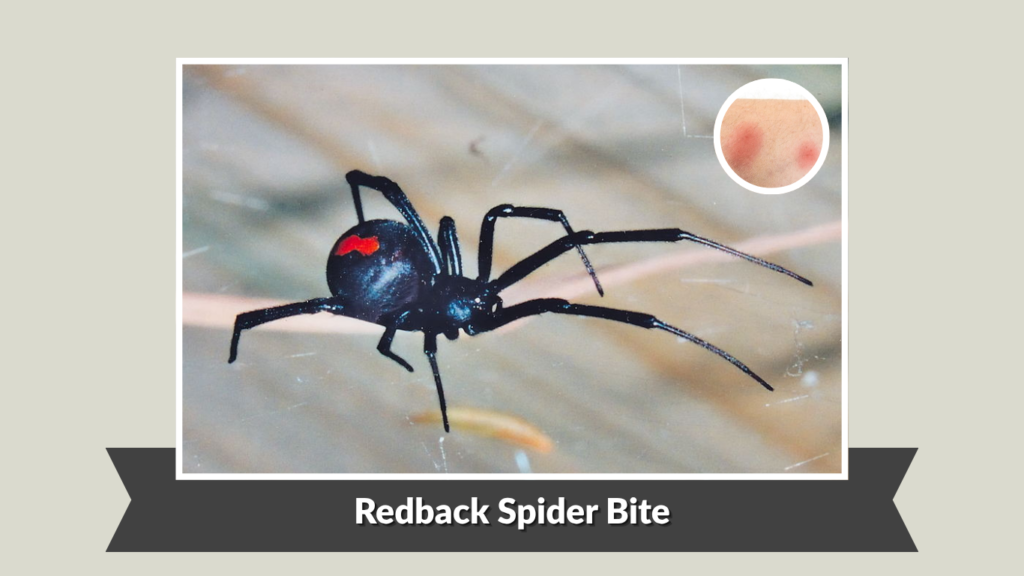
The redback spider (Latrodectus hasselti) is a medically significant widow spider found throughout Australia. Bites occur most often when someone accidentally disturbs a spider hidden in sheltered objects or structures. Unlike funnel-web bites, redback bites require a different first-aid approach, and a pressure-immobilization bandage is not recommended.
Bite Identification & Reaction
A redback bite may initially feel like a sharp or burning sting. Pain can increase and spread away from the original bite area over time.
Common symptoms may include:
- Increasing local pain
- Redness or swelling
- Sweating near the bite
- Nausea
- Vomiting
- Headache
- Abdominal discomfort
- General weakness or restlessness
Severe pain is one of the main reasons people with redback bites require medical assessment.
How Dangerous Is the Bite?
Redback venom affects the nervous system and can cause a syndrome known as latrodectism. Although serious symptoms are possible, modern medical care makes fatal outcomes extremely uncommon. The severity varies considerably, and many bites do not result in severe systemic envenomation.
What Should You Do After a Bite?
Wash the bite area gently with soap and water. Apply a wrapped cold pack for about 15 minutes to reduce pain. Seek medical attention if pain becomes severe or other significant symptoms develop. A person experiencing serious symptoms should be taken to an emergency department.
What Should You Avoid Doing?
Do not use a pressure-immobilization bandage for a redback spider bite. Unlike funnel-web venom, redback venom often causes intense local pain, and compression can worsen discomfort. Do not cut the wound, suck out venom, or place ice directly against bare skin.
6. Southern Black Widow Spider Bite
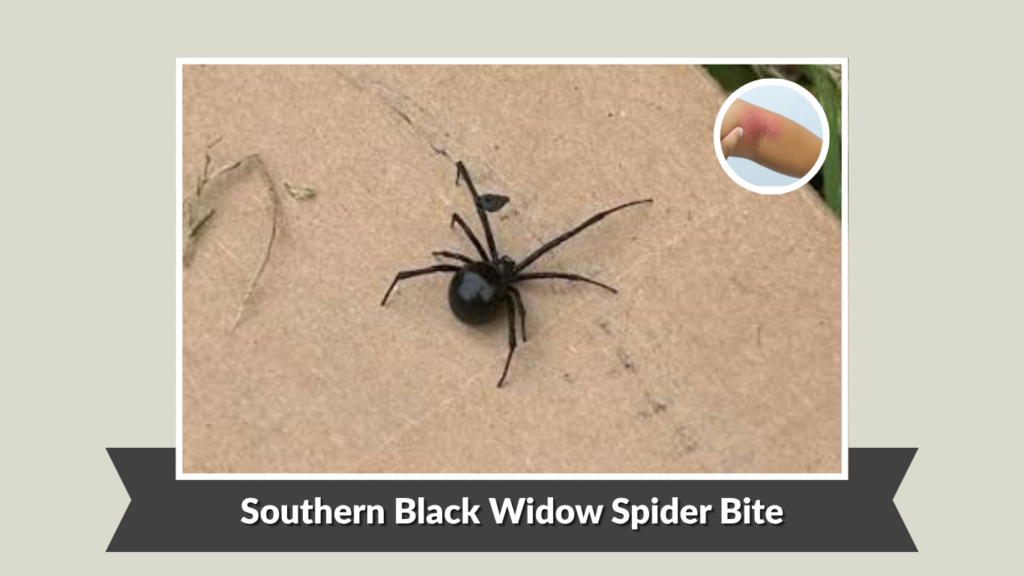
The Southern black widow (Latrodectus mactans) is one of the best-known medically significant spiders in North America. The female carries potent neurotoxic venom and is responsible for most medically important bites. Death from modern black widow envenomation is rare, but severe pain, muscle spasms, and other systemic symptoms can require hospital treatment.
Bite Identification & Reaction
Some people notice immediate pain or a stinging sensation when bitten. Tiny fang marks, mild redness, or swelling may appear around the bite. More serious symptoms can develop during the following hours.
Possible reactions include:
- Increasing pain
- Muscle cramps
- Muscle twitching
- Abdominal pain
- Back or chest pain
- Sweating
- Nausea
- Restlessness
- Difficulty breathing in severe cases
Muscle cramps may begin near the bitten limb and spread toward the center of the body.
How Dangerous Is the Bite?
Southern black widow venom acts on the nervous system and can produce severe muscle pain and spasms. Although the bite can be medically serious, fatalities are rare. Severe cases may require strong pain control, muscle-relaxing medicines, monitoring, and occasionally antivenom.
What Should You Do After a Bite?
Wash the area thoroughly with soap and water. Keep the person calm and monitor symptoms. Contact a poison center or medical professional for guidance, particularly when significant pain or muscle cramping develops. Breathing difficulty, severe weakness, or rapidly worsening symptoms require emergency medical attention.
What Should You Avoid Doing?
Do not cut the bite, suck out venom, or apply damaging home remedies. Avoid excessive activity if the person is feeling unwell. Do not attempt to handle or capture a black widow with bare hands. If the spider is still present, a clear photograph taken from a safe distance may help with identification.
7. Northern Black Widow Spider Bite
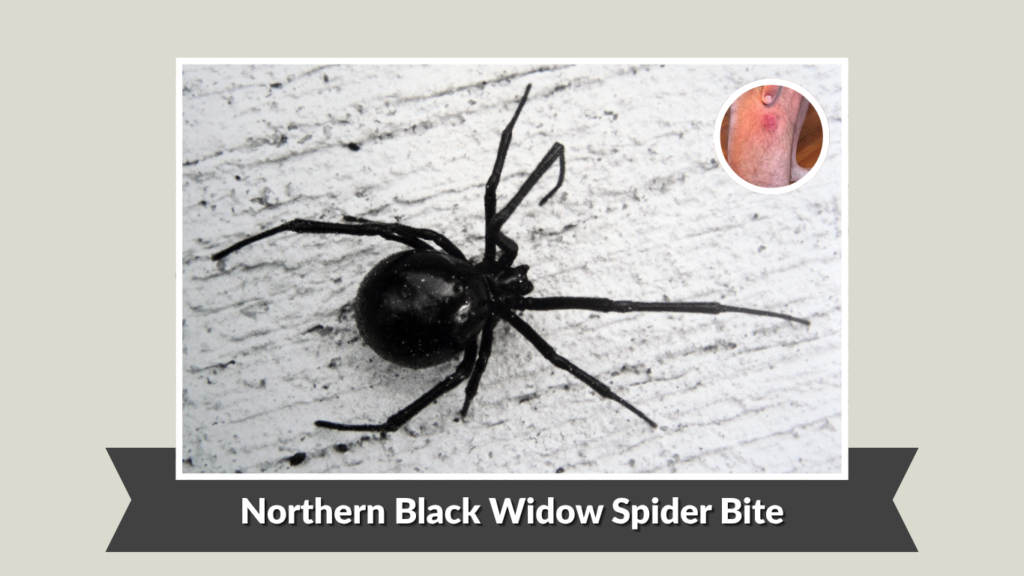
The Northern black widow (Latrodectus variolus) is a medically significant widow spider found in North America. Its venom acts mainly on the nervous system and can cause a condition known as latrodectism. Although fatal outcomes are very uncommon with modern medical care, a significant bite can produce intense pain, muscle spasms, sweating, and other whole-body symptoms.
Bite Identification & Reaction
The actual bite may feel like a small pinprick or may initially go unnoticed. Local redness and mild swelling can develop, while more important symptoms may appear during the following hours.
Possible reactions include:
- Pain around the bite
- Muscle cramping
- Abdominal or back pain
- Heavy sweating
- Nausea
- Restlessness
- Muscle twitching
- Breathing difficulty in severe cases
The pain and muscle cramps may spread from the bitten area toward other parts of the body.
How Dangerous Is the Bite?
Northern black widow venom is neurotoxic and can interfere with normal communication between nerves and muscles. Severe envenomation can cause powerful muscle spasms and considerable pain. Life-threatening complications are uncommon, but children, older adults, and people who develop severe symptoms should receive prompt medical attention.
What Should You Do After a Bite?
Wash the area with soap and water and keep the affected limb relatively still. A cold pack wrapped in cloth can be applied for short periods to help reduce discomfort. Contact a poison center or healthcare professional for advice, especially if muscle cramps, severe pain, vomiting, or breathing problems occur.
What Should You Avoid Doing?
Do not cut the bite, suck out venom, or apply an excessively tight tourniquet. Avoid handling the spider. If identification is possible, take a photograph from a safe distance rather than attempting to pick it up.
8. Western Black Widow Spider Bite
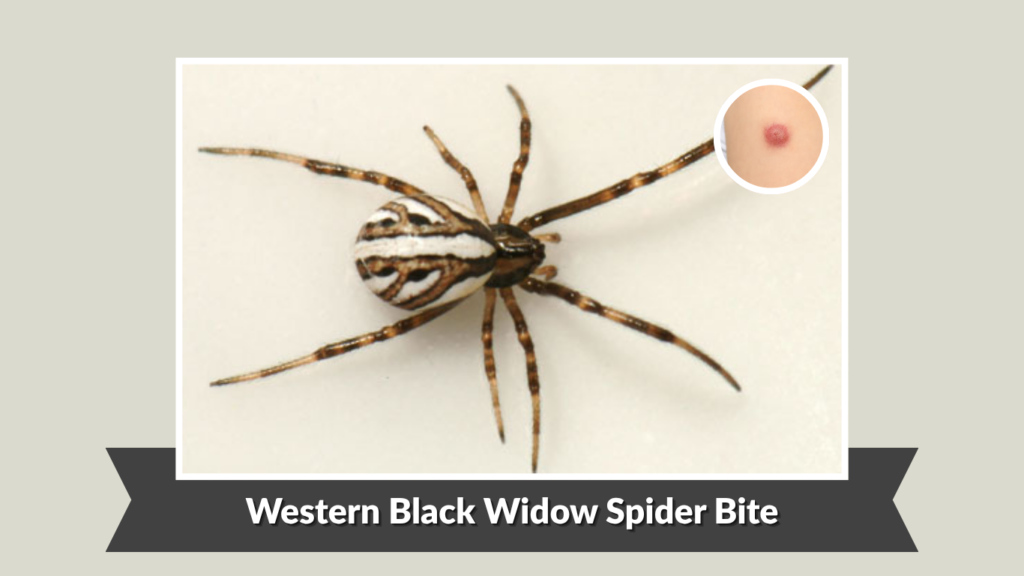
The Western black widow (Latrodectus hesperus) is one of the medically important widow spiders of western North America. Adult females are responsible for most significant bites. The venom primarily affects nerve and muscle function, meaning symptoms can extend well beyond the bite site even when there is little visible skin damage.
Bite Identification & Reaction
The bite itself may be painless or feel like a small needle prick. A small red mark can appear, but dramatic swelling or tissue destruction is not typical of black widow envenomation.
Symptoms can include:
- Increasing pain
- Severe muscle cramps
- Abdominal tightening
- Back or chest pain
- Sweating
- Nausea
- Restlessness
- Muscle weakness
Symptoms can range from relatively mild to severe depending on the amount of venom injected and the individual affected.
How Dangerous Is the Bite?
Western black widow venom is a powerful neurotoxin. Significant envenomation may cause repeated muscle contractions, widespread pain, and other nervous-system effects. Despite its reputation, death from a black widow bite is very unlikely, particularly when appropriate medical care is available.
What Should You Do After a Bite?
Remain calm and seek medical advice promptly. Wash the bite with soap and water and apply a cloth-wrapped cold pack to reduce pain and swelling. Severe muscle cramps, intense pain, weakness, or breathing difficulty should be evaluated urgently.
What Should You Avoid Doing?
Never cut the wound or attempt to suck out the venom. Do not place ice directly against bare skin or attempt to capture a widow spider with your hands. Avoid assuming that mild initial symptoms mean the bite cannot become more serious.
9. Brown Widow Spider Bite
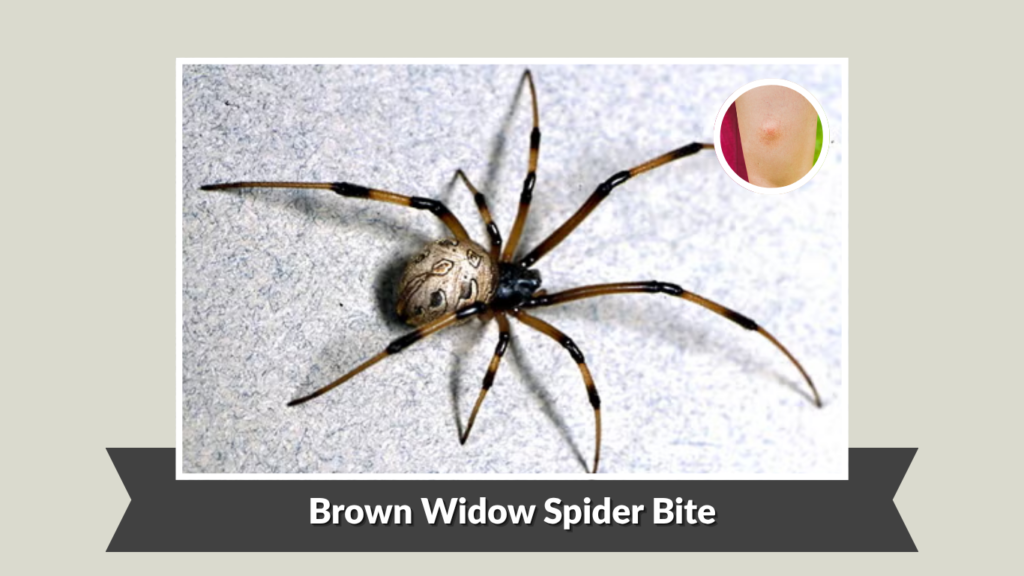
The brown widow (Latrodectus geometricus) belongs to the same genus as black widow spiders and possesses neurotoxic venom. However, documented brown widow bites are usually considerably milder than Western black widow bites because brown widows commonly inject less venom. Serious symptoms can still occur, so worsening reactions deserve medical assessment.
Bite Identification & Reaction
A brown widow bite can cause immediate discomfort followed by localized burning pain. Unlike severe black widow envenomation, many documented brown widow bites remain limited mainly to the bite area.
Possible symptoms include:
- Sharp or burning pain
- Local redness
- Mild swelling
- Tenderness
- Muscle discomfort
- Sweating
- Nausea in more significant cases
- General weakness
Severe systemic reactions are possible but appear to be uncommon.
How Dangerous Is the Bite?
Brown widow venom is biologically potent, but the spider generally delivers less venom during a bite than North American black widows. Consequently, most documented bites cause milder symptoms. Rare cases, however, have produced more serious illness requiring hospital treatment.
What Should You Do After a Bite?
Wash the bite with soap and water. Apply a cold pack wrapped in cloth for short periods and monitor the person for worsening pain, muscle cramps, vomiting, weakness, or other systemic symptoms. Seek professional medical advice if symptoms become significant.
What Should You Avoid Doing?
Do not cut or squeeze the bite site, suck out venom, or use unproven home treatments. Never handle a suspected brown widow with bare hands. If symptoms spread beyond the bite area, do not delay medical evaluation simply because brown widow bites are usually mild.
10. Brown Recluse Spider Bite
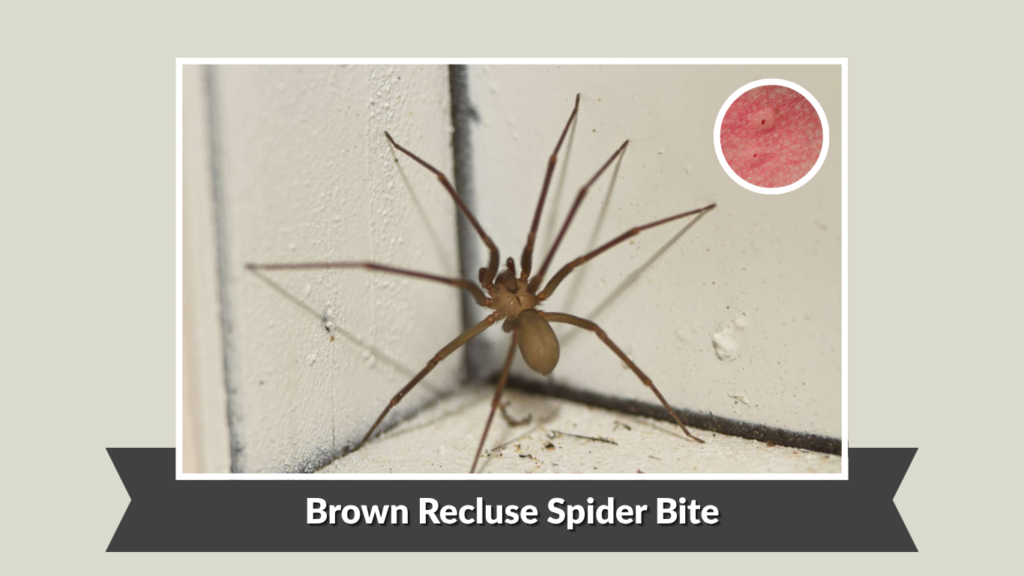
The brown recluse (Loxosceles reclusa) is medically important because its venom can damage skin and surrounding tissue. Many bites remain mild, but some develop painful lesions and tissue necrosis. Rare systemic reactions can affect red blood cells and other organs, particularly in children.
Bite Identification & Reaction
A brown recluse bite may initially be painless, making it difficult to recognize immediately. Pain can increase during the next several hours as inflammation develops.
Possible signs include:
- Increasing pain or burning
- Redness and swelling
- A blister at the bite site
- Discoloration of the skin
- A developing ulcer
- Nausea
- Headache
- Muscle aches
- Fever or weakness in systemic cases
Importantly, many other skin conditions can resemble a recluse bite, so appearance alone does not confirm that a brown recluse was responsible.
How Dangerous Is the Bite?
Most brown recluse bites do not cause life-threatening illness. However, venom can sometimes produce local tissue destruction called cutaneous loxoscelism. Rare systemic loxoscelism can cause destruction of red blood cells and severe illness.
What Should You Do After a Bite?
Wash the area gently with soap and water. Apply a wrapped cold pack, elevate the affected area when practical, and seek medical evaluation if the wound is worsening or systemic symptoms develop. Children with a suspected significant recluse bite should receive prompt medical attention.
What Should You Avoid Doing?
Do not cut the wound, attempt to remove venom, or apply intense heat. Avoid diagnosing a brown recluse bite based solely on a skin lesion, since infections and other medical conditions can produce similar wounds.
11. Chilean Recluse Spider Bite
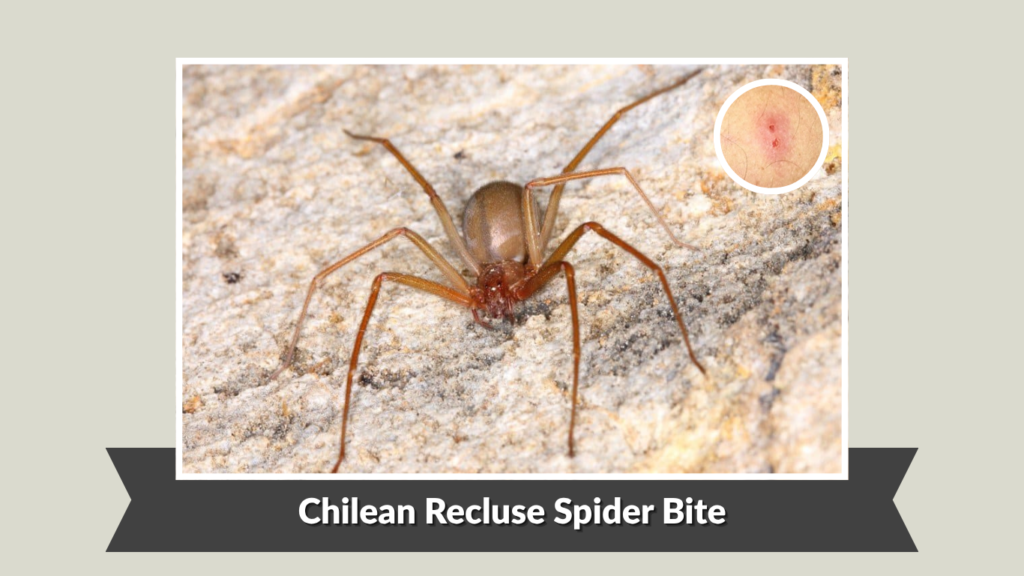
The Chilean recluse (Loxosceles laeta) is a medically important recluse spider associated with potentially serious loxoscelism. Its venom can cause local skin injury and, in a smaller proportion of patients, systemic illness involving destruction of red blood cells and other complications. A suspected significant bite deserves prompt medical evaluation.
Bite Identification & Reaction
Early symptoms vary considerably. Pain or burning may develop around the bite, while the surrounding skin can gradually become red, swollen, or bluish.
Possible reactions include:
- Local pain or burning
- Redness
- Swelling
- Bluish or purple discoloration
- Blister formation
- Progressive skin injury
- Fever or weakness
- Nausea
- Dark urine in serious systemic cases
In a Chilean series of confirmed cases, pain, bluish discoloration, and burning were among the commonly reported clinical signs.
How Dangerous Is the Bite?
The main concern is loxoscelism. Cutaneous loxoscelism can produce substantial tissue damage around the bite, while visceral or systemic loxoscelism may cause hemolysis and potentially affect kidney function. Systemic disease is much less common than localized skin involvement but can become medically serious.
What Should You Do After a Bite?
Wash the bite gently with soap and water and apply a cloth-wrapped cold pack. Limit unnecessary activity and seek medical assessment, particularly when the spider is known or strongly suspected to be a Chilean recluse. Rapidly worsening skin changes, fever, weakness, dark urine, or other systemic symptoms require urgent medical attention.
What Should You Avoid Doing?
Do not cut or burn the wound, suck out venom, or apply extreme heat. Avoid aggressive home treatment of developing skin damage. Never attempt to capture the spider if doing so creates a risk of another bite; a safe photograph may be sufficient to assist identification.
12. Mediterranean Recluse Spider Bite
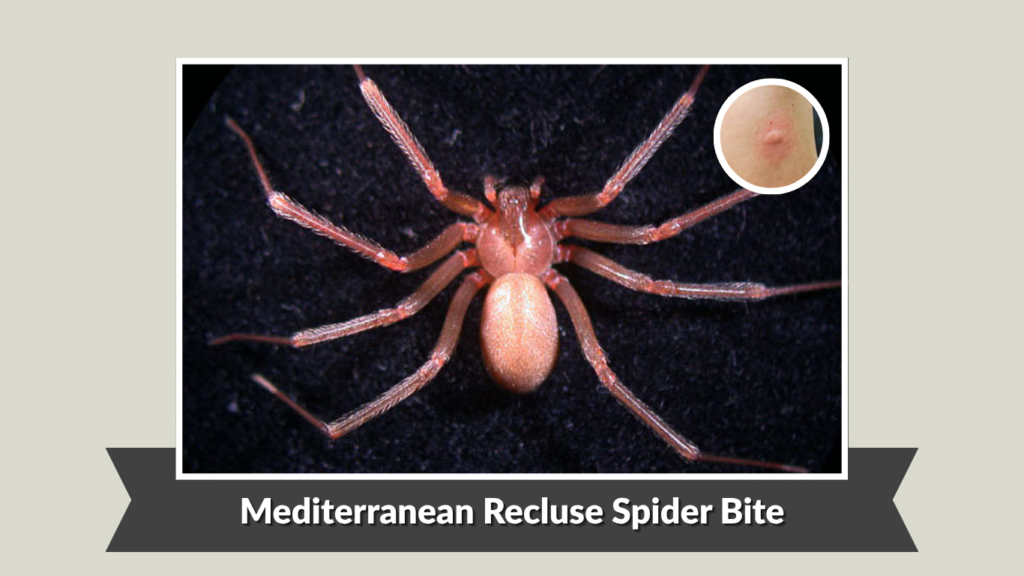
The Mediterranean recluse spider (Loxosceles rufescens) is a medically significant spider found around the Mediterranean region and introduced into several other parts of the world. Its bite may initially cause little discomfort, but venom can sometimes damage skin and surrounding tissue. In uncommon cases, systemic illness known as loxoscelism can develop.
Bite Identification & Reaction
A Mediterranean recluse bite may be painless at first or feel like a minor prick. Pain and burning can develop several hours later as inflammation increases.
Possible reactions include:
- Redness around the bite
- Burning or increasing pain
- Local swelling
- Blister formation
- Blue or purple discoloration
- A darkening central wound
- Fever or weakness
- Nausea
- Progressive skin damage
Not every bite causes necrosis, and many suspected recluse bites are actually caused by other skin conditions.
How Dangerous Is the Bite?
Most Mediterranean recluse bites are not life-threatening. However, confirmed bites have sometimes produced skin necrosis requiring prolonged wound care. Rare systemic loxoscelism can involve destruction of red blood cells and kidney or clotting complications.
What Should You Do After a Bite?
Wash the area gently with soap and water and apply a cold pack wrapped in cloth. Keep the affected area elevated when practical. Seek medical attention if pain, swelling, blistering, or discoloration continues to worsen, or if fever, weakness, dark urine, or other whole-body symptoms develop.
What Should You Avoid Doing?
Do not cut the wound, squeeze it, burn it, or attempt to suck out venom. Avoid applying extreme heat or unproven chemicals to the skin. Do not assume every developing skin ulcer is a recluse bite; proper medical evaluation is important.
13. Six-Eyed Sand Spider Bite
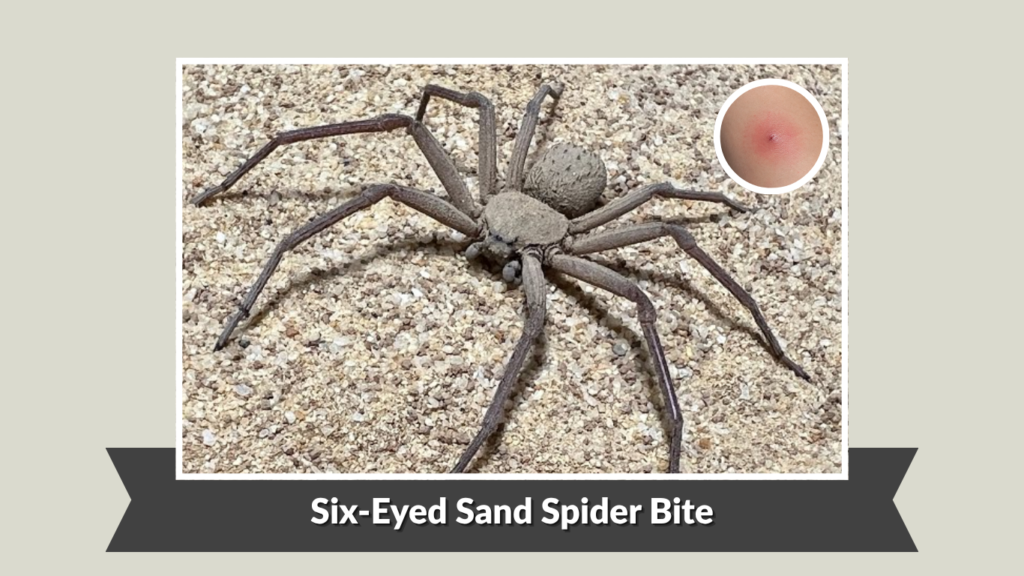
Six-eyed sand spiders include species in the genera Hexophthalma and Sicarius. Their venom contains toxins related to those found in recluse spiders and has demonstrated tissue-damaging properties. However, confirmed human bites are extremely uncommon, so the exact danger to people is less clearly documented than popular descriptions sometimes suggest.
Bite Identification & Reaction
Because verified human cases are so rare, there is no well-established pattern of symptoms for every six-eyed sand spider species. Available reports and venom research suggest that a significant bite could cause local tissue injury.
Possible reactions may include:
- Pain or burning
- Redness
- Swelling
- Blister formation
- Skin discoloration
- Increasing tenderness
- Development of a necrotic lesion
A documented Sicarius bite in South America produced a necrotic lesion resembling injury caused by Loxosceles spiders.
How Dangerous Is the Bite?
These spiders should be treated cautiously because their venoms contain phospholipase-D-related toxins capable of damaging cells and tissue. Laboratory studies demonstrate considerable toxic potential, but claims that every six-eyed sand spider bite is inevitably fatal are not supported by human clinical evidence.
What Should You Do After a Bite?
Wash the bite gently with soap and water and apply a cloth-wrapped cold pack. Seek urgent medical evaluation if a six-eyed sand spider is known or strongly suspected to have bitten you. Monitor the wound for increasing pain, blistering, discoloration, or tissue breakdown.
What Should You Avoid Doing?
Do not cut or burn the wound, suck out venom, or apply harsh chemicals. Avoid handling the spider for identification. A photograph from a safe distance is preferable if one can be taken without another bite risk.
14. Eastern Mouse Spider Bite
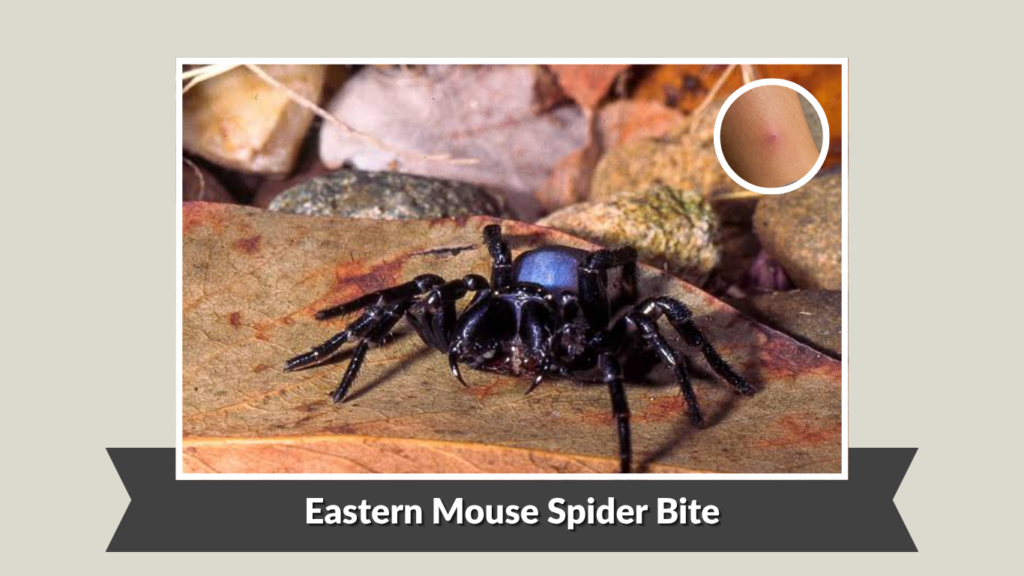
The Eastern mouse spider (Missulena bradleyi) is an Australian burrowing spider with venom containing neurotoxins related to those of funnel-web spiders. Most documented mouse spider bites have caused only local or mild symptoms, but rare severe envenomation has occurred. Because of this potential, suspected bites should receive immediate medical attention.
Bite Identification & Reaction
The spider’s large fangs can produce a painful puncture. Symptoms can remain localized, although neurological effects have occasionally been reported.
Possible reactions include:
- Strong pain at the bite
- Tingling
- Numbness
- Local sweating
- Headache
- Nausea
- Muscle spasms
- Vomiting
- Weakness or altered consciousness in severe cases
A severe historical case involved a young child who developed vomiting and neurological symptoms after an Eastern mouse spider bite.
How Dangerous Is the Bite?
Severe mouse spider envenomation appears to be uncommon. In a clinical series of 40 definite mouse spider bites, only one produced severe neurotoxic envenomation. Nevertheless, the similarity between mouse spider and funnel-web venom means the bite is treated seriously.
What Should You Do After a Bite?
Treat a suspected Eastern mouse spider bite as an emergency. Keep the person lying down and still. Apply a firm pressure-immobilization bandage to a bitten arm or leg and immobilize the limb with a splint. Arrange emergency medical care immediately. Australian first-aid guidance recommends pressure immobilization for mouse spider bites.
What Should You Avoid Doing?
Do not let the person walk unnecessarily. Do not wash the bite site after applying appropriate emergency first aid, and never cut the wound, suck out venom, or use a tourniquet. Avoid attempting to capture the spider with bare hands.
15. Red-Headed Mouse Spider Bite
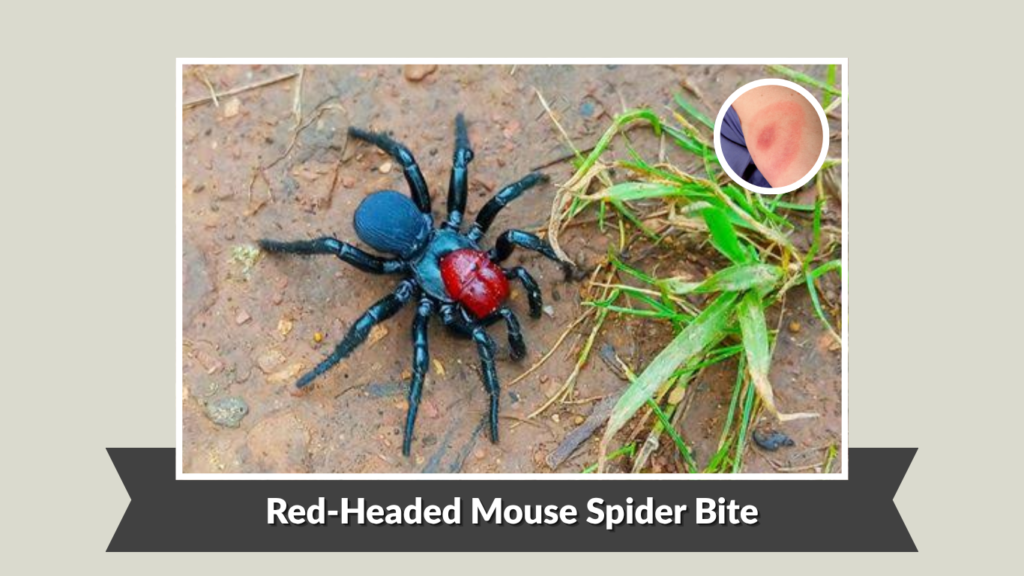
The Red-headed mouse spider (Missulena occatoria) is one of Australia’s most distinctive mouse spiders. Males are recognizable by their reddish head and jaws, while females are darker. Although serious bites are uncommon, mouse spider venom can be medically significant, so suspected bites should be approached with the same caution used for other large Australian mygalomorph spiders.
Bite Identification & Reaction
Large fangs can cause immediate mechanical pain and visible puncture wounds. Many reported mouse spider bites result primarily in local symptoms, though neurological effects are possible.
Possible reactions include:
- Sharp bite-site pain
- Local redness
- Swelling
- Tingling or numbness
- Sweating
- Headache
- Nausea
- Muscle twitching
- Weakness in more serious cases
The severity depends on whether venom was injected and the amount delivered.
How Dangerous Is the Bite?
Mouse spider venom has potentially important neurotoxic properties, but serious human envenomation is rare. Australian Museum information notes that only a small number of mouse spider bites have produced severe effects, while many reported bites cause relatively minor symptoms.
What Should You Do After a Bite?
Call emergency medical services and keep the person still. For a bite on an arm or leg, apply a firm pressure-immobilization bandage and splint the limb. This technique slows movement of venom through the lymphatic system and is specifically recommended in Australian guidance for mouse spider bites.
What Should You Avoid Doing?
Do not allow unnecessary walking or movement. Never cut the bite, suck the wound, or apply a tourniquet. Do not remove the pressure bandage while waiting for medical help unless instructed by healthcare professionals.
16. Brazilian Armed Spider Bite
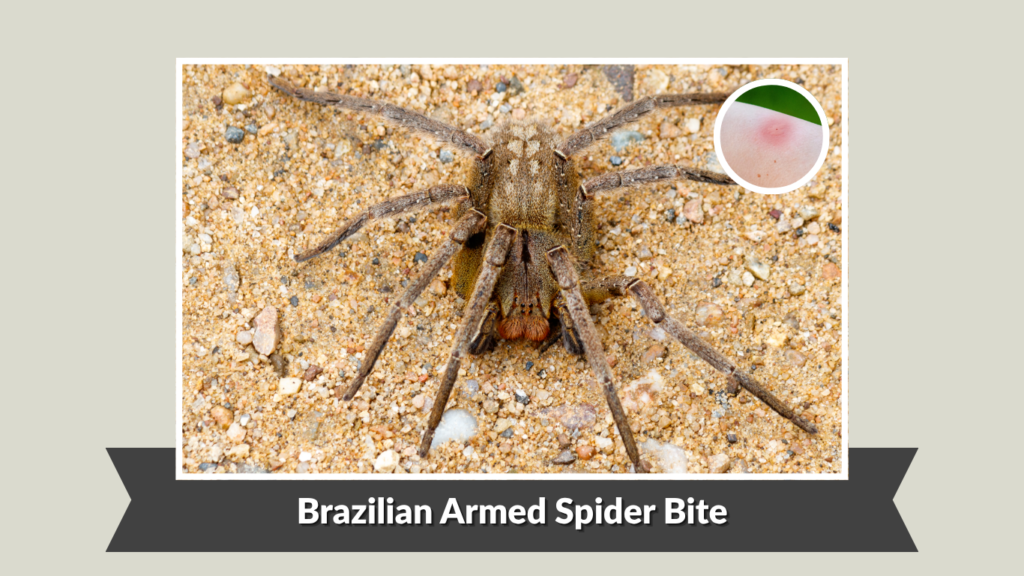
The Brazilian armed spider is a common name associated with Phoneutria spiders, especially Phoneutria nigriventer. It is also widely known as the Brazilian wandering spider. Its venom contains powerful neuroactive toxins, and bites can produce intense local pain. Serious systemic envenomation is uncommon but can become dangerous, particularly in children.
Bite Identification & Reaction
Pain commonly begins soon after the bite and can be intense. Redness and swelling may occur around the fang marks, while significant envenomation can cause symptoms elsewhere in the body.
Possible reactions include:
- Severe local pain
- Redness and swelling
- Heavy sweating
- Nausea
- Vomiting
- Tremors
- Rapid heartbeat
- Increased blood pressure
- Excessive salivation
- Priapism
- Breathing difficulties in severe cases
Systemic manifestations occur much less frequently than local pain.
How Dangerous Is the Bite?
Phoneutria venom affects ion channels and nervous-system signaling. Most cases are mild, but moderate or severe poisoning can produce cardiovascular and neurological effects. Severe confirmed envenomation has been documented, and antivenom is available in Brazil for appropriate cases.
What Should You Do After a Bite?
Seek prompt medical care after a confirmed or strongly suspected Brazilian armed spider bite. Keep the victim calm and limit unnecessary movement. Severe pain, persistent vomiting, breathing problems, major changes in heart rate, extreme sweating, or altered consciousness require urgent emergency treatment.
What Should You Avoid Doing?
Do not cut the bite, suck out venom, burn the wound, or rely on home remedies. Never attempt to handle the spider. If identification is possible, photograph it from a safe distance and allow trained professionals to manage the spider.
