

Mud dauber wasps are solitary, spider-hunting insects known for crafting their nests out of mud. Unlike social wasps, mud daubers live and hunt alone, creating tube-like nests where they store paralyzed spiders as food for their young. Found across the world, these wasps belong mainly to the genera Sceliphron, Trypoxylon, Chalybion, and Pison.
This guide introduces 17 of the most well-known mud dauber species, with clear identification features, nesting habits, and where you’re most likely to find them. Whether you’re curious about that wasp near your window or researching beneficial insects, this list will help you recognize them with confidence.
1. Sceliphron caementarium – Black and Yellow Mud Dauber
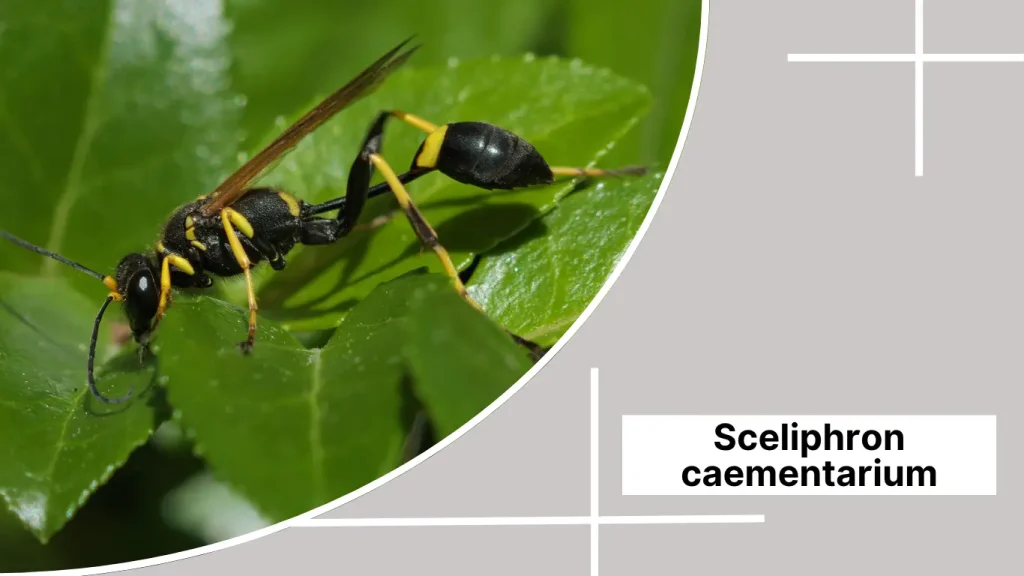
The Sceliphron caementarium, commonly known as the Black and Yellow Mud Dauber, is one of the most recognizable solitary wasps in North America. It’s famous for building pipe-shaped mud nests on walls, under eaves, or in sheds. Despite their fearsome look, they are not aggressive and are beneficial for spider control.
Where It’s Commonly Found
This species is widespread across North America, especially in the United States, Canada, and parts of Mexico. You’ll often spot them in urban, suburban, and rural areas where structures provide good nesting spots.
Behavior and Nesting
Black and Yellow Mud Daubers are solitary wasps that build nests from mud. The female creates long, tubular chambers and stocks them with paralyzed spiders—mainly orb weavers—for her larvae to feed on. Once stocked, she seals the chamber and moves on to the next.
Identification
- Color: Shiny black body with bright yellow markings on legs and abdomen
- Size: ¾ to 1 inch (19–25 mm)
- Waist: Extremely thin “thread-waisted” appearance
- Wings: Dark and slightly smoky
- Nest Style: Long, cylindrical mud tubes grouped together
2. Trypoxylon politum – Organ Pipe Mud Dauber
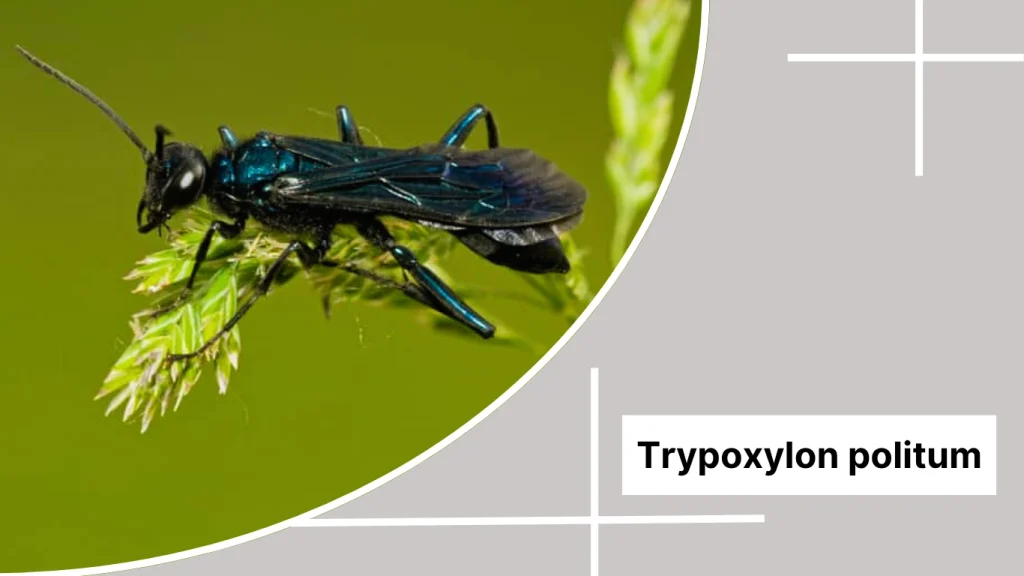
The Trypoxylon politum, also called the Organ Pipe Mud Dauber, is named for the distinctive shape of its nest, which resembles a row of organ pipes. These wasps are excellent spider hunters and play a crucial role in natural pest control.
Where It’s Commonly Found
This species is primarily found in the eastern and southern United States, often nesting under bridges, eaves, barns, and porches.
Behavior and Nesting
Females build long, tube-like mud structures in vertical rows. They paralyze spiders, mainly orb-weavers, and pack them into the chambers for their larvae. Unlike some other mud daubers, they are usually non-aggressive.
Identification
- Color: Shiny black body
- Size: Around ¾ inch (19 mm)
- Body Shape: Slender with a long petiole (narrow waist)
- Nest Style: Rows of cylindrical mud tubes resembling organ pipes
- Wings: Transparent and narrow
3. Chalybion californicum – Blue Mud Dauber
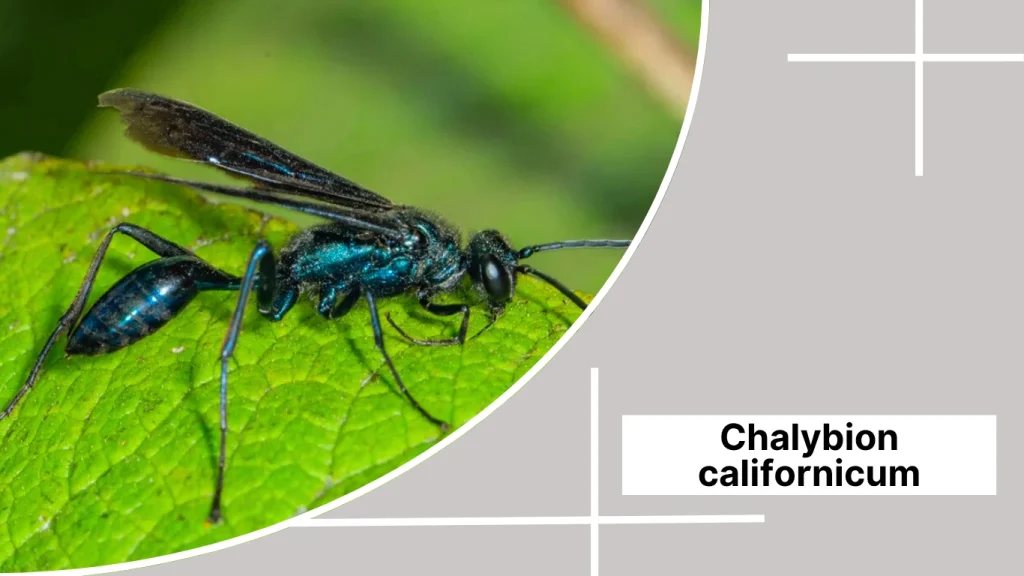
The Chalybion californicum, known as the Blue Mud Dauber, stands out due to its metallic blue sheen. Unlike most mud daubers, it often reuses or invades the nests of other mud daubers, especially Sceliphron species.
Where It’s Commonly Found
It is widespread across North America, particularly in gardens, barns, garages, and other sheltered areas with spider populations.
Behavior and Nesting
This wasp is unusual because it does not build its own nest often. Instead, it cleans out old mud dauber nests and reuses them. It primarily hunts black widow spiders, making it highly beneficial in spider control.
Identification
- Color: Iridescent metallic blue body
- Size: ½ to ¾ inch (13–19 mm)
- Body Shape: Sleek and shiny with a narrow waist
- Wings: Smoky-black and slightly iridescent
- Nest Style: Reuses existing nests or makes occasional new mud chambers
4. Sceliphron curvatum – Asian Mud Dauber

Sceliphron curvatum, commonly called the Asian Mud Dauber, is an invasive wasp species originally from southern Asia. It has spread to Europe and parts of North America, often nesting in man-made structures. It’s closely related to S. caementarium but is more urban-adapted.
Where It’s Commonly Found
Originally native to India, it’s now widespread across Europe, particularly in urban and suburban buildings, attics, and window frames.
Behavior and Nesting
Females create mud nests in crevices and sheltered surfaces. They provision each cell with spiders for their larvae. This species has successfully adapted to human-altered environments.
Identification
- Color: Mostly orange-yellow with black on the thorax and head
- Size: Around ¾ inch (19 mm)
- Waist: Long and thread-like
- Wings: Clear with dark veins
- Nest Style: Small tubular mud nests in cracks or corners
5. Trypoxylon figulus

Trypoxylon figulus is a slim, solitary wasp species found commonly across Europe and parts of Asia. It often nests in pre-existing holes like hollow plant stems, beetle tunnels, or holes in walls, sealing them with mud.
Where It’s Commonly Found
It is prevalent throughout Europe, particularly in gardens, wooded areas, and parks, where nesting holes are available.
Behavior and Nesting
Instead of constructing elaborate nests, this wasp fills existing narrow cavities with spider prey and seals them using mud. It prefers dry, sunny areas with soft mud and plenty of spiders nearby.
Identification
- Color: Black with a dull sheen
- Size: ⅜ to ½ inch (10–13 mm)
- Body Shape: Long and slender
- Wings: Transparent and folded flat over the back
- Nest Style: Seals off natural or artificial cavities with mud partitions
6. Sceliphron spirifex
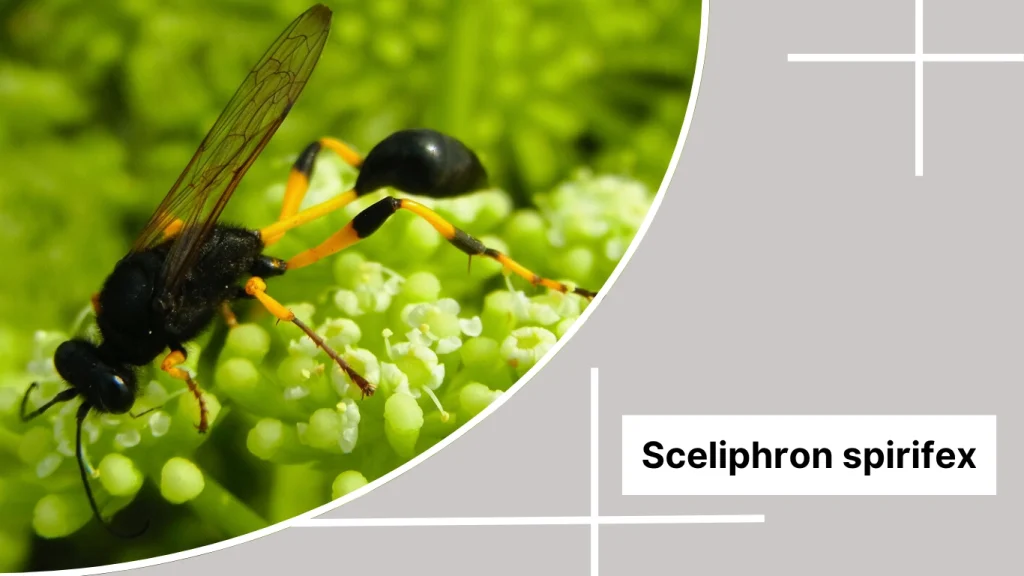
Sceliphron spirifex is a large mud dauber wasp found across Africa, the Middle East, and southern Europe. It is known for building mud nests on rocks, buildings, and even vehicles, especially in dry, warm climates.
Where It’s Commonly Found
This species thrives in deserts, savannas, and arid regions and is often seen in outdoor human structures and abandoned buildings.
Behavior and Nesting
Females construct smooth mud nests shaped like small pots or tubes. They stock them with spiders and seal each chamber after laying an egg. The species is solitary and non-aggressive.
Identification
- Color: Black body with yellow markings on legs and abdomen
- Size: Around 1 inch (25 mm)
- Waist: Very thin, thread-like waist
- Wings: Transparent or light brown
- Nest Style: Smooth mud pots or tubes, often built in clusters
7. Trypoxylon lactitarse

Trypoxylon lactitarse is a black mud dauber wasp that specializes in hunting spiders and sealing them in mud-lined tubular nests. It is commonly found in the United States, Central America, and parts of South America.
Where It’s Commonly Found
You’ll find this species in woodlands, gardens, and around homes—especially where suitable nesting crevices exist, such as window frames or wood holes.
Behavior and Nesting
This species builds its nests using existing holes or small tubes. The female packs the chamber with several paralyzed spiders, lays a single egg, and then seals it with mud.
Identification
- Color: Jet black body
- Size: About ½ to ⅝ inch (13–16 mm)
- Body Shape: Slender and elongated
- Wings: Clear with visible dark veins
- Nest Style: Uses pre-existing holes; nests are mud-sealed and linear
8. Sceliphron deforme
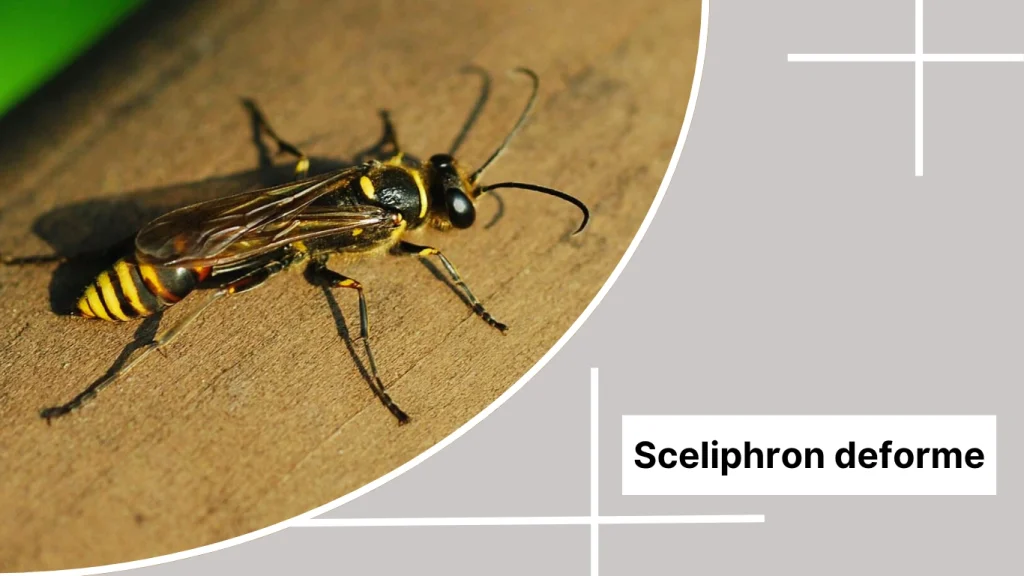
Sceliphron deforme is a lesser-known but widespread mud dauber wasp found mainly in East Asia, particularly in China, Japan, and Korea. Like other Sceliphron species, it is a solitary wasp that builds mud nests to raise its young.
Where It’s Commonly Found
It inhabits forested areas, wooden buildings, and cliffs in temperate and subtropical zones across eastern Asia.
Behavior and Nesting
The female constructs elongated mud nests on vertical surfaces such as tree trunks, stone walls, or house siding. It provisions the chambers with spiders and seals them shut after laying an egg.
Identification
- Color: Black with yellow markings on the thorax and legs
- Size: Around ¾ inch (19 mm)
- Waist: Long and narrow
- Wings: Slightly smoky and narrow
- Nest Style: Linear mud cells, often stacked in clusters
9. Chalybion bengalense

Chalybion bengalense is a striking metallic-blue wasp found across South Asia, especially in India, Bangladesh, and Sri Lanka. Like other Chalybion species, it is a known nest invader, often reusing and modifying old mud nests.
Where It’s Commonly Found
Common in tropical and subtropical regions, especially near human dwellings, gardens, and old mud dauber nests.
Behavior and Nesting
Instead of building new nests, the female often cleans out old mud dauber nests and restocks them with fresh spider prey. It hunts a variety of spiders and is non-aggressive toward humans.
Identification
- Color: Metallic blue with a shiny sheen
- Size: ½ to ¾ inch (13–19 mm)
- Body Shape: Sleek and narrow with a wasp waist
- Wings: Dark and glossy
- Nest Style: Reuses and refurbishes old mud nests built by other species
10. Trypoxylon attenuatum
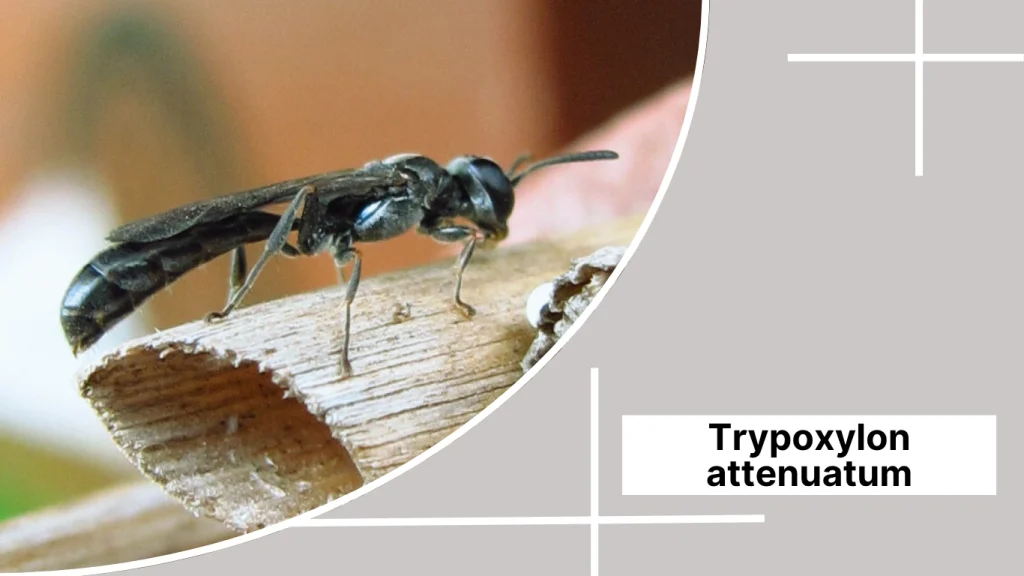
Trypoxylon attenuatum is a slim, black mud dauber wasp commonly found across North America. It is solitary and nests inside small holes in wood or plant stems, sealing each cell with mud partitions.
Where It’s Commonly Found
This species is common in gardens, forests, and suburban areas, especially where wooden structures or plant stems provide nesting cavities.
Behavior and Nesting
Females use pre-existing holes, often in wood or hollow reeds. They paralyze spiders, place them inside the cavity, and then partition the cell using mud. They often build several cells in a row inside the same tunnel.
Identification
- Color: Solid black
- Size: ⅜ to ½ inch (10–13 mm)
- Body Shape: Very slender with a long, narrow abdomen
- Wings: Clear and delicate
- Nest Style: Linear mud-sealed chambers inside holes in wood or stems
11. Sceliphron laetum
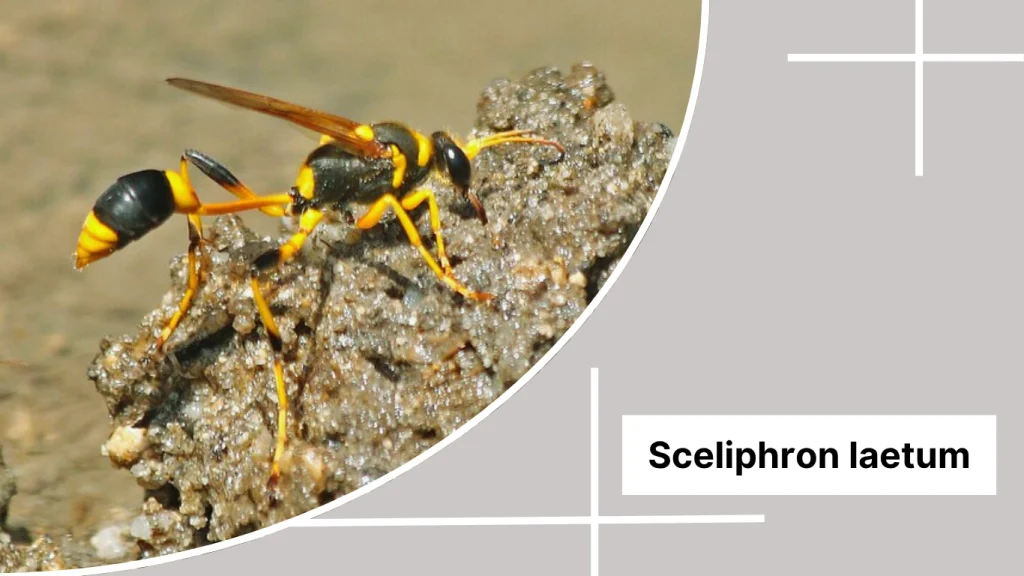
Sceliphron laetum is a large and colorful mud dauber wasp native to South America, especially Brazil and surrounding regions. It resembles other Sceliphron species but is known for its slightly brighter yellow markings and strong nest-building instincts.
Where It’s Commonly Found
Found in tropical forests, open countryside, and near human settlements, particularly in South and Central America.
Behavior and Nesting
This species builds mud nests on walls, rocks, and under eaves, and like others in its genus, it provisions them with spiders. The nests are carefully sculpted and resemble mud pipes or barrels.
Identification
- Color: Black with bold yellow markings on the thorax and legs
- Size: Up to 1 inch (25 mm)
- Waist: Long and narrow
- Wings: Slightly brownish transparent
- Nest Style: Barrel-shaped or tubular mud nests attached to surfaces
12. Chalybion zimmermanni

Chalybion zimmermanni is a metallic-blue mud dauber wasp found primarily in Central and South America. It is visually similar to Chalybion californicum but differs in habitat range and nesting behavior.
Where It’s Commonly Found
This species is native to tropical and subtropical regions, often seen near old mud nests, gardens, and shaded buildings.
Behavior and Nesting
Rather than building its own nests, it typically reuses old Sceliphron nests, cleaning them out and refilling them with freshly captured spiders. It is an efficient predator and an important controller of spider populations.
Identification
- Color: Deep metallic blue body
- Size: Around ½ to ¾ inch (13–19 mm)
- Body Shape: Sleek with a narrow waist
- Wings: Dark, iridescent
- Nest Style: Reused and modified mud nests
13. Trypoxylon texense

Trypoxylon texense is a small, spider-hunting wasp found in the southern United States, especially in Texas and surrounding regions. It builds its nests in narrow cavities and uses mud to seal them.
Where It’s Commonly Found
It prefers dry, warm environments such as wooden fences, window frames, or natural crevices in rocks or logs.
Behavior and Nesting
The female builds a series of mud-lined cells in a tunnel or crevice, each packed with paralyzed spiders. It is a fast and efficient builder and often shares suitable nesting sites with other solitary wasps.
Identification
- Color: Matte black
- Size: ⅜ to ½ inch (10–13 mm)
- Body Shape: Long, slim with a slightly curved abdomen
- Wings: Clear with dark veins
- Nest Style: Multiple mud cells inside pre-existing narrow spaces
14. Pison spinolae
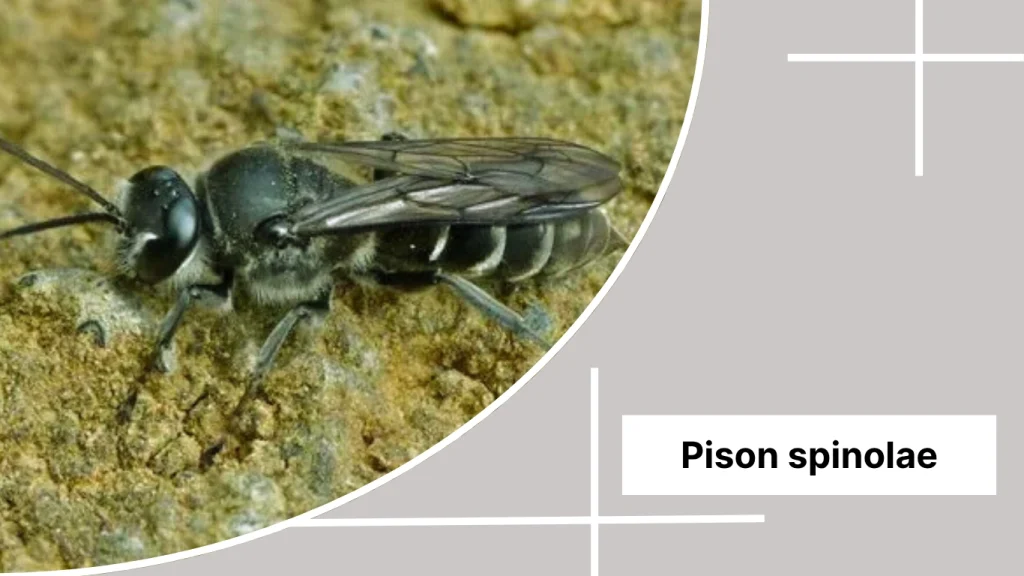
Pison spinolae is a solitary mud-nesting wasp native to Australia and New Zealand. Though often confused with true mud daubers, it belongs to the genus Pison and exhibits very similar nesting behavior.
Where It’s Commonly Found
Commonly seen in urban areas, sheds, and attics, especially where there are cracks, holes, or corners to build nests.
Behavior and Nesting
Females build small mud nests in hidden locations such as behind curtains, furniture, or wall cavities. They paralyze spiders to feed their larvae and often create a few cells per nest.
Identification
- Color: Black, sometimes with a slight metallic tint
- Size: About ½ inch (13 mm)
- Body Shape: Compact with a slightly widened abdomen
- Wings: Transparent with visible venation
- Nest Style: Small, round or irregular mud nests in concealed indoor spaces
15. Sceliphron fistularium
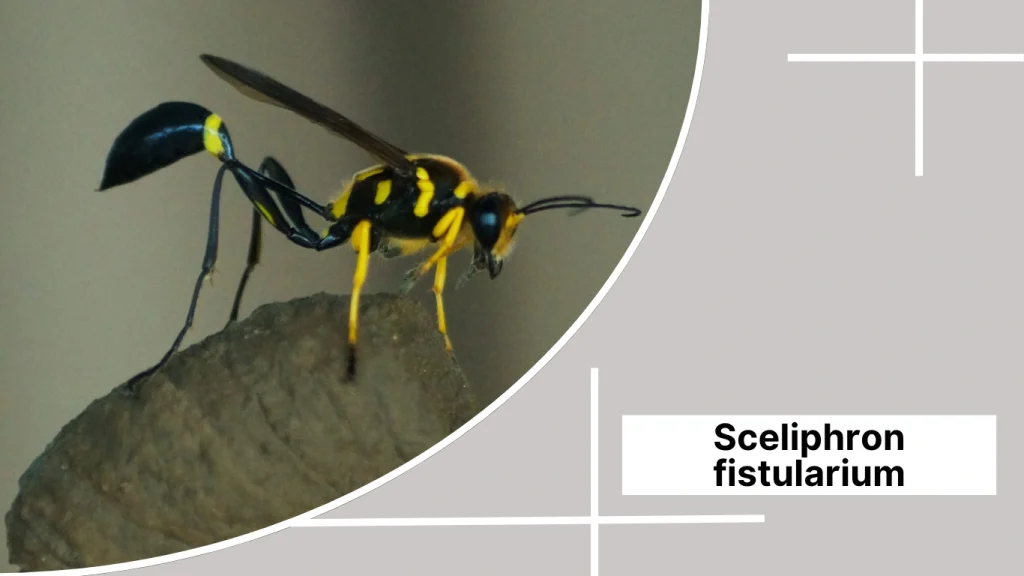
Sceliphron fistularium is a large mud dauber wasp known for building long, pipe-like mud nests. It is found primarily in Central America, the Caribbean, and parts of northern South America.
Where It’s Commonly Found
You’ll find this species near cliffs, house walls, and under large leaves in tropical or subtropical regions.
Behavior and Nesting
It constructs linear mud tubes, often several inches long, and provisions them with spiders. The nests may be placed singly or grouped in small clusters.
Identification
- Color: Black with yellow markings on legs and abdomen
- Size: Around 1 inch (25 mm)
- Waist: Very narrow and elongated
- Wings: Slightly brownish and translucent
- Nest Style: Long cylindrical mud tubes, often grouped together
16. Sceliphron madraspatanum
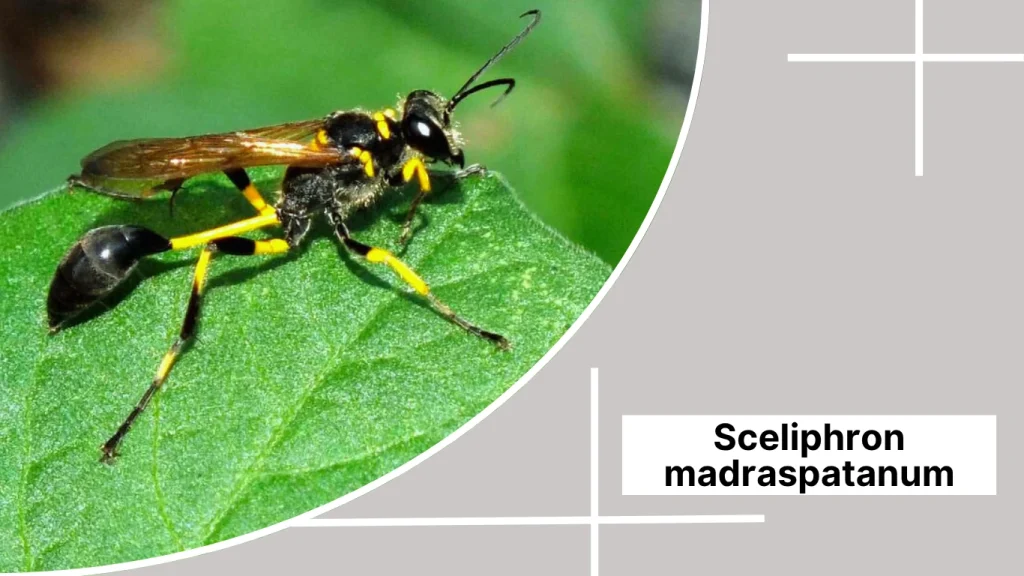
Sceliphron madraspatanum is a mud dauber wasp native to India and Sri Lanka, often found near villages, homes, and temples where mud and prey are abundant. It plays a useful role in reducing spider populations.
Where It’s Commonly Found
This species is widespread in South India, particularly in humid or semi-arid regions, often nesting on walls, rocks, and tree trunks.
Behavior and Nesting
The female builds elongated mud nests, typically made of several smooth tubes placed side by side. These nests are stocked with spiders and sealed to allow the larvae to develop in safety.
Identification
- Color: Black body with yellow bands on the legs and abdomen
- Size: About ¾ inch (19 mm)
- Waist: Thread-waisted and elongated
- Wings: Transparent to slightly brownish
- Nest Style: Neat rows of tubular mud cells on vertical surfaces
17. Trypoxylon tridentatum
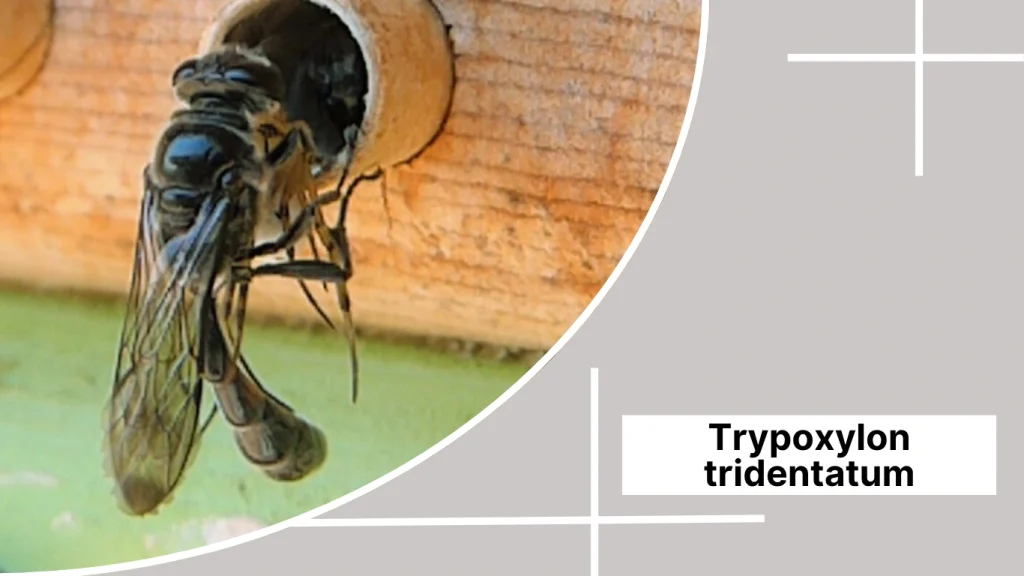
Trypoxylon tridentatum is a solitary wasp widely distributed across Europe and western Asia, often using wood-boring beetle holes or hollow stems for nesting. It belongs to the group of spider-hunting mud daubers.
Where It’s Commonly Found
Found in gardens, orchards, and open woodlands, particularly where dead wood or reeds are available for nesting.
Behavior and Nesting
Rather than building exposed mud nests, this wasp uses pre-existing cavities and seals each chamber with mud. It prefers jumping spiders and small web-builders as prey.
Identification
- Color: Black with a glossy finish
- Size: ⅜ to ½ inch (10–13 mm)
- Body Shape: Slim and slightly curved abdomen
- Wings: Clear and narrow
- Nest Style: Linear mud-sealed cells inside narrow tunnels or stems
