

Earwigs are elongated, nocturnal insects best known for the pair of forceps-like pincers at the end of their abdomen. Although they often have a bad reputation, most earwig species are harmless and play useful roles in nature by feeding on decaying matter and small insect pests. Earwigs live in a wide range of environments, from gardens and forests to deserts, beaches, and even caves. In this guide, we explore 14 different types of earwig insects, highlighting their names, habitats, and basic identification features.
1. Common Earwig (Forficula auricularia)

The common earwig is one of the most well-known earwig species and is widely distributed across Europe, Asia, and North America. It is easily recognized by the pair of curved forceps (pincers) at the end of its abdomen. Common earwigs are mostly nocturnal insects that hide during the day in dark, moist places such as under stones, logs, leaf litter, and garden debris. They are omnivorous, feeding on plant matter, decaying material, and small insects.
Identification
The common earwig usually measures about 12–16 mm in length. Its body is long and flattened, with a reddish-brown head and thorax and a darker brown abdomen. It has long, thread-like antennae and six pale legs. The most distinctive feature is the pair of forceps at the tail end, which are more strongly curved in males and straighter in females.
Larvae
Earwigs do not have true larvae. Instead, young earwigs hatch from eggs as nymphs that resemble small, pale versions of the adults. They gradually darken and grow larger through several molts. Uniquely among insects, female earwigs care for their eggs and young nymphs, protecting and cleaning them.
Habitat
Common earwigs prefer cool, damp environments. Outdoors, they live under stones, bark, mulch, compost, and garden plants. Indoors, they may enter basements, bathrooms, kitchens, and wall cracks, especially during hot or dry weather when they seek moisture and shelter.
Bite
Common earwigs do not normally bite humans. They can pinch the skin with their forceps if handled, which may cause mild discomfort but rarely breaks the skin. They are not venomous and are generally harmless to people.
2. European Earwig (Forficula auricularia)

The European earwig is the same species often referred to as the common earwig, but the name “European earwig” highlights its origin before it spread to other parts of the world. It is now widespread across North America, Asia, and other temperate regions. Like other earwigs, it is nocturnal and prefers damp, hidden environments. It feeds on decaying plant matter, soft fruits, seedlings, and small insects, making it both a minor garden pest and a beneficial predator.
Identification
European earwigs are about 12–16 mm long with elongated, flattened bodies. They are reddish-brown to dark brown in color, with pale brown legs and long antennae. The most distinctive feature is the pair of forceps at the end of the abdomen, which are curved in males and straighter in females.
Larvae
They do not have true larvae. The young hatch as nymphs that look like small, pale adults. Nymphs pass through several molts before becoming fully grown. Female European earwigs show unusual parental care, guarding eggs and early nymphs.
Habitat
They are commonly found in gardens, under stones, logs, flowerpots, and leaf litter. Indoors, they may hide in basements, wall voids, and damp rooms. They prefer cool, moist environments and are active mainly at night.
Bite
European earwigs rarely bite. They may use their forceps defensively if picked up, causing a mild pinch. They are not poisonous and do not pose any serious threat to humans.
3. Ring-Legged Earwig (Euborellia annulipes)
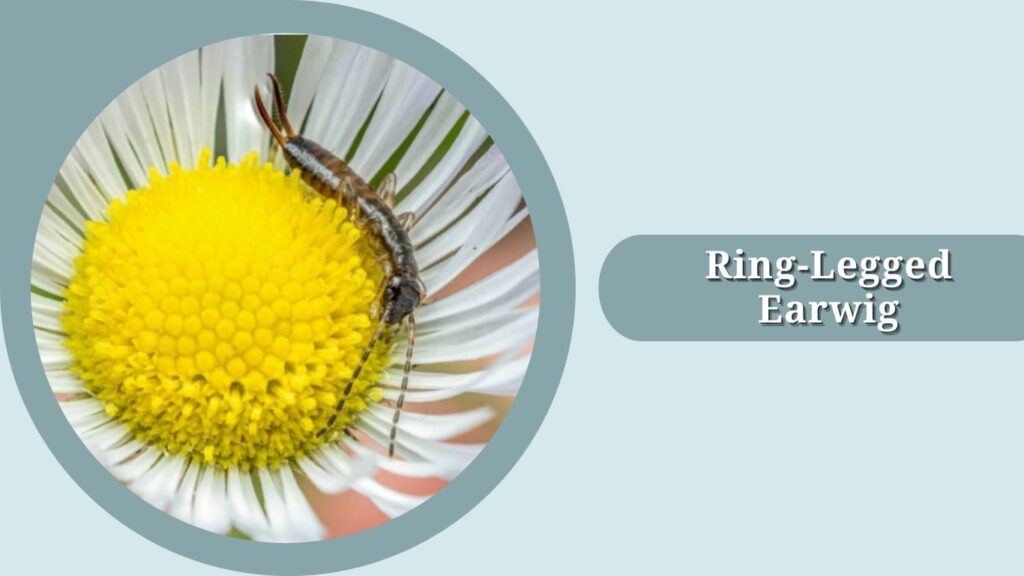
The ring-legged earwig is a darker, wingless earwig species often found in tropical and subtropical regions. It is known for the pale bands on its legs, which give it its common name. This species is active at night and feeds on decaying organic matter, plant material, and small insects.
Identification
Ring-legged earwigs are about 10–15 mm long and usually dark brown to black. They have noticeably pale or ringed markings on their legs. Their bodies are flattened, with long antennae and relatively straight forceps compared to the European earwig.
Larvae
The young hatch as pale nymphs and gradually darken as they grow. They molt several times before reaching adulthood. Females often remain with their eggs and early nymphs, offering protection.
Habitat
They are commonly found in gardens, greenhouses, compost piles, under stones, and in leaf litter. Indoors, they may occur in damp storage areas or near ground level.
Bite
Ring-legged earwigs do not bite humans. They may pinch lightly with their forceps if threatened, but this is harmless and mainly defensive.
4. Maritime Earwig (Anisolabis maritima)

The maritime earwig is a coastal species commonly found along beaches, shorelines, and salt marshes. It is well adapted to life near the sea and is often seen under seaweed, driftwood, and stones above the high-tide line. Unlike many garden earwigs, it is mainly a predator, feeding on small insects and other invertebrates found in coastal debris.
Identification
Maritime earwigs are medium-sized, usually 12–18 mm long, and dark brown to almost black. They are wingless with a flattened body, long antennae, and strong, slightly curved forceps. Their shiny, tough body helps protect them in harsh coastal environments.
Larvae
Young maritime earwigs hatch as pale nymphs resembling miniature adults. They grow through several molts, gradually darkening in color. Females guard their eggs and early nymphs, keeping them clean and protected.
Habitat
They are typically found under rocks, seaweed, driftwood, and debris along beaches and coastal areas. Occasionally, they may enter seaside buildings, hiding in damp cracks and crevices.
Bite
Maritime earwigs do not bite humans. They may pinch with their forceps if handled, but the pinch is mild and not dangerous.
5. Tropical Earwig (Chelisoches morio)
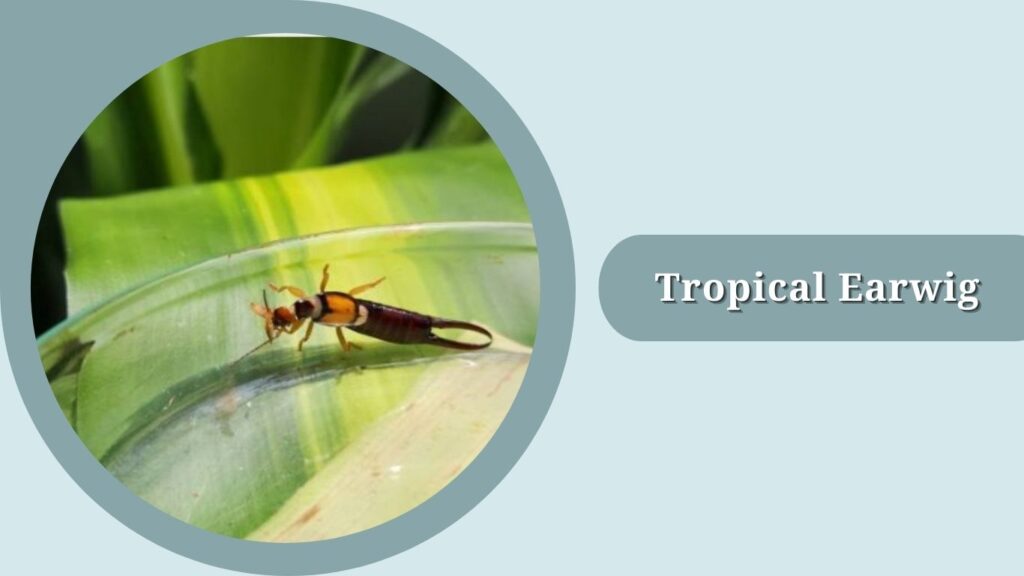
The tropical earwig, also known as the black earwig, is widely distributed in tropical and subtropical regions. It is often found in gardens, plantations, and greenhouses, where it feeds on insects and plant matter. This species is sometimes considered beneficial because it preys on agricultural pests.
Identification
Tropical earwigs are usually 15–20 mm long and shiny black or very dark brown. They have a flattened body, long antennae, and well-developed forceps, which are more curved in males.
Larvae
The young hatch as pale nymphs and pass through several molts before adulthood. Female tropical earwigs show parental care, remaining with the eggs and early-stage nymphs.
Habitat
They live in warm, humid environments such as tropical gardens, under bark, leaf litter, rotting logs, and inside greenhouses. Indoors, they may hide in damp, sheltered areas.
Bite
Tropical earwigs do not bite humans. They can pinch if threatened, but this causes only minor discomfort and no lasting harm.
6. Giant Earwig (Labidura herculeana)

The giant earwig is one of the largest known earwig species and was historically found on isolated islands. It is notable for its impressive size and powerful-looking forceps. Although now considered extremely rare or possibly extinct, it remains one of the most famous earwigs in scientific records.
Identification
Giant earwigs could reach up to 8 cm in length, making them much larger than common earwigs. They had elongated, flattened bodies, long antennae, and very large, strongly curved forceps. Their coloration ranged from reddish-brown to dark brown.
Larvae
Like other earwigs, giant earwigs did not have true larvae. The young hatched as nymphs resembling small adults and grew through multiple molts. Females were believed to guard their eggs and young.
Habitat
They were originally found in rocky, humid habitats, hiding in crevices and burrows. Their limited island range made them vulnerable to habitat change.
Bite
Giant earwigs were not known to bite humans. They may have been capable of delivering a noticeable pinch with their large forceps if handled, but they were not venomous.
7. Striped Earwig (Labidura riparia)
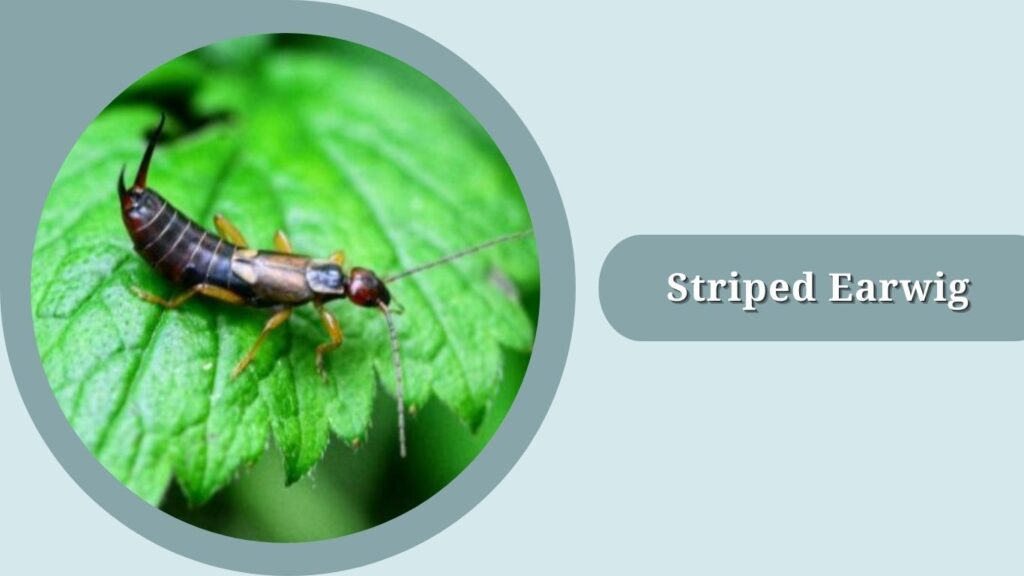
The striped earwig is a widespread species often found in sandy or riverbank environments. It is larger than the common earwig and is an active predator of small insects and larvae.
Identification
Striped earwigs are usually 20–26 mm long with a long, flattened body. They are light brown to tan with darker stripes along the body. They have long antennae and prominent, slightly curved forceps.
Larvae
Young striped earwigs hatch as pale nymphs and grow through several molts before adulthood. They gradually develop stronger coloration and more defined forceps.
Habitat
They are commonly found along riverbanks, sandy soils, gardens, and under debris such as logs and stones. They prefer warm, open habitats.
Bite
Striped earwigs do not bite humans. They may pinch defensively, but the pinch is mild and not medically significant.
8. Spiny Earwig (Doru taeniatum)
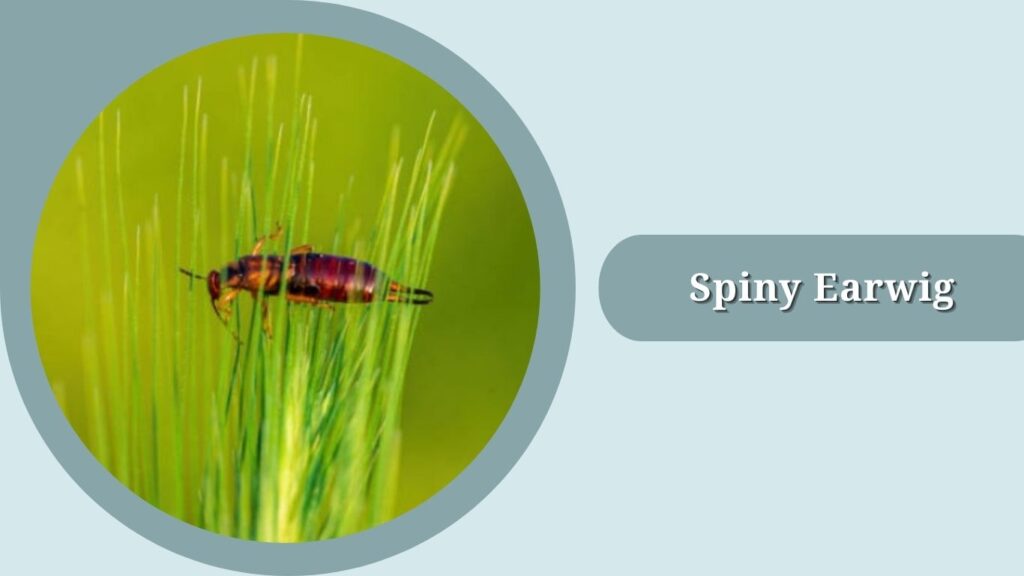
The spiny earwig is a slender earwig species often associated with grasses and agricultural fields. It is especially common in cornfields, where it feeds on both plant material and small insect pests. Because of this mixed diet, it is sometimes considered beneficial in crop environments.
Identification
Spiny earwigs are about 10–15 mm long with narrow, flattened bodies. They are light brown to dark brown and have relatively straight, slender forceps. Fine spines and hairs can be seen along the abdomen, giving rise to the common name.
Larvae
Young spiny earwigs hatch as pale nymphs that resemble tiny adults. They grow through several molts, slowly developing adult coloration and body proportions. Females often guard their eggs and early nymphs.
Habitat
They are commonly found in grassy fields, corn crops, gardens, and under plant debris. They hide in leaf sheaths, soil cracks, and under mulch during the day.
Bite
Spiny earwigs do not bite humans. They may pinch lightly if handled, but this is harmless and mainly a defensive response.
9. Asian Earwig (Euborellia femoralis)
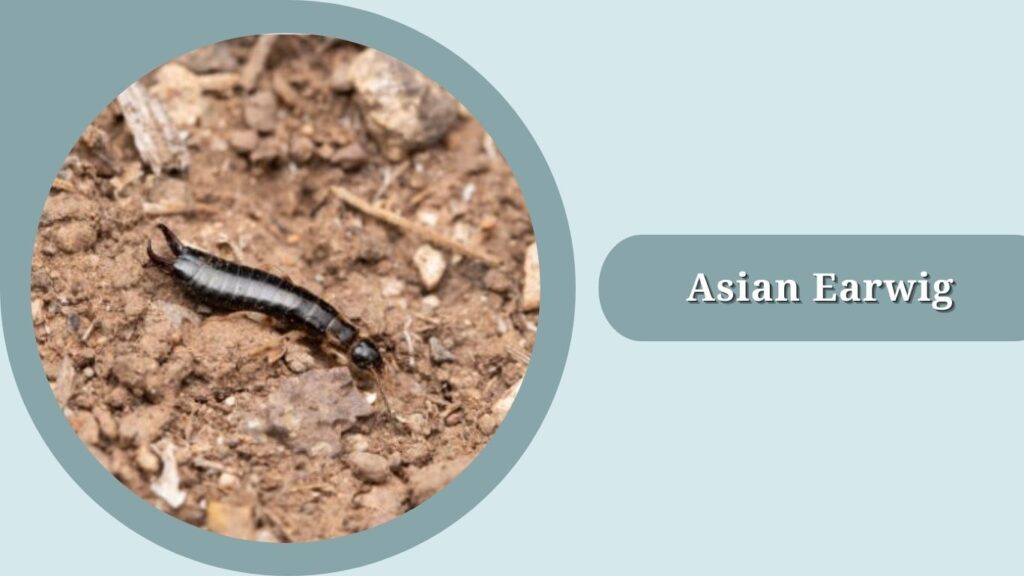
The Asian earwig is a dark, wingless species native to Asia but now found in many warm regions. It is nocturnal and hides during the day in soil, leaf litter, and garden debris. It feeds on decaying organic matter, plants, and small insects.
Identification
Asian earwigs are usually 10–14 mm long and dark brown to black. They have a smooth, shiny body, long antennae, and relatively short, straight forceps.
Larvae
The young hatch as pale nymphs and gradually darken through several molts. As with many earwigs, the female guards the eggs and early nymph stages.
Habitat
They are common in gardens, greenhouses, compost piles, under stones, and in moist soil. Indoors, they may appear in damp ground-level rooms.
Bite
Asian earwigs do not bite humans. They can pinch slightly with their forceps if threatened, but they are not dangerous.
10. Desert Earwig (Labidura truncata)
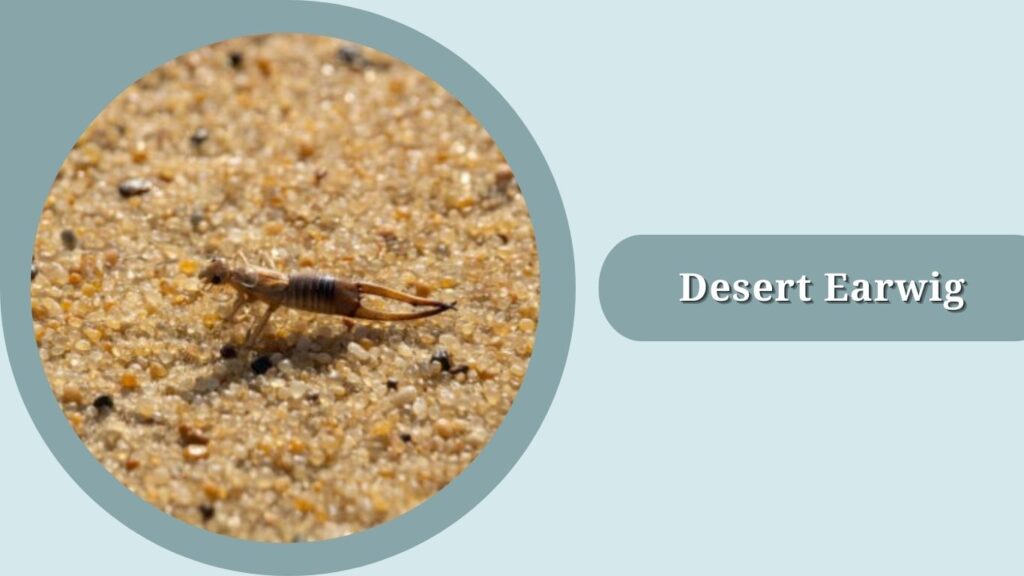
The desert earwig is adapted to hot, dry environments and is commonly found in arid and semi-arid regions. It is mostly nocturnal, spending the day hidden in burrows, under stones, or beneath debris to avoid extreme heat. This species is a predator and scavenger, feeding on small insects and organic matter.
Identification
Desert earwigs are medium to large in size, usually 18–25 mm long. They are light brown to sandy in color, with an elongated, flattened body and strong, slightly curved forceps.
Larvae
Young desert earwigs hatch as pale nymphs that resemble miniature adults. They grow through several molts, gradually developing darker coloration and larger forceps.
Habitat
They live in deserts, dry grasslands, and sandy soils, often hiding in cracks, burrows, or under rocks. They may occasionally enter buildings in very dry regions.
Bite
Desert earwigs do not bite humans. They may pinch if handled, but the pinch is mild and harmless.
11. Black Earwig (Chelisoches morio)
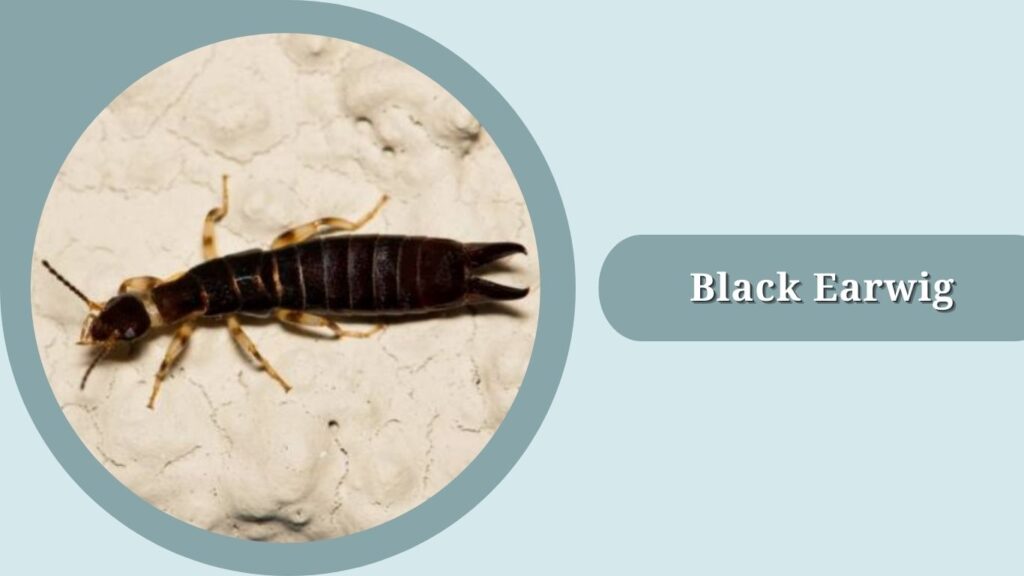
The black earwig is a shiny, dark-colored species common in tropical and subtropical regions. It is often found in gardens, plantations, and under bark. It is considered beneficial because it preys on agricultural pests.
Identification
Black earwigs are usually 15–20 mm long and glossy black. They have long antennae, a flattened body, and strong forceps that are curved in males.
Larvae
Young black earwigs hatch as pale nymphs and pass through several molts before adulthood. Females guard their eggs and early nymphs.
Habitat
They live in warm, humid environments such as tropical gardens, under logs, leaf litter, and inside greenhouses.
Bite
Black earwigs do not bite humans. They may pinch defensively, but they are not venomous and pose no serious risk.
12. Shore Earwig (Anisolabis maritima)
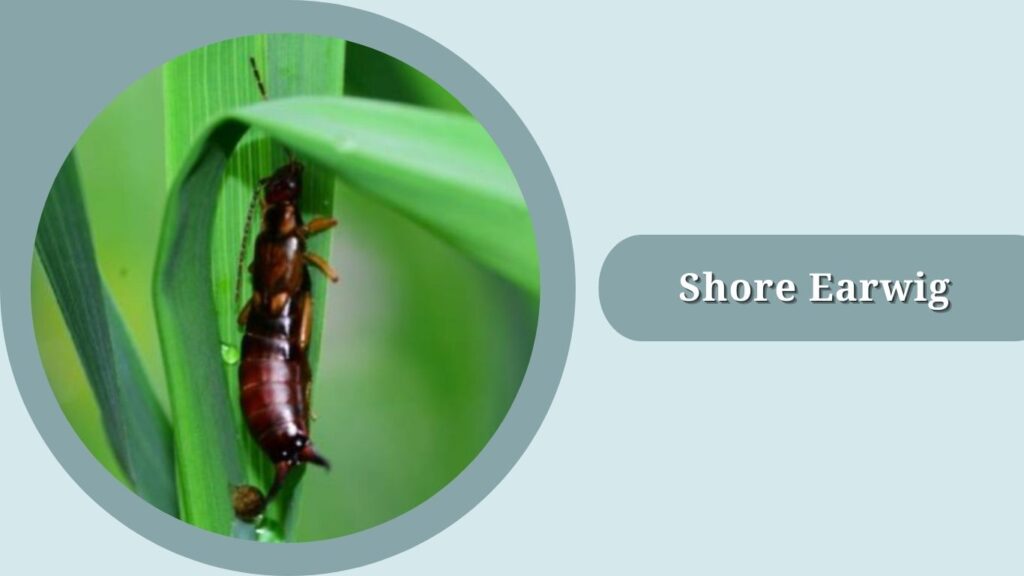
The shore earwig is a coastal-dwelling species commonly found along beaches and tidal zones. It is well adapted to salty, windy environments and usually hides beneath seaweed, stones, and driftwood. This earwig is mainly predatory, feeding on small insects and other invertebrates found among coastal debris.
Identification
Shore earwigs are medium-sized, about 12–18 mm long, with a dark brown to black, flattened body. They are wingless and have strong legs and forceps adapted for crawling through sand and debris.
Larvae
Young shore earwigs hatch as pale nymphs that resemble small adults. They grow through several molts before reaching maturity. Females guard their eggs and early nymphs.
Habitat
They are typically found along seashores, under rocks, seaweed, and driftwood. They may sometimes enter coastal buildings seeking shelter.
Bite
Shore earwigs do not bite humans. They can pinch lightly if handled, but this is harmless.
13. Little Earwig (Labia minor)
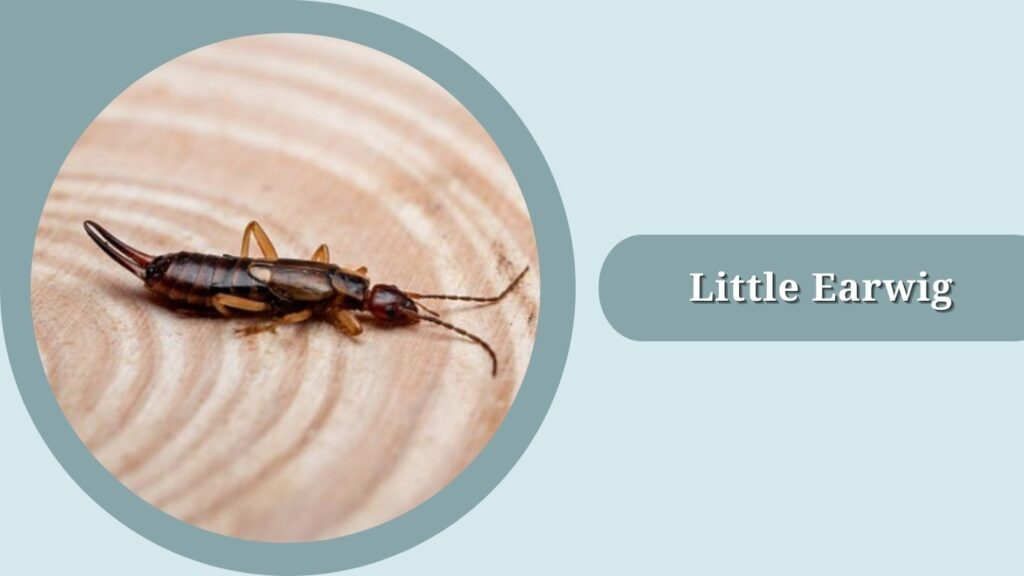
The little earwig is a small, slender species often found in grassy areas and gardens. It is capable of flight, unlike many other earwigs, and is attracted to lights at night. It feeds mainly on small insects and decaying plant matter.
Identification
Little earwigs are about 4–7 mm long, making them much smaller than common earwigs. They are light brown with delicate wings folded beneath short forewings and small, fine forceps.
Larvae
Young little earwigs hatch as tiny, pale nymphs. They grow through several molts, gradually developing wings and adult features.
Habitat
They are common in meadows, fields, gardens, and under plant debris. They may enter houses attracted to lights.
Bite
Little earwigs do not bite humans. Their forceps are very small and rarely even pinch the skin.
14. Cave Earwig (Arixenia esau)
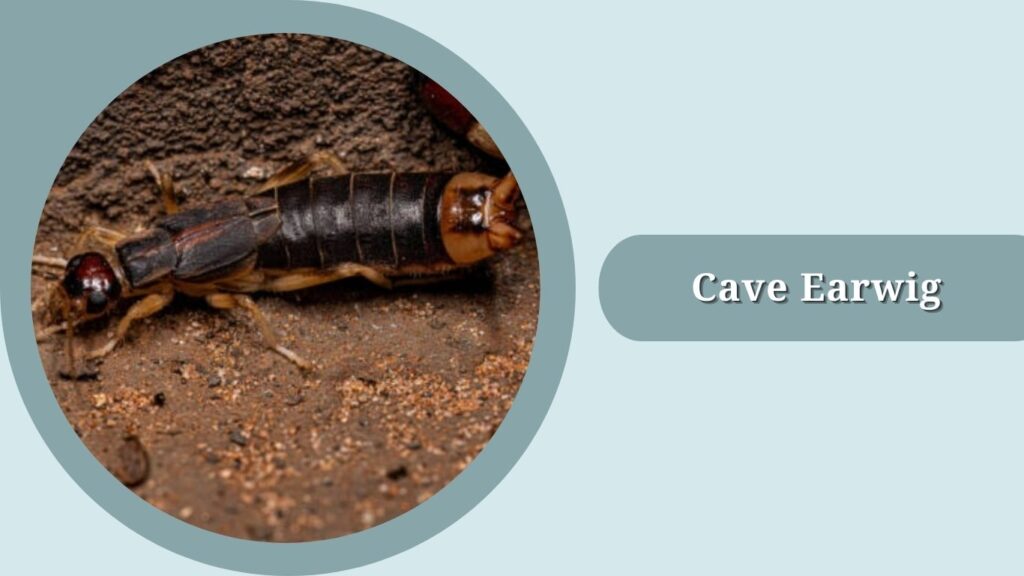
The cave earwig is a highly specialized and unusual earwig species adapted to dark, humid cave environments. Unlike most earwigs, it has a soft, pale body and reduced eyes, reflecting its life in permanent darkness. Some cave earwigs are also known for living in close association with bats, feeding on organic debris, fungi, and materials found in caves.
Identification
Cave earwigs have a pale yellowish to whitish body, soft texture, and elongated form. They usually lack strong pigmentation and may have reduced or absent eyes. Their forceps are present but smaller and less hardened than those of common earwigs.
Larvae
Cave earwigs give birth to live young or produce eggs that hatch quickly, depending on species. The young resemble tiny, pale adults and grow slowly, molting several times before maturity.
Habitat
They are found in caves, bat roosts, and deep underground environments with high humidity. They hide in crevices, guano deposits, and rocky surfaces.
Bite
Cave earwigs do not bite humans. They are harmless and rarely encountered, posing no threat to people.
