

Carpenter bees are a diverse group with over 500 species worldwide, but only a handful are commonly seen by people. These bees range from large, shiny wood-nesting species to tiny, metallic ones that nest in plant stems. The following list highlights eight of the most commonly encountered carpenter bees, each with unique traits, habitats, and behaviors.
1. Eastern Carpenter Bee

The Eastern carpenter bee is a large, shiny black bee that often nests in untreated wood around homes, fences, and decks. It looks a bit like a bumblebee but has a smooth, hairless abdomen. These bees are important pollinators, even though they sometimes cause minor damage to wood.
Identification
- Large, robust bee about the size of a bumblebee
- Shiny, mostly hairless black abdomen (not fuzzy like bumblebees)
- Thorax covered with yellow or golden hairs
- Males often have a pale or yellow patch on the face
- Often seen hovering around wooden structures in warm weather
Size and Appearance
Eastern carpenter bees are typically 1.2–2.5 cm long, making them one of the larger bees you are likely to see in gardens. Their bodies are sturdy and strong, built for powerful flight. The contrast between the fuzzy thorax and smooth, shiny abdomen is one of the easiest ways to recognize them at a glance.
Range and Habitat
This species is mainly found in the eastern and central parts of North America, in both rural and urban areas. They prefer places where there is plenty of exposed, untreated or weathered wood, such as decks, sheds, fence posts, and wooden railings. You can also find them around gardens and flowering plants where they search for nectar and pollen.
Behavior and Nesting
Eastern carpenter bees are mostly solitary, with each female creating her own tunnel in wood to lay eggs. They do not eat the wood; they drill into it to form nesting galleries. These bees are usually not aggressive and will only sting if handled or seriously threatened. Males may hover near people and seem bold, but they cannot sting and are just guarding their territory.
2. California Carpenter Bee
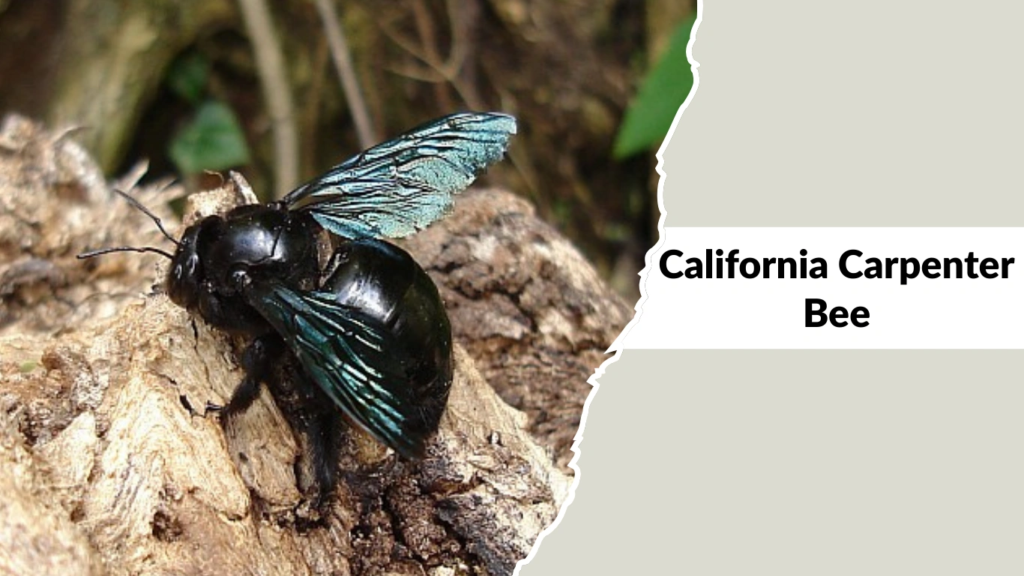
The California carpenter bee is a large, metallic-colored bee commonly found in the western United States. It is known for its impressive size and shiny appearance, often displaying deep blue, green, or purple tones. This species prefers dry, sunny regions and is frequently seen visiting flowers or boring into soft wood to create nests.
Identification
- Very large bee with a metallic blue, green, or purple sheen
- Smooth, shiny abdomen with little to no hair
- Wings often appear dark or slightly iridescent
- Females are typically darker; males may appear more golden or bronze
- Often found around dead trees, wooden beams, or garden structures
Size and Appearance
California carpenter bees are among the largest bees in North America, often reaching 2.5–3 cm in length. Their metallic coloring makes them stand out compared to other carpenter bee species. The wings beat powerfully and can make a noticeable buzzing sound when they hover close to flowers or wood.
Range and Habitat
This species is primarily found in California and the southwestern United States. It thrives in warm, arid environments but can also be seen in gardens, orchards, and forest edges. They prefer soft, weathered wood for nesting and frequently settle in fence posts, dead limbs, and structural wood exposed to the sun.
Behavior and Nesting
California carpenter bees are solitary nesters, with females excavating long tunnels to lay their eggs. They are generally gentle and avoid conflict unless provoked. Males display territorial hovering but cannot sting. These bees play an important role in pollinating many native plants and crops, making them beneficial to natural ecosystems and gardens alike.
3. Valley Carpenter Bee

The Valley carpenter bee is one of the largest and most noticeable carpenter bees in North America. It is famous for its striking color differences between males and females. Females are entirely black and shiny, while males—often called “teddy bear bees”—are golden and fuzzy. This species is especially common in warm, open areas with plenty of flowering plants.
Identification
- Females: solid black, shiny body with a smooth abdomen
- Males: golden, fuzzy appearance with greenish eyes
- Very large size, among the biggest bees in the U.S.
- Loud, deep buzzing when flying
- Commonly seen on flowering plants and wooden structures
Size and Appearance
Valley carpenter bees are massive, typically measuring 2.5–3 cm in length. Their size makes them easy to spot, especially the bright golden males. Females have a sleek, jet-black sheen, while males look soft and furry, giving them a unique contrast within the same species.
Range and Habitat
This species is widespread across the western United States, especially California, Nevada, Arizona, and New Mexico. They thrive in warm valleys, desert edges, gardens, and orchards. They prefer nesting in soft, sun-exposed wood such as fence posts, dead branches, and wooden beams.
Behavior and Nesting
Females excavate nesting tunnels in wood to lay eggs, creating long chambers stocked with pollen. Although large, they are gentle and rarely sting unless seriously threatened. Males are territorial and often hover close to people or animals, but they cannot sting. Valley carpenter bees are important pollinators of many crops and native plants.
4. Southern Carpenter Bee
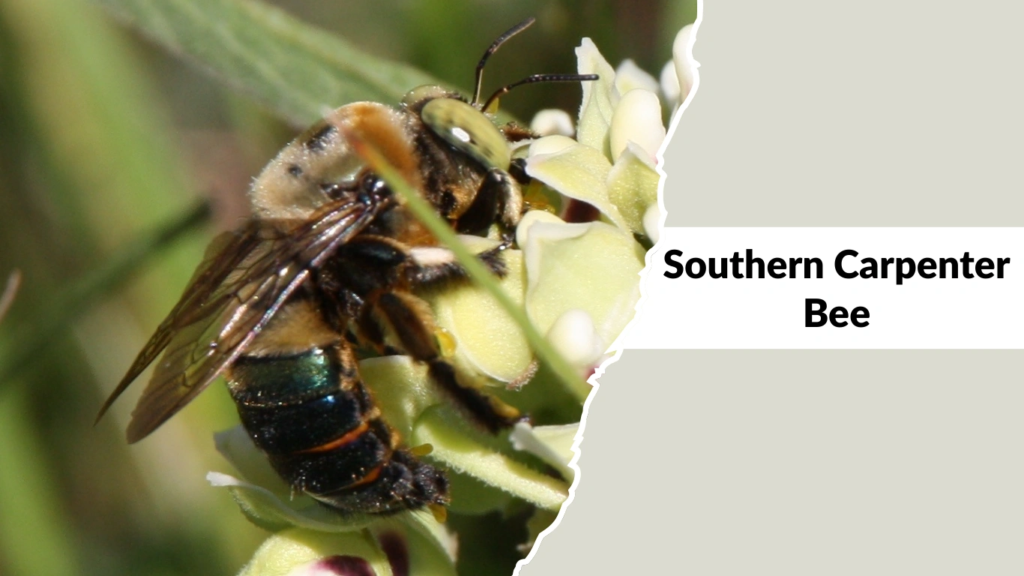
The Southern carpenter bee is a widespread species known for its glossy, dark body and powerful flight. It is commonly found in the southeastern United States, where it frequents gardens, forests, and wooden structures. This species plays an important role as a pollinator but may create nesting tunnels in untreated wood.
Identification
- Large, sturdy bee with a shiny, mostly hairless black abdomen
- Thorax may have yellow or light hairs
- Females are entirely dark; males may have lighter facial markings
- Strong, loud buzzing when hovering
- Often spotted around porches, decks, and flowering plants
Size and Appearance
Southern carpenter bees typically measure around 2–2.5 cm in length. Their body shape is stout and robust, similar to other large carpenter bees. The shiny abdomen contrasts with the slightly fuzzy thorax, making them easy to distinguish from bumblebees. The wings are dark and sometimes slightly iridescent when seen in sunlight.
Range and Habitat
This species is found throughout the southeastern United States, including states like Florida, Georgia, Alabama, Mississippi, and the Carolinas. They prefer warm climates and areas with abundant wooden structures or dead trees suitable for nesting. They are also commonly seen in flowering gardens and forest edges.
Behavior and Nesting
Southern carpenter bees are solitary nest builders. Females bore tunnels into wood to create brood chambers, storing pollen and nectar for their young. They are generally non-aggressive and will only sting if handled. Males may hover near people or animals while guarding territory but are harmless. Their strong pollination activity benefits many plants and crops.
5. Asian Carpenter Bee
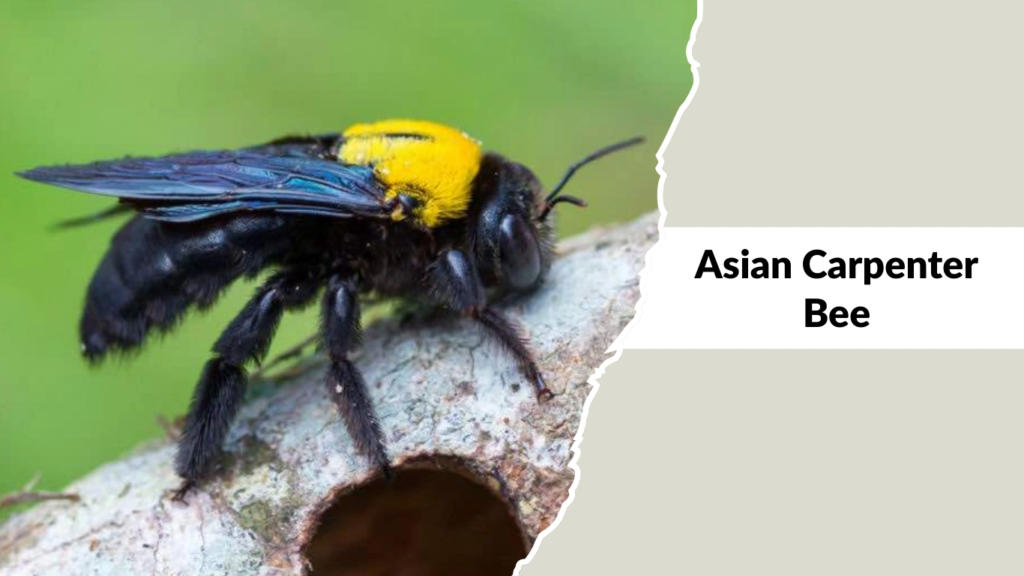
The Asian carpenter bee is one of the most widespread carpenter bee species across South and Southeast Asia. Known for its strong body, loud flight, and shiny dark appearance, this species frequently visits flowers and nests in dead wood or structural timber. It is a highly adaptable bee that thrives in rural, urban, and forested areas alike.
Identification
- Medium-to-large carpenter bee with a shiny black or dark brown abdomen
- Thorax covered with yellow or golden hairs
- Wings often appear dark with a purple or bronze tint
- Females are darker; males may appear slightly lighter
- Common around wooden beams, dead logs, and flowering plants
Size and Appearance
Asian carpenter bees usually measure between 2–2.5 cm in length. Their body is thick and powerful, designed for fast, direct flight. The combination of a fuzzy, golden thorax and a smooth, glossy abdomen makes them easy to recognize. Their buzzing is deep and noticeable during flight.
Range and Habitat
This species is widely distributed across India, Bangladesh, Nepal, Sri Lanka, China, Thailand, Indonesia, and nearby countries. It prefers warm, humid climates and nests in dead branches, bamboo, old timber, and sometimes wooden structures near homes. They are also abundant in gardens with plenty of flowers.
Behavior and Nesting
Asian carpenter bees are solitary nesters. Females excavate tunnels in soft or weathered wood, creating multiple brood cells stocked with pollen. They are generally calm and avoid stinging unless threatened. Males often hover protectively near nesting sites or flowers but cannot sting. These bees are valuable pollinators for many crops and wild plants.
6. Widespread Carpenter Bee (Xylocopa pubescens)

The widespread carpenter bee is a highly adaptable species found across Africa, the Middle East, and parts of South Asia. It thrives in both natural and human-modified environments, frequently nesting in wooden structures, dead branches, and even bamboo. Its strong flight and distinctive coloration make it easy to spot around flowering plants.
Identification
- Medium-to-large carpenter bee with a shiny black abdomen
- Thorax often covered with yellow or golden hairs
- Wings may show a brown or purplish tint
- Females appear darker and more robust; males slightly lighter
- Common around gardens, orchards, and exposed wooden materials
Size and Appearance
Xylocopa pubescens typically measures 1.8–2.5 cm in length. It has a sturdy, muscular body and a noticeable contrast between its fuzzy thorax and glossy abdomen. Their wings produce a deep, heavy buzz during flight, making them easy to hear before they are seen.
Range and Habitat
This species is widely distributed throughout northern and eastern Africa, the Arabian Peninsula, and extending eastward into Pakistan, India, and Sri Lanka. It lives comfortably in hot, dry climates as well as humid tropical regions. Nests are usually built in dead tree trunks, old timber, bamboo poles, or wooden beams.
Behavior and Nesting
Widespread carpenter bees are solitary, with each female creating her own tunnel system. They carve brood cells inside wood and fill them with pollen for their developing larvae. Despite their size, they are generally non-aggressive, and males—though territorial—cannot sting. They are valuable pollinators for many native plants and cultivated crops.
7. Small Carpenter Bee (Ceratina dupla)

Ceratina dupla is a small carpenter bee commonly found in North America. Unlike the large carpenter bees that bore into solid wood, this species prefers softer, hollow plant stems such as raspberry canes or elderberry branches. Despite its small size, it plays an important role in pollinating many wildflowers.
Identification
- Very small bee, usually dark metallic blue or green
- Slender body compared to large carpenter bees
- Abdomen smooth and shiny
- Often seen entering hollow stems rather than wood
- Moves quickly and quietly around flowers and plants
Size and Appearance
Small carpenter bees like Ceratina dupla typically measure 0.5–1 cm in length. Their bodies are sleek and metallic, often reflecting shades of blue or green in sunlight. They lack the large, bulky appearance of Xylocopa species, making them appear more delicate and wasp-like.
Range and Habitat
This species is found throughout much of eastern and central North America. It thrives in gardens, meadows, forest edges, and areas with abundant hollow plant stems. They rarely nest in wood, preferring small, natural tubes created by plants or soft pith that they can clear out easily.
Behavior and Nesting
Ceratina dupla creates nests inside hollow stems, where females lay eggs in a line of brood chambers. They are gentle bees and almost never sting. Their quiet behavior and small size make them easy to overlook, but they are effective pollinators and help maintain healthy wildflower populations.
8. Small Carpenter Bee (Ceratina calcarata)

Ceratina calcarata is another common small carpenter bee found throughout North America. It is known for nesting in the soft, pithy centers of stems rather than drilling into wood. Despite its tiny size, this species is a highly active pollinator and contributes significantly to the health of wildflower ecosystems and gardens.
Identification
- Small bee with a metallic blue, black, or green sheen
- Slender body with a smooth, shiny abdomen
- Often enters hollow or pith-filled stems (not wood)
- Moves quickly and quietly between flowers
- Easily mistaken for a tiny wasp due to its sleek shape
Size and Appearance
Ceratina calcarata typically ranges from 0.5–1 cm in length. Its metallic coloring can vary depending on light, showing iridescent tones from dark green to deep blue. The bee’s body is slim and delicate, with reduced hair compared to larger carpenter bees.
Range and Habitat
This species is widespread in eastern and central North America, thriving in meadows, gardens, and forest borders. It prefers plants with soft stems such as blackberry, sunflower, elderberry, or raspberry, where females can easily clear out the pith to create nests.
Behavior and Nesting
Ceratina calcarata builds its nests inside plant stems rather than wood. Females create a series of brood chambers in a single stem, stocking each with pollen for the developing larvae. They are non-aggressive and rarely sting, making them harmless to humans. Their quick movements and efficient flower visitation make them excellent pollinators.
